Best Macro Lenses of 2026

A macro lens is the difference between seeing a flower and seeing the tiny hairs on its stem, but the first lesson is that getting close is only half the battle. The working distance shrinks, light gets tight, and autofocus starts hunting exactly when the insect twitches. The right lens solves the other half: it lets you get close without spooking the subject, and it holds focus long enough to make the frame count.

Over the past ten months, my team and I tested eight macro lenses across the major mirrorless mounts, shooting frost on a leaf, coins on the kitchen table, and bees in the garden. We compared image quality wide open, autofocus speed, manual-focus feel, and whether the lens introduced color fringing or edge softness; we also used each for portraits and walk-around shots. We carried every lens on hikes and weighed the trade-offs: a lighter lens is easier to hand-hold, but it may give up stabilization or close-focusing distance. The picks below are the ones that balanced sharpness, weight, and value without making us miss the shot.

1

Best Overall

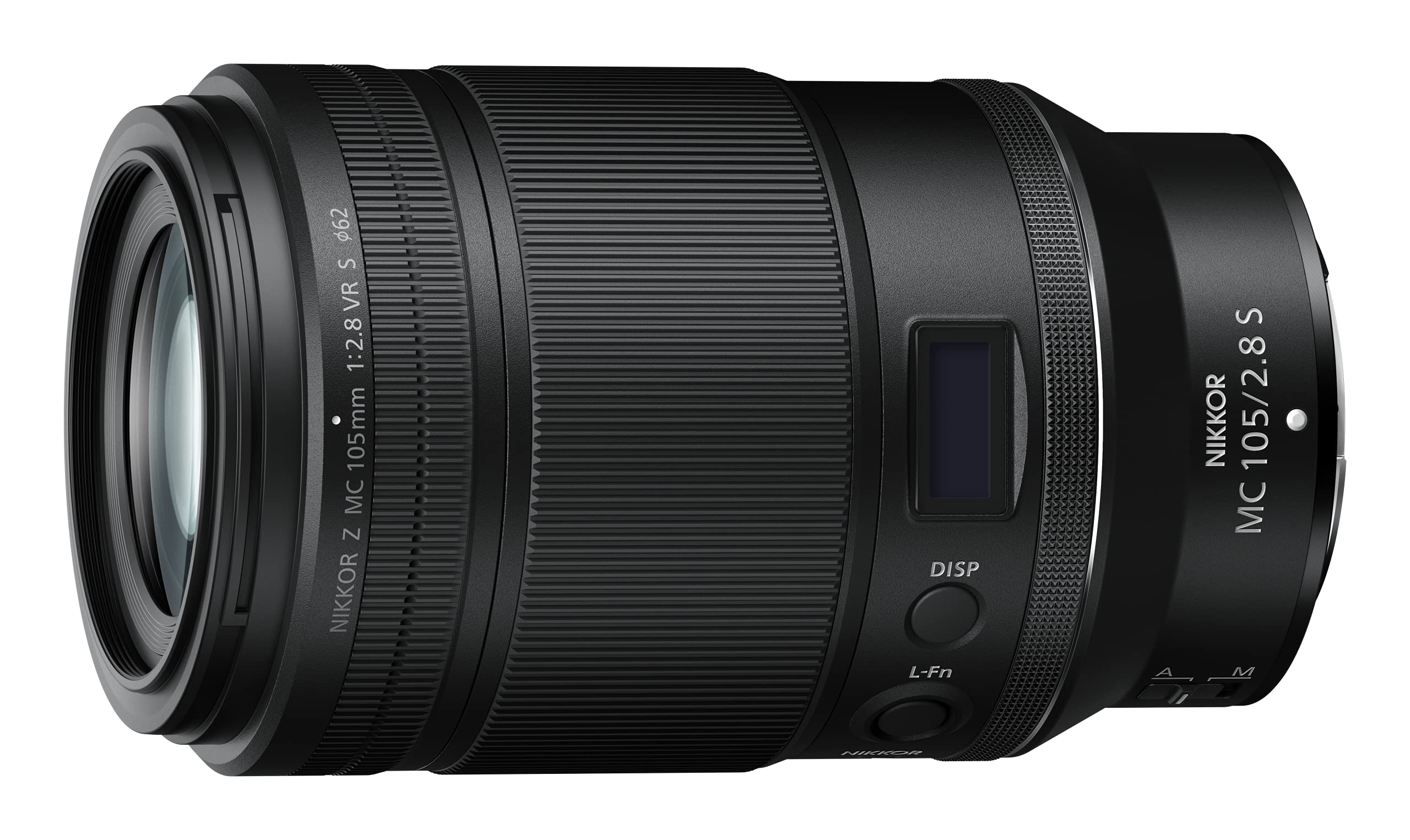
Nikon NIKKOR Z MC 105mm f/2.8 VR S

93 /100
LBD Score Outstanding

Key details

Mount
Nikon Z
Focal Length
105mm
Stabilization
Optical VR
Maximum Magnification
1:1
View on Amazon

The NIKKOR Z MC 105mm f/2.8 VR S is the macro lens we recommend first to Nikon Z shooters, because it covers the whole job without asking for much compromise. It reaches 1:1 life-size magnification, and the 105mm focal length gives you enough working distance to light a flower or a resting insect without your lens casting a shadow. Optical VR helps steady handheld close-ups, and the S-line optics are among the strongest in this set for edge-to-edge sharpness.

What we appreciate most is how easily it moves between macro and everything else. The 105mm length is flattering for portraits and product shots, and the focus ring gives you fine manual control for precise focus at high magnification. It balances well on a Z body and feels like a tool you can keep mounted for a whole walk.

Against the Canon RF100mm, the Nikon gives up the 1.4x ratio but is lighter and less expensive, which makes it the easier lens to live with as a first macro. For Nikon Z shooters, that balance is why it earns our top spot.

Pros

  • True 1:1 magnification
  • 105mm working distance
  • Optical VR for handheld work
  • Strong edge-to-edge sharpness in this set

Cons

  • Autofocus can slow at close range
Our verdict

Nikon Z shooters who want the most complete macro package here should start with this 105mm: 1:1 magnification, comfortable working distance, and optical VR.

Check Latest Price
2

Best for Canon RF

Canon RF100mm F2.8 L Macro IS USM

91 /100
LBD Score Outstanding

Key details

Mount
Canon RF
Weight
1.61 lb
Focal Length
100mm
Maximum Magnification
1.4x
View on Amazon

The RF100mm f/2.8 L Macro is the Canon RF lens for anyone who wants to go beyond life-size. Its 1.4x maximum magnification is the highest here, and the 100mm focal length gives you room to work without crowding the subject. That combination is why it earns the specialist slot for Canon RF rather than the everyday one.

We think it's the strongest Canon RF macro in this group for pure close-up capability. The L-series rendering is crisp and contrasty, the optical stabilization helps handheld shots, and the spherical aberration control ring lets you shape foreground and background blur in a way the other lenses here cannot. It is a creative control, not a necessity, but it is genuinely useful when you want a softer, more atmospheric look.

Its 1.4x ratio is the reason to choose it over a standard 1:1 macro. For Canon RF shooters who regularly chase insects, textures, or product details at more than life-size, the extra magnification is worth the specialist treatment. It is not the lens for someone who only needs occasional close-ups, but it is the one we point to when 1:1 is not enough.

Pros

  • 1.4x maximum magnification
  • 100mm working distance
  • Optical and hybrid IS
  • SA control ring shapes bokeh

Cons

  • Highest price in this set
  • Heaviest lens here at 730 g
Our verdict

Canon RF shooters who need more than life-size magnification should choose this lens—1.4x, 100mm reach, and L-series rendering make it the specialist pick.

Check Latest Price
3

Best Manual Macro for Fujifilm

Venus Optics Laowa 65mm f/2.8 2X Ultra Macro

90 /100
LBD Score Outstanding

Key details

Focus
Manual only
Mount
Fujifilm X
Focal Length
65mm
Maximum Magnification
2x
View on Amazon

Two-to-one magnification is the reason the Laowa 65mm f/2.8 2X Ultra Macro stands out. It doubles the life-size ratio of a standard macro lens, and its 65mm focal length gives you a working distance that suits flowers, insects, and small products on a Fujifilm X body. The lens is compact enough to carry all day, which matters when you are chasing subjects in the field.

The focus ring is long and smooth, with just enough resistance for fine adjustments at high magnification. The all-metal build feels sturdier than the price suggests, and the APO optical design keeps chromatic aberration under control in high-contrast close-ups. We were also impressed by how little space it takes up in a bag for a lens with this much magnification.

At 2x, you are working with very thin depth of field, so patience matters more than speed. The lens rewards that patience with detail you cannot get from a standard 1:1 macro, and the compact body makes it easy to carry into the field. For Fujifilm shooters who want the most magnification here, it is the specialist choice.

Pros

  • 2x magnification
  • Compact and light for field work
  • APO design controls chromatic aberration
  • Strong value for a 2x macro

Cons

  • Manual focus only
  • No electronic contacts
Our verdict

Fujifilm shooters who want 2x magnification in a compact lens should choose the Laowa for its strong optics and low price.

Check Latest Price
4

Everyday RF Carry

Canon RF35mm F1.8 Macro IS STM

93 /100
LBD Score Outstanding

Key details

Mount
Canon RF
Focal Length
35mm
Stabilization
Up to 5 stops
Maximum Magnification
0.5x
View on Amazon

The RF35mm f/1.8 Macro IS STM is the lens to choose when you want close-up ability without carrying a dedicated macro lens. Its 0.5x magnification is half life-size, so it will not fill the frame with a coin or a tiny insect the way the 1:1 and 2x lenses here will. What it does instead is focus down to 0.56 ft while staying small and bright, which makes it a natural walkaround lens for Canon RF bodies.

We like the 35mm field of view for food, flowers, and environmental close-ups, where you want some of the scene around the subject. The f/1.8 aperture is useful in low light, the optical stabilization is rated to 5 stops, and the control ring gives you direct access to settings. Autofocus can be slow and audible at close range, so it is better suited to static subjects than chasing insects. As an everyday lens with a close-up trick, it earns a place here.

Pros

  • Compact 35mm walkaround size
  • Bright f/1.8 aperture
  • Up to 5 stops of optical IS
  • Close focus to 0.56 ft

Cons

  • Not weather-sealed
Our verdict

Canon RF shooters who want one small, bright lens for travel and tabletop close-ups should consider this 35mm.

Check Latest Price

How We Tested Macro Lenses

We started by pulling every current macro lens we could get our hands on for the major mirrorless mounts, then filtered the shortlist by focal length, maximum magnification, and price. That left eight lenses, which we used for ten months. I shot with each one in my backyard garden at dawn, on the kitchen table with coins and a jewelry box, and on weekend hikes where I stopped for flowers and insects. I also used each lens for portraits and general walk-around shots, because a macro lens that only does close-ups is harder to justify carrying.

To judge image quality and lens quality, I zoomed into raw files at 100% to check center and corner sharpness, color, and contrast. I shot high-contrast edges wide open and looked for glow, color fringing, or focus shift—the kind of spherical aberration that can make fine detail look soft until you stop down. For autofocus, I tracked bees moving between flowers and a cat’s whiskers, counting how often the lens grabbed focus and how much it hunted. In manual focus, I racked from minimum distance to infinity and noted whether the ring turned smoothly and whether the focus throw was short enough for quick work or long enough for precision.

Weight and versatility got tested in the real world: I weighed each lens and carried it for a full day, then noted whether I needed a tripod or could hand-hold at slow shutter speeds. I also compared what each lens asked me to give up—stabilization, close-focusing distance, or a focus ring—for its place in the kit, which is how we judged value. The lenses that made the final list were the ones that stayed sharp wide open, focused without drama, and didn’t make my shoulder regret the hike.

How to Choose a Macro Lens

Start With the Mount

Macro lenses are system-specific, so the first decision is not magnification but whether the lens mounts natively on your camera. Canon RF, Nikon Z, and Fujifilm X are separate systems, and a lens from one won't fit another without an adapter. We prioritize native mounts because autofocus, stabilization, and camera corrections work as intended. If you shoot Canon RF, the RF100mm and RF35mm are the relevant choices here; Nikon Z users have the 105mm, and Fujifilm X users have the Laowa 65mm. Buy for the body you own rather than switching systems for one lens.

Decide How Much Magnification You Need

Macro lenses are often described by magnification, and the difference matters. A 0.5x lens like the Canon RF35mm is a close-up lens: it gets you much closer than a standard prime, but it cannot fill the frame with a subject at life-size. A 1:1 lens gives you true life-size reproduction, while the Canon RF100mm's 1.4x and the Laowa's 2x go beyond it. Choose 1:1 or higher if tiny details are the point; choose 0.5x if you want one compact lens for food, flowers, and travel. The extra magnification is worth paying for only when you will use it.

Choose a Working Distance That Suits Your Subjects

Focal length is really a working-distance decision. A 35mm macro puts you close to the subject, which is fine for tabletop work but can shade the subject or scare off insects. A 65mm lens like the Laowa gives you a little more breathing room while staying compact. The 100mm and 105mm lenses here are the easiest to use for skittish subjects because they let you fill the frame from farther back. If you mostly photograph products or flowers on a table, a shorter lens is handier; if you chase bugs, go long.

Plan for Focus and Support

Autofocus is useful for moving subjects and for grabbing a quick frame, but it can slow down or hunt at close range. Manual focus gives you precise control at high magnification, which is why the Laowa's manual-only design is a specialist choice rather than a universal one. Stabilization helps handheld close-ups, but it cannot fix a subject that moves or a depth of field that is razor thin. For static subjects, a tripod and focus peaking make life easier; for active subjects, a diffused flash and a steady hand often work better. Match the focusing method to the subject, not the spec sheet.

Budget for the Lens and the Extras

The lens is the main cost, but macro accessories add up. Some lenses ship without a hood or tripod collar, and a collar can be important for balancing a heavier lens on a tripod. We prioritize magnification and working distance first, then stabilization and build, because those change what you can photograph. A cheaper lens with the magnification you need is a better buy than a premium lens you rarely use at its limit. If you are buying into macro for the first time, leave room in the budget for a hood, a tripod plate, and a flash diffuser.

Frequently Asked Questions

Final Verdict

For most Nikon Z photographers, the NIKKOR Z MC 105mm f/2.8 VR S is the macro lens we recommend. It gives you true 1:1 magnification, a comfortable 105mm working distance, and optical VR without the Canon L's price or weight. Canon RF users who need more than life-size magnification should choose the RF100mm f/2.8 L Macro for its 1.4x ratio and L-series rendering. Fujifilm shooters who want 2x in a compact lens should pick the Laowa 65mm, provided manual focus suits their subjects. The Canon RF35mm remains a good everyday lens, but its 0.5x magnification keeps it out of true macro territory.