Best Long-Range Drones of 2026

A drone's advertised range gets measured over open water on a calm day, and no listing tells you what eats into it: a tree line, a subdivision's worth of Wi-Fi, a ridge between you and the aircraft. What you want is a drone that holds a clean video feed at the distances you'll actually fly. That's the gap our testing was built to close.

My team spent six months flying seven long-range drones, from pocket-sized models to larger aircraft that travel in their own hard cases. Each one flew the same field, the same stretch of shoreline, and the same wooded trail, so the differences we saw came from the drones rather than the weather. Ease of use and camera quality counted as much as range.

Worth knowing before you shop: the lightest drones are easier to travel with, but they feel the wind in a way you'll see in the footage, while heavier aircraft hold position better and need a bigger bag. The picks below held up either way.

1

Best Overall

DJI Mini 3

91 /100
LBD Score Outstanding

Key details

Video
4K HDR
Weight
8.75 oz
Max Range
10 km
Flight Time
38 min
View on Amazon

At 248 grams, the Mini 3 slips under the 249-gram line that keeps recreational fliers out of FAA registration and Remote ID in the U.S. That alone makes it the long-range drone we recommend first to most people: you can pack it for a hike or a trip without treating it like regulated gear. The 10 km video transmission is the other half of the appeal, giving you useful headroom for the several-kilometer flights most of us actually make.

The camera is not a token 4K sensor. A 3-axis mechanical gimbal keeps footage level, and the 4K HDR video holds detail in bright skies and shadowed ground. We especially like the true vertical shooting mode for tall subjects; it saves cropping a horizontal frame later. Stills top out at 48MP, and the included DJI RC controller has a built-in screen, so you're not burning phone battery to see what the drone sees.

Flight time is listed at 38 minutes, which is generous for this class, though wind and hovering will eat into it. We found the Mini 3 easy to place precisely, and the GPS return-to-home gives you a clear bail-out when the battery or signal gets low. It is not the drone for flying in crowded airspace or pushing through strong gusts; its light weight is the point, and it makes the Mini 3 easy to carry and quick to launch.

For most buyers, that balance is the recommendation: 10 km of transmission, a stabilized 4K camera, and a weight that keeps the paperwork simple. The Air 3S is the obvious step up if you need a larger sensor and a longer link; otherwise, the Mini 3's combination of range, stabilized video, and simple travel is the one we keep coming back to.

Pros

  • Under 249 g for recreational flights
  • 10 km video transmission
  • 4K HDR video on 3-axis gimbal
  • Built-in screen on DJI RC

Cons

  • Single battery in this kit
Our verdict

We recommend the Mini 3 to most buyers because it pairs a 10 km link and stabilized 4K HDR video with a sub-250 g body that keeps recreational flights simple.

Check Latest Price
2

Best for Pro Footage

DJI Air 3S

92 /100
LBD Score Outstanding

Key details

Weight
1.6 lb
Max Range
20 km
Main Camera
1-inch CMOS
Obstacle Sensing
LiDAR, omnidirectional
View on Amazon

The 724 g body is the heaviest here, but it buys the largest camera and the longest transmission link in this guide. The Air 3S pairs a 20 km link with a 1-inch wide-angle camera, a medium tele camera, and forward-facing LiDAR for night-time obstacle sensing.

That combination is why it earns the pro slot. The 1-inch sensor and 4K/60fps HDR video give you more room to recover highlights and hold color at sunset, and the second lens lets you frame tighter without flying closer. We like that the LiDAR-backed sensing is aimed at dusk and night flights, where a clear view matters most. The three batteries in this combo also make a full day of shooting realistic.

The trade-off is a heavier, bulkier kit that takes more space in a bag and more care on a hike. In return, you get a camera ship that holds its position in wind and footage that can stand up to grading instead of just social media. The 20 km range is not a license to fly beyond visual line of sight; it is reserve for signal stability when trees, terrain, or interference eat into the link.

For a working photographer or a serious hobbyist who wants the best camera and the most transmission headroom in this set, the Air 3S is the clear choice. If you mainly want a lighter travel drone, the Mini 3 is the smarter everyday pick.

Pros

  • 20 km transmission
  • 1-inch main camera plus tele
  • LiDAR omnidirectional sensing
  • Three batteries in combo

Cons

  • Requires FAA registration at 724 g
Our verdict

We pick the Air 3S for fliers who need the longest link and the best camera here, and who accept the weight and registration that come with it.

Check Latest Price
3

Best Battery Life

Potensic ATOM 2

90 /100
LBD Score Outstanding

Key details

Camera
4K/30fps HDR
Weight
8.78 oz
Max Range
10 km
Total Flight Time
96 min
View on Amazon

Ninety-six minutes of total flight time is the number that makes the ATOM 2 worth a look: three batteries and a parallel charging hub turn a 10 km drone into one you can keep flying through a full morning. The kit also stays at 249 g, which keeps recreational registration out of the picture.

That endurance is why we recommend it to travelers who care about airtime as much as range. The 1/2-inch Sony sensor captures 4K/30fps HDR video and 48MP stills on a 3-axis gimbal, and the new remote uses a directional antenna rather than a bare Wi-Fi link. We also appreciate the vertical shooting mode and AI tracking for framing a subject without constant stick inputs. A 10 km link is more than most fliers need, but the extra headroom is welcome when the air is busy.

It is not a DJI in the polish department. The app and flight modes are capable, but the smaller sensor is more likely to show its limits in low light. For a traveler who wants range, battery life, and a light kit without paying premium prices, those are acceptable trade-offs. The ATOM 2 is the long-range drone we point to when flight time matters as much as distance.

Pros

  • 10 km directional-antenna link
  • 96 min total with three batteries
  • Under 249 g
  • 4K HDR on 3-axis gimbal

Cons

  • No obstacle avoidance
Our verdict

We recommend the ATOM 2 to travelers who want long-range reach and 96 minutes across three batteries without crossing the 250 g line.

Check Latest Price
4

Best Budget

Potensic ATOM SE

89 /100
LBD Score Excellent

Key details

Camera
4K EIS
Weight
8.64 oz
Max Range
4 km
Total Flight Time
93 min
View on Amazon

Four kilometers of PixSync 2.0 transmission, a 4K EIS camera, and three batteries in the Fly More Combo: the ATOM SE covers the long-range basics at the lowest price in this group.

The 245 g body avoids recreational registration, and the 93-minute total flight time across three batteries is generous for a first drone. It is simple to launch, and the parallel charging hub gets all three batteries back in about 90 minutes. For a new flier, that means less waiting and more practice, which is exactly what you want before you trust a longer flight.

For a first long-range drone, that is a sensible trade. You get stable GPS flight, a clean 4K image in calm air, and enough batteries to learn without constantly stopping. We see it as the low-risk way to find out whether long-range flying is for you before spending on a pro kit.

Pros

  • 4 km PixSync transmission
  • 93 min total with three batteries
  • Under 249 g
  • Lowest price in this group

Cons

  • Electronic stabilization only
  • Shortest transmission range here
Our verdict

We see the ATOM SE as the budget entry for first-time fliers who want a real 4 km link and a three-battery kit without premium spending.

Check Latest Price
5

High-Res Stills

Ruko F11PRO 2 Plus

89 /100
LBD Score Excellent

Key details

Camera
48MP photos, 4K/30fps
Weight
12.7 oz
Max Range
20,000 ft
Total Flight Time
74 min
View on Amazon

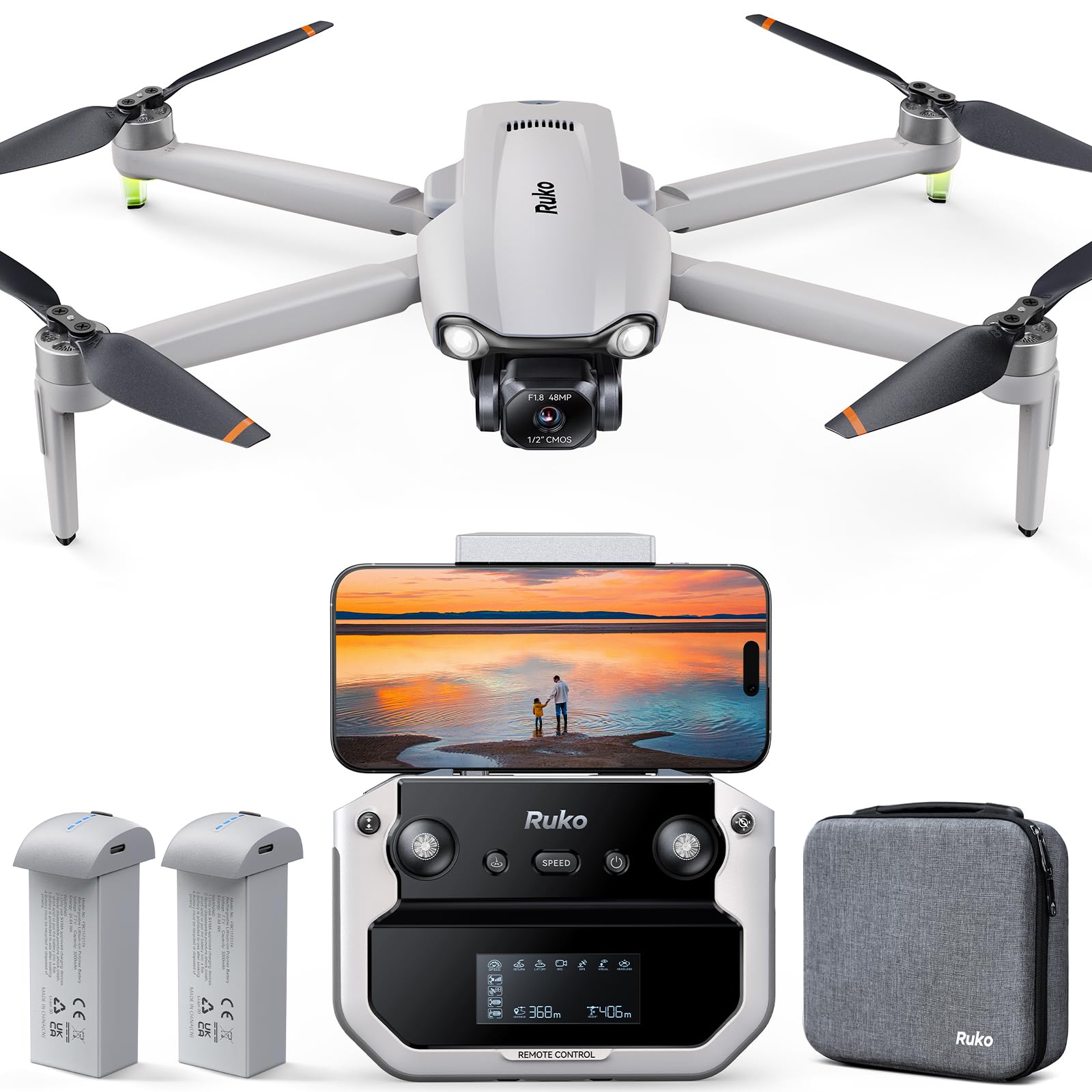
A 48MP sensor, a 3-axis gimbal, and a 20,000 ft link put the F11PRO 2 Plus between the budget 4K drones and the premium DJI models. We see it as the high-resolution value pick in this group, with stills resolution that stands out for the money.

The 1/2-inch sensor captures 48MP photos and 4K/30fps video, and the 74-minute total flight time across two batteries is genuinely useful for a long morning. The 20,000 ft link, about 6 km, gives you more room than the 4 km ATOM SE. The 3-axis gimbal keeps footage steady in wind, and the folding body is easy to pack. For a flier who crops stills or wants a longer link without moving into premium territory, this is a strong package.

It is not the camera leader here; the Air 3S has the larger sensor and better low-light range, and the Mini 3 is more polished in the app. The F11PRO 2 Plus makes its case on stills resolution and total flight time, not on being the most refined drone in the group. If those are your priorities, it earns the look.

Pros

  • 48MP stills for cropping
  • 20,000 ft transmission
  • 74 min total with two batteries
  • 3-axis gimbal

Cons

  • Reliability can be inconsistent
  • No obstacle avoidance
Our verdict

We rate the F11PRO 2 Plus for high-resolution stills and a long two-battery kit, provided you accept a shorter link than the DJI picks and a mixed reliability record.

Check Latest Price
6

Screen-Remote Travel

Bwine F7MINI

85 /100
LBD Score Excellent

Key details

Camera
48MP photos, 4K
Weight
8.78 oz
Max Range
20,000 ft
Total Flight Time
64 min
View on Amazon

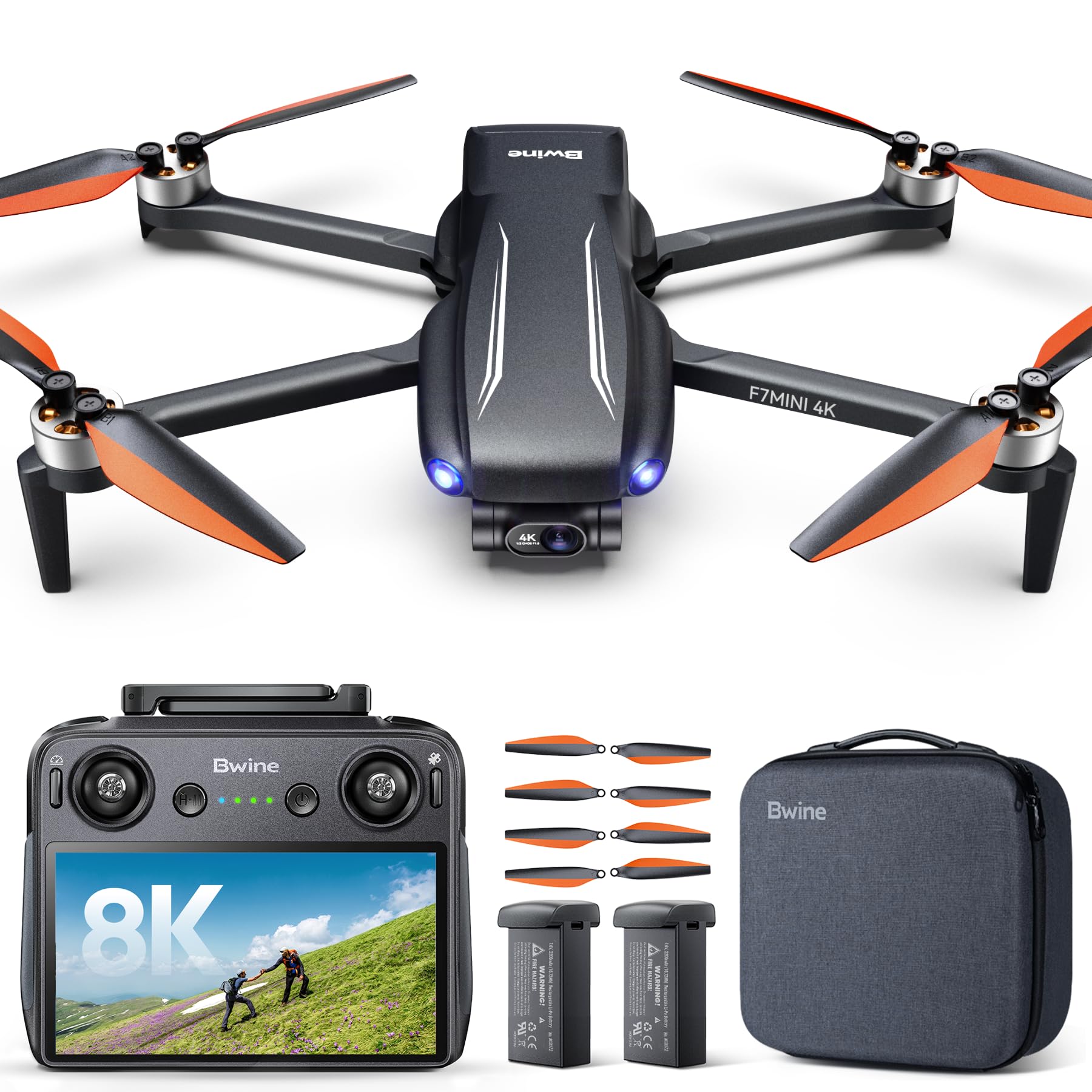
A 5.5-inch 1080p screen is built into the F7MINI's controller, so you can frame shots without clamping a phone into the holder. The drone pairs that screen with a 48MP 1/2-inch sensor, 4K video on a 3-axis gimbal, a 20,000 ft link, and two batteries for 64 minutes total.

We like the screen more than we expected to. It makes a long-range flight feel more self-contained: no phone overheating, no cable, no notifications covering the live view. The 249 g body also keeps recreational registration out of the picture, and the 6 km link is a meaningful step up from the 4 km ATOM SE. For a travel kit, that combination is appealing.

We recommend it to the traveler who wants a self-contained screen and a sub-250 g body. The 3-axis gimbal keeps 4K footage steady in a breeze, and the two-battery kit gives you 64 minutes total. It is not the low-light equal of the Mini 3 or Air 3S, but it is a practical travel drone with a screen that makes setup quicker.

Pros

  • 5.5-inch 1080p screen remote
  • 20,000 ft transmission
  • Under 249 g
  • 64 min total with two batteries

Cons

  • Reliability can be inconsistent
  • Battery life can fall short
Our verdict

We like the F7MINI for travelers who want a screen built into the controller, a 6 km link, and a sub-250 g body, with reliability caveats.

Check Latest Price
7

All-In-One Kit

Holy Stone HS360G

86 /100
LBD Score Excellent

Key details

Weight
8.78 oz
Max Range
20,000 ft
Remote Screen
5.5-inch touchscreen
Total Flight Time
96 min
View on Amazon

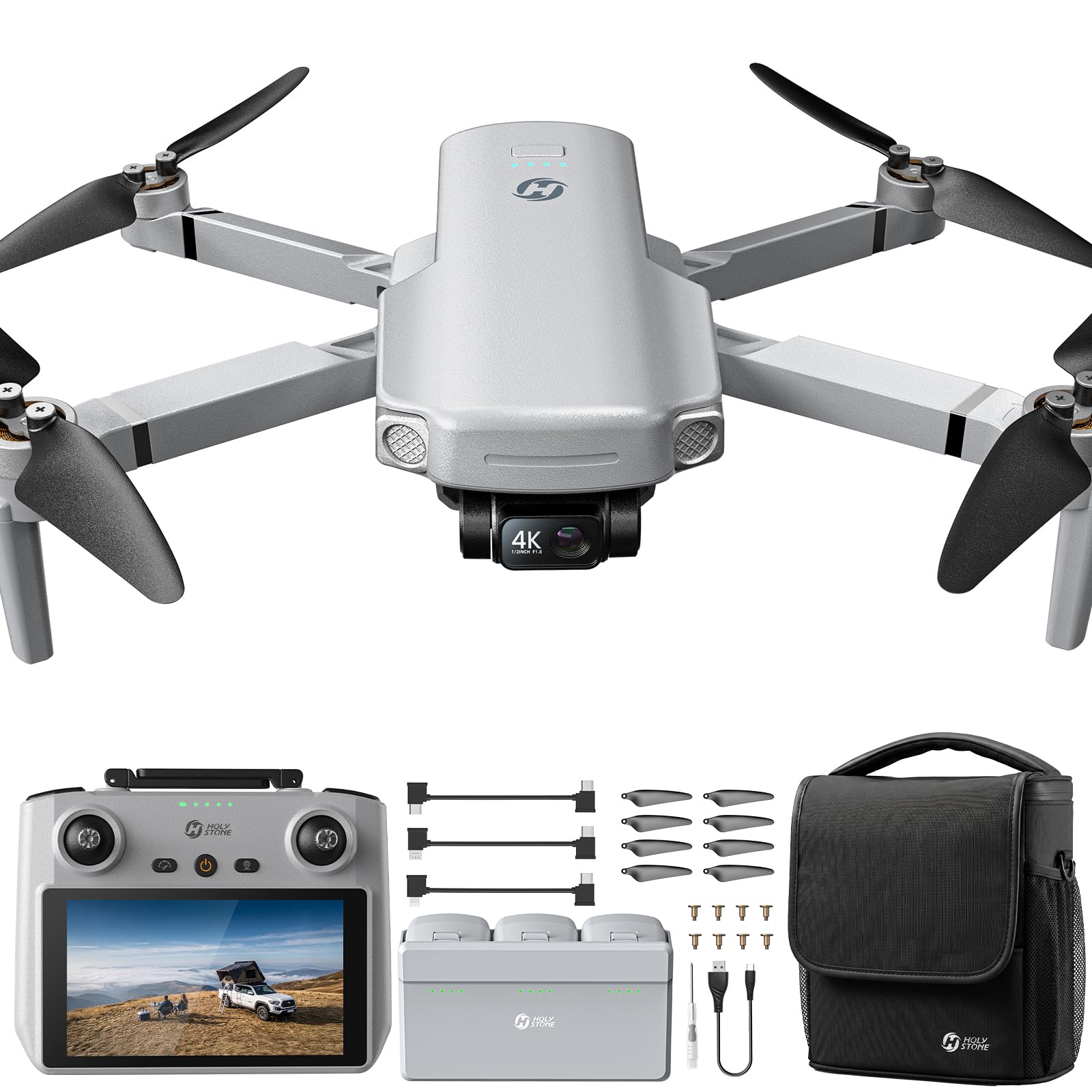
Holy Stone's HS360G is built around a 5.5-inch 1080p touchscreen remote and a three-battery kit, with a 20,000 ft link and a sub-250 g airframe.

The 48MP stills and 4K/30fps video come from a 3-axis gimbal, and the touchscreen makes framing and settings changes quicker than a phone-based controller. We think the all-in-one remote is the right call for a long-range kit: fewer accessories to charge, fewer cables to lose, and a live view that stays readable in bright light.

The 96-minute total flight time is the headline, and three batteries give you room for a full session. The 6 km link is useful for open-country flying, and the folding body is easy to pack. It is not the sharpest or most refined drone here, but it covers the long-range basics with fewer accessories to manage.

We recommend the HS360G to the flier who wants an all-in-one screen kit and does not need the best low-light camera. The 4K gimbal footage is stable in good light, and the touchscreen remote makes setup quicker. For travel and family flights, it is a practical package with fewer things to remember.

Pros

  • 5.5-inch touchscreen remote
  • 20,000 ft transmission
  • Three batteries included
  • Under 249 g

Cons

  • Battery life falls short in real use
Our verdict

We recommend the HS360G to fliers who want an all-in-one touchscreen kit and a 6 km link, as long as they plan around shorter real-world battery life.

Check Latest Price

How We Tested: Six Months, Seven Drones, Real Flying Conditions

We started with roughly 30 listings, read the spec sheets against the manuals, and cut anything with a fixed camera, a single battery in the box, or a transmission claim that seemed borrowed from a press release. That left seven drones, which we flew for six months alongside a small group of newer pilots who had never touched a controller.

Most of the flying happened in two places: a county park with a long open field and a hard tree line at one end, and a stretch of shoreline where the wind picks up in the afternoon. We timed every flight from takeoff to the low-battery warning and compared that with what each listing claimed per battery, then repeated it with the spares to see whether the second and third flights held up. For range, we pushed each drone out over open ground until the video feed stuttered or the controller warned us, then tried the same distance with trees between us and the aircraft.

Camera quality we judged by shooting the same golden-hour frame and the same dusk frame with every drone, then watching the footage back on a laptop to see how quickly the image fell apart in low light and how much the horizon tilted in a gust. Ease of use meant handing a charged controller to someone who had never flown, timing setup to first takeoff, and noting how much the app got in the way. Reliability we tested the blunt way: triggering return-to-home on purpose and switching the controller off mid-flight to see where each drone came back to.

Value came down to what's actually in the case — spare batteries, a charging hub, a controller with its own screen — weighed against how the rest of the field was equipped. A kit that only flies for twenty minutes before you're hunting for an outlet rarely stays in the rotation.

How to Choose a Long-Range Drone

Look Past the Maximum Range

A 10 km or 20 km transmission spec is measured in open, unobstructed conditions. Trees, terrain, buildings, and Wi-Fi congestion all eat into that link, which is why a 10 km drone can still lose video at a fraction of the number. For most recreational fliers, 4 km is a reasonable entry point and 10 km gives useful reserve. We put more trust in a digital transmission system with a directional remote than in a bare Wi-Fi claim. Remember that range is not permission to fly beyond visual line of sight.

Weight and Registration

In the U.S., recreational drones at or above 250 g generally need FAA registration and Remote ID; sub-250 g models avoid that paperwork. That is why the Mini 3, ATOM 2, ATOM SE, F7MINI, and HS360G are easier to travel with than the 724 g Air 3S. The exemption does not erase airspace rules, airport restrictions, or the visual-line-of-sight requirement.

Flight Time Is a Budget

Advertised flight time is a per-battery figure, while a kit's total time is what you get across all included batteries. Wind, hovering, and aggressive maneuvering shorten both. We prioritize a kit with at least two batteries and a parallel charger, because waiting for one battery to recharge is what actually ends a session. A 20-minute battery can be fine if you carry three; a single long battery is less useful if you have no way to recharge it. Plan each flight to return with reserve.

Camera and Stabilization

A 3-axis mechanical gimbal does more for smooth video than a high pixel count. Electronic stabilization can look fine in calm air, but it struggles in gusts and low light. Sensor size matters just as much: a 1-inch camera like the Air 3S holds detail at sunset that a 1/2-inch sensor will smear. For most buyers, 4K video and a mechanical gimbal are the right baseline; 48MP stills are useful only if you crop. Buy for the footage you will actually shoot, not the biggest number on the box.

Frequently Asked Questions

Final Verdict

For most buyers, the DJI Mini 3 is the long-range drone we recommend: 10 km of transmission, a stabilized 4K HDR camera, and a sub-250 g body that keeps recreational flights simple. The Air 3S is the better buy if you need the 20 km link, a 1-inch sensor, and serious low-light footage. If battery life is your priority, the Potensic ATOM 2 gives you three batteries and 96 minutes total for less than the DJI premium.