Best Microphone Pop Filters of 2026

You hear it before you hear the word: a soft puff of air on every P and B, and a clean take starts to sound like someone blowing across the mic. A pop filter breaks up that blast of air before it reaches the capsule — and it's the cheapest piece of gear in the whole setup.

I've recorded in a closet lined with moving blankets and watched a foam cover rescue an outdoor interview from a gust of wind. Over four months, my team and I worked 16 pop filters into our regular sessions: foam covers sized for a specific mic, clip-on shields on a flexible arm, stretch-on covers for handheld mics, and a foam isolation ball. Price barely predicted performance — a snug fit and honest foam thickness mattered more than anything printed on the package.

What separates a good one is unglamorous: it seals around your mic instead of hovering over it, it holds its position through a 90-minute episode, and it's still intact after a week in a gear bag. The picks below managed all three.

1

Best Overall

Aokeo Dual-Layer Pop Filter

91 /100
LBD Score Outstanding

Key details

Mount
Clamp for tubular stands
Reach
12 in
Screen
Dual-layer
Weight
6.4 oz
View on Amazon

The Aokeo's dual-layer screen is the reason it earns the top spot: the first mesh breaks the air blast, the gap between the layers gives the pressure somewhere to go, and the second layer catches what's left. We recommend it first for most home setups because it clamps to a tubular boom or stand and puts the screen exactly where you need it. The 360-degree gooseneck is stiff enough to hold a position, and the 12-inch reach gives you room to angle the filter without crowding the mic.

We used it on a boom arm and a desk stand; the clamp has a scratch-proof gripper and bit without wobbling once tightened. The 6.4-ounce weight is light enough for a small stand, though the gooseneck can sag if you bend it far forward. Set the screen close, tighten the clamp, and it stays.

The dual layer is the main event. It won't make a noisy room quiet or fix a boxy desk reflection; it stops the puffs on P and B and takes the edge off S sounds. If you need room control, an isolation ball is a different tool.

The screen wipes clean, and the clamp stays on the stand when you swivel the boom. The 12-inch reach is the detail that makes it easy to live with.

Pros

  • Dual-layer screen tames plosives
  • Clamp fits tubular stands and booms
  • 360-degree gooseneck holds a position
  • Light 6.4 oz build

Cons

  • Gooseneck can sag when bent far forward
Our verdict

The Aokeo is the pop filter we recommend first for most stands: a dual-layer screen, a clamp that fits tubular booms, and a gooseneck that holds its bend without costing much.

Check Latest Price
2

Best for Blue Yeti

VOCALBEAT Blue Yeti Windscreen

95 /100
LBD Score Outstanding

Key details

Fits
Blue Yeti and Yeti Pro
Weight
0.32 oz
Material
Foam
Max Mic Diameter
2.5 in
View on Amazon

If you own a Blue Yeti, the VOCALBEAT cover is the least fussy way to tame plosives. It slides over the capsule like a thick sock and stays there; no clamp, no gooseneck, no stand space lost. It fits the Yeti and Yeti Pro, plus other mics up to 2.5 inches in diameter.

We found it easy to put on and take off, and the foam is thick enough to soften P and B blasts while keeping spit and dust off the mesh. That direct fit is the appeal: the cover moves with the mic, so you don't have to reposition a screen every time you adjust the angle. The 0.32-ounce weight adds almost nothing.

The foam can tear if you stretch it by the edge, and it won't do much for room echo. Those are the limits of a cover that sits on the capsule. Rinse it and let it air-dry rather than wringing it out.

It's the cover we leave on between sessions, and the one we hand to someone who doesn't want to learn a clamp.

Pros

  • Slides on without a clamp or stand
  • Fits Blue Yeti and Yeti Pro
  • Thick foam softens plosives
  • Light 0.32 oz cover

Cons

  • Foam can tear when stretched
Our verdict

For a Blue Yeti, the VOCALBEAT cover is the simplest plosive fix: thick foam, a snug slide-on fit, and no clamp or stand space required.

Check Latest Price
3

Best Yeti Bundle for Indoors and Out

YOUSHARES Yeti Foam and Fur Set

91 /100
LBD Score Outstanding

Key details

Fits
Blue Yeti and Yeti Pro
Pack
2 covers
Weight
0.71 oz
Materials
Foam and faux fur
View on Amazon

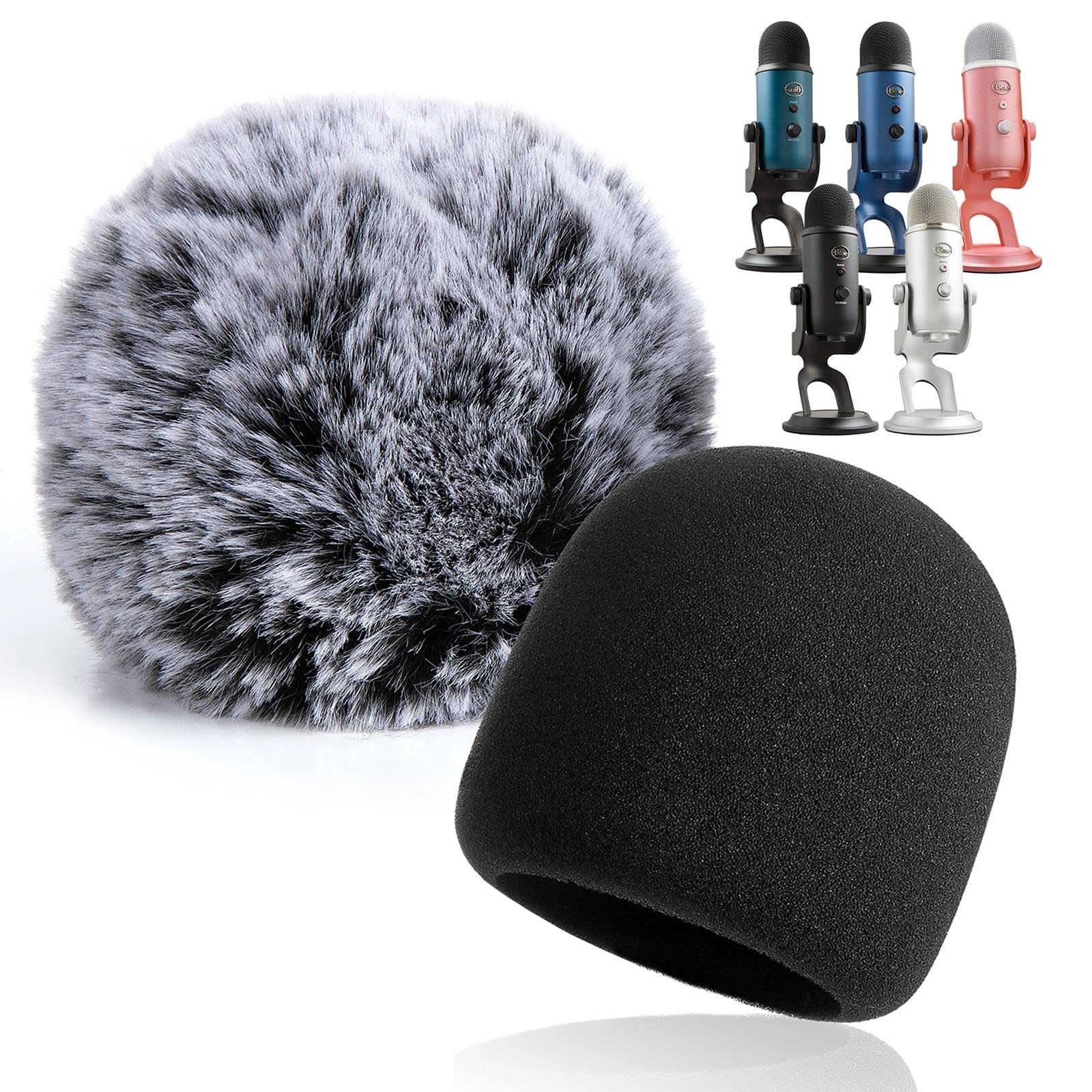
The YOUSHARES pack solves two different problems in one bag: a high-density foam cover for indoor recording and a furry wind muff for outdoor sessions. That split makes sense. The foam sits over the Yeti capsule and takes the edge off plosives; the fur adds a layer for wind and breath noise when you record on a porch or near an open window. Both fit the Blue Yeti and Yeti Pro.

The foam is washable, and the fur cover is the one we reach for when the mic goes outside. At 0.02 kg for the pair, it adds almost nothing to a bag. The fur can shed if you handle it roughly, so keep it away from Velcro and give it a shake rather than a brush.

The covers are cut for the Yeti's wide capsule, so they won't help a Shure SM58 or a Rode PodMic. Seat the cover evenly and it stays; tilt the mic hard and a loose cover can shift.

For a Yeti that moves between a desk and the backyard, the two-cover approach makes more sense than buying one compromise cover. The fur is not a substitute for a proper outdoor windshield on a long boom, but it's enough for a patio session.

Pros

  • Two covers for indoor and outdoor use
  • Fits Blue Yeti and Yeti Pro
  • Fur muff reduces wind noise
  • Washable foam cover

Cons

  • Can fit loosely on some Yeti mics
Our verdict

The YOUSHARES set gives Blue Yeti users two tools: a foam cover for indoor plosives and a fur muff for outdoor wind, in one small pack.

Check Latest Price
4

Best for Rode Mics

Rode WS2 Windscreen

93 /100
LBD Score Outstanding

Key details

Fits
10 Rode models
Weight
0.35 oz
Material
Open-cell foam and faux fur
Dimensions
110 x 85 x 85 mm
View on Amazon

The Rode WS2 is the most expensive filter here, and for someone with a Rode mic it's also the most integrated. It's a fitted foam-and-fur windscreen that slips over the head of the mic rather than clamping to a stand. The 10-gram cover adds almost nothing to the mic.

Rode lists it for ten models, including the NT1-A, NT2-A, NT1000, NT2000, NTK, K2, Podcaster, Procaster, and Broadcaster. The open-cell foam is dense enough to tame plosives without the loose, fuzzy look of a generic ball cover, and the artificial fur handles wind and breath noise. The 110 x 85 x 85 mm shape is cut for those large-diaphragm heads.

We noticed the fit is snug enough that it doesn't need a clamp or a rubber band; you pull it on and it stays. That's the reason it earns a place: it moves with the mic and doesn't add another arm to your setup.

The WS2 won't fix a room with a fan or a hard desk reflection. It's a windscreen, not acoustic treatment. For a Rode mic in a small home studio, though, it's the cleanest way to get the cover out of the shot.

Pros

  • Fitted for ten Rode models
  • Dense foam and faux fur reduce plosives and wind
  • Snug fit needs no clamp
  • Only 10 g

Cons

  • Premium price for a single cover
Our verdict

For Rode's large-diaphragm mics, the WS2 is the fitted cover to buy: dense foam, a furry outer, and a snug fit that needs no clamp.

Check Latest Price
5

Best Handheld Multipack

Mudder 5-Pack Foam Covers

93 /100
LBD Score Outstanding

Key details

Fits
1.4 in opening
Pack
5 covers
Material
Foam
Dimensions
2.95 x 2.56 x 1.38 in
View on Amazon

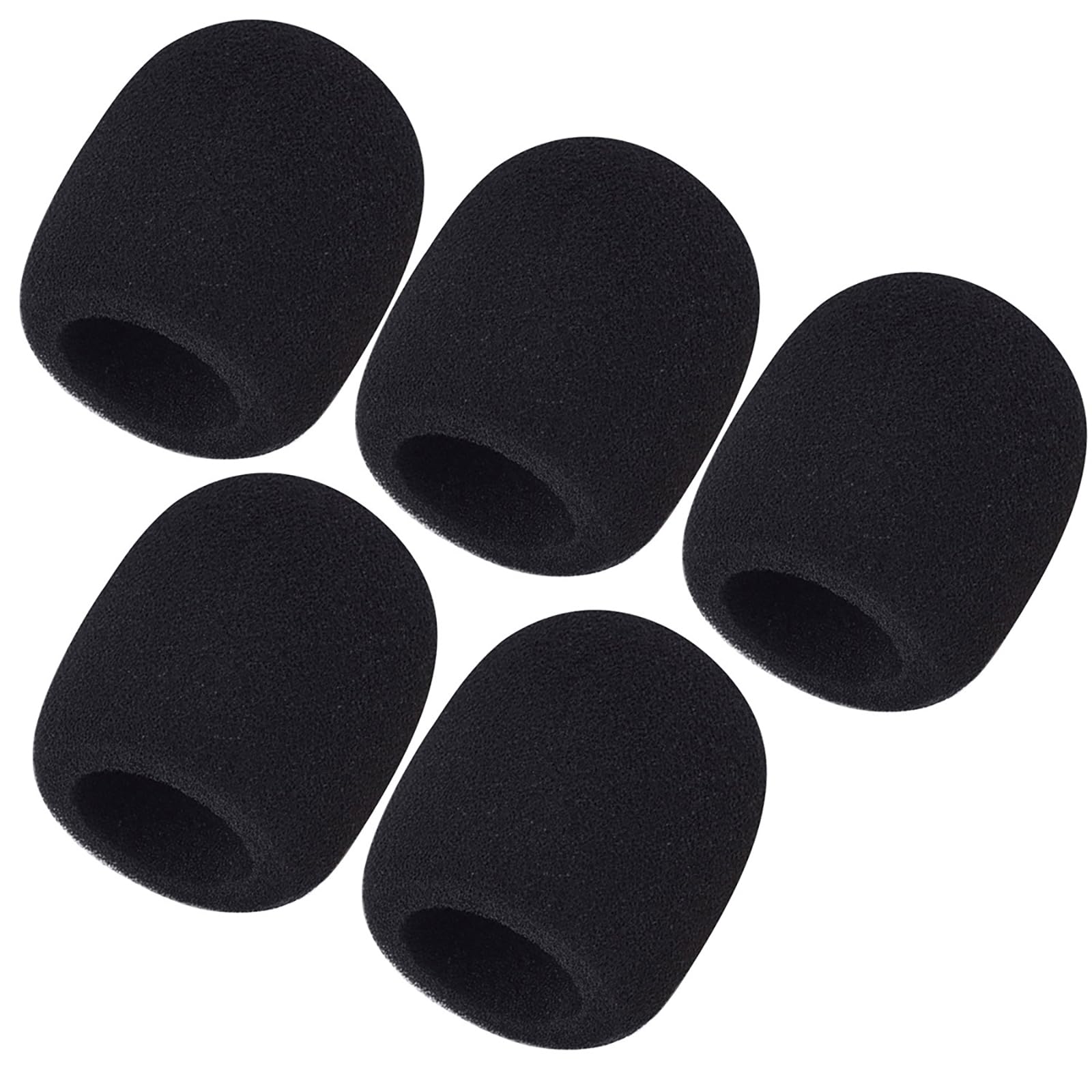
Five foam covers in one pack is the pitch, and for handheld mics it's a good one. The Mudder covers are 2.9 by 2.5 inches with a 1.4-inch opening, sized for standard handheld mics, not headsets. They stretch over the ball grille and stay put.

They earn their place at stage, karaoke, and conference rooms because they keep spit off the mic and soften P and B pops without needing a stand. The foam is thick enough to do something, and five in a pack means you can keep one in a gear bag and one in the mic case.

They arrive vacuum-packed and wrinkled; let them sit out for a few hours and they return to shape. The foam is not the densest here. The 1.4-inch opening is the number to check: an SM58-style ball fits, but a slim headset mic will swim in it.

For a drawer of handhelds, this is the practical buy. If you need one cover for a single studio mic, a fitted cover makes more sense; the Mudder's value is in the spares.

Pros

  • Five covers per pack
  • Fits standard handheld mics
  • Thick foam reduces plosives and spit
  • Low-cost spare for gig bags

Cons

  • Foam can tear when stretched over a wide grille
Our verdict

The Mudder five-pack is the practical buy for handheld mics: stretchy foam covers that fit standard ball grilles and leave you with spares.

Check Latest Price
6

Best for Shure SM58

LEFXMOPHY SM58 Windscreen

90 /100
LBD Score Outstanding

Key details

Fits
15 Shure models
Pack
3 covers
Weight
1.41 oz
Material
Foam
View on Amazon

The LEFXMOPHY is shaped like the original SM58 windscreen, and that's the whole point. It snaps over the ball grille of a Shure SM58, SM48, Beta 58A, and a long list of related Shure models. No clamp, no rubber band, no extra arm.

What we appreciate is that it doesn't ask you to change your setup. The foam has the same profile as the factory cover, so it seats without fuss, and the three-pack is the right shape for a band bag: one on the mic, one spare, one for the other vocalist. The 1.41-ounce cover adds little to a handheld mic.

The fit is specific to the Shure ball grille; check the model list before ordering if you use a different mic. Don't expect the dense, tailored feel of a premium fitted cover. These are working covers, not a luxury upgrade.

The three-pack is the practical part: you can keep a clean cover on the mic and a spare in the bag. For a wired SM58 and a spare in the case, this is the straightforward buy.

Pros

  • Replacement shape for Shure SM58
  • Three covers per pack
  • No clamp or rubber band needed
  • Washable and elastic foam

Cons

  • Ships flattened with a visible seam
Our verdict

If you use a Shure SM58, the LEFXMOPHY covers are the no-fuss replacement: factory-shaped foam, a snug seat, and three in the pack.

Check Latest Price
7

Budget Handheld Mics

QIEIMUFHD 6-Pack Foam Covers

90 /100
LBD Score Outstanding

Key details

Fits
1.4 in opening
Pack
6 covers
Material
High-density foam
Dimensions
2.8 x 2.3 in
View on Amazon

The QIEIMUFHD six-pack is a low-cost way to put a fresh cover on every handheld mic in a drawer. The covers are 2.8 by 2.3 inches with a 1.4-inch opening, and they stretch over standard handheld grilles.

The washable foam and six-count are the draw: for a karaoke setup or a classroom, you can hand out clean covers and toss them in a sink later. They take the edge off plosives and keep the mic head clean. At 0.704 ounces, they add nothing to a mic case.

The foam is thinner than the Mudder covers. They arrive vacuum-packed and need a day to expand. For speech and casual singing, the thin foam is enough; for a heavy plosive, a dual-layer screen does more.

The six-pack is the value; the foam is the compromise.

Pros

  • Six washable foam covers
  • Fits standard handheld mics
  • Low-cost spare for shared mics
  • Soft foam protects the grille

Cons

  • Runs small for some handheld mics
Our verdict

A six-pack of thin, washable foam covers for casual handheld use; buy it for spares and shared mics, not for critical recording.

Check Latest Price
8

Reflection Control

penypeal Isolation Ball

88 /100
LBD Score Excellent

Key details

Fits
50-75 mm mic diameter
Design
Five-sided seal
Weight
4.23 oz
Material
Foam
View on Amazon

The first thing we noticed about the penypeal is how much it changes the look of a mic: it's a five-sided foam ball that surrounds the capsule rather than a screen in front of it. It fits XLR and USB condenser mics with a removable jacket diameter between 50 and 75 mm.

The five-sided seal is meant to cut reflections from the sides, and the open side has a double-layer filter for plosives. It earns a place for a small untreated room where a standard pop filter stops the pops but leaves the boxy echo. At 120 grams, it's light enough for a small tripod or boom.

The noise reduction is modest compared with proper acoustic treatment. It's not a replacement for a pop filter on a Shure SM58, either; the design is for side-address condensers. We found the five-sided shape works best when the open side faces your mouth and the closed sides face the room.

If your recordings sound boxy and you already have the plosives under control, this is the more useful upgrade. If you need a plain pop filter, start with the Aokeo. The penypeal is a room tool as much as a pop filter, and that's why it earns a place.

Pros

  • Five-sided seal reduces room reflections
  • Double-layer open side filters plosives
  • Light 120 g design
  • Fits 50-75 mm condenser mics

Cons

  • Can pop off mics that don't match its opening
Our verdict

For a small room with boxy reflections, the penypeal isolation ball is a useful second step after plosives, provided it fits your condenser.

Check Latest Price

How We Chose and Tested the Best Microphone Pop Filters

We started with a list of roughly 50 pop filters pulled from retailer listings, recording forums, and the gear drawers of people on the team, then narrowed it by the things that actually decide a purchase: which mics each one fits, whether the size and thickness were stated, whether it was foam or mesh, and what you pay per cover once you count what's in the pack. Sixteen made the cut, and each one lived on a mic for the full four months rather than a single afternoon.

Fit came first. I stretched or clipped each filter onto the mic it was sold for and then onto a couple it wasn't — a large-diaphragm USB mic and a standard handheld ball mic — looking for gaps at the rim and covers that swallowed the capsule grille. To judge sound, I recorded the same plosive-heavy line at the same gain with and without the filter, listening back on headphones for whether the P thumps disappeared or just turned into a dull thud, and whether the top end went muddy along with them. For the noise side, I recorded beside a humming mini fridge and a box fan and compared how much hiss and rumble came through.

Stability and durability got the least glamorous treatment: I repositioned the clip-on arms twenty times across a session to see if they sagged by minute forty, knocked the desk to see whether the shield swung into the mic, and stuffed every foam cover into a gear bag for a week. The foam ones went through a warm-water wash and a full air dry, and I checked for tears, shedding, and rims that had stretched out of shape. Covers that kept their grip after three wash cycles earned their place near the top; the ones that shed crumbs onto the capsule did not.

How to Choose a Microphone Pop Filter

Start with the mount you already have

Pop filters come in three basic forms: a foam cover that slips over the mic capsule, a clamp-on screen on a gooseneck, and an isolation ball that surrounds the capsule. Each solves a different setup problem. A foam cover is the simplest choice for a handheld mic or a Blue Yeti, but it has to match the grille diameter or it will slip or tear. A clamp-on screen needs a tubular boom or stand, not a desk edge, so check your stand before you buy. An isolation ball is for a side-address condenser and a room with reflections, not for a handheld vocal mic.

If you already own a boom arm, a clamp-on screen gives you the most control over distance and angle. If you record at a desk with the mic on its own base, a fitted foam cover is less fuss.

Match the fit to the mic, not the photo

Fit is the most common reason a pop filter disappoints. A foam cover listed for a Blue Yeti is cut for a wide capsule; the same cover will swim on a slim dynamic mic. A replacement windscreen for a Shure SM58 is shaped for that ball grille and won't fit a Rode PodMic. Check the opening diameter and the mic shape, not just the brand name. For clamp-on screens, the mount matters as much as the screen: a clamp that fits a tubular boom won't grip a square desk edge.

Measure the widest part of the mic head and compare it with the listed opening. If you switch mics often, choose a universal clamp-on screen rather than a model-specific cover.

Expect the gooseneck to do the hard work

The screen is only half of a clamp-on filter; the arm has to hold it in place. A stiff gooseneck that stays where you bend it is worth more than a long one that droops under the weight of the screen. Tighten the clamp firmly, and keep the screen close to the mic so the arm has less leverage. If you record at a desk, put a cloth under a metal clamp to protect the finish.

Set the screen two to three inches from the grille, bend the arm into a shallow curve, and tighten the clamp before you adjust the angle.

Treat foam as a wear item

Foam covers are cheap and effective, but they don't last forever. They tear at the opening, compress over time, and collect spit and dust. A washable cover can be rinsed and air-dried; don't wring it, and don't put it back on a mic until it's fully dry. A pack of covers is useful for shared mics because you can rotate a clean one in while the other dries.

Keep a spare cover in the case, and replace any cover that has lost its shape or has a tear at the rim.

A pop filter is not room treatment

Plosive control and room noise are different problems. A pop filter stops the breath blast on P and B; it won't stop a fan, a computer hum, or a boxy desk reflection. If your recordings sound echoey, move the mic closer, soften the wall behind you, or use an isolation ball. If the problem is a puff of air, a pop filter is the right tool.

Record a test saying 'Peter Piper' and listen for the puff. If you still hear room echo, treat the room rather than buying a denser filter.

Frequently Asked Questions

Final Verdict

The Aokeo dual-layer pop filter is the one we recommend first for most stands: it clamps to a tubular boom, the gooseneck holds its bend, and the two-layer screen takes the pop out of P and B without adding another arm to your setup. If you use a Blue Yeti, the VOCALBEAT cover is simpler and hugs the capsule; for outdoor Yeti recording, the YOUSHARES bundle adds fur. If you use a Rode mic, go straight to the WS2. Match the mount first, then the mic.