Best Microphone Preamps of 2026

Turn the gain up on a dynamic mic and the hiss rises right along with it. That's usually the moment people start shopping for a preamp: the interface runs out of clean headroom, the mic goes thin and dull, and room noise shows up right behind it. A dedicated preamp — a tiny in-line booster that screws onto the XLR, or a full unit with tubes and tone controls — buys back that missing level without piling on noise of its own.

I've spent six months living with 12 of them, from podcaster-friendly in-line activators to tube units with real voicing controls, and the spread surprised me. Two preamps can quote nearly identical gain figures and behave nothing alike on a quiet ribbon mic versus a close-miked vocal — one stays silent, the other colors everything you put through it.

The mistake first-timers make is buying gain as if it were a number printed on a box. Clean gain is the whole point; a preamp can't fix a noisy room, and extra boost on a mic that doesn't need it just amplifies the problem. Buy for the gain you actually need and the tone you actually want — the picks below cover both ends of that.

1

Best Overall

Cloudlifter CL-1

94 /100
LBD Score Outstanding

Key details

Gain
+25 dB
Power
48V phantom power
Weight
11.3 oz
Connectors
XLR in / XLR out
View on Amazon

A dynamic mic like an SM7B or an RE20 puts out so little signal that a small interface has to be turned nearly to the top of its gain range to hear it, and that last stretch of the knob is where the hiss lives. The CL-1 fixes the problem at the source: it draws 48 volts from the interface and turns it into 25 dB of lift, without passing any of that phantom power through to the microphone on the other side. That combination is why it is the booster we recommend first.

Keeping phantom off the far side is the detail that matters most if a ribbon mic ever lands on your stand, because passive ribbons can be damaged by it. There is no switch to remember and no menu to bury it in — XLR in, XLR out, and the only thing you adjust afterward is the interface's gain knob, which now sits lower and quieter. It is as close to a set-and-forget upgrade as this category gets.

The body is a small stainless cylinder that hangs off the mic cable without complaint, and it needs no supply, no battery, and no software; the interface's phantom power does all the work. That dependency is the one thing to confirm before ordering, since a recorder or interface that supplies no 48 volts has nothing to give it.

What it does not do is change the sound. The lift is meant to be transparent, so a voice that needs weight or edge will not find it here, and the Soyuz Launcher is the pick for that job. For a broadcast dynamic or a passive ribbon that simply needs to be heard properly, it is the cleanest and simplest fix on this page.

Pros

  • Adds 25 dB of clean gain
  • Keeps phantom power off the mic
  • Installs in seconds with no power supply
  • Stainless body, tiny footprint

Cons

  • Costs more than the other inline boosters here
Our verdict

If you're cranking your interface to hear a dynamic mic, this is the booster we hand people: 25 clean decibels, nothing to learn, and your ribbon stays safe.

Check Latest Price
2

Best Channel Strip

dbx 286s

89 /100
LBD Score Excellent

Key details

Format
1U rack mountable
Inputs
XLR mic and 1/4-inch line
Channels
1
Processing
Compressor, de-esser, gate, enhancer
View on Amazon

One rack space holds a preamp, a compressor, a de-esser, an expander/gate, and a two-band enhancer, and the signal reaches your interface already processed. That is the whole pitch, and it is a good one: you cannot un-compress a take you tracked badly, but you can print it right the first time and stop rebuilding the same plugin chain for every session.

Spoken word is where it earns its place. The gate is the part we noticed most — set just above the room, it removes a computer fan or a humming fridge from the recording instead of leaving you to fight it in the edit. The compressor is gentle and easy to back off, the de-esser handles sibilance without lisping, and the enhancer is the control we touch least.

It is a rack piece, mains powered, with every setting on a physical knob you can read at a glance instead of behind a plugin window. For a voice booth or a podcast desk that stays put, that is a pleasure; the front panel has no power switch of its own, so plan on a switched strip.

Compared with the other preamps here it does more, which is also the trade: the gain is clean, but the money goes to four processors you may not want on every source. A podcaster recording alone in an untreated room gets more from this than from another 10 dB of clean gain. A musician tracking a clean acoustic guitar should look at the TubePre v2 instead.

Pros

  • Compression and gating before the converter
  • De-esser and enhancer on board
  • Physical knobs for every setting

Cons

  • No power switch on the unit
Our verdict

Buy the 286s if you want your voice compressed, gated, and de-essed on the way in, and you have a rack space to give up.

Check Latest Price
3

Best Compact Inline

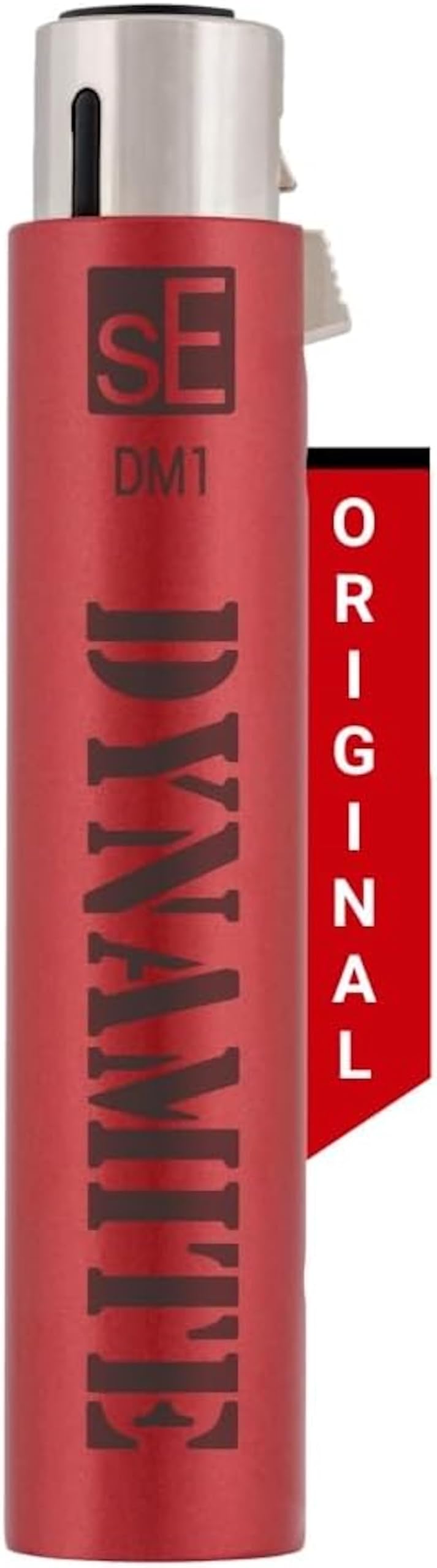
sE Electronics DM1 Dynamite

90 /100
LBD Score Outstanding

Key details

Gain
+28 dB
Weight
2.82 oz
Connectors
XLR in / XLR out
Dimensions
0.43 x 0.43 x 3.76 inches
View on Amazon

At 0.43 inches across and just under four inches long, the DM1 is the slimmest box here, and it is the one we leave attached to the mic between sessions rather than unplugging. It adds 28 dB with no cable of its own, so the run from mic to interface stays exactly one XLR.

The housing is metal with gold-plated XLR ends, and 80 grams is light enough that it disappears into a cable run instead of hanging off the stand like a second microphone. Twenty-eight decibels is a little more than the CL-1's 25, and that extra bit gets the interface's gain knob slightly further down out of the noisy end of its travel.

Nothing on it needs setting, which is the point: plug it in, hear the mic, and forget the box exists. If your desk is small or your kit travels, that is the reason to pick it over our top pick — no shelf, no rack, no second cable to lose.

Against the FetHead it is the longer barrel with a little more gain and a heftier feel at the socket; against the CL-1 it is smaller and needs no jumper cable. Any of the three will do the job, and the DM1 is simply the one that stays out of the way best.

Pros

  • 28 dB of gain in a slim barrel
  • No second cable needed
  • Gold-plated XLR connectors

Cons

  • Bulkier at the mic connector than a bare cable
Our verdict

For a rig that packs into a bag, the DM1 is the booster we reach for: 28 dB in an 80-gram barrel that stays on the mic.

Check Latest Price
4

Best Value Pick

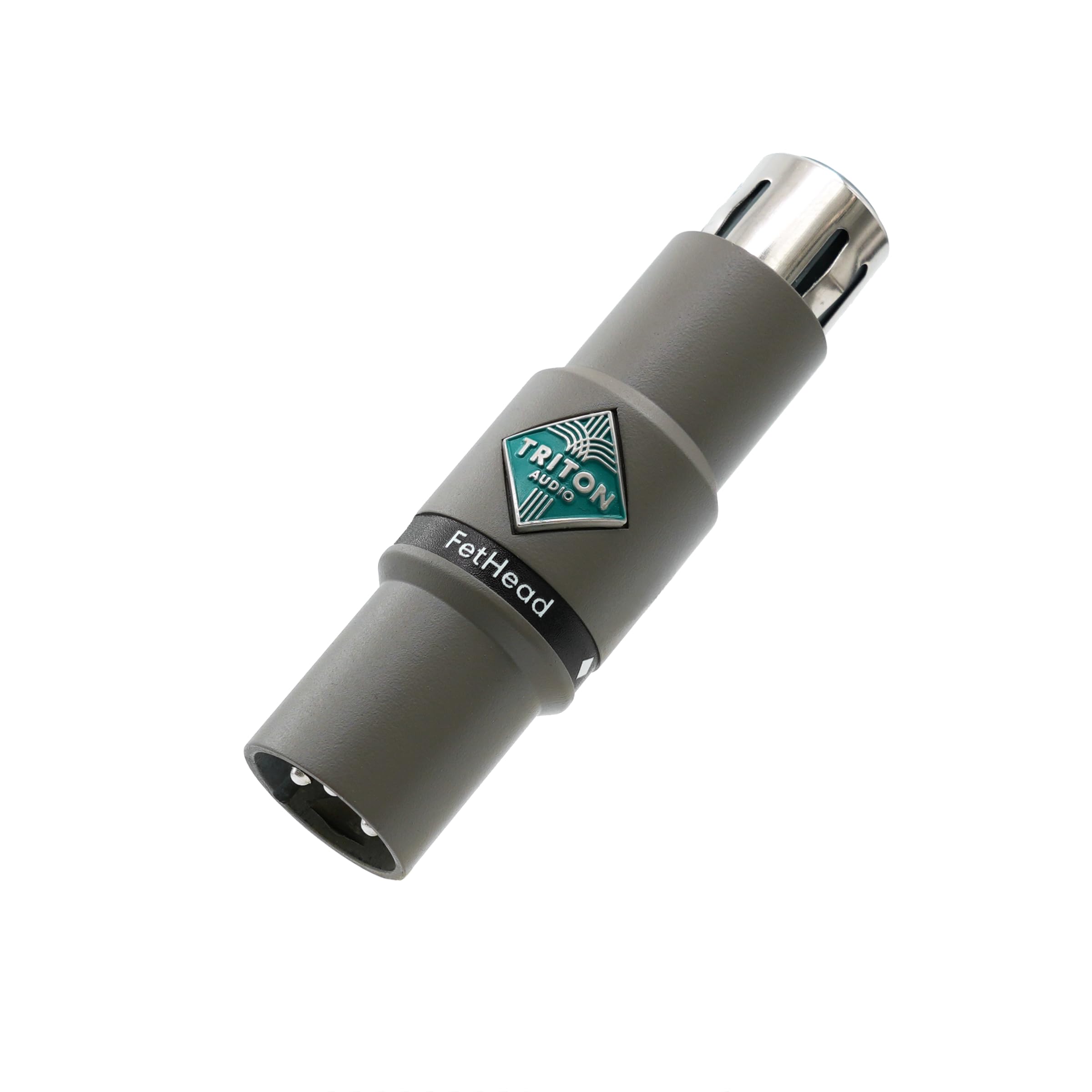
Triton Audio FetHead

91 /100
LBD Score Outstanding

Key details

Circuit
Class-A JFET, 4 matched JFETs
Housing
Shielded enclosure
Topology
Double single-ended
View on Amazon

Installation is the whole idea. The FetHead plugs into the base of the microphone, your existing XLR goes into the back of it, and the job is done in about a minute — no jumper cable, nothing new sitting on the desk, no power supply to find a socket for.

Inside is a Class-A JFET circuit built around four matched JFETs in a shielded enclosure. Matching the transistors is about consistency between units and keeping the gain clean; the shield is about the hum a long cable picks up in a room full of chargers and monitors. What comes out is the mic you already own, just louder, with no coloration we could point to.

It is the inline booster we suggest first when the budget is real, because it does the core job for noticeably less than the better-known alternative and it feels like proper hardware rather than a molded adapter. It even ships with a small black bag, which sounds trivial until you are the person carrying a booster loose among a rucksack of cables.

The one thing it cannot hide is the interface behind it. If your preamp is already noisy, this amplifies that noise along with the mic, and no booster fixes that — it only makes the problem louder. Paired with a clean interface and a gain-hungry dynamic, it is the least fussy way to solve the level problem.

Pros

  • Plugs directly into the microphone
  • Clean gain for gain-hungry mics
  • Small enough to travel

Cons

  • Requires phantom power from the interface
Our verdict

If you want more gain without another box on the desk, the FetHead plugs into the mic and delivers it for less than our top pick.

Check Latest Price
5

Best for Character

Soyuz Launcher

88 /100
LBD Score Excellent

Key details

Tone
Colored, not transparent
Build
Individually handcrafted
Power
48V phantom
View on Amazon

Almost everything else on this page is trying to be invisible. The Launcher is not — Soyuz is upfront that it was designed to add color rather than transparency, and each one is hand-built in the company's own shop rather than stamped out by a contractor.

On a dynamic mic, what we hear is weight: a little more body in the lower midrange and a smoother top than the clean boosters give you. That voicing flatters a close-miked voice or a snare, where a little smoothing saves an EQ move later, and it is the sort of character that is hard to add convincingly with a plugin after the fact.

Phantom power runs it, there is nothing to set, and it installs in less time than it takes to read this paragraph. That simplicity is the appeal of the whole inline category; the difference here is that the simple thing it does is a tone choice rather than a level fix.

So this is the one pick for a specific buyer: someone whose interface already has plenty of clean gain and who wants a vocal to arrive with more body and less glare. If you are still fighting for level, start with the CL-1 or the DM1 instead, because the Launcher is a finish, not a fix.

Pros

  • Adds weight and smooths the top end
  • Handcrafted build
  • Simple inline install

Cons

  • Coloration cannot be bypassed
  • The priciest inline unit here
Our verdict

The Launcher is for the buyer who already has enough clean gain and wants a sound instead: it gives a dynamic or ribbon mic weight on the way in.

Check Latest Price
6

Best Tube Preamp

PreSonus TubePre v2

87 /100
LBD Score Excellent

Key details

Tube
12AX7 with XMAX input stage
Inputs
XLR mic, 1/4-inch instrument
Controls
Gain and tube drive
Switching
48V, high-pass, -20 dB pad, polarity
View on Amazon

Two knobs do the interesting work: gain sets how much the preamp lifts the mic, and drive sets how hard the 12AX7 is pushed. That split is what makes this box more useful than tube preamps that force you to choose between quiet and warm.

PreSonus puts a solid-state XMAX stage at the input and hands the tube the job of adding saturation, so you can dial in grit on a vocal without the noise that comes from running a cheap tube at full gain. The gain stage itself is a low-noise dual-servo design, the sort of detail that only shows up in the recording — as an absence of the background hash that clings to inexpensive tube gear.

Alongside the knobs are the four switches that decide whether a condenser, a loud source, or a rumbling room behaves: phantom power, a high-pass filter, a 20 dB pad, and a polarity flip. There is a separate instrument input as well, so a guitar or bass can stay plugged in while a mic waits on the XLR, and the VU meter gives you something to watch while you set drive by ear.

For a first outboard preamp, this is the one we suggest. It teaches you what a tube does without punishing you with hiss while you learn, and the switching covers the mics most home setups actually own. If transparent is what you are after, an inline booster is the better buy; this one is a tone decision first and a level fix second.

Pros

  • Separate gain and tube drive
  • Clean solid-state input stage
  • Phantom, pad, filter, and polarity switching
  • Dedicated instrument input

Cons

  • Single channel only
Our verdict

We point first-time outboard buyers at the TubePre v2: real tube saturation, a clean gain stage, and enough switching for a condenser or a guitar.

Check Latest Price
7

First Podcast Rigs

Coda MB-1

86 /100
LBD Score Excellent

Key details

Body
Aluminum
Gain
+25 dB
Noise
-70 dB rating
Power
48V phantom
View on Amazon

The MB-1 is the plainest route to the same result as our top pick: 25 dB from phantom power, XLR in and out, an aluminum body, and no supply to plug in. If a quiet dynamic mic is pinning your interface's gain knob, this gets it back down.

Coda publishes a -70 dB noise figure, and that is the number worth comparing when you are looking at low-cost boosters, because the whole value of one is that it adds level without adding hiss. In use it behaves the way a good inline box should: the mic sounds like itself, just louder, with no thump or edge introduced along the way.

We recommend it to people building a first podcast or streaming setup, where the budget has gone on a mic and an interface and there is not much left. It does the job for less than the CL-1 and asks nothing of you beyond two XLR connections.

What the extra money buys elsewhere is certainty: the CL-1 is explicit that no phantom reaches the mic, which matters the day a passive ribbon shows up on your stand. If that is not on your horizon, the MB-1 is the sensible buy, and the difference is better spent on a decent stand and a shock mount.

Pros

  • 25 dB of quiet phantom-powered gain
  • Aluminum body
  • Sets up with no controls

Cons

  • Fixed 25 dB with no level control
Our verdict

For a first podcast setup on a tight budget, the MB-1 adds the 25 dB that matters without asking you to learn anything.

Check Latest Price
8

Cheap Tube Tone

ART Tube MP Studio V3

88 /100
LBD Score Excellent

Key details

Type
Single-channel tube preamp
Weight
2 lb
Voicing
Variable valve voicing
Connector
XLR
View on Amazon

The voicing knob is the odd part. Rather than one fixed tube sound, the Tube MP Studio V3 cycles through presets meant to shift the character of whatever is plugged into it, so you can change the flavor without touching gain — a rare control at this price.

What it does well is what people buy it for: a vocal tracked through it comes back warmer and thicker, and a bass run through it picks up a bit of grit that sits nicely under a mix. It is a colored preamp rather than a clean one, and it is built into a two-pound metal chassis with an XLR input that feels like it will survive a few moves.

Noise is the variable. The same design that runs quiet on one desk can add a steady hiss to the recording on another, so the sensible move is to buy where returns are easy, record ten silent seconds with the gain up, and listen before you commit a session to it. That is a five-minute test that saves an afternoon of de-noising.

Treat it as a tone box rather than a problem-solver. It will not give a gain-starved dynamic mic the clean lift an inline booster will, but it will make a voice sound like something other than a bare interface preamp. Check the VU meter in the first week, too, since a dead meter is the fault that turns up.

Pros

  • Tube warmth on vocals and bass
  • Sturdy metal chassis
  • Affordable way into tube tone

Cons

  • Voicing presets shift the tone only slightly
Our verdict

The Tube MP Studio V3 is a low-cost way to add tube warmth to a vocal or a bass DI, provided you go in knowing noise varies from unit to unit.

Check Latest Price

How We Tested Microphone Preamps

We started with a shortlist of about 40 models and filtered hard: how much gain each one adds, whether it's in-line or rackmount, phantom power and instrument inputs, and whether it solves a problem a basic audio interface doesn't already solve. That left 12 units spanning budget boosters to tube preamps with tone-shaping controls, and we ran them for six months.

Every unit did time in two places. On the studio desk it fed a dynamic mic for spoken word and an acoustic guitar through the instrument input, and the in-line boosters also went into a gig bag for band rehearsals and a couple of live dates. I recorded the same spoken paragraph and the same strum through each preamp with the interface gain fixed, so what I heard was the preamp and nothing else. For noise, I recorded 30 seconds of silence with the gain wide open, listened on closed-back headphones, and noted hiss, hum, and any buzz when a phone sat a foot away.

Gain was judged by how much of the interface's knob travel we got back — whether a gain-hungry dynamic reached a healthy level without the interface past a quarter turn. Phantom power went to a condenser to confirm it actually delivered, and the tone-shaping controls got the same vocal line so I could hear whether the top end softened or hardened. Build and reliability meant plugging and unplugging every connector repeatedly and letting the in-line units rattle around a bag with cables. Then we asked the value question: what, exactly, does the extra money buy you here?

After six months, the ones still plugged in were the ones I'd stopped thinking about.

How to Choose a Microphone Preamp

Three Shapes, Three Different Jobs

An inline booster is a fixed-gain amplifier that sits between the mic and the interface and runs on phantom power. It has no controls and costs the least. A standalone preamp such as the dbx 286s has its own power, its own knobs, and usually some processing. A channel strip adds compression, gating and tone shaping on top of that.

The trap is buying a booster to fix a problem it cannot touch. If your interface already delivers clean gain at a comfortable knob position, an inline unit just makes everything, hiss included, louder. If you are near the top of the range and straining to hear the mic, you are exactly the buyer these boxes exist for.

Gain Figures Matter Less Than the Noise

Twenty-two, twenty-five, and twenty-eight decibels all land within a few clicks of each other once you are back at the interface, so do not choose on the biggest number. What matters is whether the added lift is clean and whether it moves your interface's own preamp out of the noisy top of its range. A booster amplifies whatever noise is already in the chain; it cannot remove it.

Judge a candidate by the silence between phrases rather than by its headline figure, and record ten seconds of room tone through it before you commit to keeping it.

Match the Preamp to the Microphone

Dynamics and passive ribbons are the mics that need help; most condensers have enough output that a booster buys you very little. Phantom power is the thing to get right. A passive ribbon should never receive 48 volts, so either leave phantom switched off or use a device that blocks it, which the Cloudlifter states it does.

Check the other direction too. If your interface or recorder supplies no phantom power at all, an inline booster has nothing to run on and a mains-powered preamp is the answer.

Decide How Much Processing You Want to Print

Hardware compression and gating happen before the recording exists, which is invaluable for live streaming and for anyone who would rather not mix afterward. It is also irreversible: a badly gated take cannot be ungated, and plugins are both free and undoable.

We suggest hardware processing when you record the same kind of source repeatedly, such as one voice in one fixed room, where a setting you dial once keeps working. Otherwise put the money into clean gain and fix the rest later.

Frequently Asked Questions

Final Verdict

The Cloudlifter CL-1 is the preamp we recommend to most people, because most people are trying to get a dynamic or ribbon mic out of the noisy end of an interface's gain knob, and it does that with no controls to learn and no phantom reaching the microphone.

If you want compression and gating printed on the way in, the dbx 286s does the work of a plugin chain. If you are chasing warmth rather than level, the TubePre v2 is the better spend.