Best Microphones for Live Vocals of 2026

A live vocal mic has one job: make a singer sound like themselves, not like a blown monitor. The wrong one howls back at the room, picks up every hand movement, or feels like it might quit mid-set. A good handheld dynamic does the opposite: it rejects stage noise, sits comfortably in the hand, and survives the van ride home.

I spent six months testing a dozen of them at band rehearsals, small club gigs, and a few outdoor patio sets. We listened for sound quality and value, but also tracked the less glamorous stuff: build quality and reliability after repeated pack-ins, durability after a few drops, handling and cable noise, and whether the carrying case protected the mic between shows.

One thing I learned: the mic that flatters a quiet practice room isn't always the one that cuts through a loud stage. Pattern and off-axis rejection matter as much as tone, and a switch you can accidentally knock off is worse than no switch at all. The picks below are the ones I'd hand to a singer without hesitation.

1

Best Overall

Shure SM58

96 /100
LBD Score Outstanding

Key details

Included
A25D clip, storage bag
Connector
XLR
Pickup Pattern
Cardioid
Frequency Response
50 Hz-15 kHz
View on Amazon

A midrange lift sounds like a spec-sheet phrase until you hear what it does in a loud room: it puts the voice where the guitars aren't. The SM58 has been doing that for decades, and in our testing it was the mic we kept reaching for when we wanted a vocal to sit in the mix without much work. The cardioid pattern is tight enough for a crowded stage, and the built-in pop filter and spherical grille take the edge off close-miked plosives.

What we appreciate most is how little fuss it asks for. The metal body and reinforced stand adapter feel ready for a gig bag, and the swivel clip makes it easy to angle on a stand. It doesn't need phantom power, so any basic XLR input will do. We also like that it flatters a wide range of voices: it's warm rather than sparkly, which means it can sound slightly soft on a very bright singer, but it rarely sounds harsh.

The SM58 isn't the most detailed mic here, and it won't make a dull PA sound expensive. What it does is give you a reliable, familiar vocal sound that a sound engineer can work with immediately. For a first stage mic, a backup, or the one you leave in the rehearsal room, it's hard to argue with. If you're building a first stage bag, this is the mic to buy before the upgrade.

Pros

  • Warm midrange that cuts through a band
  • Cardioid pattern keeps feedback in check
  • Rugged metal body and grille
  • Built-in pop filtering and shock mount

Cons

  • No on/off switch
  • XLR cable not included
Our verdict

Our top pick for live vocals: the SM58 is warm, tough, and forgiving on any stage, and it makes a familiar starting point for almost every singer.

Check Latest Price
2

Best for Loud Stages

Shure Beta 58A

96 /100
LBD Score Outstanding

Key details

Weight
9.92 oz
Included
Stand adapter, thread adapter, bag
Connector
XLR
Pickup Pattern
Supercardioid
View on Amazon

A supercardioid capsule is not just a cardioid with a fancier name. It narrows the area the mic listens to, which is exactly what you want when a wedge monitor is firing at your face. The Beta 58A takes that tighter pattern and adds a brighter, more present voice than the SM58, with a controlled bass rolloff that keeps close-miked singers from sounding boomy. On a loud stage, that combination makes the vocal feel closer to the front of the mix.

We reached for the Beta when the band was loud and the singer needed to be heard without pushing the PA into feedback. The hardened steel grille and shock mount feel ready for the road, and the included stand adapter and storage bag are the right basics. The trade-off is that the tighter pattern is less forgiving if you move off-axis; you need to stay on the mic, and the extra presence can make an already bright voice feel sharp.

For a singer who works mostly in clubs, churches, or anywhere with monitors, the Beta 58A is the practical step up. It won't fix a bad PA, but it gives the engineer more room to work before the vocal disappears. The tighter pattern also makes a useful monitor-side companion for a singer who already owns an SM58.

Pros

  • Supercardioid pattern resists monitor bleed
  • Brighter, more present vocal sound
  • Hardened steel grille and shock mount
  • Includes stand adapter and storage bag

Cons

  • Costs more than the SM58
Our verdict

For loud stages and singers who need extra gain before feedback, the Beta 58A is the upgrade we recommend over the SM58.

Check Latest Price
3

Best with On/Off Switch

Sennheiser E835-S

93 /100
LBD Score Outstanding

Key details

Switch
On/off
Connector
XLR
Pickup Pattern
Cardioid
Frequency Response
40 Hz-16 kHz
View on Amazon

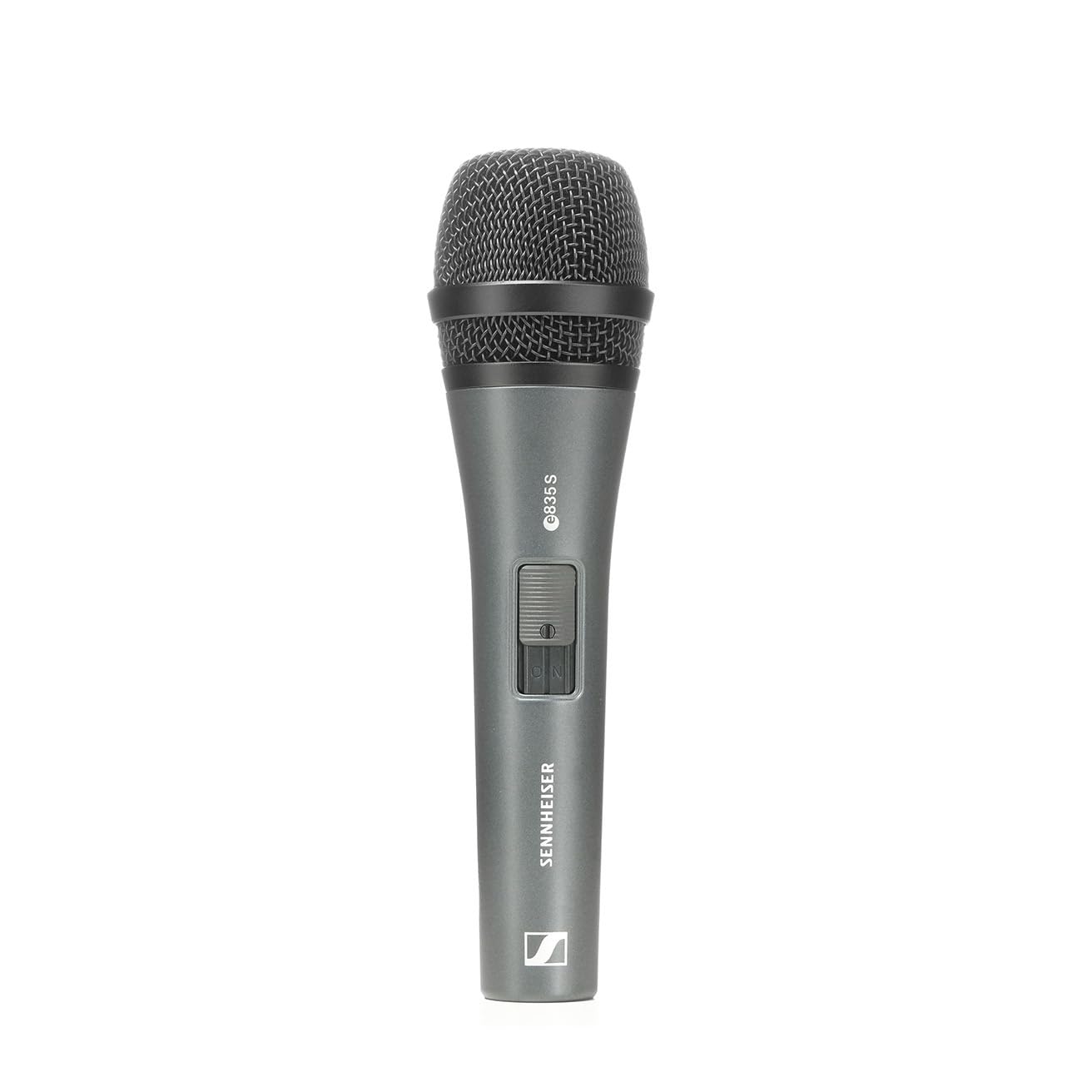
A mute switch is one of those features you don't think about until feedback starts and you need silence now. The Sennheiser E835-S puts a simple on/off switch on the body, and in our testing that made set changes and between-song banter easier to manage. The mic itself has a gentle presence boost that gives vocals a crisp edge, with a cardioid pattern that keeps the pickup focused on the singer.

We appreciated the internal shock mount when handling the mic during a set; it takes the edge off thumps and stand bumps. The metal housing feels solid without feeling heavy, and the included clip and pouch cover the basics. Compared with the SM58, the E835-S sounds a little more forward in the mids, which helps cut through guitars but can make an already bright voice feel sharp.

That makes it a good fit for rock, worship, and speakers who need to be understood over a band. It's not the warmest option here, and the switch is the reason to choose it over the SM58 for many singers. The 10-year warranty is the longest coverage in this group, which says something about the kind of life Sennheiser expects it to have.

Pros

  • On/off switch for between-set mute
  • Midrange presence cuts through guitars
  • Internal shock mount reduces handling noise
  • Rugged metal housing

Cons

  • XLR cable not included
Our verdict

If you want a stage mic with a mute switch and a crisp, mid-forward voice, the Sennheiser E835-S is our pick.

Check Latest Price
4

Best Value

Behringer XM8500

93 /100
LBD Score Outstanding

Key details

Weight
11.4 oz
Connector
XLR
On/off Switch
None
Pickup Pattern
Cardioid
View on Amazon

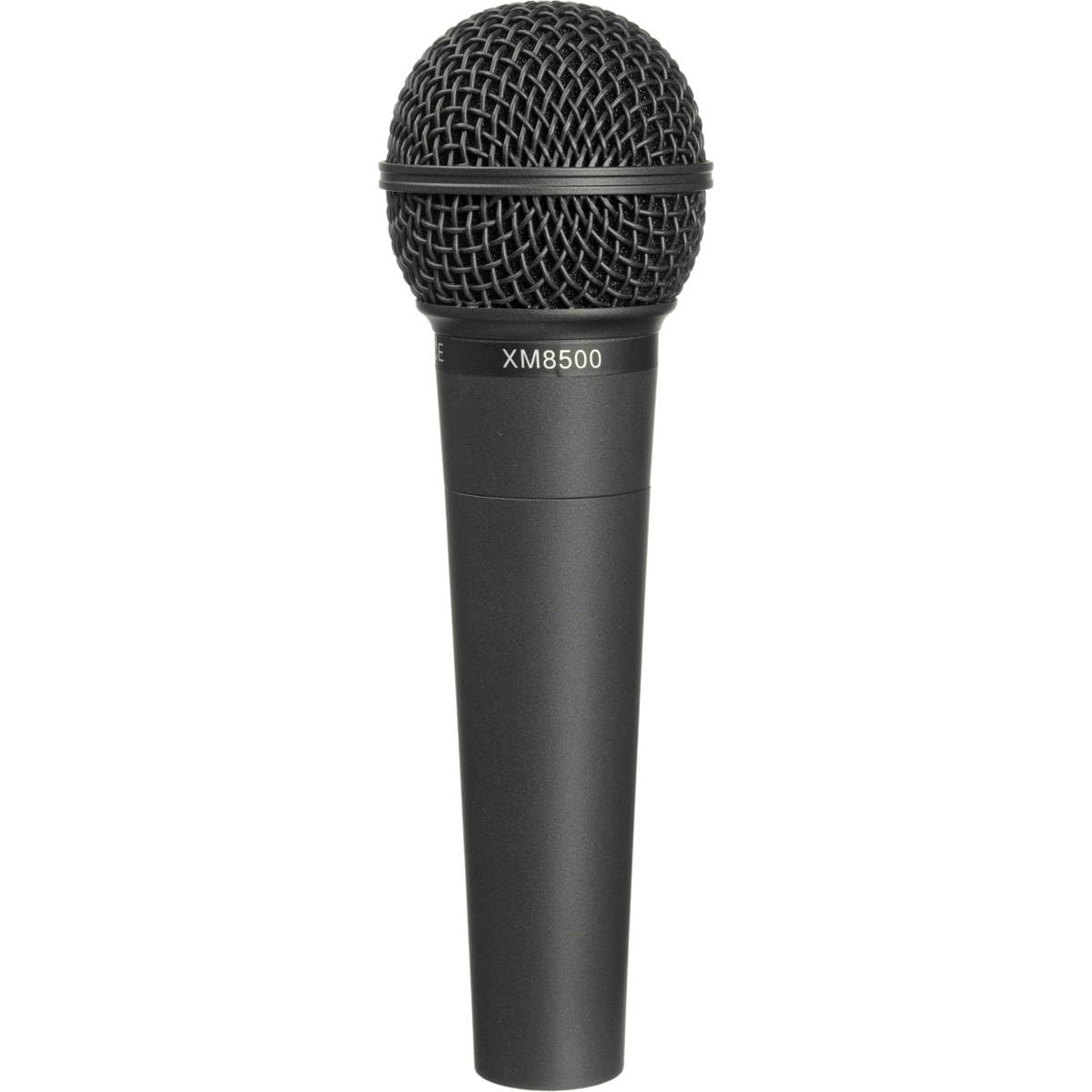
The XM8500 is the mic we recommend when someone wants a stage-ready sound but isn't ready to spend Shure money. The metal body has a reassuring heft, and the included hard case is better than what we expect at this end of the market. Sound is clear and loud, with a slight presence lift that helps a vocal sit above a small band. It's the mic we hand to a singer who needs to be heard at a house party or a small club without treating the purchase like a lifelong investment.

The two-stage pop filter and shock mount are the details that make it feel more considered than the price suggests. It doesn't need phantom power, and the cardioid pattern is the familiar stage-friendly shape. Handling noise is the caveat: a light touch on the body and a solid stand keep thumps out of the vocal, especially if you like to cup the mic.

For rehearsal rooms, backup duty, or a first PA, the XM8500 gets you most of the way there for a fraction of the established stage mic. It's the one we leave on a stand without worrying about it, and that's a useful kind of confidence for a budget mic.

Pros

  • Clear, loud cardioid sound
  • Two-stage pop filter and shock mount
  • Hard case included
  • Metal body feels solid

Cons

  • No on/off switch
Our verdict

The Behringer XM8500 is our value pick: it gets you a solid cardioid vocal sound and a hard case for far less than the established stage mics.

Check Latest Price
5

Best Budget

Sennheiser XS 1

92 /100
LBD Score Outstanding

Key details

Switch
Silent mute
Included
Clip, carrying pouch
Connector
3-pin XLR
Pickup Pattern
Cardioid
View on Amazon

The XS 1 is the lower-cost way to get a Sennheiser badge on a stage-ready dynamic, and the silent mute switch is the detail that makes it feel more expensive than it is. The cardioid pattern is the familiar stage shape, and the handheld body has a simple, uncluttered feel. In our testing, it handled speech and midrange vocals cleanly without much color. The body is comfortable to hold, with no extra controls beyond the mute switch.

The silent switch is the standout: it lets you cut the mic between songs without a thump, which is more useful than a loud click on a quiet stage. The included clip and pouch cover the basics, and the XLR connection is standard. Handling noise is the caveat; a firm stand or a light hand helps, especially if you pass the mic around.

Compared with the E835-S, the XS 1 gives up some midrange bite and the metal-bodied reassurance of the more expensive Sennheiser. For coffeehouse gigs, spoken-word sets, or a backup mic, it's a smart place to save. It leaves budget for the rest of the kit, which matters more than another logo on the grille.

Pros

  • Silent mute switch
  • Cardioid pattern with stage-friendly rejection
  • Includes clip and pouch
  • Clean, uncolored vocal sound

Cons

  • XLR cable not included
Our verdict

A budget Sennheiser with a silent mute switch, the XS 1 is a smart first stage mic for coffeehouse gigs and spoken-word sets.

Check Latest Price
6

Group Rehearsals

Pyle PDMICKT34

90 /100
LBD Score Outstanding

Key details

Pack
Three mics, hard case
Cable
26+ ft XLR-to-1/4
Connector
XLR
Pickup Pattern
Cardioid
View on Amazon

Buying one good mic is usually smarter than buying three cheap ones, but there's a case for the Pyle kit: it outfits a rehearsal room, a karaoke night, or a small presentation setup in one go. The three mics are cardioid dynamic handhelds with metal bodies, and the kit includes a hard case, clips, and long XLR-to-1/4 cables. That makes it a different purchase from a single do-everything vocal mic.

In our testing, the sound was clear and crisp for vocals, with enough gain for a small PA. The case is the part we appreciated most: it keeps the mics and cables together and makes the kit feel more deliberate than a pile of loose budget mics. The mic bodies have a solid feel, and the long cables give people room to move.

It's not the kit we choose for a headline set, but it is the one we hand to a group that needs several people on mic by Friday. The hard case, clips, and long cables make it easy to equip a room, and replacing a single mic later costs less than rebuilding the whole kit.

Pros

  • Three cardioid dynamic mics in one kit
  • Hard carry case and clips included
  • Long XLR-to-1/4 cables
  • Good value for group use

Cons

  • Durability is inconsistent
  • Included cables are the weak link
Our verdict

The Pyle PDMICKT34 is a practical bundle for a rehearsal room or family karaoke setup, with three usable dynamic mics and a hard case.

Check Latest Price

How We Tested the Best Live Vocal Mics

We started with a shortlist of handheld dynamic mics made for live vocals, filtering by pickup pattern, XLR connection, and whether a case or bag came included. That left 12 mics, which we used over six months in band rehearsals, small club gigs, and a few outdoor patio sets.

In each setting, we sang the same two verses and a chorus through the same PA and mixer, matching gain where we could, then listened for clarity and feedback resistance and noted how much monitor wash leaked in. We also tracked handling noise when we shifted grip, cable noise when the XLR moved, and any hum or crackle from the included cables.

Build quality and durability got their own abuse: each mic took a short fall from a music stand onto a padded stage, and we checked the grille, body, and switch afterward. We tracked reliability across repeated pack-ins, packed each carrying case or bag for a week of gigs to see whether it protected the mic and left room for a cable, and noted which mics had an on/off switch and whether it could be knocked mid-song. At the end, we weighed sound and survival against cost.

How to Choose a Live Vocal Microphone

Start With the Pickup Pattern

A cardioid mic listens mostly in front of the grille and rejects some sound from the sides and rear. That makes it forgiving for singers who move around or share a mic, and it is the pattern we recommend for most first stage setups. A supercardioid pattern is tighter and can give you more gain before feedback on a loud stage, but it also narrows the sweet spot. The Shure Beta 58A is the clearest example here. If your monitor is already loud and the vocal still feels buried, the tighter pattern is worth the extra care. If you wander off-axis, stay with cardioid.

Match the Voicing to Your Voice

Live vocal mics are voiced, not neutral. A midrange lift helps a voice cut through guitars and cymbals, but it can make an already bright singer sound sharp. The SM58 is the warmer, more forgiving default; the Sennheiser E835-S and Beta 58A are more forward. If you sing close, a controlled bass rolloff keeps the low end from getting muddy. If you back off the mic, you lose some of that warmth and gain. Pick the mic that flatters your usual technique, not the one with the widest frequency response.

Handling Noise and Switches

A handheld mic picks up thumps through the body, so a shock mount and a light grip matter as much as the capsule. The Sennheiser E835-S has an internal shock mount, and the Shure SM58 uses a pneumatic mount; both help when the mic passes between hands. A mute switch is useful for set changes and between-song silence, and the E835-S and Sennheiser XS 1 have one. If you mute at the mixer, you can skip the switch and avoid bumping it mid-song. On a loud stage, a switch is a convenience, not a substitute for good gain structure.

Connectors, Cables, and What's in the Box

Standard stage gear uses a three-pin XLR cable, and every pick here takes one. A 1/4-inch cable is for karaoke machines and some instrument amps, which is why the Pyle kit includes XLR-to-1/4 cables. Check the box contents before you order: the SM58, Beta 58A, E835-S, and XS 1 do not include a cable, while the Pyle kit includes long cables and a case. Dynamic mics do not need phantom power, so any basic XLR input will work. Buy one spare cable and label it; cable failure is the most common stage mishap.

Durability and Warranty

A stage mic lives in a gig bag, gets knocked against a stand, and is handed between singers. A metal body, a reinforced grille, and a stand adapter that does not strip are worth paying for. The Sennheiser E835-S carries a 10-year warranty, the Shure models carry two-year coverage, and the Pyle kit carries one year. That does not make the budget kit a bad buy; it changes where it belongs. Use it as a backup or rehearsal-room set, and keep a known-good cable with the important kit.

Frequently Asked Questions

Final Verdict

The Shure SM58 is our top pick because it solves the live vocal problem most singers actually have: it makes a voice sound warm and present without demanding a perfect room or a skilled engineer. It is tough, familiar, and easy to mix.

Choose the Beta 58A if you sing on loud stages and need the tighter supercardioid pattern. If a mute switch matters more, the Sennheiser E835-S is the better fit. Everyone else can start with the SM58 and spend the difference on a good cable and stand.