Best Neutral Density Filters of 2026

An ND filter is a pair of sunglasses for your lens: it cuts the light reaching the sensor so you can drag a shutter to 30 seconds at noon or open up to f/1.4 on a bright sidewalk. The idea is simple. What separates two filters claiming the same number of stops shows up in the file — a color cast you have to correct later, corners that go dark, or a faint X of uneven density at the strongest setting.

I've carried one for years for long exposures at creeks and coastlines, and I've deleted plenty of frames ruined by cheap glass. Over the past four months, my team and I shot with 14 filters — fixed kits, single-strength models, and 1-to-9-stop variables, up to a 10-stop for midday long exposures — on both crop-sensor and full-frame bodies.

Worth knowing before you buy: a variable ND is two polarizing layers stacked, and dialed to its strongest setting that can cost you sharpness. If you always shoot at the same stop, a fixed filter is the cleaner and often cheaper answer, while a variable one earns its keep for video and shifting light. Coatings and a slim frame matter as much as the stop count — the picks below are the ones that held up on all of it.

1

Best Overall

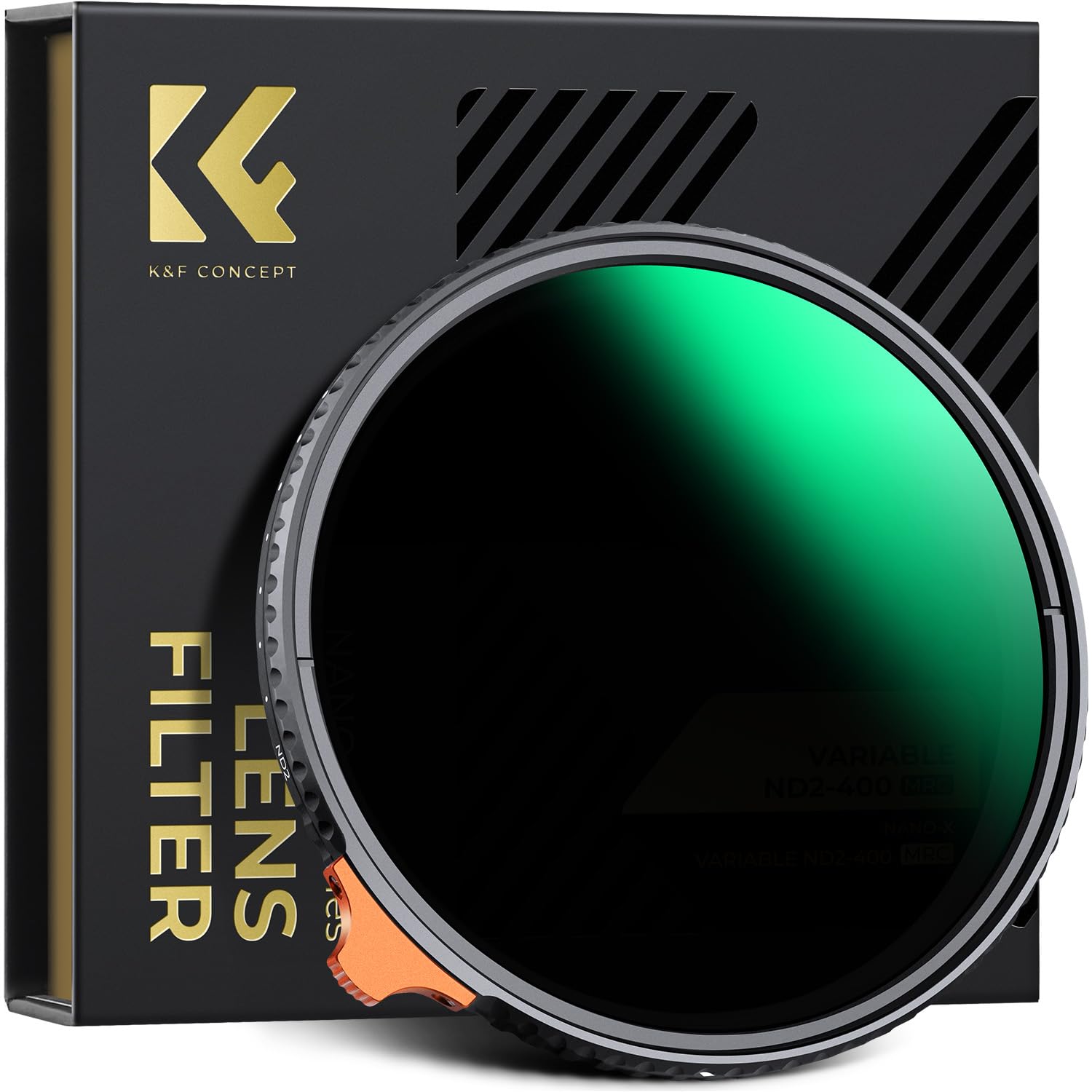
K&F Concept 77mm Nano-X Variable ND

91 /100
LBD Score Outstanding

Key details

Coatings
28 multi-layer
Stop Range
1-9 stops (ND2-ND400)
Thread Size
77mm
Frame Thickness
7.4mm
View on Amazon

A variable ND is only as good as the ring you turn, and this one puts a small lever on the frame instead of a knurled edge. That sounds minor until you are behind a tripod at a slow shutter: you push the lever with one finger, watch the exposure move, and never wrap a hand around the barrel and jog the framing. Add 28-layer coatings on Japanese AGC glass and a 7.4mm frame, and this is the most complete variable ND of the ones we compared.

The coating stack is the part that is easy to skim past. Twenty-eight layers on both sides, rated hydrophobic, oil-proof and scratch-resistant, is a real advantage at the coast: spray and fingerprints wipe away instead of smearing into the glass, so you spend less of a shoot cleaning. The frame is slim enough that K&F claims clean corners down to 16mm, and on an ultra-wide it barely adds depth in front of the lens.

It is the most expensive filter here, and the premium is legible once you have handled it: coatings, machined frame and lever are what you are paying for rather than a badge. Where it earns that back is changeable light. A cloud crosses the sun during a take, a subject walks from shade into full sun, and you push the lever a few millimeters instead of swapping filters and re-metering.

Pros

  • One-finger side lever keeps the frame steady
  • 28-layer coatings shed water, oil and scratches
  • Slim 7.4mm frame suits ultra-wide lenses

Cons

  • Front threads won't hold a lens cap
  • Over-rotating past maximum brings the X pattern
Our verdict

For anyone shooting stills and video outdoors on the same camera, this is the variable ND we reach for first: the side lever makes density changes repeatable with one finger.

Check Latest Price
2

Best Budget Variable ND

K&F Concept 82mm Variable ND (B-Series)

91 /100
LBD Score Outstanding

Key details

Coatings
8 multi-layer
Stop Range
1-9 stops (ND2-ND400)
Thread Size
82mm
Frame Thickness
7.4mm
View on Amazon

Same 1-9 stop range, same 7.4mm frame, and a good deal less money than our top pick: on paper the B-Series looks like the Nano-X with a different nameplate. Through the glass, it isn't.

What the extra money buys is consistency. This one is smooth to rotate and the threads engage cleanly, and for a first variable ND that is most of the battle. The price shows in the corners, though: it does its best work in the lighter half of its range, and at the darkest settings the vignetting is heavy enough that you end up cropping or correcting it. Keep it in that lighter half and it is a great deal of filter for the money.

The rest of the package is more considered than the price suggests. Eight multi-layer coatings knock down reflections, the sandblasted frame cuts stray light bouncing around the rim, and at 20 grams it lives on the camera without complaint. The included microfiber cloth is a small thing that a lot of filters at this price leave out.

Pros

  • Full 1-9 stop range at a budget price
  • Smooth 360-degree rotation with firm threads
  • Eight-layer coatings cut reflections

Cons

  • Heavy vignetting at the darkest settings
  • Goes soft on long telephoto lenses
Our verdict

The budget variable ND we recommend: the full 1-9 stop range and smooth rotation, provided you work in the lighter half of it.

Check Latest Price
3

Best Fixed Kit for Learning

NEEWER 58mm ND2-ND16 Filter Kit

92 /100
LBD Score Outstanding

Key details

Stop Range
1-4 stops
Thread Size
58mm
Kit Contents
Four filters, lens pen, pouch
Filters Included
ND2, ND4, ND8, ND16
View on Amazon

If you have never used an ND filter and cannot yet say what six stops looks like, a kit of fixed filters teaches you faster than any variable dial. This one gives you four of them, ND2, ND4, ND8 and ND16, each doing exactly one thing, so you learn by feel what a stop takes away. We like that for a first purchase: nothing on a fixed filter can shift under your fingers between frames.

Fixed filters also sidestep the weak spot of a variable. There is no pair of rotating polarizing layers to throw an X across the frame, and color stays even when you stack two of them, so ND4 plus ND16 gets you six stops without a cast to correct later. The frames are slim enough to stay out of the corners on a wide lens, and the threads engage without play.

The pouch is what makes the kit practical: a mesh pocket for each filter, a flap that stays shut, plus a two-tipped lens pen and a cleaning cloth. That is the difference between filters that live in a bag and filters that get scratched loose in one. Coverage runs from one to four stops, which handles opening your aperture in daylight and slowing a shutter enough for moving water.

Pros

  • Four densities from one to four stops
  • Pouch, lens pen and cloth included
  • Clean, even color when stacked
  • Slim frames clear wide-angle corners

Cons

  • Four stops is the ceiling
  • Stacking two filters can vignette on a wide lens
Our verdict

The kit we point beginners to: four fixed filters that teach what stops do, without a variable ND's color shift or X pattern.

Check Latest Price
4

Best Simple Fixed Filter

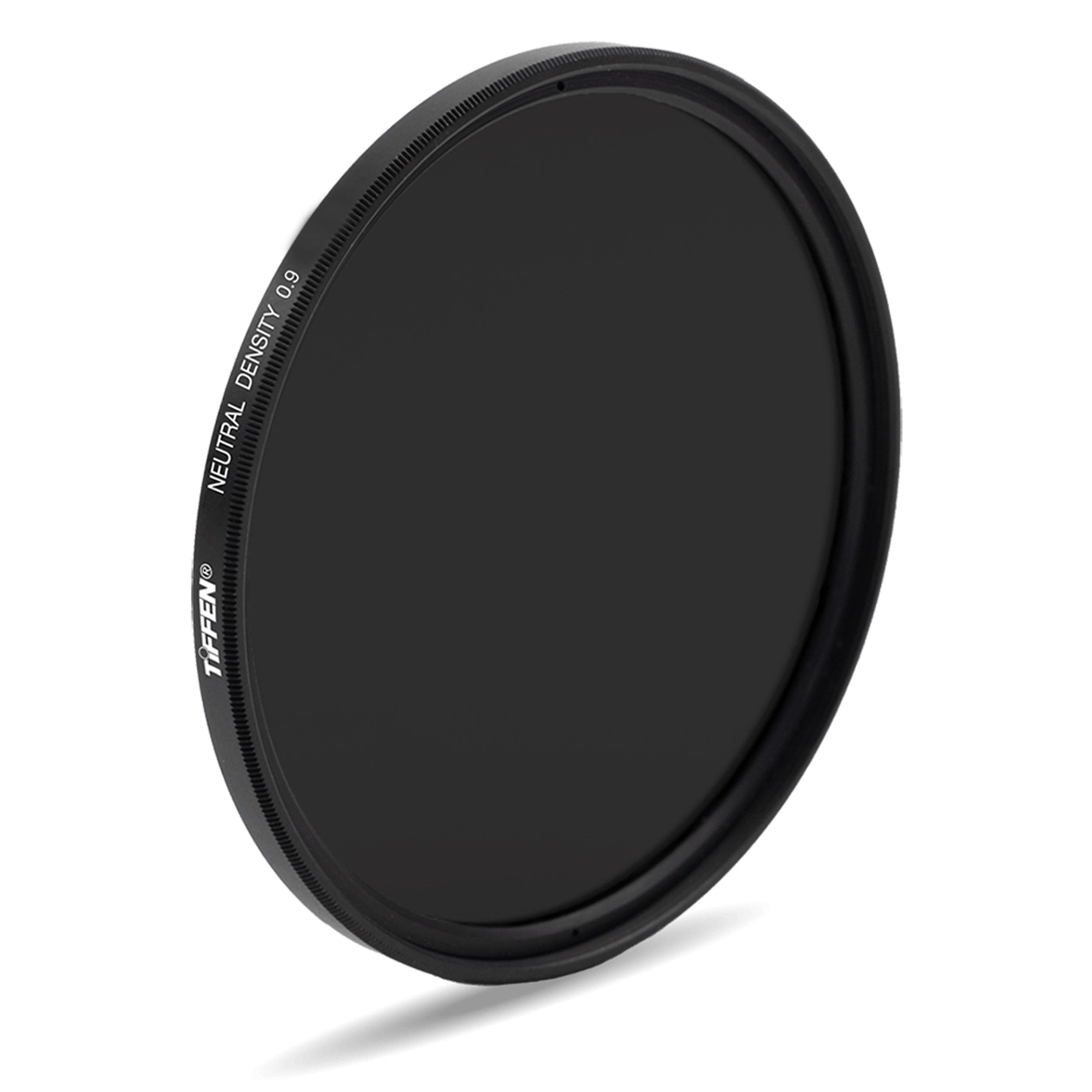
Tiffen 52mm 0.9 3-Stop Filter

91 /100
LBD Score Outstanding

Key details

Stops
3 stops (0.9 density)
Coatings
None
Thread Size
52mm
Glass And Frame
Optical glass, aluminum
View on Amazon

No ring to rotate, no range to learn, no coating on the glass: the Tiffen 0.9 is one density, three stops, and nothing else. That is the appeal.

Three stops is a useful middle for stills. It is enough to open a fast lens in daylight, or to slow the shutter into the range where moving water starts to blur, without the near-black viewfinder a ten-stop gives you. The ring is aluminum, the element is optical glass, and it arrives in a hard plastic case, so there is nothing to configure and very little to get wrong.

We reached for it as the plain option, and plain turns out to be a compliment in a category full of filters that want your attention. It screws on, it cuts three stops, it comes off, and there is nothing standing between you and the shot. For the money, that makes it the least fussy way to find out whether you enjoy working with ND at all.

Pros

  • One density, so nothing to adjust
  • Solid aluminum and glass construction
  • Small and light enough to keep in a bag

Cons

  • Uncoated glass flares and can tint greens
  • Retaining ring can work loose
Our verdict

A single three-stop filter with nothing to learn, and the one we point to for trying long exposures without buying a whole system.

Check Latest Price
5

Long Exposures

NEEWER 58mm ND1000 10-Stop Filter

86 /100
LBD Score Excellent

Key details

Stops
10 stops (ND1000)
Coatings
30 nano layers
Thread Size
58mm
Frame Thickness
3.3mm
View on Amazon

Ten stops is a single-purpose tool. It is the density that turns a bright midday scene into an exposure you can hold for seconds, so surf goes milky and clouds streak while the rest of the frame stays sharp.

At 3.3mm the aluminum frame is the thinnest of the filters here, and that is the detail we appreciate most on a wide lens, because the filter adds almost nothing in front of the glass. The front threads are real, too, so a hood or a polarizer goes on without a step ring. We did not expect both on a filter at this price.

Using it is a small ritual: compose, focus, then screw it on, because the viewfinder goes close to black once ten stops sit in front of the lens. Exposure is set on the camera rather than on the filter, through shutter speed, aperture and ISO, so the density stays fixed while you work. Thirty nano coatings on HD optical glass mean spray wipes off rather than settling in.

Pros

  • Ten stops for long exposures in daylight
  • 3.3mm frame barely adds depth
  • Front threads accept a hood or polarizer

Cons

  • Fixed at ten stops, with no density control
Our verdict

The ten-stop we point long-exposure shooters to: thin enough for a wide lens, threaded for a hood or polarizer, and priced like a spare.

Check Latest Price

How We Tested the Best ND Filters

We started with roughly 40 filters from brands we'd shot with and brands we hadn't, then narrowed by the thread sizes our test lenses actually take — 52mm, 58mm, 77mm, and 82mm — along with price and whether the listing named its glass and coating. That left 14 units: fixed kits and single-strength filters alongside adjustable models, from budget picks to a couple of pricier pieces we wanted to see justify themselves.

Testing ran four months, and most of it happened where these filters get used: an hour before sunset at a creek, midday on bright sidewalks, a weekend at the coast, and a few video shoots with a fast prime. For each filter I shot the same frame with and without it, then compared color against a gray-card reference to see how much warmth or green crept in. I checked corners on a wide lens for vignetting and hard edges, and the strongest setting for that telltale X.

We checked effectiveness against the math — 10 stops should turn a quarter-second exposure into four minutes — and noted which filters drifted off their claimed density. I pointed each one into a low sun to see whether contrast held or the frame hazed over, and threaded them onto three different lenses to catch stiff, gritty, or cross-threading mounts. Build quality showed up in small ways: play in the frame, a ring that crept while I focused, knurling that slipped under a thumb.

The last pass was about living with them. I wiped every filter with the same microfiber after a deliberate fingerprint to see whether smudges lifted cleanly or just smeared, then cleaned them after the coastal shoot to see if salt came off the coatings without a fight. Value came down to one question: what the file looked like next to what the filter cost.

How to Choose a Neutral Density Filter

Start with the thread, not the specs

Every lens has a diameter printed beside a ø symbol, and that number is the only size that will screw on. Diameters run from the low 40s up to 82mm and beyond, so the filter that fits your wide zoom will not fit the prime in the same bag. If you shoot several lenses, buy for the widest and use step-up rings on the rest: one 77mm filter plus a 52-to-77mm ring serves both, and the ring costs less than a second filter.

One consequence worth knowing before you order: a step-up ring changes how your lens hood and cap sit, so a neat solution on paper can be fiddly in the field.

Fixed or variable

A variable ND is two polarizing layers rotated against each other, so a single filter covers a whole range. That is why it suits video and travel, where the light changes while you work. The trade is optical: near the top of the range the layers can produce an X-shaped band of density across the frame, and corners go first. Fixed filters avoid that entirely, but you need one for every density you want.

We reach for a variable when the light moves under us and for a set of fixed filters when clean corners on a wide landscape matter more than convenience. If you shoot both, a variable plus one strong fixed filter covers more ground than either alone.

How many stops do you need?

A stop is a halving of light: three stops cuts the light to an eighth, ten stops to roughly a thousandth. Three stops is enough to open your aperture outdoors or slow a shutter until moving water softens. Six gets you real motion blur in bright sun. Ten is for exposures you hold for seconds in the middle of the day, which is a different tool rather than a stronger version of the same one.

Buy for the brightest conditions you genuinely shoot in. A variable covering 1 to 9 stops handles most daylight work from one filter, and a ten-stop alongside it covers the long exposures it cannot reach.

What optical quality looks like

You cannot judge an ND filter from the outside, but a few things predict how it behaves. Multi-layer coatings cut flare and make the glass easier to wipe clean. A slim frame keeps corner darkening out of wide-angle shots. A slight warm or green cast is common and correctable in post; uneven density across the frame is not, and that is what separates good variables from the rest.

If you shoot wide, weight the frame thickness and the coating count above the headline stop range. A filter that reaches ten stops but darkens the corners is less useful than one that reaches six stops cleanly.

Caps, hoods and stuck threads

Two annoyances catch almost everyone. First, slim filters often have front threads a size larger than the lens, so your standard lens cap will not grip and stacking a second filter is harder than it looks. Second, aluminum on aluminum seizes: tighten a filter down hard and it can become a genuine job to remove. Seat it, then back it off a fraction.

Carry the filter in a pouch rather than loose in a bag. Glass that shares a compartment with a lens hood will collect the scratches you notice at f/11 on a clear day.

Frequently Asked Questions

Final Verdict

If you shoot both stills and video outdoors, start with the K&F Concept 77mm Nano-X. The side lever is the reason: it lets you change density without leaving the camera, and the 28-layer coatings hold up to spray, sun and fingerprints. That combination is what makes it the best default in this group.

If the budget is tighter, the B-Series gives you the same 1-9 stop range for much less, provided you work in the lighter half of it. And if your goal is a long exposure in the middle of the day, no variable filter gets you there cleanly; that is the NEEWER ND1000's job.