Best Waterproof Cameras of 2026

A waterproof camera's real test isn't the pool. It's hour six of a beach day, when the buttons are gritty with sand, the lens has been wiped on a wet T-shirt, and the battery is the only thing between you and the sunset. Depth ratings tell you how deep a camera goes; they say little about whether it survives a week of that.

I flooded exactly one camera — a cheap one I trusted on a snorkel trip — so I read the fine print now. Over the past eight months, my team and I have put 10 waterproof cameras through pools, reef shallows, kayaks, and rainy trailheads, running batteries flat, forcing Wi-Fi transfers from the middle of nowhere, and letting a few bake in the sun until they overheated.

The real fork in this category isn't brand, it's format. A rugged point-and-shoot with a zoom and true macro is a stills camera you can hand to a kid; an action cam trades that for stabilization and clean 4K. Both are good, for different trips.

1

Best Overall

OM System Tough TG-7

82 /100
LBD Score Excellent

Key details

Macro
Up to 1 cm
Video
4K
Sensor
12MP BSI CMOS
Waterproof Rating
15 m (50 ft)
View on Amazon

Fifteen meters of water protection without a housing is the headline, but the macro system is what makes the TG-7 more than a rugged point-and-shoot. The five underwater modes adjust color and contrast for the scene, and the four macro modes focus as close as 1 centimeter, including an underwater microscope setting that turns a tide pool into a subject. We found that combination the most versatile stills setup here: you can shoot a wide reef scene, then switch to a tiny crab without changing cameras or adding a housing.

The 12MP BSI sensor and F2.0 lens give the TG-7 more latitude than the budget compacts, and RAW capture leaves room to correct color after a dive. Video runs to 4K, with 120fps high-speed recording for splashes and fish movement. The 3-inch LCD is bright enough above water, but the menus are denser than a point-and-shoot's; we needed a couple of sessions to set up the underwater shortcuts we wanted.

Ruggedness is the other half of the story. The body is shockproof, crushproof, freezeproof, and anti-fog, so it can move from a snorkel bag to a snowy trail without a case. It gives a serious snorkeler the controls and close-focus tools the simple compacts lack. For a dedicated snorkeler or a diver who stays within its rating, it is the most complete compact here.

Pros

  • No-housing waterproofing to 15 meters
  • Four macro modes focus to 1 cm
  • 4K video and 120fps slow motion
  • Shockproof, crushproof, and freezeproof

Cons

  • Premium price for a 12MP compact
Our verdict

We recommend the TG-7 when underwater stills and macro matter more than saving money; it's the most complete no-housing waterproof camera here.

Check Latest Price
2

Best for Low-Light Video

DJI Osmo Action 4

93 /100
LBD Score Outstanding

Key details

Video
4K/120fps
Sensor
1/1.3-inch CMOS
Battery
160 minutes
Water Resistance
Waterproof
View on Amazon

A 1/1.3-inch sensor is unusually large for an action camera, and it is the first thing we notice when the light drops. The Osmo Action 4 holds color and detail in a dim pool or a shaded reef where smaller-sensor cams start to smear. The 155-degree field of view is wide enough for tight underwater scenes, and the magnetic quick-release mount makes it easy to move between a wrist strap, a selfie stick, and a helmet.

Stabilization is the other reason we keep reaching for it. RockSteady and HorizonBalancing keep handheld footage level, and 4K at 120fps gives you slow motion without dropping resolution. The dual touchscreens are bright and responsive, and the battery is rated for 160 minutes, which is long for this class. The magnetic mount is secure enough to trust in a boat bag, but it is also easy to pop off when you want to switch angles.

Compared with the cheaper action cams here, the Osmo Action 4 is the one we choose when footage quality matters more than saving money. It is not a stills-first camera, and it does not have the macro range of the TG-7, but for low-light video, stable handheld shots, and fast mounting, it is the action camera we reach for first.

Pros

  • Large 1/1.3-inch sensor for low light
  • Smooth RockSteady stabilization
  • 4K/120fps with wide 155° view
  • Magnetic quick-release mounting

Cons

  • Can heat up during long 4K takes
  • Companion app can be fussy
Our verdict

We pick the Osmo Action 4 for low-light action footage and smooth stabilized video, and it's the action camera we trust when the light fades.

Check Latest Price
3

Best 360-Degree Video

Insta360 X5

93 /100
LBD Score Outstanding

Key details

Video
8K30fps 360°
Weight
1.1 lb
Battery
208 minutes
Water Resistance
Waterproof
View on Amazon

You do not aim the X5 so much as let it capture everything and choose the angle later. Dual lenses record a full 360-degree scene at up to 8K30, so you can swim through a reef and decide afterward whether the clip is about the fish, the coral, or the diver beside you. The invisible selfie-stick effect is the crowd-pleaser: a handheld shot looks like a third-person camera floating behind you, with no stick in frame.

We were impressed by how stable the footage stays. FlowState stabilization and 360-degree horizon lock keep the horizon level while you swim or paddle, and the triple AI chip helps in low light. The 2.5-inch screen is bright enough for framing, the battery is rated for a little over three hours, and the replaceable lenses are a smart durability move because the exposed glass is the part most likely to take a hit.

The X5 is a specialist tool, not a point-and-shoot. It rewards someone who enjoys reframing clips and experimenting with angles. For creative underwater video, nothing else here gives you the same freedom to decide the shot after the fact.

Pros

  • 8K30 360-degree video
  • Invisible selfie-stick effect
  • FlowState stabilization and horizon lock
  • Rugged replaceable lenses

Cons

  • Reframing adds an editing step
  • Premium price for video-first buyers
Our verdict

We choose the X5 when we want to reframe a whole scene later; its 360 footage and invisible selfie-stick effect make it the most creative video tool here.

Check Latest Price
4

Best Budget Compact

Kodak PIXPRO WPZ2

85 /100
LBD Score Excellent

Key details

Zoom
4x optical
Sensor
16MP BSI CMOS
Weight
6.21 oz
Waterproof Rating
15 m (49 ft), 1 hour
View on Amazon

The WPZ2 is the point-and-shoot of this group: a 4x optical zoom, a 27mm wide end, and a body you can hand to a kid without a lecture. It is waterproof to 15 meters for up to an hour, shockproof from 2 meters, and dustproof, so it covers snorkeling, pool days, and dusty trails without a housing. The 16MP BSI sensor and 1080p video are modest next to the action cams, but the optical zoom gives you something most of them cannot match.

We found the controls simple enough to learn in an afternoon, and the 6.21-ounce body disappears in a jacket pocket. The 2.7-inch LCD is small and washes out in direct sun, so framing is easier with your body between the screen and the sky. Wi-Fi transfer works, but it is not the camera's strongest feature; we treat it as a bonus rather than the main way to move files.

The WPZ2 is not a video-first camera, but it is the compact we hand to someone who wants zoom and simplicity near the water. It is easy to carry, easy to explain, and the optical zoom gives you a reason to leave the phone in the bag. For a first waterproof camera or a second camera for a beach trip, that combination makes sense.

Pros

  • 15-meter waterproofing without a housing
  • 4x optical zoom and 27mm wide angle
  • Simple point-and-shoot controls
  • Light 6.21-ounce body

Cons

  • Waterproofing depends on perfect seal care
Our verdict

The WPZ2 is our pick for a simple waterproof point-and-shoot with optical zoom; it skips action-camera video but gets the basics right.

Check Latest Price
5

Best Budget Action Camera

AKASO EK7000

89 /100
LBD Score Excellent

Key details

Video
4K30fps
Battery
2 x 1050mAh
Stabilization
EIS
Waterproof Rating
131 ft with case
View on Amazon

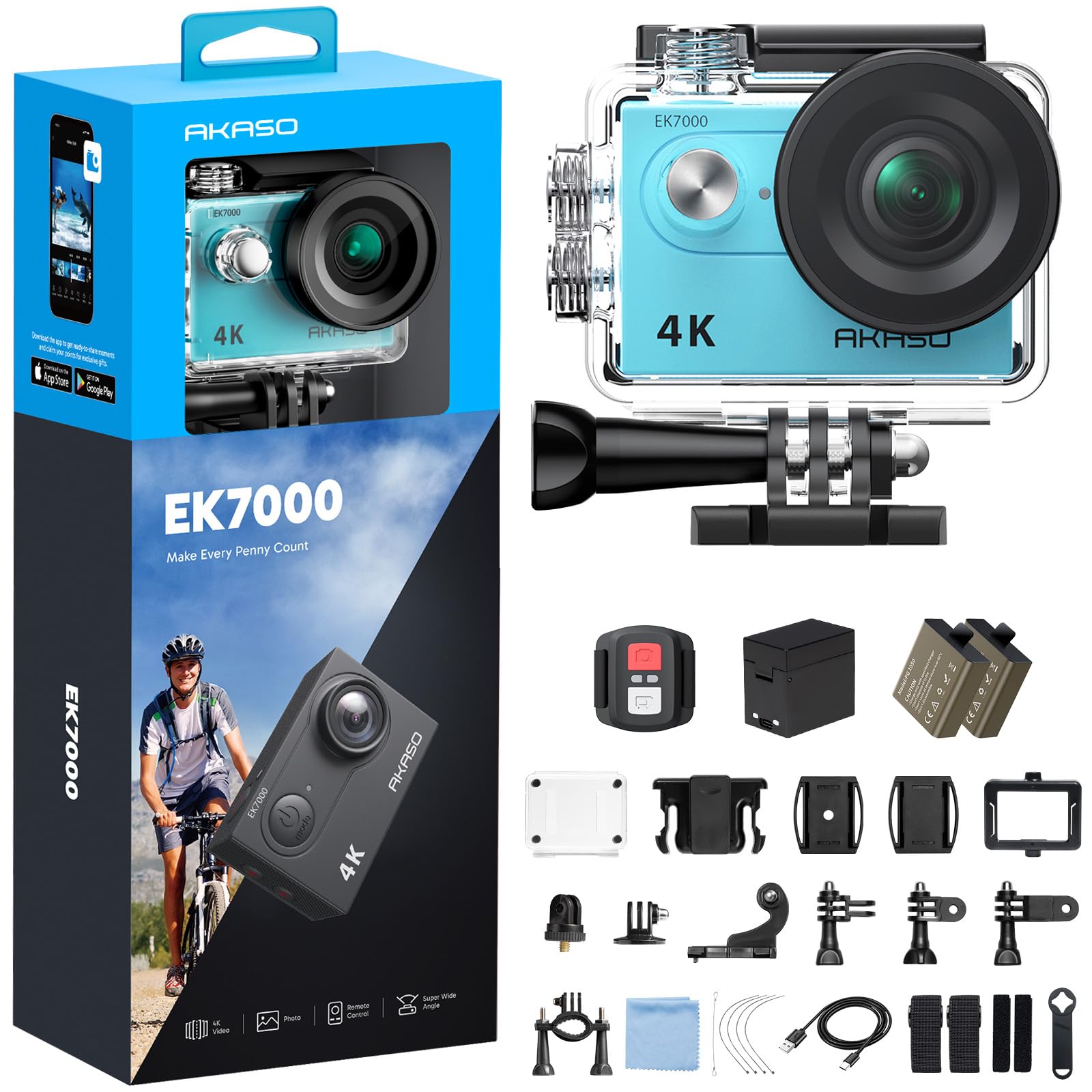
The EK7000 is the least expensive way into underwater video here, and the box is the reason it works. You get the camera, a waterproof case rated to 131 feet, two batteries, a charger, a wrist remote, and a pile of mounts. That is not a stripped-down starter kit; it is enough to clip the camera to a mask, a bike, or a paddleboard and start recording without buying a second accessory.

Video tops out at 4K30, with 20MP photos and electronic stabilization. The footage is not as clean in low light as the Osmo Action 4, and the camera is made for action, not close-ups. But the case seals securely, the remote is handy when the camera is on a helmet, and the two batteries let you swap instead of stopping for the day.

We treat the EK7000 as a first action camera, not a long-term upgrade. The controls are simple, the mounts cover the basics, and the price leaves room for a bigger memory card and a floating grip. If you want to try underwater video without committing to a premium camera, this is the least intimidating way in.

Pros

  • 131-foot waterproof case included
  • 4K30 video at a budget price
  • Two batteries and mounts included
  • Wrist remote for easy framing

Cons

  • Battery life runs short
  • No touchscreen
Our verdict

We point budget buyers to the EK7000 because it puts real underwater video within reach and includes the case and mounts to start.

Check Latest Price
6

Best for Macro

Pentax WG-90

79 /100
LBD Score Very Good

Key details

Video
1080p
Sensor
16MP CMOS
Macro Light
Six LED ring lights
Waterproof Rating
14 m for 2 hours
View on Amazon

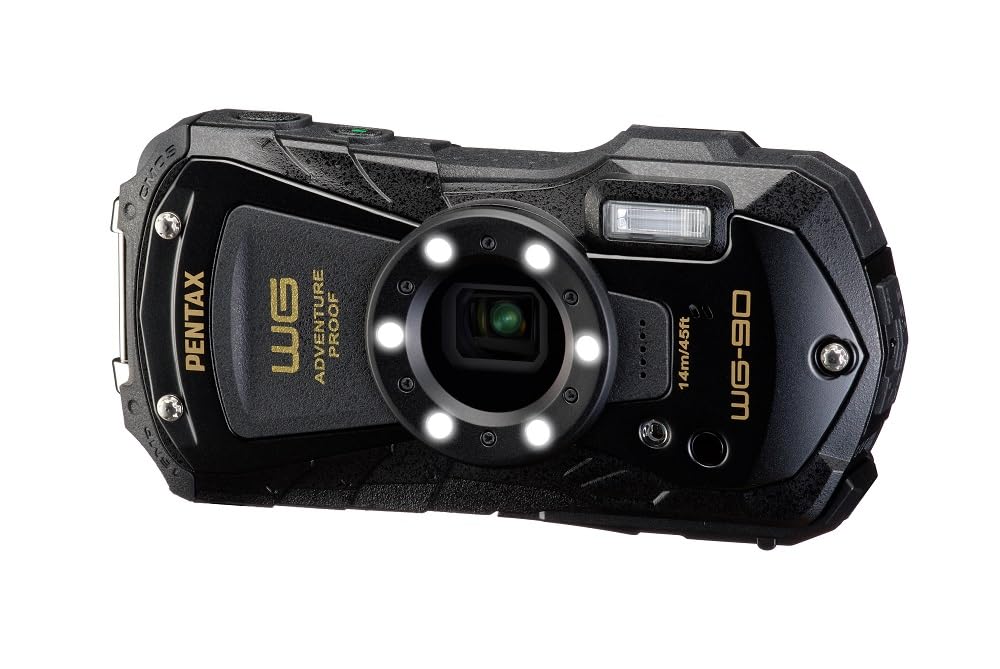
Six LED macro lights ring the WG-90's lens, and that tells you what this camera is for. They sit around the barrel to light close-up subjects evenly, which is exactly what you need for tide-pool creatures, coral details, or the serial number on a wet piece of equipment. The Digital Microscope mode pushes that further, turning the camera into a close-up tool for textures the naked eye skips.

The rest of the body is built for the same kind of work. It is waterproof to 14 meters for up to two hours, shockproof, dustproof, and freezeproof, with a 5x optical zoom that starts at 28mm. The 16MP sensor and F2.8 lens are not class-leading, but the camera is easy to brace against a rock or a boat rail, and the macro lights make the difference when you are close and the light is flat.

Underwater and Underwater Movie modes adjust color and contrast for the scene. We found the WG-90 happiest when we slowed down and composed a close-up rather than firing off a burst. It is a rugged compact built around close-up stills, and that is how we used it.

Where it falls short is flexibility. The program mode can make poor exposure choices in low contrast, and the camera is happiest when you slow down. But for macro work in wet places, the ring light and microscope mode are genuinely useful, not decoration. If your underwater photography is about the small stuff, the WG-90 earns its place.

Pros

  • Six LED macro lights around lens
  • Waterproof to 14 meters for two hours
  • Digital Microscope mode for close-ups
  • 5x optical zoom with 28mm wide end

Cons

  • Video tops out at 1080p
  • Rear screen scratches easily
Our verdict

We like the WG-90 for close-up work around tide pools and trails; the ring light and microscope mode are genuinely useful, not decoration.

Check Latest Price
7

Casual Snorkeling

YISENCE 806

89 /100
LBD Score Excellent

Key details

Photo
64MP
Video
4K
Included Storage
32GB card
Waterproof Rating
16 ft
View on Amazon

The YISENCE's floatable body and dual screens make it the casual camera here. It is built for pools, snorkeling, and beach days, with a front screen that makes selfies and group shots much easier in the water. The included floating strap means you are not fishing for it after a wave.

Video is 4K and photos are 64MP, though the tiny sensor means those numbers are more about convenience than pixel-perfect detail. Autofocus is a real help for close subjects, and the 32GB card in the box means you can shoot on day one. The 2.7-inch rear screen is bright enough for framing, and the camera is light enough to carry in a beach bag all day.

We like it as a family camera because it is simple, it floats, and it does not ask you to learn a menu system before you get in the water. It is the one we hand over when the priority is fun and keeping the camera above water. For pool days and travel with kids, it is an easy recommendation.

Pros

  • Floats with included strap
  • Dual screens simplify selfies
  • 4K video and 64MP photos
  • 32GB card included

Cons

  • Rated only to 16 feet
  • Short 70-minute battery rating
Our verdict

We keep the YISENCE around for pool days and casual snorkeling because it floats, shoots 4K, and includes the memory card.

Check Latest Price

What We Put Every Waterproof Camera Through

We started with a few dozen models and cut down to 10, filtering on depth rating, sensor size, whether batteries and mounts are replaceable, and price spread from budget to prosumer. Owner reviews kept flagging the same failure points — fogged lenses, batteries dying in the cold, apps that wouldn't pair — so we built the tests around those.

Water resistance got the hardest look. Every camera came to a pool, a reef snorkel, and a kayak, where it rode in a wet pocket for hours at a time. We submerged each at and beyond its rated depth while pressing every button, then checked for fogging behind the lens and moisture in the battery bay; saltwater units were rinsed and rechecked a day later for stiff buttons or a gritty zoom. Between trips we dropped them from waist height onto tile, buried them in sand, and left a couple overnight in a chest freezer.

For image quality we shot the same reef, pool, and street scenes at dawn, midday, and dusk, then compared stills and clips side by side on one monitor. Battery life was timed from full charge to shutdown during continuous 4K recording, plus a day of idle standby drain. Overheating surfaced on the sunniest afternoons — we kept recording in direct light until a camera quit on its own, noting how long it lasted and how hot the body felt.

Wi-Fi got tested where people actually use it, in a beach parking lot with weak signal: we paired each camera to a phone, pushed a five-minute clip across, and logged every dropped connection and re-pair. We also shot one-handed with wet, sandy fingers and took stock of what ships in the box versus what you have to buy.

How to Choose a Waterproof Camera

Start with depth and time, not the waterproof label

A waterproof rating is a depth and a duration, not a permanent promise. The TG-7 and WPZ2 are rated to 15 meters for about an hour, the WG-90 to 14 meters for two hours, and the YISENCE to 16 feet. Action cameras like the EK7000 reach 131 feet only inside their sealed case. Match the number to your activity: a snorkeler rarely goes past a few meters, while a scuba diver needs a housing or a camera rated for the depth.

The trap is treating waterproof as a license to dive. A camera rated for one hour at 15 meters is not a dive computer, and a case that is not latched is not waterproof at all. Check the gasket, close the door, and test the seal before the trip. If you need more depth than the rating, choose a different camera or a proper housing.

Pick the shape that matches the shot

Compacts like the TG-7 and WG-90 are built around stills: you get optical zoom, macro modes, and a form that braces easily against a rock. Action cameras like the Osmo Action 4 and EK7000 are built around movement: mounts, stabilization, and a wide lens that keeps the whole scene in frame. The X5 adds a third option, capturing 360 degrees and letting you reframe later.

If you want one camera for snorkeling stills and close-ups, start with a rugged compact. If you want video on a helmet or paddleboard, start with an action cam. The 360 camera is the creative choice, but it adds an editing step; it is not the simplest way to get a shareable clip.

Read the sensor and lens, not the megapixel badge

A 64MP badge on a tiny sensor does not beat a 12MP camera with a bright lens and RAW capture. The TG-7's F2.0 lens and 12MP BSI sensor give it more flexibility in dim water than the budget compacts, while the Osmo Action 4's 1/1.3-inch sensor is the reason it holds up in low light. Look for sensor size, aperture, and RAW support before you chase resolution.

Stabilization matters just as much for video. RockSteady on the Osmo Action 4 and FlowState on the X5 are the difference between watchable footage and a shaky clip. If you shoot stills, macro range and a close-focus mode are worth more than another megapixel.

Budget for batteries, cards, and the app

Battery life is the quiet compromise across this category. Action cameras often ship with two cells because a single one runs out fast; the EK7000 includes two, and the Osmo Action 4 is rated for 160 minutes. The YISENCE is rated for 70 minutes, so a spare or a power bank changes a short swim into a full day.

Storage and software are the other hidden costs. A 32GB card fills quickly with 4K video, and the action-cam apps are not always the smoothest part of the system. Buy a faster, larger card than you think you need, and test the app at home before you rely on it at the water.

Frequently Asked Questions

Final Verdict

The OM System Tough TG-7 is the camera we recommend first because it handles the widest range of underwater stills without a housing, and its macro system is the reason to choose it over an action cam. If your priority is video, the DJI Osmo Action 4 is the better fit for low light and stabilization; if you want to reframe the shot after the dive, the Insta360 X5 is the creative alternative.