Best Overall

TP-Link Archer TX3000E
Key details
- Antenna
- Two high-gain antennas on magnetized base
- Bluetooth
- 5.3
- Rated Speed
- 2402 Mbps (5 GHz) / 574 Mbps (2.4 GHz)
- Wi-Fi Standard
- Wi-Fi 6 (802.11ax), dual-band
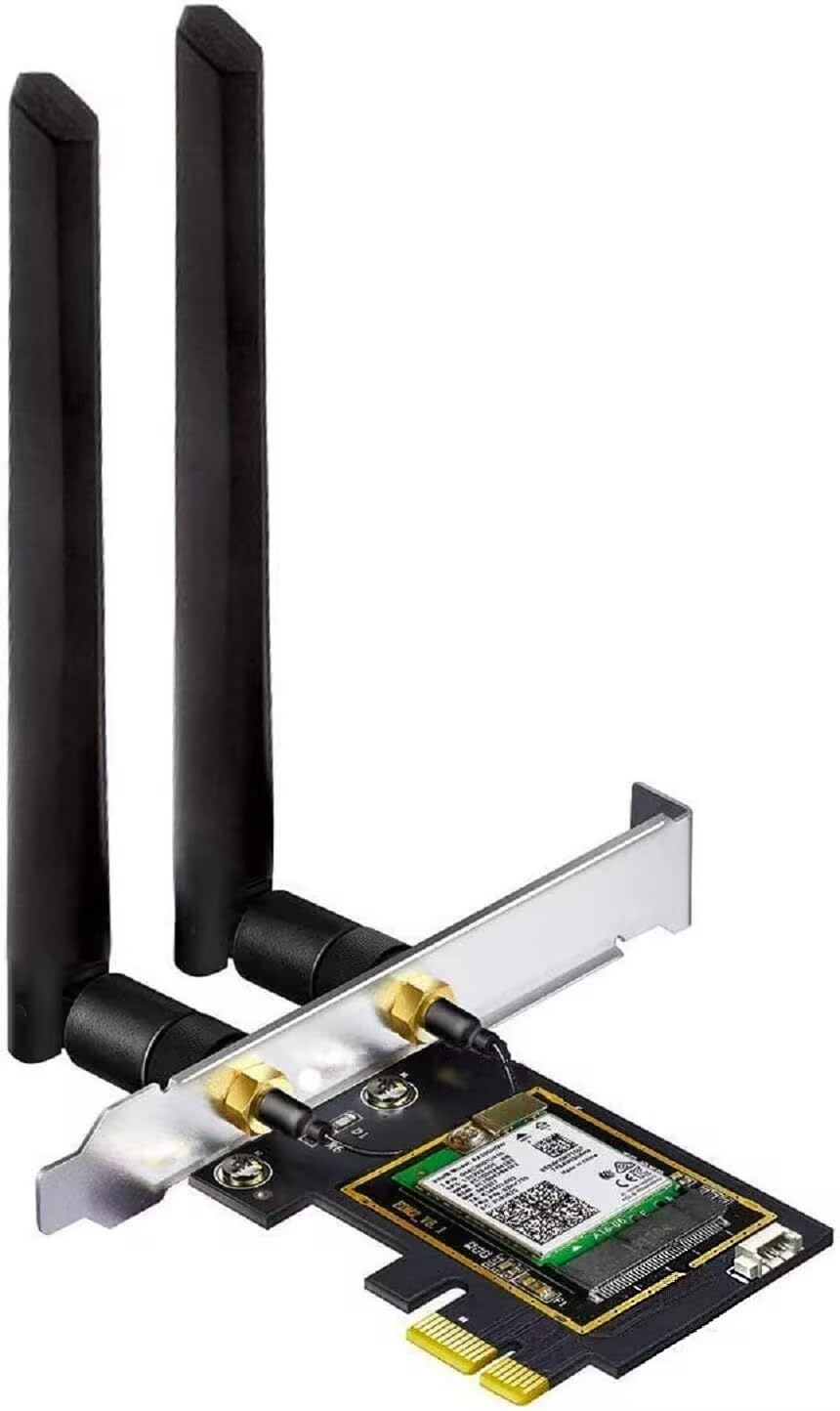
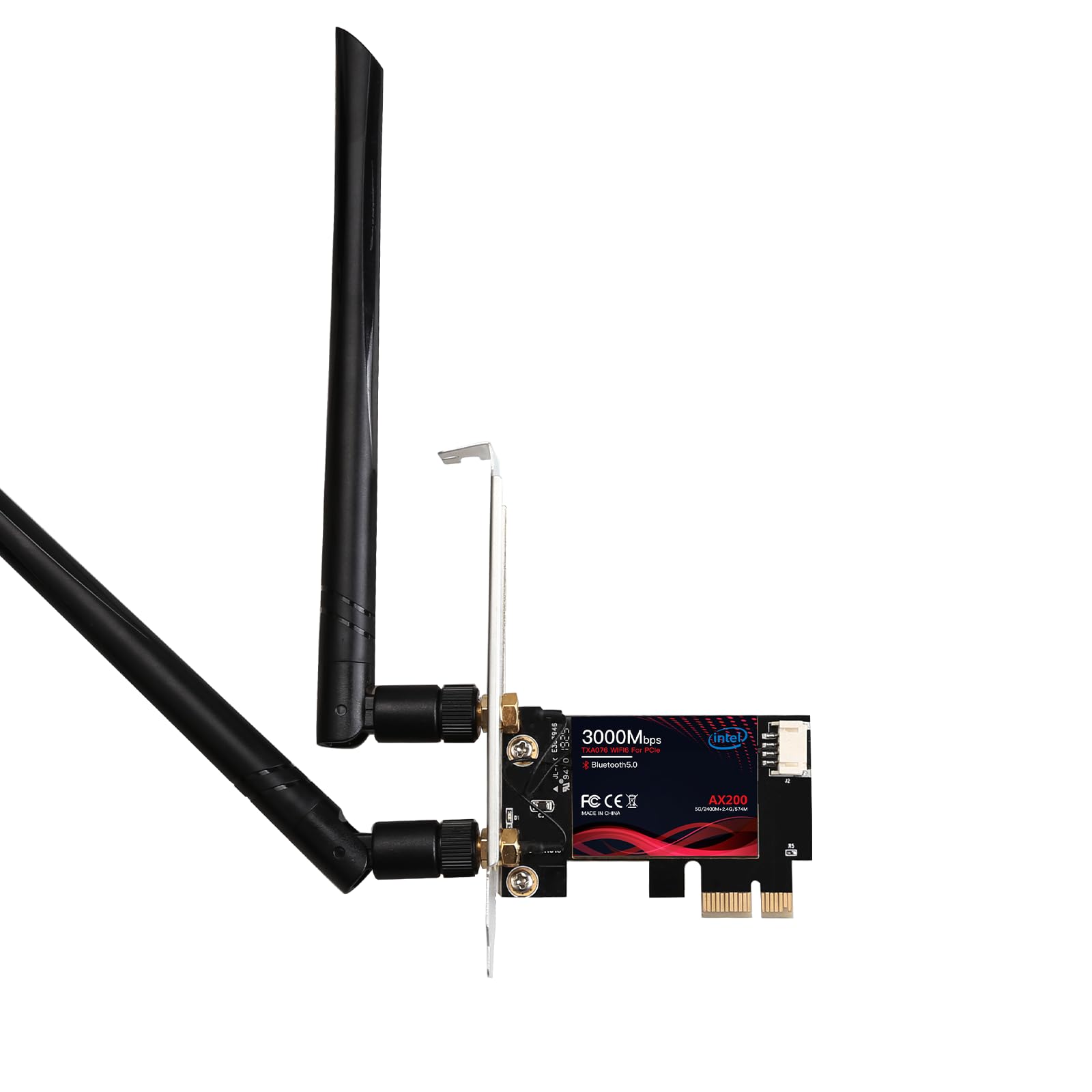
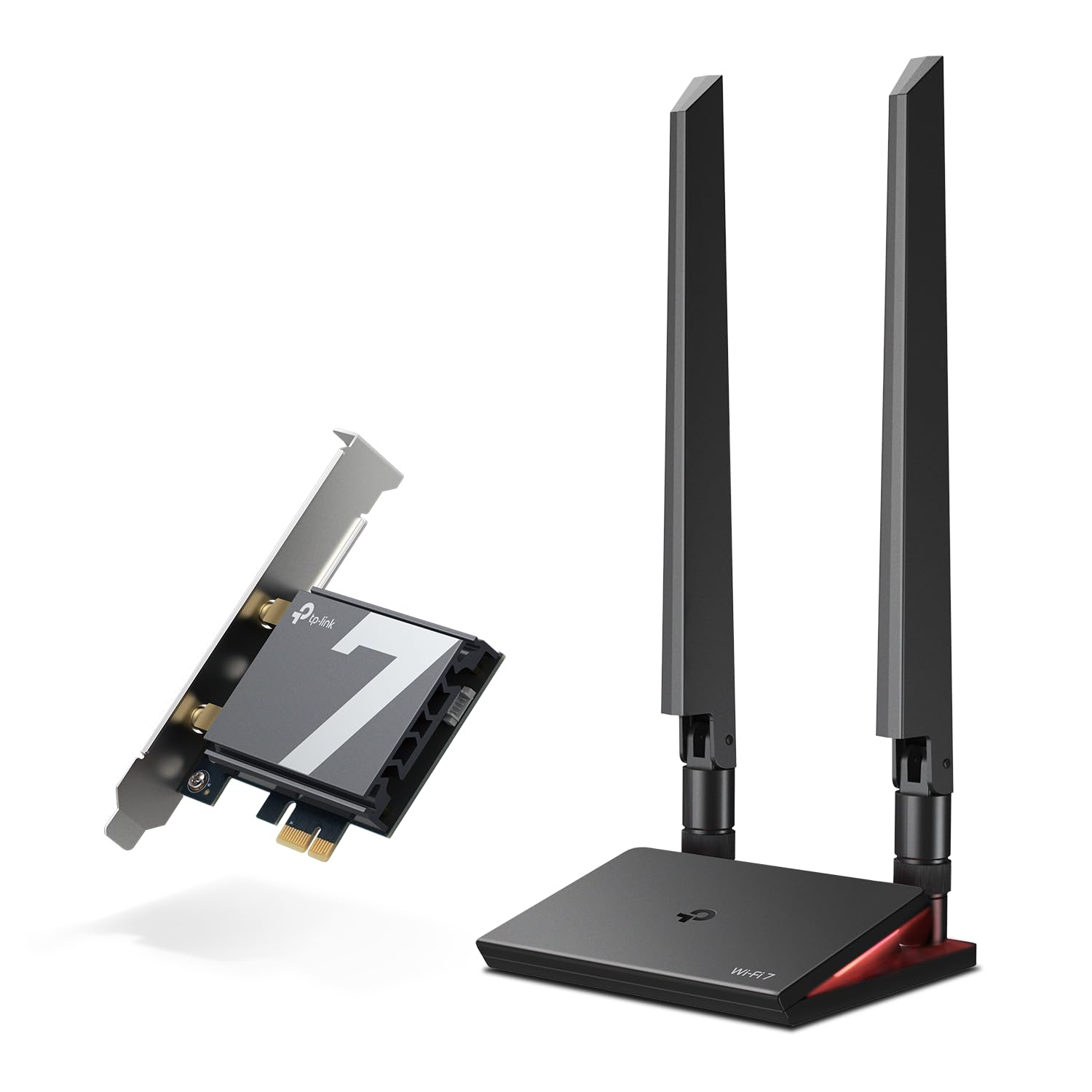
The magnetized antenna base is the part that decides whether this card works in a room with the desk pushed into a corner. It sits on a cable, so the radio can go on top of the tower, on a metal shelf or anywhere with a straighter line to the router than the rear panel offers. Against a wall, with the case wedged under a desk, that freedom is most of what you are buying.
Underneath the plastic is Intel's Wi-Fi 6 silicon, and that is the reason this is the card we point most people to. Intel's wireless drivers are the least dramatic part of a desktop build, which is exactly the trait you want in a network card: Windows 10 and 11 pick it up and it stays picked up. The 2402 Mbps on 5 GHz and 574 Mbps on 2.4 GHz are far beyond what most home connections deliver, and Bluetooth 5.3 rides along on the same card, saving a dongle and a USB port.
Bluetooth needs a free 9-pin USB 2.0 header on the motherboard and the little cable in the box. If both headers are already spoken for by front-panel ports, you get Wi-Fi and no Bluetooth, and no amount of driver reinstalling changes that. On the connection itself, a link that drops and rejoins on a busy network usually points at a driver update or a congested channel rather than a dead card, and the antenna base makes it quick to rule out placement first.
Both brackets ship in the box, the antennas detach for transport, and the card takes a PCIe x1 slot most boards have spare. Nothing about it is exciting, which is the recommendation: it disappears into the machine and you stop thinking about your network.
Pros
- Intel Wi-Fi 6 silicon with mature drivers
- Magnetized antenna base clears the case
- Bluetooth 5.3 on the same card
- Standard and low-profile brackets included
Cons
- No Linux support listed by the maker
For most desktop upgrades this is the card we point people to: Intel Wi-Fi 6, Bluetooth 5.3, and an antenna base that lifts the radio out of a steel case.