Best Robot Vacuums with Mapping of 2026

A robot vacuum without a map is a bumper car with a dustbin. It ricochets off chair legs, vanishes under the bed, and turns up twenty minutes later stuck on a rug corner with a dead battery. Mapping is what turns that into something you can actually leave running while you're at work: the vacuum scans the room, remembers the layout, and finds its dock on purpose instead of by luck.

I've lived with enough of these to know the map is only half the story. Suction gets all the marketing, but a brush roll wrapped in hair, a motor loud enough to derail a phone call, and a robot that parks itself in the bathroom doorway will ruin your week faster than a couple hundred pascals ever will. Over the past seven months my team and I ran 10 of these machines — several with self-emptying bases — through ordinary household mess, and what separated them was rarely what the spec sheet bragged about. The picks below are the ones that kept their maps straight and their brush rolls clear.

1

Best Overall

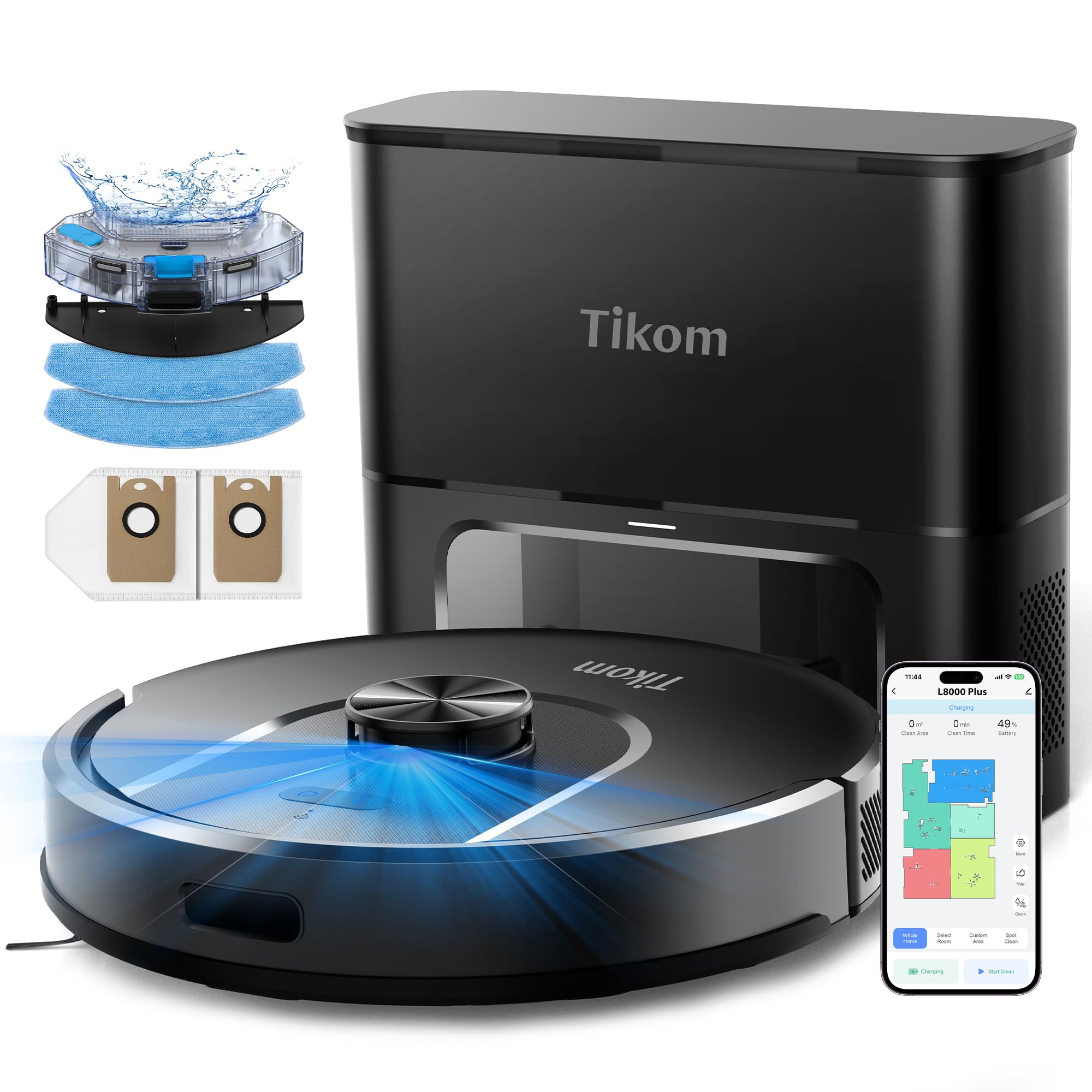
Tikom L8000 Plus

88 /100
LBD Score Excellent

Key details

Runtime
150 min
Suction
6000 Pa
Navigation
360° LiDAR
Self-Empty Capacity
3 L, up to 90 days
View on Amazon

The L8000 Plus is the easiest of these to live with day to day because the dock does the annoying part. A 3-liter bag holds up to 90 days of debris, so a daily run does not mean a daily bin check, and the base is compact enough to tuck beside a wall. That hands-free capacity is the part that changes daily ownership for a busy household.

Mapping is the other half of the story. The 360-degree LiDAR and app controls let you name rooms, send the robot to one, and draw no-go and no-mop zones that it follows. We like that the mapping and mopping controls live in the same place; you can adjust water flow for a quick pass in the kitchen without changing the suction setting for the rest of the house. It is the kind of app work you do once and then forget, which is what you want.

The mop is a maintenance tool, not a scrubber. Three water levels are enough for a light pass over sealed hard floors, but sticky spots still need a hand. What we appreciate is that the 60 dB rating keeps it unobtrusive while it works, and the self-empty cycle is short. The base needs a dedicated patch of floor, so measure beside the wall before you commit.

Pros

  • Up to 90 days between bin empties
  • LiDAR mapping with room and no-go control
  • Vacuums and mops in one pass
  • Quiet 60 dB operation

Cons

  • No stated multi-floor map count
Our verdict

For most homes, we recommend the L8000 Plus because it pairs dependable room mapping with a 90-day self-empty base, and it handles both vacuuming and light mopping.
Check Latest Price
2

Best Value

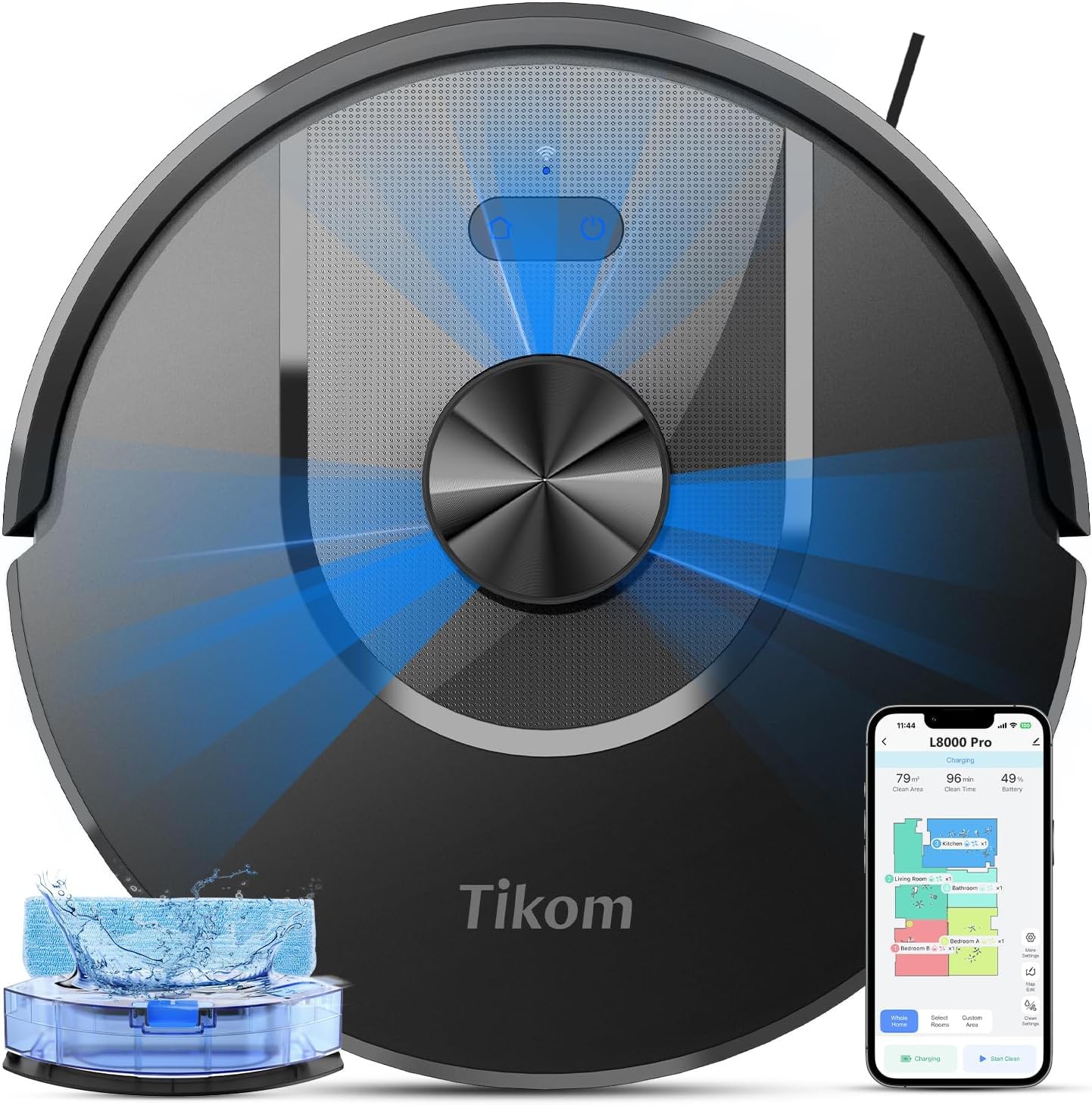
Tikom L8000 Pro

88 /100
LBD Score Excellent

Key details

Runtime
150 min
Navigation
LiDAR
Saved Maps
5
Dustbin / Water Tank
450 ml / 300 ml
View on Amazon

The L8000 Pro is the smart-money version of our top pick: it keeps the LiDAR map, the mop, and five saved floor maps, then drops the self-emptying dock. We are happy with that trade if you do not mind emptying a 450-milliliter bin after a run, and the five-map memory makes it the better fit for a house with a basement or a regular upstairs clean.

Mapping is not cut down. The robot builds a LiDAR map, lets you select rooms and no-go zones in the app, and stores up to five maps for different levels. The 3.6-inch body slips under a sofa, and the 150-minute runtime is enough for a normal floor on one charge. We also like the 45 dB low setting: it is quiet enough to run while you are working in the next room.

The mop is a light-duty extra, best for a kitchen pass rather than a whole-floor wash. What matters is that the Pro covers the mapped-cleaning job for less than the self-emptying models, and its five-map memory gives it a clearer role than the top pick for multi-level homes. The app is where that advantage shows up: switching floors is a tap rather than a re-map.

Pros

  • Five saved maps for multi-level homes
  • LiDAR room mapping and no-go zones
  • Vacuums and mops in one pass
  • Quiet 45 dB low mode

Cons

  • Mop tank needs refills on larger floors
Our verdict

Buy the L8000 Pro if you want mapped cleaning, mopping, and five saved floor maps without paying for a self-empty dock.

Check Latest Price
3

Best for Multi-Floor Homes

iMartine D16S MAX

87 /100
LBD Score Excellent

Key details

Runtime
180 min
Navigation
360° LiDAR
Saved Maps
5
Self-Empty Capacity
1.3 L bagless, up to 45 days
View on Amazon

Five saved floor maps is the number that makes the D16S MAX worth a second look. That is enough for a main floor, an upstairs, a basement, and a couple of special cases, and the app keeps each one separate. Add a bagless self-empty base that holds 1.3 liters and the robot can run for weeks without you handling the dustbin.

The cleaning package is big: an 18,000Pa suction rating, a 220-milliliter onboard bin, a 150-milliliter water tank, and up to 180 minutes in quiet mode. We read those figures as headroom for pet hair and larger floors rather than a promise that every carpet gets a deep clean. The 65 dB quiet-mode rating keeps it from taking over the room. The bagless base saves you from buying bags, but emptying the cup puts you back in contact with the dust; that is the trade for avoiding bag costs.

Where it earns its place is a large, multi-level home where the robot gets carried between floors and the bin fills fast. We choose it over the top pick when five maps and a longer runtime matter more than the tidier bagged dock. The 18,000Pa figure is the headline, but the saved maps are the reason to buy this one.

Pros

  • Five saved floor maps
  • Bagless self-empty base holds 1.3 L
  • 180-minute runtime
  • Strong hair pickup

Cons

  • Can get stuck under low furniture
Our verdict

The D16S MAX is our pick for large, multi-level homes that need five saved maps, a long runtime, and a bagless self-empty base.

Check Latest Price
4

Best Vacuum-Only Option

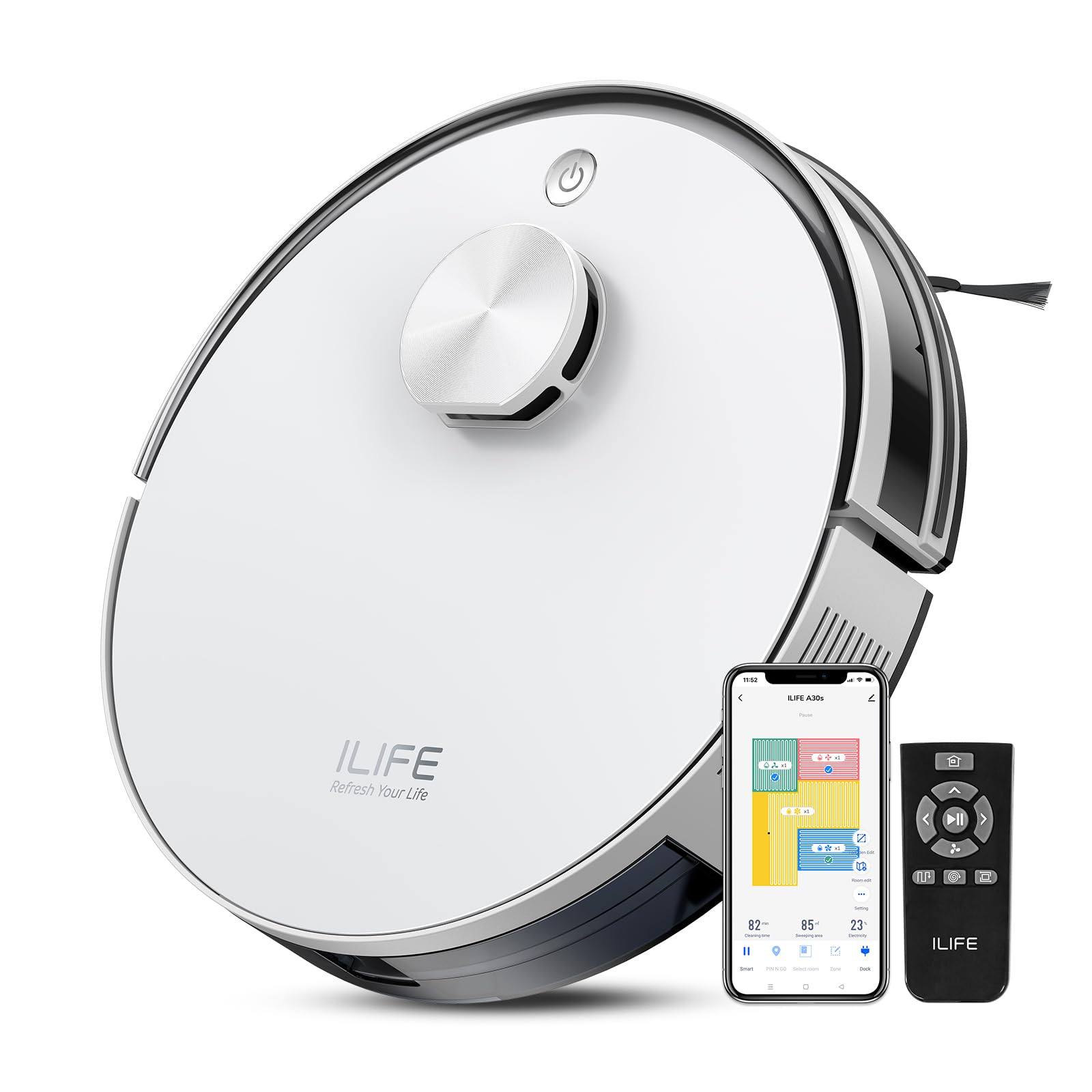
ILIFE A30s

83 /100
LBD Score Excellent

Key details

Dustbin
500 ml
Runtime
150 min
Suction
10,000 Pa in Spot mode
Navigation
LiDAR
View on Amazon

The A30s makes a deliberate choice: no mop tank, no wet pad, no extra refill routine. That makes it the vacuum-only pick here, and a sensible one for carpeted rooms or a house where a separate mop already lives in the closet. The 500-milliliter bin and 150-minute runtime suit a normal floor plan, and the 3.74-inch body gets under low furniture.

Its LiDAR map is the reason it belongs in a mapping roundup rather than a cheap-robot list. The app handles no-go zones, virtual walls, room selection, and schedules, and the robot can also be started with the remote or Alexa. We like the vacuum-first focus: there is no water tank to clean, and the 10,000Pa spot mode gives it a burst for a gritty patch. The remote is a useful backup for guests or parents who do not want another app.

The A30s is not the softest-edged robot in this group. It is the one we point to when the priority is a real map and strong pickup without paying for mopping hardware you will not use. The 6-pound body is easy to move between rooms, and the dual anti-tangle brush is aimed at pet hair. If you want one machine to vacuum and mop, look at the combos; if you want the vacuum job done simply, this is the cleanest answer.

Pros

  • Real LiDAR mapping and no-go zones
  • Strong 10,000Pa spot suction
  • Vacuum-only simplicity
  • Light 6-pound body

Cons

  • 72 dB is louder than the quietest models
  • Charging faults can appear within weeks
Our verdict

The A30s is the vacuum-only pick for hard floors and pet hair, with real LiDAR mapping and no mop tank to maintain.

Check Latest Price
5

Best Compact Pick

Lefant M330 Pro

81 /100
LBD Score Excellent

Key details

Height
95 mm
Runtime
150 min
Map Memory
Multi-floor
Navigation
dToF LiDAR
View on Amazon

At 95 millimeters tall, the M330 Pro is the one here that slips under the lowest furniture. We recommend it for apartments and cluttered rooms where a taller robot would spend its run bumping into chair rails and sofa skirts. The 450-milliliter visible bin is easy to check, and the 150-minute runtime is generous for a small home.

The dToF navigation scans up to 15 meters and stores multi-floor maps, which is enough for a flat and a loft or a couple of regular cleaning zones. The app handles no-go zones and scheduling, and the robot switches to avoid carpets when it is in mop mode. That is the right behavior if you have rugs you want to keep dry.

The M330 Pro is at its best on hard floors, where the slim body and map memory do the daily work. The mop pad lifts out for rinsing, and the visible bin means you can see when it needs emptying instead of guessing. We like that practical honesty more than a bigger feature list.

Pros

  • 95 mm body fits under low furniture
  • Multi-floor map memory
  • Visible 450 ml dustbin
  • 150-minute runtime

Cons

  • Small 200 ml mop tank
  • Carpet suction may disappoint
Our verdict

Choose the M330 Pro for small homes and low-clearance furniture; its 95 mm body and multi-floor memory are the useful parts, not the mop.

Check Latest Price
6

Pet Hair

VONKO S6Pro

86 /100
LBD Score Excellent

Key details

Runtime
180 min
Navigation
LiDAR
Saved Maps
5
Self-Empty Capacity
2.5 L, up to 60 days
View on Amazon

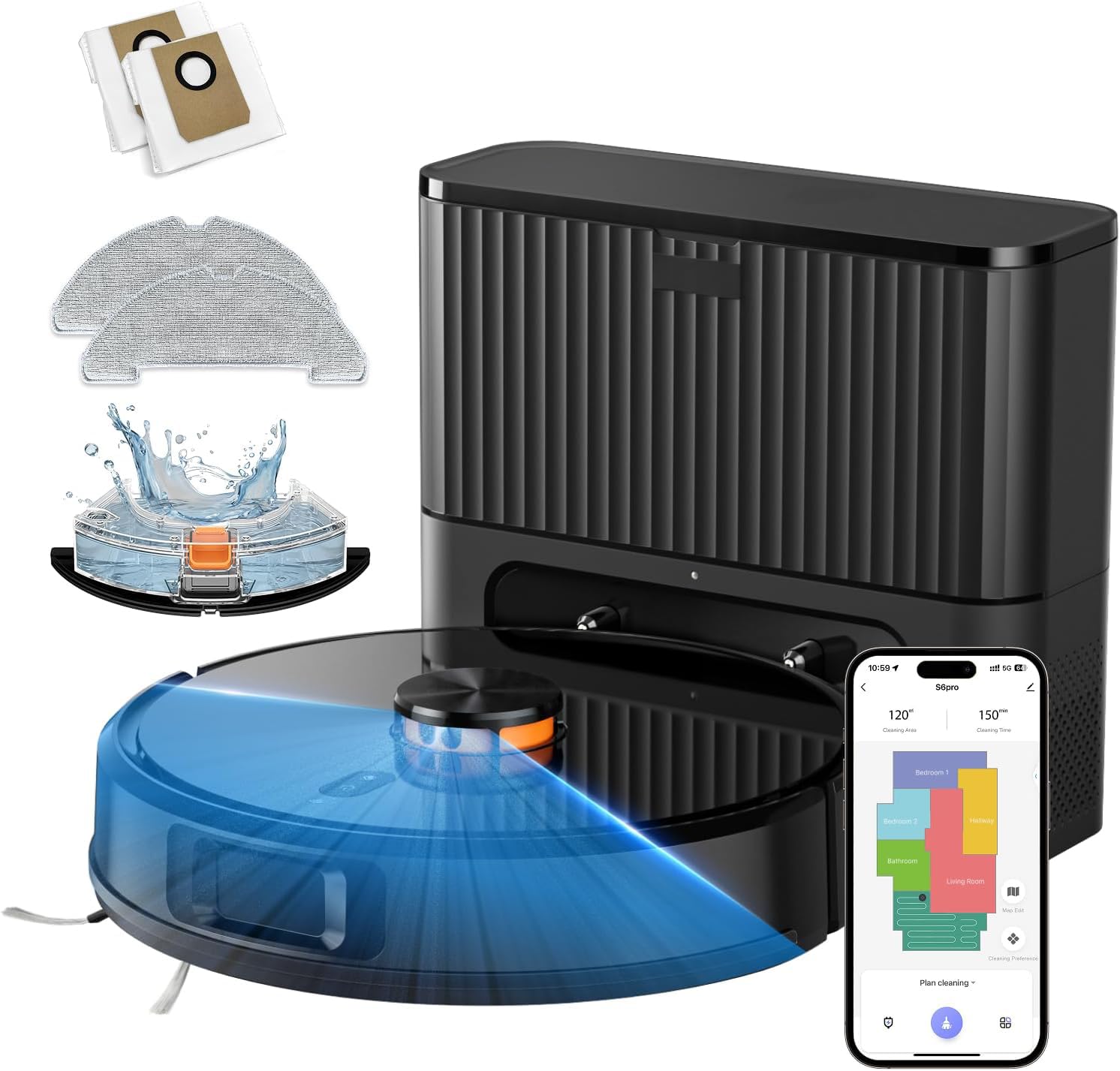
A 2.5-liter self-empty base and up to 60 days between empties give the S6Pro a clear reason to exist in a crowded field. It is the pick for a pet household that fills a bin quickly and has a dedicated spot for a larger dock. The 8,000Pa suction rating and 180-minute runtime are sized for that same busy household.

Mapping is handled by LiDAR, and the app stores up to five floor maps, so a second level is a selection rather than a re-map. The robot also vacuums and mops in one pass, with app and Alexa control. We like the bigger base for a house with a shedding dog; it turns the daily bin check into a monthly one.

We see the S6Pro as the alternative for a multi-level home with pets. Five maps and a 60-day base do more for that household than a smaller dock and a single-floor map. If the bin fills too fast in your house and you have room for a bigger station, this is the one to compare with the top pick.

Pros

  • Up to 60 days between empties
  • Five-floor map memory
  • 180-minute runtime
  • Vacuums and mops in one pass

Cons

  • Large 2.5 L base needs floor space
Our verdict

The S6Pro is a strong alternative for pet hair and multi-level homes, with a bigger base and longer runtime than our top pick.

Check Latest Price
7

Hands-Free Cleaning

wrydao S6-Pro

92 /100
LBD Score Outstanding

Key details

Runtime
160 min
Suction
6000 Pa
Navigation
LiDAR
Self-Empty Capacity
3 L, up to 90 days
View on Amazon

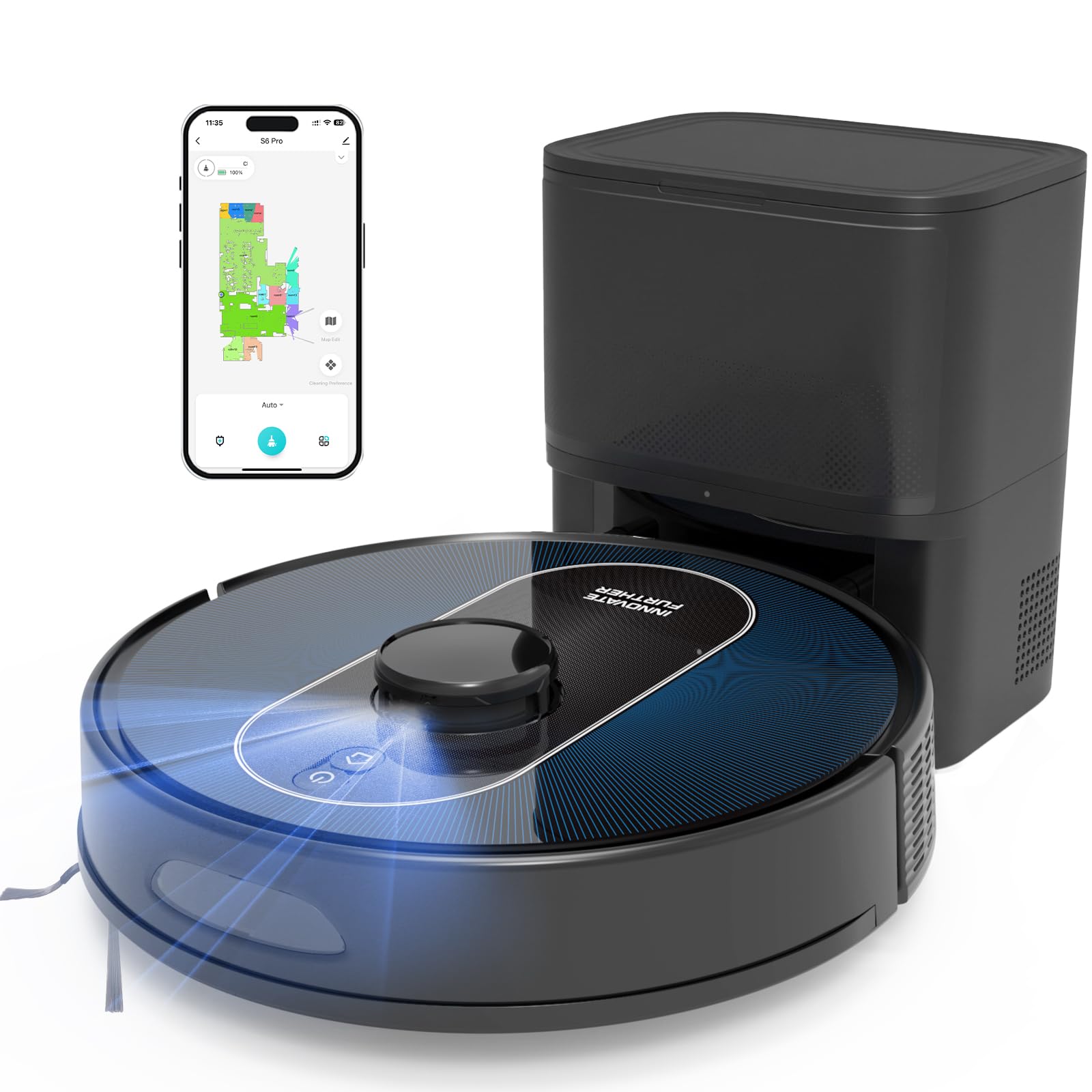
On paper, the S6-Pro gives you the whole hands-free package: 6,000Pa suction, LiDAR mapping, no-go zones, a 3-liter self-empty base, a mop, and app or Alexa control. The 90-day capacity is the headline, and it puts this model in the same conversation as self-empty robots that cost more.

The navigation is the part that decides whether that package works. LiDAR builds a room map, and the app lets you schedule, select rooms, and set no-go zones. The 160-minute runtime is useful, though carpet and higher suction will shorten any robot's run. A clear map and a simple schedule matter more here than a long list of modes.

The self-empty base uses a 3-liter dust bag, which is a genuine convenience but also a consumable. The mop is a light maintenance pass, best for a kitchen floor rather than a scrubbed clean. We like the simple control set: one place in the app for suction, water flow, and room selection, and Alexa when your hands are full.

The S6-Pro makes the most sense when you want the self-empty routine without moving up to a premium dock, and you are happy to let the mop handle light maintenance. The controls are straightforward, the base does the tedious work, and the 160-minute runtime gives it room to finish a normal floor.

Pros

  • 90-day self-empty capacity
  • LiDAR mapping and no-go zones
  • 160-minute runtime
  • Alexa and app control

Cons

  • No stated multi-floor map count
  • Dust bags are a recurring cost
Our verdict

The S6-Pro is a strong hands-free choice for a mostly single-level home, with a 90-day base and straightforward LiDAR mapping.

Check Latest Price
8

Carpeted Floors

Shark Navigator RV2110

84 /100
LBD Score Excellent

Key details

Dustbin
0.52 qt
Runtime
120 min
Brushroll
Self-cleaning
Navigation
SmartPath spot LiDAR
View on Amazon

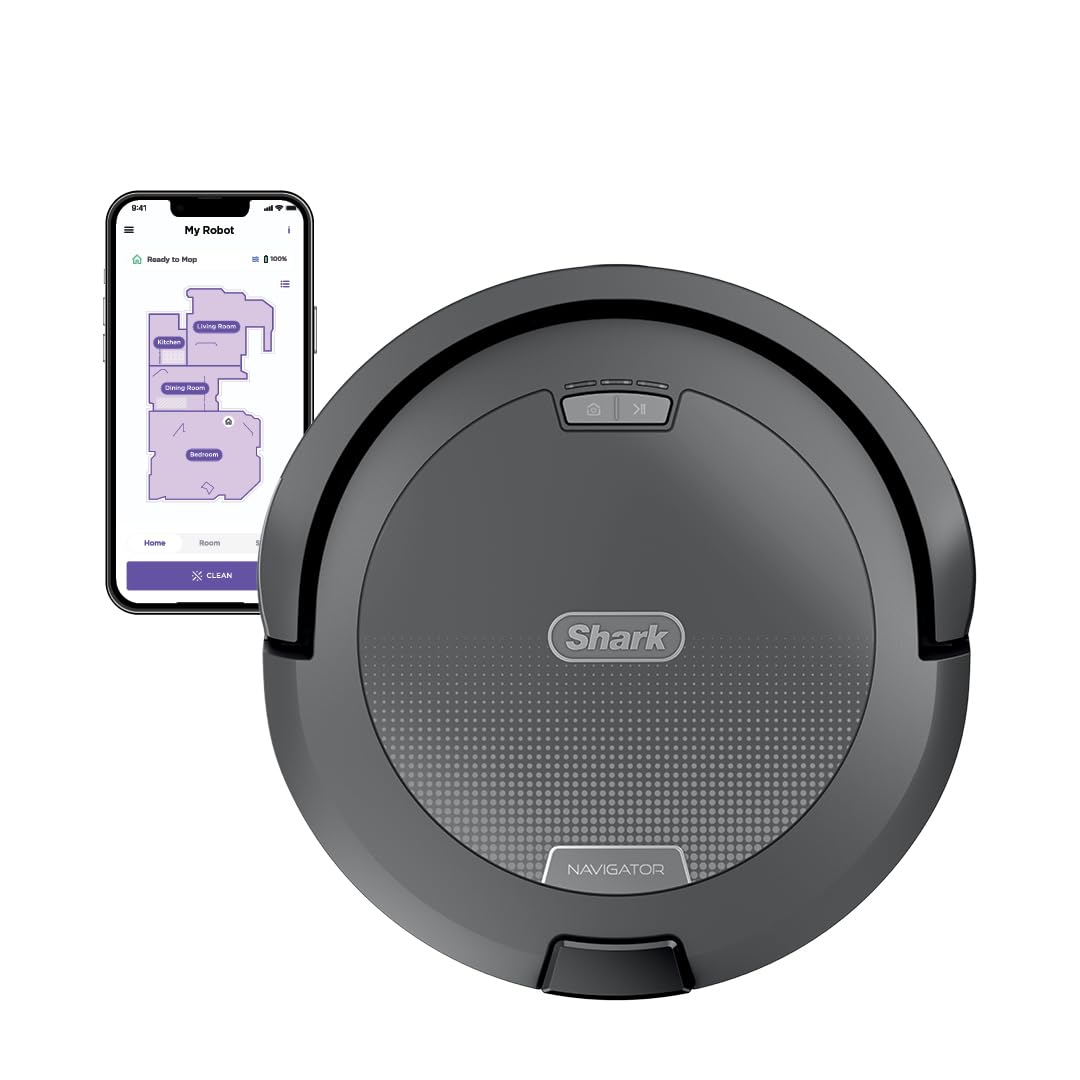
Carpet is where the Navigator makes its case. The self-cleaning brushroll is built to pull hair off the floor without wrapping itself into a knot, and the 0.52-quart bin is easy to reach when it fills. For a house with shedding pets and wall-to-wall carpet, that combination is more useful than a mop tank.

Shark's SmartPath navigation uses spot LiDAR to clean in rows, which is a different approach from the saved room maps on the other picks. It still builds a map and lets you name rooms in the app, but the emphasis is on systematic coverage rather than room-by-room routing. The robot also detects and avoids objects, which helps with shoes and pet bowls left out.

The 120-minute runtime is shorter than the longest here, but it is enough for a normal floor. The 4.6-inch body is taller than the low-slung models, so check the gap under your sofa before you buy. That clearance is the difference between a useful carpet robot and one that parks at the sofa skirt.

The Navigator is the carpet specialist in this group. We choose it when the brushroll and row-by-row cleaning matter more than a mop or a hands-free dock, and when the house is mostly carpet. It is a focused tool, and that is the reason to consider it rather than a compromise.

Pros

  • Self-cleaning brushroll for pet hair
  • SmartPath row-by-row cleaning
  • Object detection and avoidance
  • 120-minute runtime

Cons

  • Mapping is less precise than saved room maps
  • No self-empty base
Our verdict

Choose the Navigator if carpet pickup and a self-cleaning brushroll are your priorities, and you want a focused vacuum rather than a mop combo.

Check Latest Price

How We Tested Mapping Robot Vacuums

We started with research, not a shopping cart. I read through listings and customer reviews for every robot vacuum advertising real mapping — lidar or camera-based — and crossed off anything that only claimed "smart navigation" without an app-drawn floor plan. From there we narrowed by dock type, multi-floor memory, and price, and bought 10 machines to test for seven months. Each one ran in a home with hard floors, two low-pile rugs, a shedding dog, and a hallway that catches everything.

Setup came first: I timed how long it took to unbox, connect to Wi-Fi, and produce a first map, and noted whether the app explained itself or required guesswork. Then the machines ran scheduled jobs while I worked, and I watched the map fill in — whether it finished in one pass, whether rooms were divided sensibly, and whether the no-go zones I drew around a charging cable and a pet bowl were actually respected. Two units got carried upstairs midweek to see whether they recognized a second floor instead of overwriting the first.

For cleaning, I scattered a measured mix of cereal, sand, and dog hair across hard floor and low-pile rug, then checked the brush roll and bin afterward — hair pickup was the clearest divider between the good ones and the rest. I ran each vacuum on max suction during a phone call to judge noise, timed runtime until it returned to dock, and kept a tally of how often it got stuck on rug tassels, thresholds, or chair legs, or tipped while climbing a rug edge. Over seven months I also watched the wear items: bumper scuffs, wheel treads, dock contacts, and how much replacement bags and filters would add to the real cost of ownership.

How to Choose a Mapping Robot Vacuum

Start With the Map, Not the Suction Number

The navigation system is the part you live with every day. LiDAR and dToF sensors measure distance with light, so they build a floor plan without needing the room lights on and tend to hold that layout from run to run; camera-only systems can need more light. After setup, the useful test is whether you can name rooms, send the robot to one, and block a zone without rebuilding the map. If you have stairs, check the saved-map limit too: five maps covers most houses, while a single-floor home can ignore the feature. We put more weight on a stable map than on another thousand pascals of quoted suction.

Decide How Hands-Free You Want the Dock to Be

Self-emptying is the feature that changes the weekly rhythm. A 3-liter bag can last around 90 days on some models, while a 1.3-liter bagless base runs closer to 45 days and asks you to empty a cup. The base also takes floor space and, on bagged models, adds a consumable. We think the dock is worth paying for in a pet house or a large floor plan; in a small apartment, a 450-milliliter bin you empty after each run may be the simpler choice. Check whether the dock uses bags before you commit.

Vacuum-Only or Vacuum-and-Mop?

Most combo robots mop by dragging a damp pad, so think of the mop as maintenance rather than a scrub. It is useful for kitchen crumbs and light dust on sealed hard floors, less so for sticky spots or grout. A vacuum-only model such as the ILIFE A30s avoids tanks, pads, and no-mop zone fuss, which is a real advantage in a carpeted house. If you do choose a combo, check for a no-mop zone or carpet detection so the pad does not drag across a rug. We treat the mop as a bonus, not the reason to buy.

Measure Clearance, Runtime, and the Annoying Obstacles

Height is the specification that decides which rooms a robot can actually finish. A 95-millimeter body slides under low sofas and toe kicks; a 4.6-inch body may stop at the skirt. Runtime is usually quoted in quiet mode, so a 150- or 180-minute rating shrinks when the robot boosts suction on carpet. Clear cords, pet bowls, and fringed rugs before the first run, and use no-go zones for the spots that still catch it. A robot that maps well but parks itself on a rug fringe every day is not saving you time.

Budget for the Consumables and the Return Window

Filters, brushes, mop pads, and dust bags are the running costs that do not show up in the purchase price. A bagless base avoids bags but puts you in contact with dust; a bagged base is tidier but adds a recurring order. Battery charging is the least predictable part of this category, so buy from a seller with a return window you can live with and test a full charge-and-dock cycle in the first week. We keep an eye on the warranty and the return window before we look at extra features.

Frequently Asked Questions

Final Verdict

Most homes should start with the Tikom L8000 Plus. It has the strongest balance here of stable LiDAR mapping, a 90-day self-empty base, and a mop that handles light maintenance, and it does not ask you to babysit a bin every day. If you clean more than one level, the Tikom L8000 Pro adds five saved maps for less money; if you want a bigger base and a longer runtime, the VONKO S6Pro is the alternative to compare. The map is the feature to protect: a room-by-room cleaner is only worth it if the plan holds its shape.