Best Robotic Pool Cleaners of 2026

The pitch is simple: drop it in the water, walk away, and come back to a clean pool. In practice, the robots worth their price are the ones that keep moving — climbing the wall to the waterline instead of sulking in the deep end, and finding their way around the ladder without a rescue. A good one hands back the half hour you'd otherwise spend dragging a hose and vacuum head around the pool. A bad one just gives you something else to fish out.

My team and I spent most of a swim season with seven of these, about eight months, in two very different pools. Spec sheets proved a rough guide: quoted runtimes assume warm water and a clean filter, and suction numbers say nothing about whether a robot will actually scrub the tile line or just bump into it. Navigation, wall climbing, and how gracefully each one handled ladders, main drains, and the step into the deep end separated the field. Price was a poor signal too. The picks below are the ones we'd drop in again without thinking.

1

Best Overall

Beatbot Sora 10

88 /100
LBD Score Excellent

Key details

Weight
23.1 lb
Runtime
Up to 300 minutes
Debris Capacity
5 liters
Cleaning Coverage
Floor, walls, waterline, shallows to 12 in
View on Amazon

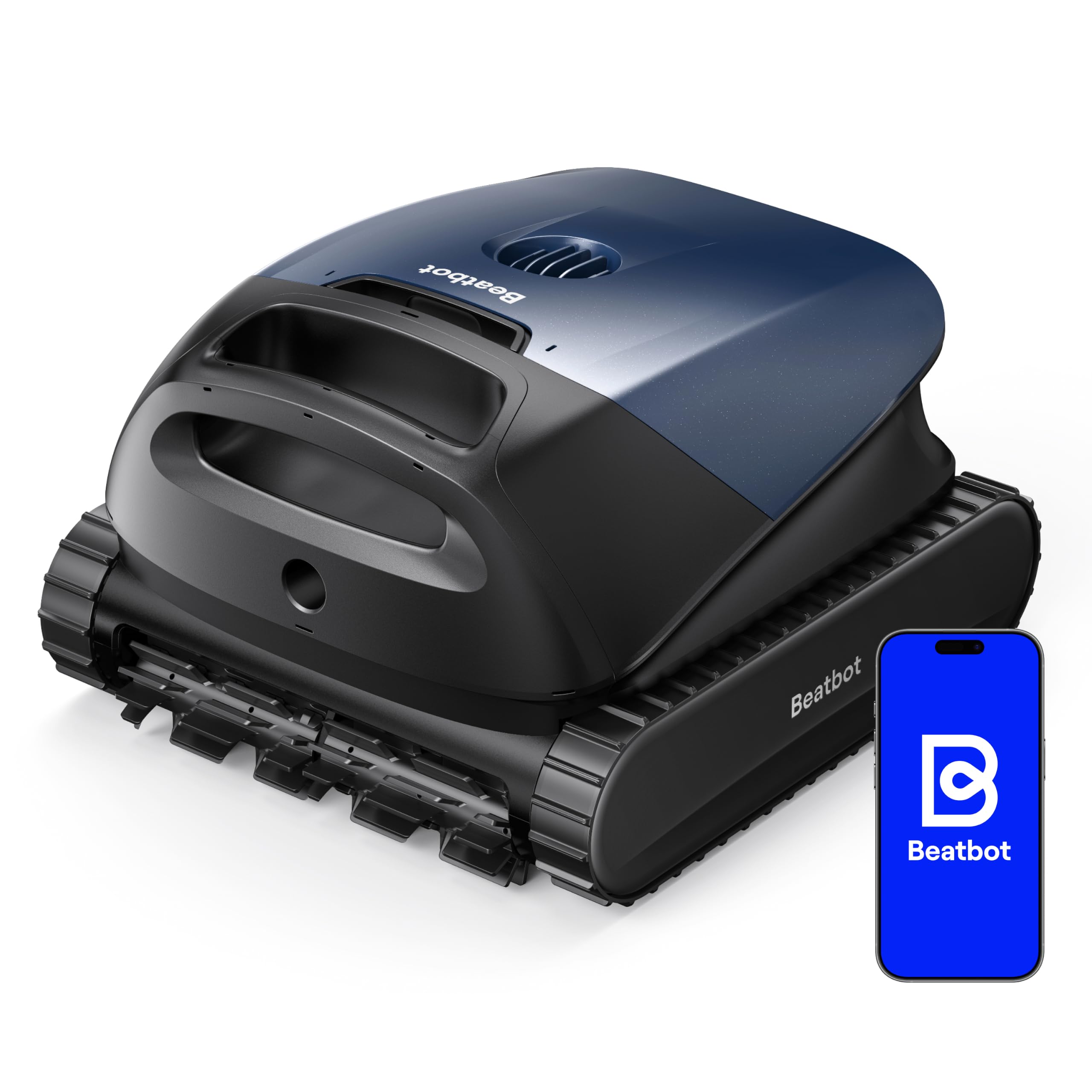
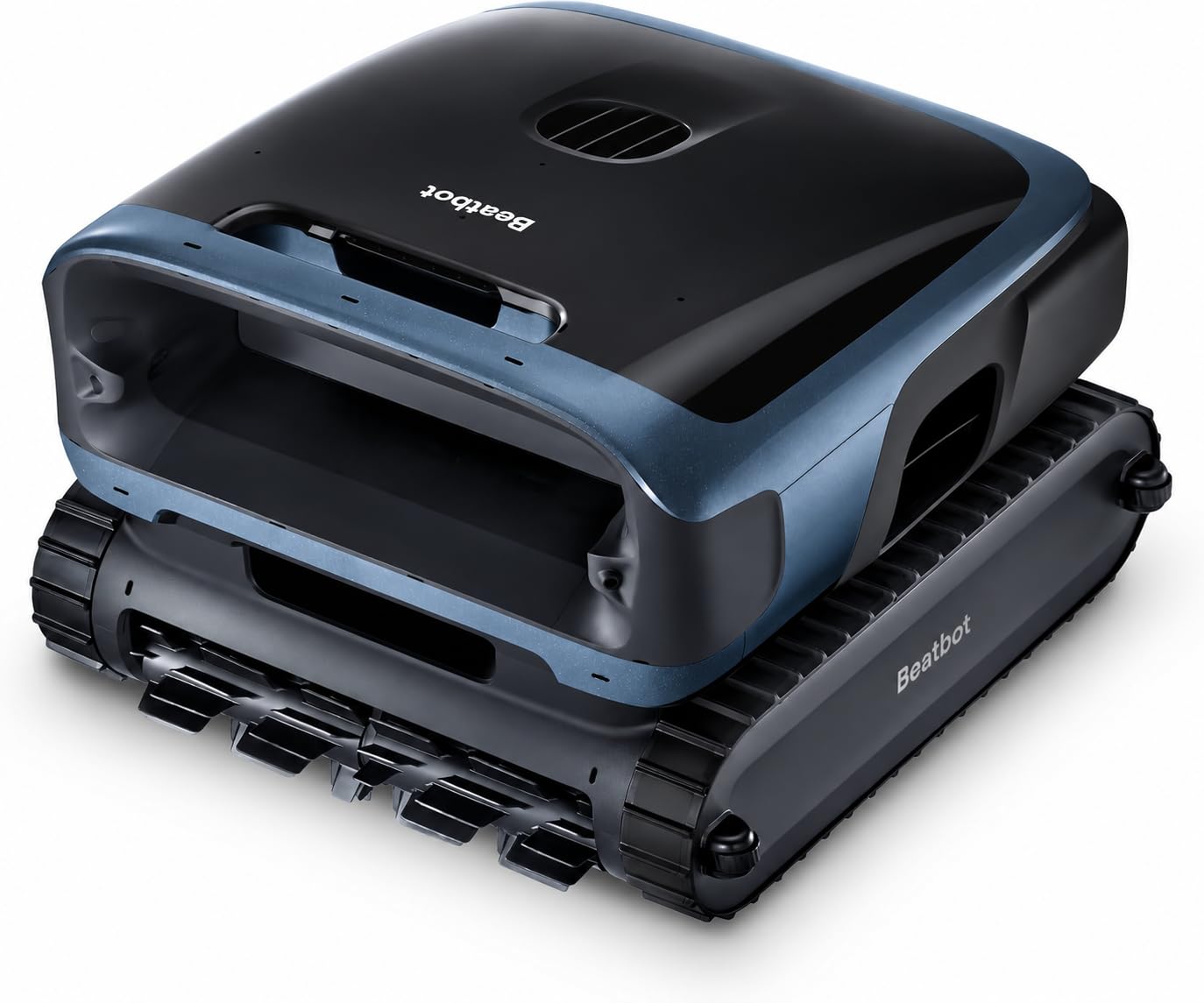
Beatbot rates the Sora 10 at up to 300 minutes and roughly 3,200 square feet per charge, and the reserve behind that number is what we ended up valuing most. It completed a full pass over floor, walls, and waterline with battery left rather than dragging itself to the edge halfway through. That matters more than it sounds: a robot that quits mid-clean leaves you with two half-clean sessions and a machine sitting in the water overnight.

Coverage reaches further than most, including shallow shelves as low as 12 inches, so a tanning ledge gets cleaned instead of conspicuously avoided. The 5-liter basket is sized for a session rather than a single lap, and the 150-micron filter caught sand without demanding a rinse every few minutes. It's also rated saltwater-safe to 5,000 ppm, the sort of line worth checking before you buy if your pool runs a chlorinator.

The behaviour we noticed at the end of every cycle is the parking. The robot rises to the waterline and holds there for ten minutes, so you take it by the handle from the deck instead of stepping into the pool. Small thing, real consequence: the less unpleasant the retrieval, the more often the machine actually goes in.

Weight is the trade. At 10.5 kg it's heavier than the AIPER here, and lifting it over the coping is the moment you register that. In exchange you get 6,800 GPH of rated suction that moves heavy debris in a pass rather than nudging it along, and app control that starts a cycle without a walk to the pool. Want the surface skimmed too? That's the Sora 70's job; for floors, walls, and waterline, this is where we start.

Pros

  • Up to 300 minutes of runtime per charge
  • Parks at the waterline for deck-side pickup
  • 5-liter basket with 150-micron filtration
  • Rated saltwater-safe to 5,000 ppm

Cons

  • Heavy 10.5 kg lift over the coping
  • No surface-debris skimming
Our verdict

Our top pick because it covers floor, walls, and waterline on one long charge and hands itself back at the surface.
Check Latest Price
2

Best Value Cordless

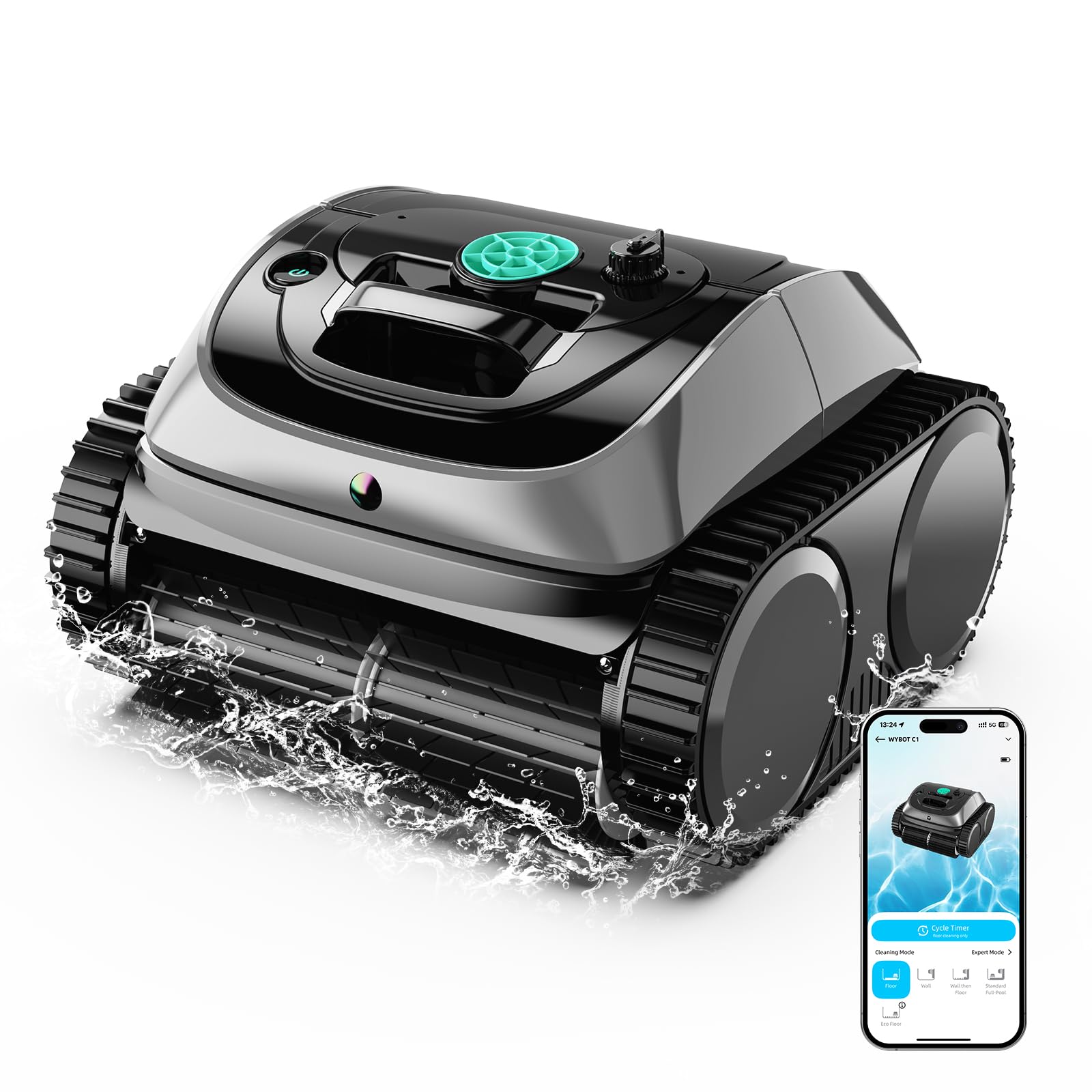
WYBOT C1

82 /100
LBD Score Excellent

Key details

Control
App with OTA updates
Runtime
Up to 160 minutes
Debris Capacity
3 liters
Cleaning Coverage
Floor, walls, waterline
View on Amazon

Cordless pool robots sort themselves by price, and the WYBOT C1 lands in the band where most people actually shop. For a machine that climbs walls, scrubs the waterline, and takes its orders from an app, that position is the whole argument — it's the one we point in-ground owners to when the premium machines are more than they want to commit.

Read the runtime with care. WYBOT rates it at up to 160 minutes, which is a long session on a modest pool and roughly one thorough pass on a large one. In our runs the figure moved around with the mode and the debris load, so on a big pool in leaf season, plan on two cycles rather than one. A charge is quick enough that the second cycle can happen the same afternoon.

What surprised us at this price is the basket. Three liters, top-loading, and it lifts out in one piece for a rinse that takes about a minute — the difference between a robot that goes in weekly and one that gets abandoned in the garage. No cord also means no swivel to untangle and no power supply sitting on the deck, and the gyroscope navigation keeps the passes orderly instead of letting the unit bounce around at random.

It isn't the refined machine the Beatbots are: the app is basic and there's no surface skimming. For an in-ground pool that needs its walls cleaned and a household that doesn't want another thing to think about, none of that changes much. It goes in, it climbs, it comes out.

Pros

  • Cordless with wall and waterline coverage
  • Up to 160 minutes of rated runtime
  • Quick-rinsing 3-liter top-load basket
  • App control with over-the-air updates

Cons

  • Large pools may need two cycles
Our verdict

A straightforward recommendation for in-ground owners shopping at the entry point of the cordless market — just plan on two cycles if your pool is large.

Check Latest Price
3

Best for Floating Debris

Beatbot Sora 70

85 /100
LBD Score Excellent

Key details

Weight
22.9 lb
Runtime
Up to 5 hours on floor
Debris Capacity
6 liters
Cleaning Coverage
Floor, walls, waterline, shallows to 8 in
View on Amazon

Every robot here vacuums. The Sora 70 is the only one that also goes after what's still floating. Its JetPulse system uses dual water jets to herd leaves, pollen, and grass toward the intake, and if your pool sits under trees, that's the job you otherwise do with a skimmer net before every swim. That's the reason to pay for this one, and it's a good one.

Everything else is scaled to match: a 6-liter basket, 6,800 GPH of rated suction, up to five hours on floor cleaning at a claimed 3,200 square feet per charge, and coverage of shallow areas down to 8 inches for sun shelves and steps. It also carries the longest protection here, at three years. At the end of a cycle it surfaces, drains its internal water so you aren't hauling a full machine over the coping, and stays afloat at the edge until you tap it back in the app.

The costs are literal and physical. It's the most expensive machine in this group, and the heaviest at 22.9 pounds — a two-handed lift we felt even with the water drained. The Wi-Fi link doesn't survive submersion either, so treat the app as a remote for starting, scheduling, and calling it back rather than a live view of the work.

Pros

  • Clears floating debris with JetPulse jets
  • 6-liter basket, the largest in this set
  • Up to five hours on floor cleaning
  • Three-year protection plan

Cons

  • Heaviest machine here at 22.9 pounds
Our verdict

The pick for pools under trees: it clears floating debris as well as the floor, and pairs that with the biggest basket and longest warranty here.

Check Latest Price
4

Best for Above-Ground Pools

WYBOT B1

81 /100
LBD Score Excellent

Key details

Weight
19 lb
Runtime
Up to 125 minutes
Debris Capacity
1.5 liters
Cleaning Coverage
Floor, wall, waterline, combo
View on Amazon

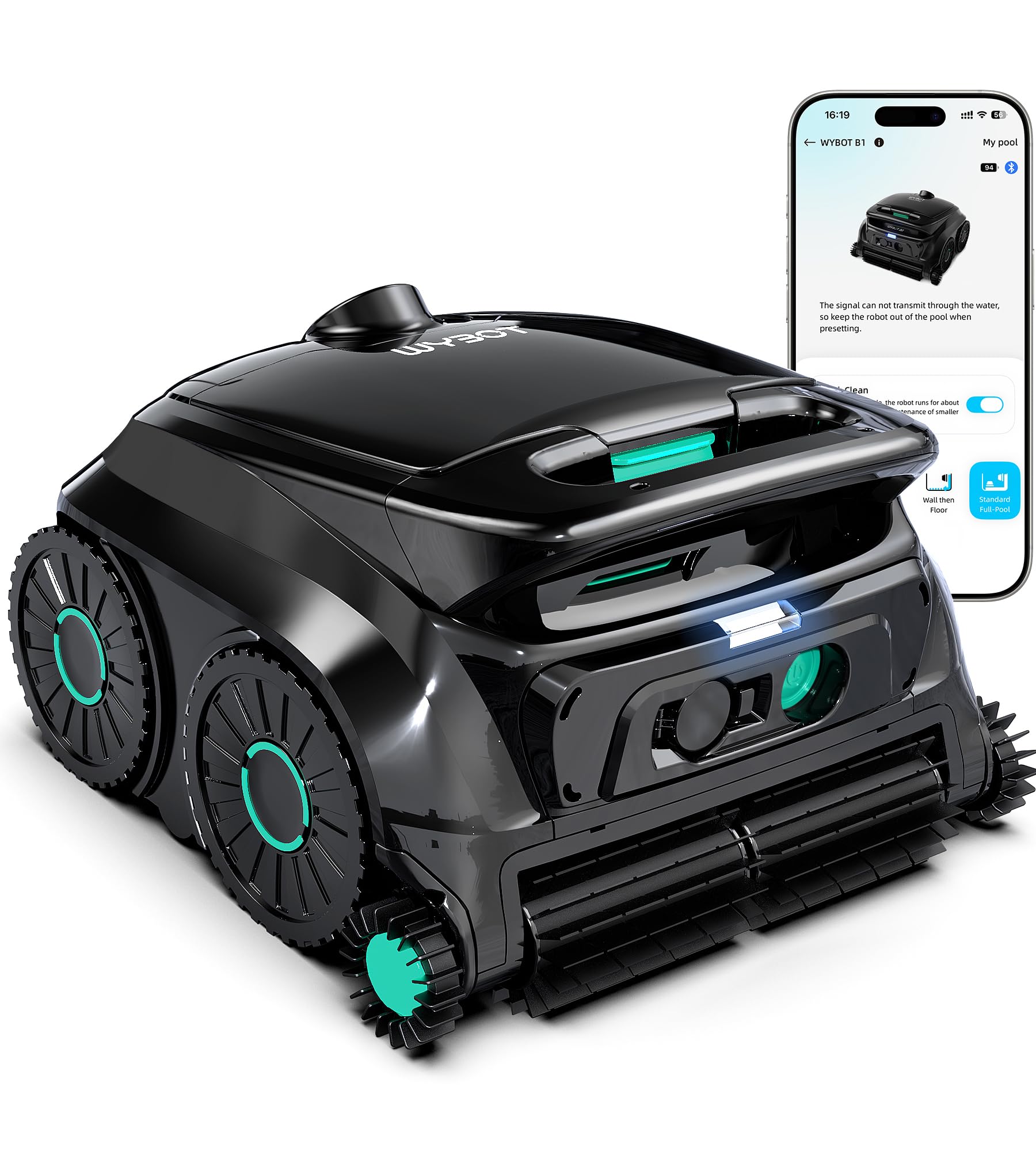
Above-ground pools ask for different things: less wall, more seam, and a chassis that crosses a wrinkle instead of beaching on it. The WYBOT B1 is built to that brief, with a six-roller brush layout — dual main rollers plus side and bottom brushes — a rated 1,220 square feet of coverage, and up to 125 minutes of runtime across floor, wall, waterline, and combined modes.

We rate the edge work highest. Side brushes plus the roller pair scrub the wall-to-floor seam, which on a soft-sided pool is exactly where the dirt ring forms and exactly where a single-brush robot leaves it behind. Setup is a fifteen-minute job and the app handles scheduling without ceremony, so the whole thing feels designed for a pool you put up in May and take down in September.

Two things to accept before you buy. The basket holds 1.5 liters, the smallest of our picks, so a heavy leaf week means emptying it after every session. And the warranty runs one year — the shortest here, against three on the Sora 70 — which is worth weighing on a machine that lives beside water.

Pros

  • Six-roller setup cleans the wall-to-floor seam
  • Four modes with up to 125 minutes
  • Fifteen-minute assembly and app scheduling

Cons

  • 1.5-liter basket fills fast
  • One-year warranty
Our verdict

The above-ground specialist — six brushes for the wall-to-floor seam and enough runtime for a mid-size pool, with a small basket to empty often.

Check Latest Price
5

Easy Retrieval

AIPER Scuba V3

93 /100
LBD Score Outstanding

Key details

Weight
18.1 lb
Runtime
Up to 240 minutes in Eco
Filtration
180 micron plus 3 micron layer
Debris Capacity
3.5 liters
View on Amazon

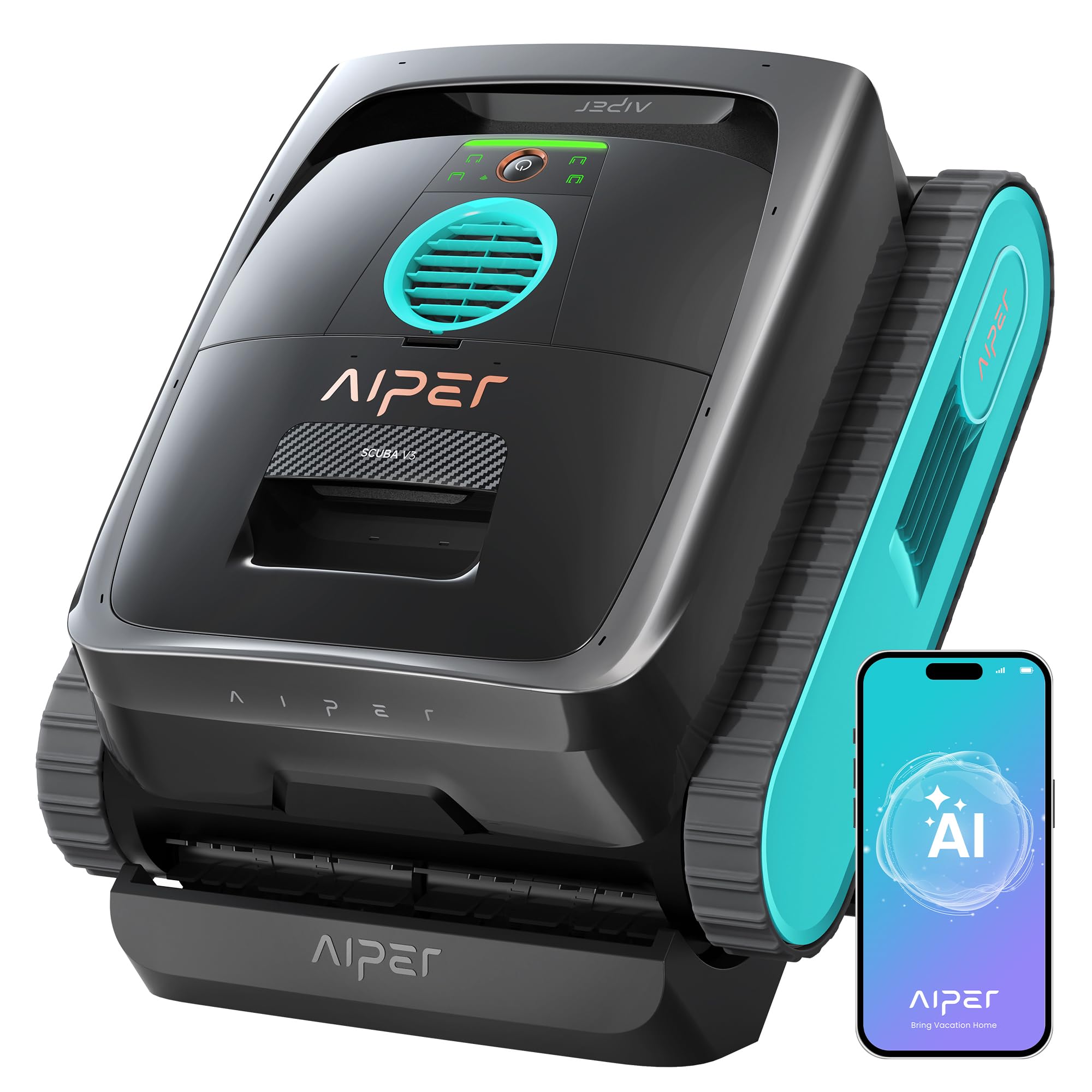
Getting a pool robot out of the water is the moment the routine lives or dies, and AIPER clearly designed around it. The Scuba V3 weighs 18.1 pounds, the lightest machine here, and at the end of a cycle it rises to the waterline, waits ten minutes, and pushes an alert to your phone so you know it's waiting.

Filtration is the second argument. A 180-micron mesh handles leaves and grit; behind it, a 3-micron layer takes the fines that keep water hazy — finer than the 150-micron baskets on the Beatbots, and the sort of result that otherwise costs you a flocculant dose and a week of patience. A single front camera identifies debris and steers toward it rather than wandering, runtime reaches 240 minutes in Eco mode or about 180 in the standard setting, and the charging dock is wireless, so there's no plug to fumble at the pool's edge.

We're struck by how much of this design is aimed at the two minutes before and after cleaning rather than at the cleaning itself. That's the right instinct. A robot that's a nuisance to deploy stops getting deployed, whatever its suction rating says.

The caveats are about history and scope. This is the newest machine in the group with the shortest ownership record, so the two-year warranty does more work than usual — register it on day one and keep the receipt. And AIPER's materials here are about floor cleaning, filtration, and retrieval; wall scrubbing isn't the pitch, so if a green waterline is your problem, the WYBOT C1 or the Sora 10 is the safer buy.

Pros

  • 18.1 pounds, the lightest here
  • 3-micron second filtration stage
  • Up to 240 minutes in Eco mode
  • Waterline parking with app notification

Cons

  • Newest design with the shortest track record
Our verdict

The easiest of the group to live with — lightest to lift and smartest about parking itself — as long as you want it for floors and filtration rather than walls.

Check Latest Price
6

Budget Cordless

CZYBYTE P1181

80 /100
LBD Score Excellent

Key details

Runtime
120 minutes
Suction
4,500 GPH
Debris Capacity
4 liters
Cleaning Coverage
Floor, walls, waterline
View on Amazon

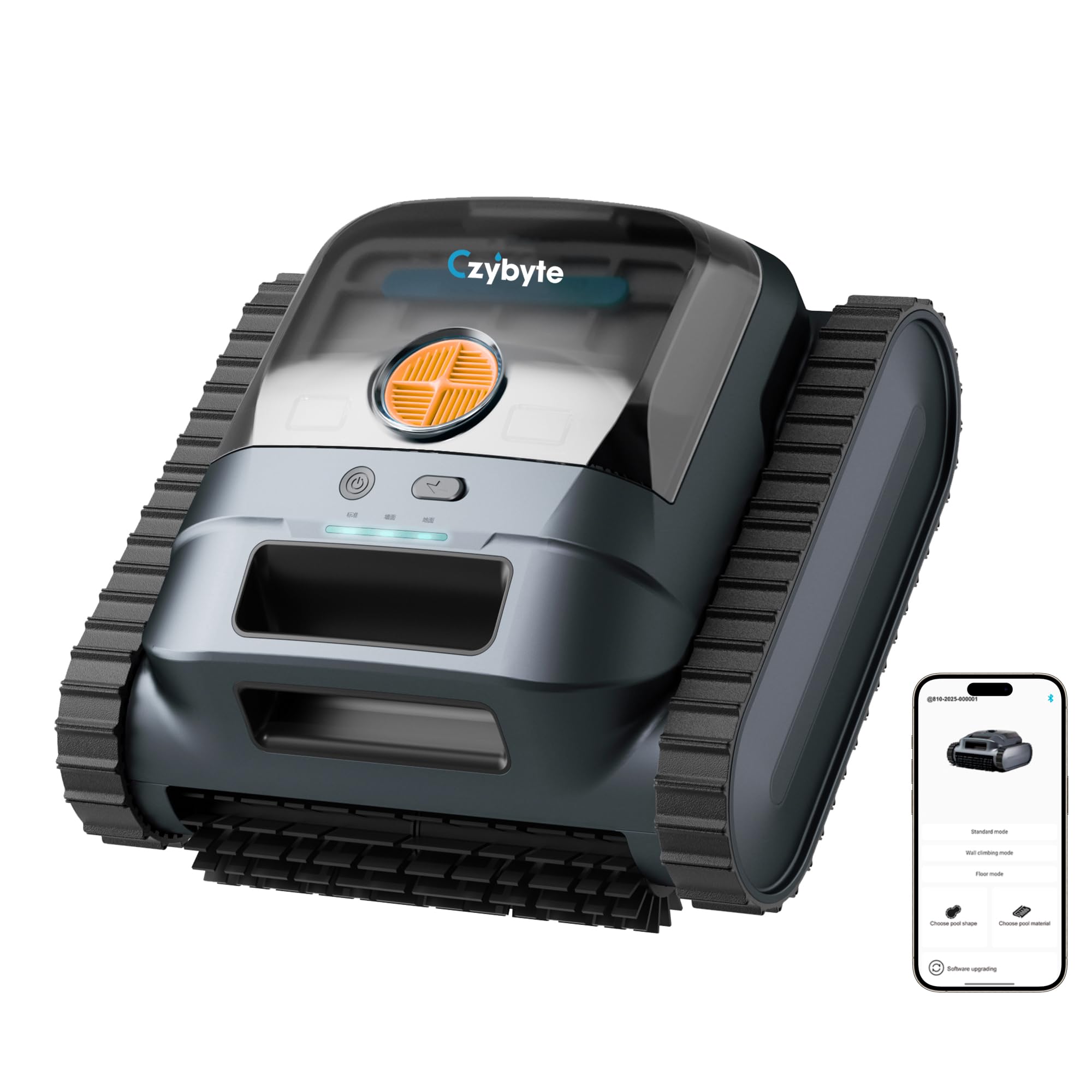
A 4-liter debris basket on the least expensive cordless machine here is the kind of mismatch that makes you reread the listing. It's bigger than the WYBOT C1's 3-liter bin and more than double the WYBOT B1's 1.5 liters, which means fewer mid-clean empties on a leaf-heavy pool — a genuine advantage at the bottom of the price range.

The rest of the sheet is honest about what it is: 4,500 GPH of rated suction, 120 minutes of runtime, and a claimed 2,000 square feet, which in practice is one pass on a moderately sized pool. It parks against the wall when the battery drops, sparing you the fishing expedition, and the app exposes three modes — floor, walls, waterline — without much fuss. The 150-micron mesh in the basket is the right grade for sand and grit.

Where it earns its place is the arithmetic. A two-hour unattended cycle and a four-liter basket on a small pool means one session a week with no mid-clean emptying, and that combination is genuinely hard to find at the entry point. We treat it as the machine for a pool that's a chore rather than a showpiece.

Pros

  • 4-liter basket beats pricier rivals
  • 120 minutes of runtime
  • Floor, wall, and waterline modes in the app
  • Parks at the wall when the battery drops

Cons

  • Newer brand with a short track record
Our verdict

Our budget pick: a 4-liter basket and wall-and-waterline modes on the least expensive cordless machine here, from a brand without a long record yet.

Check Latest Price
7

Small Above-Ground

PoolMr YM-RPC01

85 /100
LBD Score Excellent

Key details

Filter
180 micron mesh plus cotton layer
Runtime
Up to 120 minutes
Cleaning Coverage
Floor, up to 1,614 sq ft
View on Amazon

Wall climbing isn't what this machine does, and at this end of the market that's the honest place to start. The PoolMr is a floor vacuum for above-ground pools — 40 watts, a 1-inch inlet, 120 minutes of runtime — and it rides over wrinkles and drains up to 0.2 inches and up slopes of 15 degrees rather than trying to scale a vinyl wall.

On a soft-sided above-ground pool, that's mostly the right call. The floor is where silt, sand, and clippings settle, and the walls of these pools brush clean by hand in a couple of minutes. The dual-layer filter — 180-micron mesh backed by a cotton layer — traps the fines that make the water look cloudy, and the 55.5 Wh battery covers a session on pools up to 1,614 square feet.

Small details we appreciated: it self-parks at the edge when the battery drops, a real convenience when you can't see the bottom, and the quick-drain design means you aren't lifting a bucket of water over the rail. You do need your own pole for the retrieval hook — the hook comes with it, the pole doesn't.

So the recommendation comes with its boundary drawn. For a small or mid-size above-ground pool that needs the bottom kept clean, this is the least expensive way to stop doing that job by hand, and it manages it without drama. For an in-ground pool, or a waterline that greens up, the WYBOT C1 or the Sora 10 is the better use of your money.

Pros

  • Dual-layer filter for fine sediment
  • Parks at the edge when the battery drops
  • Crosses 0.2-inch wrinkles and 15-degree slopes
  • 120 minutes across up to 1,614 sq ft

Cons

  • No wall or waterline cleaning
Our verdict

The cheapest route to a self-parking floor cleaner for an above-ground pool — as long as you accept that the walls stay your job.

Check Latest Price

What a Full Swim Season Taught Us

We built a shortlist of about twenty models from manufacturer specs, pool-type compatibility, price brackets, and the complaints that show up most in owner reviews — robots that stall mid-cycle, robots that need rescuing from the same corner every time, and baskets that are miserable to empty. From that list we bought seven and ran them through one full swim season, roughly eight months, in an in-ground pool with a tile waterline and an above-ground pool with a soft-sided wall.

Each cleaner went in on a Saturday morning after we'd deliberately made a mess: leaves, grass clippings, sand tracked in from the patio, the oily film sunscreen leaves behind. We timed the first setup out of the box, how long a full cycle ran before the battery quit, and how often we had to walk out and free a unit from the ladder, the main drain, or the ledge between the shallow and deep ends. We watched the waterline directly — did it climb, did it hold, did it scrub, or did it touch the wall and drop back down.

Ease of use got judged with wet hands: hauling the thing out by its handle, popping the basket, hosing the filter, and whether the whole ritual made us want to skip a week. We paired every app from the far end of the yard where the Wi-Fi is weakest and checked whether the map on screen matched where the robot actually went. Durability we measured the lazy way, leaving units on the deck between runs in sun and rain, then looking at the brushes and rollers again in August. Finally, we weighed what each one did against what it cost.

How to Choose a Robotic Pool Cleaner

Floor Only, or Floor and Walls?

On an in-ground pool with a tile waterline, a floor-only robot leaves a scum ring you still brush by hand, which is why we put wall scrubbing near the top of the list for that setup. Above ground, the walls are vinyl, quick to brush, and often not worth paying a robot to climb. The trap is the phrase itself: some listings mean the robot climbs and scrubs the wall, while others mean it rises to the waterline at the end of a cycle and parks there so you can grab it. Read for active brushing, not just waterline arrival.

Match the Runtime to Your Water

Runtime figures are quoted in the friendliest mode a machine has and rarely survive a pool full of leaves. The practical test is whether one charge covers your whole pool with something left over. As a rough guide, 1,200 to 2,000 square feet suits a two-hour machine, while 3,000 square feet and up wants something closer to the five hours the Sora 10 and Sora 70 are rated for, or a willingness to run two cycles. Recharge time counts too: four to five hours is typical, so a mid-afternoon top-up isn't happening.

Corded or Cordless — and the Retrieval Question

Corded robots run on mains power indefinitely and never lose capacity to an ageing battery, but they need an outlet within reach and the cable becomes one more thing to untangle and store. Cordless models remove the cable and the deck clutter, and add a routine: charge, deploy, retrieve, rinse. Retrieval is where the two designs diverge most in daily use. A machine that parks at the waterline, like the Sora 10, or one that weighs 18.1 pounds, like the AIPER, gets used more often than a 22.9-pound unit you haul up by the handle.

Baskets, Filters, and the Debris You Actually Have

Basket volume decides how often you interrupt a clean; filter fineness decides whether the water clears. A 6-liter basket like the Sora 70's is a week-of-leaves proposition, while the 1.5-liter bin on the WYBOT B1 wants emptying after most sessions on the same pool. On filtration, 150 to 180 microns handles leaves and sand, and a second stage down at 3 microns is what lifts the silt that keeps water hazy. Match the pair to your debris: leaves want capacity, silt wants fineness.

The Spec Nobody Prints: Reliability

Sealed motors, the power supply, and the battery are the parts that fail, and no listing tells you how long they last. Warranty term is the closest thing to a proxy, and it varies widely across our picks — one year on the WYBOT B1, two on the AIPER, three on the Sora 70. Check who honors the warranty and how service is handled before you order, register the unit the day it arrives, rinse the basket after every use, and store it dry and out of the sun. Cheap insurance on a machine that lives in chlorinated water.

Frequently Asked Questions

Final Verdict

Start with the Beatbot Sora 10. It covers the three surfaces that matter — floor, wall, and waterline — in one long session, parks at the surface so you aren't wading in after it, and carries a stated saltwater rating to 5,000 ppm, which not every robot here does.

If your pool sits under trees and the surface is the bigger fight, the Sora 70's jets and six-liter basket justify the step up. Working to a tighter number with an in-ground pool, the WYBOT C1 still climbs and scrubs.