Best Overall

Renogy 200W N-Type Solar Panel
Key details
- Weight
- 23.4 lb
- Panel Size
- 49.7 x 30.1 x 1.2 in
- Rated Power
- 200 watts
- Cell Efficiency
- 25%
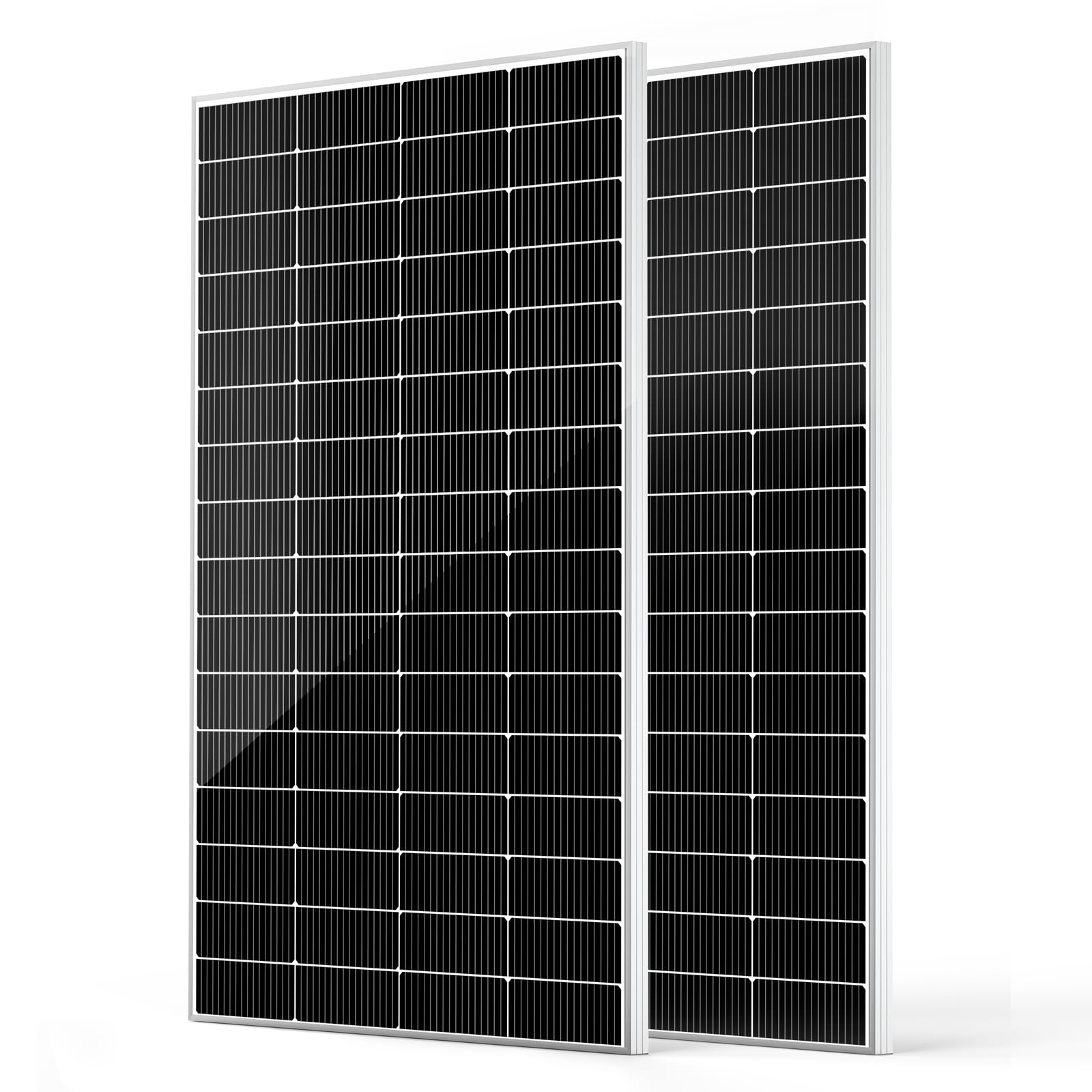
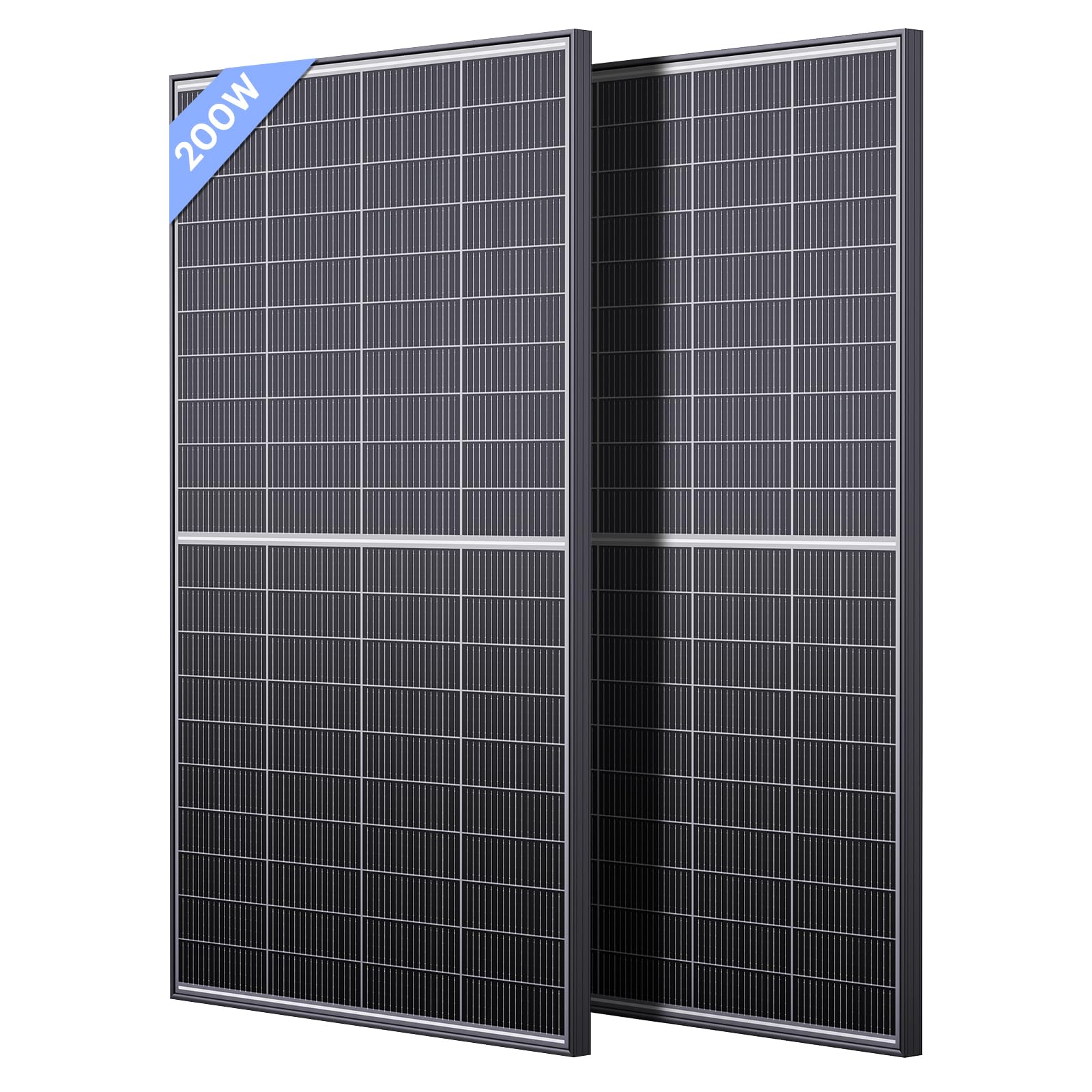
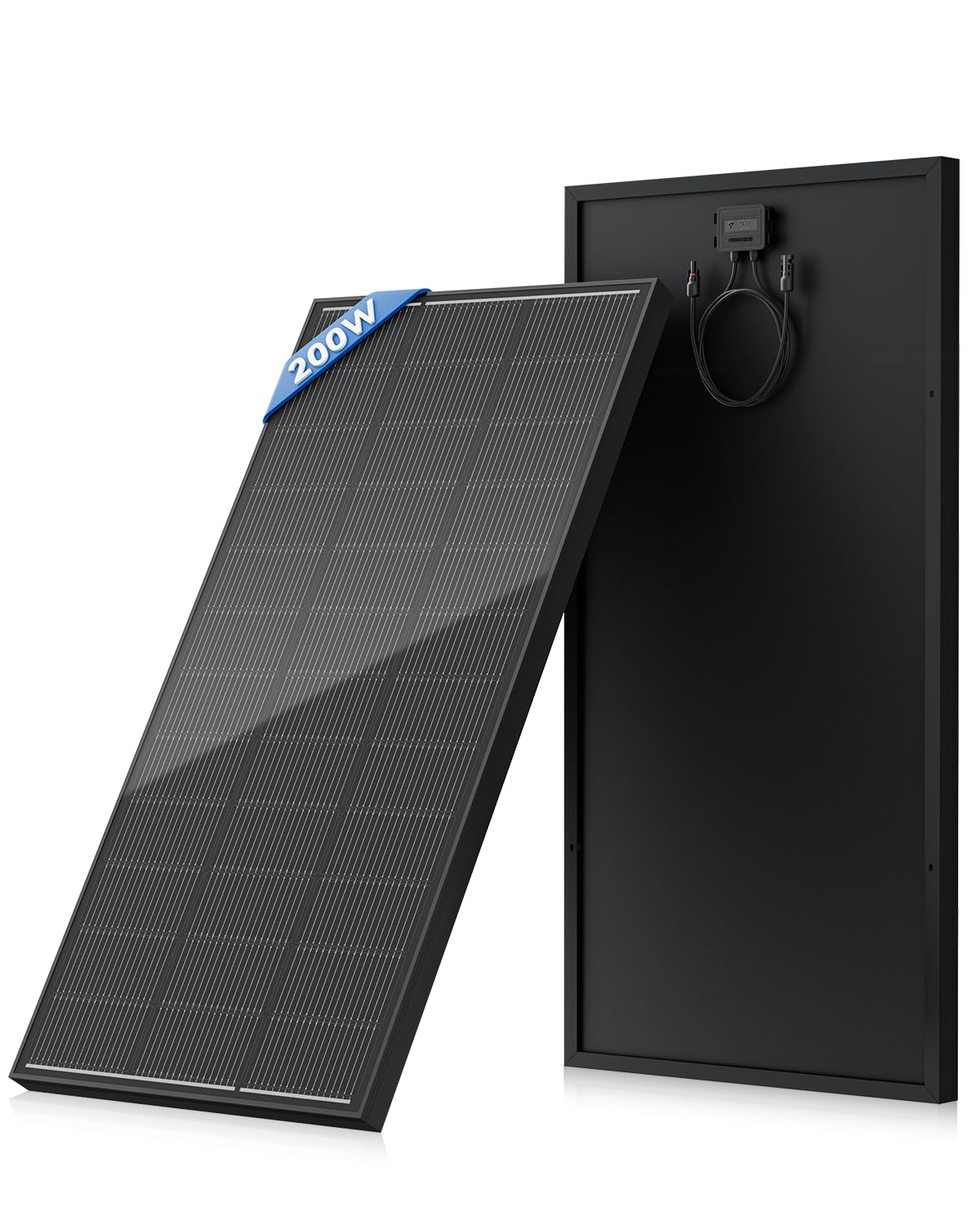
A 200-watt panel is a big sheet of glass, and this one is 7.5% smaller and 11.7% lighter than the version it replaced: 49.7 by 30.1 inches and 23.4 pounds. On a campervan roof that difference decides whether a second panel fits beside the vent and the skylight. It is a two-hand lift onto a rack, not a two-person job.
This is the panel we recommend first, because it answers the ordinary RV question without asking you to learn anything new. The 25% N-type cells and 16-busbar layout are the current generation, and the low temperature coefficient matters more than it sounds — a roof panel gets hot, and heat is where rated watts quietly disappear. Renogy rates degradation at 1% in the first year and 0.4% a year after, with a 10-year workmanship warranty.
Settle one thing before you order. This is a 24-volt-nominal panel with a 37.44-volt maximum-power voltage, so it wants an MPPT controller rated for its open-circuit voltage. A cheap 12-volt PWM controller is the wrong partner and will waste a good panel; if you are keeping the PWM unit you already own, start with a 20-volt panel instead.
Renogy has changed this panel's dimensions between revisions, so measure before you assume it drops into brackets you already have — the current version is 49.7 inches long, and earlier ones were noticeably different.
Pros
- 25% N-type cells in a compact footprint
- Low temperature coefficient holds output in heat
- 10-year workmanship warranty and slow degradation
Cons
- Panel only, with no controller, cable, or brackets
The panel we point most RV owners to: efficient, compact enough for a van roof, and easy to build on later. Give it an MPPT controller.