Best Solar Panels for Off-Grid Cabins of 2026

The inverter starts beeping at 9 p.m., the fridge has run since noon, and the clouds rolled in at two — that was the night I stopped guessing about off-grid power. Solar on a cabin isn't a green gesture; it decides whether you can run the lights, the pump, and the fridge at once. The panels look identical leaning against a wall. The differences show up in week three, when the sky stays gray.

We've spent nine months with 10 panels and small kits — single 200-watt modules up to 400-watt pairs — on a cabin roof, a shed, and a camper. Real output on a hot afternoon, footprint, whether the brackets came in the box, and how fast the battery bank clawed back after three gray days separated them far more than the wattage on the label. Worth knowing: that rating is a lab figure taken at 25 degrees Celsius, so a panel baking on a July roof runs under it, and one shadow across a corner costs more than the shaded area suggests. The picks below are the ones that held up.

1

Best Overall

Callsun 400W Pair

93 /100
LBD Score Outstanding

Key details

Panel Size
51.3 x 30.3 x 1.4 in
Panel Count
2 x 200W
Rated Output
400W
Cell Efficiency
25.6%
View on Amazon

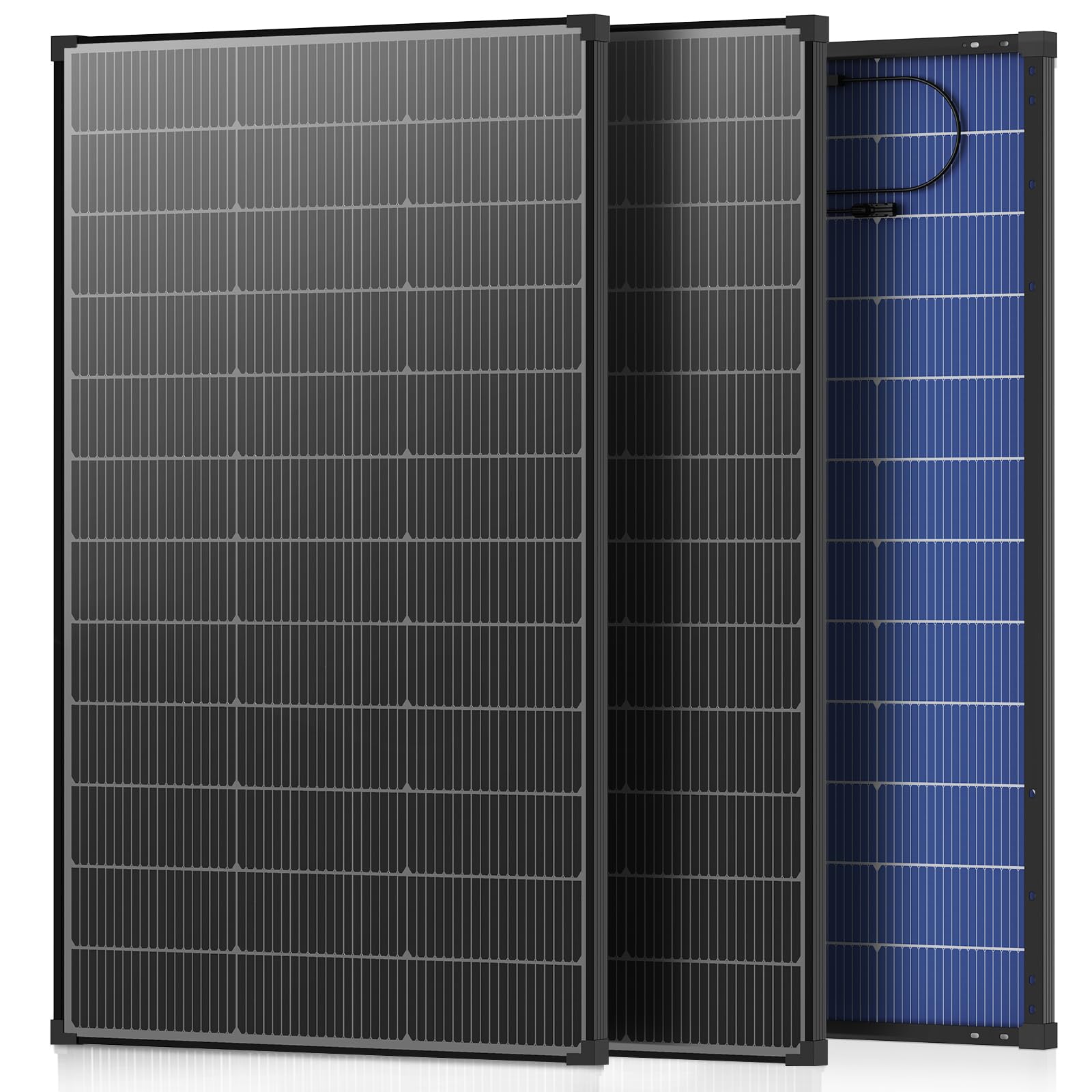
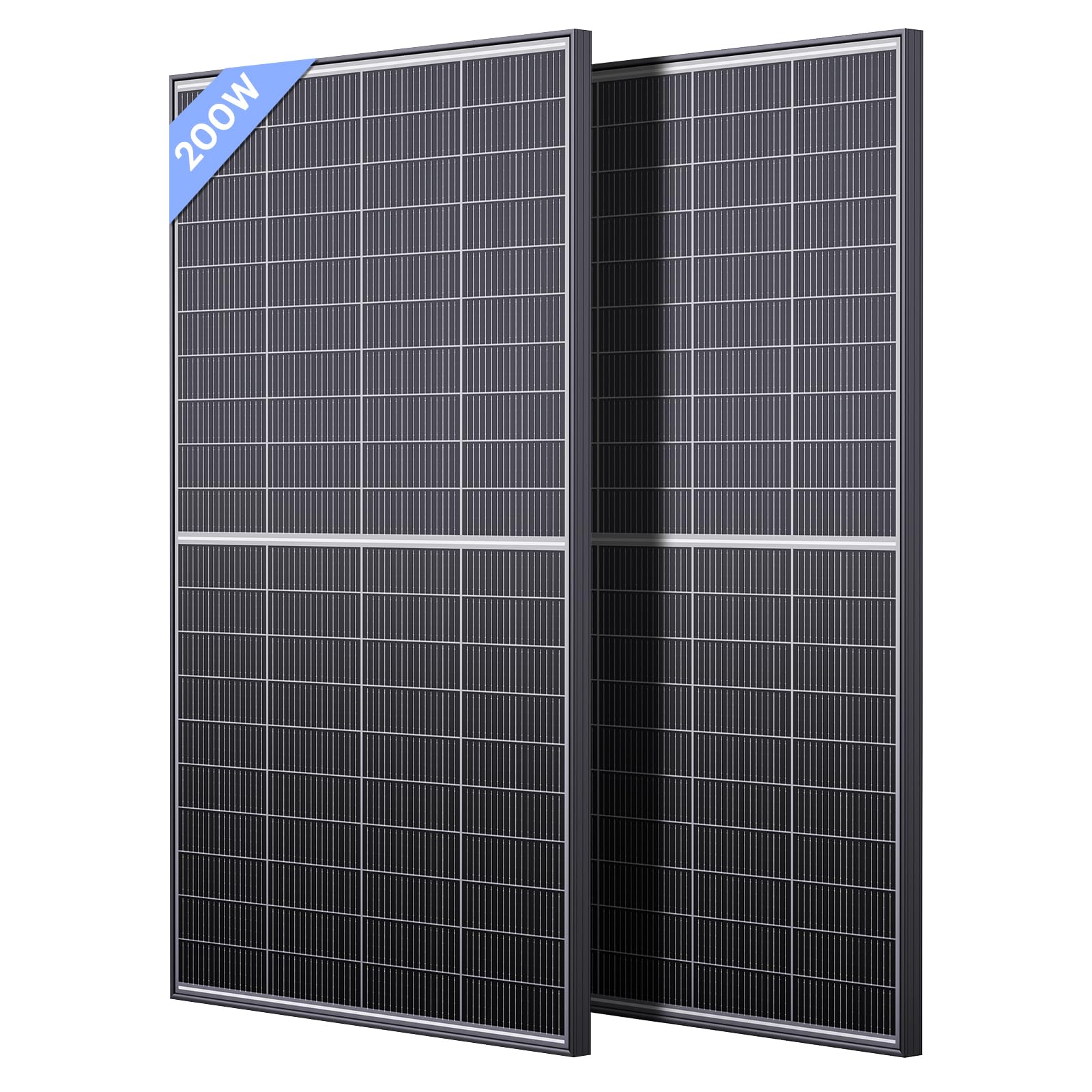
The feature that won us over on the Callsun pair is not the 400-watt headline but the way each panel is split into two independently working halves. On a cabin roof where a tree throws shade across one corner, that TwinCell layout keeps the unshaded section producing instead of dragging the whole panel down. That is why this is our top pick for off-grid cabins: it is the array here that best handles the imperfect light most cabins actually get. The 25.6% N-type cells are also among the highest efficiency figures in this group, so the shade tolerance does not come at the cost of a weak panel.

In strong sun, the two panels can exceed their 400-watt rating, which gives a cabin some headroom for a fridge, lights, and device charging. The bifacial backsheet can add more when the panels are mounted over a reflective surface, though you should not count on that gain on a dark shingle roof. To reach the full 400 watts you wire the pair in series, so check that your charge controller can accept the combined voltage before you connect anything. The panels come with solar connectors and a manual, but no controller.

Each panel measures 51.3 by 30.3 by 1.4 inches and weighs 23.8 pounds, so two people can handle the install without a lift. The aluminum frame feels substantial, and the compact shape leaves room for a walkway or a roof vent on many cabin roofs. The 51.3-inch length is the measurement to check first; it fits many van-style racks, but a cabin roof with a short clear run will need a different layout.

Pros

  • TwinCell layout limits partial-shade losses
  • Can exceed 400W in strong sun
  • 25.6% cell efficiency is among the highest here
  • Solid frame and compact footprint

Cons

  • Mounting hardware is not included
Our verdict

For a cabin array that has to shrug off partial shade, the Callsun 400W pair is our top pick; it is the strongest all-around choice here for a 12V/24V off-grid system.

Check Latest Price
2

Best Compact Panel

Renogy 200W Panel

93 /100
LBD Score Outstanding

Key details

Panel Size
49.7 x 30.1 x 1.2 in
Rated Output
200W
Weather Rating
IP67
Cell Efficiency
25%
View on Amazon

At 49.7 by 30.1 inches and 23.4 pounds, the Renogy panel is the compact one we reach for when a cabin roof has more sun than usable square footage. It is a single 200-watt panel, not a kit, so plan on a controller, wiring, and mounts. The smaller frame leaves room for a vent, chimney, or walkway, and it is 7.5% smaller and 11.7% lighter than the previous version of this panel.

We rank it as the best compact panel here because the 25% N-type cells hold voltage well in heat and keep charging when the light is less than ideal. The 24V operating voltage and low temperature coefficient are the reasons a cabin in a hot, sunny climate can still get useful output from a modest panel. The 200-watt rating is a lab figure, and like every panel here it will produce less in heat, haze, or shade. What matters is that it keeps working when the light is not perfect.

The frame is rigid, the IP67 junction box is sealed against weather, and Renogy backs the workmanship for 10 years. Installation is straightforward on a roof rack. The 1.2-inch depth keeps the profile low, which matters when the panel sits above a cabin roof you see every day.

Pros

  • Compact 49.7 x 30.1 in footprint
  • Light 23.4 lb panel
  • 25% N-type cell efficiency
  • IP67 sealing and 10-year workmanship warranty

Cons

  • Single 200W panel suits smaller loads only
Our verdict

For a tight roof or a phased cabin build, the Renogy 200W panel is our compact pick; it is well built and easy to add one at a time.

Check Latest Price
3

Best Value Array

ECO-WORTHY 400W Array

88 /100
LBD Score Excellent

Key details

Panel Size
35.63 x 23.03 x 1.18 in
Panel Count
4 x 100W
Rated Output
400W
Cell Efficiency
25%
View on Amazon

The math is what makes the ECO-WORTHY set interesting: four 100-watt panels add up to 400 watts, but each one is small enough to fit around a roof vent, a chimney, or the shaded edge of a cabin clearing. That flexibility matters more on a real cabin roof than a single large panel's cleaner look. The set also uses N-type bifacial cells, so you are not giving up modern panel technology to get the smaller size.

We think this is the best value 400-watt array in this group. The cells are rated at 25% efficiency, the junction boxes are IP68, and the 35-inch cables give you some slack for a clean run to a combiner box. The smaller panels also make it easier to spread the array across two roof planes, which can help when one section gets morning sun and another gets afternoon sun. In good light, the four panels can produce close to their combined rating; in haze or heat, expect less, as with any panel here.

The frame is sturdy, and the 1.18-inch thickness keeps the panels from looking bulky on a low cabin roof. The pre-drilled holes make mounting straightforward, and the waterproof junction boxes are a real plus for a cabin that sees snow or heavy rain. The trade-off is more connections than a two-panel array, so give yourself time to plan the cable runs and check each connector. The 35.63-inch length is the detail that makes this set easy to work around obstructions; it is one of the shortest panels here, so it fits where the 50-inch panels will not.

Pros

  • Four 100W panels fit around obstructions
  • 25% N-type bifacial cells
  • IP68 junction boxes
  • 35-inch cables add wiring slack

Cons

  • Mounting hardware is not included
Our verdict

For the most 400W capacity for the money in this set, the ECO-WORTHY four-panel array is our value pick, especially on a broken-up roof.

Check Latest Price
4

Best Starter Kit

ECO-WORTHY 200W Kit

91 /100
LBD Score Outstanding

Key details

Panel Size
35.2 x 23.1 x 1.3 in
Rated Output
200W
Cell Efficiency
21.5%
Included Controller
30A PWM
View on Amazon

The appeal of the ECO-WORTHY 200W kit is that it turns a first cabin solar project into a short shopping list: a 200-watt panel, a 30A PWM charge controller, and plug-and-play cabling arrive together. That completeness is worth something when you are wiring a cabin for the first time and do not want to match every connector yourself. The panel is pre-drilled, and the kit can be wired for 12V parallel or 24V series, which gives you a little room to grow.

ECO-WORTHY rates the daily output at up to 800 watt-hours in four hours of full sun, a useful benchmark for lights, a fan, and device charging; treat it as a sunny-day ceiling, not a year-round average. The monocrystalline cells are rated at 21.5% efficiency, which is a step behind the N-type panels here, but the kit's real advantage is that it gets you producing power without a second order for a controller.

We see this as a starter kit rather than a forever array. The panel is pre-drilled, the cables are plug-and-play, and the layout is simple enough to troubleshoot. If your battery bank sits at the far end of the cabin, measure the cable run before you mount the panel; the included leads may not reach. For a first small cabin setup, the convenience is real, and the simple layout is easier to troubleshoot than a four-panel array.

Pros

  • Includes 30A PWM controller and cabling
  • Pre-drilled panel and simple connections
  • Can be wired for 12V or 24V
  • Complete kit for a small first system

Cons

  • PWM controller limits future expansion
Our verdict

For a first small cabin system, the ECO-WORTHY 200W kit is our starter pick: it bundles the panel, controller, and wiring in one easy install.

Check Latest Price
5

High-Efficiency Builds

AeternaSol 400W Pair

80 /100
LBD Score Excellent

Key details

Panel Size
52.76 x 26.38 x 1.18 in
Rated Output
400W
Weather Rating
IP68
Cell Efficiency
25.6%
View on Amazon

The 25.6% efficiency claim and IP68 junction box are why the AeternaSol pair caught our eye. Those are strong numbers for a cabin array, and the bifacial backsheet can add output when the panels are mounted over a reflective roof or ground surface. But the pair does not have the Callsun's twin-cell anti-shade layout, and that is the difference that matters when shade is the main constraint.

The narrower 26.38-inch width can help on a tight layout, but overhang is harder to fix than a missing inch of width. The panels are pre-drilled for Z-brackets and angled mounts, which saves a step on the rack. Bifacial gain depends on a reflective surface; on dark shingles, plan on the front-side rating. Check the 52.76-inch length first; it is the longest panel here, and a clean fit matters more than a fraction of a percent of efficiency.

Pros

  • 25.6% cell efficiency
  • IP68 waterproof junction box
  • Bifacial design can add rear-side gain
  • Pre-drilled mounting holes

Cons

  • Controller and mounting hardware are extra
Our verdict

The AeternaSol 400W pair is a strong high-efficiency alternative for cabin roofs with reflective mounting; we rank it behind the Callsun when shade is the main constraint.

Check Latest Price

How We Tested Solar Panels in Real Off-Grid Conditions

The shortlist started as a spreadsheet of about 40 listings, filtered by cell type, rated wattage, weatherproofing rating, whether a charge controller was included, and whether mounting hardware shipped in the box. I ruled out anything that needed freight delivery or a second person to get it onto a roof, which left 10 panels and kits, from single 200-watt modules to 400-watt pairs, tested over nine months.

Each one went onto a real surface — a south-facing cabin roof, a shed roof that loses the sun by mid-morning, and a camper — and I read output with a clamp meter at midday, in thin cloud, and again at dusk, comparing actual watts against the label. To see what shade really costs, I let a chimney's shadow crawl across one corner of every panel and logged the drop. I also felt how hot the backsheet got and watched whether output sagged as the panel warmed.

Footprint and weight got measured, not guessed: how much roof run one panel ate, whether I could carry and position it alone, and whether the bracket holes lined up with standard rails or needed fresh drilling. Where a kit included a controller, I ran it for a week against a controller I already trusted and watched what the bank did. Then came the long test — three overcast days in a row, logging battery voltage every morning to see which panels clawed the deficit back and which just held even.

Every panel stayed outside through rain and a hard freeze; afterward I checked junction boxes and connectors for water and looked for haze or browning behind the glass. Value came last: what each one cost per usable watt once brackets and a controller were added in.

How to Choose Solar Panels for an Off-Grid Cabin

Size the array around daily watt-hours

Start with what the cabin draws in a day, not with the panel's wattage. Add up lights, a fan, a fridge, device charging, and any tools, then divide by realistic sun hours and add margin for heat, wiring, and battery losses. A 200W panel is a reasonable first step for lights and small electronics; a 400W array gives a fridge or a longer stay more headroom. If you are close between two sizes, choose the larger array or leave room to add a panel, because running a battery flat is harder on it than adding capacity.

Plan for shade before you chase efficiency

A 25.6% cell is not much help if a tree covers one corner of the panel all afternoon. Bypass diodes and split-cell or twin-cell layouts can limit the damage, but the better fix is layout: put panels where they get the longest unshaded window, and use smaller panels to work around vents and branches. The Callsun pair's twin-cell design is the most shade-tolerant layout here; the ECO-WORTHY four-panel set is the easier one to spread around obstructions. Watch for shade from the cabin itself, not just trees.

Match the controller to the array's voltage and current

Panels are only half the system. A 400W pair wired in series can produce a high open-circuit voltage, so check the controller's maximum PV input before you connect it. PWM controllers are inexpensive and fine for a small 12V kit, but MPPT controllers usually make better use of a larger array and give you more room to expand. The ECO-WORTHY 200W kit includes a 30A PWM controller; the panel-only sets here need a controller chosen for their series or parallel configuration. Size the controller for the array you plan to have next year, not just today.

Measure the roof, access route, and mounting hardware

A panel that does not fit the roof, or cannot be carried up a ladder, is the wrong panel no matter how efficient it is. Check length and width against vents, edges, and walkways, then check weight and the path to the roof. The Renogy 200W panel is the compact choice here at 49.7 by 30.1 inches; the AeternaSol pair is the longest at 52.76 inches, so overhang is the first thing to check. Mounting hardware is often sold separately, and a sturdy rack with an air gap under the panels matters for heat and snow. Confirm the frame and bracket pattern before you order.

Frequently Asked Questions

Final Verdict

For most off-grid cabins, our default is the Callsun 400W pair. Its twin-cell layout gives it the best chance of useful output when trees or roof obstructions shade part of the array, and 400W total is a more realistic foundation than a single 200W panel. If roof space is the binding constraint, choose the Renogy 200W panel; it is the compact building block. If you want the most 400W capacity for the money, the ECO-WORTHY four-panel set is the value choice.