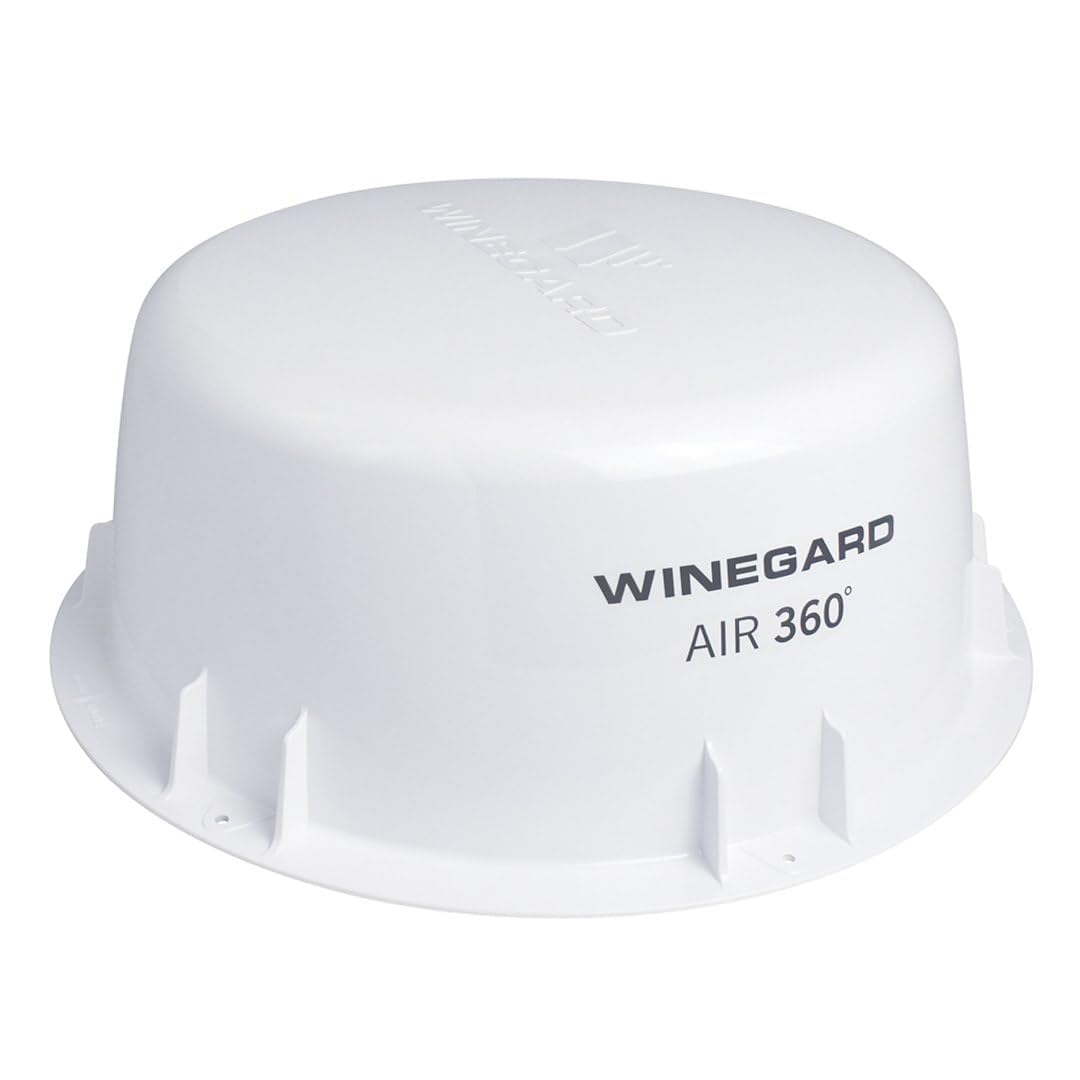
Best Overall
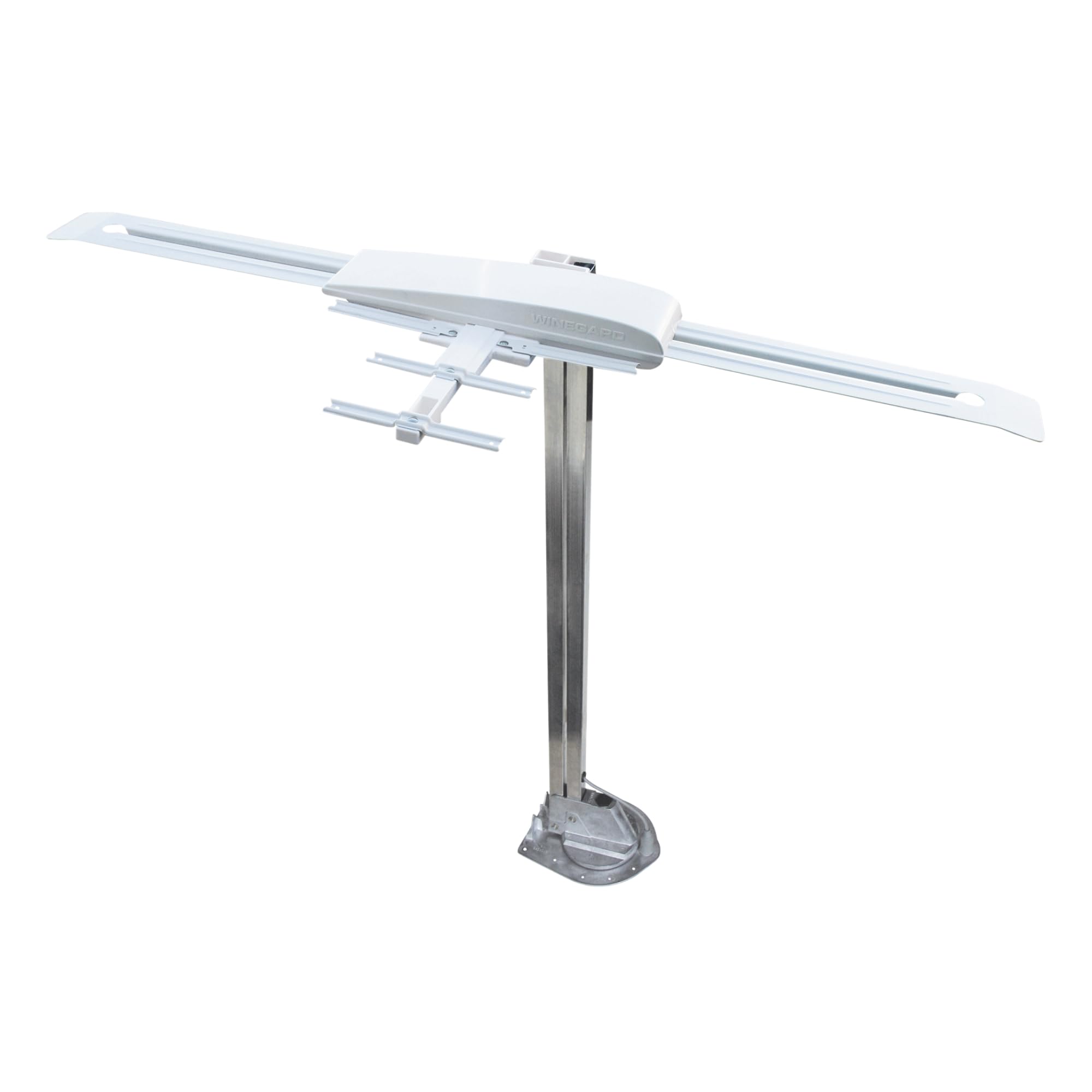
Winegard Sensar IV RVW-395
Key details
- Range
- 55 miles
- Aiming
- Crank-up, rotate from inside
- Weight
- 10.2 lb
- Amplifier
- Built-in
The Sensar IV does two jobs from a single handle inside the coach: it raises the batwing roughly four feet above the roof and rotates it until the picture locks. Aiming is the whole point. A directional antenna concentrates its gain on one heading, so when you're parked a long way from the transmitters with a ridge in between, you can hunt for the angle that works instead of accepting whatever arrives. Of the two antennas we recommend here, this is the one that goes on the trips where reception is the reason you brought a TV.
Behind that handle, the built-in amplifier and the Wingman UHF element do the quieter work. Most digital stations sit in the UHF band, and the Wingman is a reflector-and-director set that sharpens the head's UHF response rather than just turning up the volume on everything, noise included. We paid attention to that distinction, because a dumb amplifier makes a clean weak signal louder and a dirty one worse. Pointed at the towers, this is the antenna in this group that holds a lock on channels a fixed dome drops.
The head is the one part that feels lighter-duty than the mast it rides on. The crank gear and the powder-coated boom feel like the substantial half of the assembly; the wing itself is thin, and if you're the sort who leaves an antenna standing through a storm, that's the piece to think about. Winegard covers parts for two years and labor for one, which is a fair floor for something that lives outdoors year-round.
The practical numbers are easy enough to plan around. Range is listed at 55 miles in the specifications and 65 in the headline, so plan on the smaller figure and treat anything beyond it as a gift. At 10.2 pounds, most of the mass in the base and boom, a swap is a two-hands-on-a-ladder job rather than something you do one-armed. Winegard's RV Halo app adds an augmented-reality aiming assist — the kind of feature that sounds like a gimmick until you're on a roof at dusk, phone out, trying to work out which stand of trees the towers are behind.
Pros
- Aiming squeezes out stations fixed antennas miss
- Built-in amp plus a UHF-optimized wing
- Reuses existing crank hardware and coax
- NextGen TV and 4K compatible
Cons
- Wing head feels lighter-duty than the mast
Buy this one if your camping takes you away from cities: it's amplified, it aims, and that combination pulls in stations a fixed antenna simply won't hold.