Best QLED TVs of 2026

A QLED isn't an exotic new panel — it's an LCD with a layer of quantum dots in front of the backlight, which is why these sets push color and brightness ordinary LCDs can't. What separates a great one from a mediocre one is everything behind that layer: how finely the backlight is divided, how fast the panel refreshes, and how gracefully the TV handles a dark room.

My living room faces west, so from about 4 p.m. on, every TV I've owned has doubled as a mirror. My team and I spent six months with 12 QLEDs in that room and in a windowless basement, from a 40-inch set that sits on a dresser to an 85-inch wall hog, watching the same movies and games and setting each one up from scratch.

One thing worth knowing before you shop: the HDR badge on the box tells you almost nothing by itself. A bright set without real local dimming glows gray around every starfield and streetlight. The picks below are the ones that didn't.

1

Best Overall

TCL 65-Inch QM6K

86 /100
LBD Score Excellent

Key details

HDR
Dolby Vision, HDR10+, HDR10 & HLG
Panel
QD-Mini LED
Screen Size
65 inches
Refresh Rate
144 Hz
View on Amazon

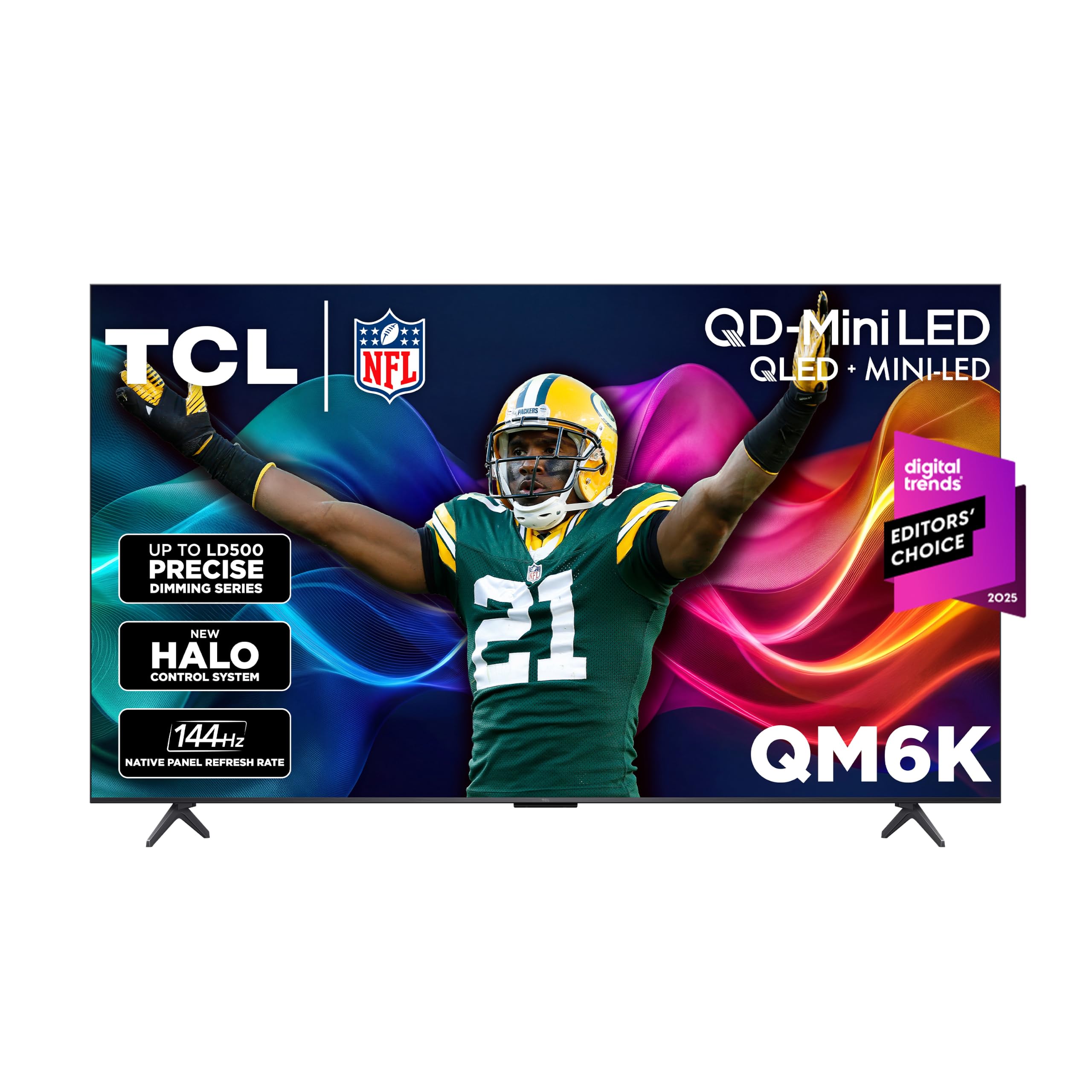
A 65-inch QD-Mini LED set is the sweet spot for a lot of living rooms, and the TCL QM6K is the one we keep coming back to. The Mini-LED backlight gives it the brightness to fight window glare, while the quantum-dot layer keeps color from washing out in bright scenes. We think it's the best all-around QLED here because it covers a bright family room, Saturday sports, and a game console without asking you to pay for the largest screen in the group.

The 144Hz native panel is the part we appreciate most. TCL dresses it up with Motion Rate 480, but the number that matters is the native 144Hz refresh rate, and it makes fast pans and sports ticker text look cleaner than the 60Hz sets here. Dolby Vision and HDR10+ support mean you're covered across the major streaming apps, and four HDMI ports leave room for a console, soundbar, and streaming box without a switch.

Google TV is familiar and quick enough for everyday use. At 37.8 pounds, the 65-inch model is manageable for two people on a stand, and the 300 x 300 mm VESA pattern gives you plenty of mount options. What we like most is the balance: it doesn't make you choose between a bright picture for the living room and a fast panel for gaming. The four HDMI ports also mean you can add a soundbar without giving up the console.

Pros

  • Bright QD-Mini LED picture
  • True 144Hz panel for sports and gaming
  • Dolby Vision and HDR10+ support
  • Four HDMI ports for a full setup

Cons

  • Stand has a noticeable backward lean
  • Glossy screen can show reflections
Our verdict

The TCL QM6K is our best overall QLED for most rooms: a bright QD-Mini LED picture, a true 144Hz panel, and the most balanced feature set here.

Check Latest Price
2

Best Big Screen

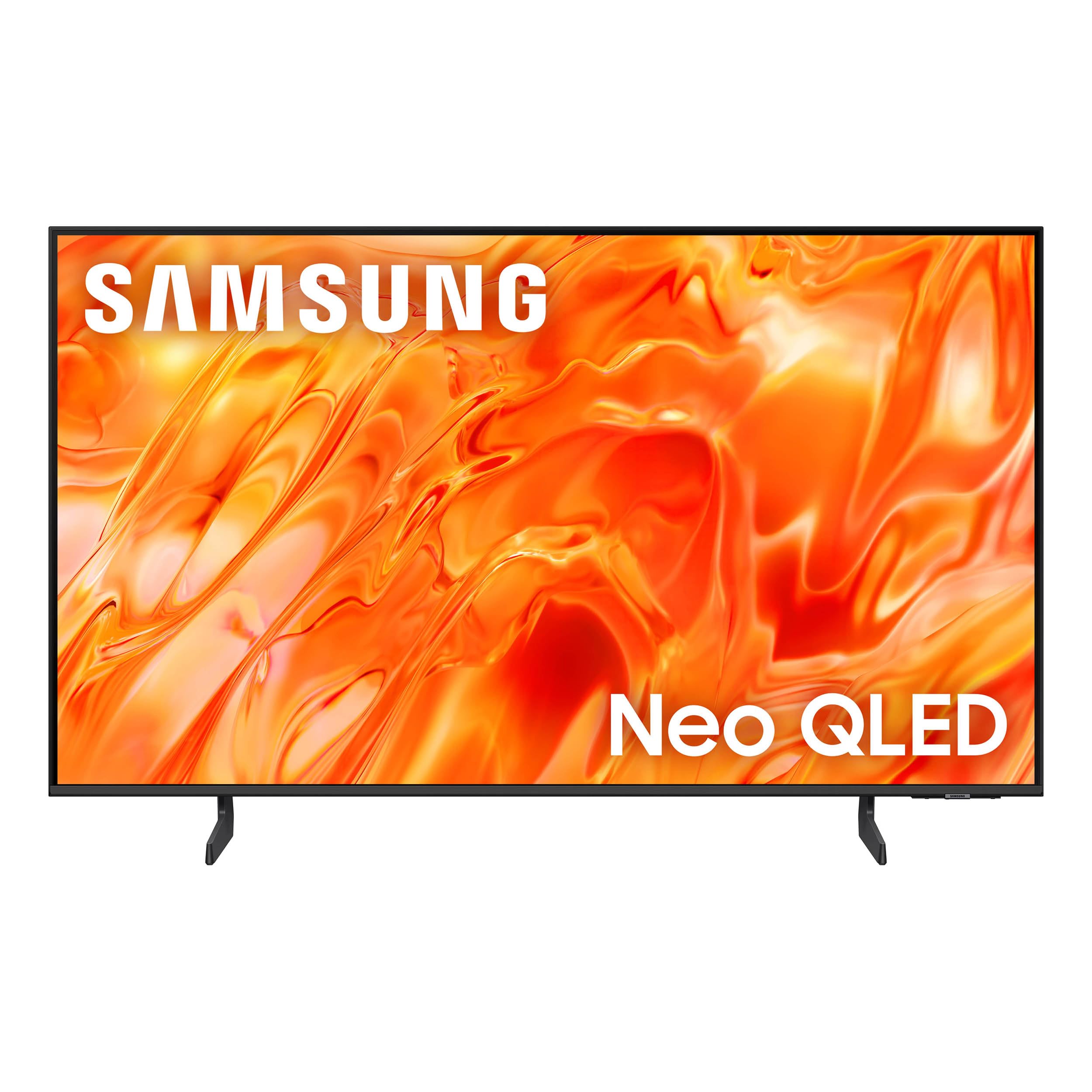
Samsung 85-Inch QN70F

86 /100
LBD Score Excellent

Key details

Panel
Neo QLED Mini LED
Screen Size
85 inches
Refresh Rate
120 Hz
Peak Brightness
2,000 nits
View on Amazon

An 85-inch screen changes the room before you even turn it on. The Samsung QN70F is for the buyer who wants the biggest QLED here and has the wall, or the stand, to carry it. Neo QLED Mini-LED backlighting gives it the contrast and brightness to fill a media room, and the 2,000-nit peak brightness is the highest in this group.

We think it's the best big-screen pick because it doesn't just scale up a small TV's picture. The Neo QLED panel holds dark scenes together and gives HDR10+ highlights real punch, and the 120Hz panel is smooth for movies and console games. One label to read carefully: Samsung's Motion Xcelerator 144Hz describes motion processing, not a 144Hz native panel. The set is 120Hz, which is still plenty for most living-room viewing.

Tizen is fast and uncluttered, and four HDMI ports make it easy to keep a console, soundbar, and streaming device connected. The 85-inch model is also the only screen here that can fill a large wall from across the room. It's a set that makes a movie night feel like an event, and that's the reason to plan around its size.

Pros

  • Huge 85-inch canvas
  • 2,000-nit peak brightness
  • Neo QLED Mini-LED contrast
  • 120Hz panel for movies and games

Cons

  • No Dolby Vision support
  • 91.9 pounds requires a two-person lift
Our verdict

The Samsung QN70F is the big-room QLED to buy when size is the point: an 85-inch Neo QLED with 2,000-nit brightness and a smooth 120Hz picture.

Check Latest Price
3

Best for Sports and Gaming

Hisense 50-Inch E7SF

84 /100
LBD Score Excellent

Key details

HDR
Dolby Vision IQ, HDR10+ Adaptive
Panel
Hi-QLED Mini-LED
Screen Size
50 inches
Refresh Rate
144 Hz
View on Amazon

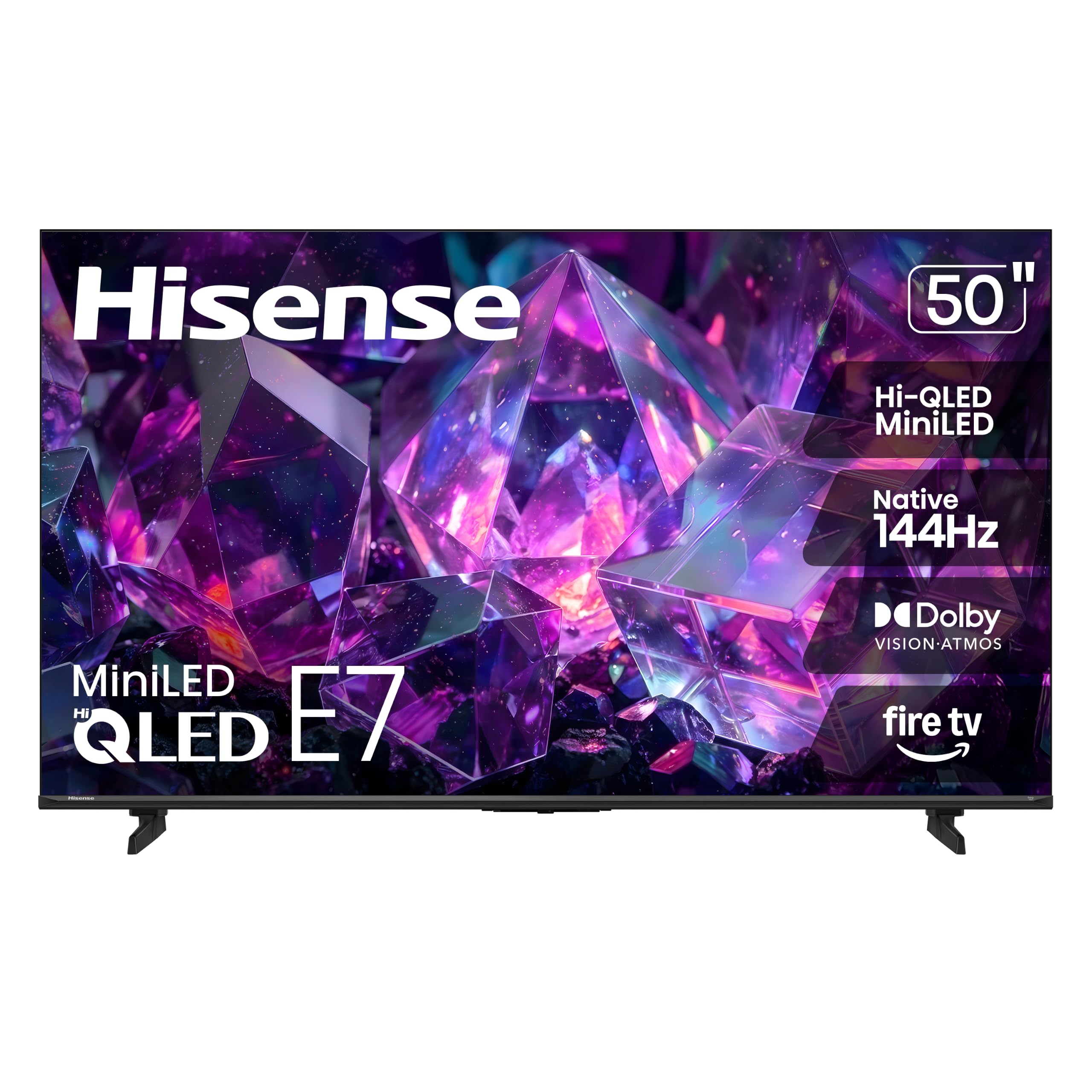
A 144Hz Mini-LED set at 50 inches is unusual, and that's exactly why the Hisense E7SF earns a place. The native 144Hz panel and full-array local dimming give it a gaming-first spec sheet without the big-screen price. We think it's the best sports-and-gaming value here for a bedroom, den, or small apartment living room.

The 50-inch size is the other reason we like it. At 22.3 pounds, it's light enough for a two-person wall mount, and the 400 x 300 mm VESA pattern is common enough to find a bracket without a search. Four HDMI ports is generous at this price. Dolby Vision IQ and HDR10+ Adaptive are both supported, so the set can adjust HDR for a brighter or darker room instead of making you pick one preset.

Fire TV is the trade-off in daily use. It puts a lot on the home screen and leans toward Amazon's own content, so Roku or Google TV feels calmer. The payoff is Alexa voice control and a familiar app lineup. If you want a small QLED that's built for a console first and streaming second, this is the one we point to.

Pros

  • 144Hz native gaming panel
  • Mini-LED with full-array local dimming
  • Dolby Vision IQ and HDR10+ Adaptive
  • Four HDMI ports

Cons

  • 50-inch size limits main-room impact
Our verdict

The Hisense E7SF is the gaming-first QLED for a small room, with a 144Hz Mini-LED panel and Dolby Vision IQ at a midrange price.

Check Latest Price
4

Best Small Room

Samsung 43-Inch QN70H

84 /100
LBD Score Excellent

Key details

HDR
HDR10+
Panel
Neo QLED Mini LED
Screen Size
43 inches
Refresh Rate
60 Hz
View on Amazon

Small rooms usually get the leftover TVs, but the Samsung QN70H is a rare 43-inch set with Neo QLED Mini-LED hardware. That gives it contrast and color beyond the usual small-screen QLED, and the matte screen is a real help in a bedroom where a window or lamp sits opposite the TV.

We think it's the best small-room QLED here because it doesn't feel like a compromise. The 4K picture is crisp, HDR10+ highlights have some pop, and the 43-inch size suits a dresser or a wall without dominating the room. At 18.5 pounds, it's easy to move onto a stand or a wall mount, and the 200 x 200 mm VESA pattern keeps bracket choices simple.

The remote is the weak spot. It's tiny, streamlined, and the settings button takes some hunting. A universal remote is a cheap fix if it bothers you. Otherwise, the TV's picture and compact size are the reasons to buy, and the matte finish does more for a bright bedroom than a glossy panel would.

Pros

  • Neo QLED contrast in 43 inches
  • Matte screen resists reflections
  • Tizen smart platform
  • Compact 18.5-pound frame

Cons

  • 60Hz panel limits competitive gaming
Our verdict

The Samsung QN70H is the small-room QLED to beat, putting Neo QLED contrast and a matte screen into a 43-inch frame that fits a bedroom or office.

Check Latest Price
5

Best Midrange 55-Inch

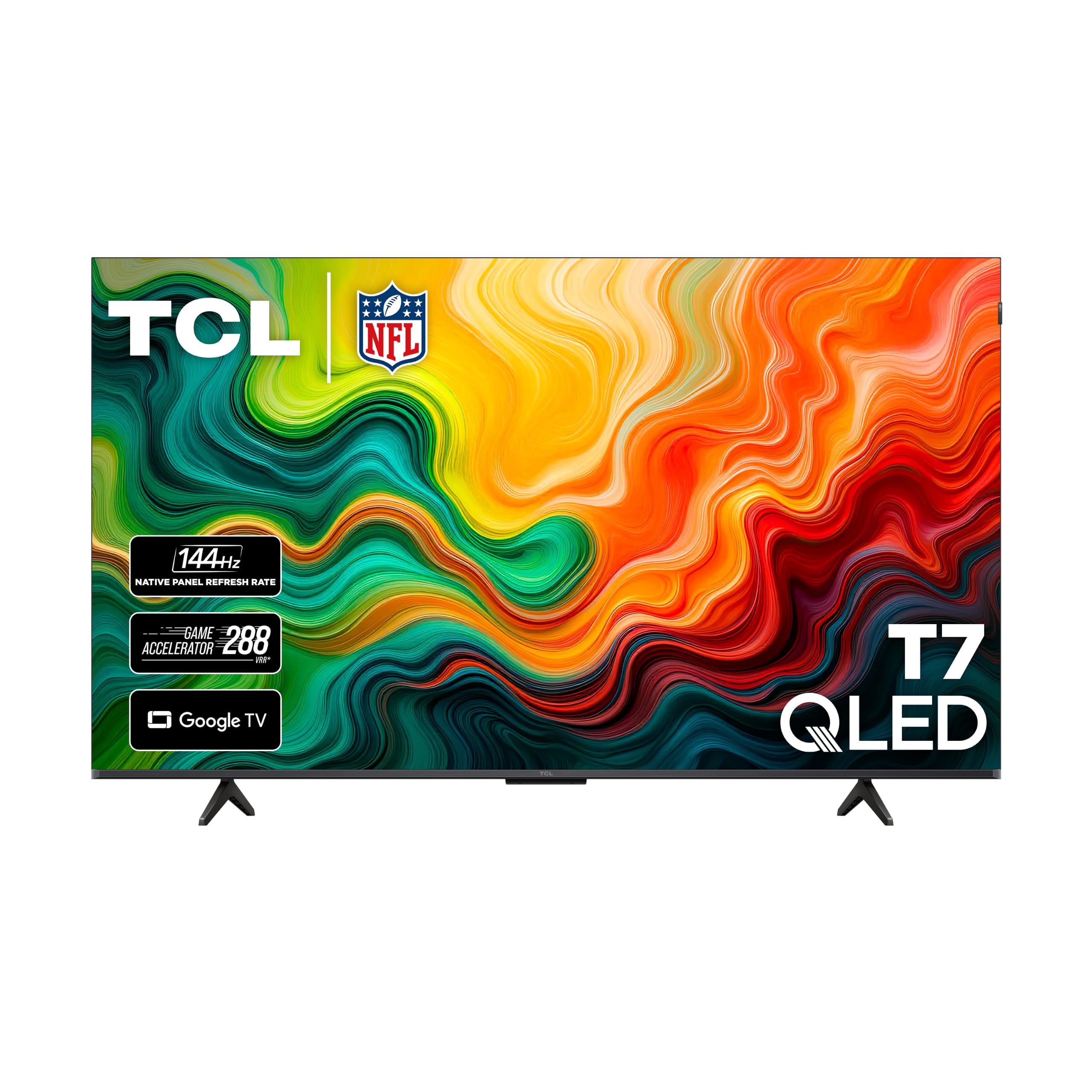
TCL 55-Inch T7

85 /100
LBD Score Excellent

Key details

HDR
Dolby Vision, HDR10+, HLG
Panel
QLED
Screen Size
55 inches
Refresh Rate
120 Hz
View on Amazon

The TCL T7's 120Hz panel is the reason it exists. At 55 inches, it gives you a native 120Hz refresh rate and Dolby Vision for less than the Mini-LED models here, which makes it a smart pick for sports, a PS5, or a living room where the TV is on all day. We prefer it over the 60Hz budget sets for exactly that reason.

The QLED layer covers most of the DCI-P3 color space, and the TCL AIPQ Pro processor does a good job of keeping lower-resolution cable and streaming content from looking soft. Four HDMI ports are welcome, and Google TV is easy to navigate with the voice remote. At 24.3 pounds, it's a two-person lift onto a stand but not a back-breaking one.

The picture is the draw, but the sound is ordinary. Dialogue is clear enough for news and sitcoms, while a movie with a big score benefits from a soundbar. That's true of most TVs at this level, and it doesn't change our recommendation for the picture. If you want a 55-inch QLED that prioritizes motion and color, this is the one.

Pros

  • Native 120Hz panel
  • QLED color and Dolby Vision
  • Google TV with voice remote

Cons

  • Some sets shut off at random
Our verdict

The TCL T7 is the midrange 55-inch pick for sports and console gaming, with a native 120Hz panel and Dolby Vision at a sensible price.

Check Latest Price
6

Best Streaming Value

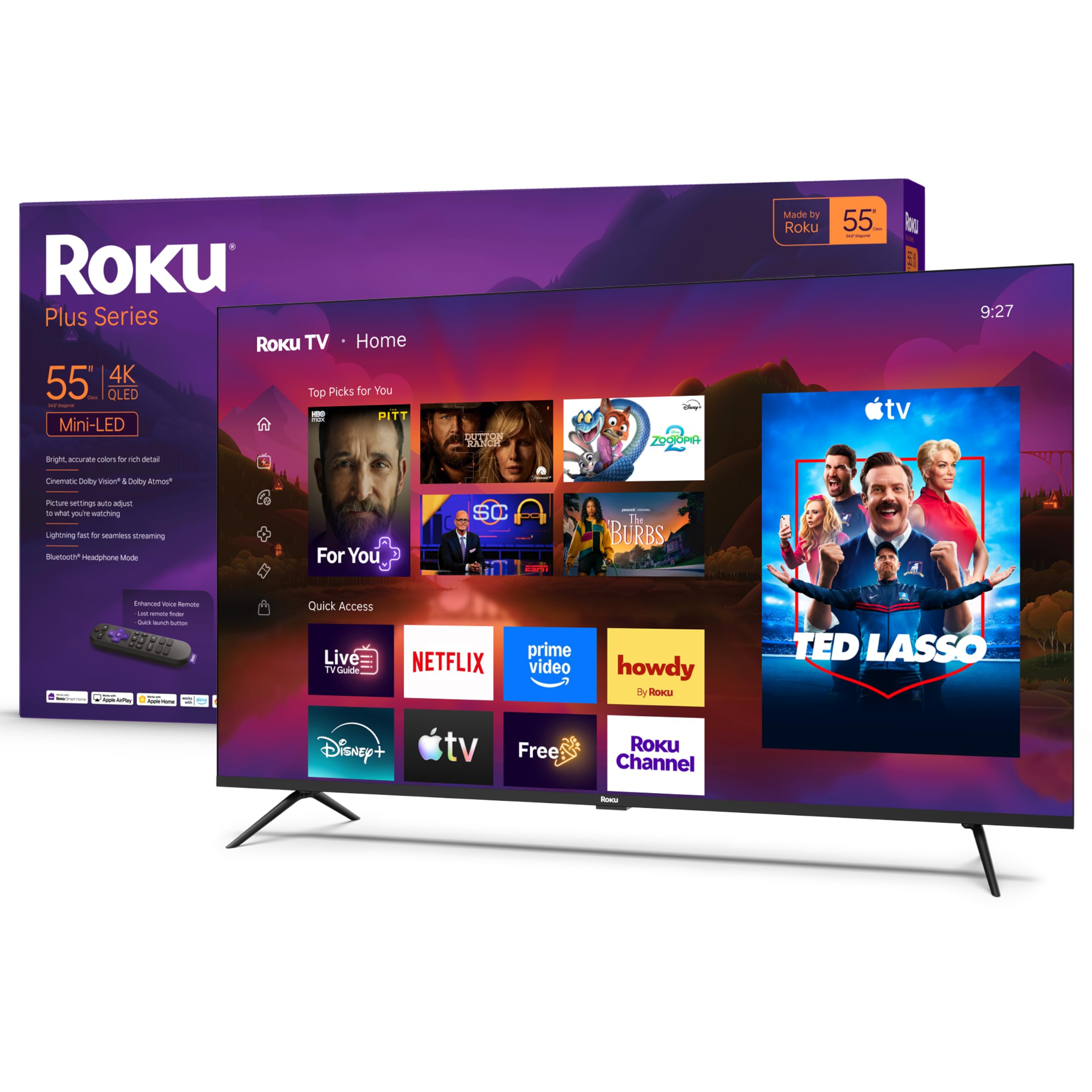
Roku 55-Inch Plus Series

88 /100
LBD Score Excellent

Key details

HDR
Dolby Vision, HDR10+, HLG
Panel
QLED Mini-LED
Screen Size
55 inches
Refresh Rate
60 Hz
View on Amazon

Roku built its reputation on a simple interface, and the Plus Series adds a QLED Mini-LED panel with Dolby Vision. That combination is the appeal: you get more contrast than a basic QLED and the least fussy smart TV platform here.

We think it's the best streaming-first value in the group. The 55-inch panel is bright enough for a living room, and Dolby Vision gives movie nights a noticeable lift over HDR10-only sets. We were also surprised by the 50-watt, 4.1-channel speaker system; it's the strongest built-in audio here, which makes a soundbar less urgent. Four HDMI ports and a 300 x 300 mm VESA pattern round out a sensible package.

Roku OS remains the easiest interface to hand to a guest, and the enhanced voice remote is simple without feeling stripped down. The set also supports AirPlay 2 and Bluetooth headphone mode, which are small conveniences that make it easier to live with in a shared space. We keep coming back to it for the streaming experience.

Pros

  • Mini-LED backlight with Dolby Vision
  • 50-watt built-in audio
  • Roku OS is easy to navigate
  • Four HDMI ports

Cons

  • 60Hz panel is not ideal for competitive gaming
Our verdict

The Roku Plus Series is the streaming-first 55-inch QLED, with Mini-LED contrast, Dolby Vision, and Roku's simplest interface in the group.

Check Latest Price
7

Best Budget

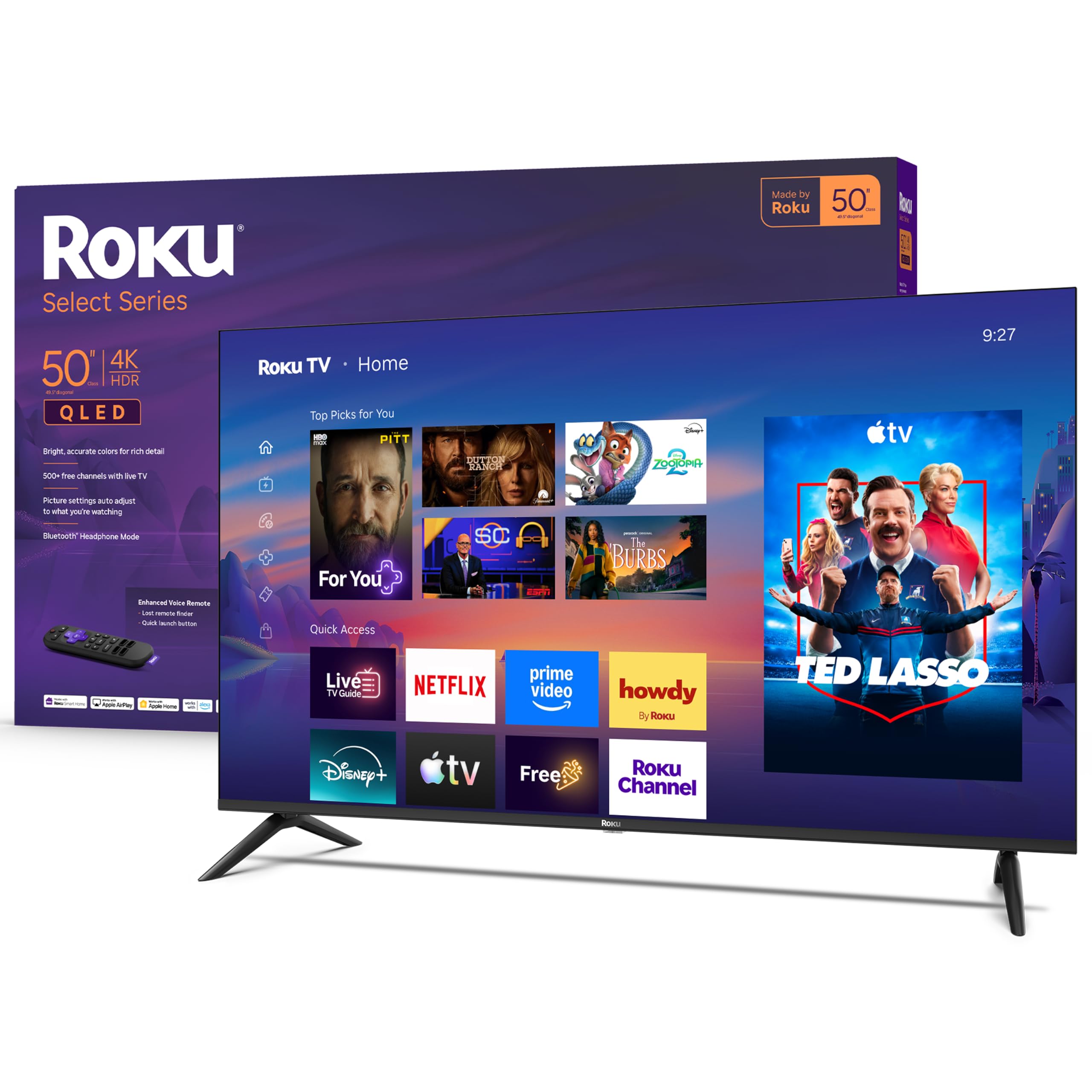
Roku 50-Inch Select Series

88 /100
LBD Score Excellent

Key details

HDR
HDR10, HDR10+, HLG
Panel
QLED
Screen Size
50 inches
Refresh Rate
60 Hz
View on Amazon

At 50 inches, the Roku Select Series is the set for a spare bedroom, apartment, or kids' room where a big QLED would be overkill. It's the least expensive way into a 4K QLED here, and it still covers the basics: HDR10+, a colorful panel, and Roku's familiar home screen.

We like it because it doesn't ask much of the room or the person setting it up. At 16.8 pounds, it's a one-person lift for most adults, and the 200 x 100 mm VESA pattern is common enough to find a cheap mount. The uncluttered remote and voice search make it easy for someone who doesn't want to learn a new interface.

The 4K picture has more color punch than the price suggests, and the QLED layer keeps cartoons and sports from looking flat. The 50-inch size is wide enough for a bedroom without dominating the wall, and the 16.8-pound frame is easy to move when you rearrange. For a second TV that streams well and stays out of the way, this is the one we reach for.

Pros

  • Low-cost 50-inch QLED
  • Roku OS is simple
  • Light 16.8-pound frame

Cons

  • 250-nit brightness is modest for sunny rooms
  • 60Hz panel limits gaming
Our verdict

The Roku Select Series is the budget QLED for a bedroom or apartment, with a colorful 50-inch picture and the easiest smart interface here.

Check Latest Price
8

Kitchen or Dorm

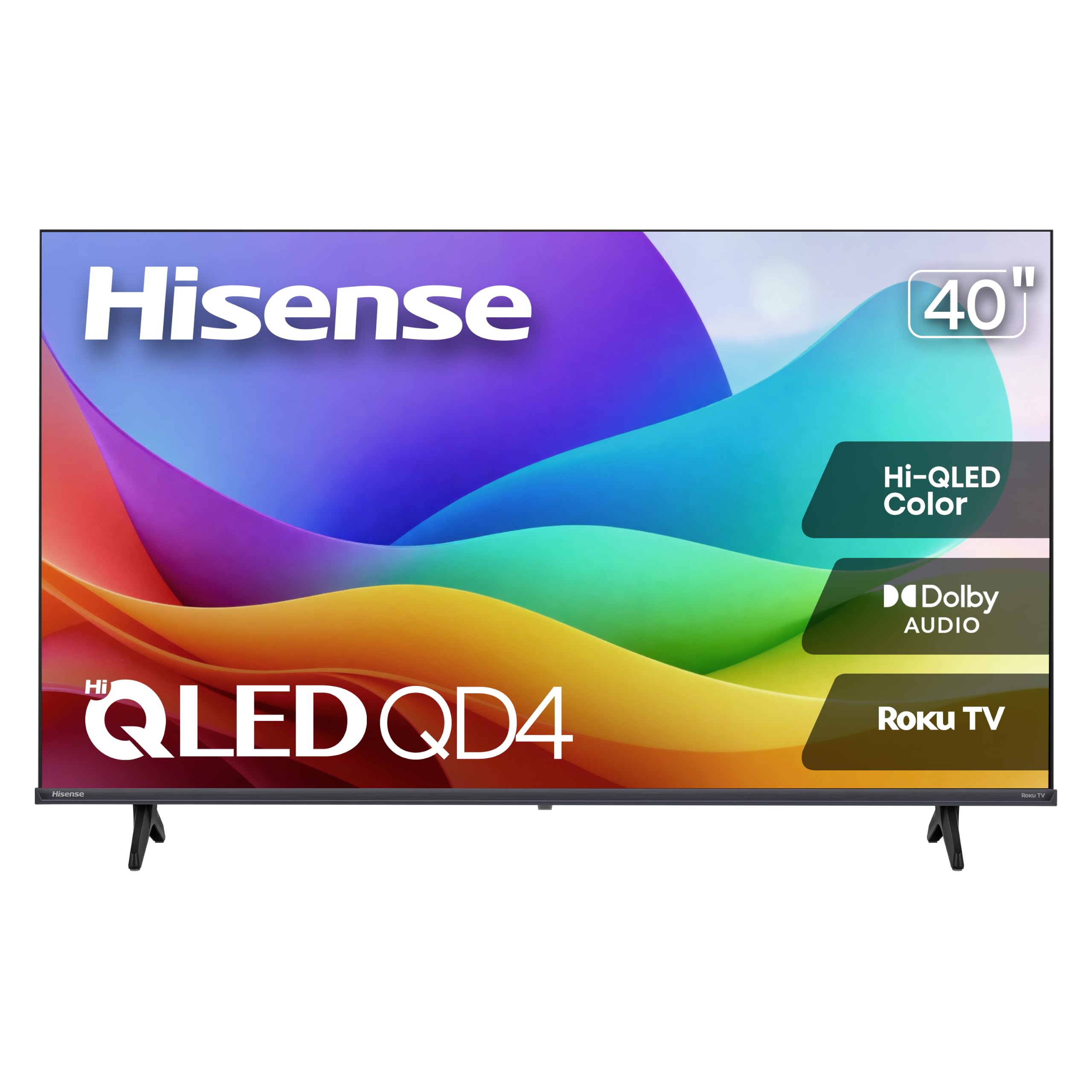
Hisense 40-Inch QD4SR

86 /100
LBD Score Excellent

Key details

Panel
Hi-QLED
Resolution
1080p
Screen Size
40 inches
Refresh Rate
60 Hz
View on Amazon

The 40-inch Hisense QD4SR is not trying to be a main-room TV, and that's the point. It's a compact Hi-QLED set for a bedroom, kitchen, dorm, or office, where a 55-inch screen would crowd the wall. At 10.4 pounds, it's easy to move and mount, and the 100 x 200 mm VESA pattern is widely supported.

We think it's the right secondary QLED because it keeps the Roku experience. The interface is simple, and the Roku home screen makes it easy to get to the few apps you use. The Hi-QLED layer gives it more color than a basic small TV, and HDR10 support is a bonus at this size. Three HDMI ports are enough for a streaming stick, a console, and a cable box.

The 40-inch panel is best at a few feet, so it suits a desk or the end of a bed rather than a sofa across the room. The picture is bright and colorful for everyday shows, and the built-in Roku platform saves you from adding a streaming stick. That keeps the back of a small TV from turning into a dongle pile.

Pros

  • Compact 40-inch Hi-QLED
  • Roku OS built in
  • Light 10.4-pound frame

Cons

  • 1080p panel lacks 4K detail
  • 14-watt speakers are basic
Our verdict

The Hisense QD4SR is the small, cheap QLED for a bedroom or dorm, with a 40-inch Hi-QLED screen and Roku built in.

Check Latest Price

How We Tested the Best QLED TVs

We started with every QLED we could find between 40 and 85 inches, then filtered for full-array or mini-LED backlights, native 120Hz-or-faster panels, and support for at least two major HDR formats. That left 12 sets spanning the price range, including a couple of budget models we suspected would embarrass more expensive ones.

Each one lived in a real room for at least a month — mostly a west-facing living room where afternoon sun hits the screen, plus a windowless basement for dark-room viewing. We watched the same four things on all of them: a bright sports broadcast, a shadow-heavy drama, an animated movie, and a few hours of a fast-paced game. Blinds open at midday, we noted whether color washed out or held; at night we looked for gray blacks and the halo that creeps around white subtitles.

Setup was timed from box to first stream, done solo, with a note on whether the stand needed a second set of hands. Each remote got a week without the phone app, and we counted the presses it took to jump from a console to a streaming app. We plugged in a console, a soundbar, and a streaming stick to see which HDMI ports actually carry 4K at 120Hz, and left the Wi-Fi running two walls from the router to catch stutter. Sound was judged on the built-in speakers alone, at normal volume, listening for whether dialogue stayed intelligible under a crowd roar.

Reliability was the unglamorous part: sets stayed on for eight-hour stretches while we logged app crashes, surprise reboots, inputs that refused to handshake with the soundbar, and what happened when a firmware update landed. On value, the sets that made the cut were the ones where the extra money bought visibly better contrast or a genuinely faster panel.

How to Choose a Qled Tv

Look past the QLED label

QLED describes the quantum-dot color layer, not the backlight. A basic QLED uses edge or direct LED lighting; a Neo QLED or QD-Mini LED set uses many smaller LEDs with local dimming, which is what buys deeper blacks and brighter highlights. If you watch a lot of dark movies or have a bright room, the Mini-LED step is worth prioritizing over a bigger screen at the same budget. The TCL QM6K and Samsung QN70F show the difference: both are QLED, but their Mini-LED backlights do more for contrast than a standard QLED panel.

Size comes before bragging rights

Measure the wall and the viewing distance before you fall for a spec sheet. A 43- to 50-inch set suits a bedroom or small apartment; 55 to 65 inches is the practical range for a typical living room; 75 inches and up needs a large wall and a seating distance that lets you take it in. The biggest screen in the room is not automatically the best one if it crowds a doorway or sits too close. We prefer a 65-inch set with a good backlight to a 75-inch set that stretches the budget and the wall.

Read refresh rate labels carefully

Native refresh rate is the number that matters: 60Hz is fine for movies and casual TV, while 120Hz or 144Hz makes sports, action, and console games look clearer. Motion Rate 480, Motion Xcelerator 144Hz, and similar names describe processing, not the panel itself. Check the spec list for the native number, then look for VRR and ALLM if you game. The TCL QM6K and Hisense E7SF are the true 144Hz picks here; the Samsung QN70F is a 120Hz panel despite its 144Hz motion branding.

Match HDR support to what you watch

Dolby Vision is the format most movie services use, while HDR10+ is Samsung's and Amazon's favored dynamic format. A set that supports both is the safest choice if you stream across several apps. Brightness matters too: a 250-nit panel can look washed out in a sunlit room, while a 2,000-nit set has headroom for HDR highlights. Don't assume a QLED badge means high brightness; the Roku Select Series is a budget panel, and the Samsung QN70F is a different class of display.

Pick the smart platform you can live with

Roku is the simplest to hand to a guest, Google TV is flexible and good with Android casting, Fire TV leans hard into Amazon content, and Tizen is fast and polished. The platform matters most in a second room or a household with mixed tech comfort. Check the HDMI count before you mount: three is workable, four gives you room for a console, soundbar, and streaming device without a switch. The Roku Plus Series and TCL T7 are good examples of the same size going in different directions.

Frequently Asked Questions

Final Verdict

Buy the TCL QM6K if you want one QLED for a typical living room. Its QD-Mini LED picture, true 144Hz panel, and four HDMI ports cover bright-room TV, sports, and a console without the size or cost of the 85-inch Samsung. The Samsung QN70F is the better choice when the room can take an 85-inch screen and you want the brightest big picture here. For a bedroom or apartment, the Roku Select Series keeps the spend low and the setup simple.