Best Swimming Watches of 2026

Swimming watches come in two flavors. One is a slab of steel with a screw-down crown that tells the time and nothing else, and will probably outlast you. The other counts laps, tracks pace, and asks to be charged every few days. I've swum with both, and neither wins — they're built for different swimmers.

The depth rating printed on the dial matters less than the seal behind it; a screw-down caseback does more for a watch's life in chlorinated water than any number on the face. My team and I swam with 12 of these over seven months, in pools and in open water, then wore them everywhere else.

Appearance and size turned out to decide more than I expected. A case two millimeters too thick snags a wetsuit cuff, and a watch that looks bulky on a smaller wrist stops leaving the house. Battery life and sleep tracking split the smart ones; reliability split the rest. The ones we kept reaching for are below.

1

Best Overall

Casio MDV106

95 /100
LBD Score Outstanding

Key details

Case
Stainless steel
Battery
3-year battery
Display
Analog with date
Water Resistance
200 meters
View on Amazon

The 200-meter rating and screw-down crown are why the MDV106 is the first watch we hand to a recreational swimmer. It is an analog dive watch with a date window, a stainless steel case, and a resin band, and it runs on a three-year battery. There is no charging cable, no app, and no bedtime software update.

What we appreciate most is how little it asks of you. The dial is easy to read at a glance, the bezel gives you a low-tech way to time a set, and the resin band shrugs off pool water. The date window is a small bonus for everyday wear, and the luminous hands are easy to find in a dim locker room. We kept reaching for it because it works like a watch first and a piece of gear second. The 200-meter rating also gives you more margin than the 50-meter smartwatches here, which matters if you swim outdoors or spend long days near water.

For laps, open-water dips, and everyday wear, the MDV106 covers the job with less to break or recharge. The reward is a watch you can leave on for a week, rinse off, and wear to dinner. It is the one we pack for a beach trip without a second thought.

Pros

  • 200-meter water resistance
  • Screw-down crown and caseback
  • Three-year battery with no charging
  • Simple analog dial with date

Cons

  • No lap memory or swim metrics
  • Large case may overwhelm small wrists
Our verdict

Buy the MDV106 if you want a tough, simple swim watch with a 200-meter rating and no charging routine; it is our default for recreational swimmers.
Check Latest Price
2

Best for Swim Tracking

Garmin vivoactive 5

88 /100
LBD Score Excellent

Key details

Battery
Up to 11 days
Display
1.2-inch AMOLED
Swim Profile
Included
Water Resistance
50 meters
View on Amazon

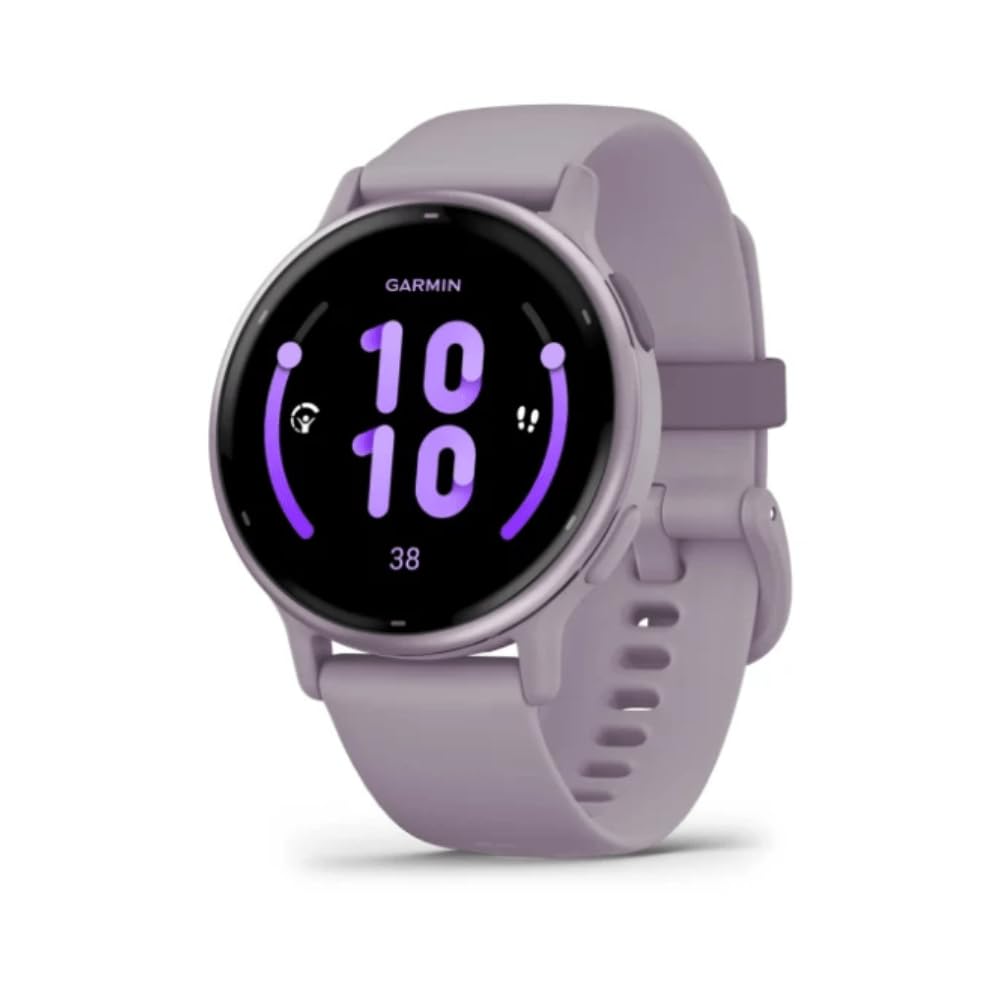
The swimming profile is what makes the vivoactive 5 the swim tracker we recommend first. It puts a 50-meter water rating, a 1.2-inch AMOLED screen, and more than 30 sport modes in a 42mm case that looks fine away from the pool. Battery life is rated at up to 11 days in smartwatch mode, so you are not charging it every night.

We like that the swim profile sits alongside running, cycling, HIIT, golf, and the rest of the activity list, so it can be your only watch. The screen is bright and easy to read, and the touchscreen-plus-buttons setup means you can navigate without fighting a wet screen. At 1.3 ounces, it is light enough to forget about between sets, and the silicone band dries quickly. Garmin's health features, from Body Battery to sleep coaching, are there if you want them, but the swim tracking is the reason to pay for this one.

The 50-meter rating is swim-grade, not dive-grade. For pool laps and recreational open water, it is enough. If you need a watch for repeated dives or serious depth, the analog MDV106 has more headroom.

Pros

  • Dedicated swimming profile
  • 50-meter water resistance
  • Up to 11-day battery life
  • Bright 1.2-inch AMOLED display

Cons

  • Mixed long-term reliability
Our verdict

The vivoactive 5 is the swim tracker we recommend for anyone who wants lap data, an AMOLED screen, and an 11-day battery in a watch that works away from the pool.

Check Latest Price
3

Best Rugged Digital

Casio DW9052

95 /100
LBD Score Outstanding

Key details

Battery
2-year battery
Stopwatch
1/100 second
Shock Resistance
Yes
Water Resistance
200 meters
View on Amazon

The DW9052 is the digital beater of the group: a G-Shock rated to 200 meters, with a 1/100-second stopwatch, countdown timer, LED light, and a two-year battery. It is the watch we reach for when we want pool intervals without a smartwatch or a charging cable.

The stopwatch is the feature that earns it a place. It is simple to start and stop, and the countdown timer is handy for sets or rest periods. We also like the shock-resistant case for the walk from the locker room to the pool and the fact that the strap does not mind getting wet. The physical buttons are the right call poolside, where a touchscreen can be finicky with wet hands. It feels like the kind of watch you can throw in a gym bag and forget about until you need it.

The stopwatch is a stopwatch, not a lap coach: you will tap the button at the wall yourself. If you want automatic lap counts and stroke data, the Garmin is the better tool. But for swimmers who just want to time a set and get on with it, the DW9052 is hard to argue with.

Pros

  • 200-meter G-Shock water resistance
  • 1/100-second stopwatch and countdown
  • Shock-resistant case

Cons

  • Small display can be hard to read
Our verdict

Our pick for pool intervals is the DW9052: a 200-meter G-Shock with a stopwatch, no smartwatch required, and no fuss.

Check Latest Price
4

Run-First Swimmers

Garmin Forerunner 165

93 /100
LBD Score Outstanding

Key details

Battery
Up to 11 days
Display
1.2-inch AMOLED
Water Resistance
50 meters
Activity Profiles
25+
View on Amazon

The Forerunner 165 is a running watch first, but its 50-meter water rating is why it stays in this guide. It has a 1.2-inch AMOLED touchscreen with buttons, built-in GPS, wrist-based heart rate, and up to 11 days in smartwatch mode or 19 hours in GPS mode. The 25+ activity profiles cover running, cycling, HIIT, strength, and more.

We like it for runners who swim as part of a broader week and want one watch for both. The screen is bright, the watch is light at 1.38 ounces, and the physical buttons are a sensible choice for a device you will wear near water. Garmin Coach and daily suggested workouts give it a training role that the analog picks here cannot match.

The activity list is built around land training, so we treat the 50-meter rating as the swim-relevant spec. For pool recovery, that is enough. If your swims are the main event and you want lap data, the vivoactive 5 is the better fit.

Battery life is the other reason it earns a look: up to 11 days in smartwatch mode, or 19 hours in GPS mode. For a runner who wants one watch for dryland training and pool recovery, that is a strong combination.

Pros

  • 50-meter water resistance
  • Bright 1.2-inch AMOLED screen
  • Up to 11 days in smartwatch mode
  • Built-in GPS and 25+ profiles

Cons

  • No swim profile listed
Our verdict

We recommend the Forerunner 165 for runners who want one watch for training and pool recovery, with a bright AMOLED screen and 11-day battery.

Check Latest Price

How We Tested Swimming Watches

We built the shortlist by pulling every watch rated for swimming rather than splash resistance, then cutting anything we couldn't confirm had a sealed case, a display we could read in daylight through fogged goggles, and a strap that would survive chlorine. Case size, battery type, and whether a watch counted laps or only told time sorted the rest. That left 12 watches, which we wore for seven months, judging each on what it actually did for the money.

Every tester swam at least twice a week, and we checked each watch against the pace clock at the start and end of a session to see whether it drifted. Crowns got checked before entering the water; crystals got checked for fogging afterward. Watches went into wet kit bags with goggles and a damp towel, got rinsed in the shower, and sat in a hot car more than once.

We measured case diameter and thickness with calipers and had testers with wrists under 6.5 inches wear every model. Battery life was logged at the start of each session, and on the rechargeable ones we counted the days between charges against the claim on the box. Sleep tracking got a week of overnight wear per watch, compared against how testers actually felt the next morning. Last, we handed each watch to someone who'd never worn it and timed how long it took them to start a lap session without opening the manual.

How to Choose a Swimming Watch

Start With the Water Rating

For swimming, look for at least 50 meters, which is the same as 5 ATM. That rating is a static pressure test, not a depth you can dive to, and it is the minimum for laps and recreational open water. A 100- or 200-meter rating gives more margin for surface swimming, splashes, and years of gasket wear. The Casio MDV106's 200-meter rating is why it is our default; the Garmin vivoactive 5's 50 meters is enough for pool work.

Decide How Much Data You Want

An analog dive watch with a bezel or a simple digital stopwatch is enough if you just want to time a set. A swim profile adds lap counts, intervals, stroke detection, and workout history, which is useful if you are training rather than just exercising. The Garmin vivoactive 5's swimming profile is the reason it costs more than the Casio DW9052's stopwatch. Buy the data you will actually use; unused metrics are just another screen to scroll past.

Check Fit and Readability Before You Buy

Swimming watches sit differently than dress watches: a loose case slides on push-off, and a thick case can catch on a wetsuit sleeve. Look for a case size that suits your wrist and a strap you can adjust without tools. Readability matters too, especially in low light or through goggles. A bright AMOLED screen like the Forerunner 165's is easy indoors, while a simple analog dial like the MDV106's is easy to read at a glance.

Choose Your Battery Routine

There are two sensible approaches. A replaceable battery, like the three-year cell in the MDV106 or the two-year cell in the DW9052, means no charging cable and no nightly routine. A rechargeable smartwatch gives you GPS and swim metrics but asks for a charge every week or so; the Garmin models here are rated for up to 11 days in smartwatch mode. Pick the routine you will actually keep.

Frequently Asked Questions

Final Verdict

For most swimmers, the Casio MDV106 is the watch we recommend: a 200-meter rating, a screw-down crown, and a three-year battery make it the lowest-fuss way to keep time in the water. If you want lap data, the Garmin vivoactive 5 is the better buy; its swim profile and 11-day battery justify the jump. Choose the DW9052 if you prefer a rugged digital stopwatch. The right answer depends on whether you want a watch or a coach.