Best Running Watches of 2026

I spent years running with my phone in a sweaty armband, and the habit made me slower—not because the phone was heavy, but because I kept stopping to check it. A good running watch fixes that: it puts distance, pace, and heart rate on your wrist, then gets out of the way so you can run. The catch is that the category now splits into simple pace-and-distance tools and wrist-sized training computers that want to coach every workout.

Over the past seven months, our team has worn nine running watches through daily miles, long weekend efforts, and rainy track sessions. What separates a keeper from a drawer-dweller isn't the longest feature list. It's GPS accuracy you can trust on the same measured loop, battery life that survives a week of normal training, and an interface you can read with one eye while breathing hard. I also noted how each watch looked on my wrist at dinner and whether the buttons still felt solid after months of sweaty use. The picks below are the ones that got that balance right.

1

Best Overall

Forerunner 165

93 /100
LBD Score Outstanding

Key details

Weight
1.38 oz
Display
1.2-inch AMOLED
Training
Daily suggested workouts
Battery Life
11 days smartwatch; 19 hours GPS
View on Amazon

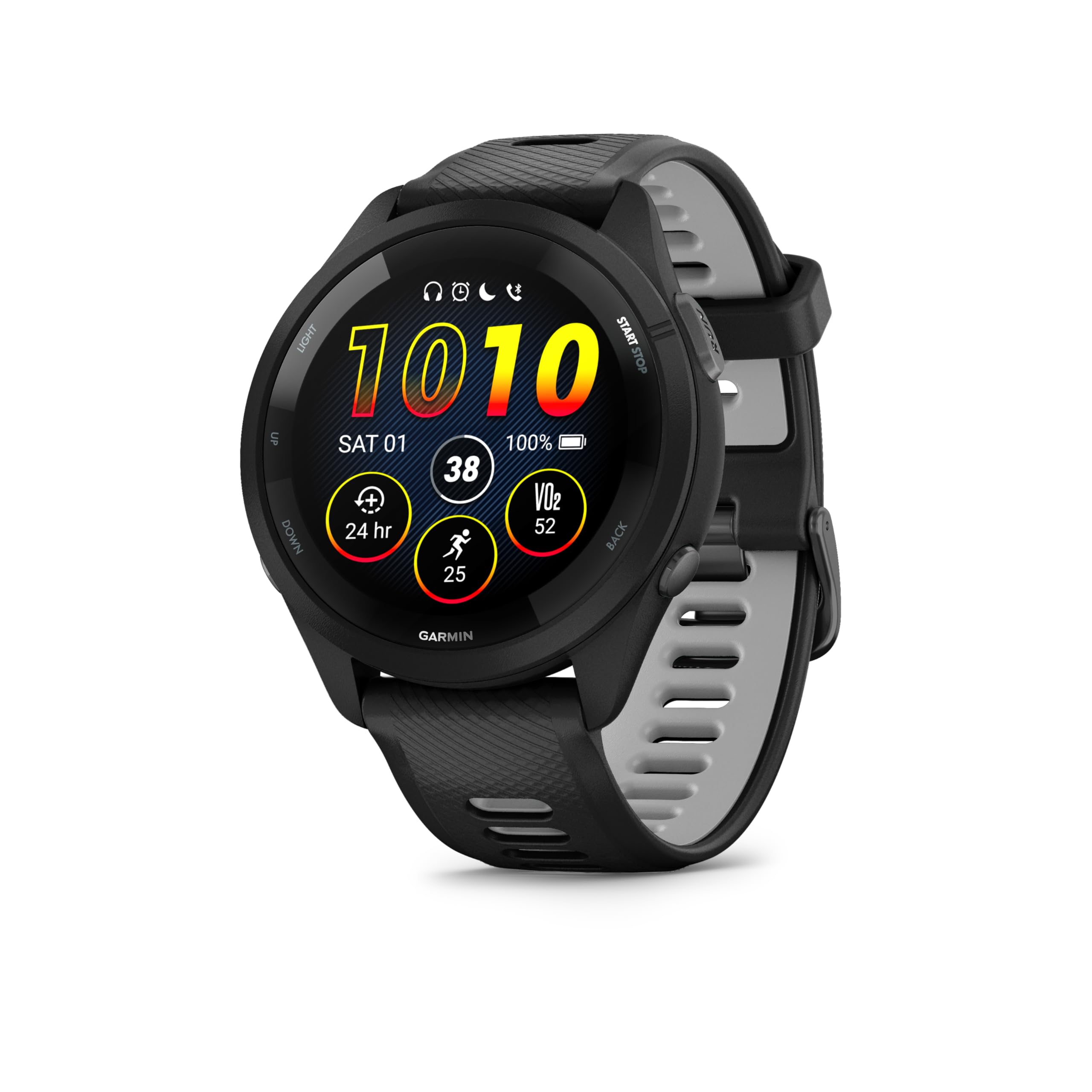
At 43 mm and 1.38 ounces, the Forerunner 165 is the running watch we reached for when we wanted to forget we were wearing one. The 1.2-inch AMOLED screen is bright and readable at a glance, and we liked having physical buttons alongside the touchscreen once our hands were sweaty. It sits close to the wrist and does not bounce around, which matters more on a long run than another row of metrics. That light, unobtrusive feel is a big part of why it became our default.

The training setup is what earned it the top spot. Daily suggested workouts adapt to recent runs, and Garmin Coach plans give you a structured path to a 5K, 10K, or half marathon. We used the suggestions on days when we did not have a plan, and we appreciated that the watch told us what to do rather than just logging the run after the fact. The 25+ activity profiles cover cycling, strength, and HIIT, so it stays useful on cross-training days.

Battery is the other reason we are comfortable recommending it as a default. Garmin rates it for up to 11 days in smartwatch mode and 19 hours in GPS mode, enough for a marathon and then some, and it turns charging into a weekend habit rather than a nightly one. The 165 is happiest as an everyday training watch rather than a race-day command center. For most runners, that is the right trade.

Pros

  • Light 43 mm case stays put on runs
  • Bright 1.2-inch AMOLED touchscreen
  • Daily suggested workouts and Garmin Coach plans
  • 19-hour GPS battery rating

Cons

  • Menu system takes some getting used to
Our verdict

For most runners, we recommend the Forerunner 165: it is light, readable, coached, and rated for a full marathon on GPS.
Check Latest Price
2

Best for Advanced Training

Forerunner 265

94 /100
LBD Score Outstanding

Key details

GPS
Multi-band GPS
Weight
1.66 oz
Display
1.3-inch AMOLED
Battery Life
13 days smartwatch; 20 hours GPS
View on Amazon

The gap between the Forerunner 165 and the 265 is not the screen; it is what the watch does with the data. The 265 adds training readiness, HRV status, and a morning report that tells you whether to push or back off. We found the readiness score most useful in weeks with back-to-back hard sessions, when the difference between tired and not recovered actually changed our plan.

The 1.3-inch AMOLED display is excellent, and the 46 mm case is a visible step up from the 165's 43 mm body. At 47 grams it feels substantial on the wrist, though we minded the bulk more at night than during workouts. If you wear a watch to bed for sleep and recovery tracking, the smaller 165 is easier to live with.

Multi-band GPS and onboard music are the other reasons to step up. We value the multi-band GPS in dense city runs and under tree cover, where a clean pace line matters more than another widget. Music storage means you can leave your phone behind. Battery is rated at 13 days in smartwatch mode and 20 hours in GPS mode, so long races are not a concern.

Pros

  • Multi-band GPS for difficult routes
  • Training readiness and HRV insights
  • Onboard music for phone-free runs
  • 20-hour GPS battery rating

Cons

  • More recovery data than many runners use
Our verdict

We recommend the Forerunner 265 for runners who train by recovery data and want multi-band GPS plus onboard music.

Check Latest Price

How We Chose and Tested Running Watches

We started by building a shortlist from current running watches at a range of prices and case sizes, filtering out models with vague battery claims or no built-in GPS. We looked for daily suggested workouts, training and recovery metrics, and coaching tools that might actually change a training week. Then we brought in nine watches and wore them for seven months.

Each watch went on daily runs from 3 to 15 miles, plus long weekend efforts and a few rainy track sessions. We ran the same measured loop repeatedly to compare distance and pace, and we checked how long each took to lock onto satellites. For battery life, we noted how many days passed between charges with GPS used on most runs, and we tracked whether the battery estimate dropped steadily or fell off a cliff. We wore them overnight to see how recovery and sleep data looked the next morning, and on interval days we compared wrist heart rate against a chest strap.

To judge usability, we started workouts, changed data fields, and silenced alerts mid-run with sweaty fingers; we noted which menus made us slow down and which screens were readable in direct sun. We wore each watch with casual clothes and a jacket to see how the case size and strap looked away from running. After months of use, we checked for scratches, loose straps, and buttons that had gone mushy. Features earned credit only if we used them more than once—daily suggested workouts, training load, and recovery guidance had to fit a real training week, not just exist in a menu.

How to Choose a Running Watch

GPS Accuracy: Standard vs. Multi-Band

Most runners do fine with standard GPS, which is what the Forerunner 165 uses. Multi-band GPS, as on the Forerunner 265, pulls from more satellite signals to hold a cleaner line near tall buildings, dense tree cover, and canyon walls. If your usual loop is open road or park path, do not pay extra for multi-band alone. If your pace graph regularly looks like it wandered through buildings, it is the upgrade we prioritize.

Battery Life: Read the GPS Rating

Smartwatch-mode battery numbers are the ones on the box, but the GPS rating is the one that matters on race day. The 165 is rated for 19 hours in GPS mode and the 265 for 20; either is enough for a marathon, even a slow one. For ultras, look for a watch that can last your longest expected finish plus a buffer. A daily-charging habit is fine, but a dead watch at mile 20 is not.

Size and Screen: Buy for Your Wrist

The 165's 43 mm case and 1.38-ounce weight make it the easier watch to wear all day, especially on smaller wrists. The 265 is 46 mm and 47 grams, with a slightly larger 1.3-inch AMOLED display. A bigger screen is easier to read mid-run, but it also catches on sleeves and feels heavier at night. If you wear a watch to sleep for recovery data, comfort should outrank an extra tenth of an inch.

Training Data: Pay for What You Will Use

Daily suggested workouts and Garmin Coach plans on the 165 give structure without turning running into a spreadsheet. The 265 adds training readiness, HRV status, and deeper recovery insights, which help if you are stacking hard sessions or racing often. Our rule: if you will not change tomorrow's run based on a score, do not pay for it. Most runners get more from a watch that makes the next easy run obvious than from a dashboard they check once.

Frequently Asked Questions

Final Verdict

Most runners should buy the Forerunner 165. It gives you the essentials we care about: a bright, readable screen, a light 43 mm case, daily suggested workouts, and a 19-hour GPS rating, without making you pay for training metrics you may never open. The Forerunner 265 is the better choice if you race often, want multi-band GPS in dense city or tree cover, and will use training readiness and onboard music. Buy the 165 for everyday consistency; step up to the 265 only when the extra data changes how you train.