Best Telescopes for Kids

Most kids' telescopes are bought as a gift, used twice, and then parked on a closet shelf — usually because the first night went badly. The view was blurry, the tripod wobbled, and the instructions assumed an adult who already knew what a finder scope was. The difference between a scope a kid drags outside every clear night and one that never leaves the box is rarely the glass; it's whether a child can carry it, set it up, and point it at something worth seeing before the excitement wears off.

Over the past six months we've spent clear nights with 14 of these, from palm-sized tabletop models to 80mm refractors on full tripods, and that pattern never broke. One thing worth knowing before you buy: ignore the huge magnification number on the box. A 70mm lens only gathers so much light, and pushing past roughly 150x turns the Moon into a dim, jittery smudge. The picks below are the ones that earned a permanent spot by the back door.

1

Best Overall

Gskyer 70/400 Refractor

88 /100
LBD Score Excellent

Key details

Weight
5.7 lb
Aperture
70mm
Eyepieces
20mm and 10mm, plus 3x Barlow
Focal Length
400mm (f/5.7)
View on Amazon

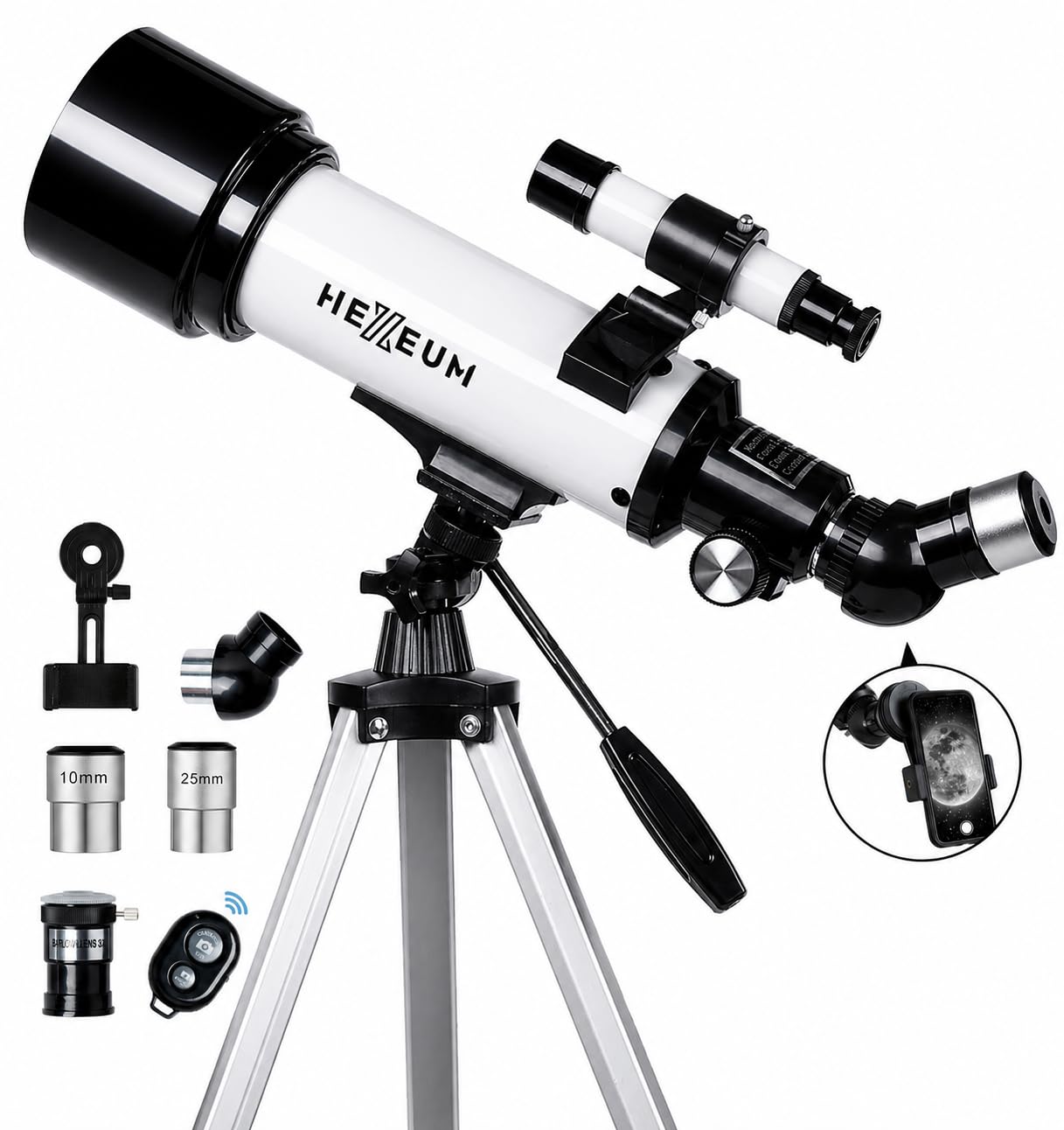
The whole kit nests together — tube, tripod, eyepieces, Barlow, phone adapter — and slides into a shoulder bag a ten-year-old can carry out to the yard. That single design decision is why this one gets used: nothing has to be left assembled in a corner waiting for a clear night that never comes.

It's also the most forgiving telescope here for a family starting from zero. Point the finder at something bright, switch to the 20mm eyepiece, turn the focus knob until the edge goes crisp, and you're observing — no alignment routine, no tools, no adult-only steps. We're fonder of the phone adapter than we expected to be, too. A child who can show a photograph of the Moon on a screen keeps coming back to the eyepiece in a way a child squinting alone in the dark often doesn't.

Set your expectations at 70mm and everything holds up. The Moon is this scope's best subject — craters along the terminator, sharp at 40x through the 10mm eyepiece. Jupiter is a small disc with its four bright moons in a line, and Saturn is a tiny ringed oval on a steady night. Add the 3x Barlow and the picture gets bigger and softer at the same time, which is the trade the magnification number never mentions, so we leave it in the box except when a child wants a satisfyingly enormous Moon.

One habit pays for itself on the first night: assemble it in daylight and align the finder on a distant chimney or streetlight, then take it outside after dark. A finder that's a fraction off sends a kid sweeping the sky for a Moon they can see perfectly well with their own eyes.

Pros

  • Kit packs into one shoulder bag
  • Phone adapter and wireless remote included
  • Two eyepieces and a 3x Barlow in the box
  • Simple enough for a beginner to run

Cons

  • Costs more than the other 70mm kits here
Our verdict

Our default recommendation for a family's first telescope: a packed-and-ready 70mm kit a beginner can aim, focus, and photograph the Moon through without help.
Check Latest Price
2

Best Value

Koolpte 70/500 Refractor

87 /100
LBD Score Excellent

Key details

Weight
5 lb
Aperture
70mm
Eyepieces
25mm and 10mm, plus 3x Barlow
Focal Length
500mm (f/7.1)
View on Amazon

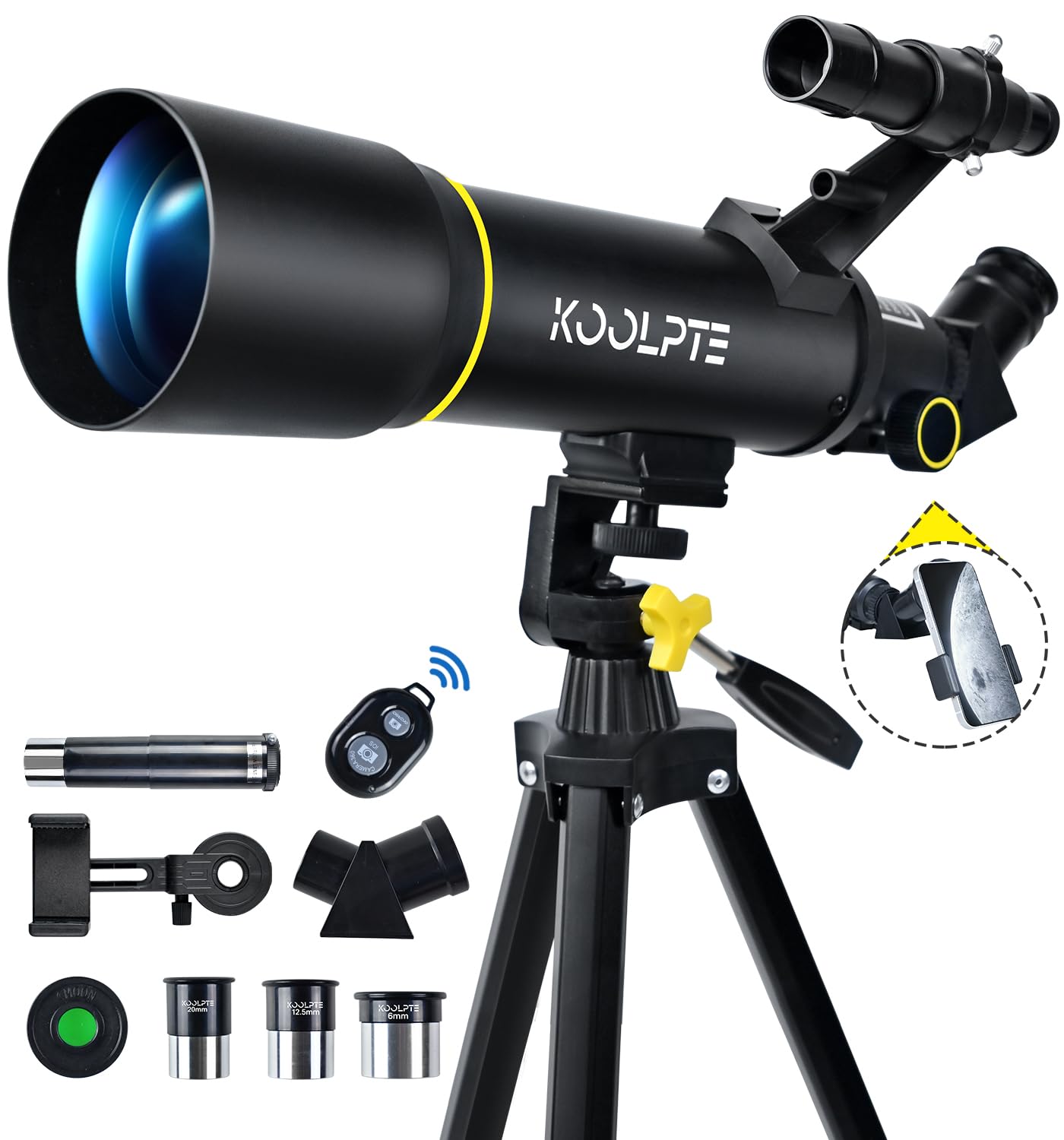
Same 70mm aperture as the Gskyer, a 500mm tube instead of 400mm, and less money — and the extra focal length isn't a marketing line. The 25mm eyepiece gives 20x here and the 10mm gives 50x, so the Moon fills more of the view before you touch the Barlow. The slower f/7.1 optics also keep the Moon's bright edge cleaner than the faster 70mm tubes manage.

In the box you get both Kellner eyepieces, the 3x Barlow, a phone adapter, a wireless remote and a soft case, and the tripod is an adjustable aluminum unit with enough height range for a child who grows three inches between birthdays. It sits around five pounds, which is a two-hand carry for a small kid and no problem at all for a nine-year-old.

What settles it for us is how little goes wrong. The Moon comes up clear, the mount is simple enough for a child to track it as it drifts, and by the second night nobody is reaching for the instructions. All it asks for is a level patch of ground and twenty minutes of dark adaptation.

Pros

  • Longer 500mm tube gives more magnification per eyepiece
  • Phone adapter, remote and soft case included
  • A strong showing with young beginners

Cons

No notable drawbacks to flag.

Our verdict

Take the top pick's optics, stretch the tube, spend less: this is the 70mm kit we name when the budget is the deciding factor.

Check Latest Price
3

Best Tabletop

Celestron FirstScope 76

84 /100
LBD Score Excellent

Key details

Mount
Manual tabletop Dobsonian
Aperture
76mm
Eyepieces
4mm and 20mm
Focal Length
300mm
View on Amazon

The tube of Celestron's FirstScope is wrapped in a printed Moon map, crater names and all, made with the lunar photographer Robert Reeves. It's a smarter feature than it sounds: a child can pick a crater off the side of their own telescope and then go find it in the eyepiece, which is a far better first night than being told to look at the Moon.

This is the only reflector here and the only one that doesn't stand on a tripod. The tube sits in a tabletop Dobsonian cradle that swivels and tilts by hand, so there are no leg locks to overtighten and nothing for a small foot to kick. A 76mm mirror is the second-largest aperture in this roundup, and mirrors don't throw the purple fringe that fast refractors show along the Moon's bright limb — the view is a little brighter and noticeably cleaner than the 70mm kits give you.

Tabletop is also the limitation. It needs a flat, solid surface at the right height — a picnic table, a porch rail, a stack of crates — and a child sitting on the ground with it is in for a sore neck. Treat it as a porch scope and it's the steadiest thing on this page. The 20mm eyepiece gives 15x and does most of the work; the 4mm reaches 75x, which is where the mirror starts earning its keep and where a restless kid stops caring.

Pros

  • 76mm mirror out-gathers the 70mm refractors
  • Tabletop rocker holds aim with nothing to kick
  • Moon map wrap gives a child targets to chase

Cons

  • No finderscope, so you sight along the tube
Our verdict

Buy this one if the scope will live on a porch or picnic table — a steady tabletop base and a 76mm mirror make the Moon the sharpest it gets in this group.

Check Latest Price
4

Best for Brighter Views

Hawkko 80/500 Refractor

83 /100
LBD Score Excellent

Key details

Aperture
80mm
Eyepieces
25mm and 10mm, plus 3x Barlow
Focal Length
500mm
Magnification
20x to 150x
View on Amazon

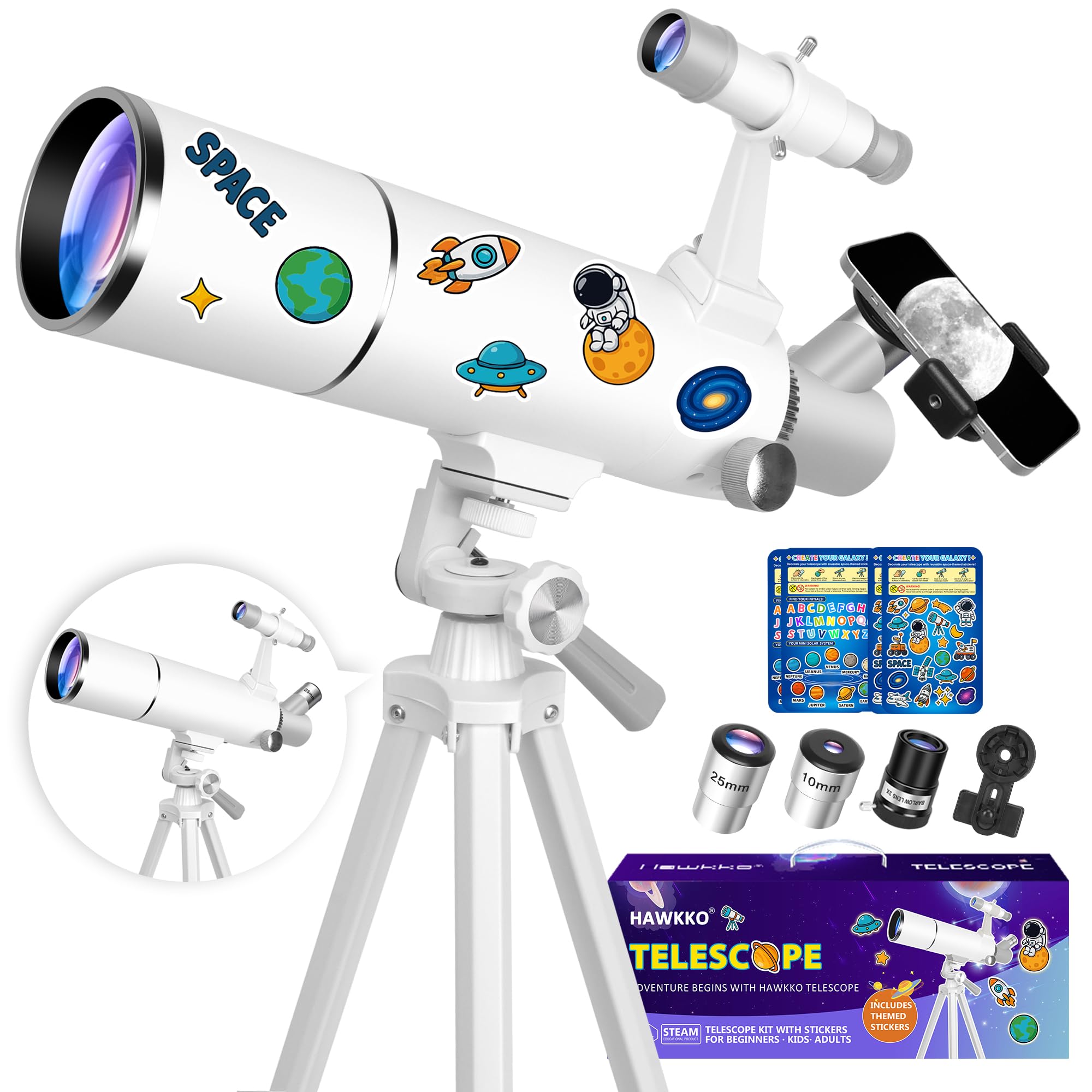
There's a sheet of space stickers in the Hawkko box — rockets, planets, the alphabet — meant to be stuck onto the tube. It's a small thing, and it's the only kit here that ships with something to personalize, but it tells you the designers had a seven-year-old in mind rather than an adult.

The reason to pay for this one is at the front end: 80mm of fully multi-coated glass, the largest aperture in this roundup, on a 500mm tube. Against the 70mm kits that's meaningfully more light — the difference between a Moon that's bright and one that's almost too bright, and enough to pull in the brighter clusters and the Orion Nebula rather than just the planets. Magnification runs from 20x with the 25mm eyepiece to 150x with the 10mm and the Barlow, though the honest ceiling for this much glass sits well below that.

So the money buys aperture and a bit of charm, not a cleverer mount, and for a child who is genuinely hooked that's the right trade. The one thing to know is the finder: it's a straight-through tube rather than a right-angle one, so a small child has to put an eye right up against the back of it. Most manage fine; the under-sevens often give up and swing the whole scope around by hand instead.

Pros

  • Largest aperture in this roundup at 80mm
  • Phone adapter and adjustable tripod included
  • Stickers let a child make the tube theirs

Cons

No notable drawbacks to flag.

Our verdict

The most aperture here, and the pick for a kid who is already past the Moon and wants the brighter clusters and nebulae to show up as something.

Check Latest Price
5

Travel and Camping

ToyerBee 70/300 Refractor

82 /100
LBD Score Excellent

Key details

Weight
3.5 lb
Aperture
70mm
Eyepieces
20mm and 6mm, plus 3x Barlow
Focal Length
300mm
View on Amazon

If the telescope's real job is to survive the trunk of a car, a camping weekend, and a school show-and-tell, this is the one we reach for. It weighs 3.5 pounds, the tube is short, and it goes together without tools — which means it comes apart and back into a bag instead of living permanently on a tripod in the corner of a room. Portability is the entire pitch here, and at this size it's a real one.

What you get is a 70mm fully multi-coated objective, 20mm and 6mm eyepieces, a 3x Barlow, a 5x24 finder, a phone adapter, a wireless remote and a star chart a kid will probably pin to a wall. Assembly is tool-free, which matters more than it sounds when the alternative is hunting for an Allen key in the dark with a child asking whether it's nearly ready.

The wide view a short tube gives you is the friendliest thing about it for a beginner. A child who can't yet aim precisely will still catch the Moon in the eyepiece and can tighten up from there, and the same scope does daytime duty on birds and distant boats, which is more than most astronomy kits are asked to do.

Pros

  • 3.5 pounds with tool-free assembly
  • Phone adapter, remote and star chart included
  • Wide field makes first aiming easier

Cons

  • Short 300mm tube keeps planets small
Our verdict

For the family whose telescope lives in the trunk, this 3.5-pound tool-free kit is the one that actually travels rather than staying in a cupboard.

Check Latest Price
6

Eyepiece Variety

Koolpte 70/400 Refractor

83 /100
LBD Score Excellent

Key details

Aperture
70mm
Eyepieces
25mm, 10mm and 6mm, plus 3x Barlow
Focal Length
400mm (f/5.7)
Magnification
20x to 200x
View on Amazon

Three eyepieces is unusual in a kit this size — 25mm, 10mm and 6mm, plus the 3x Barlow — and that spread is the reason to pick this Koolpte over the other budget refractors. You get 16x, 40x and 67x before the Barlow joins in, which covers wide-field sweeping, a full-disc Moon, and a close look at craters without buying anything extra.

The rest is standard 70mm refractor hardware: a coated objective, a 5x24 finder with crosshairs, an adjustable aluminum tripod, a phone adapter and a wireless remote. It performs like the other 70mm scopes here. The Moon is sharp, Jupiter is a disc with its moons beside it, and Saturn needs a steady night and a patient child — the same bargain every small refractor offers.

Where it slots in is the eyepiece set rather than the tube. The 6mm is the one to keep in the focuser on a still night, since 67x sits right at the edge of what 70mm of glass does well, and the Barlow is best saved for the Moon, where an oversized, slightly soft image is still a spectacle. For a kid who likes swapping parts and experimenting, having a third eyepiece to trade is worth more than any single spec.

Pros

  • Three eyepieces plus a Barlow in the box
  • Same 70mm Moon views as pricier kits here
  • Phone adapter and wireless remote included

Cons

  • Tripod is the flexiest part of the kit
Our verdict

Three eyepieces and a Barlow make this the experimenting kid's kit, with the same 70mm Moon views as the picks above it for less money.

Check Latest Price
7

Youngest Kids

Luzsco 50mm Kids Telescope

84 /100
LBD Score Excellent

Key details

Mount
Fixed
Weight
1.32 lb
Aperture
50mm
Eyepieces
20mm and 6mm, plus Barlow
View on Amazon

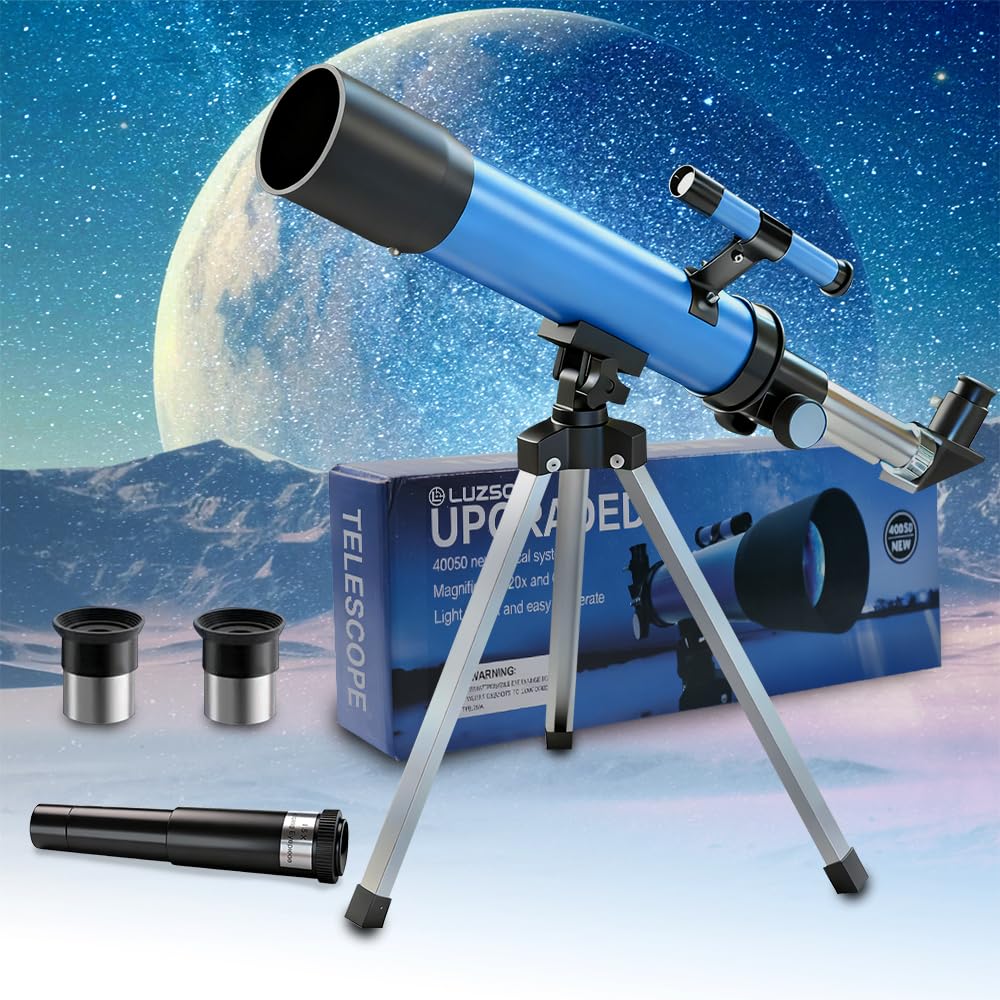
Six is young for a telescope, and the honest goal at that age isn't what a child can see — it's that the thing is theirs, it points at the sky, and it survives being carried outside by itself. The Luzsco is built around that child. It weighs 600 grams, the tube is short, and the whole assembly is small enough to live on a shelf between clear nights.

You get a 50mm multi-coated objective, 20mm and 6mm eyepieces, a Barlow, a reflex finder and a moon filter. That last item is a genuinely nice touch at this level, because the Moon through any telescope is bright enough to be uncomfortable, and a filter makes it something a child will look at for more than ten seconds.

What it shows is the Moon, and it shows it well enough to produce a gasp: the terminator, the big craters, the dark plains. Bright stars come up as points, and that's about the limit. Planets, galaxies, the things the box art hints at, are out of reach of a lens this size — and a family who buys it expecting a small version of an adult telescope ends up disappointed. Bought as a first look at the Moon, it does its job.

Our advice for this one is a daylight rehearsal. Point it at a distant tree or a street sign, get the 20mm eyepiece sharp, and learn which way the focuser turns — then try the Moon after dark. Most of the frustration with a scope this size comes from hunting a target that was never in focus to begin with, and a few minutes in daylight prevents all of it.

Pros

  • Light enough for a six-year-old to carry
  • Moon filter included
  • Quick, tool-free assembly

Cons

  • Fixed mount
Our verdict

The least expensive telescope here, and the right first scope for a six-year-old: light enough to carry alone, simple enough to aim, modest about what it can show.

Check Latest Price

How We Tested Kids' Telescopes (and What the Kids Did Themselves)

We started with about 40 scopes sold for kids and beginners, then crossed off anything under 50mm of aperture, anything whose mount looked likely to droop under its own tube, and any listing that led with magnification instead of aperture. That left 14, and we tested each one for six months.

Setup was the first filter. We handed each box to a family with a 6-, 9-, and 11-year-old and timed how long it took to get from sealed box to a first look, noting every point where an adult had to step in. We counted the questions the instructions left unanswered — how to line up the finder, which eyepiece gives which power — because that's usually where a first night falls apart.

Then we took them outside. Scopes lived by back doors and in car trunks, came out on school nights for quick Moon looks and on camping trips for darker skies, and got pointed at the Moon, Jupiter and its brightest moons, Saturn, and whatever star cluster was up. We judged clarity by whether crater edges stayed sharp as we pushed the power up, and whether a phone clamped into the adapter could hold the Moon in frame long enough to take a picture.

A wobble test settled a lot of arguments: tap the eyepiece and count until the image stops shaking. Anything past three seconds was frustrating for a kid. Over six months we also logged cracked tripod legs, focusers that developed play, and cases whose zippers gave out — and whether a kit's included eyepieces gave two genuinely usable magnifications or sent you shopping for more.

How to Choose a Telescope for a Kid

Aperture matters, magnification mostly doesn't

Light is what a telescope collects, and a 70mm objective gathers roughly twice what a 50mm does — the difference between a crisp Moon and a grey smudge. Magnification is just focal length divided by eyepiece focal length, so any manufacturer can print a large number by shipping a tiny eyepiece. A realistic ceiling is about twice the aperture in millimeters: roughly 140x for a 70mm scope, and only on a still night.

That's the trap attached to the Barlow lens in every kit here. It triples a number, not the detail, and stacked behind a 10mm eyepiece it usually produces a bigger, softer Moon. We treat it as a lunar-only accessory and keep the mid-power eyepiece in the focuser for everything else.

The mount decides whether it gets used

A telescope is only as good as what holds it. A light aluminum tripod will wobble when a child touches the focuser, and at 100x a wobble means losing the target entirely. A tabletop Dobsonian base like the Celestron FirstScope's solves that and introduces a different requirement: it needs a solid table or rail at a height the child can reach without stooping.

Whichever design you pick, check the eyepiece height with the child standing or sitting before you commit. Steady and low beats tall and shaky, every time.

What a child can actually see

Most first nights are spent on the Moon, and that is the right target: bright, easy to find, and genuinely spectacular at 40x. Jupiter shows a disc with four moons strung beside it; Saturn is a small ringed oval that rewards patience. Nebulae and galaxies stay smudges at this aperture no matter what the box art suggests, so aim the enthusiasm at the Moon and the planets.

Two habits make the difference. Align the finder in daylight on a distant chimney, and put the phone adapter in the plan — a photo a child can show someone keeps the interest alive longer than the view alone.

Weight, storage, and where it lives

Between 3.5 and 5.7 pounds, weight is less about strength than about habit. A scope with a bag that closes goes back in the cupboard; one that has to be partly disassembled tends to stay out and get knocked over. Short 300mm tubes pack into a car more easily, while a heavier tripod is steadier at home.

Decide where the telescope will live before you buy it. The one that stays by the back door gets used, and the one that goes up to the attic does not.

Frequently Asked Questions

Final Verdict

If you want one answer, it's the Gskyer. Everything a first night needs — bag, eyepieces, phone adapter, remote — is in the box, and the Moon comes up the way a child expects it to, which is what buys you the second night and the third.

Choose the Koolpte 70/500 if the outlay is the deciding factor; it's the same aperture on a longer tube for less. And if the telescope will sit on a porch rail or picnic table rather than a tripod, the Celestron FirstScope is the steadiest of the lot.