Best Wireless Video Doorbells of 2026

A wireless video doorbell is a straight trade: you skip the electrician, and in exchange you take on a battery. That's the whole bargain, and it's worth knowing up front, because you'll be the one charging it. What you get in return is your front step in your pocket — the courier who didn't knock, the neighbor's dog, the kid sneaking in late.

We've had 12 of these mounted since spring — some wired in, some running on pure battery — and six months in, the pattern is clear. Resolution is what the box sells; field of view is what you actually live with. A crisp 2K clip that cuts off at your chest is worth less than a wider lens that shows the box on the step.

The other thing nobody tells you: the weak link is usually your wall, not the camera. Front-door Wi-Fi is often the worst signal in the house, and a doorbell that keeps dropping offline can't tell you anything. Every pick below survived that, held its charge, and let me see last night's footage without a monthly fee.

1

Best Overall

Tapo D225 2K+

86 /100
LBD Score Excellent

Key details

Battery
10,000 mAh
Resolution
2K
Field Of View
180°
Local Storage
microSD up to 512GB
View on Amazon

A 180-degree view is the reason the Tapo D225 is the doorbell we recommend first. It shows the full height of the doorway — a visitor's face at the top, the parcel on the step at the bottom — and that's the difference between a clip you can act on and one you have to squint at. Head-to-toe coverage is the single thing we prioritise in this category, and no other pick here pairs it with a battery this large.

That battery is a 10,000 mAh pack, the biggest in this group, and the doorbell runs on it or on existing wiring at 8 to 24 volts. We like that flexibility in an older house: mount it wire-free this weekend, hardwire it later if the transformer turns out to be usable. There's a plug-in chime in the box too, which is the detail people forget they're giving up when the mechanical bell comes off the wall — an audible ring in the hallway, not just a phone that happens to be in another room.

Storage settles the long argument. Clips record to a microSD card of up to 512GB, with Tapo's cloud as an optional extra rather than a requirement, and person, vehicle and package detection are free rather than tied to a plan. Over a couple of years that's the difference between owning a doorbell and renting one.

The soft spots are battery and Wi-Fi, which is true of most of this group. With a busy street out front the pack drains well before the capacity number suggests, and the link wobbles when the router sits at the back of the house. Turn the sensitivity down, set the activity zone over the path rather than the whole frame, and test the signal at the door with your phone before you drill anything.

Pros

  • Full-height 180-degree view of the doorway
  • Records to microSD with no subscription
  • 10,000 mAh battery or 8-24V wiring
  • Indoor chime included in the box

Cons

  • Battery drains fast with heavy foot traffic
  • Connection can drop on a weak signal
Our verdict

If you want one doorbell that shows the whole doorstep, records without a monthly fee, and can be wired later, this is the one we point most people to.
Check Latest Price
2

Best for Detail

aosu V8S 5MP

89 /100
LBD Score Excellent

Key details

Wi-Fi
2.4 and 5 GHz
Resolution
5MP
Battery Life
Up to 90 days
Local Storage
8GB base station
View on Amazon

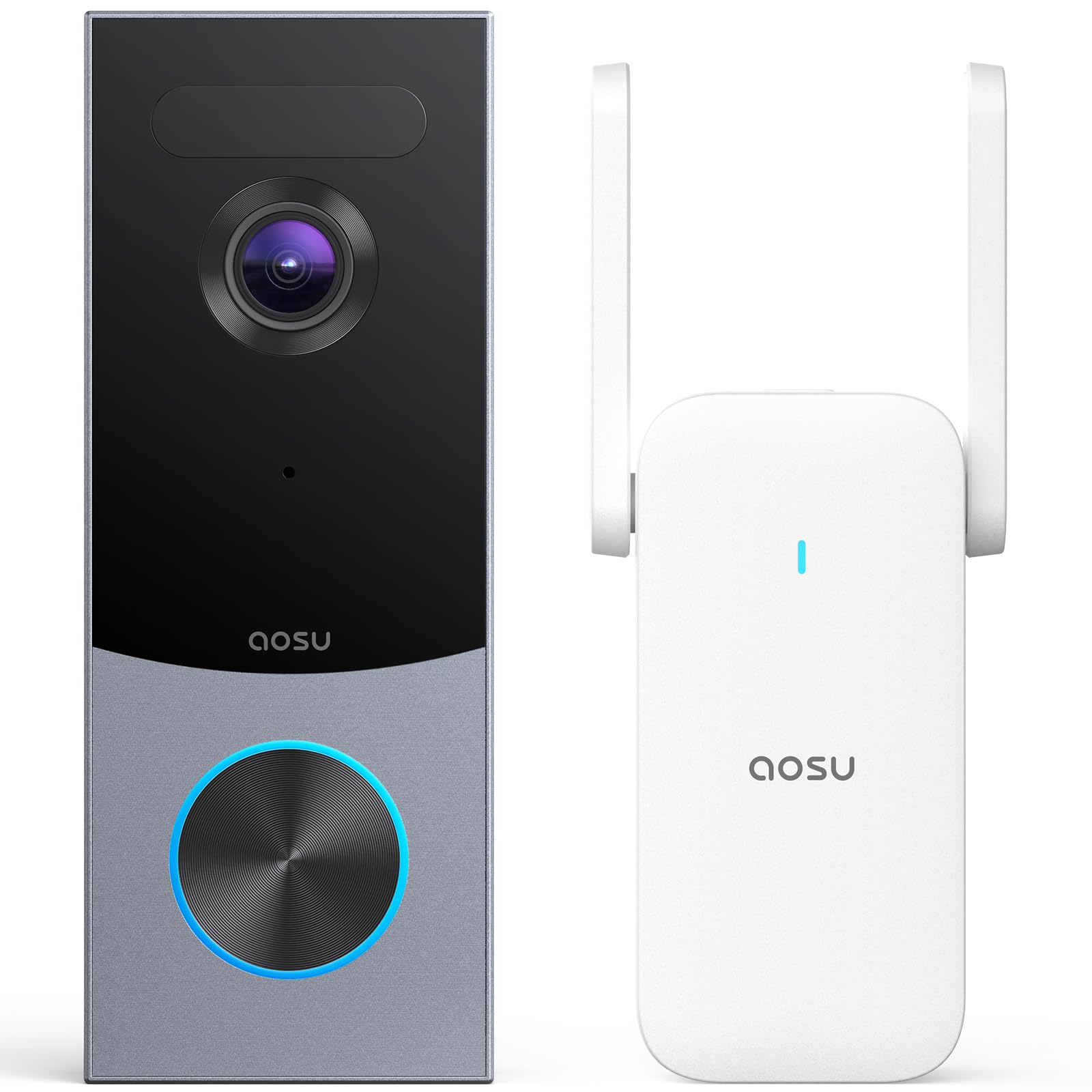
If the D225 is the sensible default, the aosu V8S is the one for someone who wants to read a licence plate. Its 5MP sensor produces the most detailed image in this group, and the 4:3 framing holds more of the porch than the tall, narrow views elsewhere. If the thing you care about is identifying a face at 30 feet, this is the doorbell on the page for you.

The 8GB base station is the more interesting half. It sits indoors, holds roughly 60 days of looping footage, and keeps the whole setup off a subscription — the point for anyone who has already paid a year of cloud fees somewhere else. Dual-band 2.4 and 5GHz Wi-Fi is unusual here, and on a 5GHz network the link is easier to keep alive than the 2.4-only competition. Battery or wiring, your choice, with rated battery life of up to 90 days.

Two things keep it off the top spot. At 930 grams it's the heaviest doorbell here by a wide margin, and it's the most expensive, so you're paying for the base station and the extra resolution rather than for convenience. Reliability is the other question mark: some units go quiet after a few months of use. Register the one-year warranty the day it arrives, and buy this for the picture and the fee-free storage rather than as the cheapest route to a working doorbell.

Pros

  • 5MP image with the most detail here
  • 8GB base station, no subscription
  • Dual-band 2.4 and 5GHz Wi-Fi
  • Battery or wired installation

Cons

  • Heaviest doorbell in this group
  • Some units stop working after a few months
Our verdict

The sharpest picture and the best fee-free recording here, in the heaviest and priciest package — a good buy if image detail is what you're after.

Check Latest Price
3

Best for Packages

eufy E340 Kit

84 /100
LBD Score Excellent

Key details

Battery
6,500 mAh, spare included
Cameras
Front and downward
Resolution
2K
Local Storage
8GB built-in
View on Amazon

The E340's second camera points at the ground, and that single design choice is why it's in this guide. Instead of one wide lens trying to cover a face and a parcel at once, you get an eye-level view of whoever is standing there and a second, close view of the doorstep — the difference between seeing a box and reading the label on it. For a house that gets three deliveries a week, that's the feature you'll use most.

Storage is built in: 8GB of internal memory, no card to buy and no plan to keep. The kit also ships with an extra quick-release battery, so recharging is a swap rather than an evening with the doorbell hanging off a cable — with two 6,500 mAh packs it's effectively never off the wall. Color night vision comes from a dual-light system rather than infrared alone, which we value for recognizing a face at night instead of a silhouette.

What you're paying for is the second lens and the spare pack, and this is the priciest single-door pick here. A downward camera also catches a lot of pavement, so expect to spend your first week drawing activity zones and muting the sidewalk. Do that once and the delivery view earns its keep every time something is left on the step.

Pros

  • Downward camera dedicated to doorstep deliveries
  • 8GB built-in storage, no subscription
  • Spare battery included in the kit
  • Color night vision from a dual-light system

Cons

  • Costs more than the single-camera picks
  • Downward camera picks up extra pavement motion
Our verdict

Buy the E340 if parcels matter as much as people do: the downward camera reads a label on the step, and the spare battery keeps it mounted.

Check Latest Price
4

Best Budget

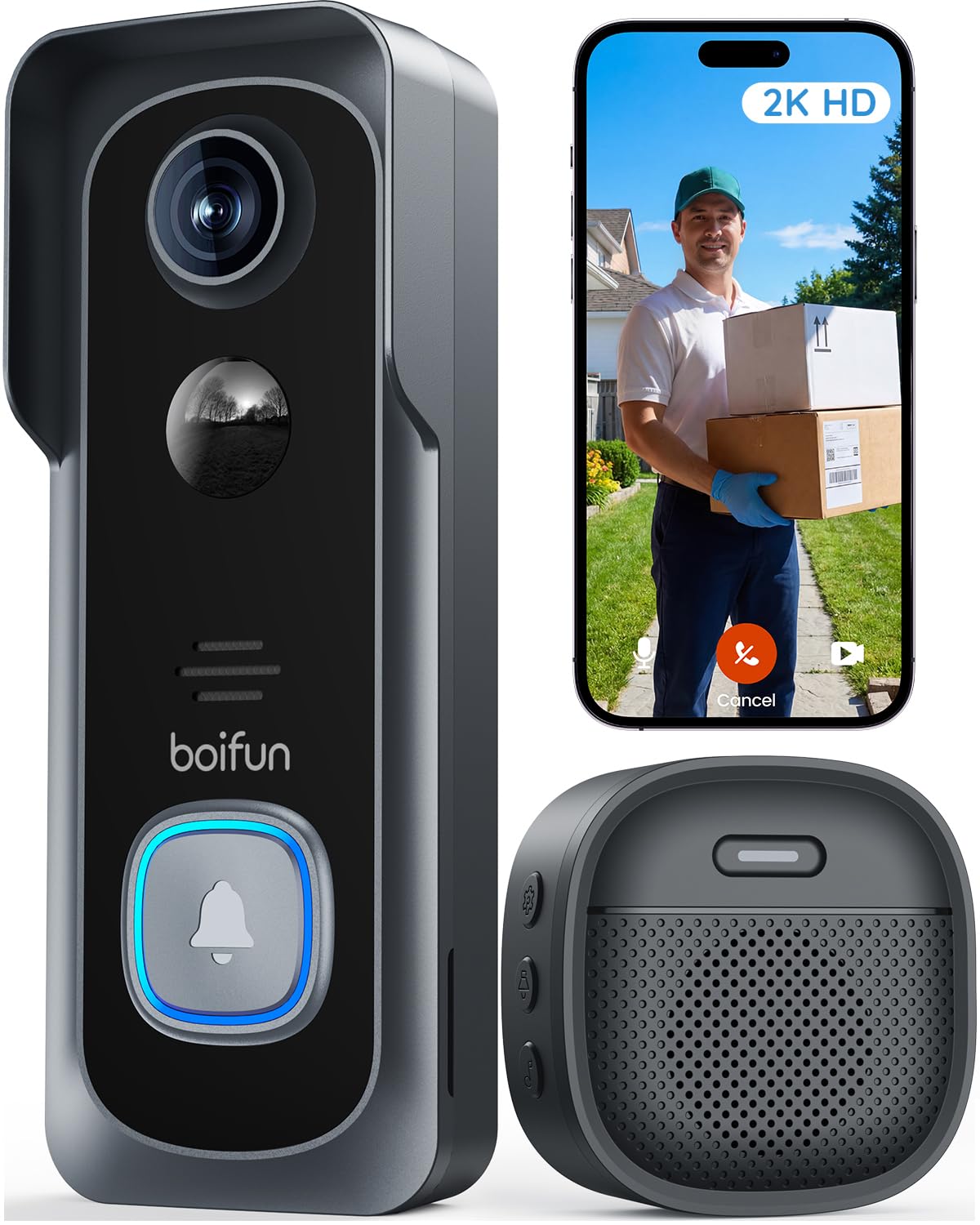
BOIFUN 2K

87 /100
LBD Score Excellent

Key details

Battery
5,200 mAh
Resolution
2K
Field Of View
166°
Local Storage
microSD up to 128GB
View on Amazon

The cheapest doorbell here that we're happy to recommend is this one, and the box is the first surprise: a 2K camera, an indoor chime and a two-year warranty. At 8 ounces it's also the lightest pick in this group, which matters if you're mounting to siding or a rental doorframe with the adhesive pad rather than into studs.

You give up the extras, not the basics. The 166-degree view covers a porch, night vision uses 940nm infrared so it doesn't glow red at visitors, and human detection, two-way audio and playback all work without a subscription — clips go to a microSD card of up to 128GB that you supply. Setup is a phone-and-app job on 2.4GHz Wi-Fi only, which is the one spec to check against your router before ordering.

The battery is sealed in, so charging means pulling the whole doorbell off the wall and plugging it into USB-C rather than swapping a pack. The listing's figure of up to 60 days assumes lab conditions with 30 activations a day; treat that as a ceiling. A porch with a sidewalk in front will get through it faster, and a fortnightly top-up is a realistic routine for a busy street.

One last thing to be clear-eyed about: 166 degrees is wide across the porch but not as tall as the 180-degree Tapo, so a parcel pushed right against the door can sit at the edge of frame. On a doorway with a step and a path that trade is fine — you still get 2K and a chime for the least money here. On a deep recess, pick the taller view.

Pros

  • Lowest price of the picks we recommend
  • Chime and two-year warranty included
  • microSD recording with no subscription

Cons

  • 2.4GHz Wi-Fi only
  • Sealed battery must come off the wall to charge
Our verdict

The best value here — 2K video, a chime in the box and no subscription — provided your router runs 2.4GHz and you don't need a head-to-toe view.

Check Latest Price
5

Best for Renters

Tapo D210

87 /100
LBD Score Excellent

Key details

Battery
6,400 mAh
Resolution
2K
Field Of View
160°
Local Storage
microSD up to 512GB
View on Amazon

No monthly fee is the promise every doorbell in this group makes, and the D210 is where the claim is cleanest. Footage goes to a microSD card of up to 512GB, person detection and the ring-call alert are free, and an indoor chime comes in the box — so it works as a doorbell before you decide whether cloud storage is worth anything to you at all.

The rental angle is what makes it our pick for anyone who can't drill. The mount is small, the box includes a 3M adhesive pad and a foam pad for surfaces you'd rather not screw into, and at 570 grams it's light enough to trust on a good adhesive. Nothing about the installation follows you to the next address except the app, which is exactly what you want if a landlord is going to want the doorframe back.

The 160-degree head-to-toe view is a step down from the D225's 180, and in practice that shows up as a slightly tighter frame at the edges rather than a missing visitor. The 6,400 mAh battery is smaller too, and both Tapos share the same reality: capacity is generous until the camera is firing all day, so match the sensitivity to your street.

Person detection is the one place it slips. It can mistake a passing animal or a shadow for a visitor, and the fix is a tight activity zone over the path rather than a full-frame view. Set that up on day one and the false alerts mostly stop.

Pros

  • Head-to-toe 2K view at a lower price
  • microSD recording with no subscription
  • Chime and adhesive pads included

Cons

  • Person detection can fire on animals and shadows
  • Smaller battery than the D225
Our verdict

Our pick for renters and anyone who won't drill: adhesive mounting, local recording with no subscription, and a chime the whole house can hear.

Check Latest Price
6

Best for Narrow Porches

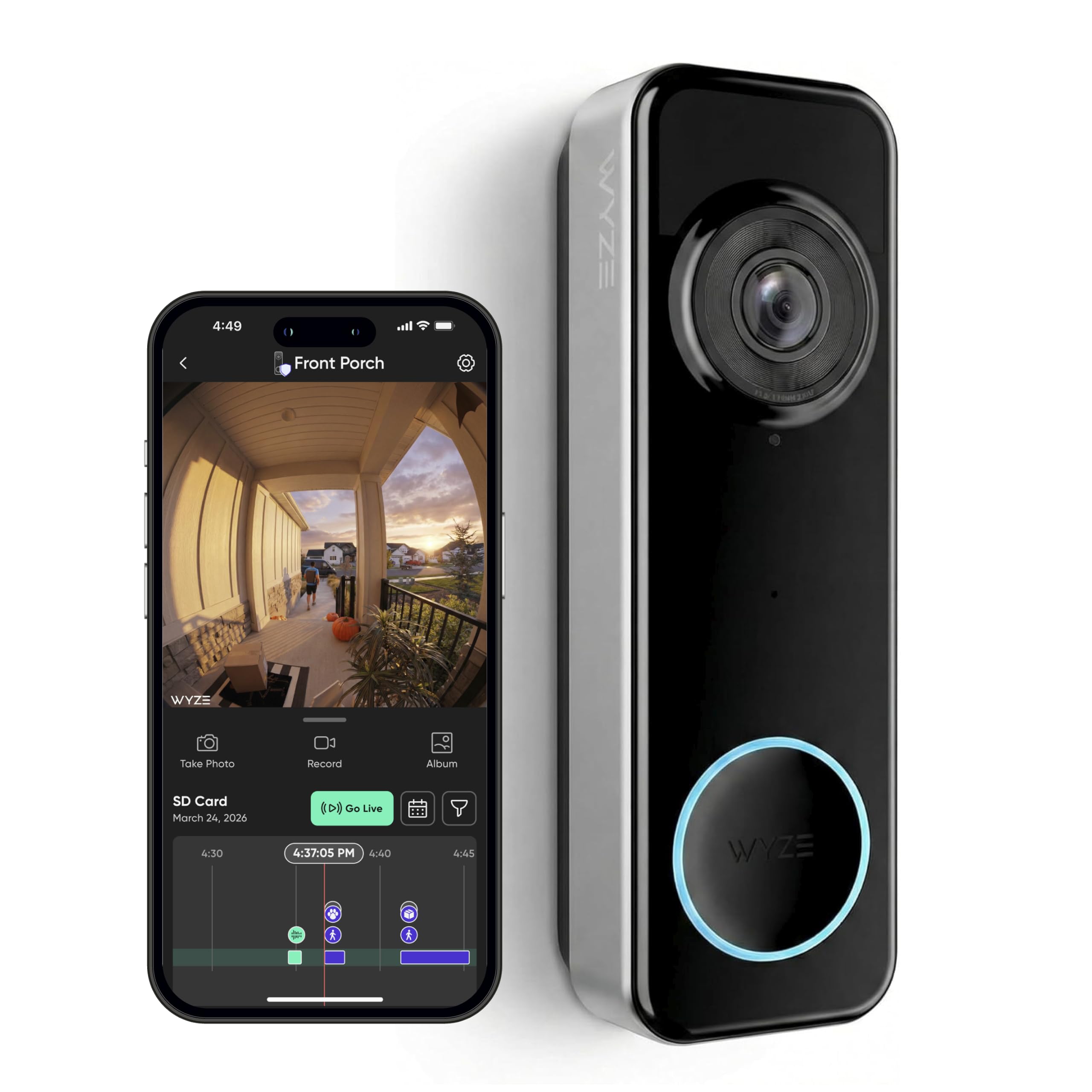
Wyze Battery Doorbell

84 /100
LBD Score Excellent

Key details

Resolution
1536 x 1536
Battery Life
Up to 6 months
Field Of View
150° x 150°
Local Storage
microSD up to 256GB
View on Amazon

A square image looks odd on a spec sheet until you mount one next to a wall. The Wyze's 1536 x 1536 view is built for the narrow porch, where a wide frame spends both edges on brick and gives you a sliver of the person. Here the picture is tall enough for a face and low enough for a parcel in the same shot, which is the whole argument for the 1:1 sensor.

Color night vision is the second thing we value. Rather than the usual black-and-white infrared, the starlight sensor keeps enough color to tell a navy jacket from a black one — useful when you're describing someone to a neighbor the next morning. Power is up to six months from a detachable USB-C battery, or continuous if you hardwire it, and the app sorts person, vehicle and package alerts separately.

The trade-offs are the app and the connection. Some units drop offline and need re-adding, and Wyze sells an optional cloud plan for anyone who wants clips off the card rather than on it. At this price we still think the square view is worth the fuss — and if you hardwire it, the battery question disappears entirely.

Pros

  • Square 1:1 view for tight entryways
  • Color night vision from a starlight sensor
  • Runs on battery or hardwired power

Cons

  • Some units drop offline and need re-adding
  • Cloud clips cost extra
Our verdict

The pick for a tight entryway: a square view that catches faces and parcels together, with color at night and a battery you can carry inside.

Check Latest Price
7

Wide Porch Views

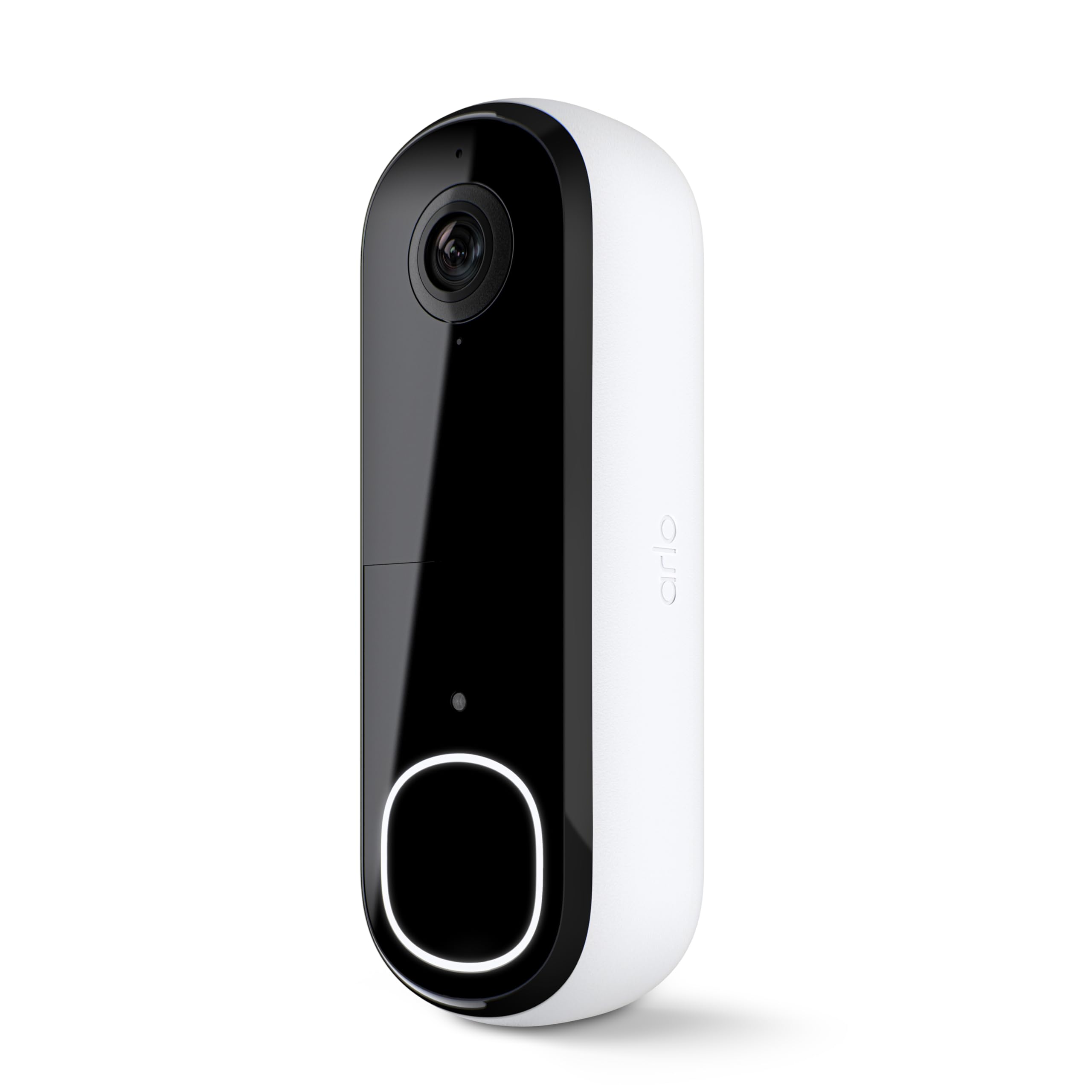
Arlo Video Doorbell 2K (2nd Gen)

81 /100
LBD Score Excellent

Key details

Power
Battery or hardwired
Resolution
2K HDR
Field Of View
180°
Included Plan
1-month Secure
View on Amazon

Arlo throws in a month of its Secure plan, and that's the honest place to start: after the trial, the features people buy an Arlo for — the 60-day video history, the AI detection, the package and person recognition — sit behind a paid plan. The hardware is genuinely good. The arithmetic is simply different from the fee-free picks here, and that's the decision, not a footnote to it.

What you get is 2K HDR video with a 180-degree view, a compact 7.2-ounce body on a small angled bracket, and the choice of battery or a trickle charge from existing wiring. It works with or without an Arlo base station, night vision is rated to 25 feet, and the head-to-toe framing does what the spec promises: faces up top, boxes down low.

Two practical notes. The doorbell doesn't ring a mechanical chime on its own — you'll want an Arlo chime or an Alexa device indoors — and connection and battery are both hit-or-miss, so give it a strong signal and don't expect months of runtime with heavy foot traffic. Buy it if you want a well-made camera and don't mind a plan; the fee-free picks above are better value if you don't.

Pros

  • 180-degree 2K HDR view
  • Works with or without a base station
  • Battery or hardwired trickle charge

Cons

  • Key features need a paid plan after the trial
  • Needs a separate chime to ring indoors
Our verdict

A well-built 2K doorbell with a wide, crisp view — worth it only if you're content to keep paying for the software after the first month.

Check Latest Price
8

Existing Blink Setups

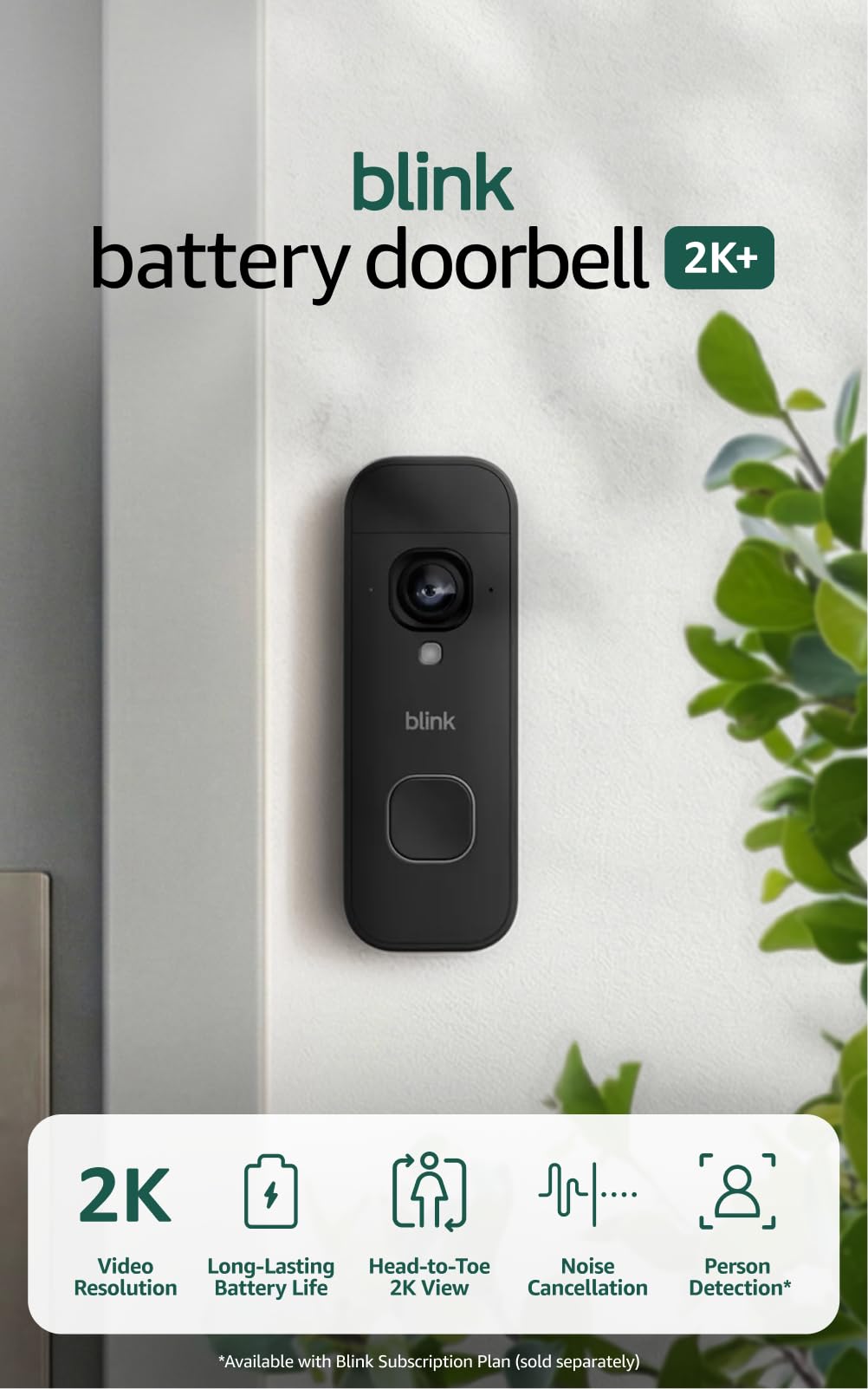
Blink Battery Doorbell 2K+

82 /100
LBD Score Excellent

Key details

View
Head-to-toe
Power
3 AA lithium batteries
Included
Sync Module Core
Resolution
2K
View on Amazon

The gap between someone stepping onto the porch and your phone telling you about it is where a doorbell earns its keep, and it's the Blink's weakest point. Live view and motion alerts can lag noticeably — long enough that a delivery is gone before the notification lands — which turns a doorbell into a doorstep recorder.

The everyday hardware is better than that suggests. 2K video with head-to-toe framing, two-way audio with noise cancellation that makes a conversation sound like one, and a Sync Module Core in the box so the doorbell joins a Blink system without extra kit. Power comes from three AA lithium batteries, which is the easiest swap in this group compared with recharging a sealed pack on a cable.

If you already run Blink cameras, the shared app and the included module make this the tidy way to cover a front door, and there's real value in keeping one app and one alert system across the whole house.

That is the buyer this one is for. If you don't already own Blink gear, weigh the lag first: some units also need re-pairing to Wi-Fi more often than they should, and that's a lot of patience to ask of a doorbell when the alternatives here answer the door faster.

Pros

  • 2K head-to-toe video and clear two-way audio
  • Sync Module Core included
  • Standard AA lithium batteries

Cons

  • Alerts and live view can lag noticeably
  • Some units need repeated Wi-Fi re-pairing
Our verdict

A tidy 2K doorbell that slips neatly into an existing Blink setup — just expect the notification to arrive after your visitor does.

Check Latest Price

What Six Months of Doorbell Footage Taught Us

We built the shortlist from about 30 models, comparing spec sheets and retail listings on the things that actually separate them: whether clips are stored locally with no subscription, whether a chime comes in the box, resolution and viewing angle, and whether the unit runs on battery, existing wiring, or both. Anything that only recorded to a paid cloud plan got cut. That left 12, which went up at front doors.

Installation came first, because it's the part people dread. I timed each one from box to first notification with nothing but a drill and a phone, and noted where the app stumbled — pairing, the Wi-Fi handshake, adding the indoor chime. Every unit got the same placement test: I checked signal at the door, then killed the router for ten minutes to see whether the doorbell reconnected on its own or needed a manual reset.

Then the walk tests. I approached from the sidewalk carrying a package, in a hoodie at dusk, and at normal pace from 5, 15, and 30 feet, watching whether the alert named a person, a vehicle, or a parcel — or just said motion. I noted whether the frame caught my shoes or only my head, and how long live view took to open after a ring.

Battery units were charged to full and run at normal household alert volume, with the days between charges logged rather than estimated. Over six months I kept a running note on the unglamorous stuff: dropped connections, missed deliveries, alerts that fired at 3 a.m. because a moth crossed the lens, whether the bracket and seals held up in rain, and how much of the feature set survives without paying anything.

How to Choose a Wireless Video Doorbell

Start with what the recording costs

The doorbell is the cheap part. Most picks here — both Tapos, the BOIFUN, the eufy, the aosu — record to a microSD card or built-in memory with no plan at all, and motion alerts, two-way talk and detection work the same whether or not you ever pay a cloud fee. Arlo runs the other way: a month of Secure is included, then the features people buy an Arlo for sit behind a subscription. Neither arrangement is wrong, but decide which one you're shopping for before you compare hardware, because a doorbell with a fee is a different purchase from one without.

The trap is the phrase 'no subscription.' It usually means a card slot, not a card. Budget for a microSD card on day one — the BOIFUN takes up to 128GB, the Tapos up to 512GB — or you'll have alerts with nowhere to keep the clips.

Match the shape of the view to your doorway

Framing decides more than resolution does. A wide 16:9 lens shows a lot of brick and a slice of a person. A head-to-toe view — whether it comes from a 180-degree lens, a square 1:1 sensor or a second downward camera — is what lets you identify a face and a parcel in the same clip.

Look at your doorway before you choose. A deep recess hides the step from a lens mounted flat on the frame, and a porch with a long path needs width more than height. Where one lens genuinely can't do both, the dual-camera eufy E340 splits the job rather than stretching a single sensor to cover it.

Check the Wi-Fi at the door, not at the router

A doorbell lives in the worst spot in the house for a radio: outside, at ground level, at the far end of a wall from wherever the router sits. Most of these are 2.4GHz only, which is the right band for range but also the crowded one. The aosu V8S is the exception here with dual-band support, and on a 5GHz network it has an easier time staying linked.

Before you order, stand at the door with your phone and watch the signal. If it's weak out there, no amount of resolution will rescue the alerts, and a mesh node will do more for you than a more expensive doorbell.

Treat battery life as a setting, not a spec

Published runtime figures assume a quiet street and a handful of activations a day. A porch on a sidewalk, with a tree that moves in the wind, drains any of these packs far faster. The controls that matter are activity zones and sensitivity, and every pick here has both.

Decide too how you want to recharge. A detachable pack — the Wyze, the eufy's spare — keeps the doorbell on the wall. A sealed battery, like the BOIFUN's, means the whole unit comes down for an evening on USB-C. If the doorbell can be hardwired, hardwire it; several of these trickle-charge from existing wiring and stop asking the question.

Don't forget the chime and the mounting kit

A battery doorbell usually won't ring the mechanical chime in your hallway. Some picks include a plug-in chime — both Tapos, the BOIFUN — and some leave you to add one, which is worth knowing before the old bell comes off the wall. Mounting works the same way: an adhesive pad and a wedge are in some boxes and not others, and a rental doorframe has different needs from a brick wall.

Frequently Asked Questions

Final Verdict

For most front doors, the Tapo D225 is the one to buy. The 180-degree view catches the parcel as well as the face, the 10,000 mAh pack is the biggest here, and microSD recording keeps a monthly fee off the table. It's the pick that leaves the fewest people making a compromise.

Spend less and you still get a good doorbell: the Tapo D210 keeps the no-fee recording and adds an adhesive mount for a rental, and the BOIFUN is the cheapest thing here we're glad to recommend. If parcels are the whole point, the eufy E340's downward camera is the only one that reads a label on the step.