Best Video Doorbells with Local Storage of 2026

The annoying part of a video doorbell isn't the doorbell — it's the subscription. You buy the hardware, then learn the recordings sit behind a monthly plan, and the day you stop paying the camera becomes an expensive peephole. Local storage fixes that: clips land on a card or a base station inside your house, and nobody bills you to watch them.

I've had a camera aimed at my front steps for years, so I know what goes wrong: a package sits in a blind spot, the Wi-Fi drops for an afternoon, the battery dies the one day someone tries the handle. We installed 12 local-storage doorbells over eight months — front doors, a side gate, one apartment corridor — and watched how each handled field of view, patchy Wi-Fi, and a week of push notifications.

A wide view beats a big resolution number — the head-to-toe framing is what catches a box on the mat instead of just a face — and budget for a high-endurance memory card. The picks below are the ones we'd put on our own doors.

1

Best Overall

Tapo D225 Video Doorbell

86 /100
LBD Score Excellent

Key details

Power
Battery or hardwired 8–24V
Field Of View
180°
Local Storage
Up to 512GB
Chime Included
Yes
View on Amazon

Head-to-toe is the useful phrase in doorbell marketing, and the D225 is the pick here that makes it literal: a 180-degree lens framed tall enough to catch a visitor's face and the parcel at their feet in the same shot. The image is 2K, night vision reaches about 25 feet, and the housing carries an IP65 rating, which is as much weatherproofing as most porches need.

What earned it the top spot is how the power and the storage fit together. Wire it into existing doorbell wiring at 8–24V and it stays charged while recording to a card up to 512GB, the largest local ceiling in this group, with no subscription at any point. Run it on the 10,000mAh battery instead and none of that stops working; you just join the recharge cycle. We paid close attention to that flexibility, because it's the difference between a doorbell you install once and one you take down every season.

The free tier is unusually complete: person, vehicle and package detection, a ring-call feature that dials your phone like a normal call, and a plug-in chime in the box. Wi-Fi is the soft spot. It's 2.4GHz only, and a metal frame or a deep brick reveal can make live view stutter, so check the signal standing at the door before you commit. If that signal is poor, the REOLINK PoE solves it with a cable instead of a radio.

Pros

  • 180° head-to-toe view catches faces and parcels
  • Card storage up to 512GB with no subscription
  • Hardwire at 8–24V or run on battery
  • Chime, person, vehicle and package detection included

Cons

  • Housing stands about 2 inches off the wall
Our verdict

We recommend it as the default: hardwire it once and you get head-to-toe 2K coverage with no subscription and a card slot that goes to 512GB.
Check Latest Price
2

Best Built-In Storage

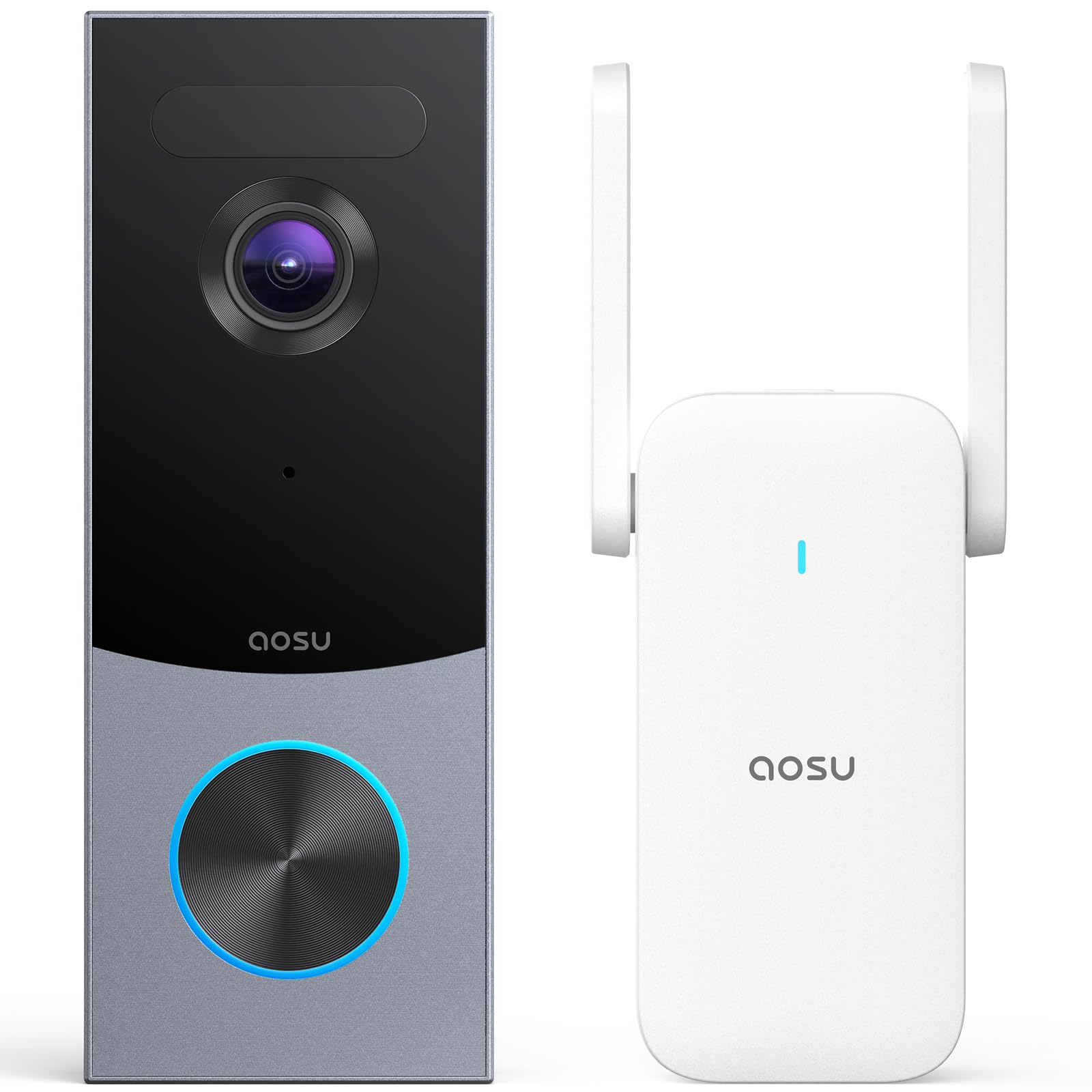
aosu Video Doorbell Ultra

89 /100
LBD Score Excellent

Key details

Resolution
5MP / 3K
Wi-Fi Bands
2.4 and 5GHz
Field Of View
166°
Local Storage
8GB in base station
View on Amazon

Storage that arrives installed is a different proposition from storage you have to shop for. The V8S ships with the aosuBase Mini, which holds 8GB and loops roughly 60 days of clips, so the doorbell is a working recorder the moment it pairs: no card to choose, no capacity to guess, no subscription underneath it.

The camera is the sharpest in this group, a 5MP sensor recording 3K through a 166-degree lens, with color night vision out to about 23 feet. Radar, passive infrared and human recognition all run at once, which is more detection hardware than anything else here, and it shows in how few false alerts the thing produces. It takes battery or wired power, and it's the only pick in this group that also offers the 5GHz band.

Two things gave us pause before recommending it this highly. It's the priciest doorbell here, and the battery is the least predictable in the group: some run for months, others need a charge within days, so how busy your street is matters more than the 90-day figure on the spec sheet. Wiring it is the way around that, if your door already has the wiring for it.

Pros

  • 8GB base station loops about 60 days of clips
  • 5MP sensor recording 3K through a 166° lens
  • Radar, PIR and AI detection in one unit
  • Only pick here with a 5GHz Wi-Fi option

Cons

  • Some units fail within a few months
Our verdict

Buy it for the 8GB that arrives with it, as long as you can live with battery life that swings from months to days between charges.

Check Latest Price
3

Best Wired PoE Pick

REOLINK Video Doorbell PoE

86 /100
LBD Score Excellent

Key details

Power
Power over Ethernet
Field Of View
135° H / 180° diagonal
Local Storage
MicroSD to 256GB or NVR
Chime Included
Yes
View on Amazon

There's no Wi-Fi radio in this one, and that's the entire argument for it. One Ethernet cable carries power and data to the door, so the feed can't drop because the porch signal is weak, and recording stays on a card or an NVR inside the house. If you can get a cable to the door, this is the most dependable doorbell in this group.

The camera is 2K at a 4:3 ratio, with 135 degrees of horizontal and 100 degrees of vertical coverage, and a 15-degree wedge comes in the box. We noted that wedge, because it's the difference between watching a path and watching a wall on a recessed entry. Local storage is a microSD card up to 256GB or a Reolink NVR, no subscription in either case. Pre-roll keeps the six seconds before a trigger, which is usually the difference between a face and a back.

Budget for the power side, because the PoE supply is not included: you're adding an injector, a PoE switch or a Reolink NVR. What that buys you is a doorbell that behaves like a security camera, with 100 feet of night vision, alerts you can limit to people, and a loud plug-in chime. It's the pick that keeps recording when the rest of the house's Wi-Fi doesn't.

Pros

  • PoE cable carries power and data, no Wi-Fi
  • Card up to 256GB or NVR, no fees
  • Chime and 15° wedge included
  • 100 feet of night vision

Cons

  • No pet detection, so animals trip alerts
Our verdict

Our pick if you can run a cable: no Wi-Fi to drop, no subscription, and recording that keeps going when the porch signal doesn't.

Check Latest Price
4

Best Bundle

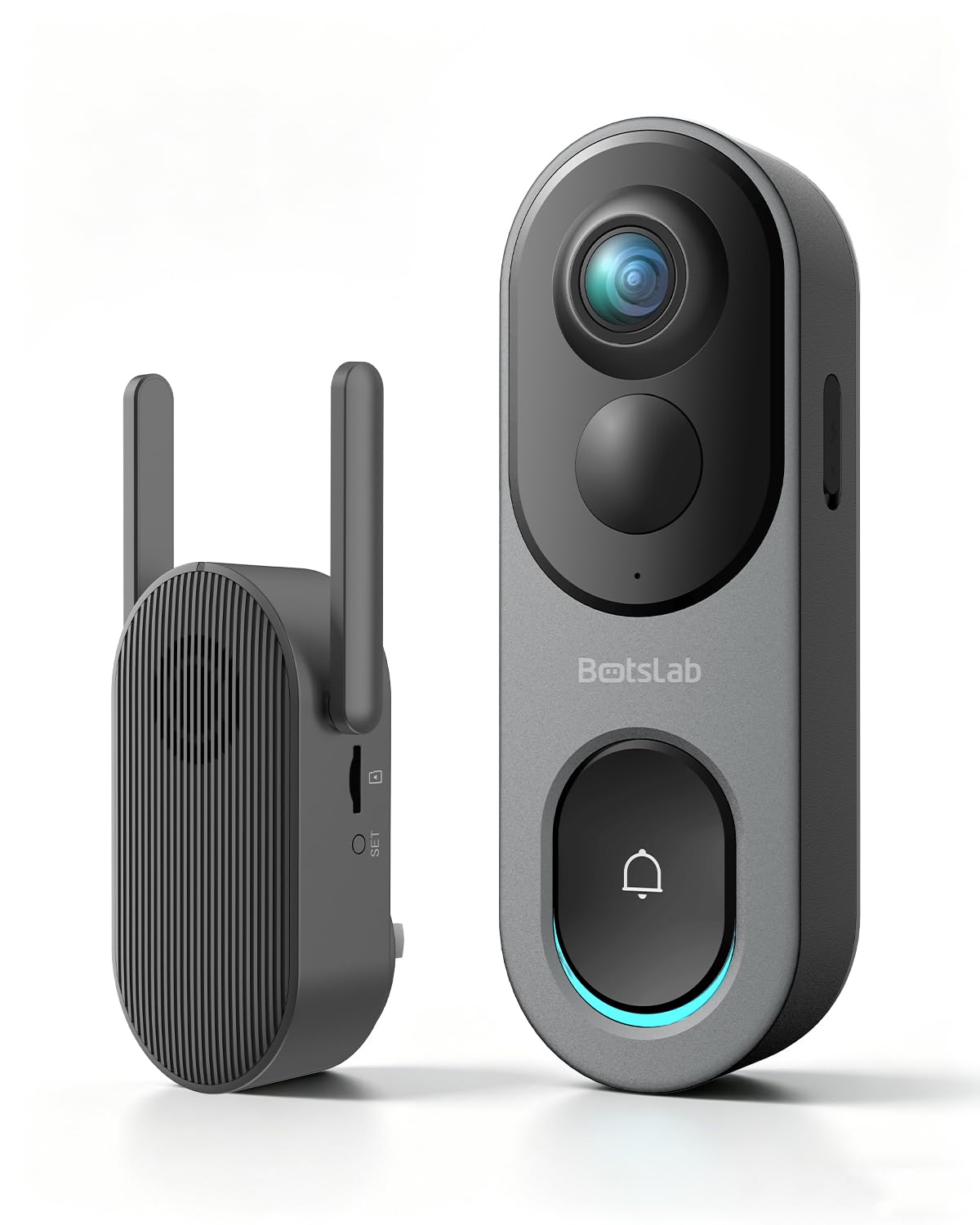
BOTSLAB Doorbell Camera

86 /100
LBD Score Excellent

Key details

Battery
6,400mAh
Resolution
5MP
Field Of View
180°
Local Storage
32GB card included
View on Amazon

Most doorbells in this group make you buy the storage separately. The BOTSLAB doesn't: a 32GB card and a base station to write to come in the box, so the purchase is complete before you pick up a screwdriver. Mount it, pair it, and clips are already being kept somewhere other than somebody else's server.

The bundle is the pitch, but the camera carries its end. It's 5MP through a 180-degree panoramic lens, with radar, PIR and AI all watching for people and packages, night vision out to about 24 feet and an IP66 housing. The base station handles the chime too, which saves you a plug socket. We prefer it for apartments and tight porches, where one complete box beats assembling a camera, a card and a ringer from three separate orders.

The trade-off is the radio. It's 2.4GHz only, and pairing needs a decent signal at the door, so a metal-framed entry can be stubborn about it. Battery life is quoted at up to 180 days from a 6,400mAh cell, which is best-case arithmetic rather than a promise. Even so, package detection is the feature that earns the base station its shelf space.

Pros

  • 32GB card and base station included
  • 5MP panoramic 180° view
  • Radar, PIR and AI package detection
  • IP66 housing for exposed porches

Cons

  • 32GB card fills quickly at 5MP
Our verdict

We recommend it as the one-box answer: card, chime, and base station all included, with a panoramic view that shows the whole doorway.

Check Latest Price
5

Best Square View

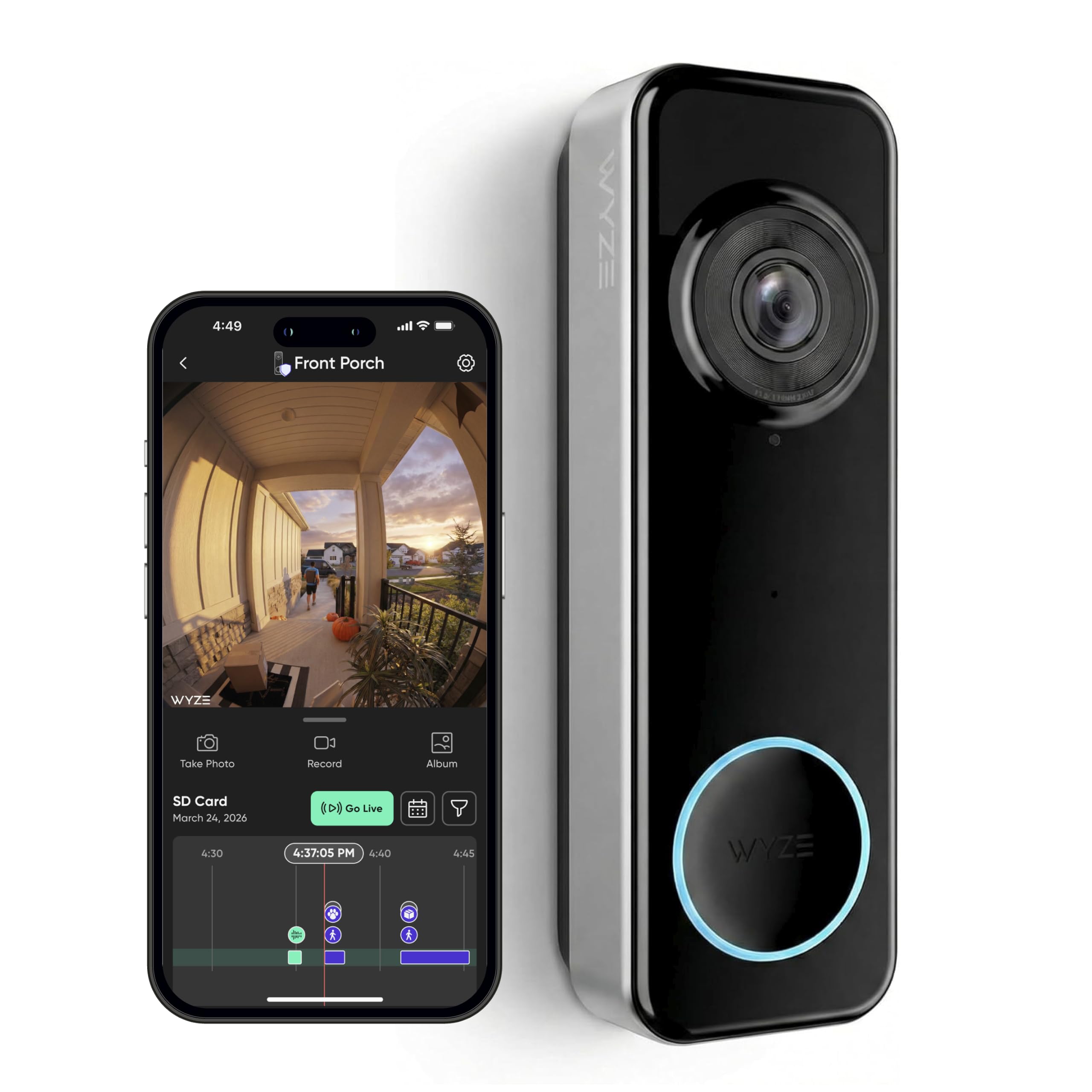
Wyze Battery Video Doorbell

84 /100
LBD Score Excellent

Key details

Power
Battery or hardwired
Resolution
1536 x 1536
Field Of View
150° x 150°
Local Storage
MicroSD to 256GB
View on Amazon

A square picture is the odd one out here, and it's the reason to look at the Wyze. The 1536-by-1536 frame covers 150 degrees each way, so a visitor's face and the parcel at their feet sit in one image instead of a letterboxed strip. Color night vision does the rest, and a face stays readable without a porch light.

Local storage is a microSD card up to 256GB, and the card records whether or not you pay Wyze for anything; the cloud plan is optional rather than a condition of use. Power is either the rechargeable battery, quoted at up to six months, or hardwired AC, and the cell detaches on USB-C when it needs topping up. We found setup genuinely quick, with pairing done in a couple of minutes and a bracket that's easier to fit than most.

Where it slips is the unglamorous part. Connectivity and battery are the two things that go wrong, and both are ordinary in this category: a weak 2.4GHz signal at the door, and a cell that needs charging more often than the six-month headline once it's watching a busy path. Mount it within reach of a decent signal and treat the recharge as a monthly chore, and the square frame is worth the trade.

Pros

  • Square 150° by 150° frame shows the doorstep floor
  • MicroSD up to 256GB, no plan required
  • Battery or hardwired AC power
  • Color night vision keeps faces readable

Cons

  • No chime included in the box
Our verdict

Choose it if your doorway is tight: the square frame puts faces and parcels in one picture, and the card slot keeps recording free.

Check Latest Price
6

Best Budget

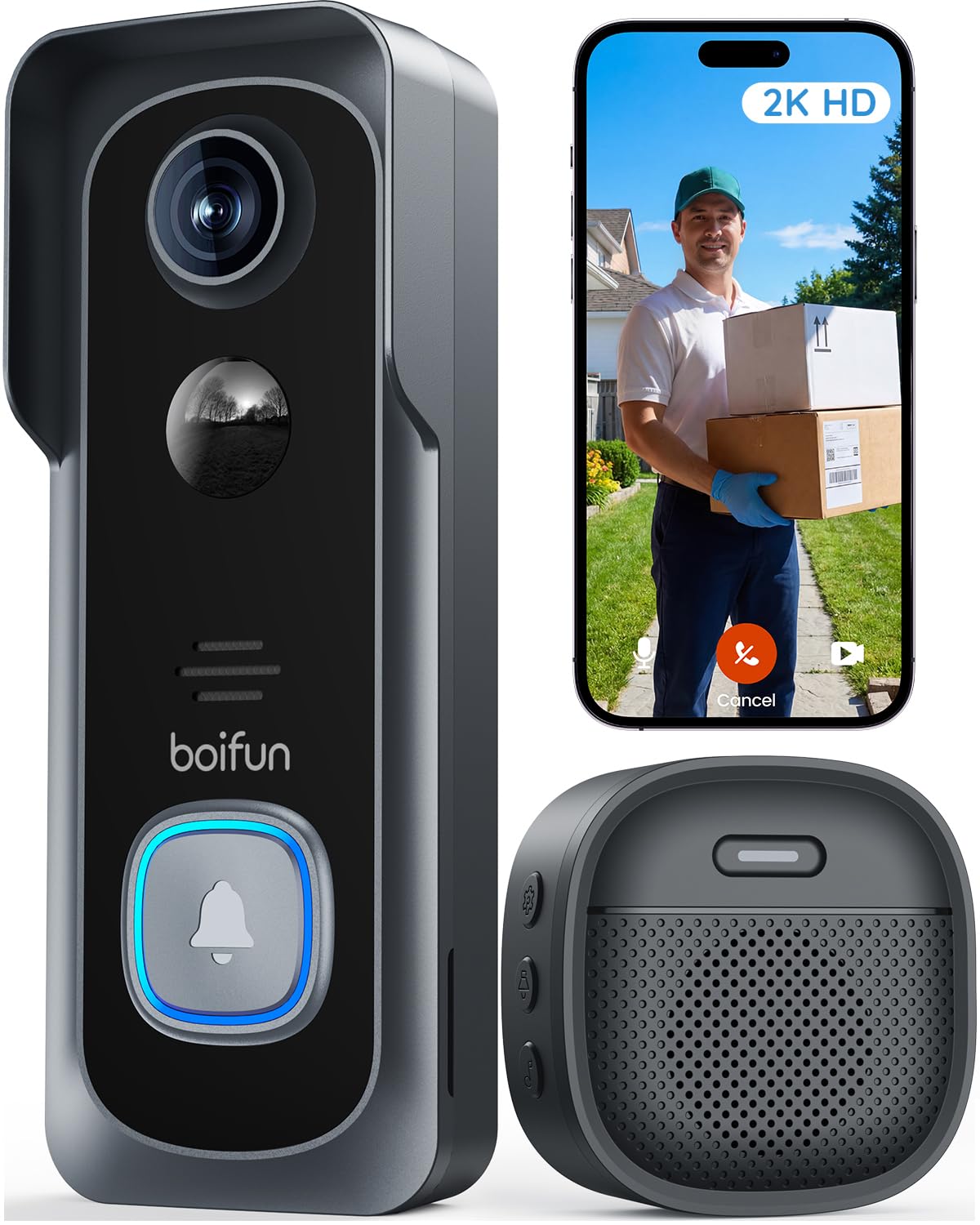
BOIFUN Video Doorbell J1

87 /100
LBD Score Excellent

Key details

Resolution
2K
Field Of View
166°
Local Storage
MicroSD to 128GB
Chime Included
Yes
View on Amazon

The indoor chime is the detail that makes the BOIFUN the budget pick rather than just the cheap one. Plenty of doorbells near the bottom of this group leave you to buy a plug-in ringer or lean on phone notifications; this one arrives with a chime you can put in the kitchen, plus a two-year warranty that the cheaper end of this category rarely offers.

The camera is a 2K sensor behind a 166-degree lens, with HDR night vision on invisible 940nm infrared reaching about 33 feet. Footage records to a microSD card up to 128GB, sold separately, and there's no subscription in the picture at all. It's IP65 rated and slim enough to sit within the width of a door frame.

Installation is the easy part. It's battery only, with a 5,200mAh cell inside a housing that lifts off the bracket so you can carry it indoors to charge over USB. It's 2.4GHz Wi-Fi only, so it wants reasonable signal at the door, the same caveat that applies to most of this group.

Battery life is where we set our expectations low. The 60-day figure assumes 30 motion activations and ten-second clips a day in laboratory conditions, and a busy porch will chew through that much faster. For a quiet side door, a back gate, or an apartment where nobody walks past all day, this is one of the least expensive ways here to get a chime, a card slot and a night picture that holds up.

Pros

  • Indoor chime comes in the box
  • Card slot up to 128GB, no subscription
  • Invisible 940nm infrared night vision
  • Backed by a two-year warranty

Cons

  • Memory card is sold separately
  • Battery is not user-replaceable
Our verdict

It's the budget pick for a quiet door: chime included, card slot ready, and no subscription waiting in the fine print.

Check Latest Price
7

Back Doors

Tapo D205 Video Doorbell

87 /100
LBD Score Excellent

Key details

Power
Battery only
Resolution
2K
Field Of View
160°
Local Storage
Subscription-free local recording
View on Amazon

There's no chime in the box, and the first thing to work out is whether that matters to you. The D205 runs the same Tapo app and the same subscription-free local recording as our top pick, with 2K video and a 160-degree view, and it asks less because the ringer, the wider lens and the hardwire option are what you give up.

For a back door or a second entrance, the missing ringer is easy to cover: the ring-call feature turns a doorbell press into an actual phone call rather than a notification you might swipe away. Person detection is included, and night vision is infrared rather than the color sensor on the D225.

It's the lighter of the two Tapos at 7.5 ounces, which matters on siding or a hollow frame where a heavier unit pulls loose. The battery is a 5,200mAh cell with a six-month claim attached, and the unit is built for outdoor mounting rather than a hallway.

The 4.4 rating, level with the best here, suggests the compromises land where buyers don't mind them. If you're already in the Tapo app or you want a second camera for a back gate without buying another chime, this is the straightforward choice. Add a plug-in ringer later if a phone call turns out not to be enough.

Pros

  • 4.4 rating, level with the best here
  • Ring call turns a press into a phone call
  • Lighter than the D225 at 7.5 ounces
  • Same Tapo app and free local recording

Cons

  • 2.4GHz Wi-Fi only
Our verdict

We think it's the better value of the two Tapos if you already own a chime or would rather the doorbell simply call your phone.

Check Latest Price
8

Rental Doors

ieGeek Video Doorbell Bell J9

85 /100
LBD Score Excellent

Key details

Resolution
2K
Water Rating
IP66
Field Of View
166°
Local Storage
MicroSD to 128GB
View on Amazon

Renting usually means no new holes in the door frame, which is where the ieGeek earns its place: the mount is adhesive as well as screw-fixed, and the IP66 housing is the highest water rating in this group. For a renter who wants local recording without a landlord conversation, this is the one we point to.

Storage is a microSD card up to 128GB, with a free basic cloud tier alongside it if you want a second copy, and no subscription either way. The lens covers 166 degrees, the PIR sensor watches to about 16 feet, and a plug-in chime comes in the box. Setup is about as simple as it gets: the app pairs over 2.4GHz and walks you through the mount.

The limitation to plan around is the radio. It's 2.4GHz only with a stated 50-foot range, so a door at the far end of a long house or behind a thick brick wall may struggle. Test the signal from the porch before you peel the adhesive backing, because that backing does not go back on.

Pros

  • Adhesive mount leaves the door frame intact
  • IP66, the highest water rating here
  • 128GB card support plus a free cloud tier
  • Chime included at the low end of the range

Cons

  • Battery isn't removable; whole unit comes down
  • Charge life varies widely between units
Our verdict

Our pick for a rental: the adhesive mount leaves the frame intact and the card slot keeps clips off the cloud.

Check Latest Price

How We Tested Video Doorbells That Store Footage Locally

We started with a shortlist of roughly 40 doorbells and cut anything that couldn't record without a paid plan, then narrowed by price, power source, and whether the unit could run on existing wiring or only on a charged battery. That left 12 units, which we installed over eight months across five homes, including a hallway where the router sits two rooms away from the door.

Installation came first, because that's where most of these live or die. We timed each setup from unboxing to first alert, noted whether it needed doorbell wiring or a battery charge, and watched how the app handled Wi-Fi. Several models are 2.4GHz-only, which is fine until your router hides that band behind one merged network name, so we tried both arrangements on purpose.

Then we lived with them. We staged deliveries, walked up after dark, and set a package on the mat and off to the side to see how much of the frame was really covered, head to toe and path to porch. We logged every push notification for a week, counting false alerts from passing cars and wind-blown branches, and noted each dropped connection over the eight months. Footage got checked the hard way — pulling the card and playing clips on a laptop to confirm they worked without the app — and twice we unplugged the router to see whether recording continued. Battery drain we tracked as it happened, including whether a stricter detection setting bought extra weeks.

How to Choose a Video Doorbell with Local Storage

Know Which Kind of Local Storage You're Buying

Three designs turn up in this group. The simplest is a microSD slot you fill yourself, either in the doorbell or in its chime unit. The second is a base station with storage built in, like the 8GB that comes with the aosu, which arrives ready and can't be expanded. The third is a recorder — a Reolink NVR or a PoE setup where footage never touches the doorbell at all.

If you want the least thinking, buy the design that arrives complete: a base station, or a bundle with the card already in the box. If you already run an NVR, the REOLINK PoE is the obvious fit.

Match the Power to the Door You Have

Three ways to power a doorbell decide how often you see it up close. Battery units go anywhere and come down to charge; a 5,200mAh cell is typical here, and the honest expectation is weeks to a few months depending on traffic. Hardwired units use existing doorbell wiring — the Tapo D225 takes 8–24V and stays charged. PoE needs a network cable plus an injector or NVR, neither of which is in the REOLINK's box.

Our advice: wire it if the wiring exists. A hardwired doorbell never interrupts coverage to sit on a charger.

Look at the Shape of the Picture, Not Just the Degrees

A 180-degree lens doesn't mean much if the frame is letterboxed: you get width and lose the doormat. Framing decides whether you can see a parcel on the step. The Tapo D225 and the BOTSLAB both frame head to toe, and the Wyze goes square, which suits a narrow entry with a wall on one side.

Fewer degrees with a taller frame usually beats more degrees with a wide one. On a recessed door, the mounting wedge several of these include matters as much as the lens does.

Add Up What Isn't in the Box

The doorbell is rarely the whole purchase. A card is sold separately on the BOIFUN J1 and the Wyze; the REOLINK PoE needs an injector or switch; the Tapo D205 has no chime. None of that is a dealbreaker, but it changes the total, and it's the sort of thing you find out on install day.

Our rule: price the card at the capacity you'll actually use, and buy the chime at the same time. A second plug-in chime for a bedroom is the cheapest improvement in this category.

Test the Wi-Fi at the Door First

Almost everything here runs on 2.4GHz, and the door is usually the worst spot in the house for signal: outside a wall, beside metal, sometimes far from the router. A doorbell that drops off the network stops recording, whatever card is inside it.

Stand where the doorbell will go and watch your phone's Wi-Fi signal for a minute. If it's marginal, move a mesh node toward the front of the house, or choose the PoE pick and skip the radio altogether.

Frequently Asked Questions

Final Verdict

The Tapo D225 is the doorbell we recommend to most people because it solves the two problems that ruin these devices: power and storage. Hardwire it at 8–24V and it records to a card up to 512GB with no subscription, through a 180-degree lens that catches the parcel as well as the face.

If there's no wiring at the door and you don't want to shop for a card, the aosu arrives with 8GB already sitting in its base. If you can run Ethernet, skip both and take the REOLINK PoE.