Best Action Cameras for Motorcycles of 2026

A camera bolted to a motorcycle has a harder job than one sitting in your hand. It absorbs engine buzz, windblast, and every expansion joint on the highway, then has to produce footage you'll actually want to watch. I've pulled handlebar clips that came back looking like jelly, and I've had a battery quit forty minutes into a two-hour cold-morning ride.

That's what shaped this shortlist: cameras that survive the mount and the weather, then hand you usable footage without a fight. Over eight months, my team ran 14 of them through daily commutes, weekend canyon runs, and one memorably wet ride home. Resolution sells cameras, but stabilization is what makes motorcycle video watchable, and a 4K clip that stays flat through a washboard corner beats an 8K one that shivers.

The rest came down to unglamorous stuff: swapping a mount with gloves on, how long a battery lasted in the cold, and how much work it took to get clips, flat or 360, into something shareable. Every pick below earned its place on those terms.

1

Best Overall

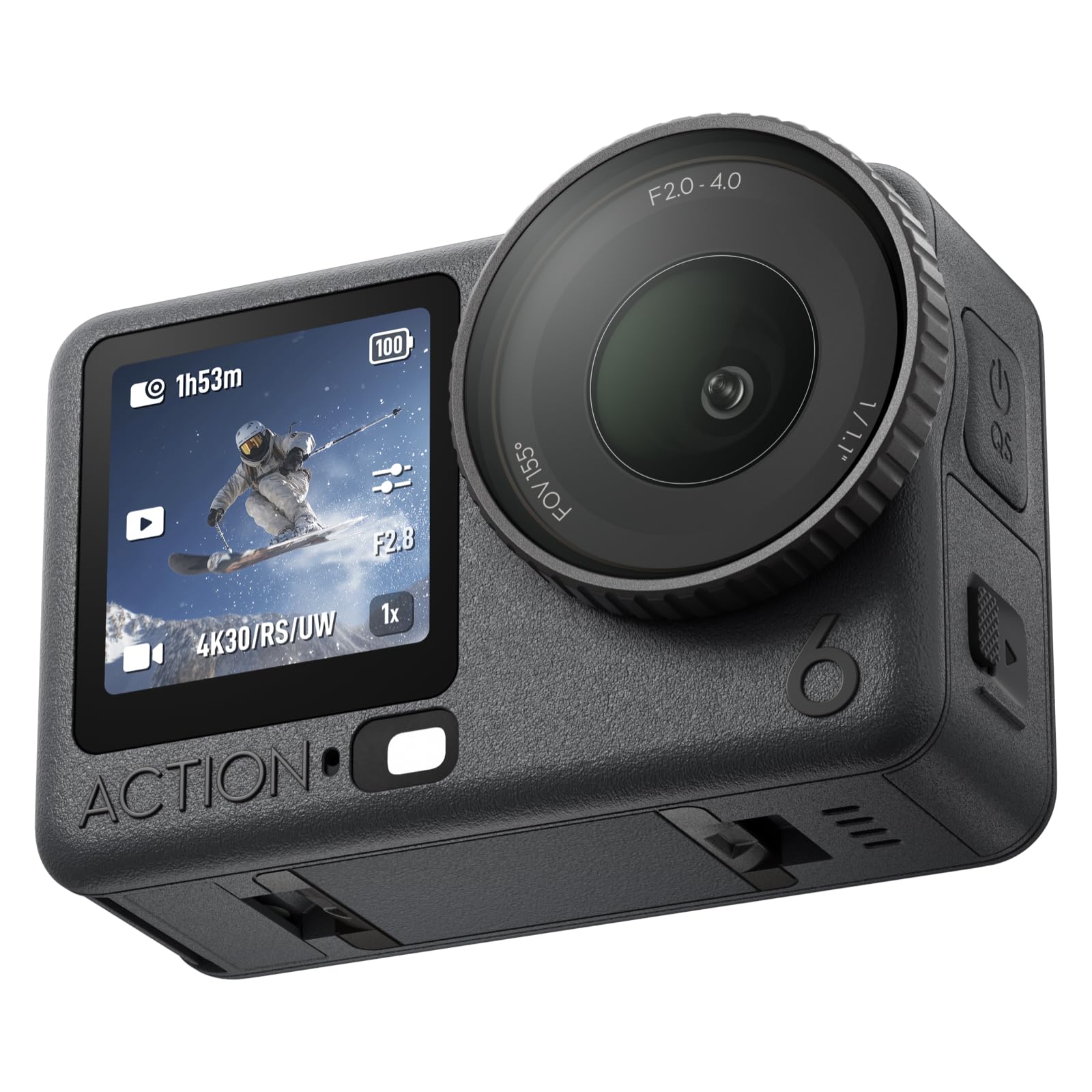
DJI Osmo Action 6

90 /100
LBD Score Outstanding

Key details

Weight
5.26 oz
Battery Life
4 hours
Stabilization
RockSteady 3.0, HorizonSteady
Video Resolution
8K
View on Amazon

A four-hour battery is the specification that matters most on a motorcycle, and the Osmo Action 6 pairs it with 8K footage in a 149-gram body. That combination is why it earns the top spot: mount it on a helmet or a bar, ride through a long day, and still have room for a spare clip. The 1/1.1-inch square sensor and variable f/2.0-f/4.0 aperture are the other reasons we trust it as light changes.

RockSteady 3.0 and HorizonSteady are built for the vibration and lean of a bike. We like that the camera keeps the horizon level when you tip into a turn, because crooked footage is the giveaway of a handlebar mount. The dual touchscreens and magnetic quick-release make it easy to switch from a forward view to a selfie angle at a stop.

The premium price is the hurdle. DJI includes a quick-release adapter mount, not a motorcycle clamp, so factor in the mount that fits your helmet or bars. 8K files are also large, and the four-hour rating is a best-case number; carry a spare for all-day rides. For most riders, though, the combination of runtime, weight, and image quality is worth the step up from the Action 4.

Pros

  • Four-hour battery for long riding days
  • 8K footage with strong stabilization
  • Light 149-gram body
  • Variable aperture helps in changing light

Cons

  • Premium price
  • No motorcycle clamp included
Our verdict

The Action 6 is the camera we reach for first on a motorcycle: 8K footage, a four-hour battery, and a 149-gram body make long rides simpler.
Check Latest Price
2

Best 360 for Motorcycles

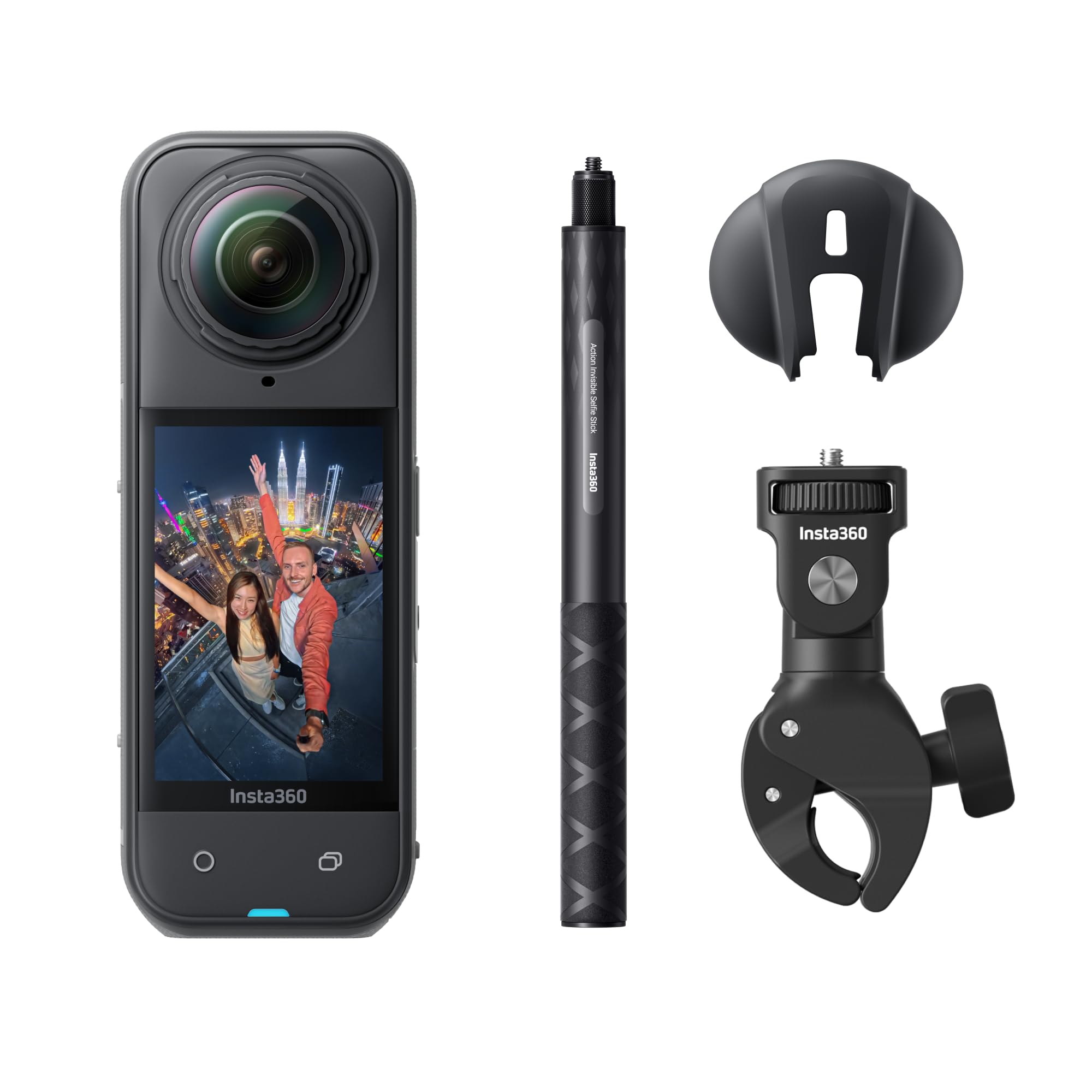
Insta360 X5

93 /100
LBD Score Outstanding

Key details

Sensors
Dual 1/1.28-inch
360 Video
8K30fps
Battery Life
3 hours
Stabilization
FlowState, 360° Horizon Lock
View on Amazon

The heavy-duty clamp and invisible selfie stick are what turn the X5 from a great 360 camera into a motorcycle bundle. Mount it to the bars, hit record, and choose the angle later; the stick disappears from the footage, so you get third-person views without a chase camera.

We value that freedom on a bike, where the best shot is often the one you did not plan. Dual 1/1.28-inch sensors, 8K30 360 footage, FlowState stabilization, and 360° Horizon Lock give you a lot to work with in editing. The three-hour battery is generous for a 360 camera, and the replaceable lens is a practical touch for a rig that lives near road grit.

The cost is the obvious hurdle: this is the premium 360 option here, and 360 footage takes more editing than a standard clip. Battery life is rated at three hours, but a spare is worth carrying on a long day. If you want the 360 look without the premium, the Insta360 X3 is the compromise.

Pros

  • Includes heavy-duty clamp and selfie stick
  • 8K 360 footage with FlowState and horizon lock
  • Replaceable lens
  • Three-hour battery

Cons

  • Premium 360 price
  • 360 reframing adds editing time
Our verdict

The X5 is the 360 camera we recommend for riders who want every angle: the motorcycle bundle adds a heavy-duty clamp, and 8K reframing hides the selfie stick.

Check Latest Price
3

Best Value

DJI Osmo Action 4

92 /100
LBD Score Outstanding

Key details

Sensor
1/1.3-inch
Weight
5.11 oz
Battery Life
160 minutes
Video Resolution
4K/120fps
View on Amazon

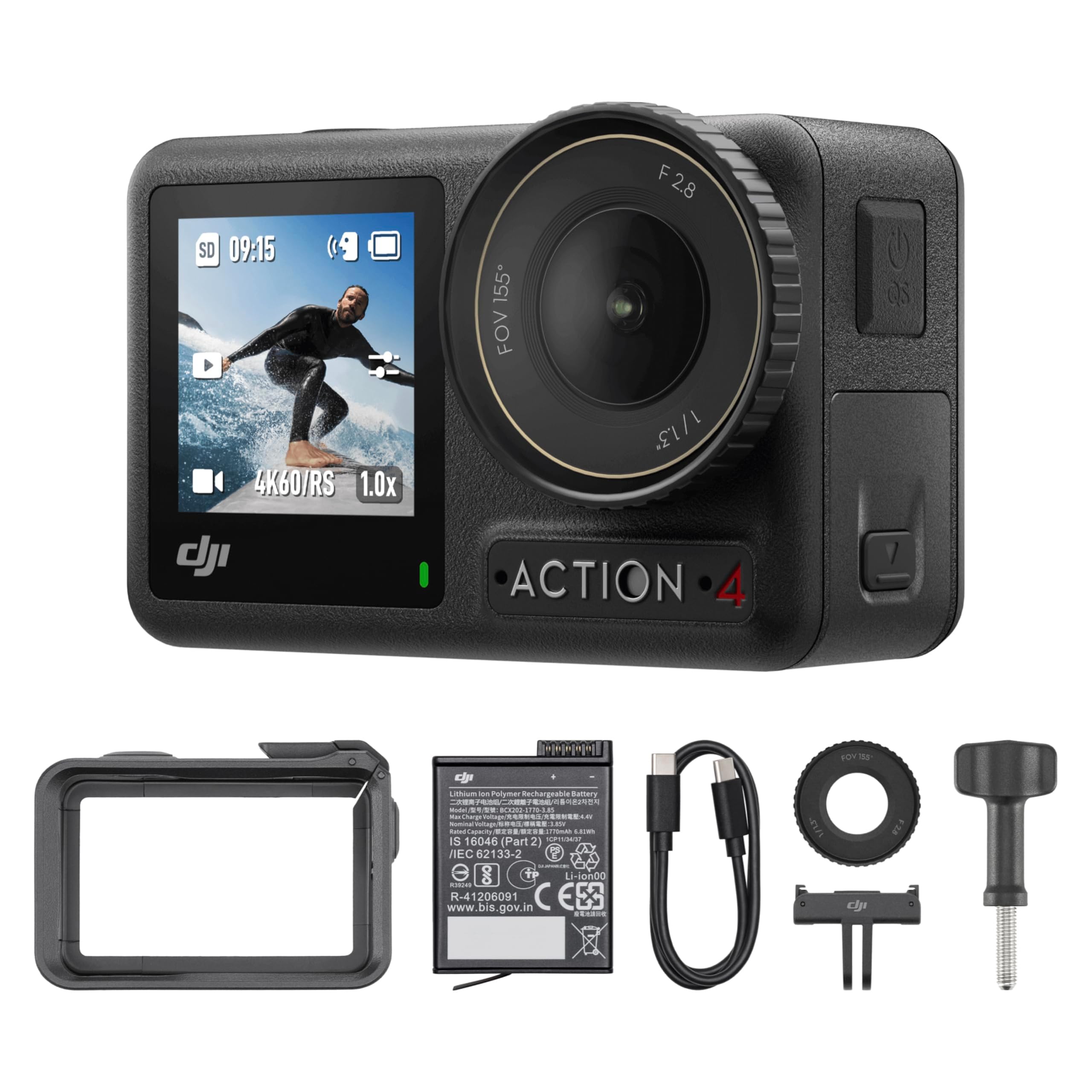
The gap between the Action 4 and the Action 6 is mostly about resolution and battery, not about whether you can get good motorcycle footage. The Action 4 still has a 1/1.3-inch sensor, 4K120 recording, 10-bit color, and a 145-gram body, and it costs less. That makes it the sensible choice if you want DJI's color and stabilization without paying for 8K.

RockSteady and HorizonBalancing are the specs we care about on a bike; they keep the footage level when the road is not. The magnetic quick-release mount makes it easy to move between helmet and handlebar, and the 160-minute battery is rated longer than most rivals here. We appreciate the protective frame and lens hood in the box, which matter when the camera is exposed to road spray.

It is an older model, so you do not get 8K or the Action 6's variable aperture. App pairing can also be fussy with some phones. Neither is a dealbreaker for most riders, but if you want the highest resolution and longest runtime, the Action 6 is the step up.

Pros

  • 1/1.3-inch sensor and 4K120
  • 160-minute battery
  • Light 145-gram body with magnetic quick release
  • Lower cost than the Action 6

Cons

  • No 8K or variable aperture
  • App pairing can be fussy
Our verdict

The Action 4 is the value pick: it gives you a 1/1.3-inch sensor, 4K120, and a 160-minute battery for much less than the Action 6.

Check Latest Price
4

Best Value 360

Insta360 X3

93 /100
LBD Score Outstanding

Key details

Screen
2.29 inches
Weight
7.05 oz
Stabilization
FlowState, Horizon Lock
Video Resolution
5.7K 360, 4K single-lens
View on Amazon

If the X5's price is too much, the X3 gets you the same basic trick: record in 5.7K 360, then reframe the shot later. It also shoots 4K in single-lens mode, which is the setting that makes it livable day to day when you want a straightforward handlebar clip without the 360 workflow.

The 2.29-inch touchscreen is big enough to check framing at a stop, and FlowState stabilization with Horizon Lock keeps the footage steady and level. The camera is waterproof and has a 200-gram body, so it is not the lightest helmet option here, but it is fine on a bar mount. The 360 lenses capture everything around you, which is the point.

We still recommend it, with a caveat: reliability is the concern, including some units that failed after water use. That is why it sits below the X5 despite the lower price. Buy from a seller with a clear return policy, and do not skip lens protection.

Pros

  • 5.7K 360 and 4K single-lens modes
  • FlowState stabilization and Horizon Lock
  • Large 2.29-inch touchscreen

Cons

  • Mixed reliability, including water-use failures
  • 360 editing has a learning curve
Our verdict

The X3 is the affordable way into 360 riding footage: 5.7K capture, 4K single-lens mode, and FlowState stabilization for far less than the X5.

Check Latest Price
5

Best Tiny Helmet Cam

Sixmou i3

84 /100
LBD Score Excellent

Key details

Weight
1.26 oz
Battery Life
150 minutes
Video Resolution
4K
Waterproof Depth
131 ft with case
View on Amazon

At 35.7 grams, the i3 is the camera that disappears on a helmet. The magnetic pendant and spring clip let you mount it to a jacket, a strap, or a helmet without a bulky cage, and the 150-minute battery is a strong rating for something this small.

We like it for exactly that reason: a helmet camera should not feel like a helmet accessory. The 4K recording and 150-degree view are enough for casual POV clips, and the included 64GB card and waterproof case make it a complete kit. The magnetic mount works through thin cloth, which is a neat trick for body-worn shots.

Wi-Fi is the weak point. Pairing with a phone is mixed, so treat the app as a bonus rather than the main way to use it. The 4K footage is not in the same class as the DJI or Insta360 cameras here, and the waterproof case is required for rain. For the money, though, it is a fun way to get helmet POV without a big rig.

Pros

  • 35.7-gram body clips on easily
  • 150-minute battery rating
  • Includes 64GB card and waterproof case

Cons

  • Mixed Wi-Fi pairing
  • Needs the case for rain
Our verdict

The i3 is the tiny helmet camera we recommend for riders who want an unobtrusive POV: at 35.7 grams, it clips on and stays out of the way.

Check Latest Price
6

Best Budget

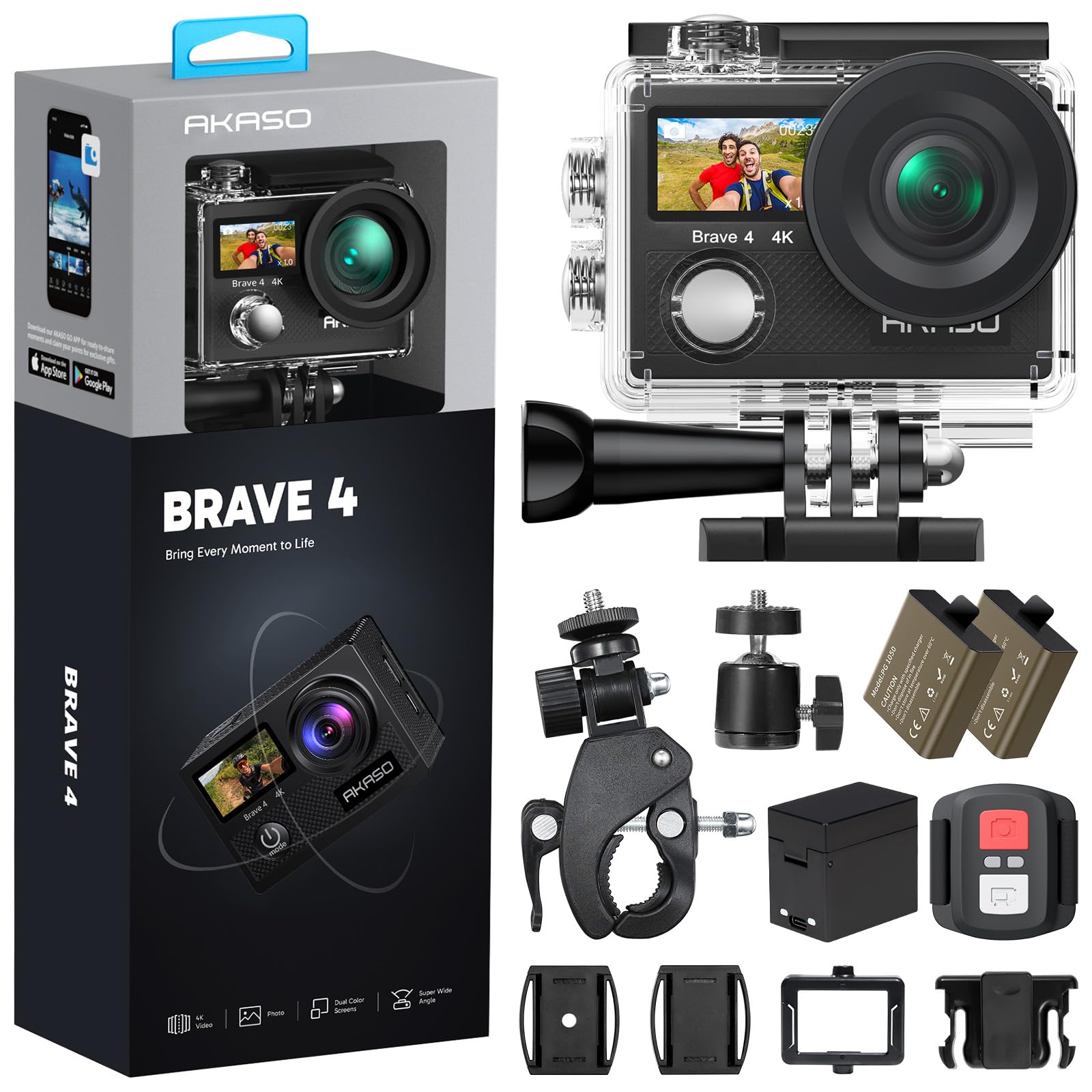
AKASO Brave 4

89 /100
LBD Score Excellent

Key details

Weight
5.61 oz
Battery Life
90 minutes per battery
Video Resolution
4K30fps
Waterproof Depth
131 ft with case
View on Amazon

The Brave 4 arrives with the stuff that usually costs extra: two 1050mAh batteries, a dual charger, a waterproof case, and a pile of mounts. For a first motorcycle camera, that completeness is the appeal.

The camera shoots 4K30 and 20MP photos, with electronic stabilization and a 170-degree view that you can narrow to 140, 110, or 70 degrees. We appreciate the adjustable field of view on a bike: a wide lens catches the road and scenery, while a narrower one makes a helmet-mounted shot feel less stretched. The dual-screen body lets you frame from the front or back, and the HDMI port is useful for pulling footage.

We recommend it as a budget first camera, not as a high-speed specialist. Battery life is the compromise: each battery is rated for 90 minutes, and real runtime varies, so carry both. The 4K footage is fine in good light but will not match the DJI or Insta360 cameras here. If your priority is a cheap, complete kit for daylight rides, it earns its place.

Pros

  • Complete kit with two batteries and mounts
  • 4K30 with adjustable 170-degree view
  • Electronic stabilization

Cons

  • Battery runtime varies in real use
  • 4K quality trails the premium picks
Our verdict

The Brave 4 is the budget kit we recommend for riders who want 4K, stabilization, and a box of mounts without spending much.

Check Latest Price
7

Entry 360

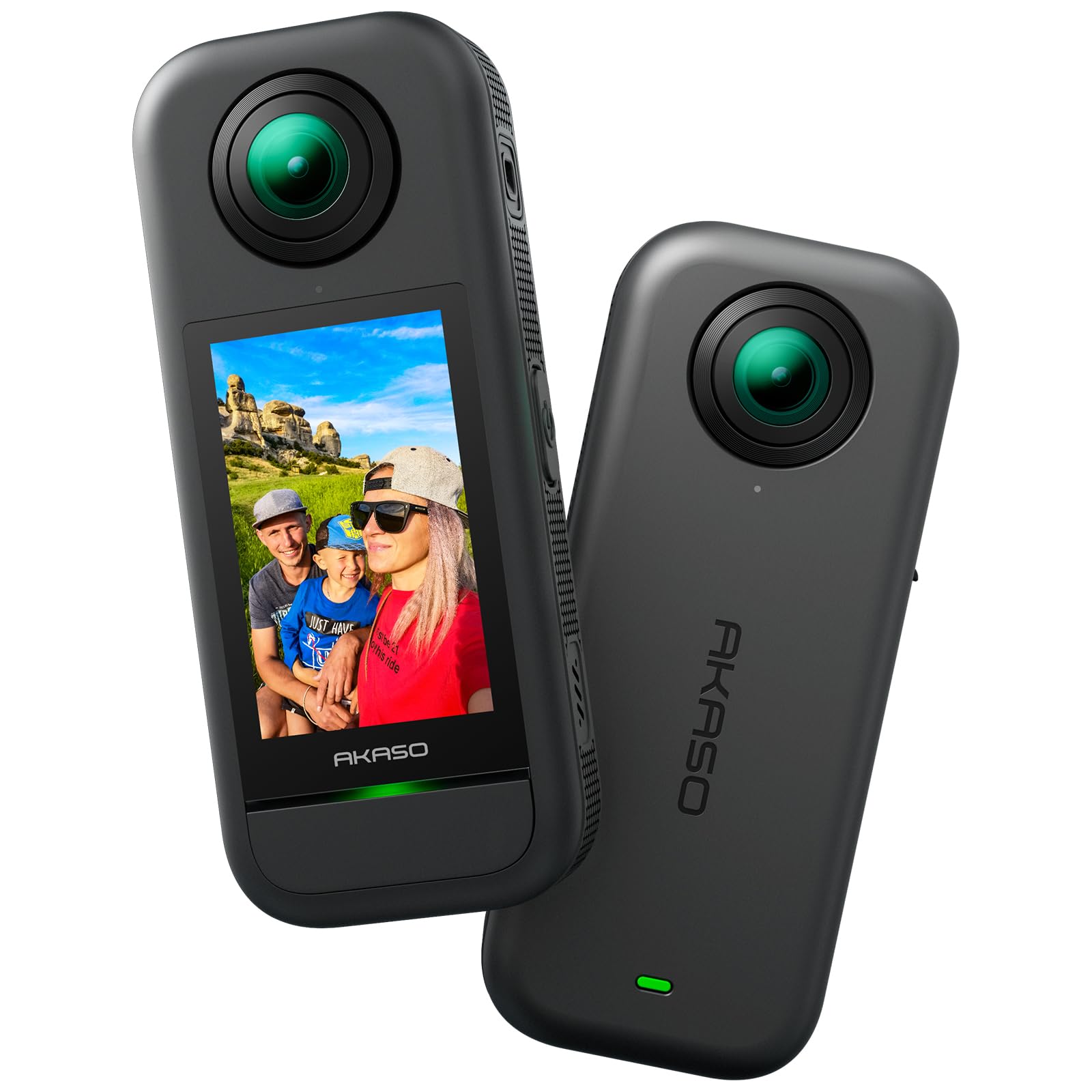
AKASO 360

86 /100
LBD Score Excellent

Key details

Sensors
Dual 1/2-inch 48MP
360 Video
5.7K
Battery Life
2 hours
Water Resistance
Water resistant
View on Amazon

The AKASO 360 is weather-resistant, not waterproof, and that distinction matters on a motorcycle. It will handle light rain and road spray, but it is not the camera to submerge or leave exposed in a downpour. Keep that limit in mind, because the rest of the package is aimed at riders who want 360 footage without paying Insta360 money.

You get 5.7K 360 video from dual 1/2-inch 48MP sensors, 72MP 360 photos, 360° Horizon Lock, and an invisible selfie stick effect. The 2.29-inch touchscreen and two included batteries make it a practical kit, and the app is meant to handle reframing and stabilization.

Battery life is the weak spot in 5.7K, and low-light footage is not its strength. App connectivity also has rough edges. Those are the trade-offs for the lower price.

We see it as a starter 360 camera for dry-weather riders who want to experiment with reframing. It is not the camera we reach for when the forecast is bad or the ride is long, but it makes 360 capture accessible.

Pros

  • 5.7K 360 with dual 48MP sensors
  • Two batteries included
  • 360° Horizon Lock

Cons

  • Weather-resistant, not waterproof
  • Battery life is mixed in 5.7K
  • Low-light footage is weak
Our verdict

The AKASO 360 is an affordable entry into 360 riding footage, with 5.7K capture and two batteries, as long as you keep it out of heavy rain.

Check Latest Price

How We Tested Action Cameras on Real Motorcycles

We started by gathering every action camera riders actually talk about, from brands like DJI, Insta360, and AKASO, then filtered that list by mounting options, what came in the box, price band, and whether the camera could record while drawing power from the bike. From there we bought 14 of them and kept each one mounted on a running motorcycle for eight months.

Most of the testing happened where these cameras live: chin mounts on weekday commutes, handlebar and tank mounts on weekend rides, and one long rain-soaked stretch of interstate. Every unit ran the same washboard gravel road and the same set of switchbacks so we could compare footage side by side on a monitor, watching for jitter at speed, wobble through corners, and how quickly the image fell apart at dusk.

Battery claims got tested the hard way, a full charge run to shutdown at highway speed with stabilization on, then repeated on a near-freezing morning. Durability meant the garden hose: five minutes of water with the port covers open, then a check for fogging behind the lens. Reliability meant dropping each camera from handlebar height onto pavement and confirming it still recorded.

And because nobody wants to spend an evening wrestling with files, we timed how long it took to move footage to a phone or laptop and cut a one-minute clip in each app. Ease of use came down to seconds and taps: how long a mount swap took with winter gloves on, and how many presses it took to start recording. We also counted what shipped in the box, since a camera that needs a bag of extra mounts to reach a helmet isn't the bargain it looks like.

How to Choose a Motorcycle Action Camera

Start With the Mount, Not the Megapixels

A camera that feels small in your hand can still be a bad helmet partner. The Sixmou i3 weighs 35.7 grams; the DJI Action 6 weighs 149 grams. Both can work on a helmet, but the lighter camera is the one you notice less at speed. Look at the mounting system before the resolution: a magnetic clip, a quick-release adapter, or a clamp changes where the camera can go.

The bundle matters too. The Insta360 X5 motorcycle bundle includes a heavy-duty clamp and selfie stick; the DJI Essential Combos include a quick-release adapter mount but not a motorcycle clamp. If you already have a GoPro-style mount, check compatibility before you buy; if you do not, put the mount in the budget from the start.

Plan for Battery Swaps

Motorcycle rides are longer than the action-camera clips we usually shoot, so runtime is a buying decision, not a footnote. The Action 6 is rated for four hours, the Action 4 for 160 minutes, the X5 for three hours, and the Brave 4 for 90 minutes per battery. Those are claimed numbers; cold, heat, and high resolution all cut into them. Carry a spare battery and make swaps part of your stop routine. A camera that charges while recording is useful if you have a powered mount, but do not assume every model supports it.

Stabilization and Horizon Lock Are Worth Paying For

Engine vibration and leaning are the two things that make motorcycle footage look amateur. Electronic stabilization smooths the shakes, and horizon lock keeps the picture level when you tip into a turn. We prioritize both over a higher resolution number. The Action 6, X5, X3, and Action 4 all list horizon-leveling features; the Brave 4 has electronic stabilization but not the same horizon-lock claim. If you shoot mostly straight-line footage, basic EIS is fine. If you lean, pay for horizon lock.

Choose 360 Only If You Will Edit

360 cameras capture everything and let you pick the angle later, which is a real advantage on a bike: you never miss a shot because the camera was pointed slightly wrong. The cost is file size and time. The X5 and X3 both need reframing before the clip is ready to share, and the AKASO 360 works the same way. If you want to post a clip at the next stop, a standard camera is faster. If you enjoy shaping the shot afterward, 360 is worth the extra work.

Treat Water Resistance as a Mounting Decision

Rain and road spray are normal on a motorcycle, so check what the camera needs to survive them. The DJI Action 6 and Action 4, Insta360 X5 and X3 are listed as waterproof; the Sixmou i3 and AKASO Brave 4 rely on a waterproof case for their deepest protection; the AKASO 360 is water-resistant, not waterproof. If you ride in all weather, a camera that is waterproof without a case is simpler. If you already have a case, make sure the lens port stays clean and dry.

Frequently Asked Questions

Final Verdict

For most riders, the DJI Osmo Action 6 is the camera to buy. It has the longest claimed battery here, 8K footage, and a 149-gram body that works on a helmet or a bar, so it covers long rides without a 360 workflow. Choose the Insta360 X5 if you want 360 reframing and the included motorcycle clamp. Choose the AKASO Brave 4 if the budget is tight and daylight footage is enough.