Best Binoculars of 2026

Every pair of binoculars is a trade-off you hold in two hands. Push the magnification up and the view gets dimmer, narrower, and harder to steady; shrink the barrels down to pocket size and everything turns soft at dusk. The right pair is the compromise that matches where you'll actually use it.

I learned that the expensive way, on a whale watch, with a borrowed pair that fogged over leaving the harbor. Since then I've kept notes on what separates binoculars you reach for every weekend from ones that end up in a drawer. My team and I have spent the past eight months with 12 pairs, from full-size 10x42s to compacts that vanish into a jacket pocket, and the gaps in clarity, weight, and ease of use showed up fast.

What first-time buyers miss is that eye relief decides whether the view feels comfortable or like squinting through a keyhole, especially with glasses on, and a smooth focus wheel matters more than one extra power of magnification. Value isn't the cheapest pair, either — it's the one that still feels solid in year three. The picks below sort themselves by how you plan to carry them.

1

Best Overall

Vortex Crossfire HD 10x42

96 /100
LBD Score Outstanding

Key details

Weight
1.4 lb
Field Of View
325 feet
Magnification
10x
Objective Lens
42 mm
View on Amazon

Ten power with a 42 mm objective is where most birders, hunters, and travelers end up, and the reasons are practical: enough reach to pull a warbler out of a treetop, a 4.2 mm exit pupil that keeps color in the view as the light drains, and a shape that still balances in two hands. The Crossfire HD is the pair here that makes that formula feel settled rather than compromised.

What separates it from the less expensive full-size pairs is everything around the glass. Nitrogen purging and O-ring seals mean it comes out of a cold truck without fogging, the rubber armor shrugs off a knock against a tailgate, and the HD elements cut the color fringing you notice on a bird against a bright sky. Vortex's warranty is unlimited and unconditional, which changes how you treat the thing: you use it.

The accessories are the part we didn't expect to care about. The included GlassPak harness holds the binocular flat against your chest so a long walk doesn't end with a strap sawing at your neck, and the tethered lens covers stay attached instead of vanishing into a pocket. The eyecups twist up and down, and 15 mm of eye relief is enough for most eyeglass wearers, though thick frames will want more room than this.

Here is why it takes the top spot. It is the only pair here that is sealed to a serious standard, covered for life, and sharp enough that we stopped thinking about the glass and started watching the bird. It is also the most expensive binocular on this list, and that is the right place to spend, because optical quality is the one thing you can't add later. The Adasion gives you a wider view and a phone mount for less; the Crossfire gives you the view you keep coming back to.

Pros

  • Unlimited, unconditional lifetime warranty
  • Fogproof and waterproof in cold, wet weather
  • Harness and tethered lens caps included
  • Sharp HD glass that holds up at dusk

Cons

  • Narrower field than the 12x Adasion
  • 1.4 pounds pulls on a neck strap
Our verdict

We recommend the Crossfire HD to anyone who wants a single pair for everything outdoors and prefers buying once to upgrading twice: the glass, the sealing, and the lifetime warranty all hold up.
Check Latest Price
2

Best with a Phone Adapter

Adasion 12x42

93 /100
LBD Score Outstanding

Key details

Weight
1.2 lb
Included
Phone adapter, tripod and tripod adapter
Magnification
12x
Objective Lens
42 mm
View on Amazon

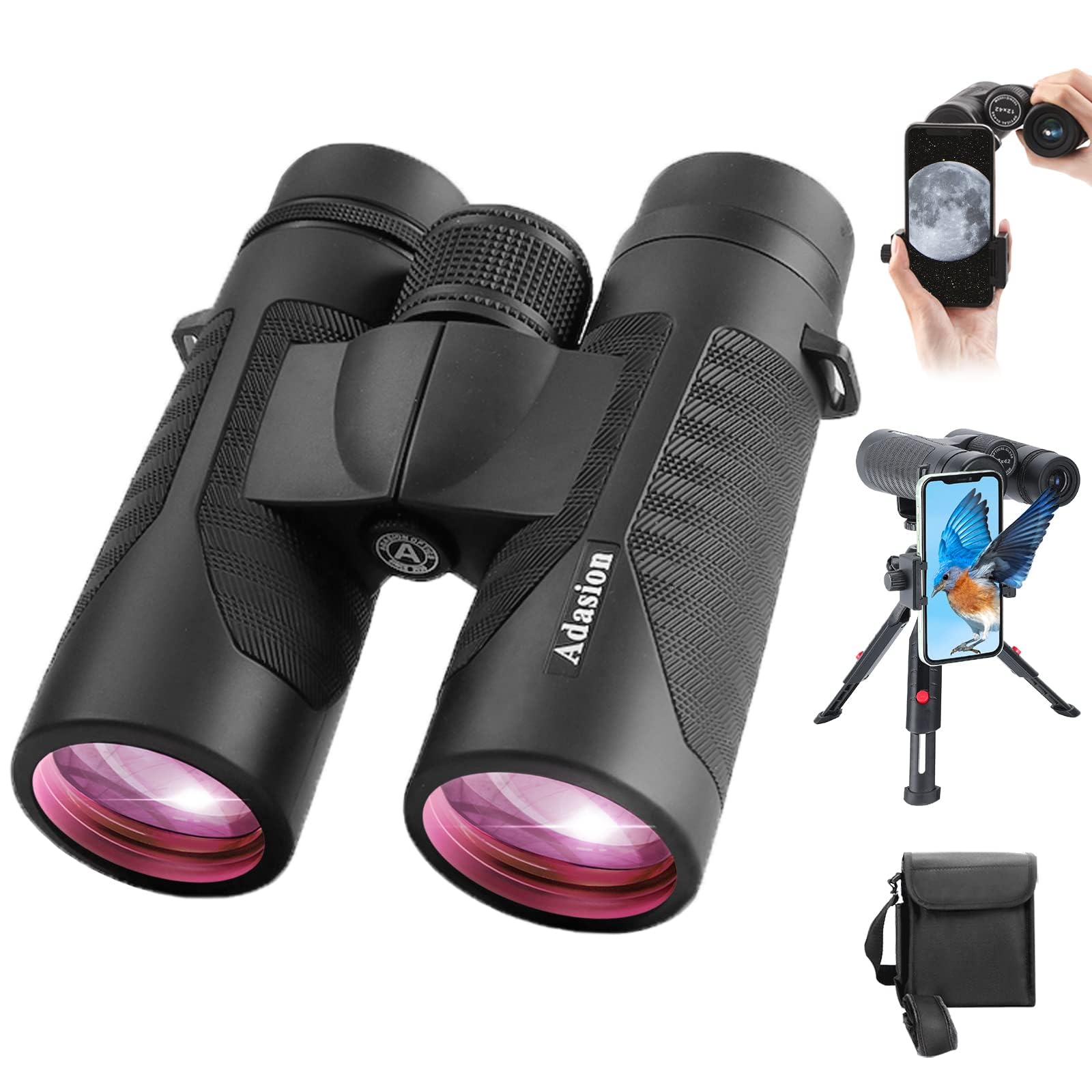
The kit is what you notice first: a phone clamp that sits over the eyepiece, a small tripod, and an adapter that screws the whole thing down. If you have ever tried to hold a phone against a binocular by hand, you know why this matters — you come home with a record of the eagle, the whale, or the kid's first heron instead of a blurry souvenir. It is the only pair here built for that, and it is why we reach for it when a camera is coming along.

Underneath the accessories is a legitimate 12x42: BAK4 prisms, fully multi-coated lenses, and a 367-foot field of view that is actually wider than the 10x Crossfire's. The IPX7 rating is the most serious water rating in this group. At 1.2 pounds it is the lightest full-size pair here, which is the difference between packing it and leaving it in the car.

Twelve power is the catch, and it is worth knowing before you order. The view moves with your pulse, so the tripod is no gimmick — but the included one is a tabletop model a couple of inches tall, which steadies the binocular on a car hood, a fence post, or a picnic table rather than at standing height. Brace it on something solid and the extra reach over a 10x is worth having; expect to work harder for a steady image in a breeze.

What we appreciate most is that the package doesn't feel like a bag of freebies thrown in. The glass is genuinely good, the image is bright and sharp in daylight, and the whole thing weighs less than a paperback. If you were going to buy a full-size binocular and a phone mount separately, this is the tidier way to do it.

Pros

  • Phone clamp, tripod, and adapter included
  • IPX7 waterproof rating, the only one here
  • 367-foot field of view at 1,000 yards
  • Lightest full-size body here at 1.2 lb

Cons

  • 13.6 mm eye relief is tight with glasses
Our verdict

For anyone who wants photos and video through their binoculars, we think the Adasion kit is the obvious buy: good glass first, useful accessories second, and a body light enough to carry.

Check Latest Price
3

Best for Kids

Vortex Bantam HD 6.5x32

91 /100
LBD Score Outstanding

Key details

Weight
15.9 oz
Eye Relief
18.7 mm
Magnification
6.5x
Objective Lens
32 mm
View on Amazon

Six and a half power reads like a downgrade next to the 10x and 12x pairs here, until you put it to your eyes. The view is wide at 7.6 degrees, so a bird doesn't vanish every time it hops; the 4.92 mm exit pupil is the largest of any pair on this list; and the image sits still because the magnification isn't fighting your hands.

Vortex built it for young faces. The barrels close down far enough for a child's eye spacing, the eyecups sit comfortably against a small brow, and 18.7 mm of eye relief is long enough that a kid in glasses can keep them on. It is also purged, sealed, and shockproof, which is the specification that matters most when the person carrying them is eight and they live in a backpack.

We handed this to adults as often as to kids, and that is where it surprised us. For glassing a feeder from a porch chair, or for anyone whose hands aren't steady at 10x, the low magnification and big exit pupil make it the easiest pair here to actually see through. It turns watching into something you can do for an hour without your eyes aching.

Set it beside the Hontry and the difference is optical rather than financial: cleaner edges, a smoother focus, and that unconditional warranty. The focus wheel is light enough for small hands to turn, and the diopter ring stays where it is set, which is what decides whether a child can use a binocular alone.

Pros

  • Largest exit pupil here makes the view easy
  • 18.7 mm eye relief works with eyeglasses
  • Waterproof, fogproof, and shockproof
  • Unconditional lifetime warranty

Cons

  • 6.5x leaves distant detail unresolved
  • 15.9 ounces is heavy for small hands
Our verdict

We hand the Bantam to families and to anyone who finds 10x shaky — it has the most forgiving view in this group, and it survives being dropped.

Check Latest Price
4

Best Compact for Families

Hontry 10x25

91 /100
LBD Score Outstanding

Key details

Weight
9.6 oz
Field Of View
362 feet
Magnification
10x
Objective Lens
25 mm
View on Amazon

The hinge opens from 60 to 75 mm, which sounds like a footnote until you watch a nine-year-old and a six-foot adult pass the same pair back and forth. Most compacts force one of them to squint; this one doesn't, and that range is why it ends up in glove boxes and school backpacks instead of a drawer.

At 10x and 9.6 ounces it is also the compact we reach for most. The view is bright for a 25 mm lens, 362 feet at 1,000 yards is wide enough to find a bird before it flies, and the center-focus wheel takes small adjustments without overshooting. In a category full of pairs whose focus feels like a toy, this one feels finished.

The one thing that rules it out for some buyers is eye relief: 10 mm is short, and with glasses on you lose most of the view. If you wear frames, look at the Occer or the Bantam instead, both of which give you far more room behind the eyepiece. Everything else about the Hontry is easier to live with than the price would suggest.

The accessories are plain but complete — case, strap, cleaning cloth — and the hinge has stayed firm rather than flopping open after a season of folding and unfolding. That is not a small thing on a compact this light, because a loose hinge turns a shareable pair into one person's pair. The three-year guarantee is unusual at this end of the market, too.

Pros

  • 60–75 mm hinge fits kids and adults
  • 9.6 ounces rides in a jacket pocket
  • Wide 362-foot field of view
  • Three-year guarantee

Cons

  • Dim and soft as the light goes
Our verdict

The Hontry is the pair we point to when a family shares one binocular: the wide hinge and the easy 10x view make it the default.

Check Latest Price
5

Best Budget for Glasses

Occer 12x25

89 /100
LBD Score Excellent

Key details

Weight
13.8 oz
Eye Relief
20 mm
Magnification
12x
Objective Lens
25 mm
View on Amazon

Twenty millimeters of eye relief is the whole case for this pair. Pull the rubber eyecups down and the Occer works with glasses on — you get the full field instead of a keyhole — and at 12x in a body this small it is the least expensive pair here that manages the combination. That is the reason it earns a slot next to binoculars costing several times as much.

The 273-foot field of view is narrow, and it takes a beat longer to find a moving bird than it does through the Hontry. Bracing your elbows on a porch rail or a car roof closes most of that gap, and after a few outings your hands learn where to point it. For a feeder, a cruise deck, or a ridge line, the reach is worth the trade.

The body is ABS plastic with a rubberized feel, and the sealing is described as life waterproof rather than rated to a depth, so rain and splashes are fine and a dunking is not. For a binocular that lives in a glove box or a fishing bag, we think that is the right compromise at this end of the market.

The diopter covers plus or minus five diopters, more adjustment than most pocket pairs offer, so it can be set for two noticeably different eyes, and the eyecups pull down rather than twisting. Small things, but they are why this one keeps ending up in a jacket pocket instead of a drawer.

Pros

  • 20 mm eye relief for eyeglass wearers
  • Large eyepiece with pull-down cups
  • Sealed against rain and splashes
  • Clear 12x view for the money

Cons

  • 12x image shakes without a brace
Our verdict

We send eyeglass wearers on a tight budget here first: 20 mm of eye relief, pull-down cups, and a clear little view for very little money.

Check Latest Price
6

Long-Range Spotting

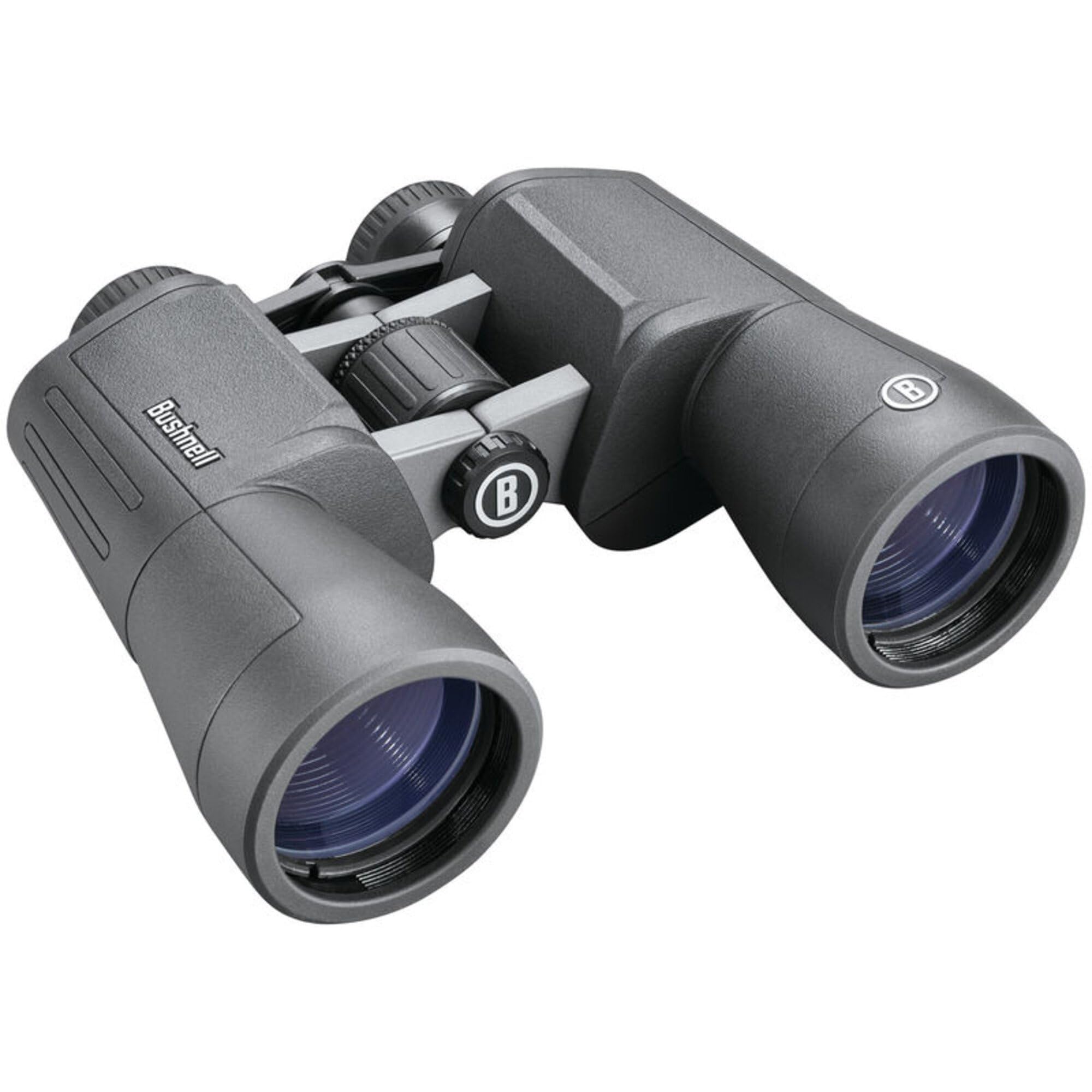
Bushnell PowerView 2 20x50

90 /100
LBD Score Outstanding

Key details

Weight
1.77 lb
Prism Type
Porro prism
Magnification
20x
Objective Lens
50 mm
View on Amazon

Twenty power buys reach and charges you for it in field of view. Through the PowerView 2, something a long way off fills the frame, but the window you see it through is narrow enough that finding it takes a slow, deliberate sweep, and the 2.5 mm exit pupil keeps the image dim unless the light is good. Neither is a fault so much as the arithmetic of high magnification.

The aluminum chassis and soft-touch rubber are the bright spots: it feels like a tool rather than a toy, the focus wheel turns smoothly, and it is tripod compatible, which is how this binocular is meant to be used. Bolted to a window mount or resting on a porch rail, 20x stops being a liability and starts being the point.

That is the honest case for it: a fixed-position spotting binocular for a hunter watching a field edge, or for anyone who needs to identify something a long way off from a seat. We don't recommend it as a first pair or as a walking-around binocular. Braced on something solid with the eyecups set, though, it earns its place.

The Ironclad warranty is lifetime, which matters on a high-magnification porro, because the failure that ends these is a knock that puts the two barrels out of alignment. Knowing a repair is covered is worth something on a binocular that lives in a truck.

Pros

  • Real 20x reach for long-distance ID
  • Aluminum chassis feels like a tool
  • Tripod-compatible for steady viewing
  • Lifetime Ironclad warranty

Cons

  • Not water resistant at all
  • 12 mm eye relief is tight for glasses
Our verdict

We keep the PowerView 2 for a specific job: sitting still and reaching far, where its 20x does what no 10x in this group can.

Check Latest Price
7

Theater and Travel

QICBIUD 8x21

86 /100
LBD Score Excellent

Key details

Weight
5.82 oz
Field Of View
415 feet
Magnification
8x
Objective Lens
21 mm
View on Amazon

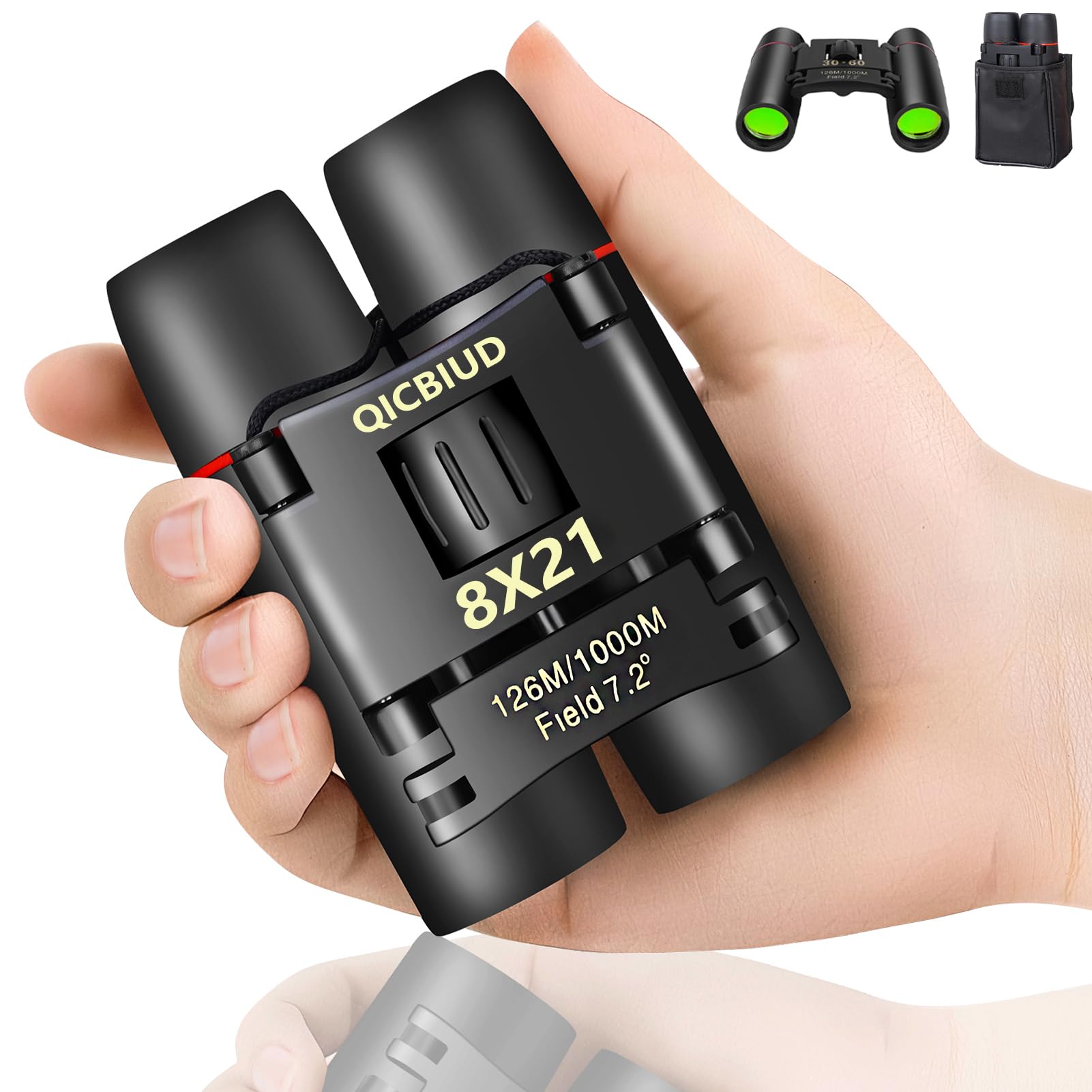
The QICBIUD is the lowest-priced pair on this list and one of the smallest: 5.82 ounces, roughly the size of a thick wallet, and forgettable in a coat pocket until the house lights dim. That is not a knock. A binocular you bring because it weighs nothing is worth more than a better one left at home.

For a theater, a balcony, or a stadium seat, it is the right tool. Eight power is easy to hold steady while you're sitting in the dark, the 415-foot field of view at 1,000 yards is wide enough to follow a performer across a stage, and the center-focus wheel has enough travel to fine-tune on a face a good distance away. We liked it far more for that than for birds.

Push it past the middle distance and the small 21 mm objective shows itself: the image softens, colors flatten, and the view dims well before the day does. Keep it for stages, courts, and back fences and it does everything you asked of it; treat it as a wildlife glass and you'll be disappointed.

There is an aluminum alloy frame under the rubber armor, which is sturdier than the price suggests, and the diopter adjusts plus or minus five diopters, enough to set it for one eye that reads better than the other. The lanyard and case are basic, but they're both in the box.

Pros

  • Wide 415-foot field of view
  • 5.82 ounces disappears in a coat pocket
  • Aluminum frame under rubber armor
  • Lowest price in this group

Cons

  • Water repellent, not waterproof
  • 2.6 mm eye relief is unusable with glasses
Our verdict

The QICBIUD is what we grab for a dark theater or a balcony seat: light, wide, and easy to focus when the lights go down.

Check Latest Price

How We Chose and Tested Binoculars

We started by pulling every pair we could find across the price range, from pocket compacts to full-size models, and comparing the specs that change how a view actually looks: magnification, objective lens size, prism glass, lens coatings, listed field of view, eye relief, and weight. That narrowed a long list to 12 pairs — full-size, mid-size, compact, and a mini folding set — that we bought at retail and used for eight months.

They lived where binoculars live. One pair sat on the kitchen windowsill for dawn sessions at the bird feeder; others went into a daypack on weekend hikes, into a tote for a minor league ballgame in the upper deck, and onto a whale watch where they got splashed. We read small signs at measured distances to compare sharpness at the center and at the edges, tracked swallows across the sky to see how fast we lost them, and weighed each pair on a kitchen scale with the strap on.

At dusk we noted how long each one could still separate a sparrow from a finch, then carried them from a cold car into humid morning air to watch for fog inside the lenses. We timed the focus wheel from a fence post to the treeline and marked which ones overshot, handed pairs to glasses wearers with the eyecups up and folded down, and gave a compact set to a nine-year-old to see whether small hands could adjust them.

Size was judged by real pockets rather than spec sheets, since the pair that fit a jacket but not a shirt pocket stayed home most days. Value came last: which ones would we buy again with our own money.

How to Choose Binoculars

Match the Magnification to Your Hands

Magnification is the number shoppers compare and the one that disappoints most often. An 8x view is bright, wide, and hard to shake; 10x adds reach with a little more wobble; 12x and beyond start charging you in shake, dimness, and a narrow window to look through. For general outdoor use we default to 10x42, which is where the Crossfire HD and most birding binoculars settle.

Step up to 20x only if you plan to brace the binocular on something solid. The Bushnell PowerView 2 is a fixed-position tool, not a walking-around pair, and that distinction matters more than the number on the box.

Eye Relief Is the Spec Glasses Wearers Need

Eye relief is the distance your eye sits behind the lens, and it decides whether a binocular works with frames on. Under about 15 mm you have to press in and the view tunnels; 17 to 20 mm gives you room to look normally. Twist-down or pull-down eyecups matter as much as the figure, because they shorten the gap so the lens meets your glasses where your eye already is.

The Occer at 20 mm and the Bantam at 18.7 mm are the generous ones in this group. The Hontry's 10 mm effectively rules eyeglasses out, however good the rest of it is.

Field of View Decides Whether You Find the Bird

Field of view is quoted in feet at 1,000 yards, and it is the number that decides whether you get on a moving subject before it moves. The pocket QICBIUD shows 415 feet, the Hontry 362, the Crossfire 325, the Occer 273, and the high-magnification pairs narrower still.

A wide field matters most at close range, at a feeder, and at a stadium, which is why a 10x that looks less powerful on paper often shows you more. Check that figure before you fall for the magnification.

Sealing and Focus Decide How It Holds Up

Waterproofing is graded, not binary. Nitrogen purging and O-ring seals are what keep a binocular from fogging inside when you carry it from a cold car into a warm room; an IPX7 rating, like the Adasion's, is a dunking rating, while 'water resistant' only covers splashes.

Then work the focus. A center wheel that turns smoothly under one finger is what lets you follow a bird through branches, and a diopter ring compensates for eyes that see differently. Set the diopter once, on a fixed object, and leave it alone.

Frequently Asked Questions

Final Verdict

Buy the Vortex Crossfire HD. It is the one pair here that combines genuinely good glass, full weather sealing, and a warranty you'll never have to argue about, and 10x42 is the specification that covers birds, deer, and a ballgame without asking you to choose in advance.

If you want to bring pictures home, the Adasion kit does that for a lot less. If the binoculars will be shared with a child, start with the Bantam instead — its wide, steady view is far easier to learn on.