Best Overall

Yamaha P71
Key details
- Keys
- 88, weighted hammer action
- Voices
- 10
- Weight
- 25 lb
- Dimensions
- 52.25 x 11.5 x 6 in
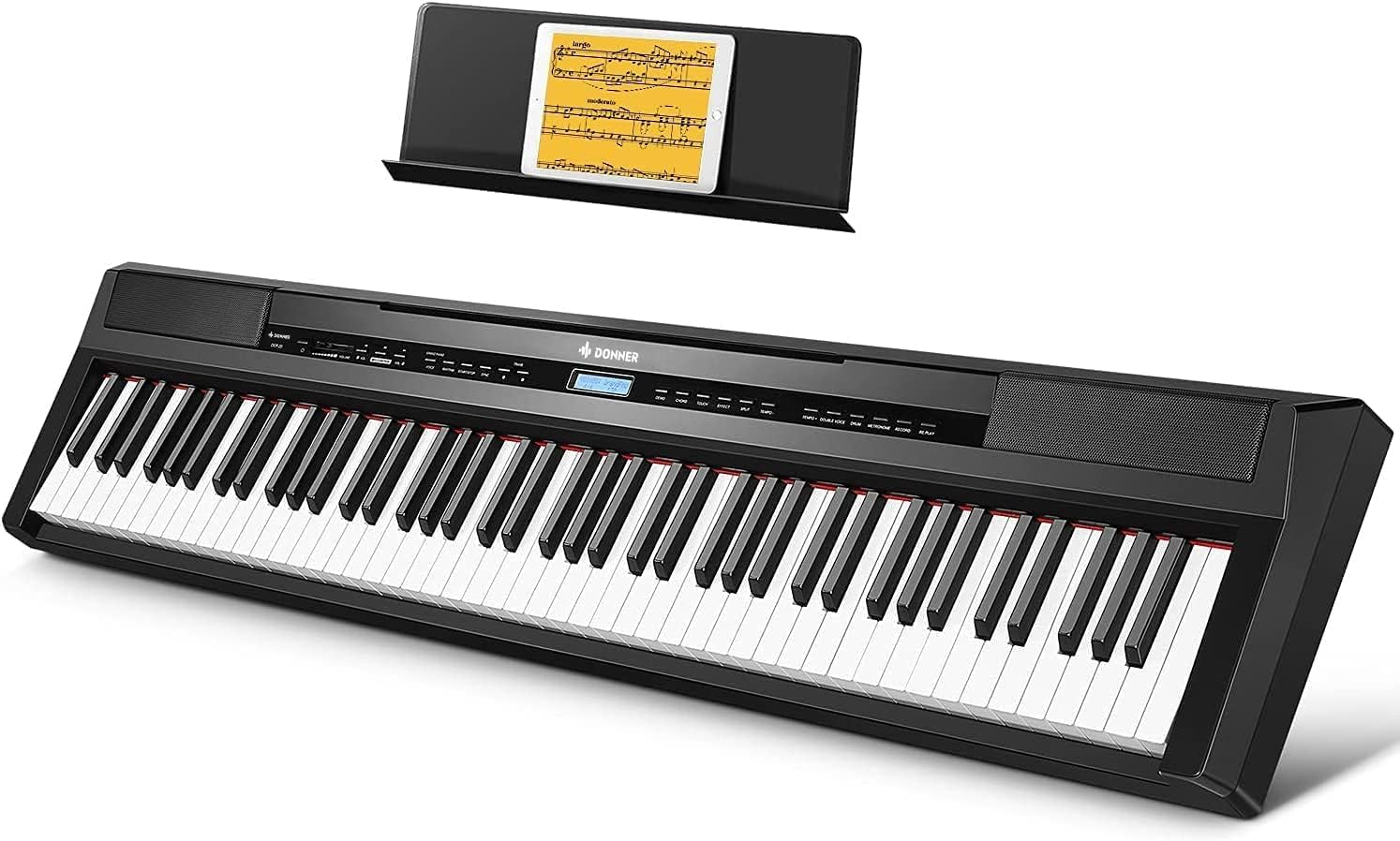
The keys are the reason this is our default recommendation. Yamaha fits 88 full-size weighted, touch-sensitive keys with a hammer action that pushes back under your fingers, so a scale played softly comes out soft and the same scale played hard comes out loud — dynamics stop being a switch. That is the skill a beginner spends the first year building, and it is the one part of a cheap keyboard you can never upgrade later.
Everything around the action is deliberately plain, and we count that in its favor. Ten voices, one button handling most functions, a grand piano tone with weight in the low end, and dual mode if you want strings layered underneath. There is no screen to negotiate, so the instrument is ready before you sit down — which matters more than it sounds when the alternative is a menu system and a manual.
At 25 pounds and six inches deep it is a slab, not a cabinet, so it lives on a stand or a table and moves between rooms without a second person. We also appreciate the 3.5mm headphone jack, which takes ordinary earbuds instead of forcing an adapter, and the action is quiet enough that late-night practice stays in the room.
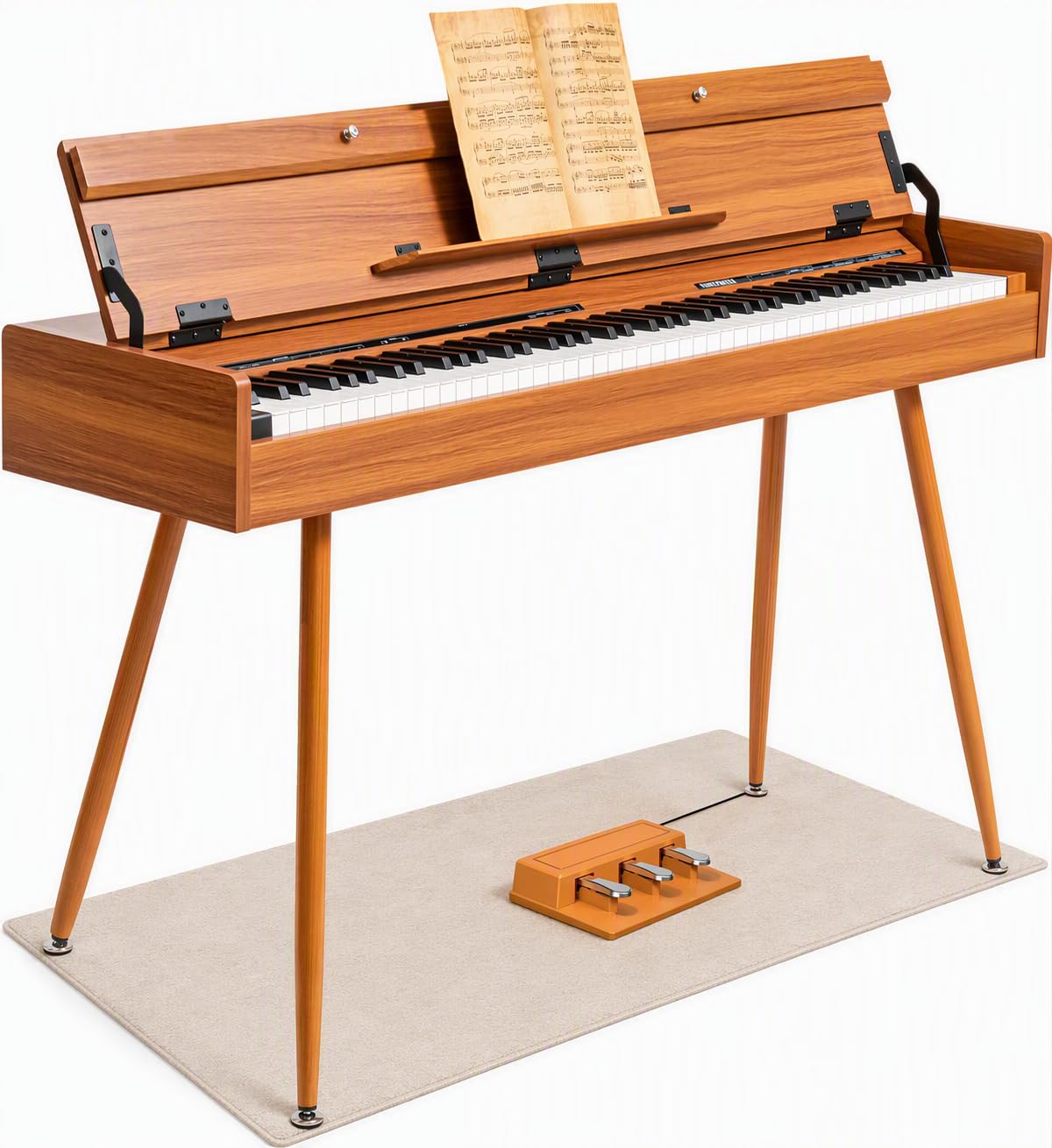
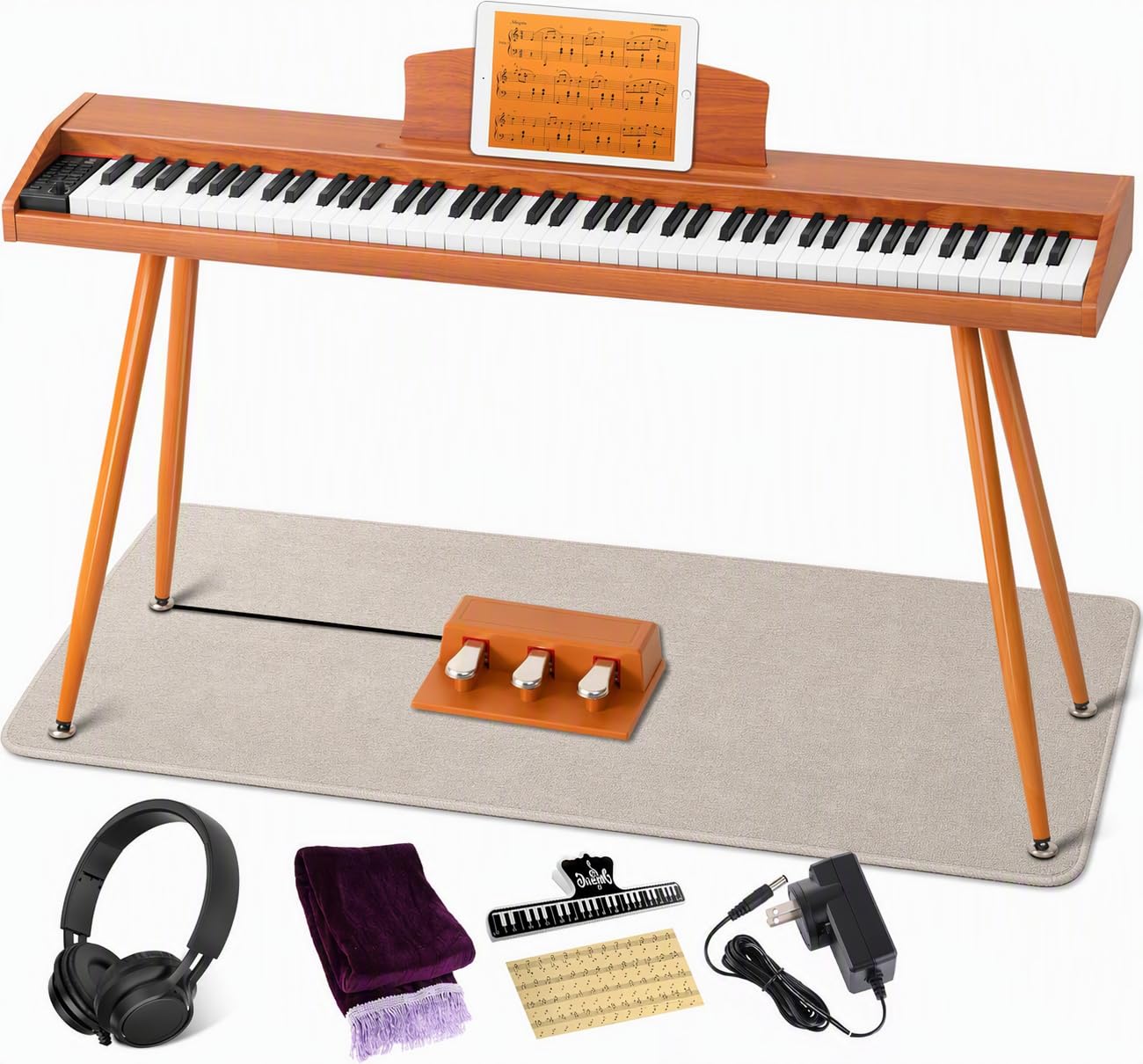
The compromise is at the pedals. There is one sustain pedal in the box rather than a three-pedal unit, so soft and sostenuto playing is off the table without adding hardware. For a first or second year that costs you nothing; if you are already working on exam repertoire, the Donner DDP-80 gives you all three.
Pros
- Weighted hammer action feels like an acoustic
- Grand piano tone with convincing dynamics
- One-button controls, no menu to learn
- 25 pounds, easy to move and store
Cons
- No stand or bench in the box
We recommend the P71 to almost every beginner: the weighted hammer action, believable grand piano tone, and screen-free controls make it the easiest piano here to grow with.