Best Overall

Yamaha P71
Key details
- Voices
- 10
- Weight
- 25 lb
- Key Action
- 88 weighted
- Connections
- USB; 3.5mm headphone
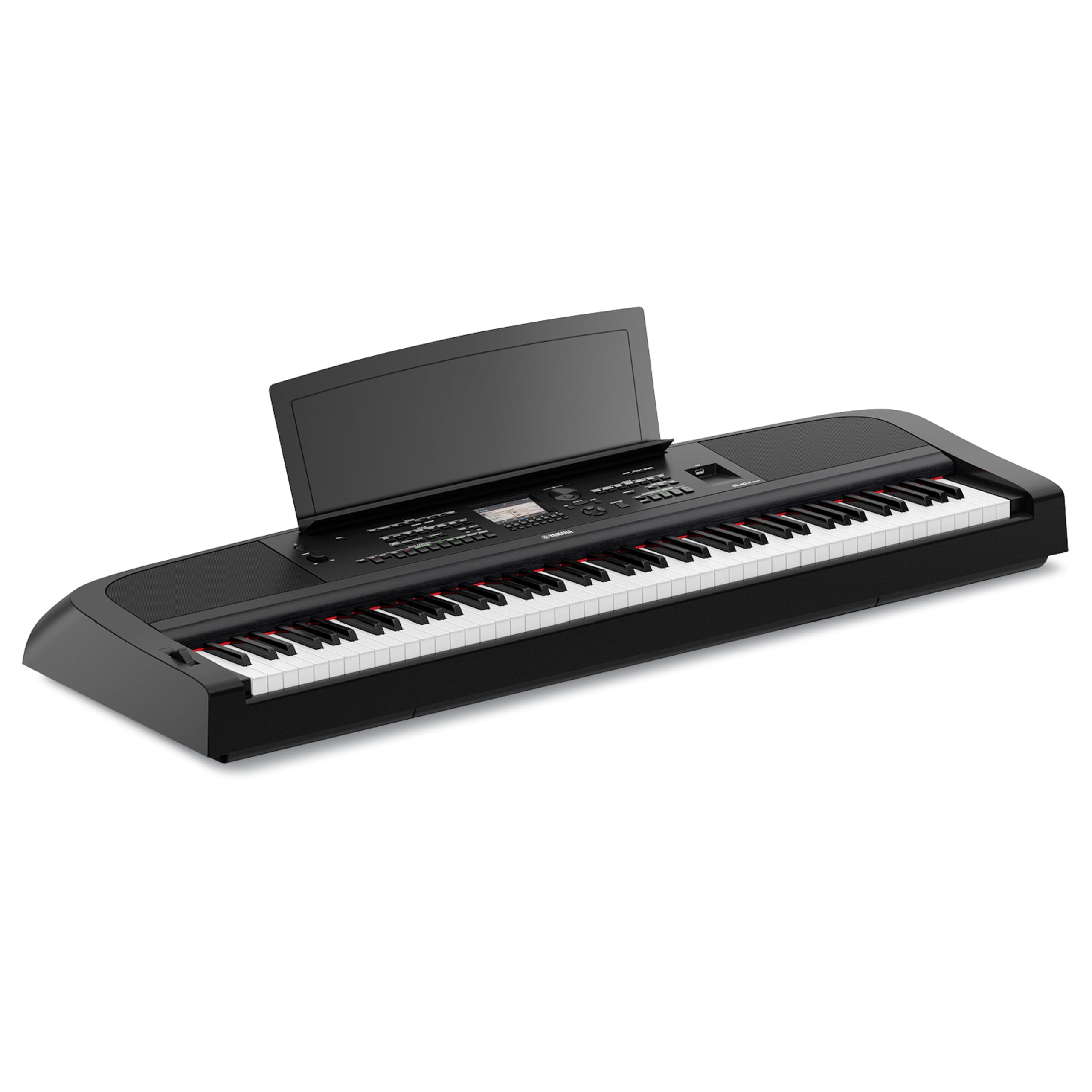
The P71 earns its place by getting the two things that matter most right: the keys push back like a piano, and the main grand-piano voice has enough body to practice on. We spent most of our time on that core sound rather than cycling through the extra voices, and that is the point of this model. It is a piano first, with a simple one-button control scheme that keeps you playing instead of menu-diving.
The weighted action is the reason to choose it over a cheaper semi-weighted keyboard. It has enough resistance to build finger strength, and the touch-sensitive response lets you shape dynamics without fighting the instrument. At 25 pounds and 52.25 inches wide, it is portable enough to move between rooms but still wants a dedicated stand and a wall.
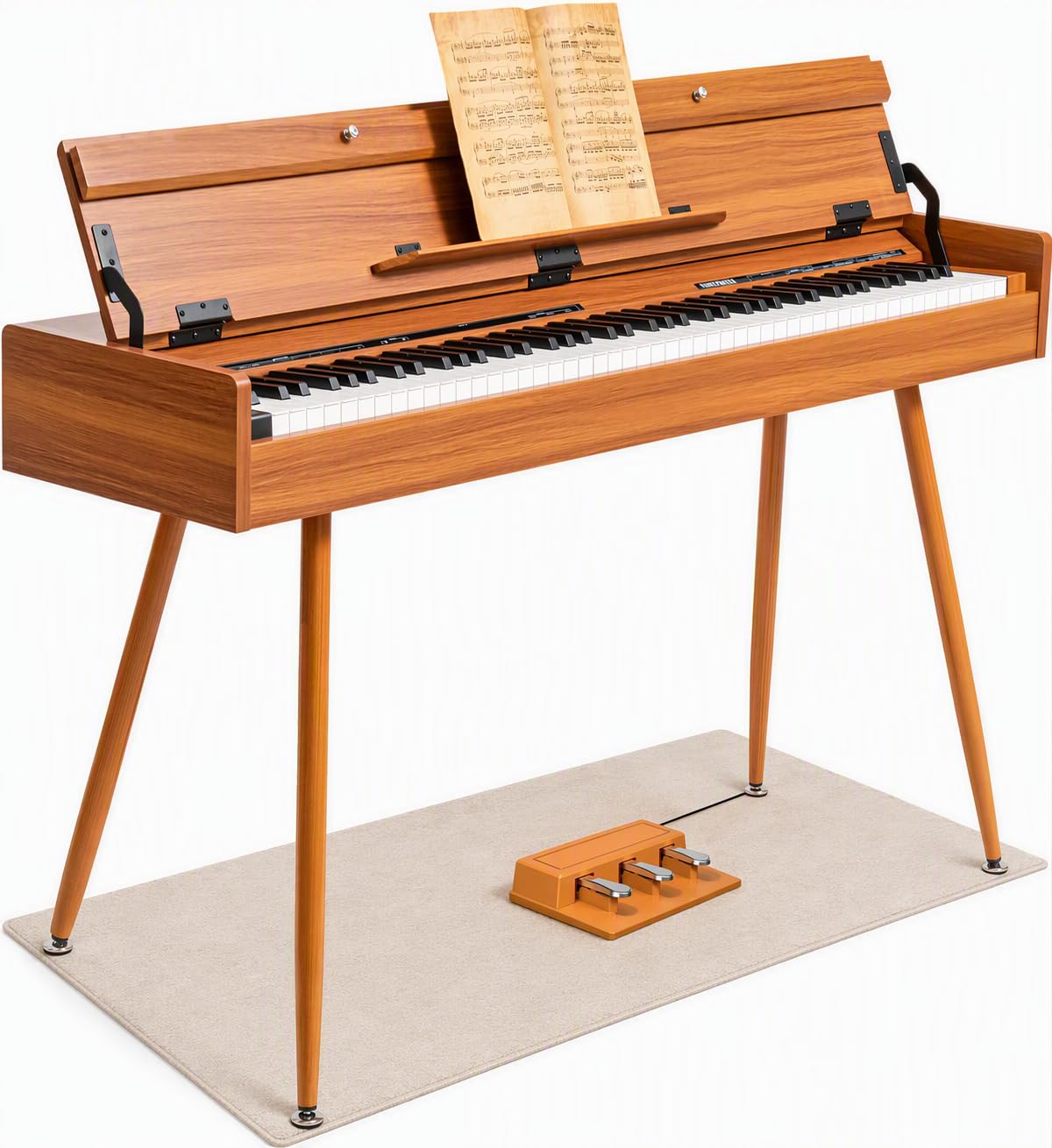
What you give up is mostly flexibility: this is a piano, not a production hub. The controls are deliberately sparse, and the included sustain pedal is a single unit rather than a triple-pedal assembly. For a beginner or returning player who wants acoustic-piano feel, those are easy trade-offs; if you need accompaniment styles or a furniture cabinet, look at the DGX-670 or DDP-80.
We kept coming back to the P71 because it does not make you think about the technology. You sit down, press one button, and play. That is a rare thing in a first serious piano, and it is why it is our default recommendation.
Pros
- Weighted action supports real piano technique
- Clear, resonant grand-piano sound
- Simple controls keep practice focused
- Light enough to move at 25 pounds
Cons
- No Bluetooth or app connectivity
- Only 10 voices
We recommend the P71 to anyone who wants a straightforward 88-key piano with convincing weighted touch and no need for apps or a deep voice library.