Best Overall
TECKNET Solar Driveway Alarm
Key details
- Alert Chimes
- 36 melodies, 5 volumes
- Sensor Power
- Solar-charged battery
- Wireless Range
- 2,600 ft
- Water Resistance
- IPX5
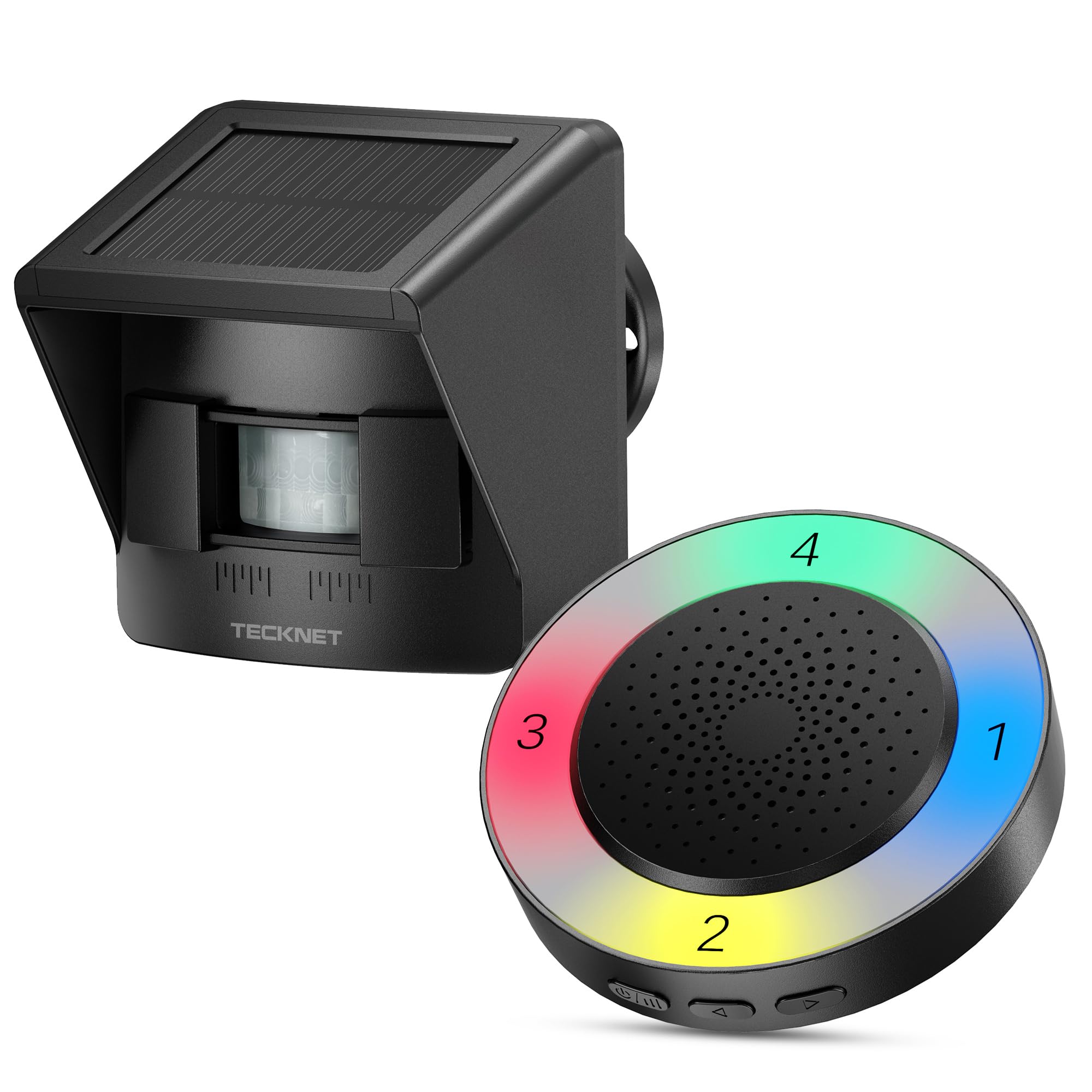
Five volume levels reads like spec-sheet filler until the receiver is sitting on a kitchen counter with the TV going. That dial is what we kept coming back to: loud enough to carry down the hall, quiet enough at night, and backed by 36 chimes so a second sensor can have its own sound. It's why this solar kit is the one we hand to most people first.
The other half of the appeal is that nothing needs feeding. A panel on top of the sensor keeps its rechargeable cell topped up, so there's no ladder in January and no four-pack of AAAs to remember. The units arrive paired — mount the sensor, plug the receiver into an outlet, and you're live. The 2,600-foot rating is an open-air figure, and a stucco wall or a wet pine will take a bite out of it, but for a sensor at the mailbox and a receiver in the kitchen you have range to spare.
What it won't do is tell you what it saw. This is a PIR eye, so a person, a truck, and a deer in the headlights are all the same event, and a shrub in a crosswind can be one too. The rotating bracket is the fix: angle the eye across the drive instead of down it and most of those nuisance trips never happen. One sensor ships in the box; the receiver's four zones are waiting for a second whenever you want one.
Sealing is rated IPX5, which is rain-and-hose rather than dunk-proof, and the panel wants a few hours of real sun to keep up. Put it on the sunny side of the gatepost and neither point matters much.
Pros
- Solar-charged sensor, no battery swaps
- Volume and chime adjustable at the receiver
- 2,600 ft open-air transmission
- IPX5 weather-rated housing
Cons
- Ships with one sensor
- Panel needs regular direct sun
We recommend this one to most people: a solar sensor that never needs batteries, a receiver you can actually turn down, and more range than your driveway will use.