Best Driveway Cameras of 2026

The worst thing a driveway camera can do is cry wolf. Mine used to ping me at 2 a.m. for a passing cat, then hand me eleven seconds of gray nothing when a package actually went missing. What you want is the reverse: an alert about the person walking up your drive, in a picture clear enough to describe them to a neighbor.

I've spent the past six months with 11 driveway cameras mounted at my house and my parents' — some wired into the eaves, some running on batteries, a couple kept alive by palm-sized solar panels. The biggest fork in the road isn't resolution, it's power. Wired never needs charging but wants an electrician's comfort level; battery installs in fifteen minutes and then wants a ladder every few months unless solar covers it. The second fork is storage, since some cameras are paperweights without a monthly plan while others write to a card.

What I cared about most was behavior at night, in weather, and on a Wi-Fi signal that has to stretch to the end of a drive. The picks below are the ones I stopped thinking about, which is the highest compliment a security camera can get.

1

Best Overall

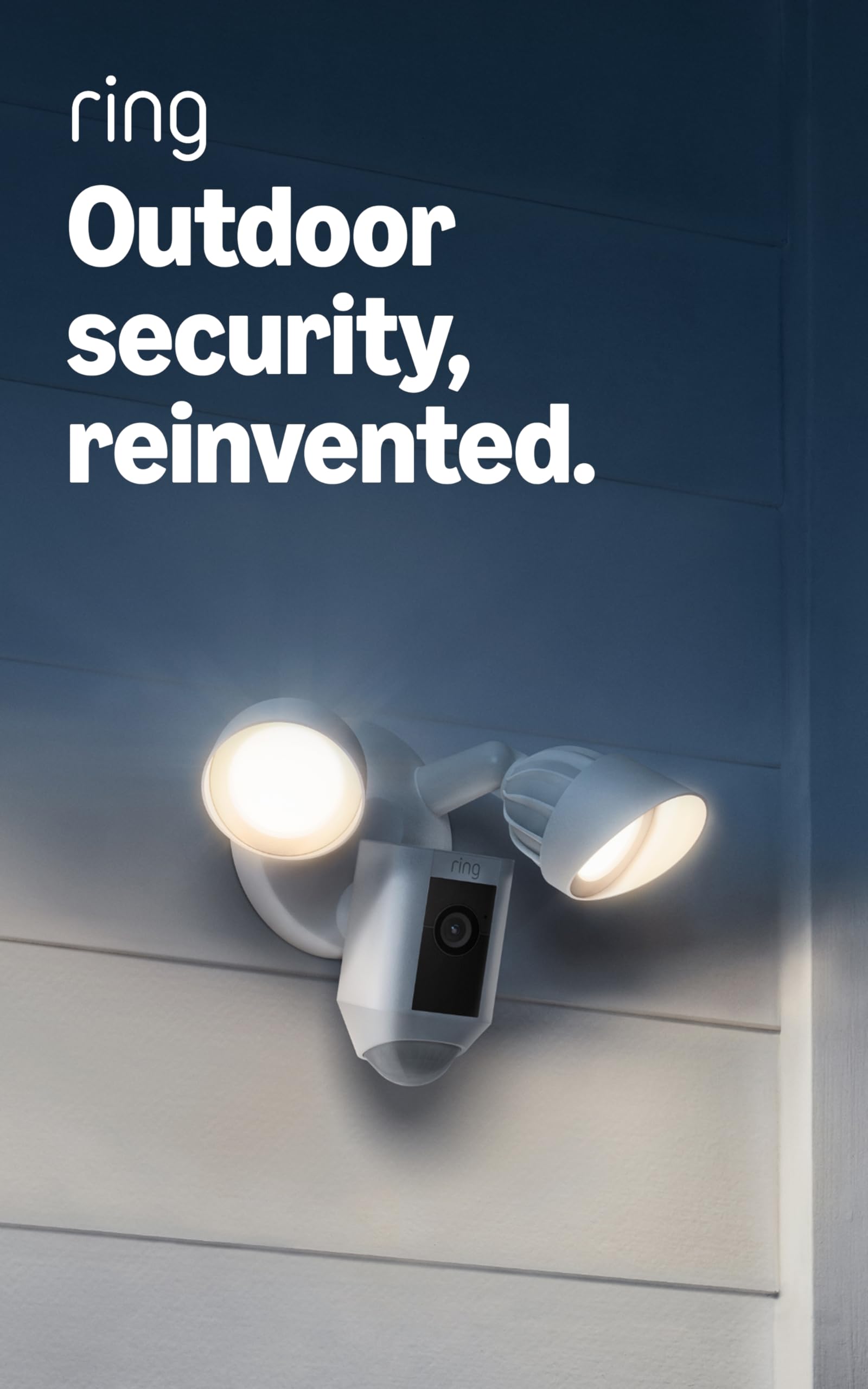
Ring Floodlight Cam Wired Plus

95 /100
LBD Score Outstanding

Key details

Power Source
Hardwired
Video Resolution
1080p HD
Floodlight Output
2,000 lumens
View on Amazon

The corner where the drive meets the garage is the spot that does the most work, and this camera covers both halves of the job: 2,000 lumens of motion-triggered LED and a 1080p feed pointed down the approach. It uses the outdoor wiring that is already there, so installation is a bracket, a couple of wire nuts, and a few minutes in the Ring app.

That combination is why it is our default. There is no pack to retrieve before a storm and no clip that starts three seconds after the car has already turned in, and the motion zones you draw in the app let you mask the street so passing headlights stop setting it off. We think the value sits in that routine reliability rather than in any single specification.

Two details stood out. The siren does not sound on its own — you tap it in the app, which is the right call on a drive where a fox should not wake the neighborhood. The floodlights, though, can come on at night when you have scheduled them off, which matters a great deal if the camera looks across at a neighbor's window.

What the 1080p sensor gives up is detail at distance. A face at the far end of a long drive still reads as a face; a plate does not. This is a camera for the twenty feet around the garage door and the car parked in front of it, and that is the zone it owns.

Pros

  • Floodlights and camera in one fixture
  • No battery to recharge, ever
  • Motion zones you can draw yourself
  • Siren stays under your control

Cons

  • Needs existing outdoor junction box wiring
Our verdict

If there's outdoor wiring at the garage, this is the driveway camera we point people to first: it lights the approach, records it, and never needs a battery charged.

Check Latest Price
2

Best Solar-Powered

VIZIUUY 3MP Solar PTZ Camera

87 /100
LBD Score Excellent

Key details

Power
Solar panel plus 9,600mAh battery
Pan Range
355 degrees
Resolution
3MP (2048 x 1536)
Weather Rating
IP66
View on Amazon

A fixed camera shows the slice of driveway you chose on the day you climbed the ladder. This one pans 355 degrees from the app, so you can swing from the garage door to the gate and back, and the 3MP sensor is sharper than the 1080p units that make up most of the budget end of this group. For a drive with more than one approach, that sweep is worth more than another megapixel, and it is the reason this sits so high in our ranking.

Power is the other half of the argument. The 9,600mAh battery is the largest of anything here, and the kit includes a separate stand for the solar panel, so the panel can face the sun while the camera faces the drive — on a lot where the camera has to point north, that separation is the difference between charging and idling. Free cloud storage covers six-second clips for seven days, and a card up to 128GB takes everything else.

The weak spot is the link between camera and phone. It is 2.4GHz only, and a thin signal at the end of the drive shows up as dropped live view and alerts that land after the fact. Motion detection is uneven too: it can miss a person crossing the apron, and the default sensitivity fires on things you do not care about. Spend ten minutes in the settings before you trust it.

Pros

  • Motorized pan covers a wide approach
  • Largest battery in this group
  • Panel aims independently of the camera

Cons

  • 2.4GHz only; dropouts on weak signal
  • Motion alerts can miss or arrive late
Our verdict

Our pick when one camera has to cover a wide, sunlit approach — the motorized sweep and big solar battery do the work, as long as your WiFi reaches the drive.

Check Latest Price
3

Best for No Monthly Fees

Tapo C401 Outdoor Camera

86 /100
LBD Score Excellent

Key details

Battery
5,200mAh, up to 180 days per charge
Resolution
1080p
Local Storage
microSD up to 512GB
Weather Rating
IP65
View on Amazon

Person detection usually arrives with a monthly bill attached. Here it does not: the C401 picks out a human shape inside zones you define, on the camera itself, and stores footage on a microSD card you supply — up to 512GB, which is more local storage than anything else on this list.

The battery is a 5,200mAh pack rated for up to 180 days per charge, and even at half that it is a couple of ladder trips a year rather than a monthly chore. It is also genuinely small — 7.2 ounces and roughly the footprint of a paperback — so it tucks under a soffit without announcing itself.

We rate it the pick for anyone allergic to subscriptions, and the honest limit is resolution. 1080p, with night vision that is serviceable rather than impressive and motion sensitivity that can stop responding to the settings you chose. Across the width of a suburban drive that is plenty: you will know a person from a shadow. At the far end of a long rural approach it is not, and the VIZIUUY's 3MP sensor is the better tool.

One more thing worth knowing: recordings live on the card, so a card failure is a recording failure. Buy a high-endurance card and check it every few months. That is the price of no monthly fee.

Pros

  • Person detection without a subscription
  • Local storage up to 512GB
  • Small body, easy to tuck away

Cons

  • 1080p caps detail at long range
  • Motion sensitivity can stop responding
Our verdict

We recommend it if you refuse to pay monthly: person detection and huge local storage on a camera small enough to hide under a soffit. Long-range detail is the trade.

Check Latest Price
4

Best Multi-Camera Kit

GMK 4-Pack Camera System

83 /100
LBD Score Excellent

Key details

Resolution
2K (1296p)
Field Of View
110 degrees
Weather Rating
IP65
Cameras Included
4
View on Amazon

Four cameras for roughly the price of one good floodlight camera is the entire pitch, and it is a persuasive one if your problem is angles rather than detail. Two on the drive, one at the gate, one on the back door, all in a single app — that is more of a property watched than any one camera here can manage. We think that is the right trade for a big lot on a budget.

Each unit shoots 2K (1296p) through a 110-degree lens with IP65 sealing, and the hardware is the plain bracket-and-screw sort. Setup is the usual screw-in, app-pairing routine and it goes quickly. The picture genuinely is clear day and night, and the alerts reach the phone without much lag.

The catches are the expected ones. There is no solar panel in the box, so four cameras means four trips up a ladder to charge them — the biggest practical gap between this kit and the solar units here. The WiFi link is the other soft spot: a camera can drop off for a while and rejoin on its own, so keep each one inside solid 2.4GHz range rather than pushing one out to the far fence.

It makes most sense where one camera was never going to be enough: a long drive with a gate, a detached garage, a side yard you cannot see from the house. One good camera on one good angle is still the better first purchase; four adequate ones are the better second.

Pros

  • Four cameras for one camera's money
  • 2K video on every unit
  • Instant alerts on all cameras

Cons

  • No solar panels; four separate recharges
  • Cameras can drop off WiFi periodically
Our verdict

Four 2K cameras for about what one premium camera costs is the right answer when your problem is angles rather than detail.

Check Latest Price
5

Best Wired Floodlight Value

Blink Wired Floodlight Camera

86 /100
LBD Score Excellent

Key details

Smart Home
Works with Alexa
Power Source
Hardwired
Video Resolution
1080p HD
Floodlight Output
2,600 lumens
View on Amazon

Twenty-six hundred lumens against our top pick's two thousand. This is the brighter floodlight of the two wired options here, and it costs less. The installation story is the same: it connects to the outdoor wiring your house already has, and 1080p color night view with a built-in siren comes along for the ride.

Blink's app is the draw for a lot of households — quick to load, sensible camera grouping, and motion zones you draw yourself so the apron is covered and the street is not. Person detection rides on embedded computer vision, which is the part worth reading the fine print on.

We think it is the right wired camera when light output beats ecosystem: a long, dark run where you want the far end lit, not just the strip by the door. What you accept in return is that person alerts sit behind Blink's optional subscription plan, and that we have not lived with this model through a winter, so long-term durability is an open question rather than a settled one.

The 1080p sensor is the same ceiling as the Ring, so the same limit applies — faces near the light, plates not so much. Aim it where the beam lands on the drive rather than flat against the wall; a floodlight pointed at brick illuminates nothing but brick.

Pros

  • Brighter output than the Ring floodlight
  • Cheaper than the other wired floodlight
  • Fits an existing Alexa household

Cons

  • Person alerts need an optional Blink plan
Our verdict

The brighter wired floodlight and the cheaper one — we recommend it when lighting the far end of a dark drive matters more than the app ecosystem does.

Check Latest Price
6

Best Compact Solar Camera

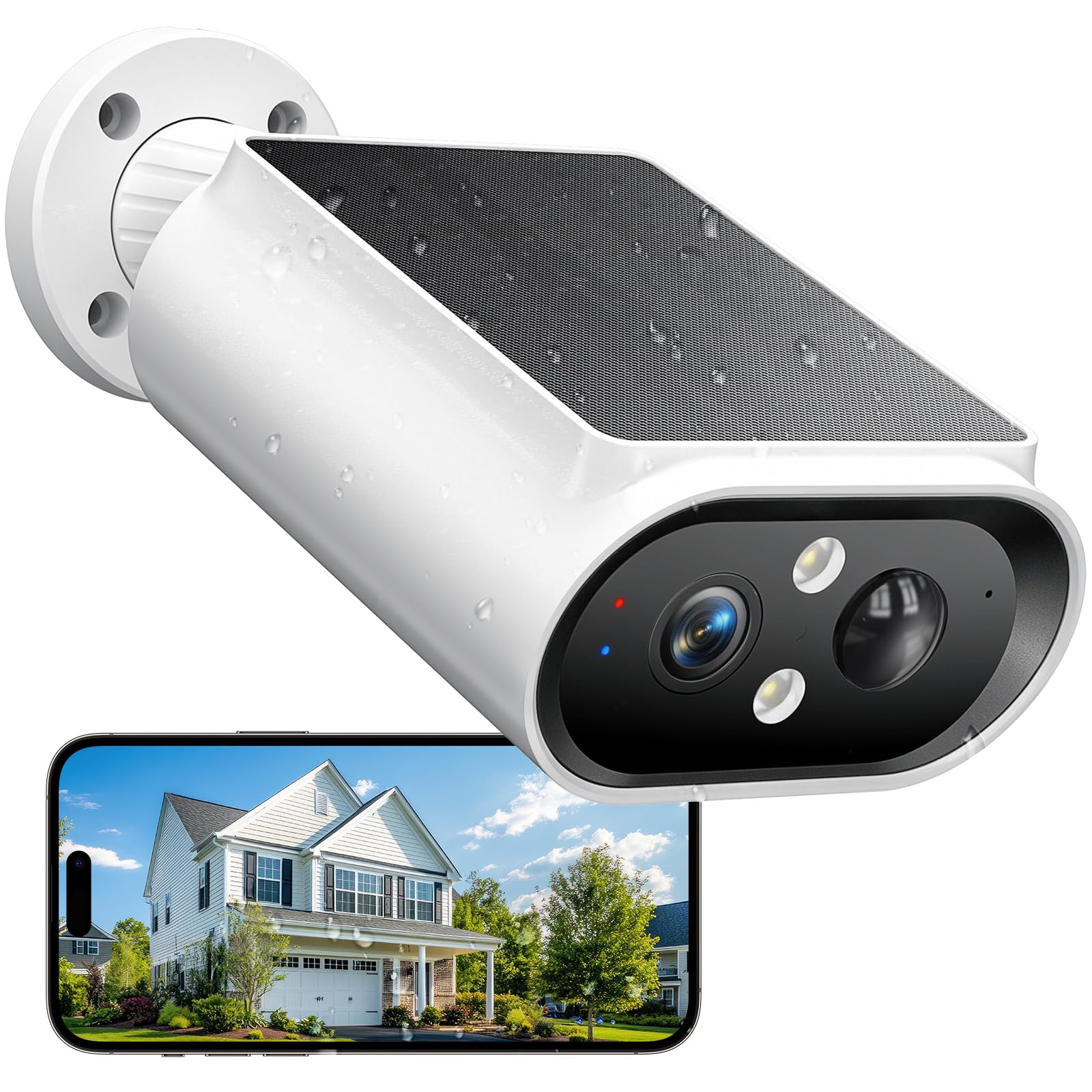
AlkiVision Solar Security Camera

89 /100
LBD Score Excellent

Key details

Power
Solar panel with battery
Resolution
2K (2304 x 1296)
Connectivity
2.4GHz WiFi
Weather Rating
IP67
View on Amazon

At 7.1 by 3.74 by 2.17 inches this is one of the smaller cameras in the group, and the mount is a simple bracket that screws to a wall or a fascia board. That matters more than it sounds on a driveway, where the obvious mounting point is often the narrow strip of trim beside the garage door.

The specification is respectable for the size: 2K (2304 x 1296) video, color night vision, a spotlight and siren, and IP67 sealing — the highest weather rating of anything we are recommending here. The battery is small at 15Wh, which is the number that decides how hard the solar panel has to work. It is 2.4GHz WiFi only, which is normal in this group but worth checking at the mount point.

The 360-degree claim needs translating. There is no motor in this one; it is a 120-degree adjustable case on a bracket, so you set the angle by hand and live with it. That is fine for a drive you can see from one corner and frustrating if you wanted the gate and the front door from the same camera — the VIZIUUY's motorized pan is the better answer there.

We like it best as the second camera on an awkward surface: over the side gate, under the carport eave, on the corner of a shed. Small, sealed, and honest about its one angle. What it is not is a single camera for a wide drive.

Pros

  • IP67 sealing for an exposed mount
  • Compact body fits narrow trim
  • Solar keeps the small battery topped up

Cons

  • Fixed case angle, not a motorized pan
  • 2.4GHz WiFi only
Our verdict

A small, IP67 solar camera for a tight mounting point — we like it as a second camera on a gate or shed, not as the only eye on a wide drive.

Check Latest Price
7

Ring App Households

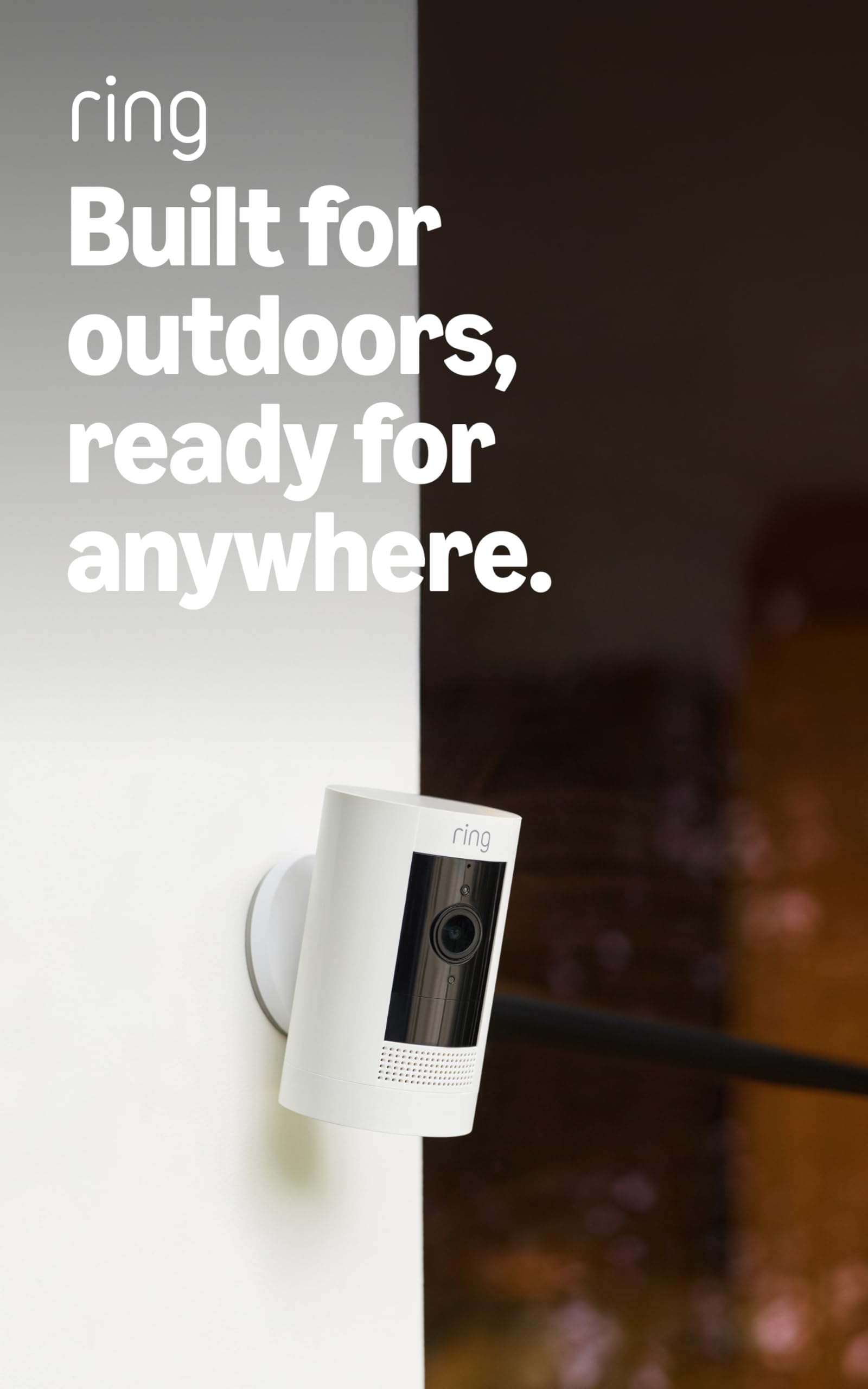
Ring Outdoor Cam (Stick Up Cam)

91 /100
LBD Score Outstanding

Key details

Mounting
Flat surface or wall bracket
Smart Home
Works with Alexa
Night Vision
Color night vision
Power Source
Rechargeable battery
View on Amazon

The case for this camera is not on its spec sheet. It is that it lives in the same app as the floodlight above: if there is already a Ring doorbell or floodlight on the house, a Stick Up Cam on the driveway drops into the same timeline and the same alert list, and one app for the whole property is worth real convenience.

We think it is a sensible third camera for a Ring household and a harder sell as your only one. Color night vision and two-way talk are the good parts, and the mount is genuinely flexible — flat surface, wall bracket, or a ceiling mount sold separately — so you can hang it almost anywhere on a garage.

Power is the compromise. The pack is rechargeable and the camera is rated to run a long time in a quiet spot, but a driveway is not a quiet spot, and every car that comes up the drive wakes it. Ring sells a solar panel separately, and for driveway duty that is close to essential rather than optional.

Two of these on opposite corners of a garage cover more angle than any single camera here and land in one place on your phone. That is the case for it.

Pros

  • Shares the Ring app with the top pick
  • Flexible mounting on almost any surface
  • Color night vision and two-way talk

Cons

  • Can go offline and need a power cycle
Our verdict

Best as an additional camera for a house that already runs Ring — the shared app is the point, and the rechargeable pack is the price of it.

Check Latest Price
8

Shaded Driveways

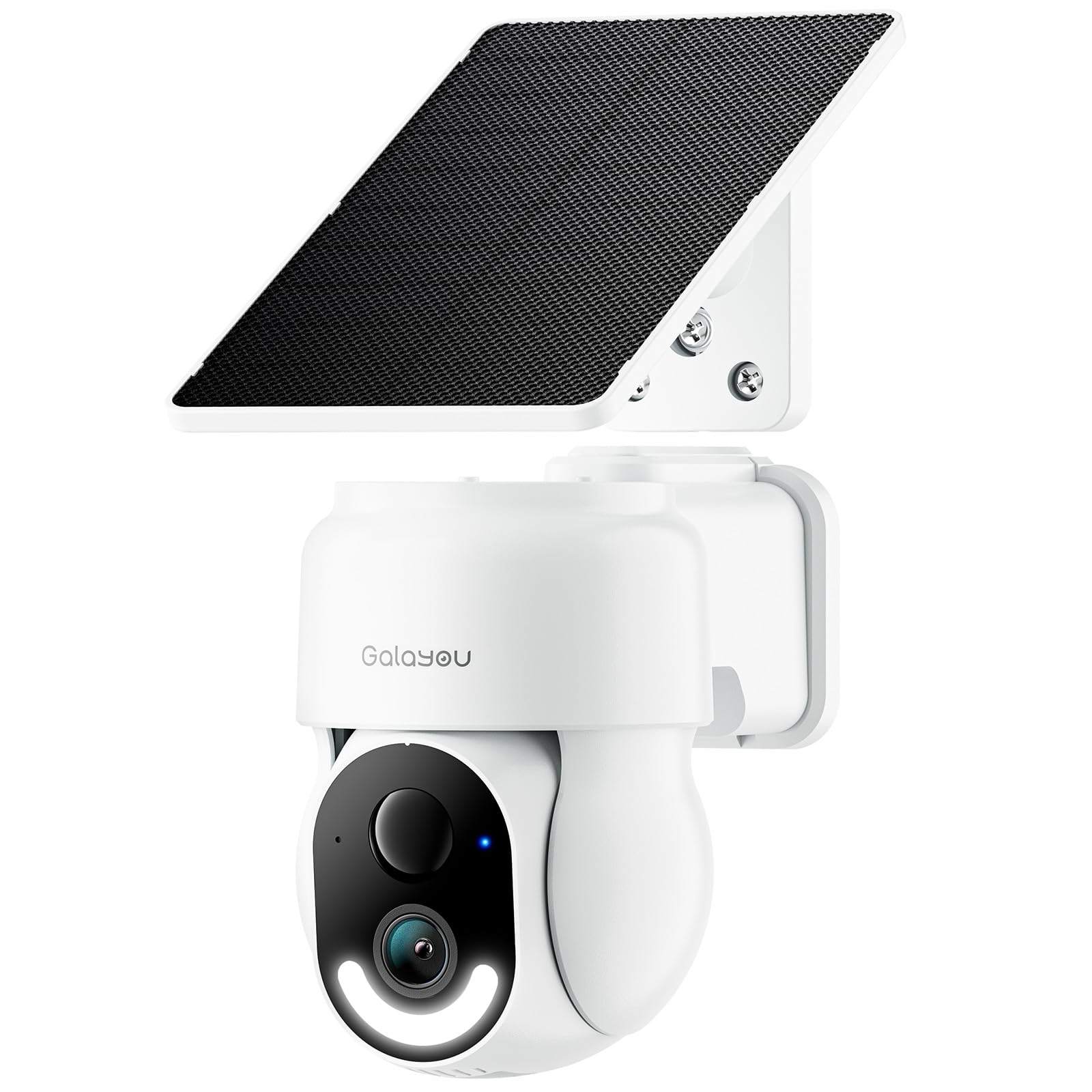
GALAYOU R6 Solar Camera

82 /100
LBD Score Excellent

Key details

Resolution
2K (1296p)
Solar Panel
Detachable
Field Of View
93.8 degrees
Weather Rating
IP65
View on Amazon

The solar panel comes off this camera. That is a footnote until you have a drive that is shaded in the morning and sunlit at noon: you screw the panel where the light actually falls and put the camera where the view actually is.

The rest is a familiar package — 2K (1296p) video, a 93.8-degree view, IP65 sealing, color night vision, and PIR tracking that follows movement across the frame. The sensor does a good job in daylight; after dark the spotlight and infrared take over and the image is usable rather than impressive.

The charging circuit is the weak link. The battery can run down within a couple of days of heavy triggers, or stop accepting a charge altogether, which makes the panel a requirement rather than a bonus — and the panel has to sit in real sun, not just daylight. So mount with that in mind rather than tucking the panel up under the eave with the camera.

We think it earns a place when the mounting position is fixed and the sun is not: a shed wall, a porch post across from the drive, a corner where a bigger camera will not hang. Local recording to a microSD card up to 128GB keeps the running cost at zero, which is the right shape for a second camera on a property.

Pros

  • Panel detaches from the camera
  • 2K video at a budget price
  • Local storage up to 128GB

Cons

  • Narrower view than the 110-degree kits
Our verdict

Worth it where the camera has to hang in shade: the detachable panel goes where the sun is, and the camera stays where the view is.

Check Latest Price

How We Tested the Best Driveway Cameras

We started with listings and customer reviews, then filtered for the things that actually decide a driveway install: how the camera is powered, whether it stores footage without a subscription, how wide a view it covers, and whether the housing is rated for weather. That left cameras at every price point, from single wireless units to multi-camera systems, and 11 of them went up on real houses.

Each one spent six months covering an actual driveway — one at the garage, one aimed down the drive toward the street, one on a side gate. I timed every install solo, phone in hand, from opening the box to watching a live view, and noted where I needed a ladder, a drill, or an outlet I didn't have.

Then we tried to fool them. Walks up the drive, deliveries, a car pulling in after dark, someone in a hood, the neighbor's cat, and a moth circling a floodlight, checking which alerts fired and which were just noise. Footage got reviewed the way a homeowner would at 11 p.m.: could I read a plate, recognize a face, separate a person from a shadow in color night vision? We also weakened the Wi-Fi at the far end of the drive to see what dropped, ran a hose over every weatherproof housing, and tracked battery drain through the coldest weeks.

Finally, we kept living with the apps — clearing alerts, pulling memory cards, confirming which advertised features quietly required a subscription — because that's what determines value long after installation day.

How to Choose a Driveway Camera

Power and placement come first

There are three routes. Hardwired is the only one that never sends you up a ladder, and the floodlight cameras here run on the wiring from an existing outdoor light, which means a junction box on the wall you want to watch. No box, no camera, unless you pay an electrician to add one.

Battery cameras go anywhere but have to be retrieved, and a busy drive drains them fastest. Solar splits the difference, and a panel you can aim separately from the camera is worth having on a shaded lot — the GALAYOU R6's panel detaches, and the VIZIUUY kit includes its own stand for the panel. Whatever you choose, match the IP rating to the exposure: IP65 for a sheltered eave, IP66 or IP67 for a post out in the open.

Aim and coverage beat resolution

Two things decide what you actually see: where the camera points and how wide its lens is. A fixed 110-degree camera on the garage corner covers the apron and the door. A panning model like the VIZIUUY sweeps the whole approach, but only in one direction at a time, so it is not watching everywhere at once.

The trap is resolution marketing. 2K and 3MP really are a step up from 1080p for reading a face across the width of a drive — but a wide lens spreads those pixels thin at the edges, so the far end of a long run still looks soft. If one specific point matters, a narrower aim buys you more than another megapixel.

Night is the real test

A driveway camera earns its money after dark or not at all. Infrared gives a monochrome image out to the range the listing quotes. Color night vision needs some light to work with, so on a moonless drive it means the built-in spotlight or the floodlight doing the lifting.

Headlights are the other problem: a car turning in blows out the exposure for a second, exactly when you wanted the plate. This is where the floodlight models separate themselves — 2,000 lumens on the Ring or 2,600 on the Blink gives the sensor something to expose for, and the whole apron stops being a black rectangle.

Alerts, storage, and the cost of running it

Motion alerts are the day-to-day experience, and the difference between a useful camera and an ignored one is zoning. Customizable motion areas on the Ring, or adjustable PIR sensitivity on the solar models, are what keep passing traffic from firing your phone all evening. Set them on day one rather than living with the defaults.

Then decide where footage lives. A microSD card costs nothing after purchase, and the Tapo takes up to 512GB. Cloud plans are recurring, and they are often the reason a cheap camera stops being cheap — check what you get without paying. On the VIZIUUY it is six-second clips kept for seven days, which is enough to know something happened and not much else.

Frequently Asked Questions

Final Verdict

The Ring Floodlight Cam Wired Plus is the one we point a driveway buyer to first: it lights the approach, records it, and wired power means you are never retrieving a battery in the rain. The condition is the junction box — without one on the garage wall, it is not a weekend job.

In that case the Tapo C401 covers the door-to-drive stretch with no subscription at all, and the VIZIUUY earns its place where one camera has to sweep a wide, sunlit approach. Pick by where you can mount it, and the rest follows.