Best Drones with Obstacle Avoidance of 2026

The moment a drone stops two feet short of a branch you never saw, you get what you paid for. Obstacle avoidance isn't a headline spec — it's the thing that lets you fly close to a tree line, a bridge, or a friend on a bike and still come home with usable footage. It's also what decides whether someone who has never flown can take a turn at the controller without you holding your breath.

My team and I spent the past seven months flying six drones with obstacle sensing in parks, backyards, and one windy stretch of coastline. The pattern that emerged: sensing is not a yes-or-no feature. Some aircraft stop dead in front of a branch; others slide around it and keep filming, and which feels right depends on how you fly.

The spec sheet also won't tell you what matters by week two — how fast the batteries recharge, whether the app fights you in the field, whether the footage holds up at dusk. That's where our attention went, and it's how the picks below separated themselves.

1

Best Overall

DJI Air 3S

92 /100
LBD Score Outstanding

Key details

Video
4K/60fps HDR
Batteries
Three included
Main Camera
1-inch CMOS + medium tele
Obstacle Sensing
Omnidirectional, forward LiDAR
View on Amazon

The Air 3S is the one we reach for when the shot matters and the light is going. Its forward-facing LiDAR and omnidirectional vision sensors give it the most complete obstacle-avoidance system in this group, and we noticed the difference around a treeline at dusk: the drone held its line instead of hesitating the way vision-only systems can. The 1-inch main camera and medium tele camera are a genuinely useful pair, not a spec-sheet novelty. We framed a subject with the tele while keeping a comfortable distance, which is its own kind of safety.

Video tops out at 4K/60fps HDR, and the 14-stop claim is the kind of range that matters when the sky is bright and the ground is not. The Fly More Combo is the version we recommend: three batteries, a charging hub, ND filters, and the RC 2 screen controller turn a quick flight into a proper shooting session. The screen is bright enough to frame without hiding under a jacket, and the 20km transmission range is more than we need for the way we fly.

The Air 3S is not the drone we grab when we want to travel ultralight, but it is the one we trust when the flight has a purpose. The medium tele is the feature we used more than expected: it lets you get a tighter shot without pushing the aircraft closer to the subject. That combination of sensing, image quality, and a complete kit is why it earns the top spot.

Pros

  • Omnidirectional sensing with forward LiDAR
  • Dual cameras with a 1-inch main sensor
  • Three-battery kit with screen controller
  • 4K/60fps HDR video

Cons

  • No wall charger included
Our verdict

Buy the Air 3S if you want the most trustworthy obstacle-avoidance system here for serious aerial photo and video, and you do not mind a larger aircraft.
Check Latest Price
2

Best for Lightweight Travel

DJI Mini 5 Pro

87 /100
LBD Score Excellent

Key details

Video
4K/60fps HDR
Camera
1-inch CMOS, 50MP
Weight
8.78 oz
Obstacle Sensing
Nightscape omnidirectional LiDAR
View on Amazon

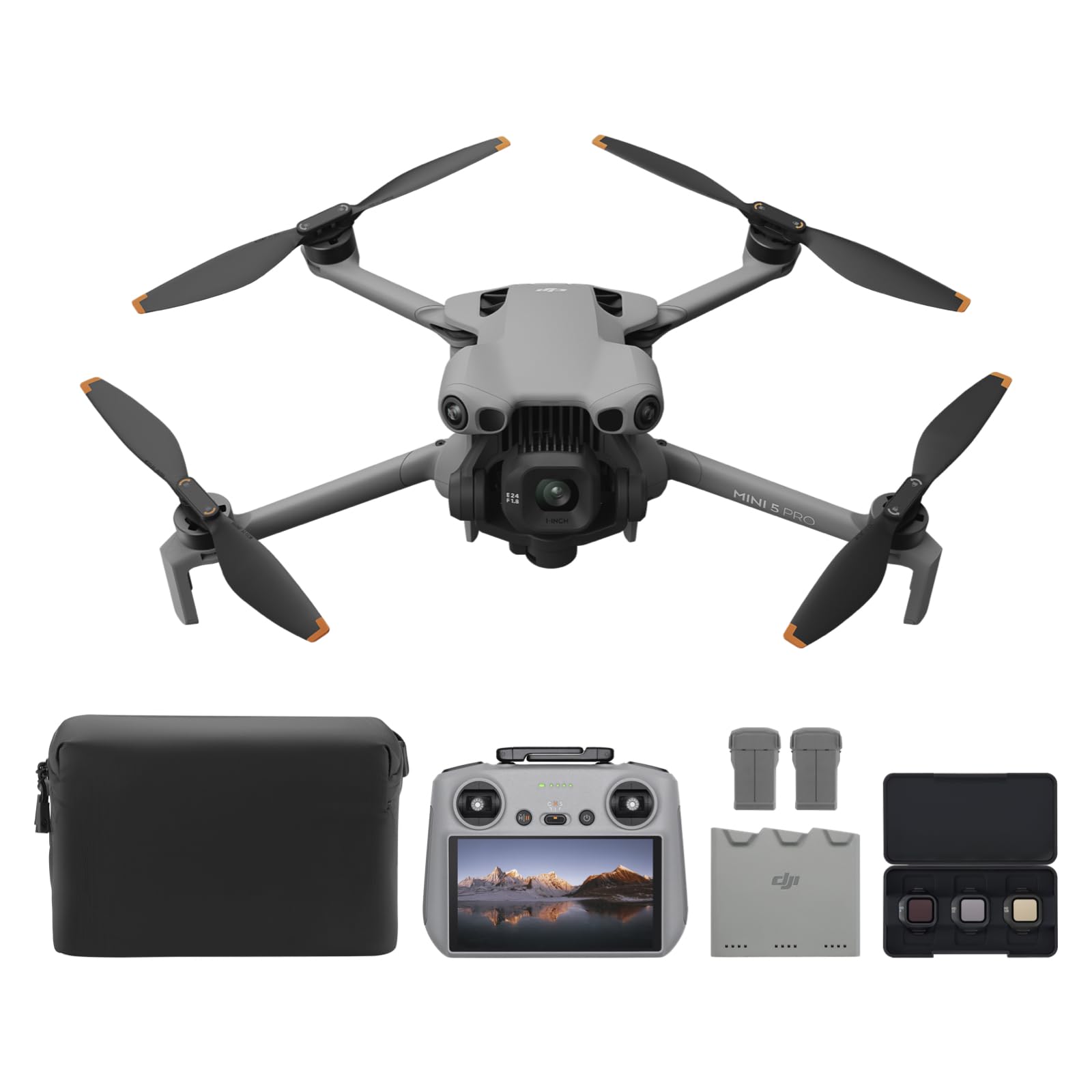
The Mini 5 Pro is the drone we pack when the bag is already full. At a listed 249g it slips into a side pocket, yet it carries a 1-inch CMOS, 4K/60fps HDR video, and nightscape omnidirectional obstacle sensing with forward LiDAR. We found the palm-sized body easy to launch and land by hand, and the 225-degree gimbal is more than a gimmick: it lets you pull a true vertical shot without wrestling the aircraft into an awkward position.

ActiveTrack 360 is the feature that made the Mini 5 Pro feel like a traveling camera crew. We used it on a walking subject and liked how it kept the frame composed without constant stick input. The 42GB of internal storage also spared us from hunting for a microSD card before a quick shoot, which is the kind of small convenience that makes you take the drone out more often.

The Fly More Combo Plus is the version we recommend, not just for the extra cells but for the charging hub and ND filters. Three batteries let us treat each flight as a scouting run and still have a fresh pack for the shot that matters. If you need a longer lens and a larger airframe, the Air 3S is the better tool; if you want the most capable drone that still travels like a compact camera, this is the one.

Pros

  • Nightscape omnidirectional sensing
  • 1-inch sensor in a 249g body
  • 225-degree gimbal with true vertical filming
  • 42GB internal storage

Cons

  • Battery life can fall short in real flights
Our verdict

We recommend the Mini 5 Pro for travelers who want a 1-inch camera and genuine all-around sensing without carrying a larger drone.

Check Latest Price
3

Best Value Obstacle Avoidance

SKYROVER X1

87 /100
LBD Score Excellent

Key details

Camera
1/1.32-inch CMOS, 48MP
Weight
8.78 oz
Controller
5.5-inch touchscreen
Obstacle Sensing
360°
View on Amazon

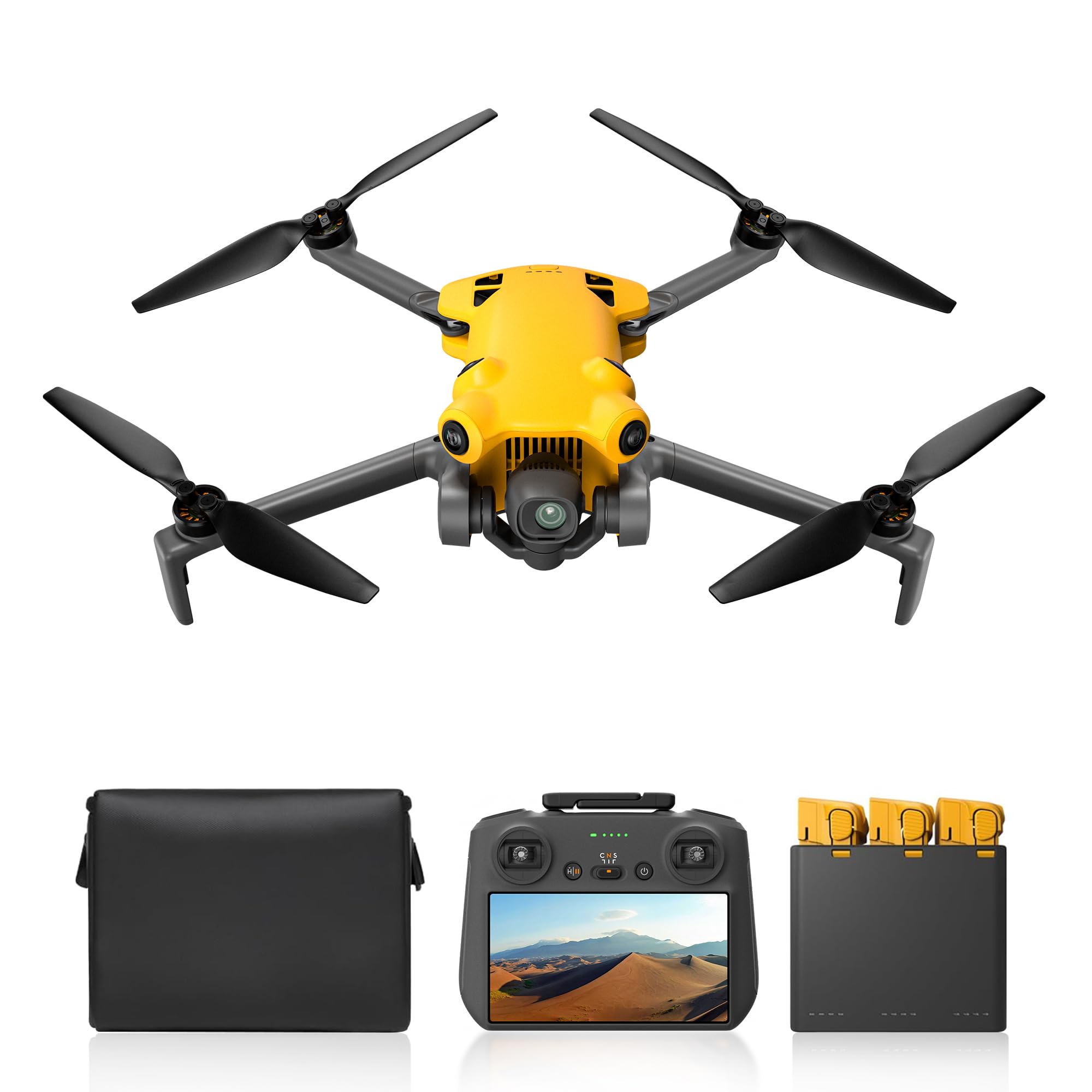
The X1 is the value pick that does not make you give up the safety feature you came for. It pairs 360-degree obstacle sensing with a 5.5-inch, 700-nit touchscreen controller, three batteries, and a 1/1.32-inch CMOS that shoots 4K/60fps HDR video and 48MP stills. We were pleasantly surprised by the screen in direct sun, and the 360-degree sensing made us more willing to fly along a tree line than we expected from a lesser-known brand.

The camera is the part that keeps the X1 close to the DJI picks in good light. Colors are punchy, the 4K footage holds up on a phone or laptop, and the 9.32-mile transmission range is far more than most casual flights need. The 5.5-inch screen is the detail we kept appreciating: no phone, no cable, no draining the device you need for everything else.

Where the X1 gives ground is in the last few minutes of a flight, when the battery percentage can move in sudden steps and make you land earlier than planned. That is manageable with the three-battery kit, but it is the reason we treat the X1 as a value pick rather than a straight replacement for the Mini 5 Pro. If you want 360-degree sensing and a screen controller for less, this is the one.

Pros

  • 360-degree obstacle sensing
  • 5.5-inch 700-nit touchscreen controller
  • Three batteries included
  • 4K/60fps HDR video

Cons

No notable drawbacks to flag.

Our verdict

The X1 is our value pick for pilots who want 360-degree sensing and a screen controller without paying DJI prices.

Check Latest Price
4

Open-Field Practice

RAIGNV V168

88 /100
LBD Score Excellent

Key details

Camera
4K, 12MP
Weight
8.18 oz
Flight Time
30 min
Obstacle Sensing
4-way
View on Amazon

The V168 is the reminder that obstacle avoidance is not a single standard. It has four-way sensing, GPS return, a 4K camera, and a 30-minute flight from a 232g airframe. We flew it in an open field and found the GPS return and brushless motors make it more than a toy, but the sensing is a basic safety net, not the all-around coverage of the Air 3S or the X1.

What you get for the money is a light, simple camera drone with a 90-degree adjustable camera, follow-me, waypoint flight, circle fly, and gesture control. The 30-minute battery is generous for this class, and the 232g body is easy to keep in a small bag. The 4K label needs context: the still resolution is 12MP and the sensor is small, so do not expect the same shadow detail as the 1-inch drones here.

If you are buying a first drone for open-field practice and want GPS return plus some avoidance, the V168 earns a look. If you plan to fly close to trees, buildings, or people, spend more for the sensing coverage. The 90-degree camera tilt is a small thing, but it lets you aim down without changing altitude, which is useful when you are learning to frame.

Pros

  • Four-way obstacle avoidance
  • GPS return and brushless motors
  • 30-minute flight per battery
  • Light 232g airframe

Cons

  • Phone-based live view adds setup
Our verdict

The V168 earns a look as a light, low-cost first drone with GPS return, but its four-way sensing is not a substitute for careful flying.

Check Latest Price

How We Tested Six Drones With Obstacle Avoidance

We started with a shortlist of roughly twenty drones advertising obstacle sensing, then narrowed it to six based on how much of the aircraft the sensors actually cover, weight class, whether the kit included a screen controller or spare batteries, and price. Each arrived as a standard retail package, was flown on current firmware, and was handed to two people with very different flying experience.

Testing ran the full seven months. Every drone's first flight happened in an open field, where we timed setup from unboxing to liftoff — firmware updates, compass calibration, app pairing — and counted how many taps it took. From there we moved to a park with a mature tree line and a chain-link fence, a backyard with overhead wires, and that gusty stretch of coast. For obstacle sensing, we flew straight at a bare trunk at walking pace from four directions, then along the fence at hip height, noting whether the drone braked, slid around the obstacle, or clipped it.

A colleague ran and then rode a bike down a trail so we could see whether tracking held its framing. We timed every battery from full charge to forced landing, in both hover and active flight, plus recharge time, and flew in wind strong enough to tilt the horizon. Footage was reviewed side by side in shade, direct sun, and dusk.

Along the way we checked the unglamorous things: hinge play, prop nicks, gimbal covers, how many automated modes we actually used rather than ignored, and what each kit gave you for the money. The drones that rose to the top weren't the ones with the longest spec list — they were the ones that behaved predictably when a branch appeared.

How to Choose a Drone with Obstacle Avoidance

Look at sensing coverage, not just the feature name

Obstacle avoidance is a category, not a guarantee. A four-way system usually watches front, back, left, and right; an omnidirectional system adds upward and downward coverage, and LiDAR helps in low light where cameras struggle. We care most about the environment you fly in: open fields are forgiving, while tree lines, wires, and urban canyons punish gaps. The Air 3S and Mini 5 Pro are the strongest sensing packages here because they combine all-around coverage with forward LiDAR. If you fly close to obstacles, pay for coverage, not just the feature name.

Weight decides where and how you can fly

Weight is the quiet deciding factor. A drone under 250g is easier to travel with and, in the U.S., generally avoids registration for recreational flight, though Remote ID and local rules still apply. Heavier aircraft like the Air 3S handle wind with more authority and carry larger cameras, but they demand more planning. Weigh the drone with the battery you intend to use, not the bare airframe, and check the rules for the country you are flying in. If you want one bag for hiking and travel, start with the Mini 5 Pro.

Build a realistic battery and camera kit

Flight-time claims are best-case numbers, so we look at the whole battery kit. Three batteries and a charging hub turn a 30-minute flight into a morning of shooting; one battery means you spend more time waiting than flying. The same logic applies to storage and filters: 42GB of internal storage on the Mini 5 Pro is genuinely useful, while the Air 3S kit includes ND filters that save you from blowing out a bright sky. Budget for the combo you will actually use, not the bare drone.

The controller and return-to-home system are part of the safety net

The controller and return-to-home behavior are part of the safety system. A screen controller like the RC 2 or the X1's 5.5-inch display keeps your phone free and reduces setup, while a phone-based controller is fine if you already carry a charged device. Range figures are less important than a stable link and a sensible return-to-home altitude. Set that altitude above the tallest obstacle in your flight area before takeoff. We also watch wind stability: a drone that holds position in a gust gives the sensing system a cleaner chance to work.

Frequently Asked Questions

Final Verdict

For most people who want a camera drone that actively helps keep itself out of trouble, the DJI Air 3S is the pick. Its omnidirectional sensing, forward LiDAR, and dual-camera kit make it the most complete package here for serious aerial video. If weight and travel are the deciding constraints, the DJI Mini 5 Pro is the one to pack; if the budget is tighter, the SKYROVER X1 delivers 360-degree sensing and a screen controller for less. The V168 is a first-drone stepping stone, not a substitute for the sensing coverage above it.