Best Emergency Radios of 2026

A weather radio is usually a purchase made the morning after a bad night — the siren went off, the phone was at 4 percent, and nobody in the room could say which way the storm was tracking. What you're actually buying is a device that pulls the NOAA broadcast out of the air, runs on something other than the wall, and warns you before the storm rather than after.

The trouble is that they all look identical on a product page. Over the past six months we've lived with 11 of them, and the differences only surface when the grid is down and you're standing in a basement trying to remember where you put the manual. The spec worth learning before you shop is SAME — the county-coding system that keeps a radio silent until your county is named, instead of squawking about a watch three counties over. And the hand crank is a stopgap, not a power plan: two minutes of cranking buys you a few minutes of listening, not a night's worth.

The picks below are the ones that held up — clean reception, alerts that actually mean something, and a battery that's still alive on day three.

1

Best Overall

PPLEE CR1030

90 /100
LBD Score Outstanding

Key details

Battery
12,000 mAh rechargeable
Lighting
300-lumen flashlight, 250-lumen reading light
Power Sources
USB-C, solar, hand crank, 3 AAA batteries
Weather Bands
7 NOAA weather channels
View on Amazon

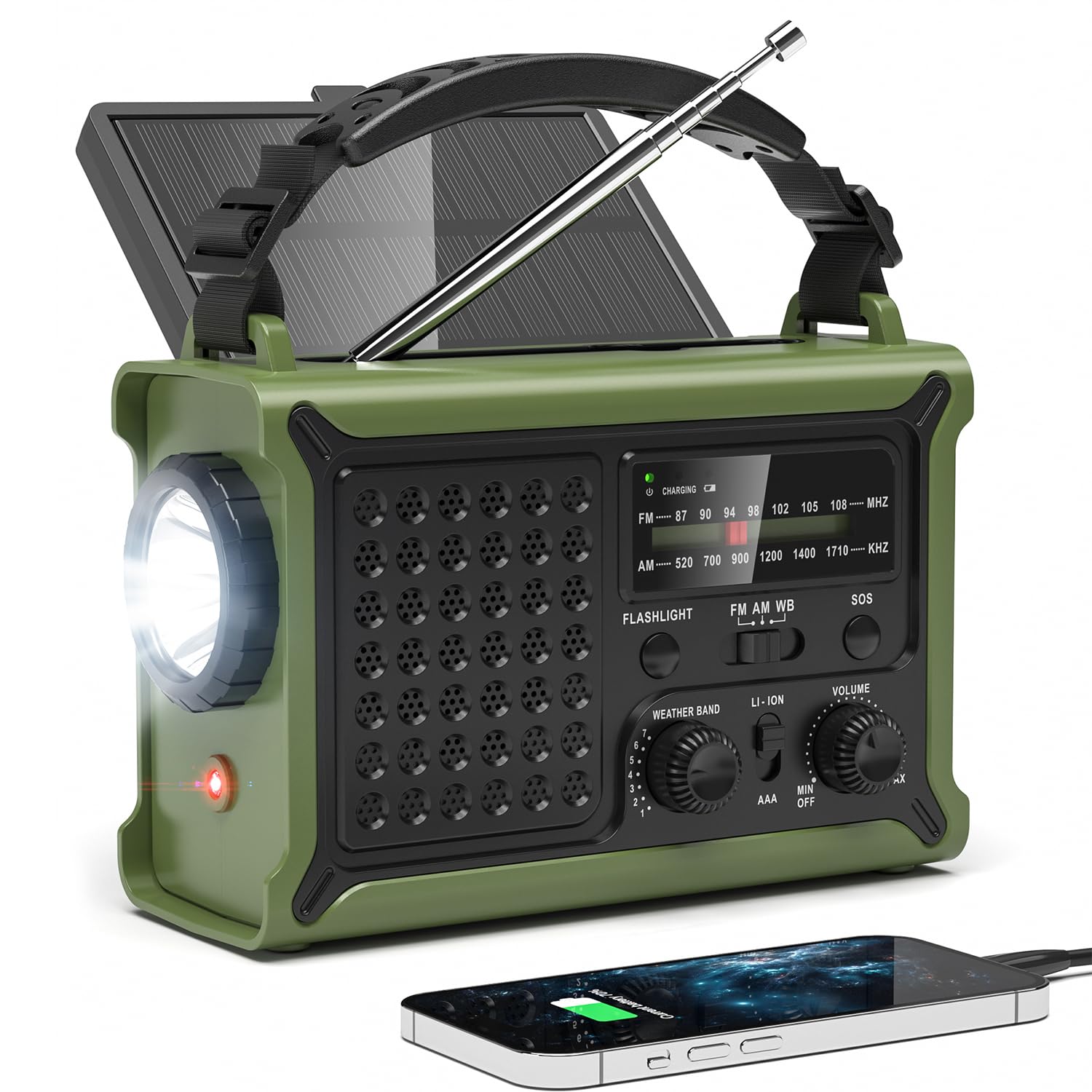
The first thing we did with the PPLEE was plug a phone into it, because a power-bank claim is the easiest thing on an emergency radio to get wrong. It took the charge, and the radio kept playing while it did. At 12,000 mAh this is the largest internal battery in the group, more than four times the pack in the Midland ER310, and that capacity is the main reason it's our top pick. An emergency radio is judged on day three of an outage, not on the afternoon you unbox it.

Four ways to refill it: USB-C, the solar panel, the hand crank, and a bay for three AAA cells. The last one is the one we care about. A panel this size and a crank are trickle chargers by nature — useful insurance, never a plan — so the AAA bay is what keeps the radio talking after the internal battery has quietly given up. The solar panel is a decent size for the class, which makes leaving it on a windowsill worth the trouble rather than purely symbolic.

The lights surprised us more than the radio did. The 300-lumen flashlight throws about 70 meters, and the 250-lumen reading light genuinely fills a small room, which is what you want at two in the morning with the power out. Sound is a step above the usual emergency-radio squawk; the 5-watt speaker handles FM music without wincing. At 6.8 inches tall it's a shelf or counter radio, not a pocket one, and its weather alerts scan and lock onto the strongest NOAA channel rather than filtering to your county — the Midland WR120B further down does the filtering.

Pros

  • Biggest internal battery here at 12,000 mAh
  • Four power paths including 3 AAA cells
  • 300-lumen flashlight plus a room-filling reading light
  • Sound quality draws praise across a large body of feedback

Cons

  • Weather alerts scan and lock rather than filter by county
Our verdict

Our pick for most homes: the biggest battery in the group, four ways to refill it, and lights bright enough to run an evening without power.
Check Latest Price
2

Best With AA Backup

Midland ER310

93 /100
LBD Score Outstanding

Key details

Weight
16 oz
Battery
2,600 mAh rechargeable
Power Sources
Solar, hand crank, USB, six AA cells
Weather Bands
7 NOAA channels with scan and alert
View on Amazon

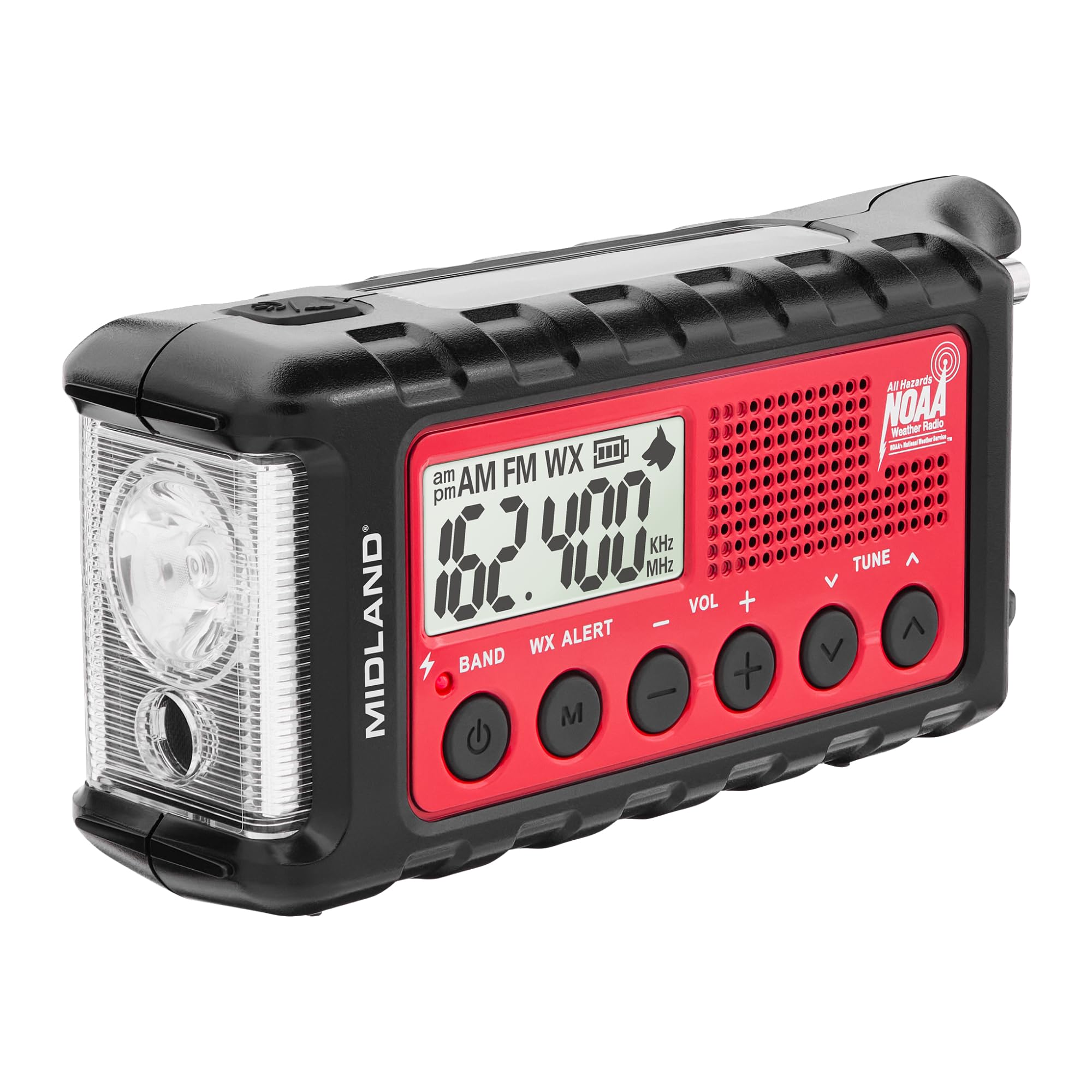
The detail we keep coming back to on the ER310 is the battery bay: six AA cells sitting alongside the rechargeable pack, with a switch that decides which one feeds the radio. That changes how you own it. Load it with lithium AAs, put it in a closet, and it's still a working radio two winters later — no charging ritual, no dead internal cell discovered at the worst possible moment.

Charging is where this radio divides. Some units hold a charge for weeks and others won't take one at all, and the solar panel on top is the usual weak link. Our answer is to treat the rechargeable pack as a bonus and the AA compartment as the power source you actually count on. Judged that way, the ER310 is the most forgiving radio here — the one that keeps working after the battery inside it has stopped.

Around that it's a plain-spoken tool: NOAA scan and alert with a loud siren, an SOS beacon that flashes Morse code, a bright flashlight, and an ultrasonic dog whistle that looks odd until you remember rescue teams use one to be heard over wind. FM and weather reception came through clearly for us. It isn't water resistant, so bag it if it lives on a boat, and at 16 ounces it hangs from a pack strap better than it rides in a pocket. The USB port will top a phone partway, not fill it.

Pros

  • Switch between the rechargeable pack and six AA cells
  • NOAA scan locks onto the strongest weather channel
  • SOS beacon, flashlight and a genuinely loud siren
  • 16 ounces is easy to hang from a pack strap

Cons

  • Not water resistant
Our verdict

Buy it if your radio will sit in a closet for a year: the AA bay keeps it working long after the rechargeable pack gives up.

Check Latest Price
3

Best for a Go-Bag

Tenergy T101

89 /100
LBD Score Excellent

Key details

Weight
9.7 oz
Battery
2,000 mAh rechargeable
Lighting
Two 120-lumen LEDs with SOS
Power Sources
Hand crank, solar, micro-USB, 3 AAA batteries
View on Amazon

The Tenergy arrives in a foam-lined zip case that holds the radio, the cable, and nothing else rattling loose — the only one here that ships with a case, and the reason it's our go-bag pick. A radio that lives in a pack gets crushed against a water bottle and a headlamp; foam and a zipper solve that without a second purchase. At 275 grams and just over six inches long, it disappears into a side pocket.

Four ways to keep it alive: hand crank, solar panel, micro-USB, and a bay for three AAA cells. The micro-USB port is the dated piece — everything else in this group has moved to USB-C, and in a decade of emergency kits that's the cable you'll have lost. The 2,000 mAh internal battery is on the small side, so plan on the AAA bay or a power bank for anything longer than a night or two. Two 120-lumen LEDs sit up front, one flood and one spot, with an SOS siren and a Morse-code flash to match.

The other thing to check in your first week is the weather band: it can arrive dead while AM and FM work fine, so tune a NOAA channel and confirm you get audio rather than static before the case goes in the bag. Do that, and this is a small, well-protected radio that does the job it's meant for, which is to be in the bag and working when nothing else is.

Pros

  • Foam-lined case keeps it protected in a pack
  • Compact 275-gram body with two 120-lumen lights
  • Four charging methods including AAA cells

Cons

  • Micro-USB charging port, not USB-C
  • Internal battery is not user-replaceable
Our verdict

Our go-bag pick: it comes in its own case, weighs 275 grams, and the AAA bay keeps it alive after the internal battery quits.

Check Latest Price
4

Best Compact All-Band Pick

DreamSky DS266

0 /100
LBD Score Fair

Key details

Size
6.7 x 1.9 x 3.3 in
Bands
AM, FM, shortwave, 7 NOAA channels
Lighting
Flashlight and reading lamp
Power Sources
USB-C, solar, hand crank
View on Amazon

Shortwave is the band nobody advertises and everybody reaches for when the local stations are off the air. The DS266 tunes AM, FM, shortwave, and seven NOAA weather channels, which makes it the only radio here that will still find something to listen to once the AM and FM dials go quiet. Add the reading lamp and it's a radio that earns a bedside table rather than a shelf in the garage.

Three charging routes — USB-C, solar, and the hand crank — plus an SOS siren with a flashing light, a flashlight, and that lamp. It measures 6.7 by 1.9 by 3.3 inches, thin enough for a drawer and small enough to throw in a kid's backpack. Shortwave wants the telescopic antenna fully out and near a window; it rewards patience more than power.

What gives us pause is the power claim. DreamSky doesn't publish a battery capacity, so there's no mAh figure to set against the PPLEE's 12,000 or the Tenergy's 2,000, and no way to judge how much phone charging you're really buying. Judge it as a radio with a lamp and an SOS button rather than as a power bank and it makes sense — the fourth band is a real hedge, and the lamp is the feature you'll use most. Just don't count on it to refill a phone.

Pros

  • Shortwave alongside AM, FM and seven weather channels
  • Reading lamp, flashlight and SOS siren built in
  • USB-C, solar and hand-crank charging

Cons

  • No published battery capacity
Our verdict

Pick it for the fourth band and the reading lamp: a small radio that keeps finding stations when AM and FM go quiet.

Check Latest Price
5

Bedside Alert Station

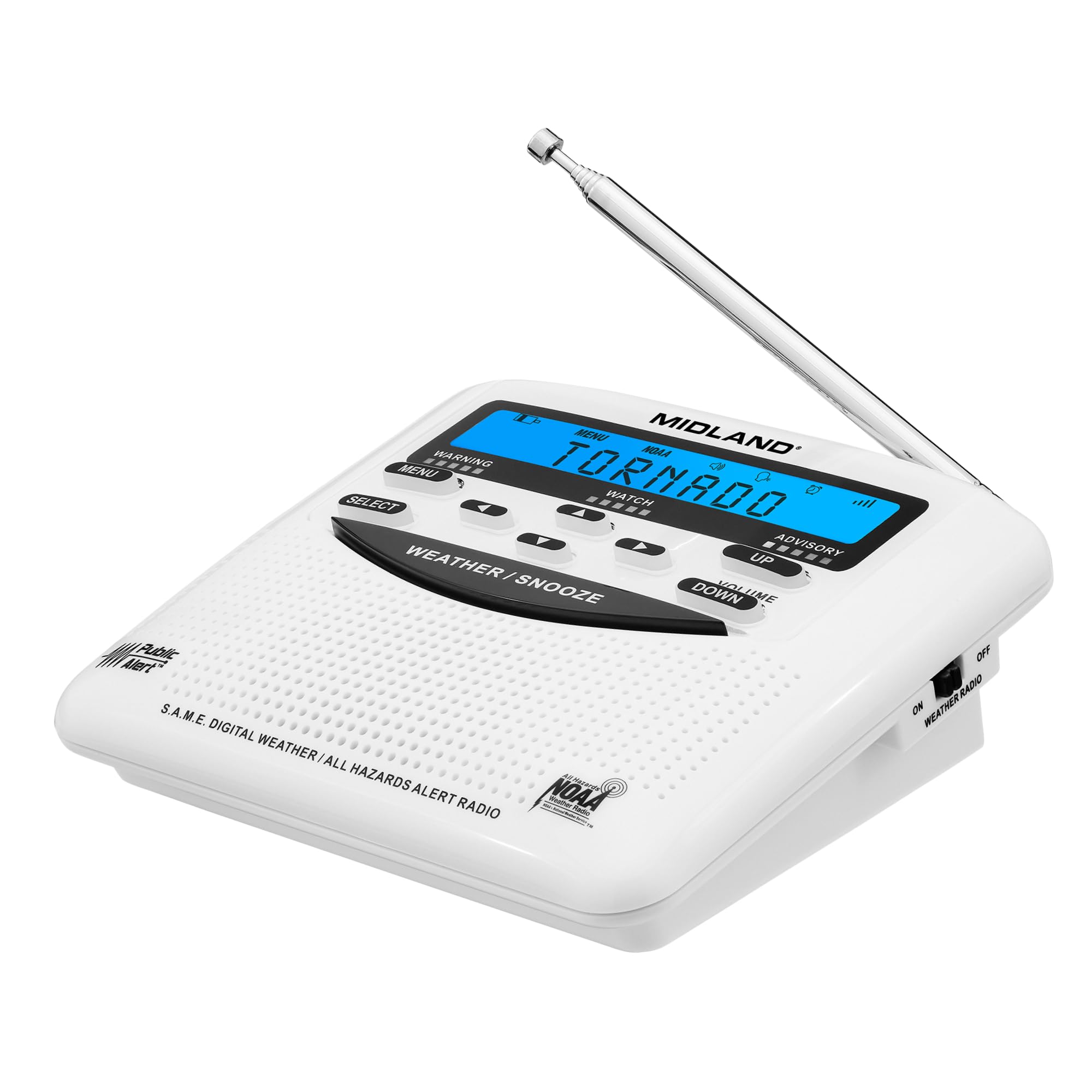
Midland WR120B

91 /100
LBD Score Outstanding

Key details

Bands
NOAA weather band only
Power
AC adapter with battery backup
Alerts
SAME county-level coding
Display
Backlit LCD, three languages
View on Amazon

This is the one radio here that isn't for a blackout kit. The WR120B tunes the NOAA weather band and nothing else, and its job is to be sitting there, programmed and listening, the night a warning is issued for your county.

SAME coding is why it's worth a place. Program your county and the WR120B stays silent for storms three counties away, then sounds a siren and reads the alert aloud when your address is inside the warning box. That's the version of a weather radio that doesn't get unplugged in frustration after a month of three-in-the-morning tests for somebody else's flood. Setup runs through a menu-driven screen in English, Spanish, or French with oversized buttons; most people get through it in one sitting, and the county-code entry is the step to have ready before you start.

Reception is the weak spot, and it's usually about placement rather than the radio: a window, an outside wall, away from the router and the microwave, with an external antenna if your nearest transmitter is far. The failure that matters more is silence — units that never sound an alert — so run the weekly test tone and make sure yours talks before you trust it. Sound is fine for a bedside and thin for a big kitchen. Keep it where you sleep.

Pros

  • SAME county coding filters out distant warnings
  • Loud siren with spoken alert and backlit display
  • Menu setup in English, Spanish and French

Cons

  • Needs an outlet for daily use; batteries are backup only
Our verdict

The best bedside alert station of this bunch: county-level SAME coding, a loud siren, and battery backup when the power drops.

Check Latest Price
6

Glovebox Spare

Mvdlinnds SM-071P

87 /100
LBD Score Excellent

Key details

Size
5.2 x 2 x 2.6 in
Bands
AM/FM
Battery
2,000 mAh power bank
Power Sources
USB-C, solar, hand crank
View on Amazon

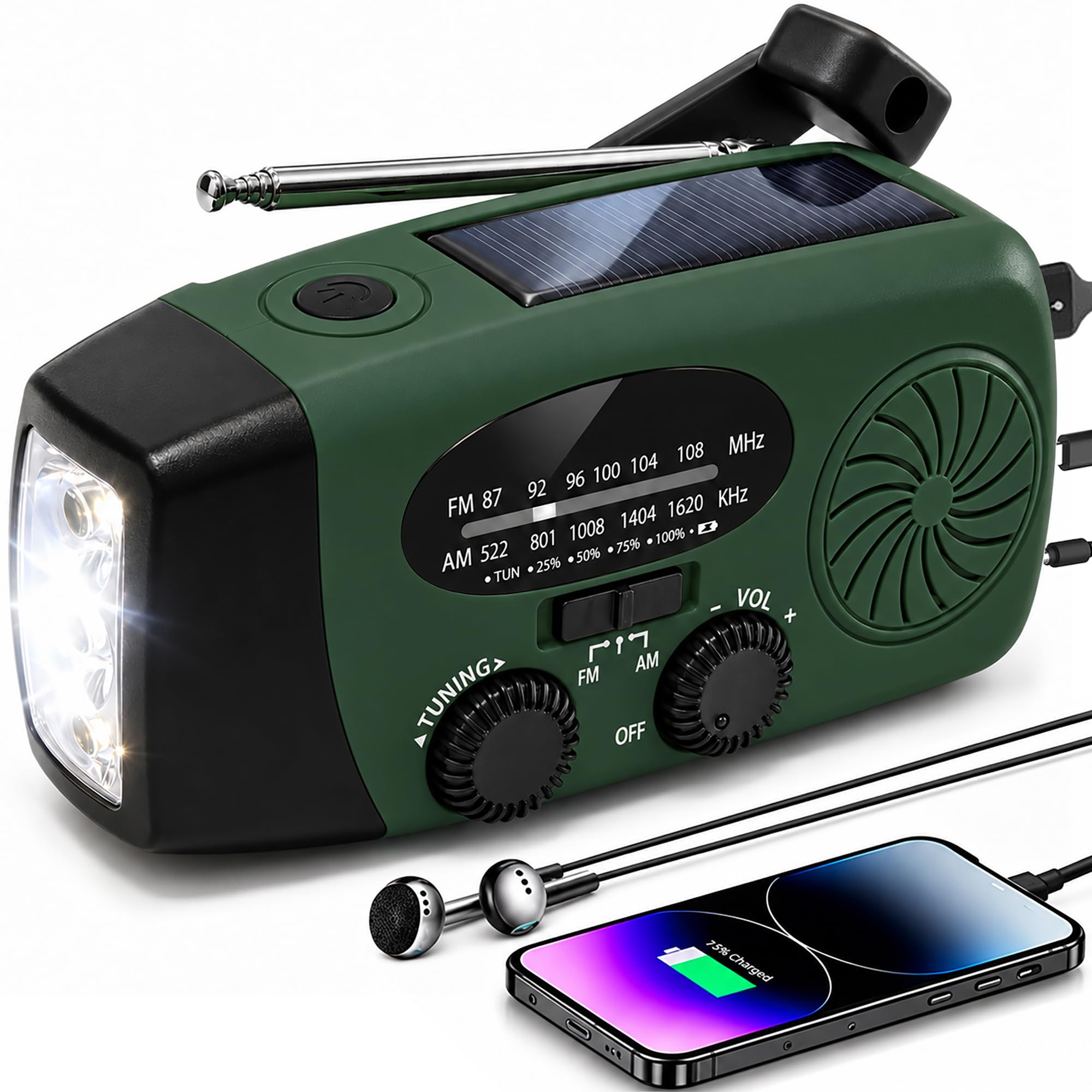
At 5.2 by 2 by 2.6 inches this is the smallest radio here — a green ABS brick that fits a glovebox, a jacket pocket, or the bottom of a daypack. It tunes AM and FM, and the rest of the kit is what you're buying: a hand crank, a solar patch, USB-C, a 2,000 mAh power bank, a 5-watt speaker, an LED torch, and an SOS alarm.

The power bank is the interesting part at this size, and the charge protection built into it matters more than the capacity number — a bank that back-feeds into its own cell is a dead radio waiting to happen. The crank and the solar panel are trickle chargers, same as everywhere else in this category, so the USB-C port is the realistic way to keep it ready. It claims water resistance, which the Midland ER310 and the Tenergy don't, though a zip bag remains cheaper than finding out.

Here's the catch, and it's a real one: the band detail stops at AM and FM. The listing never names the NOAA channels, so before you count on this for warnings, confirm weather-band coverage on the model you receive — the PPLEE and the Midland both spell theirs out, and a radio that finds a tornado warning is worth more than one that doesn't. As a spare crank radio with a light and a siren, it earns its place. As the only radio in the house, it's a gamble.

Pros

  • Smallest body in the group at 5.2 inches
  • Crank, solar and USB-C charging all present
  • 2,000 mAh power bank with charge protection

Cons

  • Weather-band coverage is not specified
Our verdict

The smallest radio here, and a sensible one to keep in the car — as long as a weather-alert radio is already waiting at home.

Check Latest Price

How We Tested the Best Emergency Radios

We started by pulling every model we could find that receives NOAA broadcasts and can run without wall power, then narrowed by price, footprint, and how many charging paths each one offered; a crank-only radio and a solar-plus-AC radio solve different problems, and we wanted both in the mix. That left 11 radios, which my team and I have now lived with for six months.

Setup was the first thing I timed, from cutting the tape to hearing a voice, and then from there to having a county-specific alert armed. A few took under five minutes; one took the manual and two attempts. Reception got tested the same way every time — same basement corner, same windowless hallway, tuned to the weakest NOAA channel I could find — with me counting how often the signal dropped out or went muddy.

Then we ran them flat. Volume fixed at a comfortable level, batteries topped off, speaker on until dead, logging the hours; then two minutes on the crank to see how much listening time came back. We plugged a phone in at 20 percent to watch the charge rate, and noted whether doing it drained the radio's own battery. Overnight we left alerts armed to see whether the tone actually woke me, and whether it fired for storms two counties away.

Sound quality we judged on AM talk and FM music at low volume — whether voices stayed intelligible or turned to mush, and whether the alert tone made the speaker buzz. The rest was ordinary living: a camping weekend, a car glovebox, and a few deliberate unplugs to confirm each one was still charged and ready where I'd left it.

How to Choose an Emergency Radio

Count the power paths, then find the battery bay

The crank and the solar panel are the two features everyone shops for and the two that matter least day to day. Both are trickle chargers: a minute of cranking buys you a weather update, not a charged battery, and a palm-sized panel needs hours of direct sun to move the needle. What actually keeps a radio alive is a battery you can supplement.

A bay for AA or AAA cells means the radio outlives its own rechargeable pack. The Midland ER310's six-cell compartment is the most forgiving version here, and the PPLEE's three AAA slots do the same job in a smaller way. If a radio has only a sealed internal battery, treat its useful life as the battery's.

Scan-and-lock alerts versus SAME coding

Two alert systems show up in this category. Most handhelds scan the seven NOAA weather channels, lock onto the strongest one, and sound an alarm when a warning is broadcast on it. That works, but you hear everything the transmitter carries, including warnings for counties that aren't yours.

SAME coding, which the Midland WR120B has, lets you program a specific county so the radio stays quiet until your area is named. If the radio is going to sit by your bed and wake you at night, that filtering is the whole point. If it lives in a pack, scan-and-lock is fine and saves you the programming.

Battery capacity: read the mAh, then discount it

Capacity runs from around 2,000 mAh in the compact radios to 12,000 mAh in the PPLEE, and the difference is measured in nights of listening and phone top-ups, not in whether the radio works at all. A bigger pack buys convenience during a long outage; a replaceable cell bay buys survival.

Our order of preference is a replaceable bay first, a large internal battery second, and a big mAh figure on its own last. A 12,000 mAh pack that dies in year three is worth less than a small one sitting next to a drawer of AA cells.

Where it will live decides more than any spec

A radio for a go-bag wants to be light — the Tenergy is 275 grams and comes in its own case — while a radio that stays home can be a shelf unit with a loud siren and a display you can read across a dark room. Compact in a listing means it fits a drawer, not that it fits a jacket pocket, so check the actual dimensions against the space you have in mind.

Then put it where you'll hear it. A weather radio in the basement is a weather radio you won't hear.

Frequently Asked Questions

Final Verdict

The PPLEE CR1030 is the one we point most people to: a 12,000 mAh pack, four ways to refill it, and lights that turn a blackout into an inconvenience rather than a hazard.

If your radio will spend most of its life in a closet, buy the Midland ER310 instead — the AA compartment means it's still working when the rechargeable pack isn't. And if the real question is whether you'll hear a tornado warning at two in the morning, the Midland WR120B answers it better than any handheld here.