Best Overall
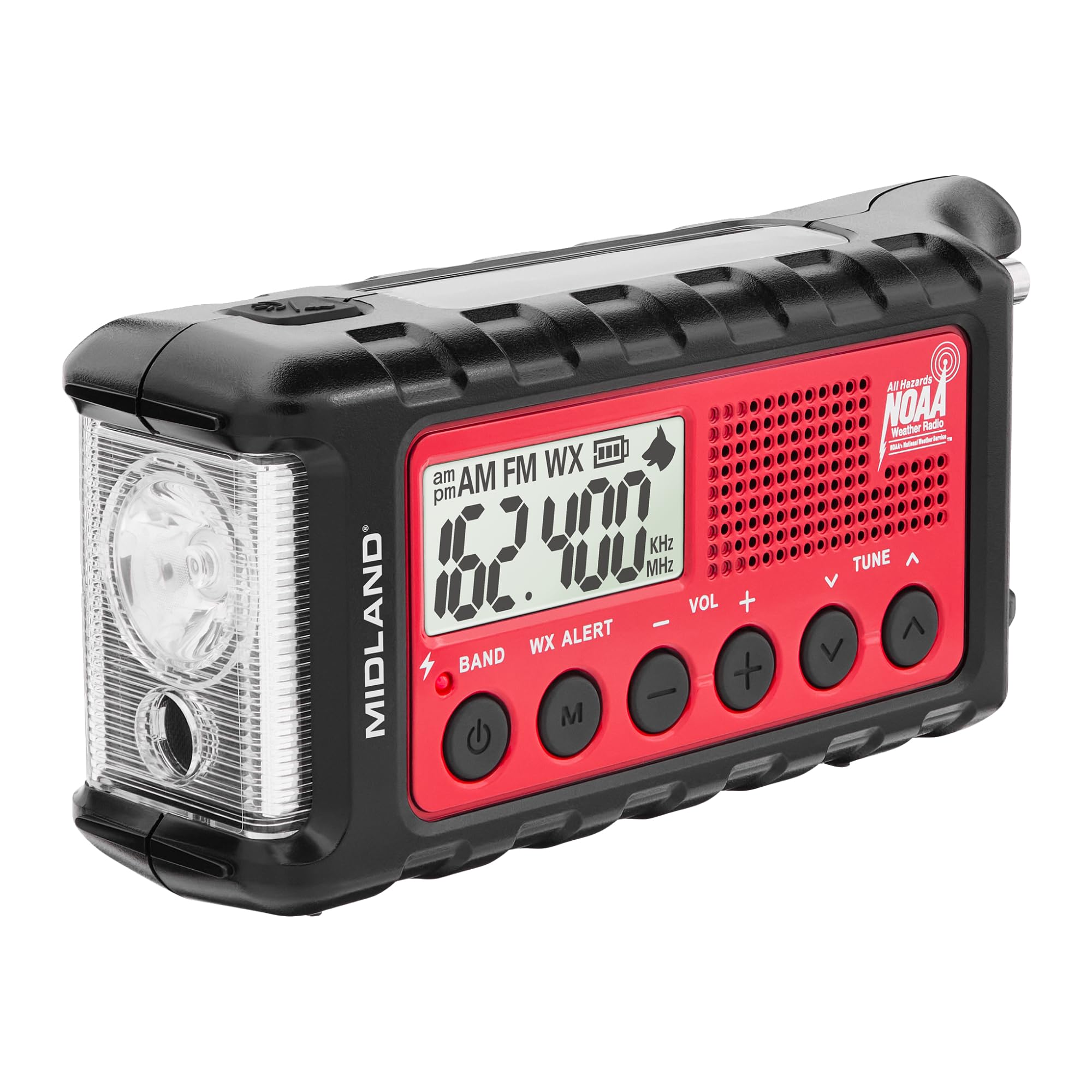
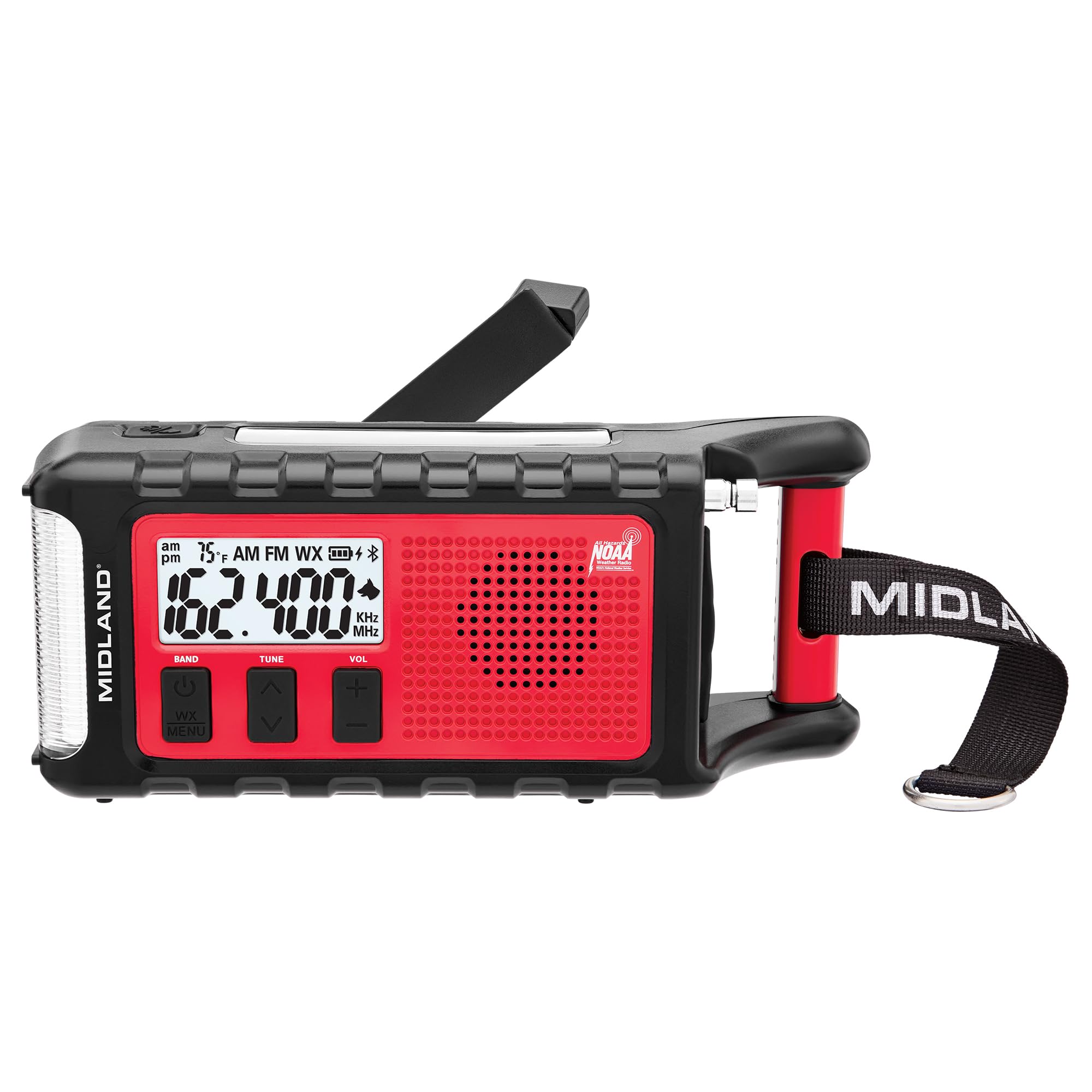
Midland ER310
Key details
- Size
- 9.61 x 2.95 x 6.85 in
- Bands
- AM/FM plus NOAA weather scan and alert
- Weight
- 16 oz
- Power Sources
- Solar, hand crank, USB, 6 AA batteries
Four ways to keep this radio alive is why it's our top pick: a solar panel along the top edge, a hand crank, a USB charge, and a bay that holds six AA cells. That last one settles the argument for us. A sealed battery that dies in year four leaves you with a brick, while the ER310 lets you drop in alkalines from a kitchen drawer and keep listening.
The weather side is just as straightforward. NOAA Weather Scan sweeps the weather channels, locks onto the strongest, and the alert tone cuts in over whatever's playing. We had the tuning figured out by feel within an evening — one dial for volume, one for stations — and the display stays readable in a dark room. FM comes in clean and AM is serviceable, which is about what a 16-ounce plastic cabinet gives you.
Cranking is honest rather than generous: you turn for a good while to buy a short stretch of listening, enough to catch a forecast and not much more. The ultrasonic dog whistle is an odd thing to find on a weather radio and we never once needed it; the SOS flashlight beacon, on the other hand, is bright enough to be genuinely useful on a dark stairwell.
At 9.6 inches and a pound, it wants a shelf or a pantry box rather than a jacket pocket, so think of it as the household radio rather than the one that rides in the car. Almost nothing on it is filler, and the layout stays simple enough to work by touch alone.
Pros
- Four power paths, including six AA cells
- Scans NOAA channels and alerts automatically
- Dial controls you can work by feel
- Bright SOS flashlight beacon
Cons
- No water resistance rating
- Needs topping up every few months
This is the emergency radio we recommend first: it scans the NOAA channels, runs on sun, crank, USB, or six AA batteries, and the controls make sense when you're rattled.