Best Weather Radios for Home of 2026

A weather radio is one of those purchases you hope stays boring — until the night the sirens go off and your phone is face-down on the charger in another room. What you're really paying for is a device that wakes you, keeps working when the power doesn't, and tells you whether the storm is actually headed for your street.

My team and I spent six months setting up and living with 12 of them, from bare-bones desktop units to rechargeable portables. The first thing that became clear is that SAME county coding is the whole game: program it wrong and the thing shrieks about a warning two counties over at 2 a.m.; program it right and it stays quiet until something is genuinely coming your way. Battery backup matters nearly as much — an alert that can't fire during an outage is just decoration.

Below are the radios that got the setup right, stayed intelligible through the static, and earned a permanent spot on a nightstand. Looks played no part in it.

1

Best Overall

Midland WR120B

91 /100
LBD Score Outstanding

Key details

Power
AC or battery backup
Display
Backlit LCD, trilingual
Dimensions
2 x 5.3 x 6.1 in
Alert Filtering
SAME county codes
View on Amazon

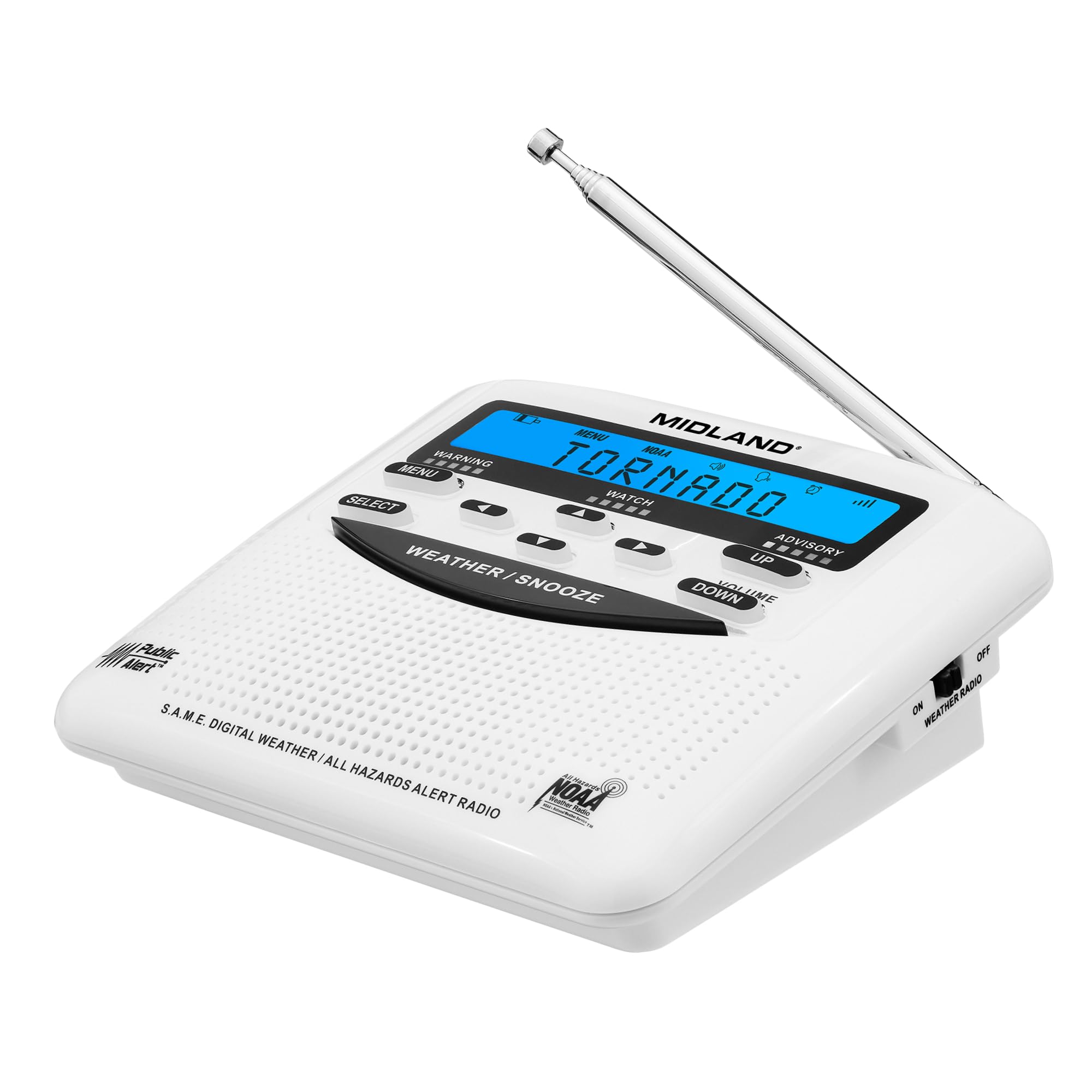
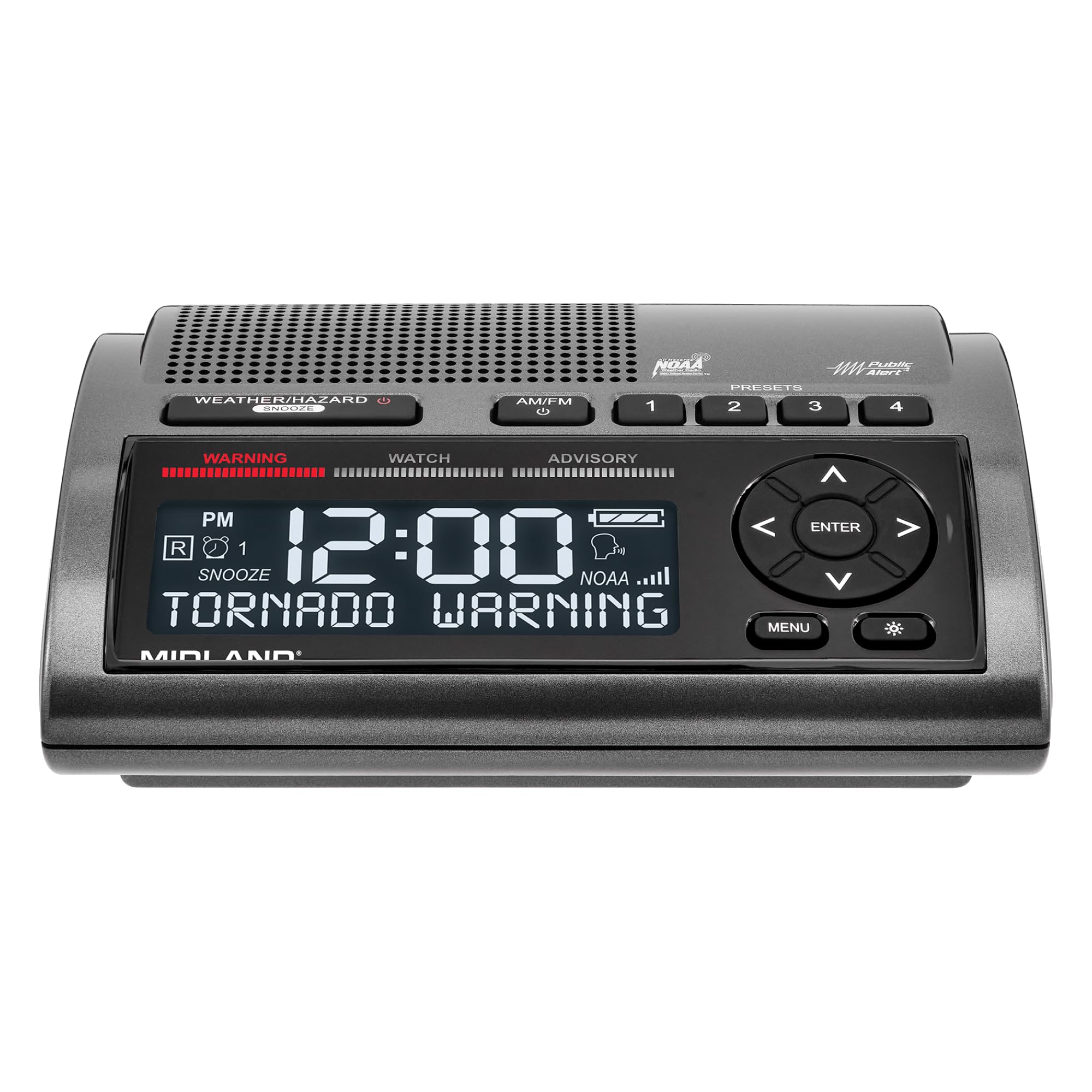
The feature that makes the WR120B the one we reach for is the county filter. You enter your county code, and the radio stays silent for storms three counties away; it speaks when your address sits inside the warning box. That is the difference between a weather radio you keep and one you unplug after the third irrelevant alert.

That focus is why it is our top pick for most homes. The desktop body is small enough for a nightstand or kitchen counter, the backlit LCD walks you through setup in English, Spanish or French, and the battery backup keeps it listening when the grid drops. We also like the built-in clock and alarm, which make it useful on the days the weather is boring.

Reception is the part to manage. Placement near a window or an outside wall makes a difference; if your county's transmitter is weak, move the radio before you decide it is deaf. Otherwise, the WR120B is the rare emergency gadget that earns its place on a nightstand.

Pros

  • SAME county filtering cuts irrelevant alerts
  • Battery backup keeps alerts coming during outages
  • Compact, backlit desktop body
  • Trilingual setup menus

Cons

  • County-code setup takes patience
Our verdict

For most homes, this is the weather radio we recommend: county-specific SAME alerts, battery backup, and a compact bedside body.
Check Latest Price
2

Best for Loud Alerts

Midland WR400

91 /100
LBD Score Outstanding

Key details

Tuning
AM/FM plus NOAA scan
Dimensions
5.5 x 6.8 x 2.3 in
Alert Output
85 dB siren, flashing light
Alert Filtering
SAME county codes
View on Amazon

The WR400 is the Midland for someone who wants the weather radio to be impossible to ignore. Its 85 dB siren and flashing light are the headline, and the SAME county programming means those alerts are for your area rather than a neighboring county. It also adds an AM/FM tuner and a clock radio, so it can earn a permanent spot on a dresser instead of living in a drawer between storms.

That extra loudness and everyday listening are what you pay for over the WR120B. We like the WR400 for a bedroom, hallway or basement where someone might sleep through a softer tone, and the automatic NOAA scan that locks onto the strongest weather channel is a sensible convenience. The display is easy to read in a dim room, too.

The trade-offs are physical. It takes more shelf space than the compact Midland, and it is built to be noticed rather than tucked away. If you mainly want a quiet bedside monitor, the WR120B is easier to live with; the WR400 is the one for a household that wants the warning to take over the room.

Pros

  • 85 dB siren with flashing light
  • SAME county programming
  • AM/FM tuner and clock radio
  • Automatic NOAA channel scan

Cons

  • Alarm volume is not adjustable
Our verdict

The WR400 is the pick for a home that wants a louder siren, a flashing light, and an AM/FM radio in one SAME-enabled box.

Check Latest Price
3

Best Budget SAME Radio

Rychi NOAA Weather Radio

82 /100
LBD Score Excellent

Key details

Power
AC or 4 AA backup
Included
External light and antenna
Alert Modes
Voice, siren, display
Alert Filtering
SAME, 80+ alert types
View on Amazon

The Rychi's external strobe is the detail that makes it useful in a hallway or a bedroom. The light is a separate piece in the box, so you can aim it toward the bed or the door while the radio itself sits near an outlet. For a home alert radio, that is a practical upgrade over a tiny icon on an LCD.

The rest is a familiar SAME package: seven weather channels, 80-plus alert types, and three programming modes for all, single or multiple county codes. You can choose voice, siren or display-only alerts, which matters if a siren in the middle of the night would panic a child or wake the whole house. The 4 AA battery backup keeps it running when the power drops, and the compact body fits on a desk corner.

We rank it as the budget SAME pick because it covers the essentials and adds the remote light without making you pay for a premium tuner. Reception is the caveat: it can be uneven in a basement or an interior room, so try it near a window before you settle on a spot. Those are fair trade-offs for a radio that is meant to sit quietly until it has something urgent to say.

Pros

  • External strobe for visible alerts
  • SAME programming with 80+ alert types
  • Voice, siren, and display-only modes
  • 4 AA battery backup

Cons

  • No AM/FM tuner for everyday listening
Our verdict

The Rychi is the budget SAME radio we recommend when you want a visible alert in another part of the room, not a premium tuner.

Check Latest Price
4

Best Compact SAME Radio

DreamSky DS6227

85 /100
LBD Score Excellent

Key details

Power
AC or 3 AA backup
Dimensions
5.8 x 5.1 x 1.9 in
Alert Modes
Voice, tone, display
Alert Filtering
SAME, 23 county codes
View on Amazon

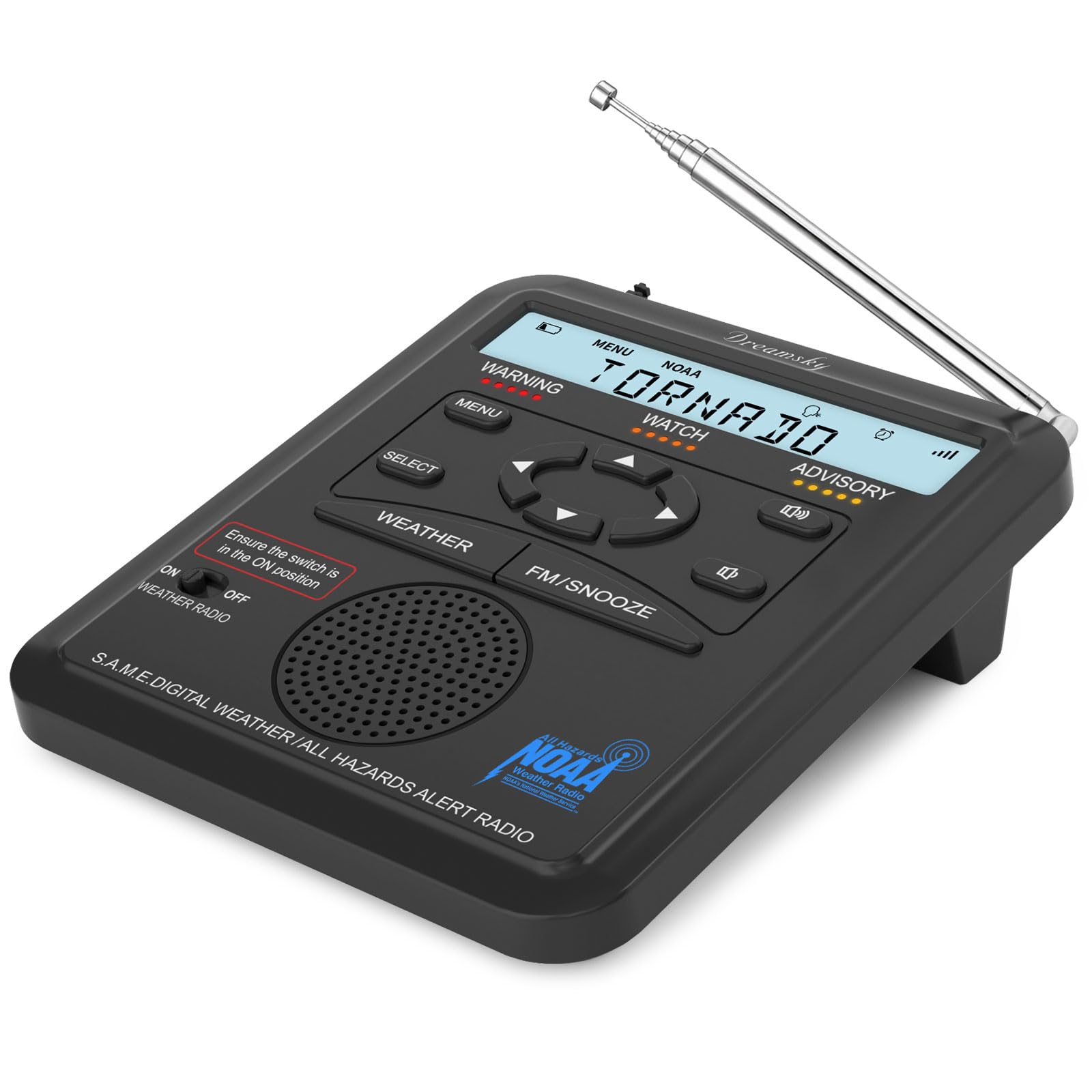
The DreamSky is the one that disappears on a shelf. At 5.8 by 5.1 by 1.9 inches, it has a shallow footprint that fits a kitchen windowsill or a narrow bookshelf without hanging over the edge, which is more than you can say for most weather radios with a decent display.

That small body still carries the SAME basics: 23 county codes, 80-plus alert types, and three alert modes, including voice, tone and display-only. We like it for a guest room or a home office where you want county-specific warnings without turning the room into an emergency command center. The FM tuner and alarm clock are useful everyday extras, and the battery backup means it keeps working when the power does not.

The compromises are tactile. The controls are small, and tuning FM stations that sit close together takes a careful hand; the same goes for stepping through setup menus. The speaker is sized for weather broadcasts, not for music. If you want a compact SAME monitor and can live with small buttons, it is an easy fit. If you need a louder alarm, step up to the WR400.

Pros

  • Shallow body fits narrow shelves
  • 23 county codes for SAME alerts
  • Voice, tone, and display alert modes
  • FM radio and alarm clock

Cons

  • Small controls take patience
Our verdict

The DreamSky is our compact SAME pick for a shelf, guest room, or office where a shallow footprint matters more than big controls.

Check Latest Price
5

Best for Weak Reception

yesiwtc NOAA Alert Radio

84 /100
LBD Score Excellent

Key details

Power
AC or 3 AA backup
Included
External antenna and light
Alert Modes
Advisory, watch, warning
Alert Filtering
SAME, 23 location codes
View on Amazon

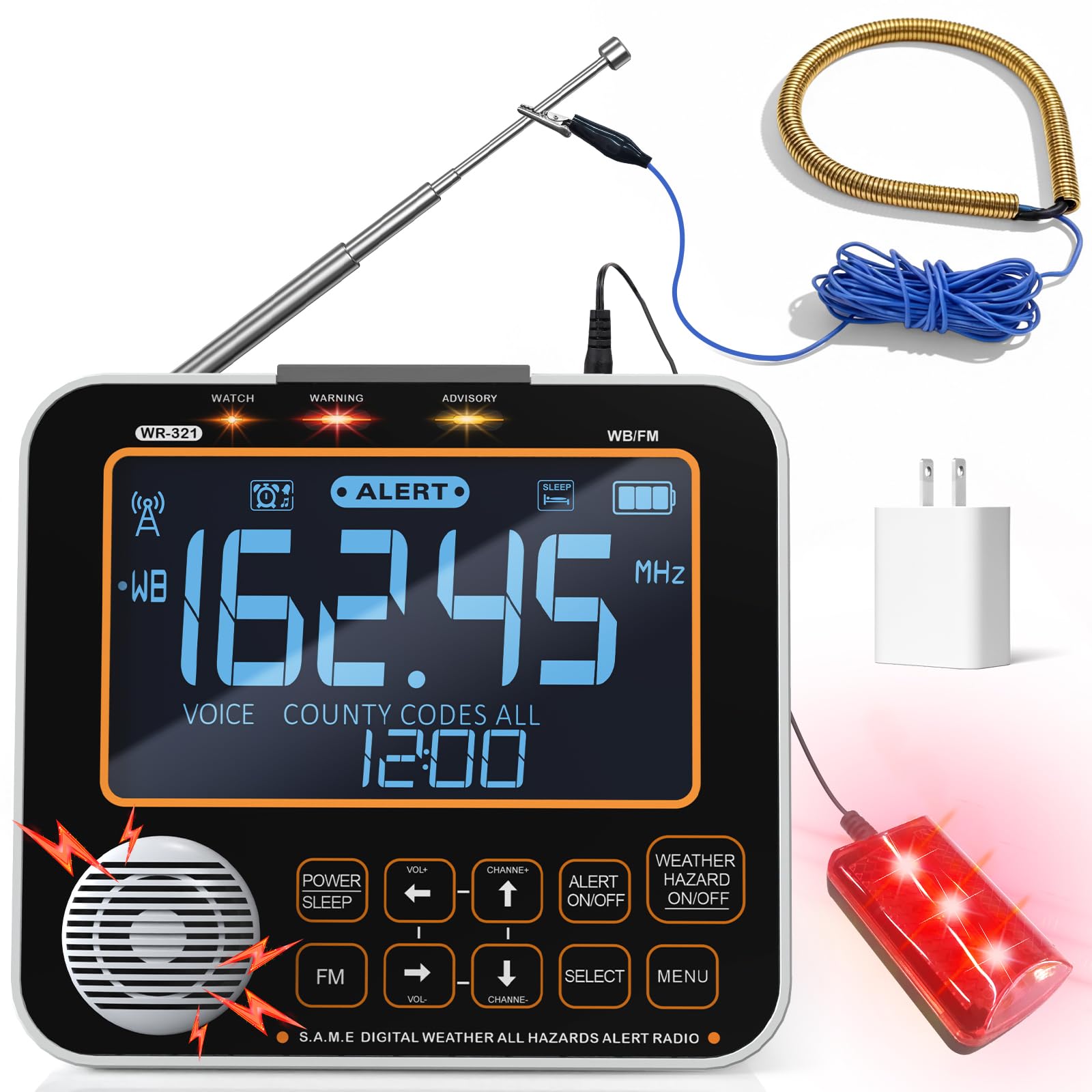
The yesiwtc arrives with the two accessories most weather radios make you buy separately: an external antenna and a warning light. That bundle is the reason to look at it. You can put the antenna where reception is strongest and the light where you will actually see it, while the radio sits on a desk or nightstand.

The core is a SAME weather radio with 23 location codes and 75-plus alert types. You can enable or disable advisory, watch and warning tiers, assign different tones to different events, and run a test without waiting for the weather to cooperate. The large English display shows alert severity and battery status, and the radio can run from AC power or three AA cells when the grid drops. The USB-C connection is a small but welcome convenience.

We rank it as the pick for a weak-signal room because the external antenna gives you a way to improve reception without moving the whole radio. The trade-off is clutter: the antenna and light are extra pieces to place, and the plastic body is functional rather than furniture-grade. If your radio lives in a basement or an interior office, that trade is worth it. If you want one tidy box on a nightstand, the WR120B is the cleaner choice.

Pros

  • External antenna helps in weak-signal rooms
  • External warning light for visibility
  • 23 location codes and 75+ alerts
  • AC or 3 AA battery backup

Cons

  • No AM band
Our verdict

The yesiwtc is the one we choose for a weak-signal room, because the included external antenna and warning light solve two placement problems at once.

Check Latest Price
6

Everyday Desk Listening

OnLyee CR1031

84 /100
LBD Score Excellent

Key details

Battery
3000 mAh rechargeable
Listening
FM, Bluetooth, microSD
Alert Type
Voice and tone
Weather Channels
7 NOAA channels
View on Amazon

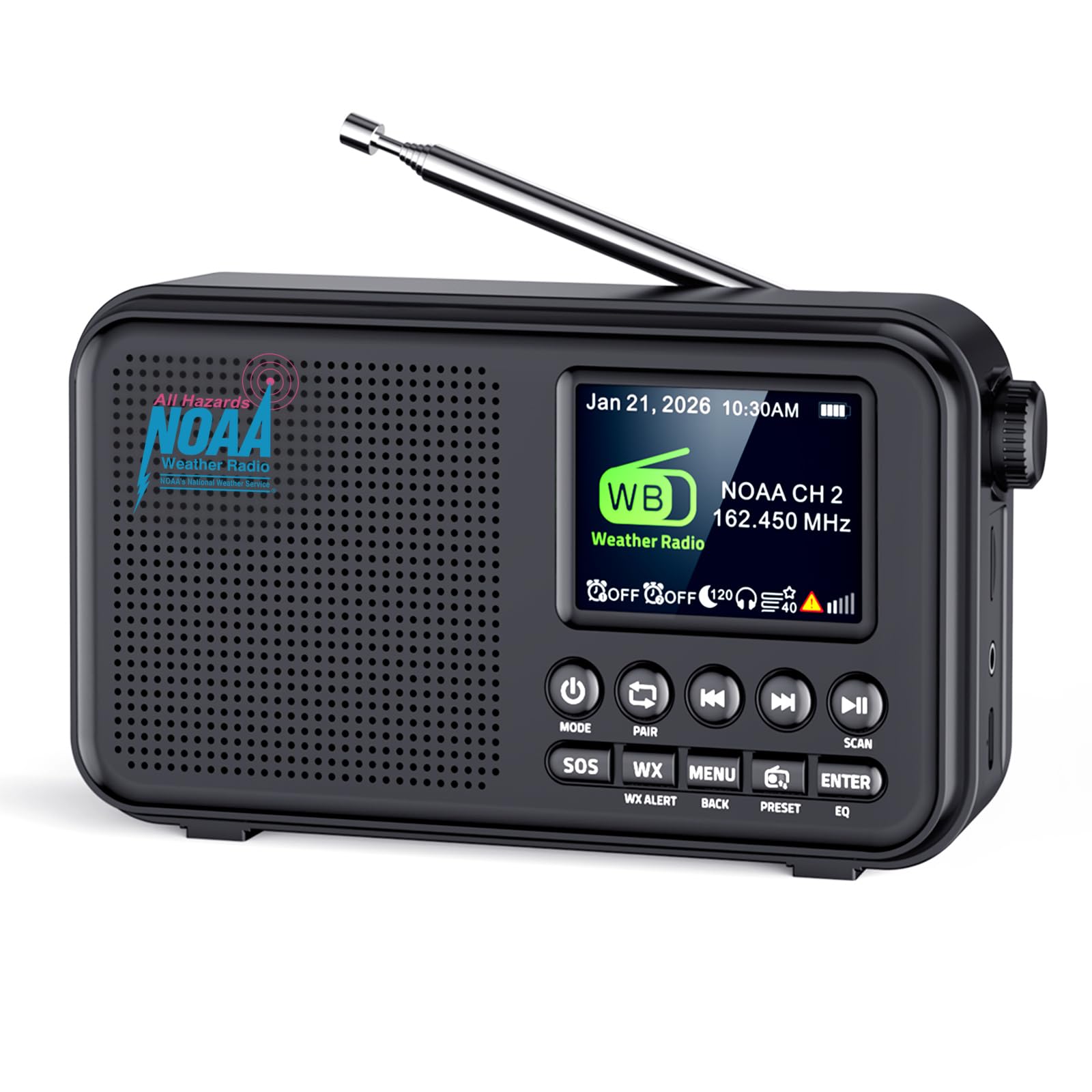
The OnLyee is a desk radio first and a weather monitor second. The 2.4-inch color screen, 8-watt speaker, Bluetooth streaming and 40 FM presets make it look and sound more like a small modern radio than the black plastic alert boxes that usually sit in a kitchen. That is exactly why some homes will use it more often than a dedicated weather radio.

For weather, it tunes all seven NOAA channels and offers voice or tone alerts on the channel you select. We like it for a home office or kitchen where you want local forecasts, FM news and music, and a loud weather tone from one device. The rechargeable 3000 mAh battery and USB-C charging make it easy to move from room to room, and the sleep timer is a nice touch for a bedside.

The alert logic is the dividing line. You choose a NOAA channel and the radio monitors it, with voice or tone alerts when the broadcast carries one. That is useful for staying informed, but it is not the same as programming your county and letting the radio decide what is relevant. We treat the OnLyee as a secondary radio for everyday listening, not the primary alert radio for a household.

Pros

  • 2.4-inch color display
  • Bluetooth and FM with 40 presets
  • 7 NOAA channels with voice and tone alerts
  • 3000 mAh USB-C rechargeable battery

Cons

  • No AM band
Our verdict

The OnLyee is a desk radio first: Bluetooth, FM, and seven NOAA channels in one good-looking unit, with weather alerts as a secondary job.

Check Latest Price

How We Tested Weather Radios Where They Actually Live

We built the shortlist by reading manuals and spec sheets before ordering anything: a radio had to support SAME county-specific programming, hold batteries as a backup, and fit somewhere roughly the size of an alarm clock. That cut a long list down to 12 units, and each one went home with a tester.

Setup came first, done the way a real buyer would do it — on the kitchen counter, with the manual and nothing else. We timed how long it took to enter our county code from a cold start, noted the points where the instructions lost us, and checked whether the alert volume and tone could be changed without digging three menus deep.

Then the radios went onto nightstands, kitchen counters, and a basement shelf. During actual watches and warnings, we compared what each unit displayed and announced against the National Weather Service feed on our phones, logging every false alarm, missed alert, and garbled broadcast. We also pulled the plug on each one mid-week to see whether the battery backup carried it through an outage and whether the warning light was visible from across a dark room.

Reception got its own pass: the same broadcast on each radio from the same spot, then again after moving the unit to a window. Alert tones, voice prompts, and FM stations were judged on whether we could understand them from the next room over the static. Finally, we weighed what each radio actually did against what it cost — features you'll never touch shouldn't be what you're paying for.

How to Choose a Weather Radio for Home

Start with SAME, Not Just a Weather Band

A radio that only tunes the NOAA weather channel is a scanner: it plays the forecast and may sound a tone for any alert broadcast on that channel, including warnings for counties nowhere near you. SAME, or Specific Area Message Encoding, lets you enter your county code so the radio stays silent until your area is included. That is the feature we treat as non-negotiable for a primary home radio. If you live near a county line, program both codes; if you travel with the radio, expect to re-enter codes. The Midland WR120B and WR400 both make this the center of setup.

Match the Alert to the Room

An alert radio has to reach the person who needs it, not just the room it sits in. A loud siren works in a hallway or a basement; a flashing light works better in a bedroom where a siren may frighten a child or fail to wake someone with hearing loss. Some models, like the Rychi, include an external strobe you can place across the room. Check whether the alarm volume is adjustable before you buy: the WR400's alarm is fixed and very loud, which is the point for some households and too much for others.

Plan for Power and Placement

A weather radio is most useful when the grid is down, so battery backup matters as much as the siren. Look for a model that runs on AC day to day and switches to cells automatically, then keep fresh batteries in it. Placement is the other half: NOAA signals are VHF, and an interior wall or basement can weaken them. Try the radio near a window or outside wall before you settle on a spot. If your best location still sounds scratchy, an external antenna like the one included with the yesiwtc gives you more room to work with.

Decide How Much Everyday Radio You Need

Most SAME weather radios are not great music radios, and that is fine. If you want one box for weather alerts, local news and an alarm clock, the Midland WR400 adds AM/FM tuning; if you want Bluetooth and a color screen, the OnLyee is a more pleasant desk radio. The trade-off is that the OnLyee lacks SAME filtering, so it monitors a weather channel rather than your county. We keep a SAME radio as the primary alert and treat the everyday radio as a second device.

Frequently Asked Questions

Final Verdict

For most homes, the Midland WR120B is the weather radio we recommend. It does the one job that matters most, filtering SAME alerts to your county and keeping them coming on battery backup, in a compact body that fits a nightstand.

If you want a louder siren and AM/FM listening, the WR400 is the step up. If you need a visible alert in a hallway, the Rychi's external strobe is the budget answer. And if you mainly want a desk radio for everyday listening, the OnLyee is a secondary monitor, not a SAME replacement.