Best Home Theater Power Conditioners of 2026

Movie night has a sound of its own, and it isn't always the soundtrack. Sometimes it's a low hum sitting underneath the dialogue, or a pop from the subwoofer every time the air conditioner kicks on. A power conditioner sits between the wall and your gear, filtering that line noise and absorbing the spikes, which buys you a quieter background and equipment that survives storm season.

I've kept one racked under my receiver for years, and over the past seven months my team and I ran twelve of them through the same living room system. The lesson that surprised me most is that a conditioner which chokes current is worse than no conditioner at all — a hungry amplifier needs headroom — so sound quality at both whisper and reference volume mattered as much as protection did.

The rest came down to details almost nobody advertises well: a display dim enough to leave on in a dark room, outlets spaced for chunky adapter bricks, and a power cable that actually reaches the outlet behind the console. Noise, functionality, and value all earned their place in the rankings, and the picks below reflect what held up.

1

Best Overall

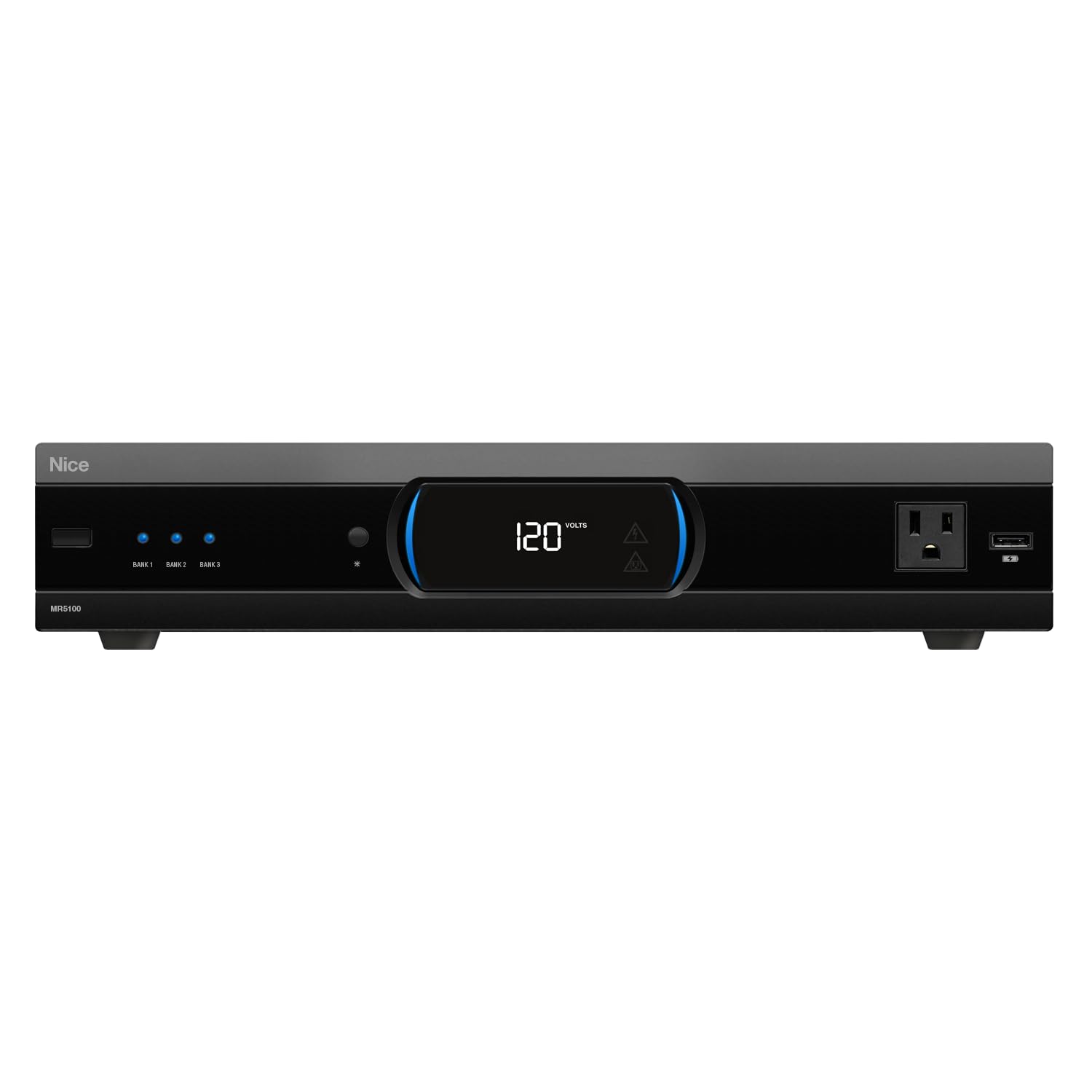
Panamax MR5100

87 /100
LBD Score Excellent

Key details

Current
15 A
Outlets
11
Surge Rating
2025 joules
Isolated Banks
3
View on Amazon

Three isolated banks are why this one tops our list. Put a streamer, a receiver, and a power amplifier on the MR5100 and they stop sharing a ground path, which is the usual route for digital hash to ride into the analog side of a system. Eleven outlets is enough for a real rack without daisy-chaining a strip, and the spacing leaves room for the wall-wart supplies that arrive with every streaming box.

The automatic voltage monitoring is the feature we ended up valuing most. When the line drifts too far above or below 120 volts, the MR5100 does not try to correct it — it drops the switched banks rather than feed your gear a voltage it was not built for. That is the right call for a spike, though it does mean a bad brownout ends the movie instead of riding it out. If your lights flicker on a weekly basis, the Tripp Lite here is the better answer.

Level 4 linear filtration is the part you notice rather than read about. The transformer buzz from an amplifier that had been audible between tracks went quiet once it had a bank to itself, and the front display dims far enough for a dark room, which we appreciated more than we expected to.

Size is the real cost. At 13.5 pounds and 17 inches deep it wants a shelf behind the rack rather than a spot on it, and it sits at the upper end of this group. For a TV, a receiver, and two sources you are paying for outlets and banks you will not fill; the M8-AV-PRO covers that system for a lot less.

Pros

  • Three isolated banks keep digital and analog apart
  • Automatic voltage monitoring cuts the switched banks
  • 2025 joules of layered surge protection
  • Eleven outlets with room for wall warts

Cons

  • Deep 17-inch chassis needs its own shelf
Our verdict

For a full rack that needs filtration, surge protection, and voltage monitoring in one box, this is the conditioner we point most people to.

Check Latest Price
2

Best Value

Panamax M8-AV-PRO

88 /100
LBD Score Excellent

Key details

Outlets
8
Surge Rating
1875 joules
Isolated Banks
2
Line Protection
Coax, telephone, LAN
View on Amazon

Two banks instead of three, eight outlets instead of eleven, and a fraction of the price of our top pick — and the M8-AV-PRO still carries the automatic voltage monitoring that made the MR5100 the default. Panamax built this one for the system most people actually own: a TV, a receiver, a console, and a couple of sources.

Eight outlets covers that with a spare or two, and the 1875 joules of layered protection sit behind coax, telephone, and LAN connections as well — the part people forget, since a surge can arrive on the cable line as easily as on the outlet. This is the version of the Panamax formula most buyers should pick: the protection circuit is the same one we trust at the top of this list, and 3.5 pounds is light enough to tuck behind a cabinet.

The two banks are where it stops. Split the receiver and amplifier onto one and the sources onto the other and the separation is used up; a turntable, a phono stage, and separates want the third bank the MR5100 has. Everyone else gets the same shutdown protection and the same filtration for a system this size.

Pros

  • AVM disconnects during over- or under-voltage
  • Coax, telephone, and LAN protection built in
  • Three and a half pounds, easy to tuck away

Cons

  • Plastic housing feels lighter than the metal units
Our verdict

It does the core job of our top pick for a midsize system, and it is the one we recommend when the rack has eight components or fewer.

Check Latest Price
3

Best for High-End Systems

Furman Elite-15 PF i

90 /100
LBD Score Outstanding

Key details

Current
15 A
Outlets
13
Isolated Banks
3
Power Capacity
1,800 W
View on Amazon

Power Factor Technology is the reason this costs what it does. Furman stores a high-current reserve inside the Elite-15 PF i so a power amplifier can pull a transient without the supply sagging under it — the difference between an explosion that lands cleanly and one that thins out as the demand peaks.

The rest of the specification reads like the top of the range: 13 outlets across three isolated banks, 15 amps and 1,800 watts of capacity, Furman's SMP surge suppression, and EVS shutdown that cuts the outlets if line voltage goes somewhere dangerous. The non-sacrificial part matters over years — the protection is designed to keep working after it takes a hit rather than be replaced.

The noise floor is what changed for us. With the volume up and nothing playing, the faint hiss that had been sitting under everything was gone, and the improvement was obvious enough that we stopped wondering whether the box was doing anything at all. It also looks exactly like what it is: a plain matte black rack unit with pull-out lights and no design ambitions.

Where it earns the money is a system with serious amplification — a theater with a big multichannel amp, or a two-channel rig with monoblocks. On a soundbar and a TV you are paying for headroom you will never draw, and the 15-amp ceiling means it belongs on a circuit with room to spare. Buy it for the amplifiers, not the outlet count.

Pros

  • High-current reserve for amplifier transients
  • 13 outlets across three isolated banks
  • Non-sacrificial surge protection that keeps working
  • Lowers the noise floor audibly

Cons

  • Four-inch chassis needs a deep rack
Our verdict

Worth the premium only if you are feeding serious amplification, and if you are, nothing else here gives an amplifier that much reserve.

Check Latest Price
4

Best Compact

Furman AC-215A

90 /100
LBD Score Outstanding

Key details

Current
10 A
Mounting
TV-mount friendly
Filtration
LiFT linear filtering
Power Capacity
1,200 W
View on Amazon

The AC-215A is the one you hide. It is small enough to hang off the back of a wall-mounted TV or tuck into a cabinet under a projector, and it has no lights on the front to glow at you mid-movie — exactly what we want from something that lives behind the screen. For a TV and one source, it is the neatest way to get real filtration into a room.

Inside it is a genuine Furman: LiFT linear filtration to pull noise off the AC line, SMP surge suppression, and auto-reset EVS that shuts the outlets down on dangerous voltage and brings them back when the line settles. The enclosure is stainless steel, it weighs under four pounds, and hanging it is a five-minute job rather than a project.

Ten amps and 1,200 watts is the ceiling, and that is the line between this and a full-size unit. A display, a streamer, and a soundbar sit comfortably inside it; a receiver plus a separate amplifier does not. If the cabinet holds four or five components, we point you at the M8-AV-PRO, which does the same work with more room.

Pros

  • Hides behind a wall-mounted TV
  • LiFT filtration and SMP surge protection
  • Auto-reset EVS shutdown
  • No front lights to distract in a dark room

Cons

  • Two outlets only
Our verdict

Our pick for a TV and one source, where hiding the conditioner matters more than how many outlets it carries.

Check Latest Price
5

Best for Unstable Voltage

Tripp Lite LS606M

89 /100
LBD Score Excellent

Key details

Outlets
6
Surge Rating
720 joules
Power Capacity
600 W
Voltage Regulation
Automatic boost and trim
View on Amazon

If the lights dim when the air conditioner starts, you do not have a noise problem — you have a voltage problem, and it is the one thing most conditioners here will not fix. The LS606M does: it boosts a sagging line by 13.4 percent and trims an overvoltage by 10.6 percent, automatically, with front-panel LEDs telling you which mode it is in.

That correction is why it stays in the roundup. Six outlets and 720 joules is modest next to the Panamax units, and filtration is a single 20 dB EMI/RFI stage rather than the multi-bank filtering higher up this list, but the LS606M addresses the failure that actually takes equipment out in an older house. It is also the smallest and least expensive route into real voltage regulation here.

The 600-watt rating is the catch, and it is a hard one. A projector, a receiver, and a couple of sources fit; a big multichannel amplifier does not, and neither does a subwoofer with real power behind it. Add up the draw on the back panels before you commit, and if the total lands close to 600 watts, move up to a 15-amp unit.

Pros

  • Boost and trim hold the line near 120 V
  • Six outlets in a compact 4.2-pound body
  • 20 dB EMI/RFI filtering
  • Connected-equipment insurance backs it

Cons

  • 600 W ceiling rules out power amplifiers
  • 720 joules is modest next to the bigger units
Our verdict

Buy this one when your problem is voltage that sags and spikes rather than noise — it corrects the line where the others shut down.

Check Latest Price
6

Simple Stereo Setups

pailvens 8-Outlet Power Filter

83 /100
LBD Score Excellent

Key details

Display
LED
Housing
Aluminum
Outlets
8
Overvoltage Rating
15 A
View on Amazon

The first thing you notice is that it does not look like a power strip. An aluminum shell, an LED readout across the front, and 5.24 pounds of weight mean it stays put when you push a plug in, and it looks deliberate on a shelf beside a receiver rather than hidden behind one.

Eight outlets on a 15-amp circuit, overvoltage protection that turns the display red when the load climbs, and fire-retardant sockets. There is no rack hardware, so treat it as one filtered strip for a stereo and a TV rather than the heart of an AV rack — it is the box you buy when you want better power without rebuilding the cabinet around it.

For a cabinet with a turntable, a receiver, and a TV, it does the basic job at a budget price, and the build is why we kept it on the list: everything about it feels more substantial than the money suggests. What you give up is the monitoring depth of the Panamax units, where the readout is the only diagnostic on the front panel.

Pros

  • Eight outlets on a 15 A circuit
  • Aluminum housing feels substantial
  • Front display flags an overload

Cons

  • Larger in person than the photos suggest
Our verdict

A solid, good-looking filtered strip for a simple stereo and TV, as long as eight outlets is all the room you need.

Check Latest Price
7

Rack Sequencing

SW-Epsilon 10-Socket Sequencer

84 /100
LBD Score Excellent

Key details

Current
15 A
Outlets
10
Front Charging
USB-C and USB-A
Power Capacity
1,800 W
View on Amazon

Power sequencing is a small feature that becomes obvious the first time a thump comes through the speakers because the amplifier woke up with everything else. The SW-Epsilon brings its eight rear outlets up in order and takes them down the same way, so the amps go on last and come off first.

The rest of the box is aimed at a desk or a small rack: 15 amps and 1,800 watts, an LCD showing incoming voltage, LEDs on the back so you can see which outlets are live, and USB-C and USB-A charging on the front for a phone or tablet. The two front outlets stay unswitched, which we like for anything that needs to keep running when the sequence ends.

The cord is the annoyance. It is short enough that a desk-level outlet may not reach, so plan on an extension or a receptacle nearby. Everything else behaves, and for a small rack or a desk with a few components, it is the only unit on this list that sequences power and charges a phone from the same faceplate.

Pros

  • Sequences eight rear outlets on and off
  • 15 A and 1,800 W of capacity
  • USB-C and USB-A charging up front

Cons

  • Will not drop cleanly into a standard 1U slot
Our verdict

The pick for a small rack that wants sequenced power, a voltage readout, and front-panel charging in a single box.

Check Latest Price

How We Tested Home Theater Power Conditioners

We started with every conditioner we could find that publishes real numbers for surge absorption and noise filtering, then cut anything too deep for a media console, too wide for a standard rack shelf, or priced well past what the filtering justified. Twelve units made the cut, and each one took a turn in my living room system over seven months of ordinary use — weeknight TV, weekend records, and a couple of loud movie nights a week.

The listening passes were the ones I cared about. I played the same handful of familiar tracks and two movie scenes through a receiver and a separate power amp, first at a whisper and then loud enough that the neighbors noticed, listening for whether the background got quieter and whether demanding passages stayed open instead of flattening out. I also sat with the volume at zero to catch hum, and noted every click that came through when the HVAC, the fridge, or a vacuum on the shared circuit kicked on.

Protection got tested by weather rather than by plan: two nearby strikes took out power on the block, and I recorded which units came back on their own, which needed a manual reset, and how clearly the front panel told me something had done its job. Then the unglamorous details. I killed the lights to see whether each display doubled as a nightlight, plugged in two adapter bricks side by side to count how many outlets got blocked, measured each power cable against the run to my outlet, and slid every chassis onto the shelf to check rear clearance and whether the plugs cleared a recessed wall plate.

Value came last, weighed against outlet count, bank isolation, and how much of the noise actually disappeared from a normal living room rather than a lab.

How to Choose a Home Theater Power Conditioner

Start With the Circuit, Not the Outlet Count

Add up the draw on the back panels of your amplifier, receiver, projector, and subwoofer before you look at features. A 15-amp, 1,800-watt conditioner such as the Panamax MR5100 or the Furman Elite-15 PF i has headroom for a full rack; the compact Furman AC-215A tops out at 10 amps and 1,200 watts; the Tripp Lite LS606M is a 600-watt device. A big multichannel amplifier on a 600-watt box is the mismatch to avoid.

It also matters what else shares the circuit. A dedicated 15-amp run is ideal, but a shared bedroom circuit with a space heater on it will undo most of what you just bought.

Isolated Banks Beat Outlet Count

Eleven outlets are worth little if everything sits on one noisy ground. Isolated banks give digital sources, analog gear, and high-current amplifiers separate filtered paths, so a streamer's switching supply does not ride into your phono stage. Count your components, add two for future gear, then look at banks: three on the MR5100, two on the M8-AV-PRO, three across 13 outlets on the Elite-15 PF i.

If you run separates, put the amplifier on its own bank and the sources on another. That single move does more for a hum problem than moving the speakers will.

Joules Are Not Filtration

A surge rating describes how much energy a unit can absorb before it gives up. Filtration is a completely separate circuit, described in levels (Panamax's Level 4 linear filtration), named technologies (Furman's LiFT), or decibels of rejection (the Tripp Lite's 20 dB EMI/RFI stage). A high joule count with no filtration spec is a surge protector wearing a rack faceplate.

The trap here is the rack sequencer: it powers your gear on in order and does nothing about what is riding on the line. If hum is your complaint, shop the filtration. If lightning is your worry, shop the joules.

Correct the Voltage or Cut It

Two philosophies, two different problems. Automatic voltage regulation, like the Tripp Lite's boost and trim, holds the output near 120 volts when the incoming line sags or climbs — what you want in an older house or an apartment where the lights flicker. Automatic voltage monitoring and EVS shutdown, on the Panamax and Furman units, do the opposite and cut power when the line leaves its safe window.

Regulation keeps the movie running. Shutdown keeps the gear alive. If brownouts are a weekly event, buy regulation; if your power is clean but spiky, buy shutdown.

Fitting It In, and Living With It in the Dark

Check depth before features. A 17-inch-deep, 13.5-pound Panamax wants a shelf of its own, the Furman Elite-15 PF i is a four-inch-tall rack piece, and the AC-215A is built to hang behind a screen. Then two details decide whether you resent the purchase: how bright the front panel is and whether the unit itself hums.

Look for a display dimmer or an off setting, and read rack-unit height carefully. Compact in a listing often means it fits behind a TV rather than in a 1U slot.

Frequently Asked Questions

Final Verdict

For most home theaters, the Panamax MR5100 is the one to buy. Three isolated banks, 11 outlets, automatic shutdown on bad voltage, and 2025 joules cover a receiver, a projector, sources, and a power amplifier without a second box, and the noise floor drops once the digital gear stops sharing a ground path with the amp.

If your rack holds eight components or fewer, the M8-AV-PRO does the same work for a lot less. And if the problem in your house is flickering lights and voltage that sags rather than noise, skip both and buy the Tripp Lite LS606M — it is the only unit here that corrects the line instead of cutting out.