Best Projectors of 2026

A projector can turn a blank wall into a movie screen, but the wrong one turns movie night into a fight with focus, brightness, and a fan loud enough to drown out dialogue. I’ve watched autofocus hunt through opening credits and had backyard screenings wash out at dusk, so I know the gap between a spec sheet and a projector you actually want to use. A good one should make setup feel invisible, keep colors rich in a semi-dark room, and sound decent without a separate speaker.

To find that, I spent eight months with 12 projectors, from compact battery-powered models to brighter home-theater units, using them for living-room movie nights, bedroom binges, and backyard screenings. We compared picture quality, ease of setup, built-in streaming and connectivity, sound, and overall value—not just the brightest number on the box. One thing I learned: brightness matters, but contrast and color handling matter just as much. The picks below made movie night feel easy rather than like a second job.

1

Best Overall

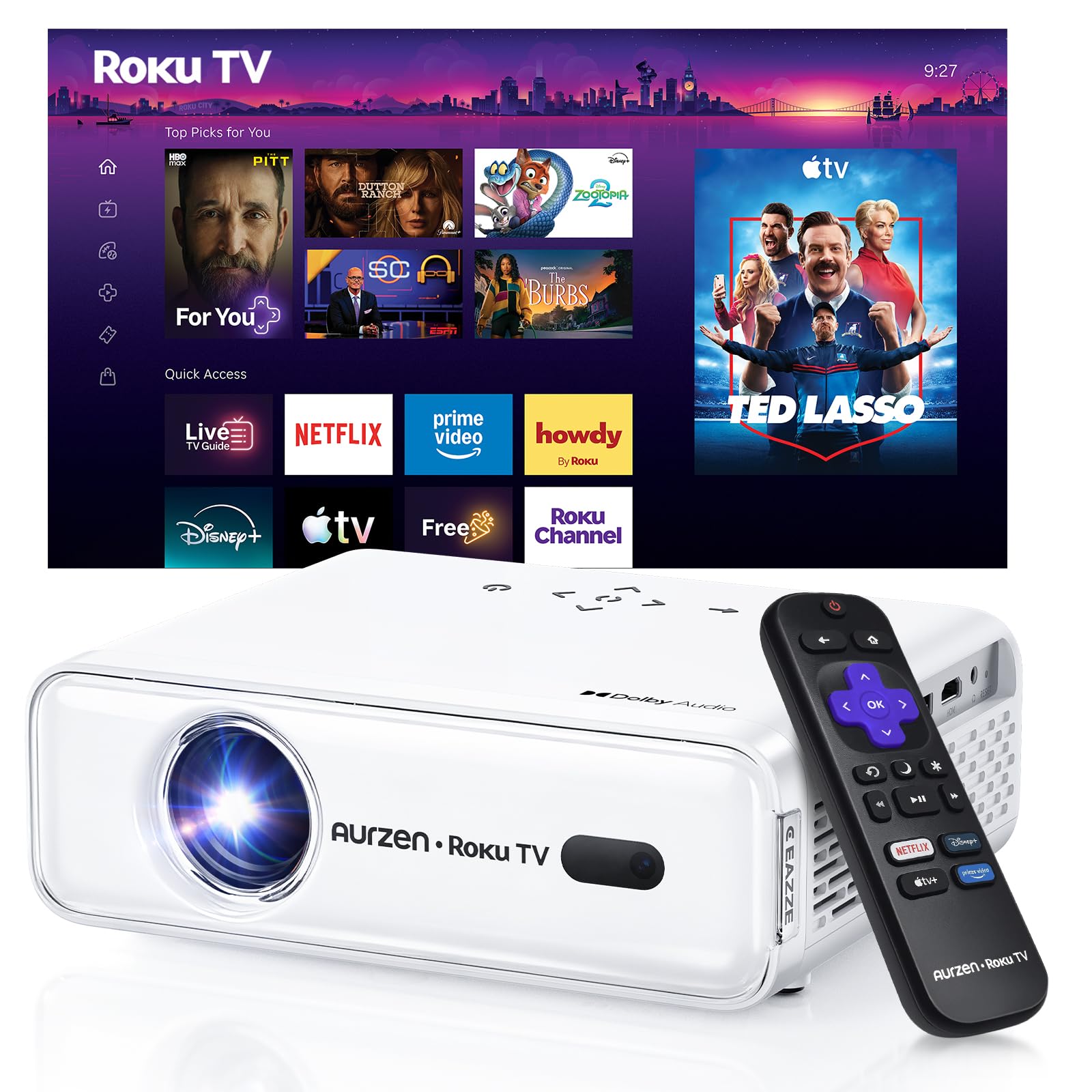
Aurzen EAZZE D1R

91 /100
LBD Score Outstanding

Key details

Weight
4.63 lb
Native Resolution
1920 x 1080
Built-In Streaming
Roku TV
Maximum Image Size
200 inches
View on Amazon

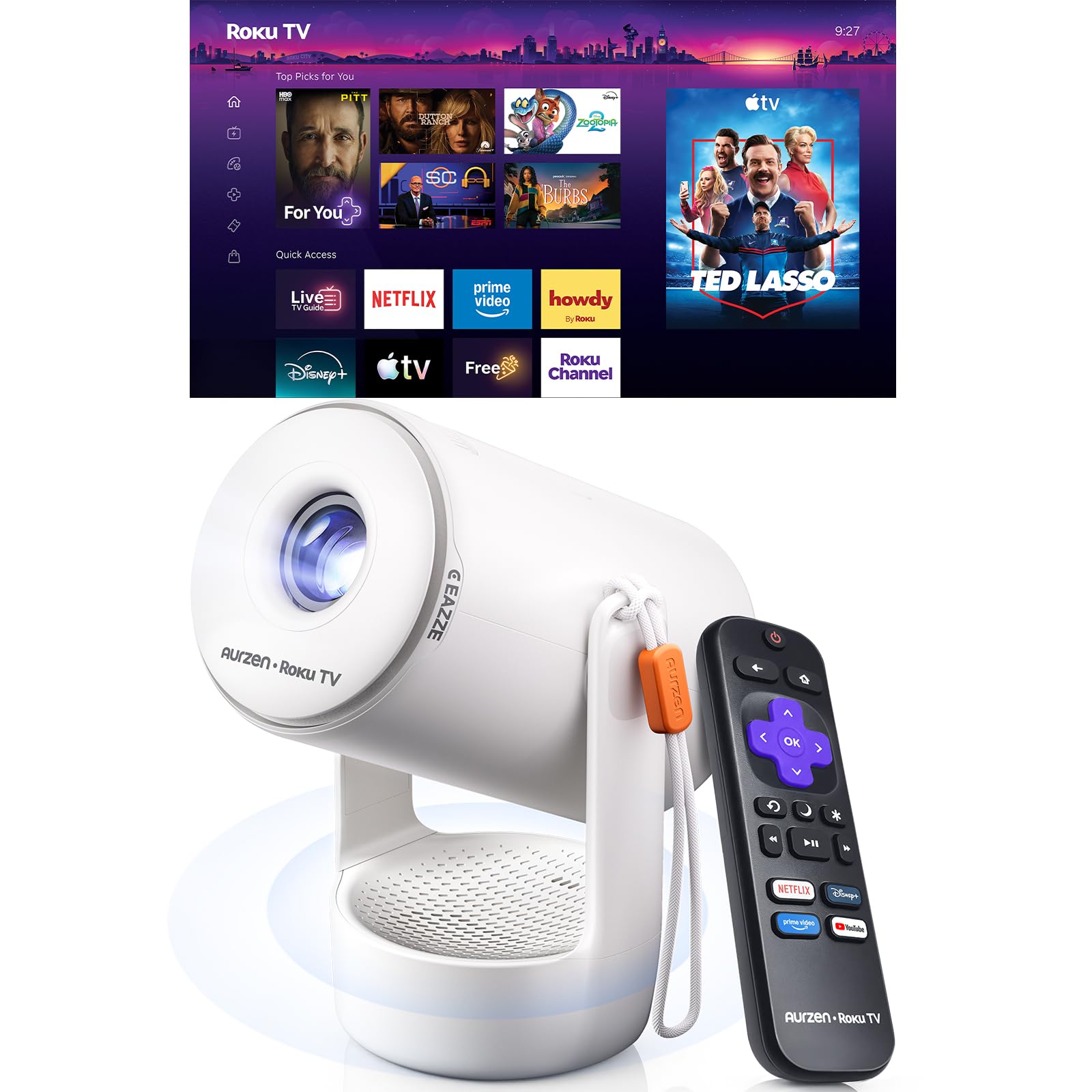
The D1R boots straight into Roku TV. Netflix, Prime Video, Hulu and YouTube sit on the home screen once you sign into a free Roku account, and the remote in the box controls all of it, with no stick hanging off the back and no second remote to hunt for under the couch.

That's why it earns the top spot. Most projectors in this range make you supply the smarts, which means an HDMI stick, its power adapter, and one more thing to lose. The D1R is native 1080p with auto focus and auto keystone, so you set it on a table, point it at a wall, and the picture squares itself up while you decide what to watch. The image runs to 200 inches, and at 2.1 kg it's a one-hand move from the living room to the patio.

Brightness is the trade. Aurzen doesn't publish an ANSI figure for this model, and the picture is at its best once the room is dark; in a half-lit living room it goes flat, and a 4 p.m. backyard screen is asking too much. For a den, a bedroom, or a yard after sunset, that's the right compromise. If your room has windows you can't tame, the ViewSonic below is the one that survives daylight.

Two practical notes. There's no HDMI cable in the box, so add one if a console or a laptop is part of the plan. And the built-in speakers are fine for a living room and thin for a yard full of people; pair a Bluetooth speaker and the sound catches up to the picture.

Pros

  • Roku TV built in, no stick required
  • Native 1080p with auto focus and keystone
  • 2.1 kg and easy to move outdoors
  • 200-inch maximum image

Cons

  • Fan is audible in quiet scenes
Our verdict

We made this our top pick because it removes the two hassles of projector ownership: no streaming stick to add, and no manual setup.

Check Latest Price
2

Best for Home Theater

Nebula Cosmos 4K SE

87 /100
LBD Score Excellent

Key details

Weight
9.9 lb
Brightness
1,800 ANSI lumens
Native Resolution
3840 x 2160
Built-In Streaming
Google TV
View on Amazon

1,800 ANSI lumens is the number that separates the Cosmos 4K SE from everything else on this page. Nebula pairs a laser with an LED array to get there, and the result is a 3,840 x 2,160 picture with Dolby Vision that stays readable well before the room goes fully dark. This is what most people picture when they say home theater, and it's the one we reach for when the evening is about the movie rather than the novelty of a big screen.

Google TV is built in with licensed Netflix, which is not the same thing as the half-working app stores some budget smart projectors ship with. The IEA 4.0 setup handles focus, keystone, obstacle avoidance and screen fit on its own, and it will even correct for the color of the wall you're projecting onto, which matters if you rent and can't paint the room dark.

Auto keystone does its best work head-on. Set the Cosmos well off to one side and the correction can hunt between settings, so a straight-on position saves fiddling. A carrying handle means the basement or the patio is still an option for a night.

The speakers are good enough that we stopped noticing them, which is the highest compliment built-in projector sound gets. The light source is rated at 25,000 hours, and the whole thing feels like an appliance rather than a gadget, which is exactly what you want from the machine that lives in the room where you watch everything.

Pros

  • True 4K with Dolby Vision
  • 1,800 ANSI lumens from laser and LED
  • Google TV with licensed 4K Netflix
  • Automatic setup including wall-color correction

Cons

  • No battery, so it needs an outlet
Our verdict

Our home theater pick: true 4K, 1,800 lumens and Google TV, with the picture to justify the price.

Check Latest Price
3

Best for Bright Rooms

ViewSonic LS740HD

85 /100
LBD Score Excellent

Key details

Weight
6.6 lb
Brightness
5,500 ANSI lumens
Light Source
Laser, 20,000 hours
Native Resolution
1920 x 1080
View on Amazon

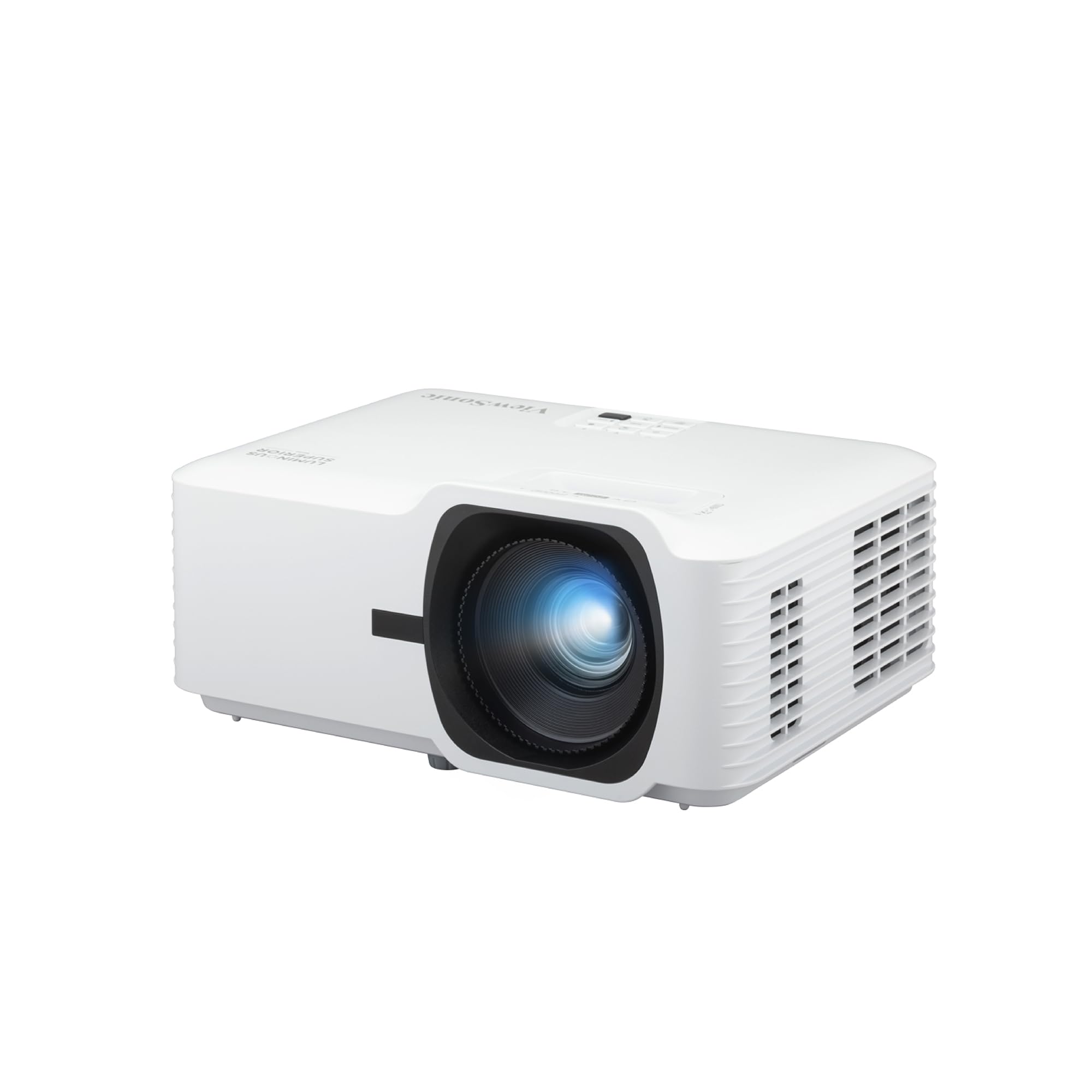
Nobody puts the LS740HD on a coffee table. It's a 6.6-pound fixed-install laser projector with a ceiling mount, a 210-watt draw and a three-year warranty, built for the rooms where the lights stay on: classrooms, conference rooms, a golf simulator in the garage, the living room of someone who refuses to hang curtains.

At 5,500 ANSI lumens it throws a 30-to-300-inch image that stays legible with sun coming through the windows. The 1.3x optical zoom and 1.13 to 1.47 throw ratio let you size the picture without moving the mount, horizontal and vertical keystone plus four-corner correction sort out an awkward position, and it will run in portrait or at 360 degrees, which is how it ends up in a golf sim.

What it doesn't have is a smart platform. No Roku, no Google TV, no apps: every frame arrives over one of the two HDMI ports, so a streaming stick or a receiver is part of the purchase rather than an optional extra. We think that's a fair trade for a room this bright and a light source rated at 20,000 hours. It just means the LS740HD is a projector for someone who already has a source and a ceiling, not for a household that wants one box and one remote.

Pros

  • 5,500 ANSI lumens beats ambient light
  • Laser light source rated at 20,000 hours
  • Optical zoom and four-corner correction

Cons

  • Ceiling-mount design is not portable
Our verdict

We recommend it when the room is bright and the projector never moves: 5,500 lumens of laser light that no mini here can match.

Check Latest Price
4

Best Battery-Powered

XGIMI Vibe One

85 /100
LBD Score Excellent

Key details

Weight
3.09 lb
Battery
Up to 1.2 hours video
Brightness
250 lumens
Native Resolution
1920 x 1080
View on Amazon

1.2 hours. That's how long the Vibe One runs on its battery before it wants an outlet, shorter than most movies, and it's the number that explains the whole design. This is a projector for the first half of a ballgame on the deck, a cartoon in a blanket fort, or a rental where the only free wall is nowhere near a socket.

Everything else about it is thoughtfully done. It's 1080p with Google TV and licensed Netflix, so the interface is the one you already know, and the dual 3W JBL speakers are the first built-in pair in this group we didn't want to replace immediately. Auto focus and auto keystone mean it's usable in the five minutes before the battery gives out, and the 150-inch maximum is plenty for a wall or a hanging sheet.

The tall cylinder sits more steadily on a picnic blanket than a flat slab does, and Bluetooth out to a real speaker is there when the JBL pair isn't enough. There's also a music mode that runs four hours off the same charge, which makes it a decent patio speaker that happens to throw a picture. We ended up using it more as a portable TV than as a home theater, and it's very good at being that.

Pros

  • Built-in battery for cord-free sessions
  • Google TV with licensed Netflix
  • JBL speakers are genuinely listenable

Cons

  • 250 lumens confines it to a dim room
Our verdict

We reach for this one when there's no outlet nearby: 1080p, Google TV and JBL sound on a battery.

Check Latest Price
5

Best Budget 1080P

YGSKK Mini Projector

91 /100
LBD Score Outstanding

Key details

Weight
1.7 lb
Warranty
3 years
Brightness
300 ANSI lumens
Native Resolution
1920 x 1080
View on Amazon

The YGSKK is the least expensive route here to a native 1080p picture with the streaming apps already inside, and for a first projector that combination is hard to argue with. Sign in, pick an app from the built-in menu, and you're watching, with no stick, no laptop and no cable across the floor.

It's smaller than you'd guess from the specs, 1.7 pounds and about 8 by 4 by 4 inches, and we liked that the focus is electric, driven from the remote instead of a wheel you fumble with while standing on a chair. Wi-Fi 6 keeps a stream steady if your router is the newer kind, Bluetooth 5.3 takes a speaker or headphones, and the throw runs from roughly 5 to 16 feet for a picture between 50 and 200 inches.

A three-year manufacturer warranty is unusual at this end of the market, and it's part of why this one earns a recommendation rather than a shrug. The speakers are small, so a Bluetooth speaker is the first accessory to buy, and the HDMI cable in the box means a console or a laptop works the moment you plug it in. For a bedroom, a dorm, or a first apartment, we think it does the job without asking for much.

Pros

  • Native 1080p with apps built in
  • Weighs 1.7 pounds
  • Three-year manufacturer warranty

Cons

  • 300 ANSI lumens means after-dark viewing
Our verdict

We point first-time buyers here: native 1080p, apps already installed, and a three-year warranty.

Check Latest Price
6

Best Bundle for Beginners

TMY V08 Projector

88 /100
LBD Score Excellent

Key details

Warranty
3 years
Brightness
300 ANSI lumens
Included Screen
80-inch foldable
Native Resolution
1920 x 1080
View on Amazon

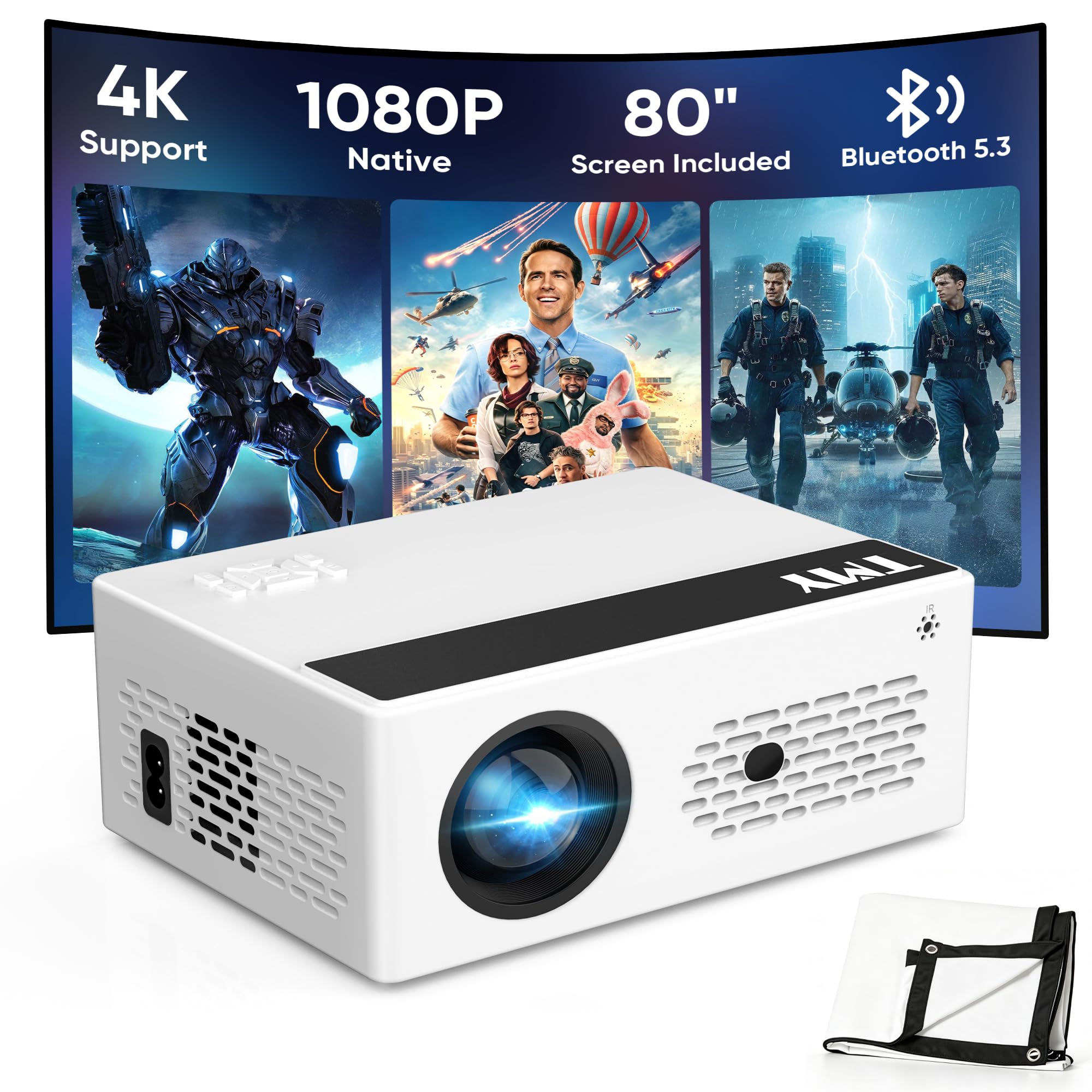
The 80-inch screen ships in the box. That one decision makes the V08 the easiest first setup here: no measuring a wall, no shopping for a screen, no discovering on the first night that your paint has a sheen to it.

Behind the screen is a native 1080p LCD projector at 300 ANSI lumens with a 15W speaker, Bluetooth, digital zoom and a sleep timer that shuts the lamp off for you. The throw covers 32 to 220 inches from roughly 3.5 to 20 feet, a wider range than most minis manage, and the three-year warranty matches the best in this group.

It's plug-and-play in the literal sense: HDMI and USB on the back, no apps inside, and the picture is genuinely good for the money, with sharp color and enough contrast to hold a night scene together. A Fire Stick or similar covers the streaming side, and there's a fair chance you already own one.

What we keep coming back to is how little thought it requires. The timer means you can fall asleep to it, Bluetooth output puts a bigger speaker one pairing away, and the screen folds into something you can carry under one arm, so the whole setup travels. It's the projector we hand to someone who has never owned one.

Pros

  • 80-inch foldable screen included
  • Native 1080p at a budget price
  • Timer shutdown and 15W speaker

Cons

  • Washes out with the lights on
Our verdict

We like it as a starter kit: a native 1080p projector and the screen, in one box.

Check Latest Price
7

Best for Bedrooms

Aurzen EAZZE E1R

87 /100
LBD Score Excellent

Key details

Stand
180° rotating
Weight
15.5 oz
Brightness
160 lumens
Native Resolution
1280 x 720
View on Amazon

Under a pound, with a strap on the side and a stand that swivels 180 degrees, the E1R is the smallest thing here that's still a real projector rather than a toy. It's about 3.4 inches square and 6.9 tall, so it disappears on a nightstand.

Roku TV is built in, which is the trick that makes it work: this is a streaming device with a lens, so there's no laptop on the floor and no stick in the back. The picture tops out at 1280 x 720 across a 20-to-120-inch image, and the base holds a sound chamber three times the size of the usual mini, loud enough that we didn't bother pairing a speaker for one room.

The swivel is the feature we got the most use from. Point it at the wall behind the bed, or tilt it back and put the picture on the ceiling, and the whole thing moves between rooms in one hand. A cleaning kit in the box is a small thing that suggests someone thought about dust.

You'll need a Roku account and Wi-Fi before the first movie, and that's the entire setup. As a small TV for a room that can't fit one, it's the neatest solution in this group: a wall and a socket are all it asks for.

Pros

  • Roku TV built in
  • Under a pound with a carry strap
  • 180-degree rotating stand for ceiling viewing

Cons

  • Native 720p, not 1080p
  • 160 lumens needs a dark room
Our verdict

Give this one the nightstand: a pound of Roku TV whose swivel stand can put the picture on the ceiling.

Check Latest Price
8

Tight Spaces

Philoent Mini Projector

91 /100
LBD Score Outstanding

Key details

Weight
13.6 oz
Brightness
200 ANSI lumens
Throw Ratio
0.8:1
Native Resolution
1280 x 720
View on Amazon

Short throw is the whole argument for this one. A 0.8:1 lens and a minimum throw distance of 0.6 m let it sit close to the wall, on a bookshelf or the end of a kitchen counter, instead of on a coffee table dragged into the middle of the room. In a small apartment, that's the difference between a projector you use and one you store.

It's 13.6 ounces and 200 ANSI lumens with a native 1280 x 720 picture, autofocus, auto keystone and a manual slider for when the autofocus settles a hair off, a detail we appreciated, because a small wheel is still the surest way to fix focus drift. It rotates 180 degrees for ceiling use and it's rated at roughly 25 dB, which is library-quiet by projector standards.

Where it lands is the small-room job: a bedroom, a dorm, the end of a kitchen where the wall is close and the seating is closer. At 13.6 ounces it moves in one hand, the two-year warranty is longer than most, and nothing about it demands a dedicated room. For a backyard or a room where the projector sits 12 feet back, one of the 1080p picks above does more for the money.

Pros

  • 0.8:1 short throw for tight rooms
  • 13.6 ounces, easy to move

Cons

  • 86-inch maximum image
  • Native 720p picture
Our verdict

For rooms where the projector has to sit close to the wall, this short-throw mini is the one we hand over.

Check Latest Price

How We Tested the Best Projectors

We started by scanning listings and reviews for realistic brightness claims, native resolution, built-in streaming apps, autofocus and keystone correction, zoom, battery life where it applied, and connections that matched how people actually use these. We filtered out anything that leaned on “4K support” without a clear native picture, then narrowed the shortlist to 12 projectors at different price points. Each one was unboxed, set up, and used for at least three weeks.

Testing happened where projectors live: a living room with curtains drawn, a bedroom with the image thrown across a slightly crooked wall, a backyard after sunset, and a room with overhead lights on for sports and presentations. We timed start-up and source switching, carried each unit from room to room, and nudged them out of place on purpose to see whether autofocus and keystone correction recovered quickly. For brightness and color, we watched the same dark scenes, sports, and animated clips, noting whether shadows kept detail, skin tones looked natural, and whites blew out. We also checked focus at the center and corners, then sat close during quiet dialogue to hear fan noise and judge whether built-in speakers kept voices clear.

Reliability meant keeping a log of dropped Wi-Fi connections, app crashes, overheating shutdowns, and remote lag over those weeks. Functionality was judged by how fast apps opened and how easily we could switch between streaming, HDMI, and a phone. Value came down to whether the picture, sound, and setup held up without extra speakers or a separate streaming stick.

How to Choose a Projector

Native resolution beats '4K support'

Nearly every budget projector claims 4K. What matters is native resolution, the pixels the projector actually produces, because '4K supported' usually just means it accepts a 4K signal and scales it down. At 100 inches, native 1080p is the sensible floor; a 720p model like the Aurzen E1R or the Philoent looks clean at 60 to 80 inches and soft beyond that. The true 4K step up is the Nebula Cosmos 4K SE, and it's a different budget altogether.

Read the resolution first and treat every other claim as secondary. If the listing only says 'supports 1080P' without a native figure, assume it's lower.

Match brightness to the light you can't turn off

Lumens are quoted in ANSI, in vague 'LED lumens', or not at all, and only ANSI figures compare across brands. A 160 to 300 ANSI mini is a dark-room projector: lovely at night, flat with a lamp on. Around 1,800 ANSI, as on the Nebula, holds its own in a dim living room, and 5,500 ANSI is what it takes to watch with daylight through the windows and the lights up. Screen size eats brightness too, so decide how big the picture needs to be before deciding a figure is enough.

Decide whether you want the apps built in

A projector plus a streaming stick is a perfectly good pairing, and some picks assume it: the TMY V08 has no apps inside, and the ViewSonic expects a receiver or a stick over HDMI. If you'd rather have one remote, buy a model with a licensed platform, which here means Roku TV on both Aurzens and Google TV with Netflix on the Nebula and the XGIMI. A generic app store bolted onto a budget mini is not the same thing, and Roku asks you to create a free account before the first use.

Measure the placement before you buy

Throw distance decides whether a projector can live where you want it. The YGSKK needs roughly 5 to 16 feet to produce its 50-to-200-inch picture, while a short-throw model like the Philoent is designed to sit close to the wall on a shelf. Auto focus and auto keystone make either one painless to set up, but correction can only do so much at a steep side angle. Check where the nearest outlet is, too, since only the XGIMI has a battery.

Sound, noise, and the cable you'll forget

Built-in speakers have improved: the XGIMI's JBL pair and the Nebula's drivers are genuinely usable. On the budget minis, a speaker is the weak link outdoors, and Bluetooth audio out is the cheap fix, though on most of these Bluetooth carries sound only, never video. Fan noise is the other half of the trade. A small, bright projector works hard and hums, which you'll notice in quiet dialogue and forget during a game.

Frequently Asked Questions

Final Verdict

The Aurzen EAZZE D1R is the projector we point most people to, because it removes the two things that make projectors annoying: the extra streaming stick, and the fiddling with focus and keystone every time you move it. Roku TV, native 1080p and auto setup in something you can carry out to the patio.

If the room is the point, a finished basement or a wall you want filled with 4K, the Nebula Cosmos 4K SE is worth the jump. And if you can't get the room dark, the ViewSonic LS740HD is the only projector here that doesn't care.