Best Instant Cameras of 2026

There's a particular disappointment in shooting a whole pack of instant film at a birthday party and getting back ten dark, blurry rectangles. I know it well. But a camera that hands someone a real photo is still the most fun thing you can pull out of a bag — the nostalgia is genuine, and the good ones are far more forgiving about bad indoor light than the duds.

Over the past six months, my team and I have shot with 12 instant cameras at a backyard wedding, a kid's birthday party, a dim restaurant dinner, and on a couple of road trips, and the differences showed up fast. The keepers handled low light without turning faces orange, loaded film without a wrestling match, and looked good enough that people asked about them.

One thing worth knowing: film isn't universal. Each camera takes a specific film format, and most bodies don't come with film in the box, so confirm the film is easy to find before you fall for a camera's looks. The picks below are the ones we'd buy again, for ourselves or as a gift.

1

Best Overall

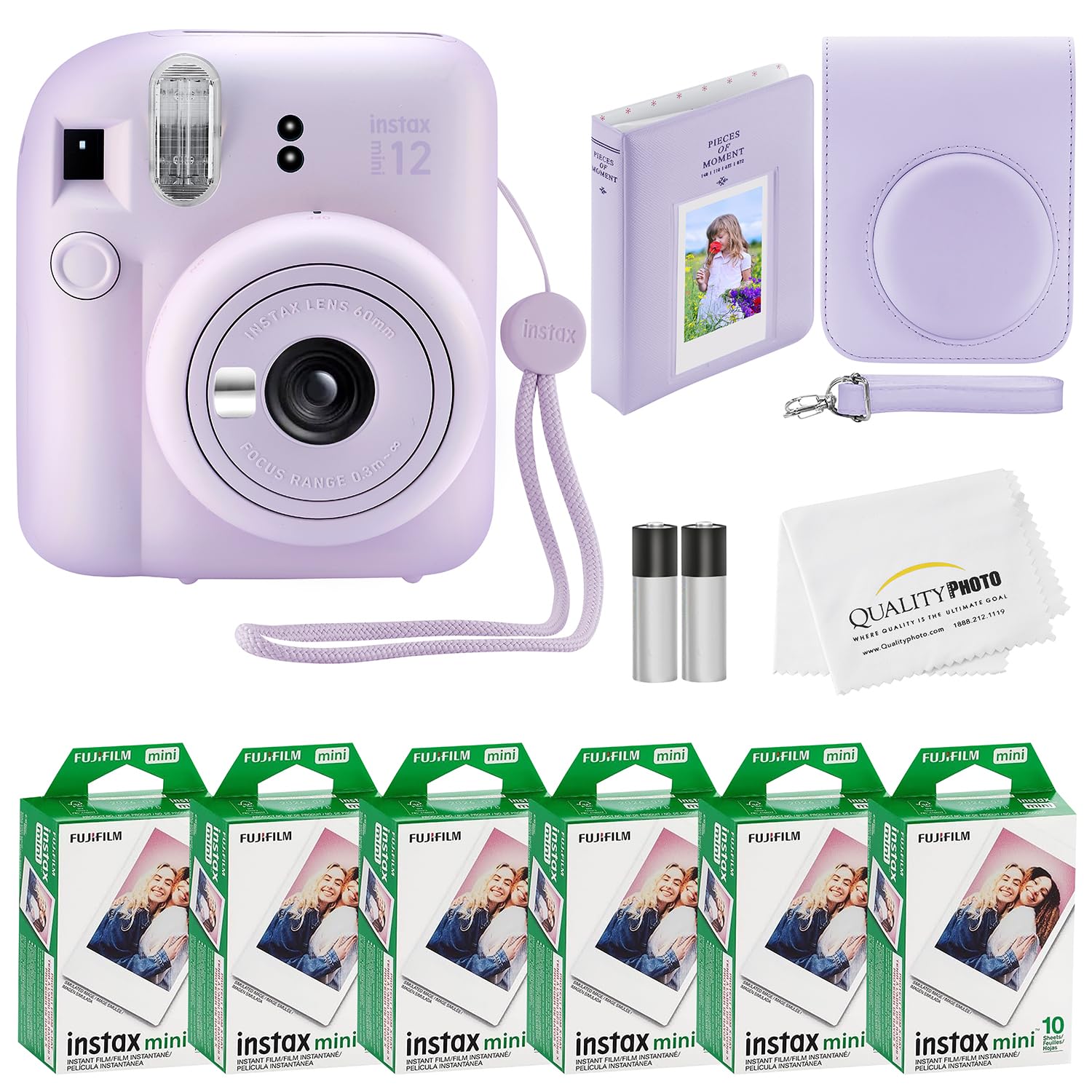
Fujifilm Instax Mini 12 Bundle

94 /100
LBD Score Outstanding

Key details

Exposure
Automatic
Viewfinder
Optical
Film Format
Instax Mini
Film Included
60 prints
View on Amazon

Sixty sheets of film, a matching case, a photo album, and a pouch of stickers, frames, and clips come in this box, and that is most of why it's our top pick. Film is the expense that never stops, so a bundle that starts you with 60 shots means you can learn the camera, burn a few frames on bad framing, and still fill an album before you order more. Nothing else here comes close on included film.

The camera itself is deliberately boring, which is the point. Exposure is automatic, the viewfinder is optical, and the only real decision is which way to point it — this is the one to hand someone who has never used a film camera, and the prints still come back. There's a clip-on close-up lens for shots inside arm's length, and the included case means it survives a tote bag full of keys.

What you give up is control. There's no exposure compensation, no creative modes, and no way to see a frame before it prints, so every shot costs film whether you love it or not. The prints are small, too: charming in a wallet or clipped to a fridge, not the big print people picture when they hear the words instant camera. For a first camera we don't think any of that matters yet. For someone who wants to fiddle with settings, it will.

Pros

  • 60 sheets of film, case, and album included
  • Automatic exposure leaves nothing to set up
  • Close-up lens and scrapbook extras in the box

Cons

  • Fully automatic, with no creative or manual modes
  • Small prints that won't suit everyone
Our verdict

For most people this is the instant camera to buy: the simplest body in the set, and the only bundle that hands you 60 shots on day one.

Check Latest Price
2

Best for Choosing Before You Print

Fujifilm Instax Mini Evo

92 /100
LBD Score Outstanding

Key details

Screen
2-inch LCD
Effects
10 lens x 10 film
Storage
microSD card slot
Film Format
Instax Mini
View on Amazon

A 2-inch screen, a digital sensor, and a built-in printer: the Evo isn't a film camera that prints, it's a small digital camera that uses Instax Mini film as its paper. You compose on the screen, choose one of 10 lens effects and one of 10 film effects, and press whichever shutter button matches how you're holding it. The print drops out seconds later.

We think that's the smartest way to shoot instant if you care about the results. Nothing prints until you say so, which means film goes only toward images you've already seen, and the free app sends pictures from your phone to the printer — the trick that makes it useful at a party where the best shots are already on someone's phone. A microSD slot holds the frames you decide not to print, and the card isn't included, so add one.

What it isn't is an analog camera. There's no surprise, no one-of-a-kind frame, none of the small thrill of watching an image appear that you couldn't preview — the Evo trades all of that for control, and that's the right trade only if you'd rather have a good print than an unpredictable one. It's also the priciest camera here, so the control is something you pay for twice.

Pros

  • Print only the frames you've already seen
  • Prints photos straight from your phone
  • 100 lens-and-film effect combinations
  • microSD storage and a 2-inch screen

Cons

  • Prints show their digital sensor up close
  • Plastic body feels cheaper than the price
Our verdict

If you've ever wasted a pack on bad frames, the Evo pays that back: shoot, check the screen, print only the keepers.

Check Latest Price
3

Classic Polaroid Look

Polaroid Now 3rd Gen Bundle

82 /100
LBD Score Excellent

Key details

Weight
15.9 oz
Battery
USB-C rechargeable
Autofocus
Twin-lens
Film Format
Polaroid i-Type and 600
View on Amazon

This is the only camera here that takes Polaroid's own film, and that's the reason to consider it: i-Type and 600 packs give you the full-sized Polaroid print, softer and moodier than anything Instax produces. The twin-lens autofocus picks between two focus distances on its own, so you frame in the optical viewfinder and press — no focus ring, no settings to work through.

We also appreciate the housekeeping details, which are the ones that decide whether a camera actually travels with you. A USB-C port replaces disposable batteries and Polaroid rates a charge at more than 15 packs, while double-exposure and self-timer modes cover the frames that need them. At 15.9 ounces it's light enough to carry all day without thinking about it.

Light is the catch, and it's a real one. Shoot outdoors or beside a bright window and you get the look people buy a Polaroid for; shoot a dim living room and the print comes back dark and flat no matter what the meter promised. Bright, direct light is the whole game here. Plan the photos around it and the camera delivers — ignore it and you'll feed it film for nothing.

Pros

  • Twin-lens autofocus picks the lens for you
  • Takes both i-Type and 600 film
  • USB-C rechargeable for 15-plus packs
  • Double exposure and self-timer built in

Cons

  • Automatic exposure only, with no manual control
  • Locked into Polaroid i-Type and 600 film
Our verdict

Buy it for the film and the look rather than for low-light reliability — it's the pick for daylight portraits and anyone who wants a genuine Polaroid print.

Check Latest Price

How We Chose and Shot With 12 Instant Cameras

We started with research, looking at every instant camera still in production that takes film you can actually buy. That filter alone eliminated a few charming vintage-style bodies whose film has been discontinued — exactly the compatibility headache we wanted to spare you. From there we narrowed by price, size, and how each camera is meant to be carried, then bought 12 to test ourselves.

All 12 went to the same places over six months: a backyard wedding, a 6-year-old's birthday party, a dim restaurant dinner, two road trips, and one very crowded holiday table. At each, we shot four setups — a portrait at about three feet, a group shot in a room lit by a single lamp, a moving subject, and a selfie — then laid the prints side by side to see which faces stayed readable and which went muddy.

Low light earned its own round. We shot the same scene with the flash on and off under one table lamp, noting whether skin went orange, whether the background fell to solid black, and how long each print kept shifting before the image settled. We also counted how many frames out of a 10-pack we'd actually keep, since a camera that wastes half your film isn't a bargain no matter what it costs.

Because so many of these get bought as gifts, we handed each one to someone who'd never used an instant camera and watched whether they could load film and get a shot off without instructions, timing the load and checking that the frame counter came back to zero. For appearance, we noted which bodies people reached for and how the prints looked taped to a fridge. And we tracked which extras were still fun a month in — filters, selfie mirrors, shooting modes.

How to Choose an Instant Camera

Start With the Film, Not the Camera

Every camera here is locked to one film family, and the families don't swap. Instax Mini gives you credit-card-sized prints, the widest choice of bodies, and the easiest refills to find; Polaroid's i-Type and 600 film gives you the full-sized, softer print people picture when they hear the word Polaroid. Hold a print of each size before deciding, because that difference is the camera's whole personality.

Then price a pack of the film you've chosen. Instax Mini is the friendlier habit, and bundles change the math enormously: the Mini 12 box includes 60 prints, the Polaroid Now includes 16, and the Evo comes as a camera you'll buy film for separately. Count the included prints against the price of a refill pack before you decide which listing is the better deal.

Analog or Hybrid?

Two different machines get sold as instant cameras. A true instant camera exposes film directly: one press, one print, no take-backs, and the print is the only copy that exists. The Evo is a hybrid — a digital sensor and a printer in one body — so you compose on a screen, apply lens and film effects, and print only the frames you've already seen.

The trade is character for control. A hybrid wastes far less film, prints photos off your phone, and suits anyone who wants a good print rather than an unpredictable one. An analog camera gives you grain, surprise, and a one-of-a-kind object. Decide which of those you're actually buying before you compare prices.

Light Decides More Than the Camera Does

Instant film has a narrow exposure range, and every camera here struggles when the light drops — the Polaroid Now most of all. Indoors, put your subject near a window or close enough for the flash to reach, rather than across a dim room. Outdoors on a bright day, these cameras look excellent and the prints sell themselves.

If most of your shooting happens at night or in low rooms, be honest about it: no pick here rescues that, and you'll get dark, flat prints. Plan the shots around the light instead, and treat the flash as a helper for close subjects rather than a fix for a dark room.

Match the Controls to the Person Holding It

The Mini 12 is fully automatic — switch on, aim, press — which is why it's the one to put in a kid's hands or pass around a table. The Evo asks you to make decisions before every print, which rewards an older user and frustrates a young one. The Polaroid Now sits between them: twin-lens autofocus does the work, but there's no override when it guesses wrong.

Think about who will shoot most of the photos, then buy the least complicated camera that person can run. A camera with more control than its user wants is a camera that stays in a drawer.

Frequently Asked Questions

Final Verdict

Most people should buy the Instax Mini 12 bundle. It's the least complicated camera here, and the box gets you through your first 60 shots without placing another order — which is the part of instant photography that actually costs money.

If you'll agonize over which frames deserve film, the Evo's screen and effects earn their premium, because you print only what you've already seen. And if the print itself is the point, the Polaroid Now is the only camera here that gives you a real Polaroid: shoot it in daylight and it's lovely, shoot it in a dim room and it isn't.