Best Image-Stabilized Binoculars for Boating of 2026

A boat is never truly still. Even on a flat morning, the hull moves just enough to turn a distant buoy into a bouncing dot, which is why image stabilization earns its keep—it cancels the small shakes and lets you read a channel marker. But stabilization also adds weight, batteries, and something else to adjust when you're already holding on with one hand. We tested six pairs over eight months, from a center console in a chop to a marina at dawn, and the differences showed up in chop.

Good marine binoculars do more than steady the view. They pull detail out of low light, seal out spray, and fit well enough that you can keep them up for a long watch. I learned to care about weight and battery life as much as optical quality, because a pair that steadies beautifully is useless if it swings into the console every time you lean over. Some justify their bulk for open-water scanning; others make more sense as a compact pair. The picks below are the ones that held up.

1

Best Overall

Canon 10x42 L IS WP

87 /100
LBD Score Excellent

Key details

Weight
2.4 lb
Magnification
10x
Objective Lens
42 mm
Water Resistance
Waterproof
View on Amazon

The Canon 10x42 L IS WP earns the top spot because it pairs true waterproof sealing with a bright, easy-to-hold view. The 42mm objective and 10x magnification give you a generous 4.2mm exit pupil, so the image stays usable as the light drops toward evening. On a moving boat, 10x is the magnification we prefer: enough reach to read a channel marker or follow a bird, but not so much that every swell turns into a jump. The 16mm eye relief also makes it comfortable with glasses.

Canon's stabilization has the most convincing lock of the group. We especially like that you can press the IS button and let it run rather than holding it down through a long scan, which makes a difference when you are braced against a rail with one hand. At 2.4 pounds, the 10x42 is not the pair you forget around your neck, but the weight buys the larger glass and a steadier feel in wind. We did not mind the heft for short scans; it is the all-day carry that separates it from the 12x36.

The price is the main hurdle: it is the most expensive pick here, and you are paying for the 42mm glass and true waterproofing. If you need more reach offshore, the Fujinon's 14x view is the better tool; if you want a lighter carry, the 12x36 is the sensible step down.

Pros

  • True waterproof sealing for spray and rain
  • Bright 42mm view with 10x magnification
  • Stabilization can be locked on

Cons

  • Objective lens caps are fiddly to refit
Our verdict

We recommend the Canon 10x42 L IS WP as the best all-around boat binocular: true waterproofing, a bright 42mm view, and lock-on stabilization make a moving deck feel calm.
Check Latest Price
2

Best for Open Water

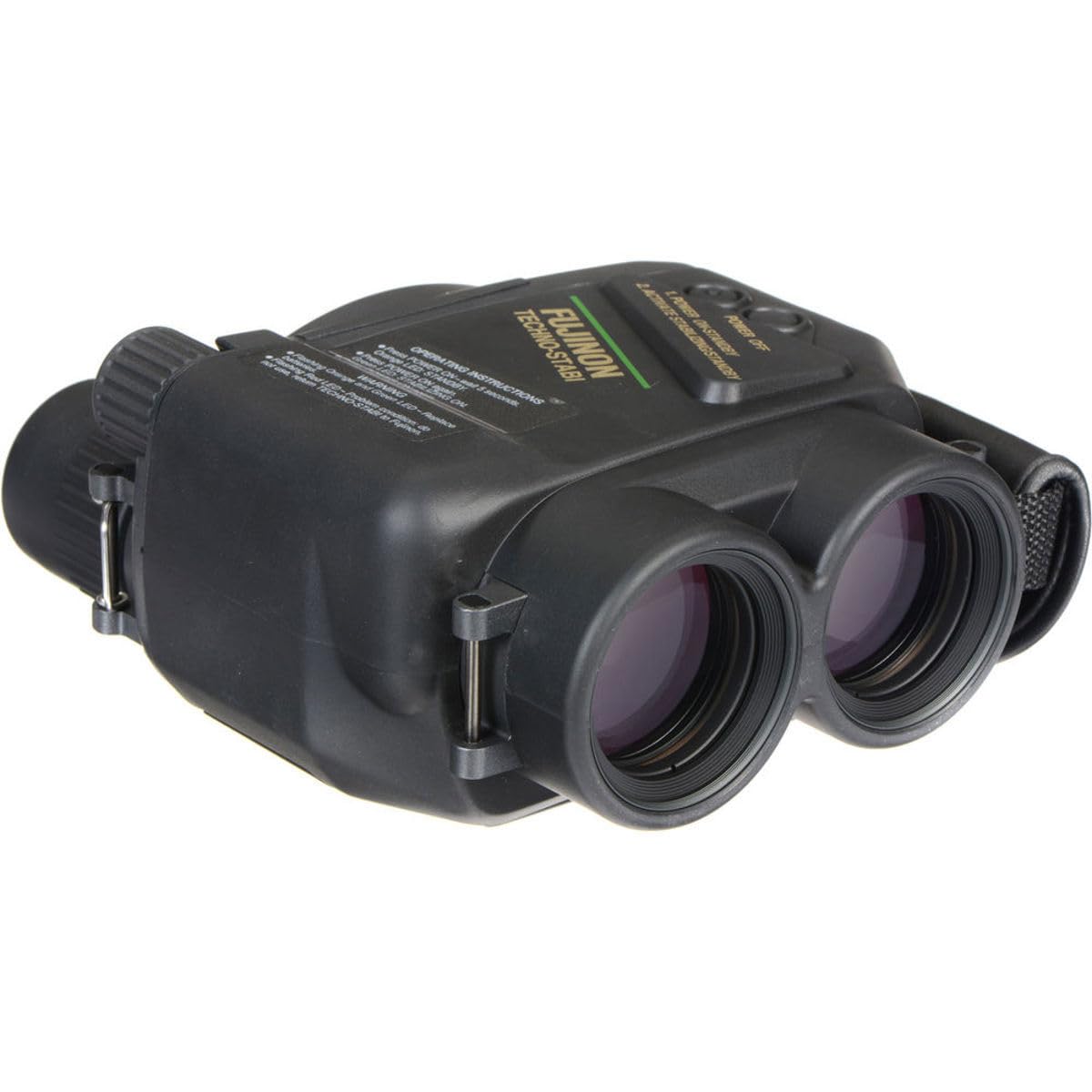
Fujinon Techno Stabi TS1440

85 /100
LBD Score Excellent

Key details

Magnification
14x
Stabilization
5 degrees
Objective Lens
40 mm
Water Resistance
Waterproof
View on Amazon

Fourteen power is more than most boaters need—until the channel marker is a speck and the horizon is doing its best to move. The Fujinon Techno Stabi TS1440 is built for that moment: 14x magnification, a 40mm objective, true waterproof and fogproof sealing, and a 5-degree stabilization range. It is the most marine-specific pair in this group, and the one we hand to someone heading offshore in gray light.

In use, the 14x view is a clear step up in reach from the 10x Canon, and the stabilization holds a distant boat steady enough to read its hull. We were impressed by the 40mm objective's brightness, which keeps color and contrast intact when the sky turns flat. What we did not love is the bulk: this is a big, heavy pair, and it takes up more room in a day bag than the compact Canon. The stabilization is the reason you bought it, and it is also the reason the body is so substantial.

Waterproofing is the real separator. The Canon 12x36 is lighter and easier to carry, but it is only water resistant; the Fujinon is the one we trust when spray comes over the bow. Its 14x view is narrower than the 10x Canon's, so it is not the pair for close-in birds or a busy marina. For open water, long-range identification, and wet conditions, the trade is worth it.

Pros

  • True waterproof and fogproof sealing
  • Powerful 14x view with 5-degree stabilization
  • Clear, bright 40mm optics

Cons

  • Battery life can be short with heavy stabilization use
Our verdict

We choose the Fujinon TS1440 when the day is wet and the target is far: 14x reach, true waterproofing, and 5-degree stabilization are worth the bulk.

Check Latest Price
3

Best Lightweight

Canon 12x36 IS III

88 /100
LBD Score Excellent

Key details

Weight
1.8 lb
Magnification
12x
Objective Lens
36 mm
Water Resistance
Water resistant
View on Amazon

At 1.8 pounds, the Canon 12x36 IS III is the pair we reach for when the binoculars have to live around your neck all day. It is the lightest pick here, and the 12x magnification gives you more reach than the 10x Canon without making the image feel jumpy. The 36mm objective keeps the package compact, and the stabilization is strong enough that the 12x view feels closer to a mounted glass than a shaky hand-held one.

The compromise is sealing. Canon calls this water resistant, not waterproof, so it is the one we choose for a protected cockpit or fair-weather boating rather than an open boat in rain. That is a real limit, but it buys you a lighter, less expensive pair that is still sharp in daylight.

For long days on the water, the lighter weight matters more than the missing 6mm of objective glass. The 12x36 is not as bright at dusk as the 42mm Canon, but it is crisp in daylight and easy to steady. If you want the best all-around view and can accept the heft, go with the 10x42; if you want a pair that disappears on your chest until you need it, this is the one.

Pros

  • Lightest at 1.8 pounds
  • 12x view with strong stabilization
  • Less expensive than the top pick

Cons

  • Stabilization button requires constant pressure
Our verdict

We reach for the Canon 12x36 IS III when weight matters most: it is light, steady, and sharp in daylight, though its water resistance is not full waterproofing.

Check Latest Price
4

Long-Range Scanning

SIG Sauer Zulu6 HDX 16x42

83 /100
LBD Score Excellent

Key details

Magnification
16x
Stabilization
OIS scan and target modes
Objective Lens
42 mm
Water Resistance
IPX-7 waterproof
View on Amazon

Two stabilization modes are the reason the SIG Sauer Zulu6 HDX belongs in this conversation. The 16x42 roof-prism body pairs OIS scan mode for sweeping the shoreline with target mode for locking onto a buoy or a bird, and the IPX-7 rating means it can take spray. On paper, that is the most flexible stabilization setup here.

We liked having separate scan and target modes; on moving water, the difference between sweeping a wide area and bearing down on one object is useful. The 16x magnification is the highest in our set, and it shows in the reach. It also shows in the narrow field of view, which makes picking up a moving target harder than with the 10x or 12x Canons.

The 42mm objective gives it a decent footprint for a 16x glass, and the waterproof body is ready for spray. For bright days and long-range scanning, the Zulu6 is a capable specialist. If you want one pair for all conditions, the Canon 10x42 is the safer default.

Pros

  • Two OIS modes: scan and target
  • IPX-7 waterproof roof-prism body
  • 16x reach with 42mm objective

Cons

  • Low-light contrast is a weak spot
Our verdict

We like the SIG Zulu6 for bright-day, long-range scanning: two stabilization modes and IPX-7 sealing in a 16x roof-prism package, provided you accept the narrow view.

Check Latest Price

How We Tested These Binoculars on the Water

We built the shortlist by narrowing to binoculars with built-in stabilization and bodies that could handle spray, then looked for a mix of full-size and compact models so we could compare them across different boats. We tested six pairs over eight months, on a center console, on a borrowed sailboat, and at the dock.

On the water, I stood on deck in a two-foot chop and tracked a channel marker until it either steadied or swam. We compared views at dawn and dusk, reading buoy numbers and picking out a breakwater, and noted when glare washed out contrast. We also checked hinge tension, eyecup play, whether the lenses fogged after a warm cabin to a cold dawn, and whether the rubber armor stayed put after a splash of salt water.

We weighed each pair, then wore it around our necks for a two-hour watch to see where it dug in. We adjusted interpupillary distance and diopter with bare hands and with sailing gloves, and checked whether the eyecups stayed put against sunglasses and whether the strap lug felt solid after a one-handed grab. For battery life, we logged hours of stabilization use and noted when the low-battery warning came on or the image began to drift.

We used each pair for scanning moorings, watching birds between anchorages, and stowing in a dry bag, then asked whether the view justified the weight and cost. The ones that rose to the top were the ones we reached for without thinking—not the ones with the longest spec sheet.

How to Choose Image-Stabilized Binoculars for Boating

Start With Sealing, Not Magnification

We put sealing ahead of magnification for exactly this reason: on a boat, the first question is not how far you can see but whether the binoculars can take spray. True waterproof sealing is the safer choice for an open cockpit; water resistant is a reasonable compromise for a protected helm and fair-weather use. The Canon 10x42 L IS WP and Fujinon TS1440 are the two picks here that claim true waterproofing, while the Canon 12x36 is only water resistant. If your binoculars will hang around your neck in rain or salt spray, pay for the sealing.

Match Magnification to the Water You Boat

Higher magnification sounds better until the boat moves. We prefer 10x for all-around deck use because a 10x42 gives a wide, bright view and is the easiest to hold steady; 12x adds reach without much penalty; 14x and 16x are for open water and long-range spotting, where the narrower field is a fair trade. The SIG Zulu6's 16x is the most powerful view here, but it is also the narrowest. If you mostly track birds and channel markers near shore, start at 10x or 12x.

How Stabilization Is Activated Matters

Stabilization is not just a yes-or-no feature. Some systems run while you hold a button; others let you press once and scan, or offer separate modes for sweeping and targeting. We prefer a system that does not tire your finger during a long scan. The Canon 12x36 requires constant pressure, which is the main handling compromise in that pick; the Canon 10x42 can be locked on, and the SIG's two modes are the most flexible setup here. Try the button before you commit.

Weight, Brightness, and Deck Comfort

A binocular that stays around your neck all day should be light, but low-light brightness comes from the objective lens and exit pupil. The Canon 12x36 is the easy all-day carry at 1.8 pounds, while the 10x42 adds heft and a 42mm objective for dawn and dusk. Check eye relief if you wear glasses: the Canon 10x42 offers 16mm, the Fujinon 13mm. A harness can make a heavier pair more tolerable, but it cannot make a dim view brighter.

Plan for Batteries and Spares

The Canon 10x42 runs on two AA batteries; the Fujinon uses four. Stabilization is the main drain, and battery life is one of the mixed notes on the Fujinon. Keep a spare set in the case and switch stabilization off between scans. We treat a fresh set of batteries the same way we treat a lens cloth: small, cheap insurance for the moment the view matters most.

Frequently Asked Questions

Final Verdict

For most boaters, the Canon 10x42 L IS WP is the safest buy in this set: true waterproof sealing, a bright 42mm view, and stabilization that holds a steady image without asking you to keep a button pressed. If you need more reach offshore, the Fujinon TS1440's 14x view and 5-degree stabilization are worth the extra bulk. If weight is the deciding factor, the Canon 12x36 is the one to carry—just keep it out of spray.