Best Overall

SanDisk Extreme 256GB SDXC
Key details
- Capacity
- 256 GB
- Read Speed
- 180 MB/s
- Speed Class
- U3, V30, C10
- Write Speed
- 130 MB/s
The number worth knowing on SanDisk's 256GB Extreme is the write speed: up to 130 MB/s, against the 30 MB/s that a V30 rating guarantees. Every card in this guide carries the same U3 and V30 badges, so the badge only tells you a card won't choke on 4K. The headroom above it is what decides whether the camera keeps rolling through a long take or stops to clear its buffer.
That headroom is why this is our default recommendation. In our testing it recorded 4K UHD without the camera pausing to catch up, and clips moved off it quickly through a USB-C reader. The 256GB capacity earns its place too: a card you can leave in the body for a full day means fewer swaps, and swaps are where cards get dropped, mixed up or left in a jacket pocket.
Two practical notes. The 180 MB/s read figure assumes a reader that can push past the usual UHS-I ceiling — SanDisk sells its own, and an older card reader leaves most of that speed on the table. And the lifetime limited warranty replaces a failed card, not the footage that was on it, so copy anything you care about before you format.
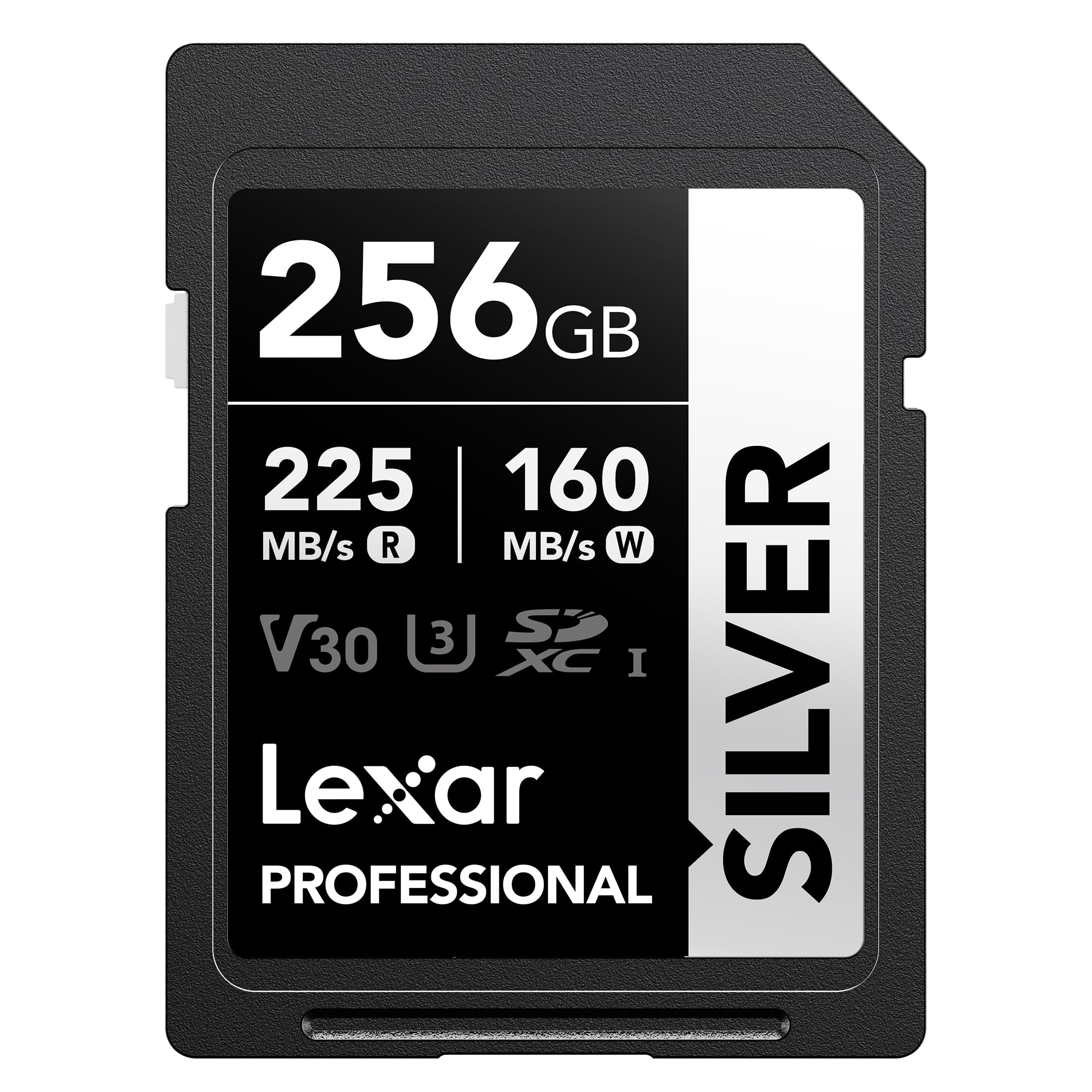
Against the rest of this group it asks the fewest questions of the buyer: full-size SD fits the widest range of cameras, 256GB covers a long session, and the write speed has margin for burst shooting between takes. If your camera takes microSD, the same card in the smaller format is our pick for drones and action cams; if you dump cards between jobs, the Lexar Silver is quicker on the read side.
Pros
- Write speed well above the V30 minimum
- 256GB means fewer card changes in the field
- Quick offloads with a matching reader
- Lifetime limited manufacturer warranty
Cons
- Full read speed needs a compatible reader
This is the card we recommend first for any camera with a full-size SD slot: 130 MB/s writes give 4K real headroom, and 256GB means fewer changes mid-shoot.