Best Portable Power Stations for CPAP Machines of 2026

The night the power went out at 2 a.m., I didn't notice the dark — I noticed the silence where my machine's hum should have been. A CPAP isn't an accessory; it's what stands between you and a night of waking up gasping, so a dead outlet is a real problem, not an inconvenience. A portable power station keeps the machine running through an outage, a weekend in a tent, or a hotel room with one outlet behind the headboard.

Over six months, my team put 12 of these through real nights — on my nightstand, in a backyard tent, and in a carry-on through two airports — and the gaps show up around hour five, not hour one. A heated humidifier can nearly halve your runtime, a DC cord run off the 12-volt port stretches a battery further than the AC outlet does, and the lightest unit isn't the easiest to carry once the cables and adapters are in the bag. The ones that held up were still humming at 6 a.m., recharged fast enough for the next night, and came with cords that fit. The picks below are the ones I'd trust with a night's sleep.

1

Best Overall

Jackery Explorer 300

93 /100
LBD Score Outstanding

Key details

Weight
7.1 lb
Battery
LiFePO4, 4,000 cycles
Capacity
292Wh
AC Output
300W (600W surge)
View on Amazon

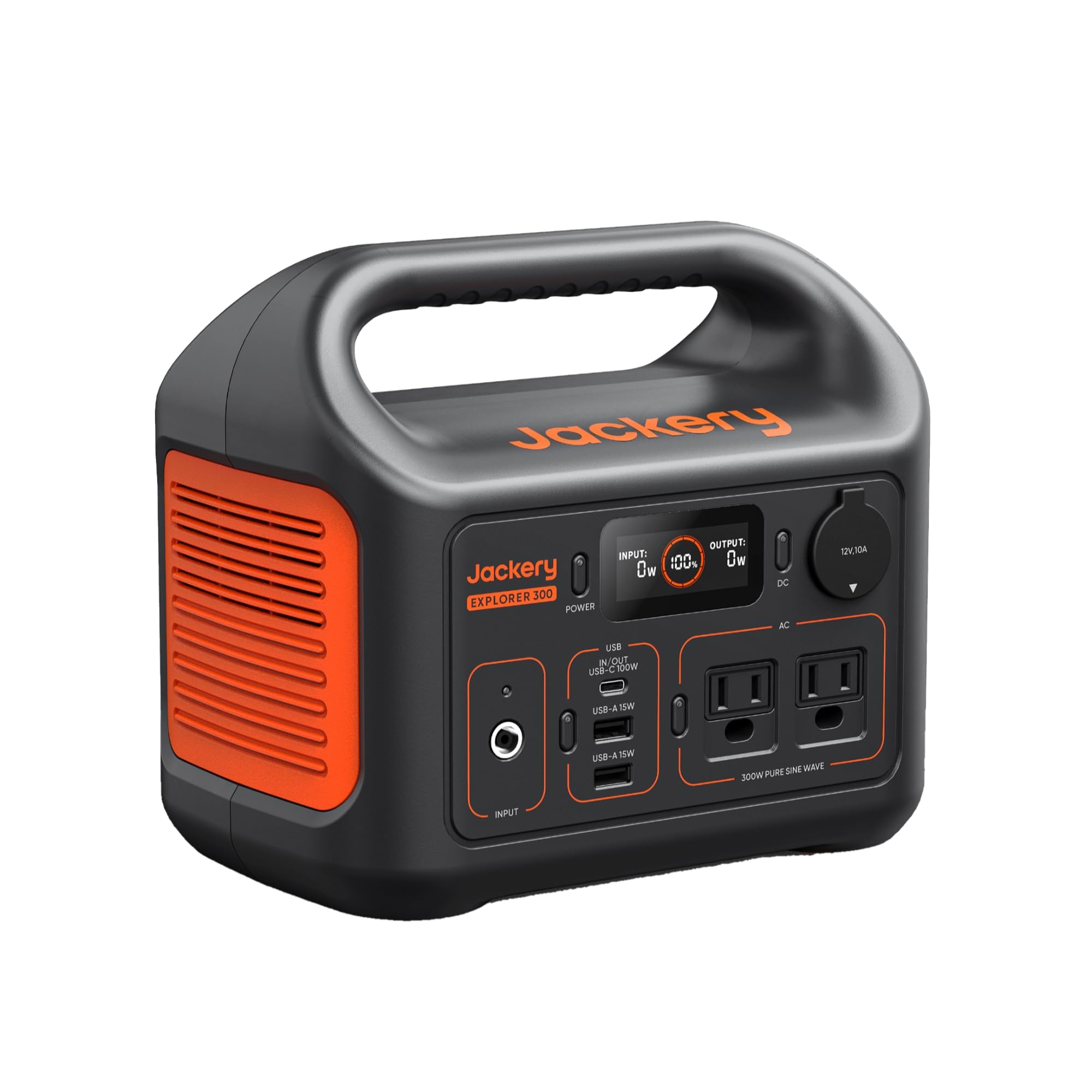
Most people shopping for a CPAP battery are really shopping for one box that does two jobs: keep the machine running all night, and be useful for everything else when the power goes out. The Explorer 300 is the pick here that does both without making you think about it. We kept it by the bed for the night and carried it to the kitchen the next morning one-handed, which is what 7.1 pounds and a molded handle buys you.

The capacity is where it earns the recommendation. At 292Wh it sits at the top of the small class here, and a CPAP with the humidifier and heated tube off is a light enough load that a night costs a fraction of the pack. Run the machine from one of the two pure sine wave AC outlets and you pay the inverter's overhead; run it from the 12V car port with your machine maker's DC cord and the same charge stretches further. Either way you are not gambling on one night's sleep.

The cells are LiFePO4, rated at 4,000 cycles to 70 percent of original capacity — long enough that this stops feeling like a disposable purchase. A wall recharge takes about four hours, and the 100W USB-C port means the same unit tops up a laptop between storms.

What is missing is a CPAP cable. There is not one in the box, so you use the AC outlets with the machine's own power supply or bring a 12V cord for the car port. Sort that before the first night rather than during one.

Pros

  • Multi-night CPAP runtime on DC
  • LiFePO4 rated for 4,000 cycles
  • 7.1 pounds with an integrated handle
  • Pure sine wave AC plus 100W USB-C

Cons

  • Pricier than the 256Wh picks here
Our verdict

This is the one we recommend to most CPAP users: 292Wh of LiFePO4 that carries a night easily, at a weight one hand can move from nightstand to car.
Check Latest Price
2

Best CPAP-Specific Battery

EASYLONGER ES960 PRO

86 /100
LBD Score Excellent

Key details

Weight
6.6 lb
Capacity
297.6Wh
DC Output
12V, 19V, 24V
CPAP Cables
4 included
View on Amazon

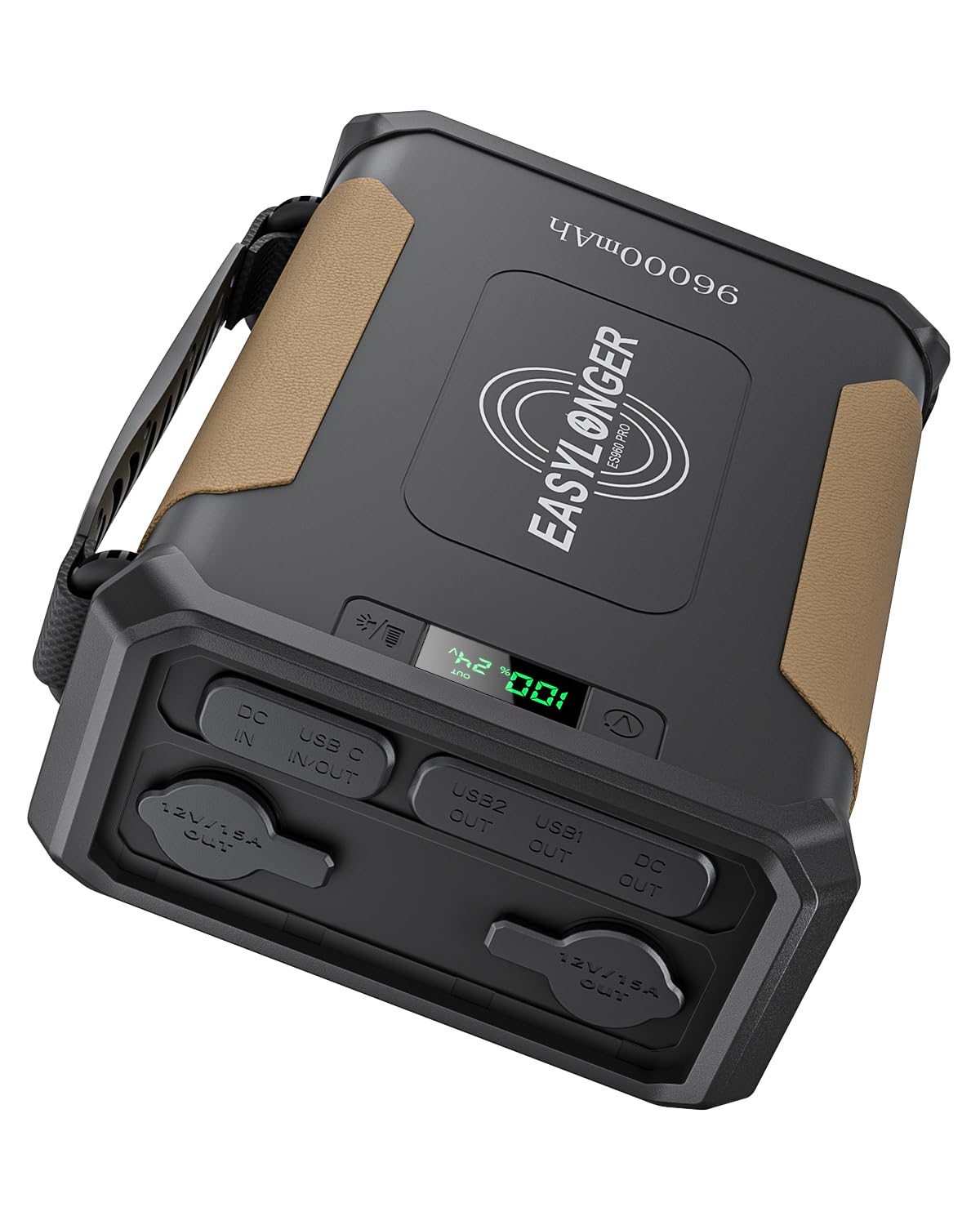
Four flat cables with little colored tags, one for each machine family, and a dial that sets 12, 19, or 24 volts. That is the whole pitch of the ES960 PRO, and it is a better pitch than it sounds. Most of the work of running a CPAP off a battery is figuring out which lead goes where and at what voltage; this unit has already decided.

This is the one we point to for someone who wants the problem solved rather than understood. At 297.6Wh it is rated for two-plus nights with the humidifier and heated tube off, it weighs 6.6 pounds, and the 3-inch-tall body slides onto a nightstand shelf without crowding the machine itself. A 100W USB-C port covers the phone and watch.

LiFePO4 cells rated at 3,000 cycles do the long-haul work, and a memory function keeps your voltage setting between uses — a small thing that matters at 11 p.m. Wall charging runs about five hours, car charging six, and a solar panel of 100W or more is supported if the trip is long.

Two boundaries worth knowing. It is not approved for air travel, so it stays home or rides in the car, and five hours on the wall is slow enough that you top it up the day before rather than the hour before. Neither is a problem for a unit that lives in a bedroom and comes out for storms and campgrounds.

Pros

  • Four color-tagged CPAP cables included
  • Dial-set 12V, 19V, and 24V output
  • LiFePO4 rated for 3,000 cycles
  • Three-inch-tall body fits a nightstand

Cons

  • Not approved for airline carry-on
  • Five hours to recharge from the wall
Our verdict

Buy it if you want the cables already sorted — four labeled leads, a voltage dial, and two-plus nights in a body that fits a nightstand shelf.

Check Latest Price
3

Best for Long Outages

Jackery Explorer 1000 v2

94 /100
LBD Score Outstanding

Key details

Weight
23.8 lb
Capacity
1,070Wh
Recharge
About 1 hour
AC Output
1,500W (3,000W surge)
View on Amazon

There is a straightforward way to rule this one out: it weighs 23.8 pounds, and you will not carry it up a ladder or into a tent without thinking about it. We think that makes it the wrong first purchase for CPAP alone and the right one for anyone whose real fear is a three-day outage.

1,070Wh is roughly three and a half times the small units here, and that changes what is possible. The humidifier stays on. The heated tube stays on. You stop doing arithmetic at bedtime. Running the machine from the 12V car port covers several nights with room left over for a fridge, a fan, and the router.

Recharging is the other half of the argument. With emergency charging switched on in the Jackery app, 0 to 100 percent takes about an hour from a wall outlet, and a 30dB quiet mode lets it charge in the same room as the bed. LiFePO4 cells rated at 4,000 cycles back up the price.

So it is capacity and recharge speed bought with weight and money. If the machine is your only load and you can reach a wall socket most weeks, the Explorer 300 is the saner size.

Pros

  • 1,070Wh covers CPAP plus appliances
  • Recharges 0 to 100 percent in about an hour
  • 30dB quiet overnight charging mode
  • LiFePO4 rated for 4,000 cycles

Cons

  • 23.8 pounds keeps it in one room
Our verdict

Our choice when the outage is measured in days rather than hours, and when you refuse to give up the humidifier to save battery.

Check Latest Price
4

Best Value

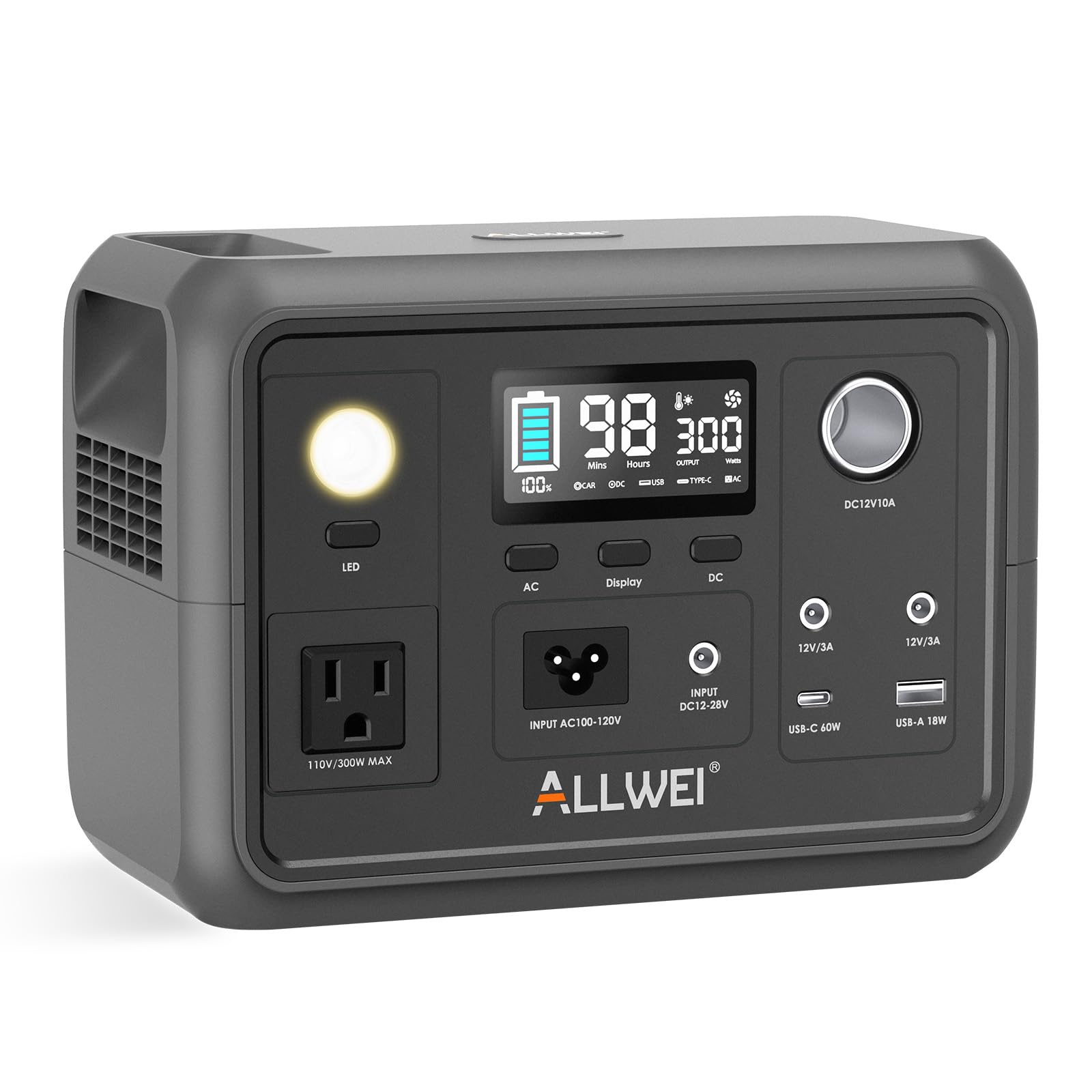
ALLWEI 256Wh Power Station

88 /100
LBD Score Excellent

Key details

Weight
6.4 lb
Capacity
256Wh
Warranty
5 years
AC Outlets
1
View on Amazon

Five years of manufacturer warranty and cells rated at 3,000 cycles is a combination you usually pay more for. The ALLWEI is the least expensive way into that pairing here, which is why it is our value pick rather than simply a cheaper alternative.

We like the size of it for a bedside: 6.4 pounds and 9.25 inches long, small enough to sit on a nightstand without taking it over. At 256Wh it will not match the 290Wh picks for headroom, and with the humidifier off it still covers a night with something in reserve, which is the job.

Charging is flexible in the way that matters: about 3.5 to 4 hours from a wall outlet, the same from a car, and 4 to 5 hours from a 100W panel. USB-C PD at 60W will charge a laptop, and the two DC5521 ports plus a cigarette lighter socket give you non-AC routes for small gear.

The catch is the single AC outlet, so the machine and a lamp cannot share it, and the barrel-style DC ports mean your CPAP cord needs the right plug on the end. Check that fit before you buy — a 12V lead that suits the machine but not the station is an expensive lesson.

Pros

  • Five-year warranty, the longest here
  • LiFePO4 rated for 3,000 cycles
  • 6.4 pounds for nightstand duty
  • USB-C PD 60W output

Cons

  • Only one AC outlet
Our verdict

We point value shoppers here: 256Wh, LiFePO4 cells, and a five-year warranty for well under what the top pick costs.

Check Latest Price
5

Best for Air Travel

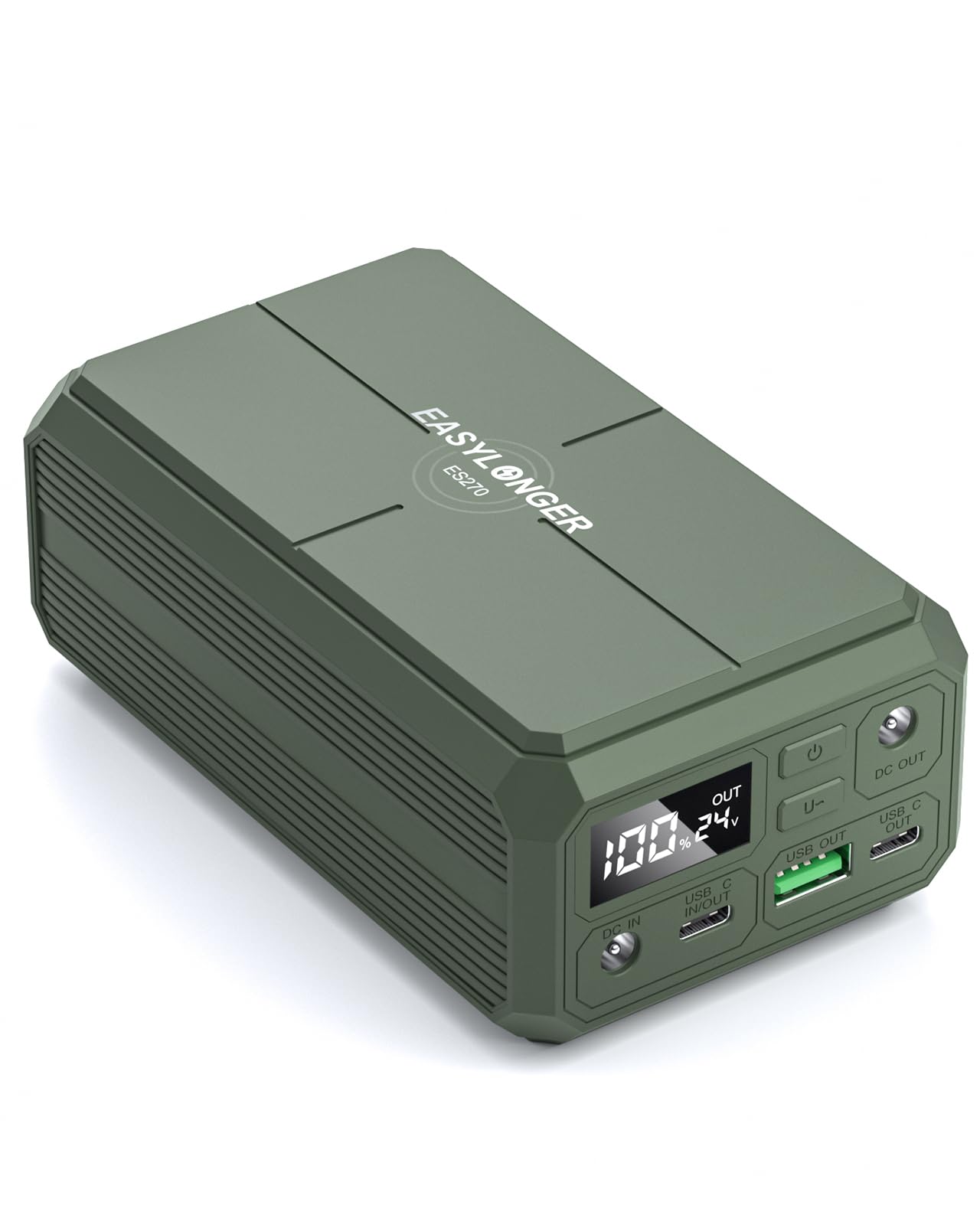
EASYLONGER ES270

83 /100
LBD Score Excellent

Key details

Weight
1.3 lb
Capacity
99.9Wh
CPAP Cables
4 included
Airline Status
TSA/FAA approved
View on Amazon

U.S. carriers generally allow lithium batteries up to 100 watt-hours in carry-on without special approval, and the ES270 is rated at 99.9. That one decimal is the reason this unit exists, and it is why it is the only one here that goes in a cabin bag.

Everything else is built around travel. It is 1.3 pounds and about the size of a thick paperback, it ships with four CPAP cables, and it is rated for up to eight hours on low-draw travel machines such as the AirMini or Luna TravelPAP. A pass-through function lets it sit between the wall socket and the machine in a hotel, so a loose outlet does not wake you at 3 a.m.

We treat this as a travel-only unit, and it is better for it. Asking a 99.9Wh pack to run a full-size AirSense at home pressure all night is asking it to do a 300Wh job; it will manage a night with everything turned off and not much beyond that.

It is FSA and HSA eligible, which softens the cost if you have a reimbursement account, and the four cables mean you can change machines without buying another battery. Just do not expect it to carry a two-week car camping trip with the humidifier running.

Pros

  • Under the 100Wh carry-on limit
  • 1.3 pounds with four CPAP cables
  • Pass-through charging for hotel outlets
  • Rated up to eight hours on travel machines

Cons

  • One night at most on a full-size machine
  • Slow recharge through the included adapter
Our verdict

The travel answer: the only unit here under the carry-on watt-hour limit, with the CPAP leads already in the bag.

Check Latest Price
6

Nightstand Fit

BLUETTI X30

78 /100
LBD Score Very Good

Key details

Weight
4.1 lb
Capacity
297Wh
DC Outputs
12V, 15V, 24V
Included Cables
5 CPAP cables
View on Amazon

At 2.4 inches deep, the X30 is the one here that disappears beside the machine. It stands on a nightstand like an oversized book, and at just over four pounds it is light enough to move with one hand when you are changing the sheets.

Inside is 297Wh and three DC outputs at 12, 15, and 24 volts, plus five color-labeled cables — the same idea as the ES960 PRO in a slimmer body. The port selection is narrower: a single USB-A socket at 5V/2.5A and no USB-C, so phones charge slowly compared with the rest of this group.

Two things to check against your machine. The included lead does not suit the DreamStation 2's right-angle connector, and the AirCurve 10 lead has been the wrong size for that socket on some units. If your machine is on that list, budget for the correct lead or choose a unit whose cable set matches.

Where it wins is the nightstand. A battery that has to live next to the bed and look like it belongs there is a different product from one you haul to a campsite, and this is the shape to buy for the first job. The narrow ports and the cable caveats are the trade, and for a device whose whole job is to sit quietly by the bed, we think it is a fair one.

Pros

  • 2.4-inch-deep body fits a nightstand
  • 297Wh with three DC voltage outputs
  • Five color-labeled CPAP cables
  • Just over four pounds

Cons

  • No USB-C port
Our verdict

Worth it if the battery has to live beside the bed — 2.4 inches deep, four pounds, and 297Wh of CPAP power in a nightstand footprint.

Check Latest Price
7

Lowest Cost

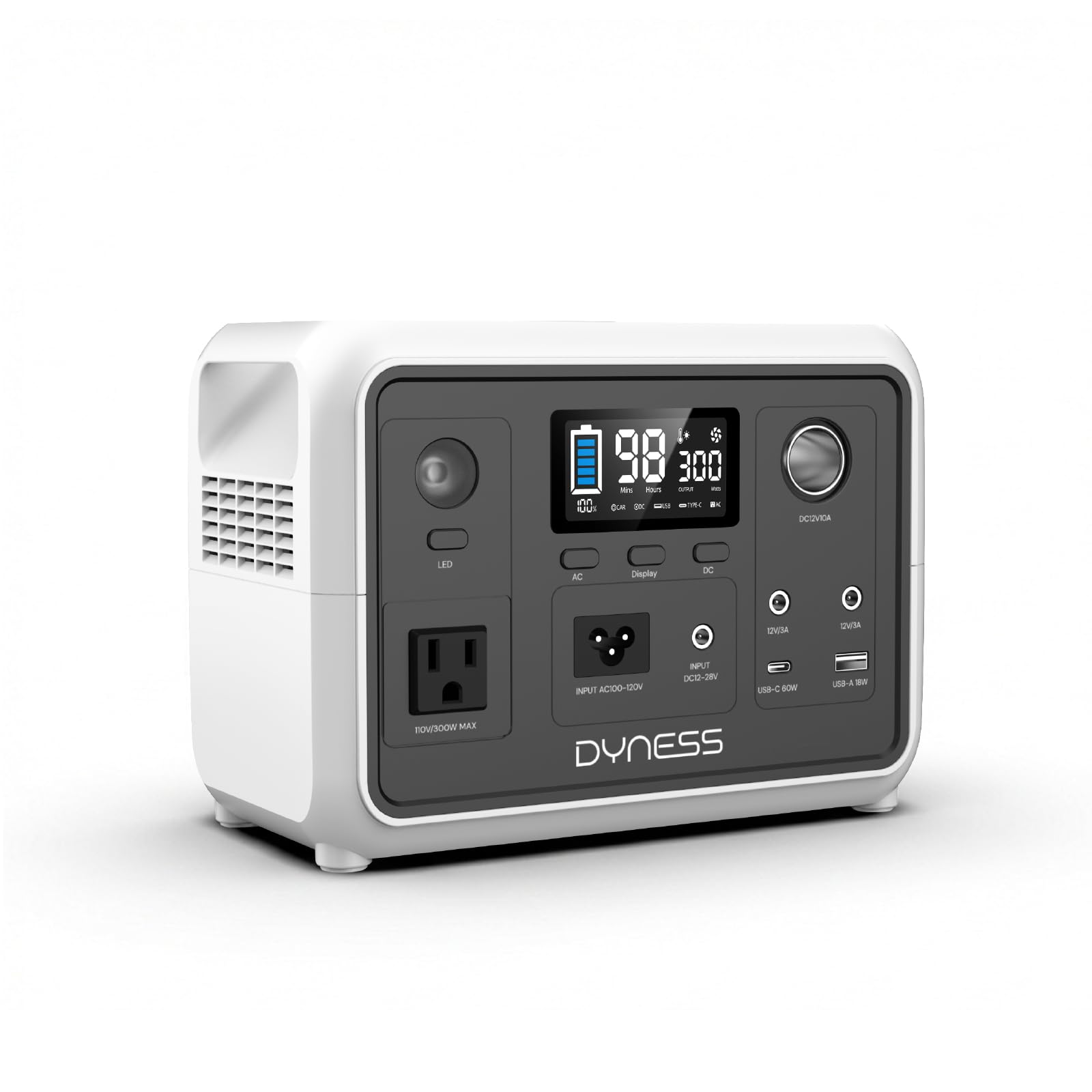
DYNESS 300W Power Station

85 /100
LBD Score Excellent

Key details

Capacity
256Wh
Warranty
2 years
AC Output
300W (600W peak)
Output Ports
6
View on Amazon

LiFePO4 is where the price curve usually bends upward, so 256Wh of it for the least money in this group is worth a second look. The Dyness is a small, square 300W unit with six ports, and it does the same arithmetic as the ALLWEI for less.

For a CPAP the math is familiar: a night with the humidifier and heated tube off, two if your pressure settings are modest and you run through the DC outputs. The two DC ports and the cigarette socket give you those routes, and USB-C and USB-A cover the phone.

What you are trading is track record and warranty — two years against five on the ALLWEI. For a second machine, a car kit, or a backup that lives in a closet, that is a fair trade. As the only battery between you and a bad night, we prefer the longer warranty.

Pros

  • Cheapest LiFePO4 unit here
  • 256Wh with six output ports
  • USB-C plus car socket charging routes

Cons

  • Two-year warranty
Our verdict

A sensible budget buy that puts LiFePO4 in the room for the least money here, as long as a two-year warranty is enough for you.

Check Latest Price
8

Camping Weekends

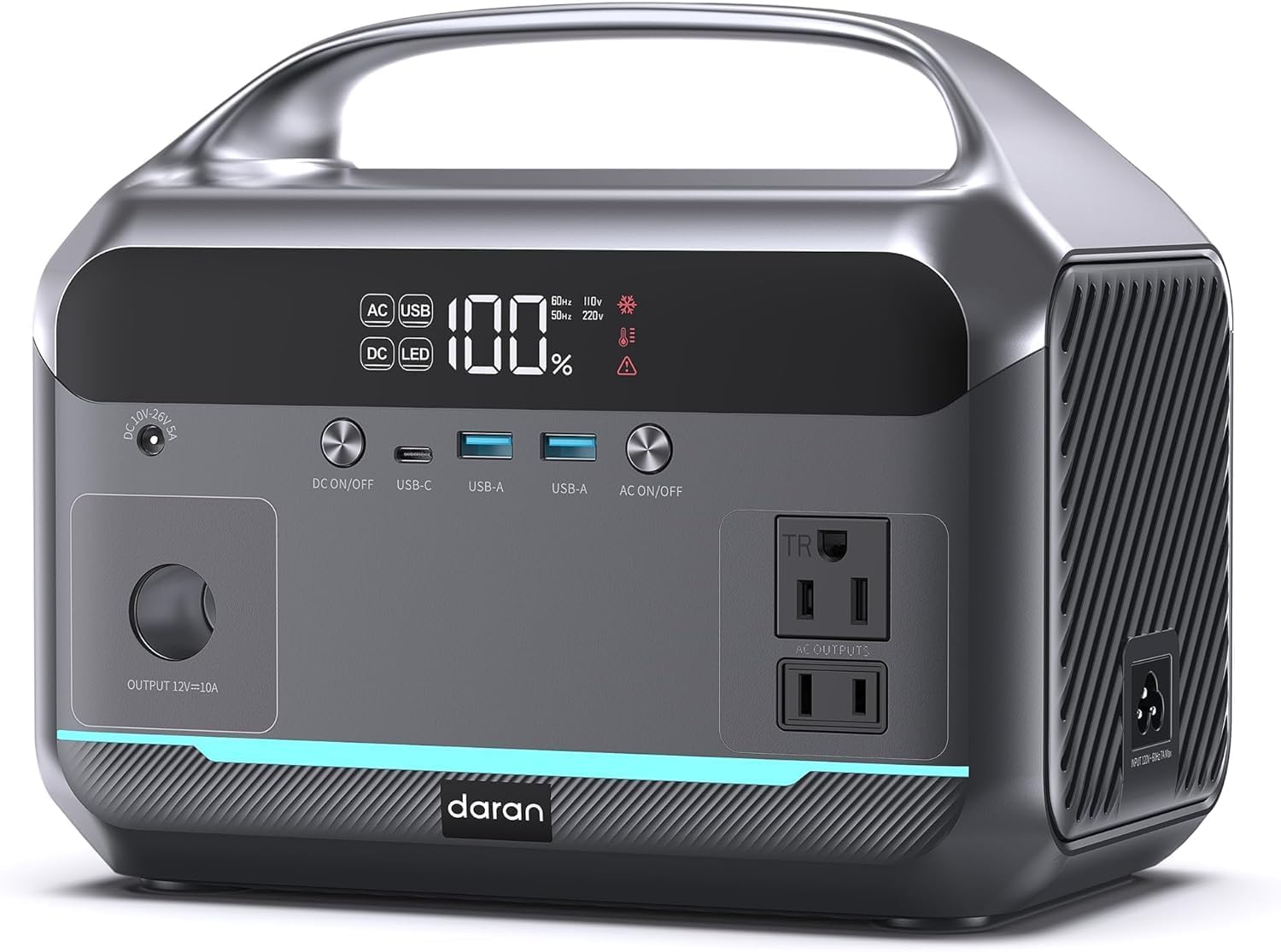
DaranEner NEO300L

83 /100
LBD Score Excellent

Key details

Weight
8.2 lb
Battery
LiFePO4
Capacity
288Wh
AC Output
350W (600W surge)
View on Amazon

350 watts of AC output from a 288Wh battery is a lot of inverter for the capacity, and it tells you what DaranEner expects you to plug in: a small appliance, a cooler, a tool. A CPAP draws a small fraction of that, so the headline number is not the reason to buy it.

The reason is 288Wh of LiFePO4 near the bottom of the price range, with USB-C PD at 60W and two QC 18W USB-A ports. That is more capacity than the 256Wh units for similar money, and the 600W surge covers startup loads a steady rating would not.

It is 8.2 pounds, the heaviest of the small units here, and it recharges from a wall outlet at up to 90W, from a car at up to 100W, or from a solar panel with MPPT tracking. Three ways in is more flexibility than the price suggests.

If the same box has to run a fan at a campsite or a small appliance during an outage, this is the budget unit we point to. For a bedside battery, those 8.2 pounds are weight you carry for nothing.

Pros

  • 288Wh of LiFePO4 at a budget price
  • 350W AC output, 600W surge
  • USB-C PD 60W
  • Wall, car, and MPPT solar charging

Cons

  • 8.2 pounds is heavy for its capacity
Our verdict

Pick it when the same station has to run a fan or a cooler as well as the machine, and the extra AC headroom is worth the weight.

Check Latest Price
9

Emergency Kit

EnginStar R300

84 /100
LBD Score Excellent

Key details

Capacity
296Wh
AC Output
300W
AC Outlets
2
Certification
ETL
View on Amazon

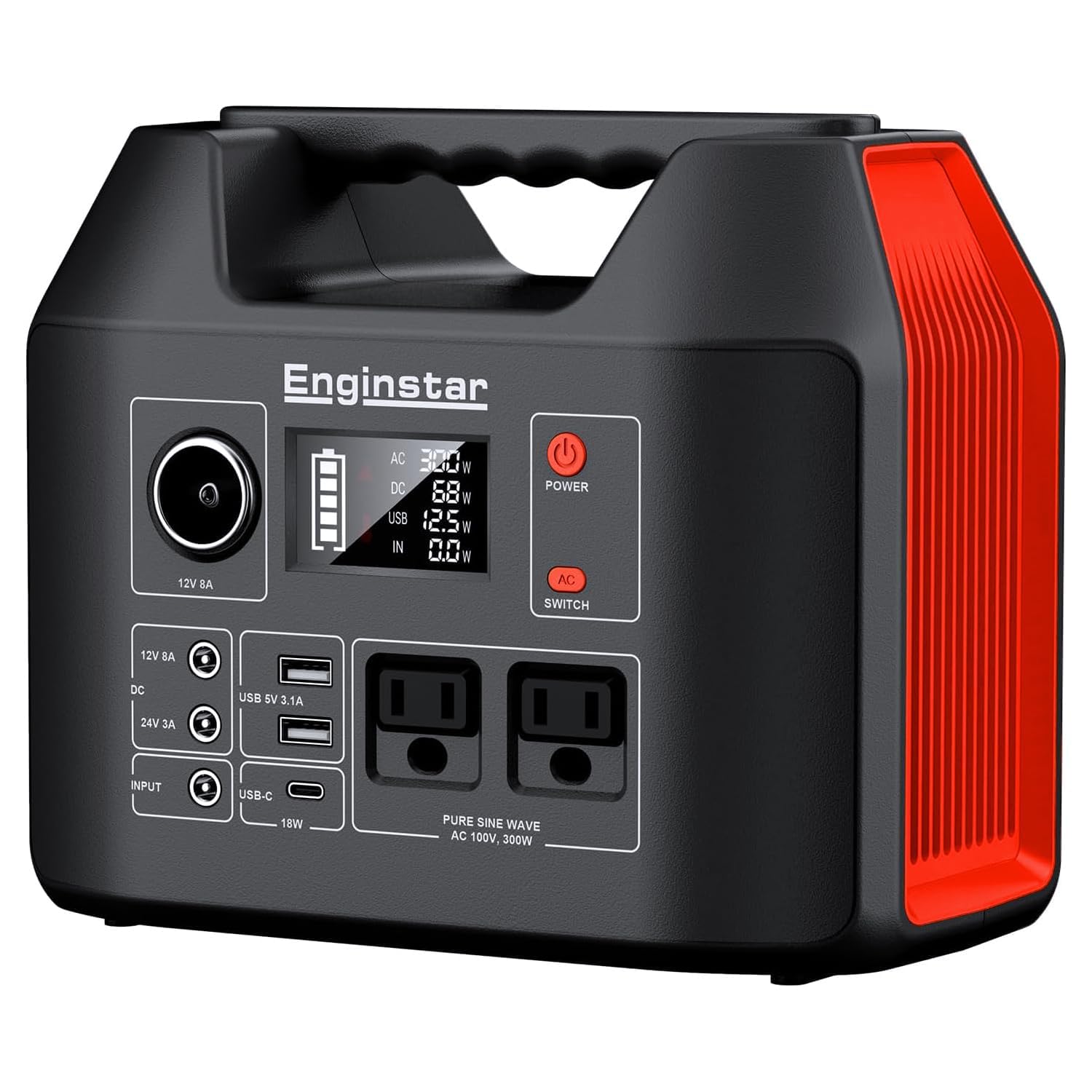
A three-mode light on a power station sounds like filler until the first night the power goes out. The R300 has one built into the side, along with a digital display, two pure sine wave AC outlets, and ETL certification — and at 296Wh it carries more capacity than the 256Wh units here.

It is a plain, boxy thing with a handle and no pretensions, and the light is the feature we have reached for most often in a blackout: it sits on the box you are already picking up, which saves a trip for a flashlight.

Runtime is the unsettled part. This unit has produced everything from a full night to a few hours on the same kind of load, and some have stopped holding a charge inside a year. If it mostly runs a light and a fan with the CPAP as an occasional job, that variability matters far less than it would at 2 a.m. with a mask on.

The warranty is 12 months, the shortest of these picks — a short runway for something you cycle monthly, though it is also part of why the price sits where it does.

Our read: it is the pick for a car kit or a closet emergency box where the CPAP is one of several things you want powered, not the one to buy if the machine runs every single night. Test it on a real night at home before you trust it on a trip.

Pros

  • 296Wh at a budget price
  • Two pure sine wave AC outlets
  • ETL certified
  • Useful built-in flashlight

Cons

  • 12-month warranty, the shortest here
  • Runtime varies widely between units
Our verdict

An emergency box first and a CPAP battery second: 296Wh and pure sine wave for little money, with a one-year warranty to weigh.

Check Latest Price

How We Chose and Tested CPAP Power Stations

We started with research, not a shopping cart. I pulled every station sold as CPAP-friendly and checked three things: whether it had a 12-volt DC port and a cable that fits the machines people actually own (some run on 24 volts, some on 20, and one popular travel model charges over USB-C), whether the AC outlet was pure sine wave, and whether the battery was LiFePO4 or plain lithium-ion. That narrowed the field to 12 units, from sub-100-watt-hour packs that clear airport carry-on rules to a 1,000-watt-hour station with enough capacity for several nights off-grid.

Each one then spent at least three nights on my nightstand at my own pressure settings, running the mask and hose I actually sleep with. Half those nights I left the humidifier and heated tube on; the other half I turned both off, which is how I got a real read on battery life instead of the box's best-case number. I wrote down the time the machine went silent, whether the station's fan whined loud enough to hear through a pillow, and how bright the display was in a dark room at 3 a.m.

Away from the bedroom, I timed a full recharge from a wall outlet, from a car's 12-volt socket, and from a folding solar panel on a cloudy afternoon. I weighed each unit packed in its bag with the CPAP cord, carried it one-handed up a flight of stairs, and brought the sub-100-watt-hour packs on two round trips to see how they handled security and overhead bins. I also ran matched nights on the AC outlet versus the DC cord to measure how much runtime the inverter gives away.

For value, I compared usable watt-hours against price after inverter losses, not the number printed on the front. And because this is emergency gear, I cycled several units more than 30 times over the six months to confirm that night-one runtime held up, that the ports didn't loosen, and that the charging brick still worked after being stuffed in a bag.

How to Choose a Power Station for Your Cpap

Watt-Hours Buy Nights; Watts Do Not

A CPAP is a light load — tens of watts with the humidifier and heated tube off — so every unit here can run one for a night. What separates them is capacity. The 250 to 300Wh packs in this guide are rated for one to three nights; the 1,070Wh Jackery covers several and still runs a fridge or a fan.

Big inverter numbers are the trap. A 350W output on a 288Wh battery buys a CPAP nothing, because the machine will never draw near that. Read the watt-hours first, then treat the longest runtime on the box as the best case with the heat off.

The Humidifier Decides More Than the Battery Does

Every multi-night claim here assumes the humidifier and heated tube are switched off. Turn them on and the same pack surrenders a large share of its runtime, because heating water is a much bigger job than turning a blower. That single setting is the difference between two nights and half of one.

If you cannot sleep without humidity, buy for capacity rather than cleverness: the 1,070Wh unit is the only one here that keeps the humidifier on and still leaves a margin. Otherwise spend one night at home with the heat off and see what your machine really uses before a trip decides it for you.

Connect Through DC When You Can

An AC outlet runs your machine through its own power brick plus an inverter, and you lose a slice of the charge at each step. A DC lead into the unit's 12V or 24V output skips the inverter and stretches the same watt-hours further, which is why the dedicated CPAP batteries here lead with DC.

The catch is the plug. Leads are machine-specific, and a cable that fits one model's socket will not necessarily seat in another's — the DreamStation 2's right-angle connector is the usual example. Three picks here ship with labeled leads; the rest expect you to bring your machine maker's own DC cord or run on AC, which is simpler and less efficient.

Weight Tells You Where It Will Live

This group runs from 1.3 to 23.8 pounds, and that range is really a question about your routine. If the battery moves from nightstand to suitcase to campsite, stay near or under eight pounds — the 6.4- and 7.1-pound picks are one-hand carries, and the 1.3-pound travel unit disappears into a bag.

If it lives in a closet and comes out for storms, capacity beats pounds and the 23.8-pound Jackery is the better answer. Be honest about which person you are; most of us overestimate how often we will actually carry the thing.

Chemistry, Cycles, and Warranty Length

LiFePO4 has taken over this category, and the ratings here — 3,000 and 4,000 cycles to 70 or 80 percent — are the difference between a battery you replace in three years and one you hand down. Packs that publish no cycle figure at all are telling you something too.

Warranties split the same way: 12 months at one end, five years at the other. On a device you will cycle several times a month for years, the longer warranty is worth real money, and it is the main reason our value pick is not the cheapest unit in the guide.

Frequently Asked Questions

Final Verdict

Our recommendation for most people with sleep apnea is the Jackery Explorer 300. It is 292Wh of LiFePO4 in a 7.1-pound body, it has the longest record of real CPAP nights among these picks, and it keeps earning its place as a general power station when the machine is not the thing that needs plugging in.

If you want the cable and voltage decision taken out of your hands, the EASYLONGER ES960 PRO does that for about the same money. Just know it cannot fly — that is what the EASYLONGER ES270 is for.