Best Portable Power Stations for Home Backup of 2026

A portable power station is not a whole-home generator, and that's the point: it waits in the closet until the grid drops, then keeps the fridge, router, and a few lamps alive without fumes or a fuel run. Box copy tells you almost nothing about how one will behave at 2 a.m., six hours into an outage. Over six months, I lived with eight of them—from a lunchbox-size unit to a bruiser that can carry a fridge—during planned breaker drills, weekend RV trips, and one real storm outage.

What separates a useful home-backup unit from a paperweight is less glamorous than wattage: usable capacity after inverter losses, a UPS-style switchover fast enough to keep a desktop from rebooting, and a recharge time that fits between outages. I paid attention to LiFePO4 chemistry and compatibility—whether the built-in battery plays nicely with solar panel voltages and the gear you already own—along with outlet mix, fan noise, and how the handles and port covers hold up. Value came down to cost per usable watt-hour. The picks below are the survivors.

1

Best Overall

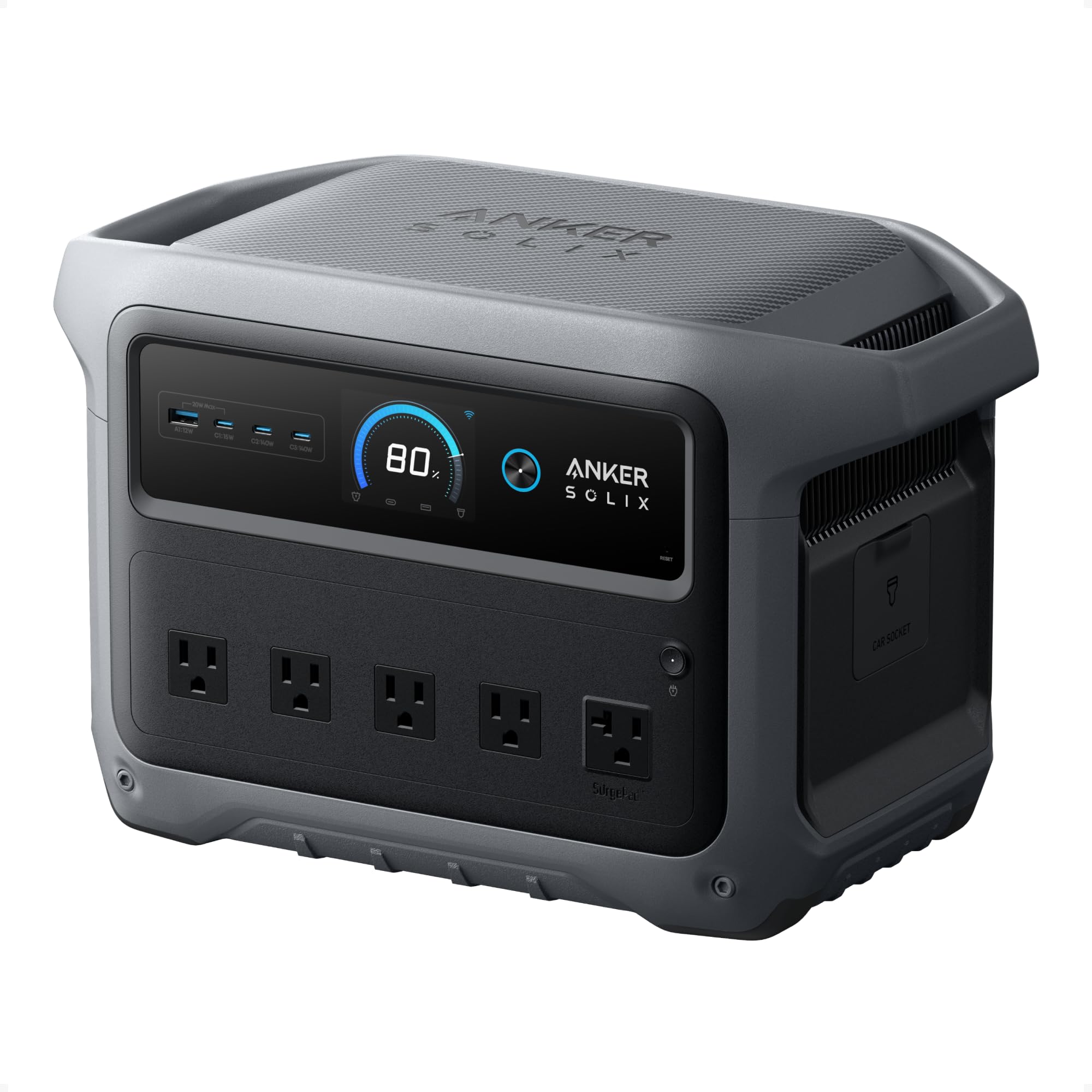
Anker SOLIX C1000 Gen 2

93 /100
LBD Score Outstanding

Key details

Battery
LiFePO4, 4,000 cycles
Capacity
1,024Wh
Recharge
49 min
AC Output
2,000W (3,000W peak)
View on Amazon

The 49-minute recharge is the first thing we noticed, but the 2,000W continuous output is what makes the SOLIX C1000 Gen 2 our default for home backup. A 1,024Wh LiFePO4 battery is sized for the essentials rather than the whole panel: fridge, router, lights, phones, and a fan, with a 3,000W peak for compressor startup. We like that combination because it closes the gap between a small camping battery and a 2kWh unit that is a chore to move.

The port layout covers AC appliances and USB devices without a dongle, and the app is where you enable the 1,600W HyperFlash charge. That is a useful reminder that the fastest setting is optional: you can use a slower charge when you are not in a hurry. The 1,024Wh capacity is not huge for a whole-house plan, but it is the right size for a hallway battery that has to be ready before a storm.

What we appreciate most is the long-game hardware. The LiFePO4 cells are rated for 4,000 cycles to 80%, and the five-year warranty is the coverage we want on a battery that may sit idle for months. That is why this one earns the top spot over lighter 1kWh units: it is built to be the battery you keep, not just the one you take camping.

The compact footprint and built-in handle make it easy to keep near the fridge or desk, and the screen gives you a quick read on draw without opening the app. Just do not ask it to carry a high-wattage heater or a whole-home circuit.

Pros

  • 2,000W continuous output with 3,000W peak
  • 49-minute full recharge through the app
  • LiFePO4 rated for 4,000 cycles
  • Five-year warranty

Cons

  • 24.9-pound body is a two-hand lift
Our verdict

Most homes should start here: the SOLIX C1000 Gen 2 pairs 2,000W of output with a 49-minute recharge and LiFePO4 endurance in a package you can still move.

Check Latest Price
2

Best Lighter Alternative

Jackery Explorer 1000 v2

94 /100
LBD Score Outstanding

Key details

Weight
23.8 lb
Capacity
1,070Wh
Recharge
1 hr
AC Output
1,500W (3,000W surge)
View on Amazon

The Explorer 1000 v2 is the 1kWh station we treat as a crossover: 1,070Wh and 1,500W are enough for a fridge, router, lights, and phones, and the one-hour emergency recharge makes it easy to top up between storms. It also weighs 23.8 pounds, light enough for one person to carry from the garage to the kitchen without planning a route. For a household that wants one battery for camping and outage duty, that combination earns it a runner-up spot.

Where it gives ground to the Anker is output. The 1,500W continuous rating and 3,000W surge are fine for a standard fridge and small appliances, but a 2,000W station has more headroom for a microwave or space heater. We like the three AC outlets and the 100W USB-C port for laptops and phones; the layout is simple enough that you can hand the unit to someone else during an outage.

The LiFePO4 battery is rated for 4,000 cycles to 70%, and the app adds a one-hour emergency charge mode. For camping, the 23.8-pound body and foldable handle are the details that matter; for home backup, the 100W USB-C port and three AC outlets cover the small stuff. It is the lighter, simpler alternative to our top pick, and the one we pack for a weekend.

Pros

  • 1,070Wh capacity in a 23.8-pound body
  • One-hour emergency recharge via app
  • LiFePO4 rated for 4,000 cycles
  • Three AC outlets plus 100W USB-C

Cons

  • 1,500W output limits high-draw appliances
Our verdict

A lighter 1kWh battery for camping and outage duty is exactly what the Explorer 1000 v2 delivers, with a one-hour recharge and a simple, portable layout.

Check Latest Price
3

Best for UPS Backup

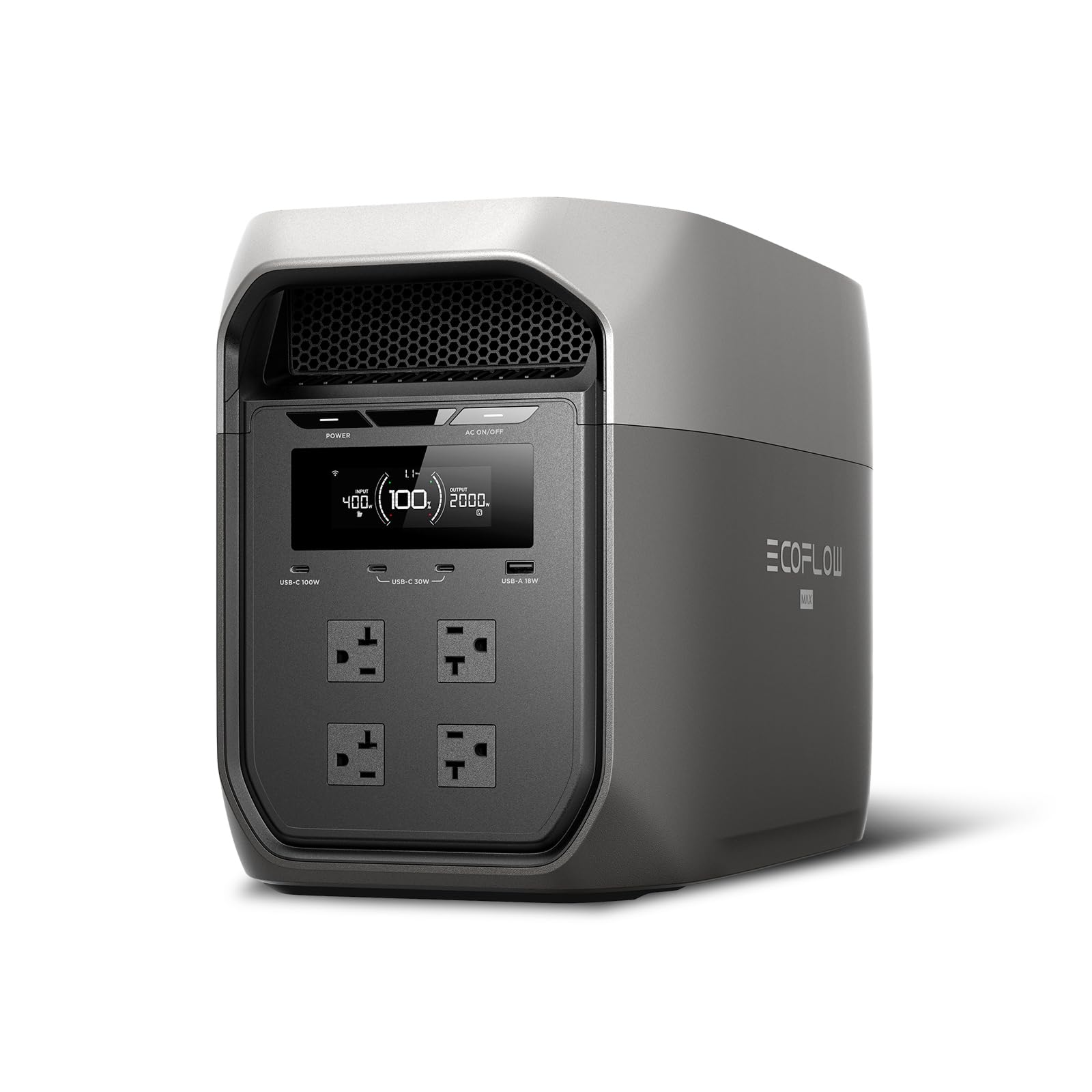
EcoFlow Delta 3 Classic

93 /100
LBD Score Outstanding

Key details

Weight
26.7 lb
Capacity
1,024Wh
AC Output
1,800W (3,600W surge)
UPS Transfer
10ms
View on Amazon

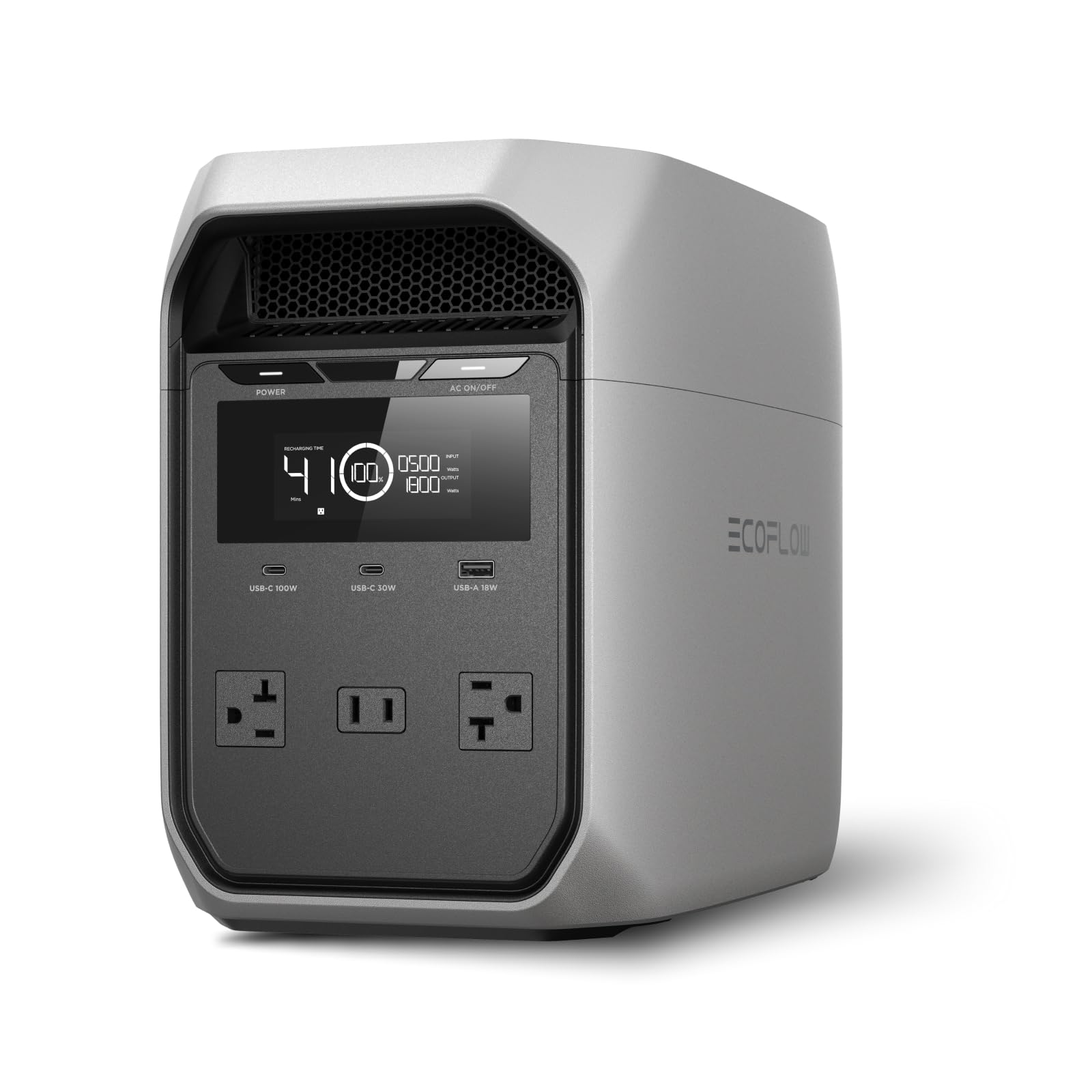
A 10ms transfer time is the detail that separates the Delta 3 Classic from a plain camping battery. Plug your desktop, router, or home-theater gear into it and the station can take over fast enough to keep those devices from rebooting when the grid blinks. That makes it a better fit for a desk-side outage plan than for a whole-home circuit, where its 1,024Wh battery and 1,800W output will run out of headroom quickly.

We like the 0–80% charge in 45 minutes and the full charge in about an hour; that speed turns a lunch break into enough time to refill the battery before an evening storm. The 3,600W surge and X-Boost mode give it more startup room than the 1,800W continuous rating suggests, though you should still check the label on a fridge or microwave before counting on it. At 26.7 pounds, it is portable enough to move between rooms, but not something to carry up a ladder.

The LiFePO4 cells are rated for 10+ years of daily use, and the five-year warranty backs that up. For the electronics that matter most in a short outage, the fast UPS switch is the feature that earns it a spot. This is a battery to keep near the desk, not one to haul to a job site.

Pros

  • 10ms UPS transfer for sensitive electronics
  • 1,800W output with 3,600W surge
  • 0–80% recharge in 45 minutes
  • Five-year warranty

Cons

No notable drawbacks to flag.

Our verdict

The Delta 3 Classic is the desk-side backup we recommend: its 10ms UPS switch and 1,800W output protect electronics without a generator.

Check Latest Price
4

Best for Long Fridge Runtime

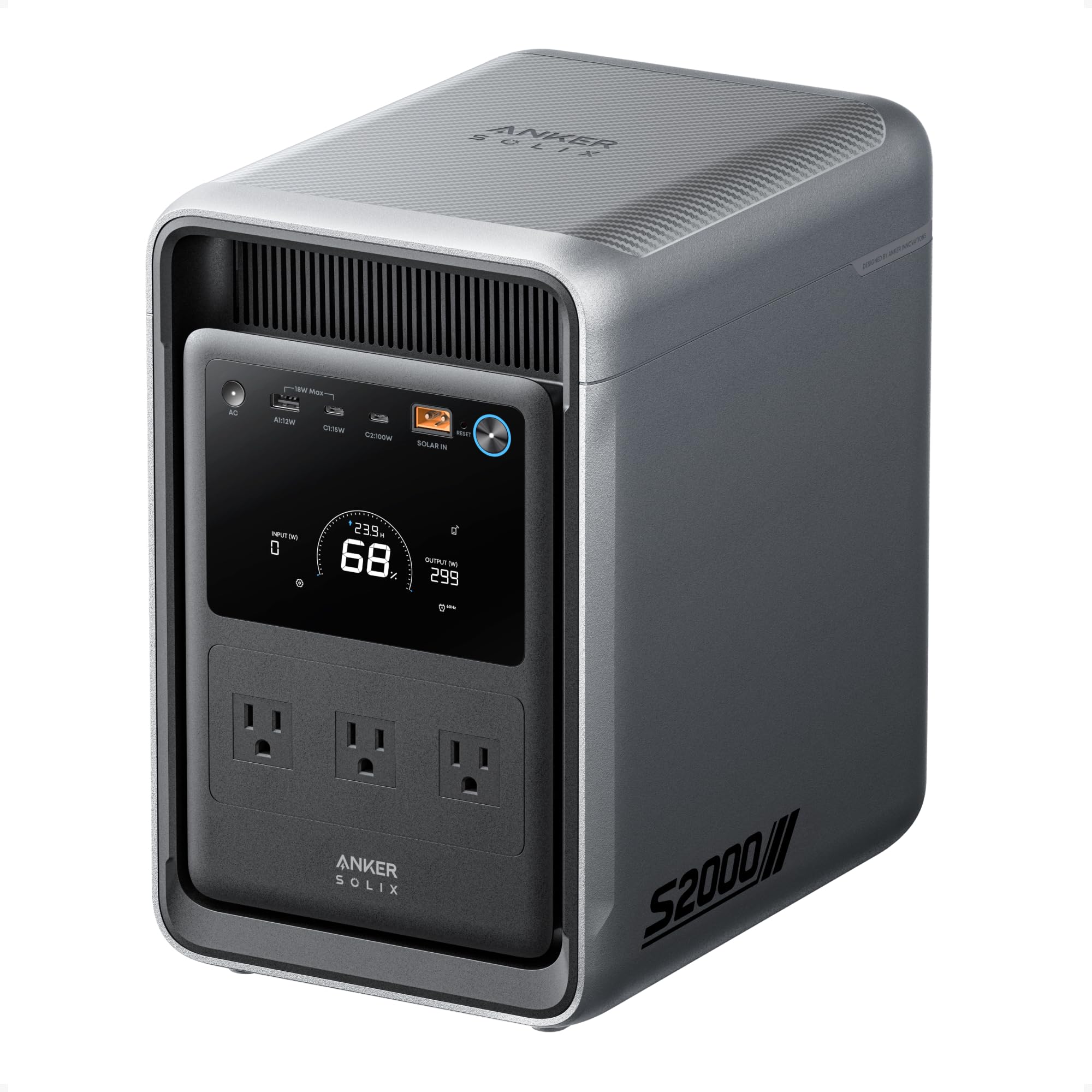
Anker SOLIX S2000

91 /100
LBD Score Outstanding

Key details

Weight
35.7 lb
Battery
LiFePO4, 10,000 cycles
Capacity
2,010Wh
AC Output
1,500W (3,000W peak)
View on Amazon

Anker rates the S2000 for up to 35 hours of fridge backup, and that claim is the right way to think about it: this is a battery for keeping food cold, not for running a whole panel. The 2,010Wh capacity and 1,500W output are aimed at a fridge, freezer, lights, router, and fans, with a 3,000W peak for compressor startup. The 6W idle draw is the less obvious number, and it matters in a long outage because every watt the station wastes is runtime you do not get.

At 35.7 pounds and roughly 8.2 by 11.1 by 12.7 inches, it is small for a 2kWh station, but it is still a deliberate two-hand lift. We like that it has eight outlets and a 400W solar input; the solar ceiling is modest, so do not expect a fast off-grid refill from a couple of panels. The five-year warranty and 10,000-cycle LFP rating are the long-game details that make the higher price easier to justify.

The S2000 is the runtime-first choice in this group. It spends its capacity on efficiency and long LFP life, which is the right trade for food preservation. That focus is why it earns a spot for fridge backup, and why its 35.7-pound body is worth the space it takes.

Pros

  • 2,010Wh capacity for long fridge runtime
  • Low 6W idle draw
  • 10,000-cycle LFP battery
  • Compact 35.7-pound body

Cons

  • 1,500W output limits high-power appliances
Our verdict

When the refrigerator is the centerpiece of your outage plan, the S2000 is the pick: 2,010Wh of efficient LFP storage in a compact 35.7-pound body.

Check Latest Price
5

Best for Whole-Home Essentials

Jackery HomePower 3600 Plus

88 /100
LBD Score Excellent

Key details

Capacity
3,584Wh
Recharge
2 hr
AC Output
3,600W
Expandable
Up to 21kWh
View on Amazon

The HomePower 3600 Plus is the first unit here that feels like home infrastructure rather than a camping accessory. With 3,584Wh and 3,600W of AC output, it can run pumps, heaters, and dryers that would trip a smaller station, and the parallel capability raises output to 7,200W if you add a second unit. That is a different job from keeping the router alive, and it changes how you plan the purchase.

Jackery builds in a plug-and-play transfer-switch path, which is the detail that makes it more than a giant battery. Pair it with an MTS and it can back up selected home circuits without a complex install. The 3,584Wh battery is expandable to 21kWh, so you can start with one unit and add capacity later instead of buying the biggest system on day one.

The 0–100% recharge in about two hours with hybrid AC and DC is quick for this class, and the five-year warranty is appropriate for something that may sit ready for years. This is a unit you place and leave rather than carry from room to room, which is the right shape for a circuit-backed install.

We recommend it for the buyer who wants to keep a furnace, fridge, freezer, and a few lights running through a multi-day outage and is willing to plan the install. For a renter or a first-time battery buyer, the 1kWh picks are easier to live with; the HomePower's advantage is that it can grow into the job instead of being replaced by it.

Pros

  • 3,584Wh capacity with 3,600W output
  • Expandable to 21kWh
  • Parallel output up to 7,200W
  • Five-year warranty

Cons

  • 77.2 pounds makes placement a two-person job
Our verdict

A whole-home essentials plan is where the HomePower 3600 Plus earns its keep: 3,584Wh, 3,600W, and expansion to 21kWh.

Check Latest Price
6

Best for High-Power Appliances

EcoFlow Delta 3 Max

92 /100
LBD Score Outstanding

Key details

Capacity
2,048Wh
Recharge
0–80% in 1.13 hr
AC Output
2,400W (3,400W X-Boost)
UPS Transfer
10ms
View on Amazon

The Delta 3 Max is the answer when your outage list includes a microwave, space heater, or power tool. Its 2,400W continuous output and 3,400W X-Boost mode sit above the 1,500W–2,000W stations here, while the 2,048Wh LFP battery gives those loads enough runway to be useful. That combination is why it earns a place for high-power backup rather than everyday camping.

We like the 0–80% recharge in 1.13 hours and the sub-10ms transfer time; those two figures make it a practical UPS for a home office or a sump pump, not just a tailgate battery. The EcoFlow app is useful for monitoring draw and setting priorities, and the five-year warranty covers a battery that may spend most of its life waiting. It is the most output-focused 2kWh unit in this group, and that focus is the reason it earns a spot.

The 2,048Wh capacity puts the Delta 3 Max in the place-it-and-leave-it class, and the LFP cells are the long-term story. If you mainly need refrigerator runtime, the S2000 is the more efficient shape; if you need to start a motor or run a heater, this is the one. That is a narrower job than a general home battery, but it is a job the smaller units cannot do.

Pros

  • 2,400W continuous, 3,400W X-Boost output
  • 2,048Wh LFP capacity
  • 0–80% recharge in 1.13 hours
  • Sub-10ms UPS transfer

Cons

  • Premium price for the extra output
Our verdict

High-draw appliances are the reason to choose the Delta 3 Max: 2,400W continuous and 3,400W X-Boost give it headroom a 1kWh station cannot match.

Check Latest Price
7

Garage or Workshop

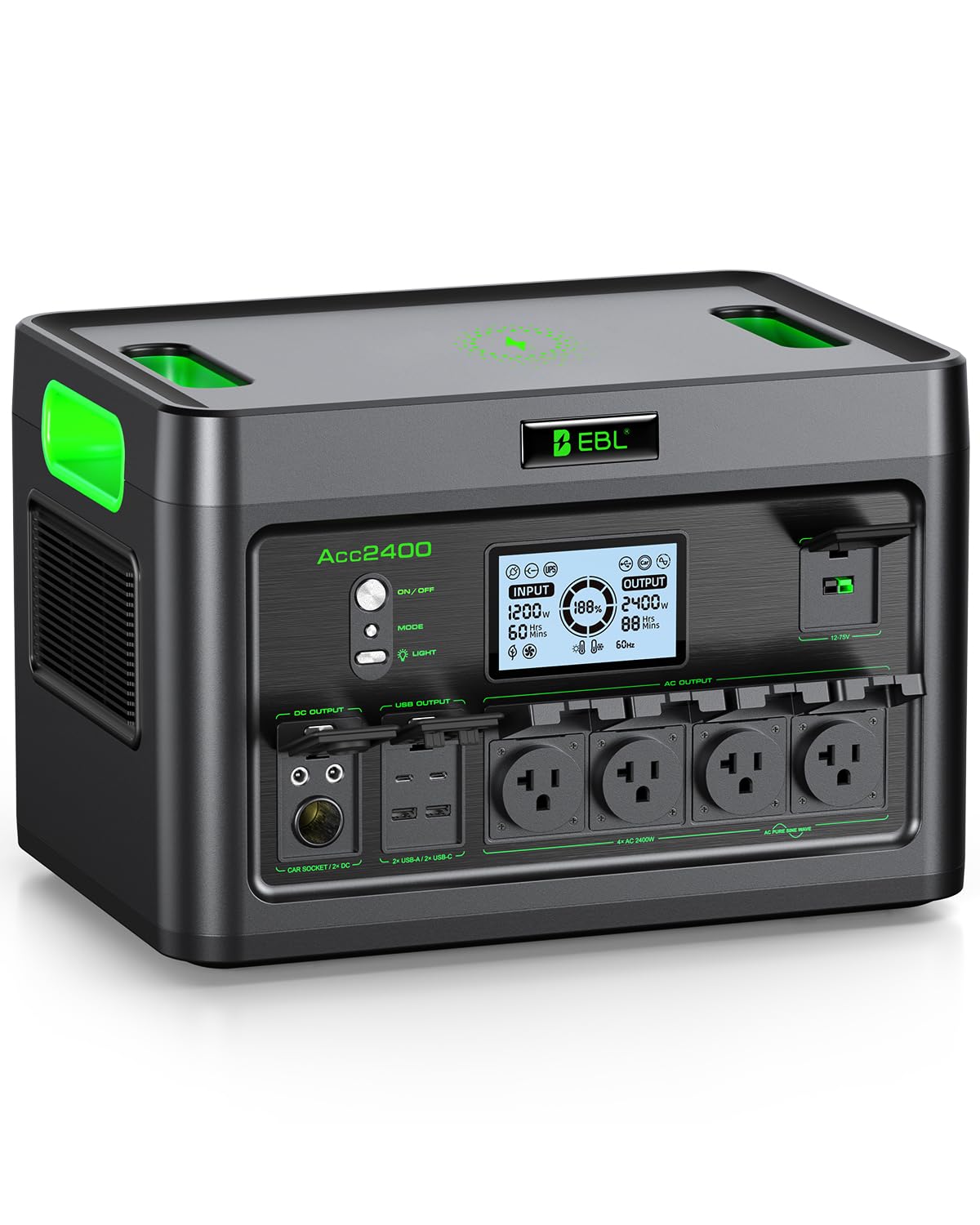
EBL 2400W

86 /100
LBD Score Excellent

Key details

Weight
54 lb
Battery
LiFePO4, 3,500 cycles
Capacity
1,843.2Wh
AC Output
2,400W (4,800W surge)
View on Amazon

The EBL 2400W is the value play in this group: 1,843.2Wh and 2,400W of output put it in the same conversation as the premium 2kWh stations, and the outlet layout covers four AC plugs plus USB-C and USB-A ports. That is a lot of power for the price tier, and it is the reason the unit stays on our list.

The LiFePO4 battery is rated for 3,500 cycles, and the two-hour quick charge is competitive with the better-known brands. We like the dual-side handles because a station this size needs them, and the four AC outlets give you room for a fridge, freezer, and a couple of small appliances without a power strip. The display is easy to read, and the layout is straightforward enough to use without the manual.

The two-year warranty is the shortest among our main picks, and that is the trade-off you accept for the capacity. If you want a budget large-capacity battery for a garage or workshop, this one makes sense; if it will be your only defense against a multi-day outage, the five-year coverage on the Anker and Jackery models is worth the step up. It is a workhorse value, not the most polished long-term bet.

Pros

  • 1,843.2Wh capacity at a budget tier
  • 2,400W output with 4,800W surge
  • Four AC outlets plus USB-C
  • 3,500-cycle LiFePO4 battery

Cons

  • Heavy at 54 pounds
Our verdict

A lot of capacity and output without the premium 2kWh price is the EBL 2400W's appeal, especially for a garage or workshop backup.

Check Latest Price
8

Small-Device Outages

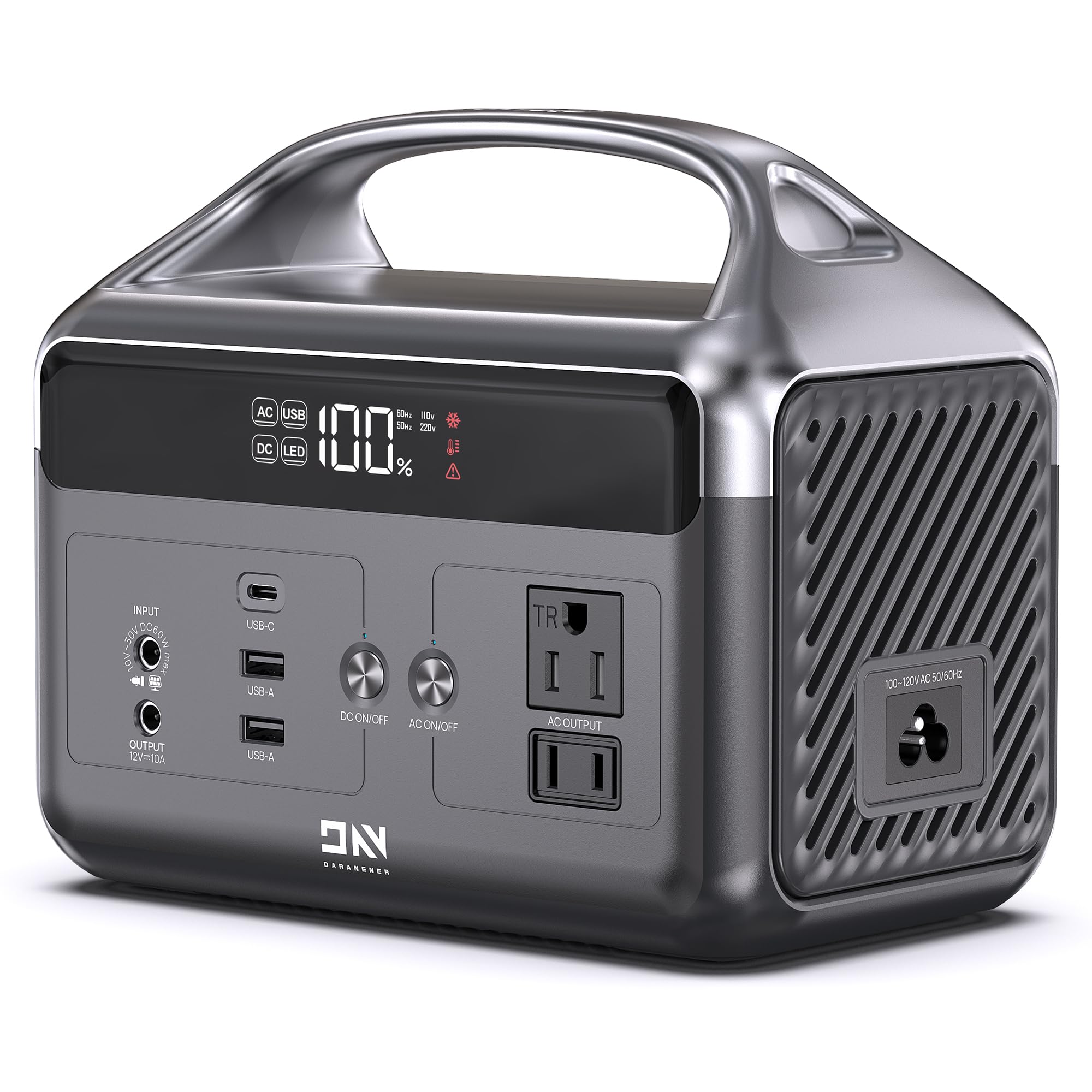
DaranEner NEOZ2

84 /100
LBD Score Excellent

Key details

Weight
5.7 lb
Battery
LiFePO4, 3,500 cycles
Capacity
192Wh
AC Output
300W (600W surge)
View on Amazon

At 5.7 pounds, the DaranEner is the unit you can keep in a closet and forget about until the lights go out. The 192Wh capacity and 300W output make it a companion battery for phones, a router, a fan, and a lamp, with a 600W surge for small devices that need a little more at startup. It is a small-device kit, and the size is the point.

The LiFePO4 battery is rated for 3,500 cycles, which is unusually long for a station this small, and the 60W USB-C port is fast enough for a laptop or tablet. We like the built-in LED light and the carry-friendly shape; those are the details that make it useful in a real outage rather than just a spec-sheet battery. Six outlets also mean you can leave a phone, a hotspot, and a couple of lights plugged in at once.

The 100W AC input and 60W solar ceiling suit a battery that lives in a drawer. Neither is built for fast refills, so plan to top it up before a storm rather than during one. The display is simple, and the light is bright enough to be useful when you are looking for a flashlight in the dark.

The DaranEner earns its place as a second battery, not the main one. Keep it charged in a bedroom or hall closet, and it will cover the small loads that make an outage feel less disruptive while the bigger station runs the fridge. That is a narrow job, but it is one this little unit does without taking up shelf space.

Pros

  • 192Wh LiFePO4 battery in a 5.7-pound body
  • 3,500-cycle rating
  • 60W USB-C and six-device layout
  • Built-in LED light

Cons

  • 192Wh capacity limits large appliances
Our verdict

The DaranEner is a bedside or small-device outage kit: it keeps phones, a router, and a light going without taking up shelf space.

Check Latest Price

How We Tested Home Backup Power Stations

We built the shortlist by filtering for units that could realistically back up a fridge or a home office, then narrowed by LiFePO4 chemistry, continuous and surge output, recharge time, outlet selection, footprint, price relative to usable capacity, and how clearly each maker explained solar-panel and transfer-gear compatibility. That left eight models, which we tested for six months—the same eight in the intro. We did not simply unbox and shine a flashlight at them; each unit had to earn its spot through repeated use.

Most testing happened at my house during planned breaker drills. I plugged in the refrigerator/freezer, router, modem, a few lamps, and phone and laptop chargers, then timed how long each load ran and noted when a compressor start tripped the unit or the fans became annoying in a quiet room. Smaller units got lighter duty on weekend RV trips and at my desk—router, laptop, CPAP—because that is how many people actually use a compact station. One real storm outage gave us an unscripted run with the fridge and router, and I also checked UPS-style switchover with a desktop PC, watching for reboots.

Charging speed got a stopwatch: wall outlet from empty to 80 percent and full, then solar input with a portable panel in partial shade. Compatibility was hands-on—I checked whether the built-in battery accepted the panel's voltage range without extra fuss, whether the USB-C PD ports could run everyday gear without an adapter, and whether the AC outlets gripped plugs securely. Quality and reliability came from living with them: port covers, handle flex, case heat, error lights, and repeated drain-and-recharge cycles. At the end, I compared cost per usable watt-hour and what came in the box, because a cheap station that needs an accessory to be useful is not a value.

How to Choose a Portable Power Station for Home Backup

Build the Outage List First

A power station is sized in watt-hours, but the useful number is how long it will run your actual list. Add up the watts on the labels of the fridge, router, lights, and phone chargers you want to carry, then multiply by the hours you expect to run them. A fridge cycles on and off, so its average draw is lower than its label, but startup surge still matters.

For most homes, 1,000Wh is the starting point for a fridge plus small essentials, and 2,000Wh gives more margin for an overnight outage. If you want to run a heater, microwave, or power tool, capacity is only half the decision; the output section matters just as much. We treat the appliance list as the first filter, not the battery's headline number.

Match Output to Startup Loads

Continuous watts tell you what the station can run steadily; surge watts tell you what it can start. A fridge compressor, a furnace blower, or a power tool can pull several times its running wattage for a moment. That is why a 1,500W station may run a fridge but trip on a microwave, while a 2,000W or 2,400W unit has more headroom.

Check the appliance label for running watts and look for a locked-rotor or startup figure if the maker publishes one. If the numbers are close, choose the higher-output station or leave that appliance off the outage list. We prioritize output headroom over a long feature list because a battery that cannot start the load is not helping.

Choose LiFePO4 and a Warranty You Can Live With

LiFePO4 is the chemistry we prioritize for a battery that sits idle between storms. It is more stable than older lithium-ion packs and is usually rated for thousands of cycles; 4,000 cycles to 80% is a good benchmark, and some units go further. The warranty matters because a home-backup battery may not show a problem in the first month.

A five-year warranty is common on the stronger picks here, while a two-year warranty tells you the maker is pricing in less long-term support. That does not make a cheap battery useless, but it changes the math if this is your only outage battery. We prefer to pay once for a battery that keeps its capacity than replace a bargain unit after a few seasons.

Plan Recharge, Placement, and UPS Duty

Recharge speed changes how you prepare. A 1kWh station that refills in under an hour can be topped up while you eat dinner; a slower unit needs to be charged the night before. Solar is useful for longer outages, but panel wattage and weather set the real recharge time, so do not treat a solar input rating as a guarantee.

Placement is part of the purchase. A 2kWh unit is usually a two-hand lift, and a 3.6kWh unit is a place-and-leave appliance. If you need seamless backup for a desktop or sump pump, look for a 10ms UPS transfer; if you need to grow capacity later, check for an expansion port before you buy. We do not treat expansion as essential for a first battery, but it is the difference between growing a system and replacing it.

Frequently Asked Questions

Final Verdict

The Anker SOLIX C1000 Gen 2 is the home-backup station we recommend for most people because it combines a useful 1,024Wh battery with 2,000W of output and a 49-minute recharge, all in a package that still moves between rooms.

If your priority is refrigerator runtime, the Anker SOLIX S2000 is the better shape; if you need to run major appliances or expand later, the Jackery HomePower 3600 Plus is the step up. Start with the outage list, then choose the smallest station that clears it.