Best Portable Power Stations for RVs of 2026

The first time I tried to run an RV's rooftop air conditioner off a portable power station, the unit quit before the compressor finished spinning up. The box said 2,000 watts; the real startup surge wanted more. That gap between the number on the label and what an outlet actually delivers under load is the whole game here — a good unit keeps the fridge cold overnight, runs a CPAP without a hiccup, and refills itself before you've finished breaking camp.

I've lived with eight of these over the past nine months, from 1kWh boxes light enough to carry one-handed to 3kWh units that really want two people and a ramp. Chemistry matters more than capacity claims: the LFP batteries nearly every serious unit now uses will take thousands of charge cycles where older lithium wouldn't.

What separates the keepers from the ones that get left in the garage comes down to surge handling, honest recharge times, and whether the thing fits how you actually camp. The ones below earned a permanent spot in the bay.

1

Best Overall

BLUETTI Elite 200 V2

92 /100
LBD Score Outstanding

Key details

Weight
53.4 lb
Capacity
2,073.6Wh
Recharge
0-80% in 50 minutes
AC Output
2,600W continuous, 3,900W peak
View on Amazon

A compressor fridge cycling overnight, a microwave at breakfast, a coffee maker straight after: that's the load profile of an ordinary trailer morning, and it's the one that separates a station with enough stored energy from one that only has enough inverter. The Elite 200 V2 sits at 2,073.6Wh with 2,600W of continuous output, and a 3,900W ceiling for the second a compressor kicks on.

We came away thinking this is the size most rigs should start at. Four AC outlets take the counter appliances at once, and the 2,600W rating means nobody has to check whether the fridge is running before starting the microwave. What we appreciated most was the 0-80% recharge in 50 minutes. At a campground pedestal or off a generator, a station that refills over lunch stops being something you ration.

BLUETTI's three charge modes are worth knowing about. Turbo is loud and quick; Silent slows the charge and holds the fan down, and we used it at night in a trailer where the station sits two feet from the bed. Standby draw is listed at 10W, low enough that leaving it plugged in between trips no longer feels like a mistake.

Fifty-three point four pounds is the trade. It's a two-handed lift with nothing casual about moving it from the trailer to the garage, which suits a rig where the station gets installed once and stays put. Fold that into your plan and the capacity comes close to free.

Pros

  • 2,073.6Wh covers a fridge overnight and breakfast after
  • 2,600W continuous runs a microwave with the fridge cycling
  • 0-80% recharge in 50 minutes
  • Silent charge mode and 10W standby draw

Cons

  • Four AC outlets is a short row for a full rig
Our verdict

Our default for a travel trailer: 2,073.6Wh and 2,600W handle the fridge, the microwave, and the coffee maker in the same morning.
Check Latest Price
2

Best RV Hookup

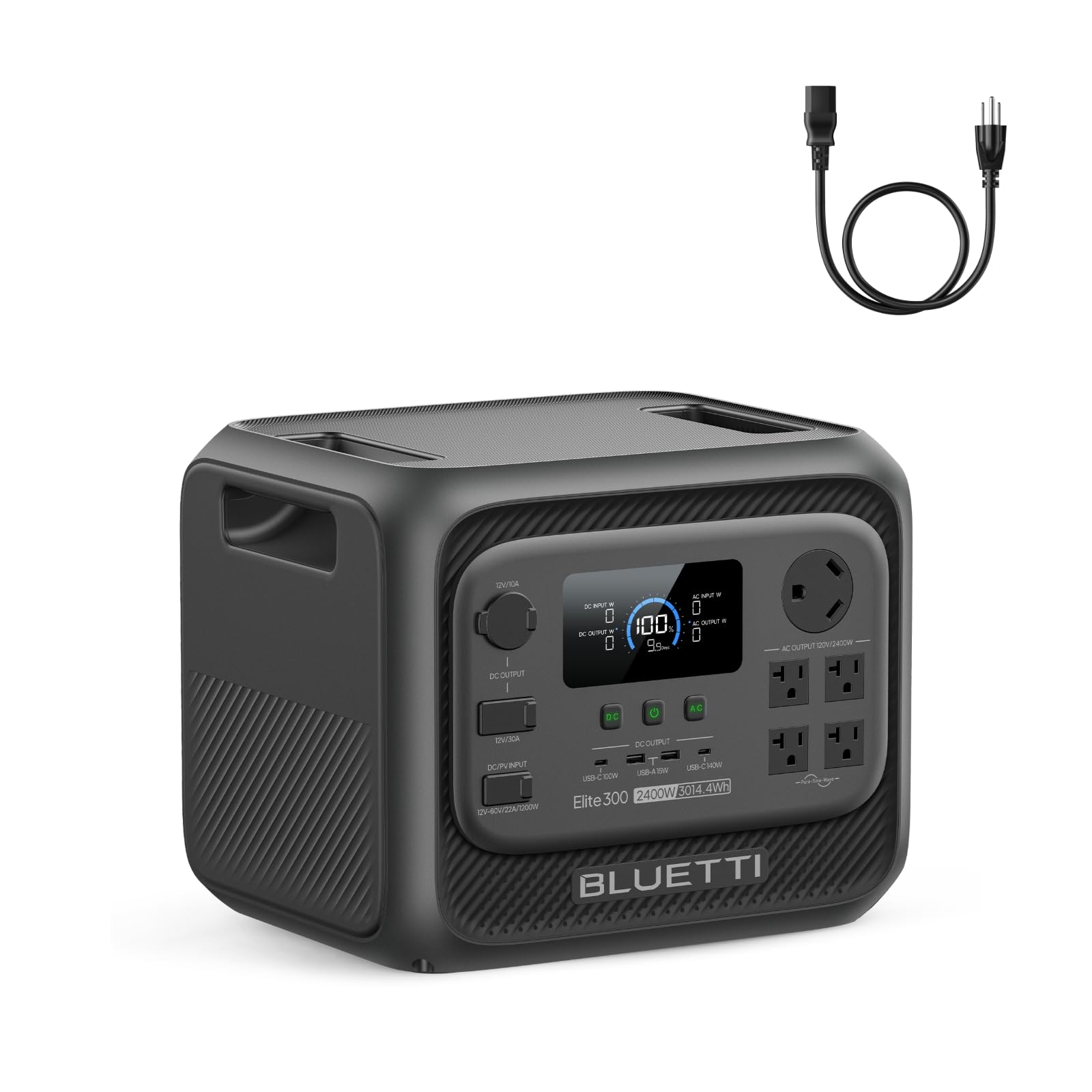
BLUETTI Elite 300

89 /100
LBD Score Excellent

Key details

Weight
58 lb
Capacity
3,014.4Wh
RV Ports
TT-30 and 12V/30A DC
AC Output
2,400W continuous, 4,800W surge
View on Amazon

The TT-30 outlet is the reason to look at this one. It's the round three-prong socket a travel trailer's shore cord already ends in, and having it built into the station means no 30-amp-to-15-amp dogbone adapter hanging off the back. We've rigged that adapter chain on other stations; doing without it is a small relief that stays small every single time you plug in.

Behind the socket sits 3,014.4Wh and 2,400W of continuous output, with a 4,800W surge for a compressor starting. The 12V/30A DC output is the other RV-shaped feature: a high-current 12-volt feed for rigs wired around a 12-volt panel rather than a stack of cigarette-lighter adapters. If your trailer's DC side is where the work happens, that port earns more than another AC outlet would.

Charging runs 0-80% in 78 minutes at the top rate. What we noticed is that the extra capacity over the Elite 200 V2 is what turns a roof air conditioner from a five-minute experiment into an hour or two of cooling before bed — and the Elite 300 manages that while carrying more watt-hours per pound than the smaller BLUETTI.

Pros

  • TT-30 outlet takes a 30-amp shore cord directly
  • 3,014.4Wh with a 4,800W surge
  • High-current 12V/30A DC output for a rig's DC side
  • 0-80% charge in 78 minutes

Cons

  • 58 pounds with no wheels to help move it
Our verdict

A built-in TT-30 outlet is why we back this one for 30-amp trailers, and 3,014.4Wh gives that connection something worth plugging in.

Check Latest Price
3

Best for Small Rigs and Vans

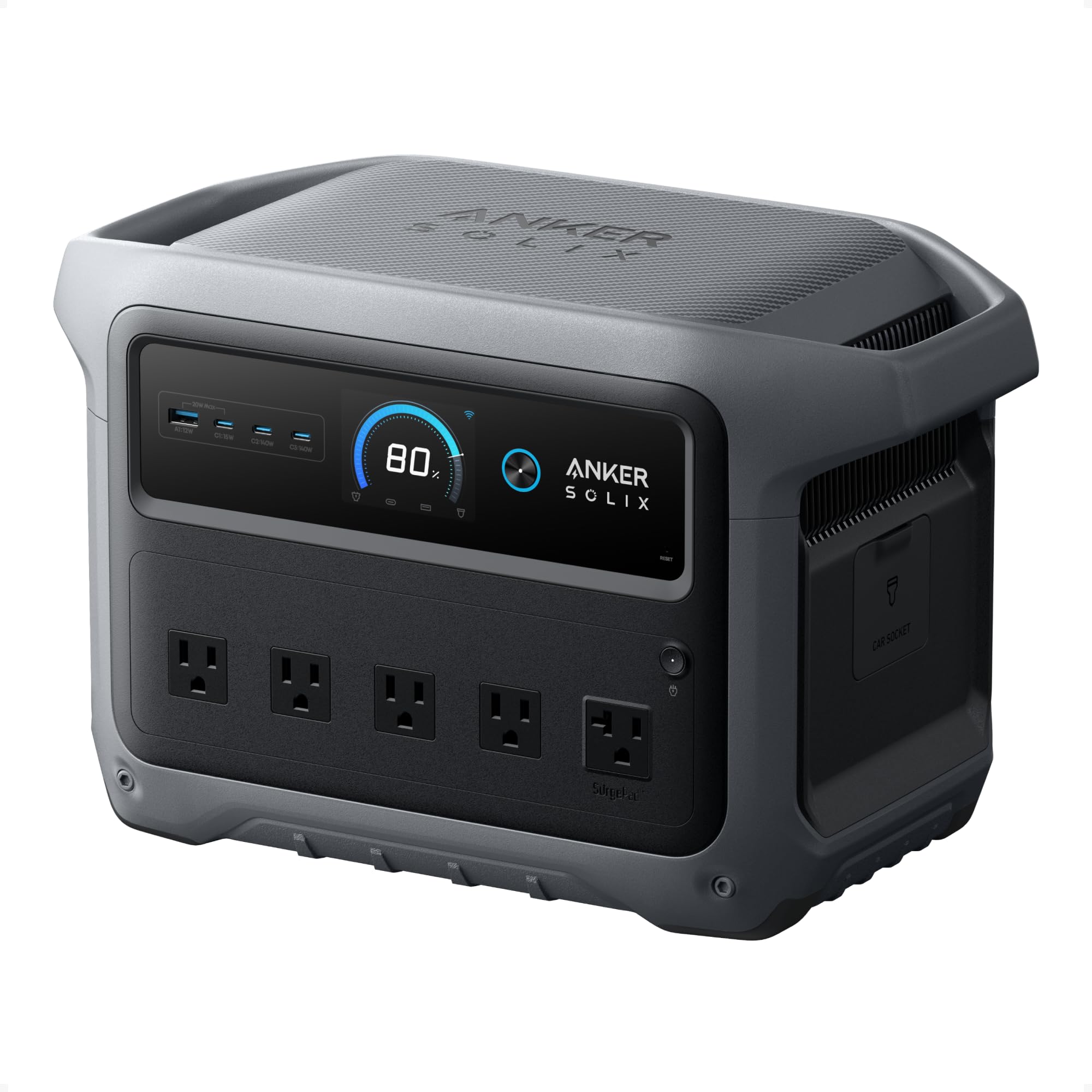
Anker SOLIX C1000 Gen 2

93 /100
LBD Score Outstanding

Key details

Capacity
1,024Wh
Recharge
49 minutes to full
AC Output
2,000W continuous, 3,000W peak
Cell Rating
LiFePO4, 4,000 cycles to 80%
View on Amazon

Getting a power station into a camper van's bench storage is the test nobody lists. The C1000 Gen 2 passed it easily: Anker lists the unit at 11.3 kg, one handle is enough, and we slid it under a dinette seat without emptying the compartment first. That sounds like a small thing. It's the difference between a station you use every evening and one that stays in the garage.

The output is the surprise. 2,000W continuous with a 3,000W peak is more inverter than the EcoFlow Delta 3 Classic manages, and it runs a small trailer's fridge, lights, laptop, and a Starlink dish at the same time. We also noticed the fan staying off through an ordinary evening of device charging — quiet enough to forget about until something big kicks on.

Anker's recharge figures are the ones to hold onto: 49 minutes to full at the top rate, and about 1.8 hours from 600W of solar. The battery is rated to 4,000 cycles before it drops to 80% capacity, which is the number worth comparing against the decade-long claims in the marketing copy.

Pros

  • 11.3 kg, light enough to lift and stow one-handed
  • 2,000W continuous with a 3,000W peak
  • Full recharge in 49 minutes
  • Rated to 4,000 cycles before 80% capacity

Cons

  • 1,024Wh is a night of essentials, not an air conditioner
Our verdict

The one we hand to van builders: 2,000W and 1,024Wh in a box one person can lift into a storage bay.

Check Latest Price
4

Best Budget

EcoFlow Delta 3 Classic

93 /100
LBD Score Outstanding

Key details

Weight
26.7 lb
Capacity
1,024Wh
Recharge
0-80% in 45 minutes
AC Output
1,800W continuous, 3,600W surge
View on Amazon

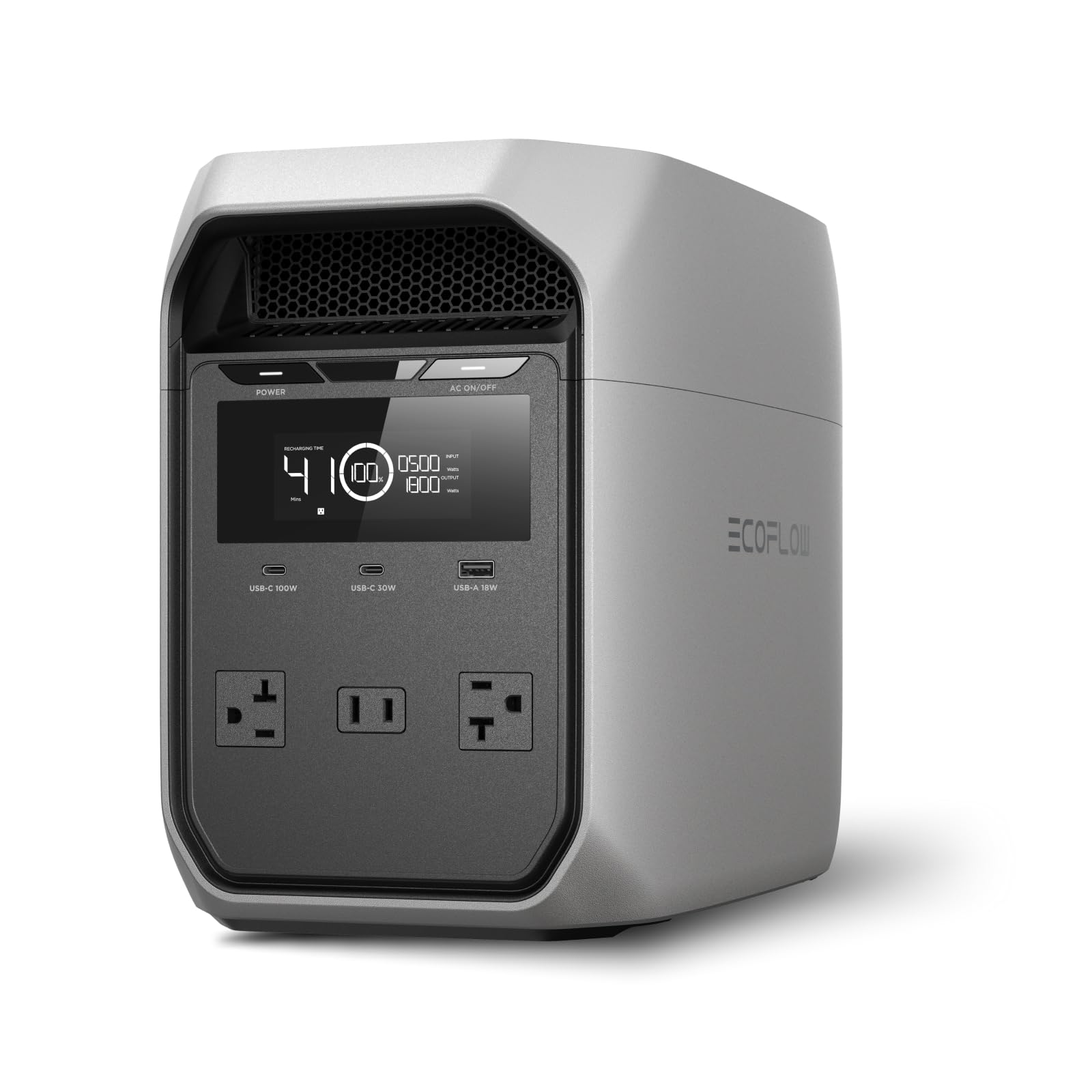
Value is the whole argument for the Delta 3 Classic, and it survives contact with the specs. This is the least expensive station here, and it still gives you 1,800W of output with a 3,600W surge, a 10-millisecond transfer to battery, and a 45-minute climb to 80%. We expected the budget pick to feel like a compromise. It reads as a deliberately small station instead.

What you're buying is 1,024Wh — a night of fridge cycling, lights, and device charging in a small trailer, with 26.7 pounds to carry and six outlets to fill. The 10ms switchover is the underrated part: leave it plugged into the pedestal and the router and the laptop never notice when shore power drops. Solar tops out at 500W, a slower off-grid refill than the bigger units here, but plenty for a van with two panels on the roof.

Pros

  • Least expensive station in this guide
  • 10ms UPS transfer keeps electronics running
  • 0-80% in 45 minutes
  • 26.7 pounds with a carry handle

Cons

  • 1,800W won't start a roof air conditioner
Our verdict

We send budget builds here: the least expensive station in this guide still delivers 1,800W and a 10ms UPS switchover.

Check Latest Price
5

Best for RV Air Conditioning

Anker SOLIX F3000

85 /100
LBD Score Excellent

Key details

Weight
91.5 lb
Capacity
3,072Wh
AC Output
3,600W continuous
Solar Input
Up to 2,400W
View on Amazon

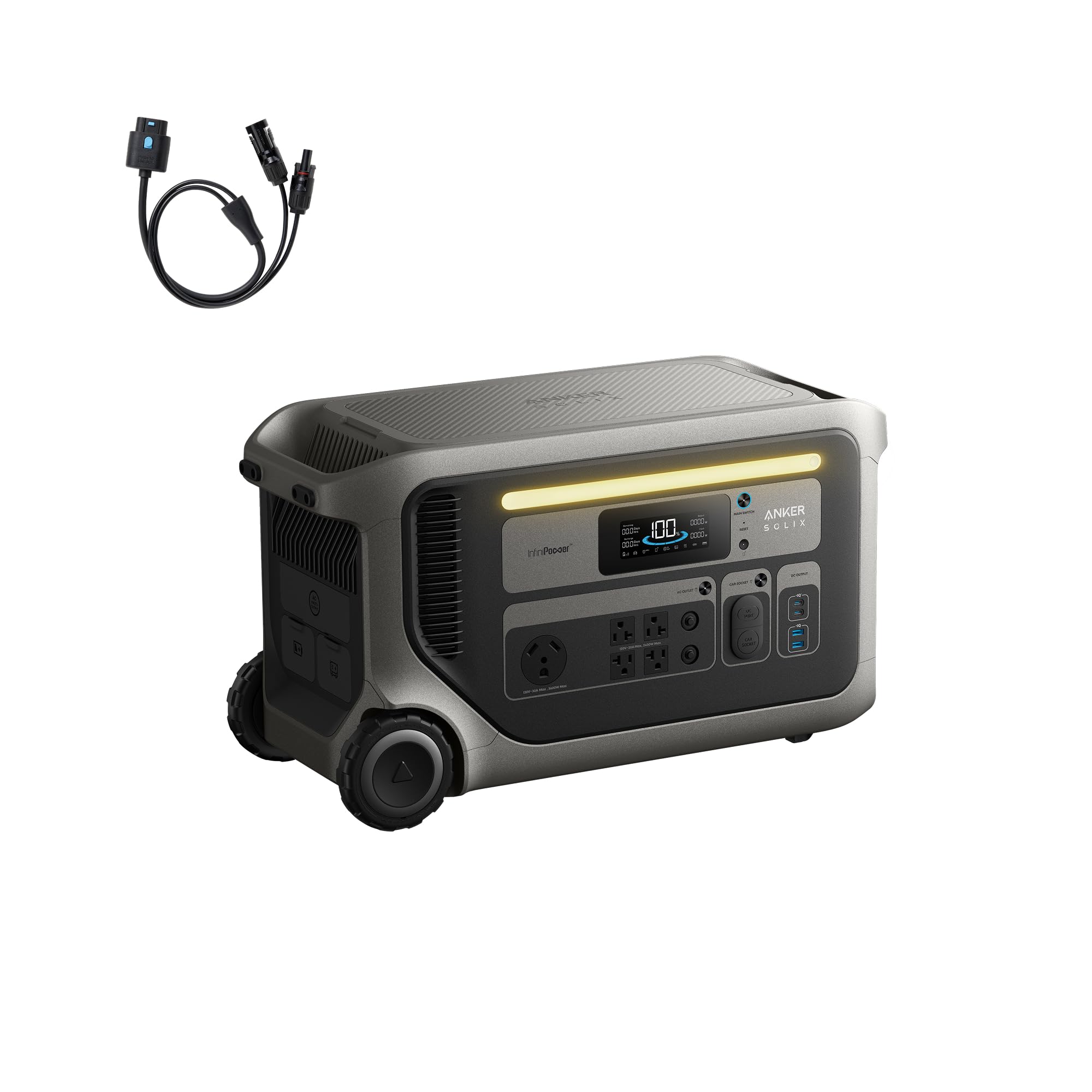
One load decides this category, and it's the roof air conditioner. A 13,500 BTU unit pulls north of a kilowatt for as long as it runs, so a 1kWh station is a forty-minute experiment and even 2kWh buys you an hour or so. The F3000 carries 3,072Wh and inverts 3,600W continuously, and that pairing is what turns air conditioning from a demo into something you schedule a hot afternoon around.

The rest of the unit is built for a rig rather than a campsite: 11 outlets, a 120V output that pairs with a second unit for 240V, and a low enough idle draw that Anker claims 125 hours of AC standby. Solar input goes to 2,400W, the fastest recharge path here if you're parked in the sun rather than plugged into a pedestal.

What tips it for us is that the headroom is usable. 3,600W means the air conditioner, the microwave, and the fridge can be on together, and 11 outlets mean you're not hunting for a power strip the moment a second person plugs something in. It's the pick for the rig where the air conditioner runs and everything else follows.

Pros

  • 3,072Wh with 3,600W continuous output
  • 11 outlets, including 120V pairing for 240V
  • 2,400W solar input for fast off-grid refill
  • Low idle draw for long standby

Cons

  • 91.5 pounds makes it a fixture, not cargo
Our verdict

For rigs with a roof air conditioner, this is where we point: 3,072Wh and 3,600W make cooling a load you plan around.

Check Latest Price
6

Best for Quiet Nights

DJI Power 2000

87 /100
LBD Score Excellent

Key details

Noise
As low as 30 dB
Capacity
2,048Wh
AC Output
3,000W continuous
Expansion
Up to 22.5kWh
View on Amazon

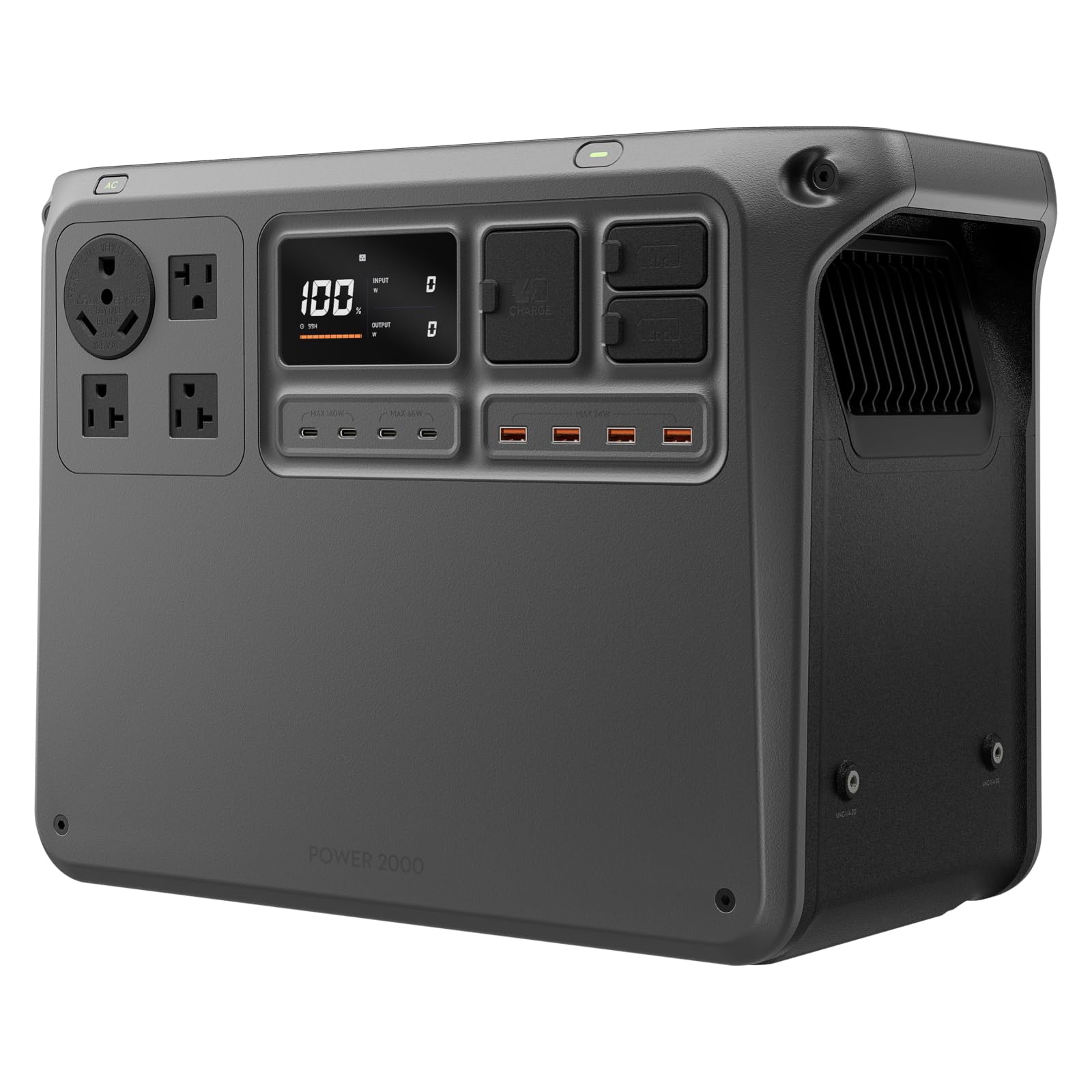
Sleeping three feet from a power station changes what you care about. Most of the units here are silent at idle and audible under load; DJI rates the Power 2000 as low as 30 dB, and if your van layout puts the station beside the bed, that number matters more than another hundred watt-hours.

The rest of the package is squarely in the 2kWh class: 2,048Wh, 3,000W continuous, four AC outlets, four USB-C ports with two at 140W, and expansion to 22.5kWh with add-on batteries. The detail that stands out if you fly DJI drones is the SDC ports, which charge flight batteries directly — nothing else here does that.

It costs less than the Elite 200 V2 with almost the same capacity, which makes it the value play in this class. We still rank the BLUETTI first, because quiet helps every night while charging consistency decides a whole trip, and the Elite 200 V2 is the surer of the two when the pedestal isn't available.

Pros

  • Rated as low as 30 dB in operation
  • 2,048Wh with 3,000W continuous output
  • SDC ports charge DJI drone batteries directly
  • Expands to 22.5kWh with add-on batteries

Cons

  • 30 dB is the quietest point, not a load figure
Our verdict

The quiet one — DJI rates it as low as 30 dB, so it can sit near the bed and still deliver 2,048Wh and 3,000W.

Check Latest Price
7

Full-Time RVing

ABOK Ark3600

86 /100
LBD Score Excellent

Key details

Outlets
15 output ports
Capacity
3,840Wh, expandable to 11,520Wh
Mobility
Wheels and telescoping handle
AC Output
3,600W continuous, 4,500W peak
View on Amazon

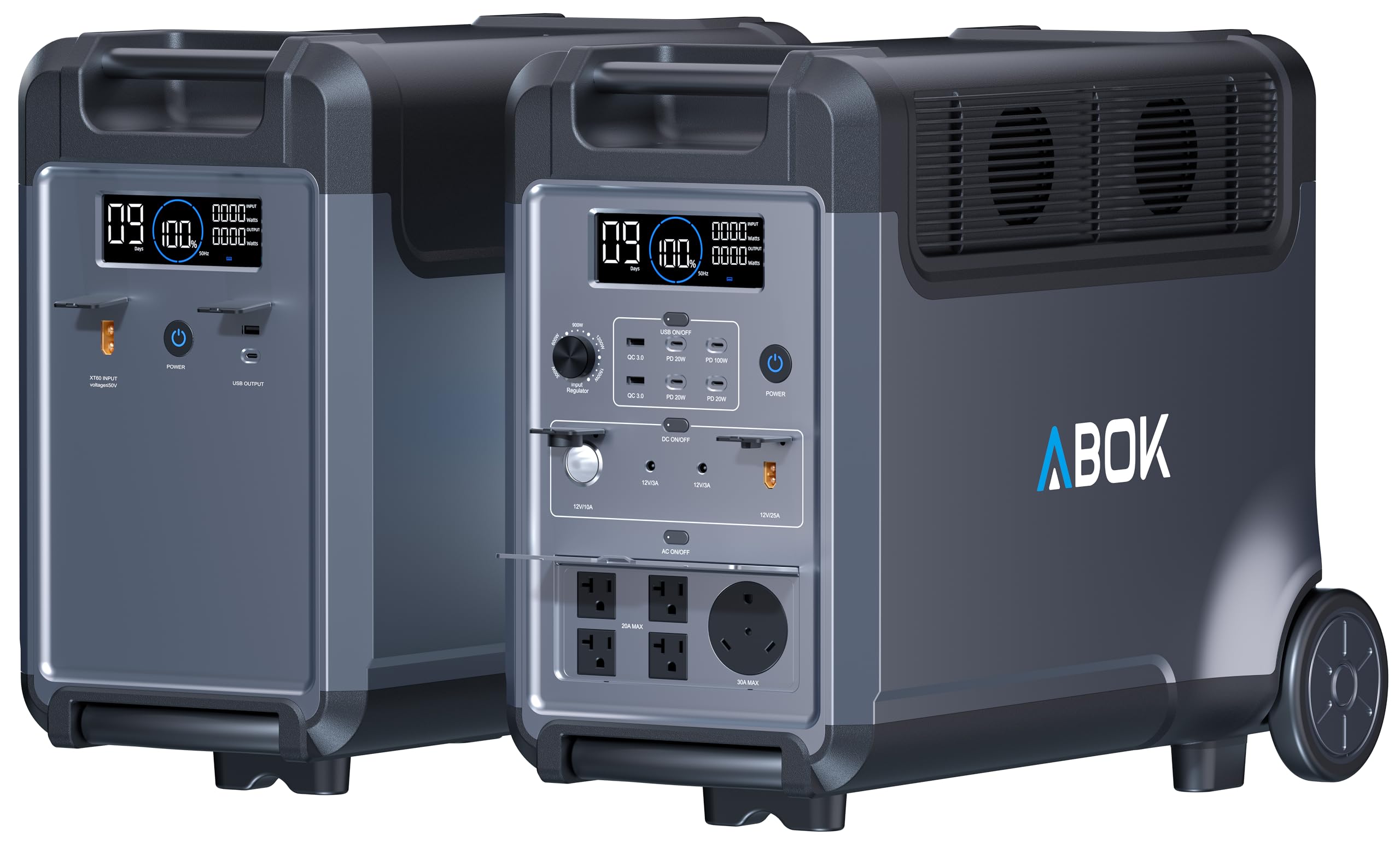
A 3,840Wh station is furniture unless somebody thought about how it moves. ABOK put the Ark3600 on wheels with a telescoping handle, and inside a trailer that detail is worth more than another outlet: you walk it to the shore-power inlet instead of clearing a path and lifting.

Capacity is the other half of the pitch. 3,840Wh arrives with a second battery in the box, expands to 11,520Wh, and feeds 15 output ports including a 30-amp AC socket, USB-C, and DC5521. Output is 3,600W continuous with a 4,500W peak, enough for a full rig's appliances one or two at a time rather than all at once.

Charging a pack this size takes about three hours from AC, and the app handles monitoring. The bundle is what to weigh against the single-box stations here: two packs in the box means you're buying the expansion up front rather than promising yourself you'll add it later.

What we like about the Ark3600 is that it's the only station here you can grow into without replacing: the ceiling is three times the base capacity, and the wheels mean a second pack doesn't change how you move it. It is also the priciest unit in this guide, sold by a brand with a shorter history than BLUETTI or Anker — which is the trade for that headroom.

Pros

  • 3,840Wh expandable to 11,520Wh
  • Wheels and telescoping handle for moving it
  • 3,600W continuous across 15 output ports
  • Second battery included in the box

Cons

  • Tall 18.5-inch body needs a permanent floor spot
Our verdict

This is our pick for full-timers: 3,840Wh on wheels with a telescoping handle and a path to 11,520Wh.

Check Latest Price
8

Light 2kWh Duty

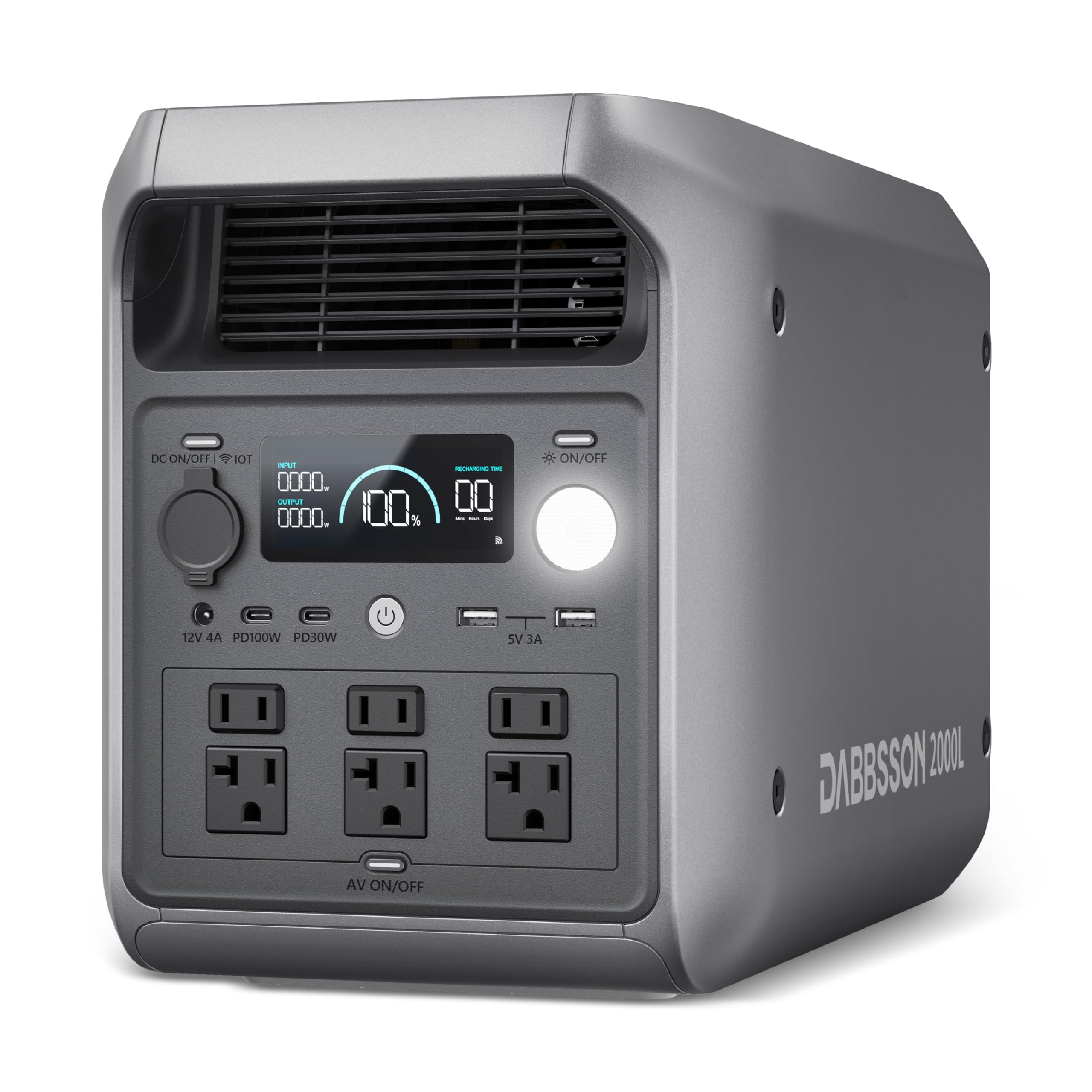
Dabbsson 2000L

85 /100
LBD Score Excellent

Key details

Weight
41 lb
Capacity
2,048Wh
Recharge
1 hour via AC
AC Output
2,200W continuous, 3,300W boost
View on Amazon

Forty-one pounds is the number that makes the 2000L interesting. The BLUETTI Elite 200 V2 carries a similar amount of capacity at 53.4 pounds, and twelve pounds is the difference between a station you shift between the truck and the trailer and one that lives wherever you first set it down.

Output is 2,200W continuous with a 3,300W boost across six outlets, and the semi-solid LiFePO4 cells are the design choice the whole package is built around. An air fryer, a coffee maker, and a fridge are all within reach, and the boost covers the surge a compressor throws at startup without tripping the inverter.

Charging is the strongest part of the spec sheet: a full 2,048Wh in about an hour from AC, up to 800W of solar through the MPPT input, and app control that lets you cap the charge level when the station mostly sits between trips. An hour to full is at the front of this group for a pack this size, which matters when you're moving campsites daily.

What sells it for us is that the portability doesn't cost capacity: the same watt-hours as the bigger BLUETTI in a box twelve pounds lighter, with a faster fill. The warranty helps the case too — three years, plus two more on registration — which is a serious commitment from a brand that hasn't been around as long as the names above it.

Pros

  • 41 pounds for 2,048Wh
  • Full AC recharge in about an hour
  • 2,200W continuous with 3,300W boost
  • 800W solar input with app charge limits

Cons

  • Newer brand with a shorter reliability record
Our verdict

We like it as the light 2kWh option: 41 pounds, 2,200W, and a full recharge in about an hour.

Check Latest Price

How We Tested the Best Portable Power Stations for RVs

We started by pulling every unit we could find with a 1,000Wh-plus LFP battery and cross-checking specs against the jobs an RV actually has: overnight fridge duty, a coffee maker and microwave in the morning, and enough recharge speed that one cloudy day doesn't end the trip. We also noted whether capacity could be expanded later with a second battery, and kept a running figure on what each unit cost per usable watt-hour. That narrowed the field to eight, which we ran for nine months in the driveway, at boondocking sites, and through a two-day home outage.

Charging got timed with a stopwatch rather than taken on faith — each unit plugged into a household wall outlet from empty to 80%, then from the 12-volt socket in a truck, then from solar panels propped in the yard. We noted how warm the case got mid-charge, how loud the fans spun, and whether the app's readout matched the number on the unit's own screen.

For output, we ran a rooftop air conditioner's startup surge, a space heater, an induction burner, and a laptop dock, one at a time and then in combinations, watching for which load tripped the unit first. Every one got weighed on the bathroom scale — the advertised figure is rarely the whole story once the handle is included — then carried up a flight of stairs and through a cargo hatch. During the outage I unplugged a running desktop to see whether the transfer was instant or a blink.

Durability meant riding in a trailer over washboard gravel, sitting in dust, and taking a light rain shower with the ports closed; afterward we checked whether buttons still clicked and outlets still gripped a plug. We paired each to its app on the same phone to compare what you can genuinely monitor from the far end of a campsite, and whether the Bluetooth connection held. Nine months in, we re-ran the original load test to see if capacity had drifted or anything had developed a rattle.

How to Choose a Portable Power Station for an Rv

Size it to the night, then to the worst load

Two numbers do the work. Watt-hours tell you how long a station runs what you plug in; watts tell you what it can start. Begin with what runs while you sleep — a cycling compressor fridge, a CPAP, lights, phones — because that's the load you can't manage in real time. Then add the one appliance you actually want to run: a microwave for minutes, a coffee maker for a few more, a roof air conditioner for hours, which resets the whole calculation. Buy for the overnight figure, and for the air conditioner if you have one.

Read continuous watts before the boost figure

Every station here quotes a peak or boost number well above its continuous rating. That headroom is real but brief: it exists to cover the second or two a compressor draws at startup. Size the continuous rating above whatever you'll run for hours instead. A microwave pulls around a thousand watts on its own, a hair dryer more, and the fridge cycles on top of both.

The Anker SOLIX F3000's 3,600W continuous is headroom you can plan around. The Elite 300's 2,400W continuous, with 4,800W of surge behind it, covers the same appliances one at a time — and knowing which of those two situations describes your rig is most of the decision.

The RV-specific connections decide the install

A TT-30 outlet is the round three-prong socket a travel trailer's shore cord ends in, and only one station here has one built in — the BLUETTI Elite 300. Everything else needs a 30-amp-to-15-amp dogbone adapter, which is cheap, works fine, and is one more thing to keep track of in the dark.

The trap: a TT-30 socket does not turn a power station into a 30-amp supply. Output still stops at the inverter's continuous rating, so plugging the whole rig in is a convenience, not a licence to run the air conditioner and the microwave together.

Weight and wheels decide who moves it

Where the station lives settles this. A unit that stays in the rig can be heavy; one that shuttles to the house, the tent, or the truck bed should be light enough for one person to lift without a plan. Up to about 25 pounds is one-hand territory. Past 50 pounds, assume a two-handed lift and think about wheels — the ABOK Ark3600 comes on them, with a telescoping handle, and it's the only pick here that does. Treat portable in a listing as a claim about handles, not about carrying it far.

Plan the recharge before you commit

Charging speed matters more on the road than at home. The fast figures here — 45 to 80 minutes to 80% — assume a full campground pedestal or a generator, and they're what let you refill over lunch instead of writing off an afternoon. If you're boondocking instead, compare solar input: 500W on the Delta 3 Classic, 800W on the Dabbsson, 2,400W on the SOLIX F3000. For weeks rather than days, expansion matters too — the DJI Power 2000 and the SOLIX F3000 both take add-on batteries.

Frequently Asked Questions

Final Verdict

Eight stations, one decision that actually matters: what runs overnight, and what draws the most when it runs. For most travel trailers that's the BLUETTI Elite 200 V2 — 2,073.6Wh, 2,600W continuous, and a 50-minute climb to 80%, in a box you install once and stop thinking about.

Two things change the answer. If a roof air conditioner is on your list, build around the Anker SOLIX F3000's 3,072Wh and 3,600W, with the BLUETTI Elite 300 as the 30-amp alternative that takes your shore cord directly. If instead you carry the station into a van every night, the Anker SOLIX C1000 Gen 2 does most of the same work for a fraction of the weight.