Best Solar Generators for Off-Grid Cabins of 2026

The first night I spent at a cabin wired to a battery instead of a breaker panel taught me that a solar generator is judged at 9 p.m., not at noon. The fridge kicked on, the lights browned out, and the watt-hour figure on the box stopped meaning much. What actually matters is whether a unit can carry a cabin's small, stubborn loads — a fridge, a few lights, a laptop, a well pump — through a grey stretch without drama. My team and I have spent nine months running eight of them.

Here's what first-time buyers get wrong: watt-hours are the size of the tank, but the inverter's continuous and surge ratings are the size of the tap. Capacity won't save you if the surge can't start a pump, and a fast-charge claim only counts if your panels produce something on a flat, overcast afternoon. We tracked both, plus the unglamorous stuff — fan noise at 2 a.m., weight on a muddy path, capacity after a hundred cycles, cost per usable watt-hour with the panel counted. The picks below are the ones I'd leave running while I'm away.

1

Best Overall

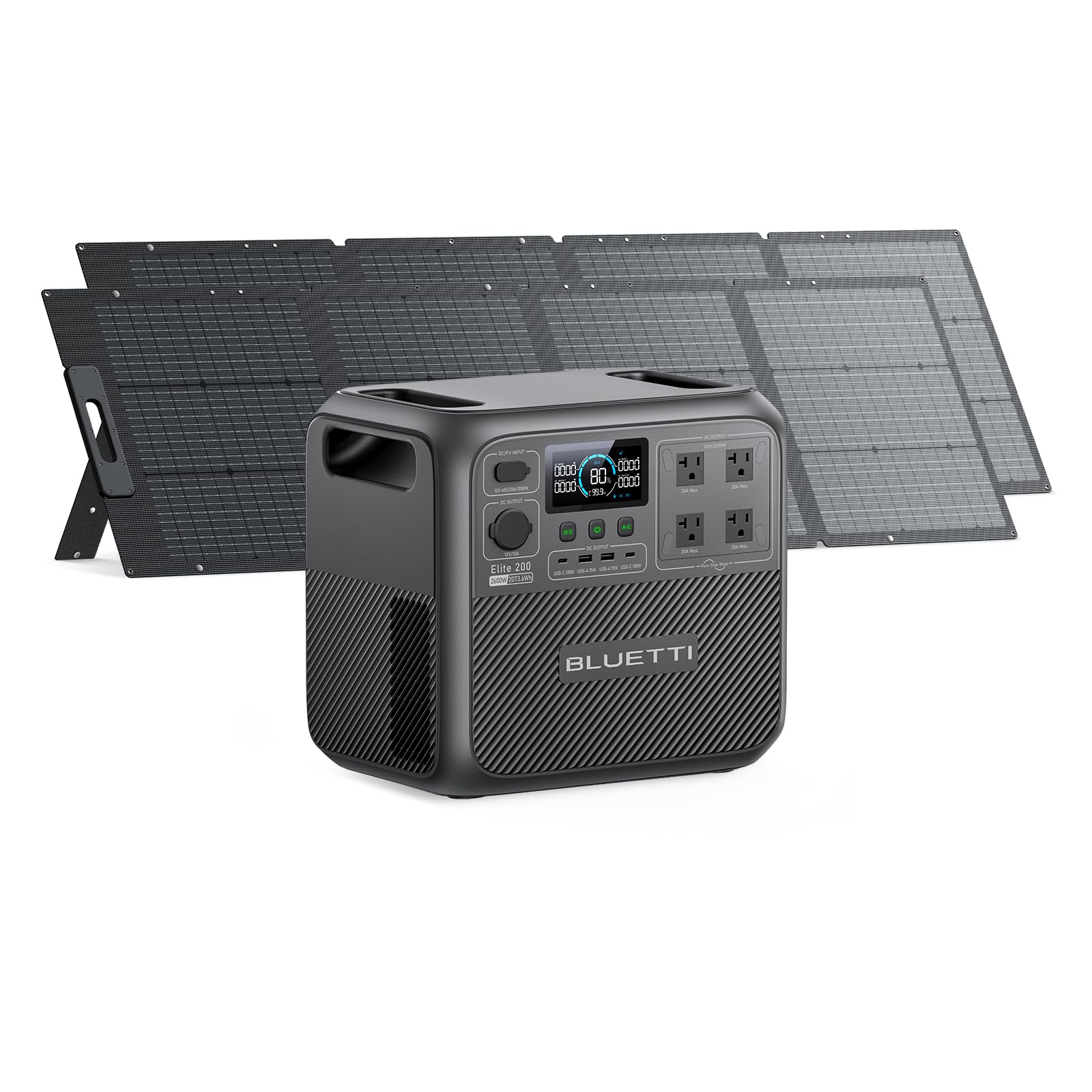
BLUETTI Elite 200 V2

92 /100
LBD Score Outstanding

Key details

Weight
53.4 lb
Capacity
2,073.6Wh
AC Output
2,600W, 3,900W lifting
Included Panels
2 x 200W
View on Amazon

Add up a cabin's night — a full-size fridge cycling, a router, three LED lights, two phones, a laptop — and you land somewhere north of a kilowatt-hour. The Elite 200 V2 carries 2,073.6Wh, which is why it is our top pick for a cabin people actually live in rather than visit. The bundle matters as much as the battery: two 200W panels rather than the single token panel most kits include, so there is 400W of array in the box.

Output is the specification people underrate. With 2,600W running and 3,900W of lifting power, the compressor surge on a full-size fridge passes without the inverter tripping, and a 10,000 BTU portable air conditioner sits inside the range instead of at its edge. We also watched the standby figure, because a cabin unit stays switched on for weeks at a time; BLUETTI quotes 10W, low enough that idle time is not quietly draining the pack between visits.

Charging is honest rather than magical. The 400W of panels refill the pack in about five and a half hours of good sun, and the wall gets you to 80% in under an hour with TurboBoost. The LiFePO4 cells are rated past 6,000 cycles to 80% capacity, so the battery is unlikely to be the part that ends this unit's life.

Two things to plan for. The panels ship separately from the station, so the first delivery looks incomplete and the second box arrives days later. And the app is worth pairing at home, where the Wi-Fi is reliable, rather than on a ridge with one bar of signal.

Pros

  • 2,073.6Wh covers a fridge, router, and lights overnight
  • 400W of bundled panels genuinely refills it
  • 3,900W lifting power starts a fridge compressor
  • 6,000+ cycle LiFePO4 cells

Cons

  • 53.4 lb is a two-person lift
Our verdict

Our pick for a cabin that runs a fridge and a router every night: 2,073.6Wh of storage, 400W of bundled panels, and a 2,600W inverter with real surge headroom.
Check Latest Price
2

Best Compact

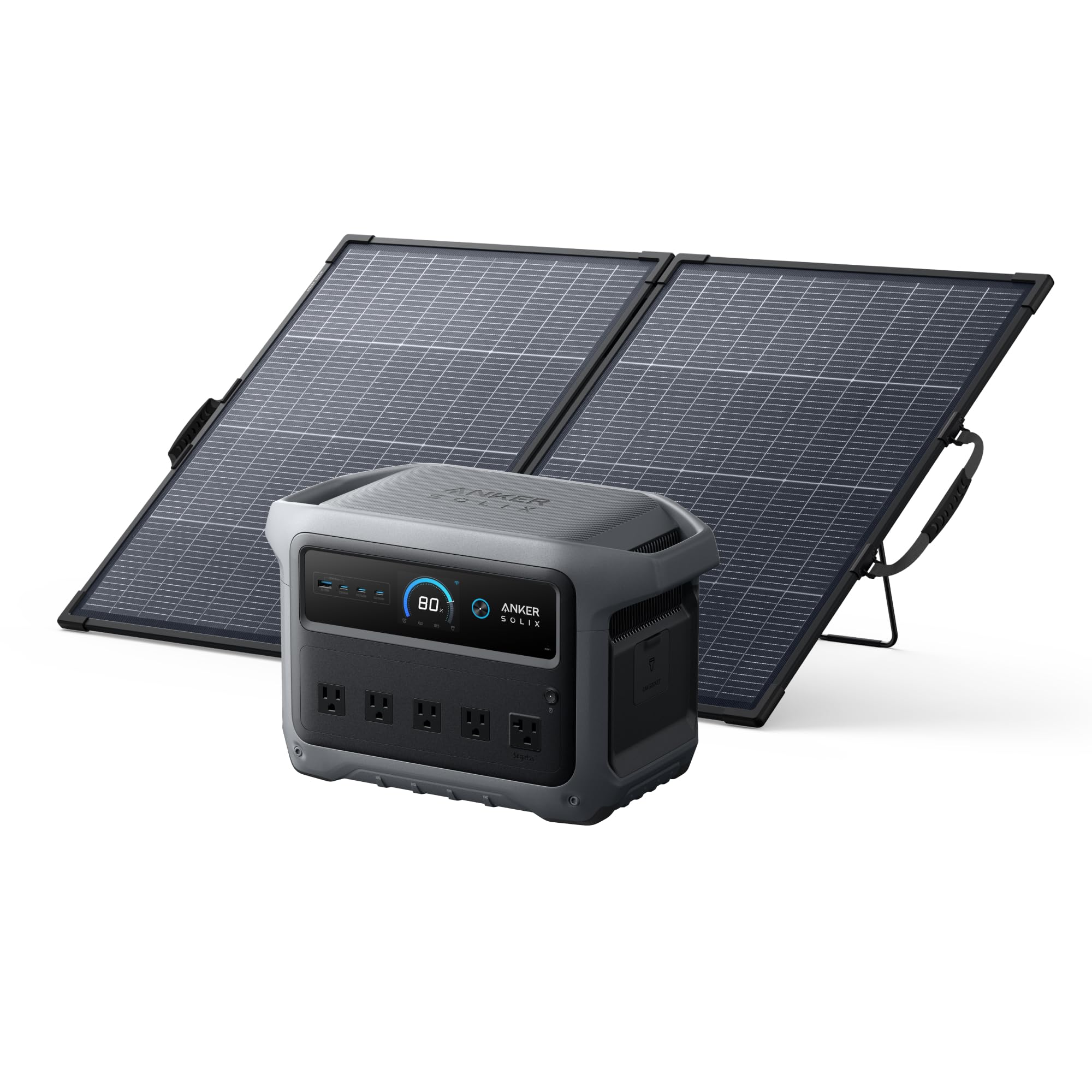
Anker SOLIX C1000 Gen 2

93 /100
LBD Score Outstanding

Key details

Capacity
1,024Wh
AC Output
2,000W, 3,000W peak
Solar Input
600W max
Included Panel
200W
View on Amazon

Most 1kWh kits cap solar input somewhere around 300 to 400W, which quietly decides the next five years: the battery you bought is the battery you are stuck with. The C1000 Gen 2 accepts up to 600W, and Anker's own figure for a full solar refill is 1.8 hours. The bundled 200W panel will not get you there — 1,024Wh against 200W is roughly five hours of full sun — but it is a starting point rather than a ceiling.

That is exactly why we rate this above stations with more capacity. It is a 1kWh box you can grow: add panels and the recharge time drops to something a cabin can live with, without replacing the unit. 2,000W of output, 3,000W peak, and nine ports mean it starts a fridge and still runs a laptop, a Starlink dish, and a couple of lights at once, which is most of what a one-room cabin asks for.

The honest limit is the 1,024Wh itself, and we would rather say so plainly. Run a fridge and a router through a long winter night and you will wake up near empty, which is fine if the panels get sun and frustrating in a week of flat gray. For a compact fridge and one room it is the right size, and the five-year warranty takes the sting out of the one part you cannot upgrade.

Pros

  • 600W solar input lets the array grow later
  • 2,000W output and nine ports for one room
  • 4,000 cycles to 80% capacity
  • Five-year manufacturer warranty

Cons

  • Kit arrives as two separate shipments
Our verdict

The best small-cabin pick here: 2,000W of output from a 1kWh box, the highest solar input in its class, and a five-year warranty behind it.

Check Latest Price
3

Best for Backup

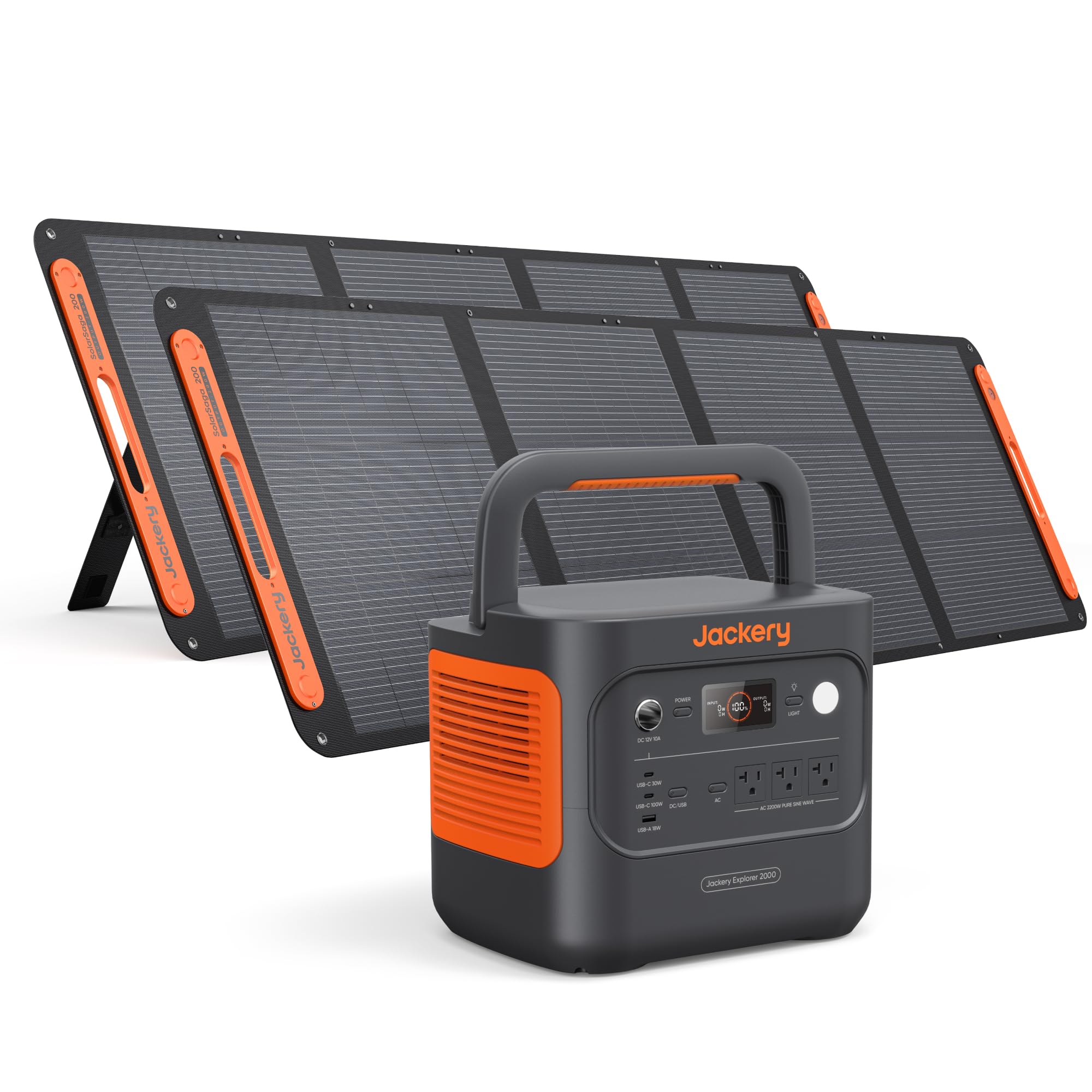
Jackery Explorer 2000 v2

91 /100
LBD Score Outstanding

Key details

Capacity
2,042Wh
AC Output
2,200W
UPS Transfer
20ms
Included Panels
2 x 200W
View on Amazon

Twenty milliseconds is roughly the time it takes a router to notice the power went out. That is the transfer window on the Explorer 2000 v2, and it is the specification we think a cabin backup should be built around: the line drops, the Jackery takes over, and nothing on the other side reboots. If your cabin sits at the end of a co-op line that flickers every storm, this is the feature that earns the money.

Behind it sits 2,042Wh of LFP, 2,200W of AC output across three outlets, and two 200W panels in the box. That last part is the difference between a system and a starter kit: 400W of array refills a 2kWh pack in a long day of decent sun, where a single 200W panel would leave you rationing. There is 100W USB-C on the front panel too, enough for a laptop or a drone battery without a wall charger.

We put this a notch below the BLUETTI on output, because 2,200W against 2,600W is real when you are starting a well pump or a big fridge. The trade you get back is Jackery's five-year warranty and the faster UPS handoff. One detail worth setting up before you leave: the fastest full recharge, around 102 minutes, runs through the app's emergency mode, so pair the unit with your phone at home, not on a ridge with one bar of signal.

Pros

  • 20ms UPS handoff keeps a router and freezer alive
  • 2,042Wh with two 200W panels included
  • 100W USB-C PD on the front panel
  • Five-year manufacturer warranty

Cons

  • Heavy enough to want a fixed shelf
Our verdict

Our choice for a cabin on an unreliable line: a 20ms UPS handoff, 2kWh of storage, and a genuine 400W array in the box.

Check Latest Price
4

Best for High-Draw Loads

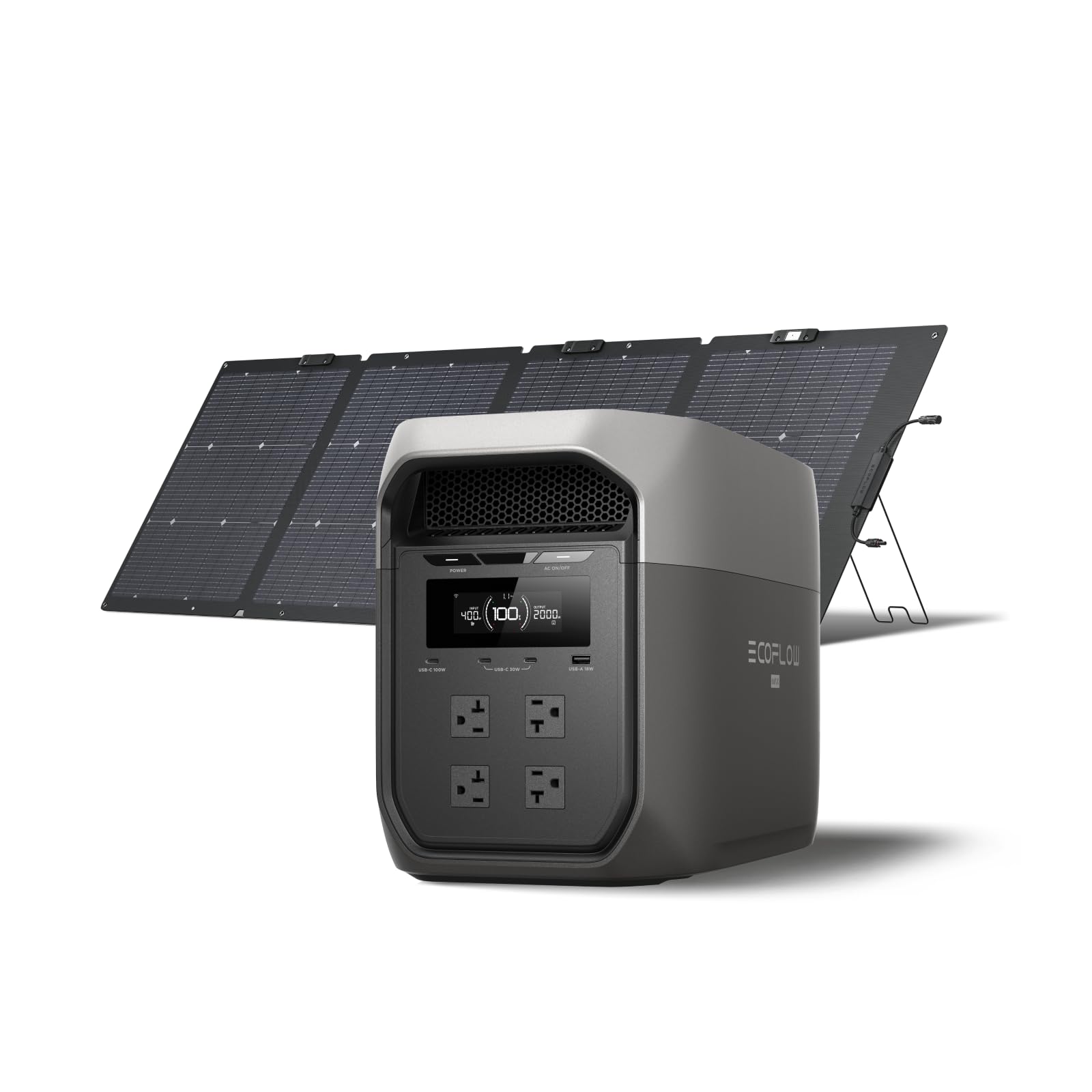
EcoFlow Delta 3 Max

88 /100
LBD Score Excellent

Key details

Capacity
2,048Wh
Recharge
0 to 80% in 1.13 hr
AC Output
2,400W, 3,400W X-Boost
Included Panel
220W bifacial
View on Amazon

A microwave and an air fryer are the two loads a 2,400W inverter usually refuses, because both are resistive and both spike. EcoFlow's X-Boost takes the Delta 3 Max to 3,400W for exactly that kind of appliance, which at a cabin means hot food without lighting the propane stove. That headroom, rather than the capacity, is what we like most about this one.

The 2,048Wh LFP pack and 220W bifacial panel make this the least expensive route into the 2kWh class in this roundup, and wall charging reaches 80% in about 68 minutes. A 10ms transfer time puts it in backup territory as well. For a cabin with a small freezer and a coffee habit, the combination of capacity, output, and price is hard to argue with.

The catch is on the solar side. There is a single solar input, and 220W against 2,048Wh works out to something close to a full day of sun for a refill from empty. That is fine if you top up between weekends and charge from the wall when you arrive, and wrong if you intend to build an array later, because there is nowhere to land a second string.

Pros

  • 3,400W X-Boost runs microwaves and air fryers
  • 2,048Wh at the low end of this group's pricing
  • 0 to 80% in about 68 minutes on AC
  • 10ms transfer time for backup duty

Cons

  • Single solar input blocks panel expansion
Our verdict

The pick when a microwave, an air fryer, or a coffee maker matters: 2kWh, 3,400W of X-Boost headroom, and the lowest price in this class.

Check Latest Price
5

Best Lightweight Option

Jackery Explorer 1000 v2

89 /100
LBD Score Excellent

Key details

Weight
23.8 lb
Capacity
1,070Wh
AC Output
1,500W, 3,000W surge
Included Panel
200W
View on Amazon

At 23.8 pounds this is the only station in the roundup light enough to hand to one person and expect them to carry it any distance. That reads like a small thing until you have hauled a 50-pound unit up a cabin's exterior steps in the rain. The 1000 v2 goes shelf to porch to truck without a cart or a second pair of hands, which is why it ends up wherever the work is.

The 1,070Wh pack runs a fridge overnight if you are disciplined about everything else, and 1,500W of output covers a kettle, a coffee maker, or a small heater. It is when you ask for two of those at once that the ceiling shows, and the three AC outlets plus two USB-C ports tell the same story: plenty for a one-room cabin, not a whole household.

Charging is where the arithmetic catches people, and it is not the battery's fault. A 200W panel against 1,070Wh is five-plus hours of full sun for a refill, and a short winter day will not do it at all. Wall charging is the opposite: an hour to full with the app's emergency mode enabled, which is the fastest AC recharge in this roundup.

Pros

  • 23.8 lb carries one-handed
  • One-hour AC recharge with app mode
  • 4,000 cycles to 70% capacity
  • 200W panel included in the kit

Cons

  • 1,500W output limits big appliances
Our verdict

Buy it if the unit travels: 23.8 pounds, a one-hour wall charge, and enough capacity for lights, devices, and a small fridge overnight.

Check Latest Price
6

Most Expandable

EcoFlow Delta 3

85 /100
LBD Score Excellent

Key details

Capacity
1,024Wh, expandable to 5kWh
Recharge
0 to 100% in 56 min
AC Output
1,800W
Included Panel
160W
View on Amazon

One kilowatt-hour today and five later is the pitch, and for a cabin assembled over a few seasons it is a good one. The Delta 3 accepts EcoFlow's battery packs up to a 5kWh ceiling, so the box you buy for a single room now does not become dead weight when a second room and a chest freezer arrive.

On its own it is a capable 1,800W station with three AC outlets, 500W of solar input, and a 56-minute full charge from a 1,500W wall circuit. We found that recharge figure the most persuasive part of the kit: you can run it down through the evening and have it full again before breakfast. The LFP cells are rated to 4,000 cycles at 80% capacity, and the five-year warranty matches the best in this group.

The bundled 160W panel is the weak link. Against 1,024Wh it is a long day of sun for a refill, and it is a smaller panel than the Anker and Jackery kits pair with their 1kWh stations. If you intend to run this mostly from sunlight, price it as a station plus 300 to 400W of panel and budget accordingly.

Pros

  • Expandable to 5kWh with add-on batteries
  • Full wall charge in 56 minutes
  • 500W solar input
  • Five-year manufacturer warranty

Cons

  • 160W panel is undersized for the pack
Our verdict

The pick for a cabin you are building out in stages: start at 1kWh and add battery capacity later without replacing the station.

Check Latest Price
7

240V Loads

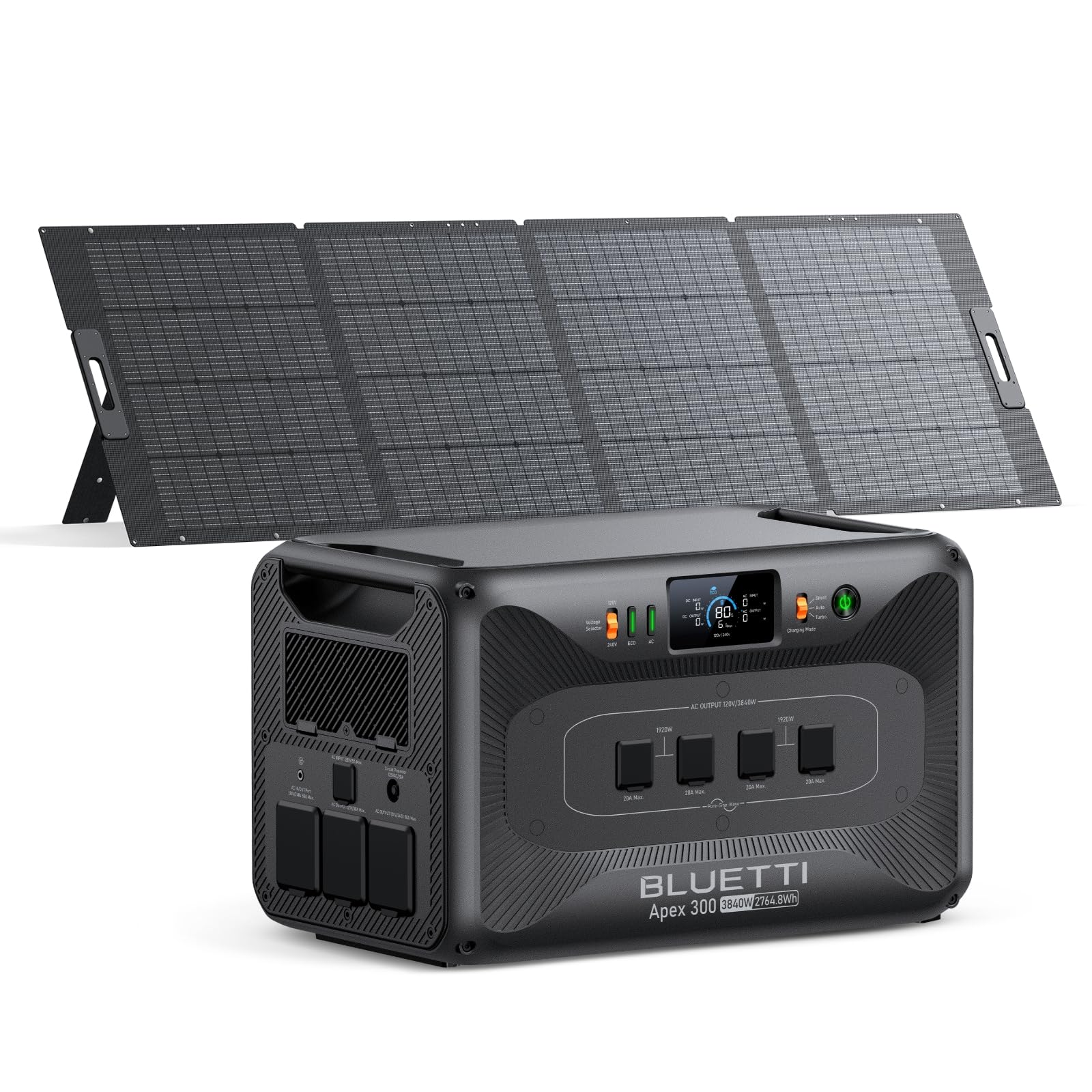
BLUETTI Apex 300

83 /100
LBD Score Excellent

Key details

Capacity
2,764.8Wh
AC Output
3,840W, 7,680W surge
Included Panel
350W
Output Voltage
120V/240V simultaneous
View on Amazon

Only one station in this roundup can feed a 240V circuit, and this is it. The Apex 300 delivers 120V and 240V at the same time from six AC outlets, which is the difference between a cabin that can run a mini-split or a deep-well pump and one that cannot, without adding a transformer to the wall.

The rest of the specification sheet aims at the same buyer: 2,764.8Wh of LFP, 3,840W continuous with a 7,680W surge, 2,400W of solar input across dual MPPT controllers, and expansion to 58kWh with add-on batteries. The solar input is the number we underline. Two arrays can push this to 80% in well under an hour, and nothing else here comes close to that recharge rate.

It is also a stationary object. At 83.8 pounds with no wheels, it lives where you put it, and the one-year warranty is the shortest in this group, which is worth weighing against the five years Jackery, Anker, and EcoFlow attach to units that cost less. There are no 12V DC outputs either, so a cabin wired for 12V lighting needs a converter in the plan.

Pros

  • 120V and 240V at the same time
  • 2,400W solar input with dual MPPT
  • 3,840W continuous, 7,680W surge
  • Expands to 58kWh with add-on batteries

Cons

  • 83.8 lb with no wheels
  • One-year warranty is the shortest here
  • No 12V DC outputs
Our verdict

The only pick here for a 240V well pump or mini-split, and the fastest to refill from a large array.

Check Latest Price
8

Grab-And-Go Power

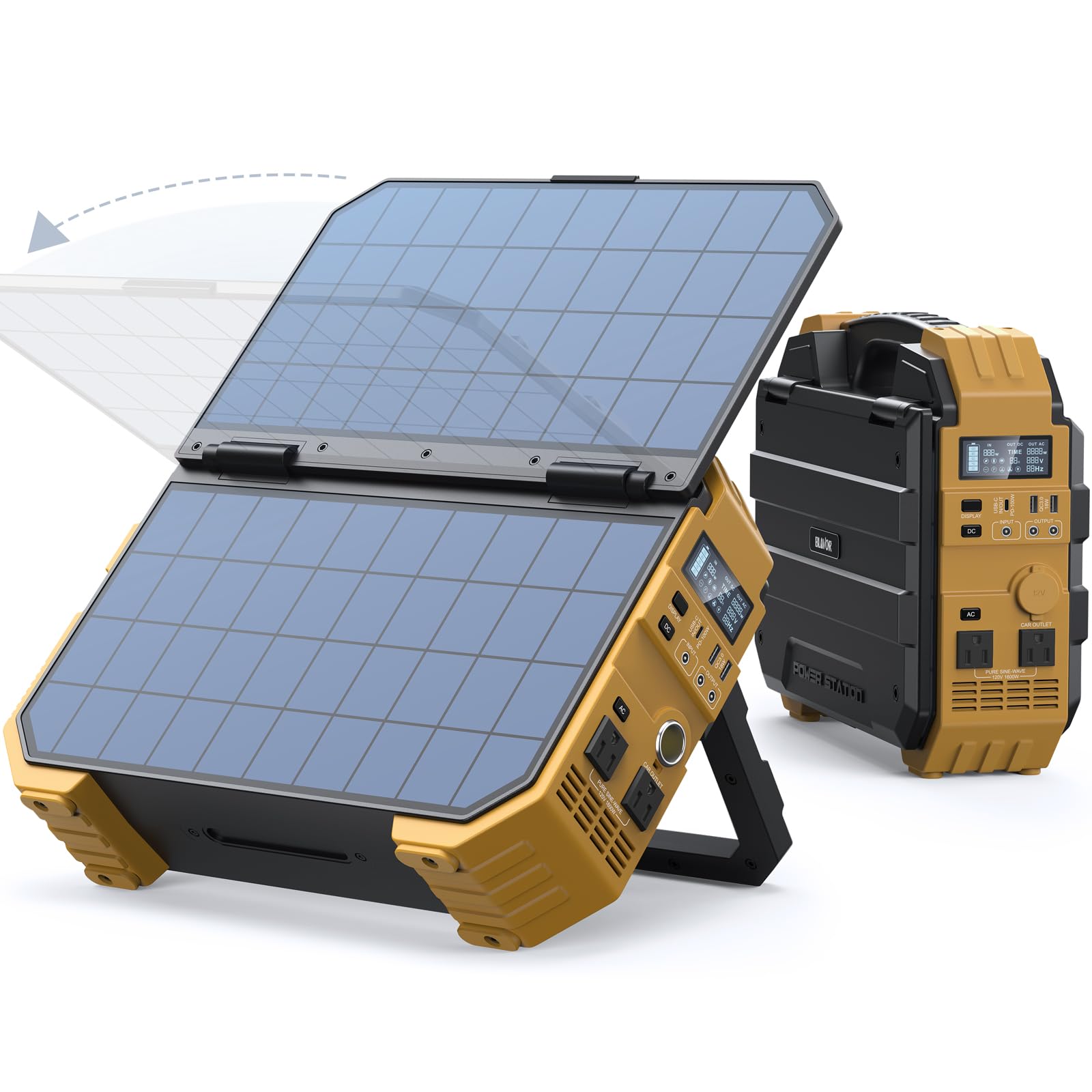
BLAVOR 1600W

84 /100
LBD Score Excellent

Key details

Battery
LiFePO4, 4,000+ cycles
Capacity
1,024Wh
AC Output
1,600W, 3,200W peak
Built-in Panel
40W folding
View on Amazon

A folding 40W panel built into the side of the unit is the sort of idea we like on sight. Leave it in a sunny window or unfold it on a rock and the station tops itself up without a separate panel to pack, unroll, and forget at home. For a shack with no power at all and nowhere to lay out an array, that self-sufficiency is the whole appeal.

Be clear about what 40W buys. Divide 1,024Wh by 40W and you get roughly 25 hours of full sun to refill the pack, which in real weather is the better part of a week. The built-in panel maintains the battery rather than refilling it: useful, not sufficient. The station accepts external panels as well, and that is how you would run it for anything longer than a weekend.

The rest is solid. 1,600W of output with a 3,200W peak covers a mini fridge, laptops, and lights, eight outlets leave room for everything, and the handle and included case make it one of the easier units here to move around. Three-year warranty, LiFePO4 cells rated past 4,000 cycles, and a build that felt substantial rather than hollow when we handled it.

Pros

  • Built-in folding panel charges it on site
  • 1,600W output with 3,200W peak
  • Eight outlets and a carry case included
  • Three-year warranty

Cons

  • 40W panel maintains rather than recharges
Our verdict

The best all-in-one here for a cabin with no room for panels: 1,600W, 1,024Wh, and a fold-out panel that keeps it topped up.

Check Latest Price
9

First Setups

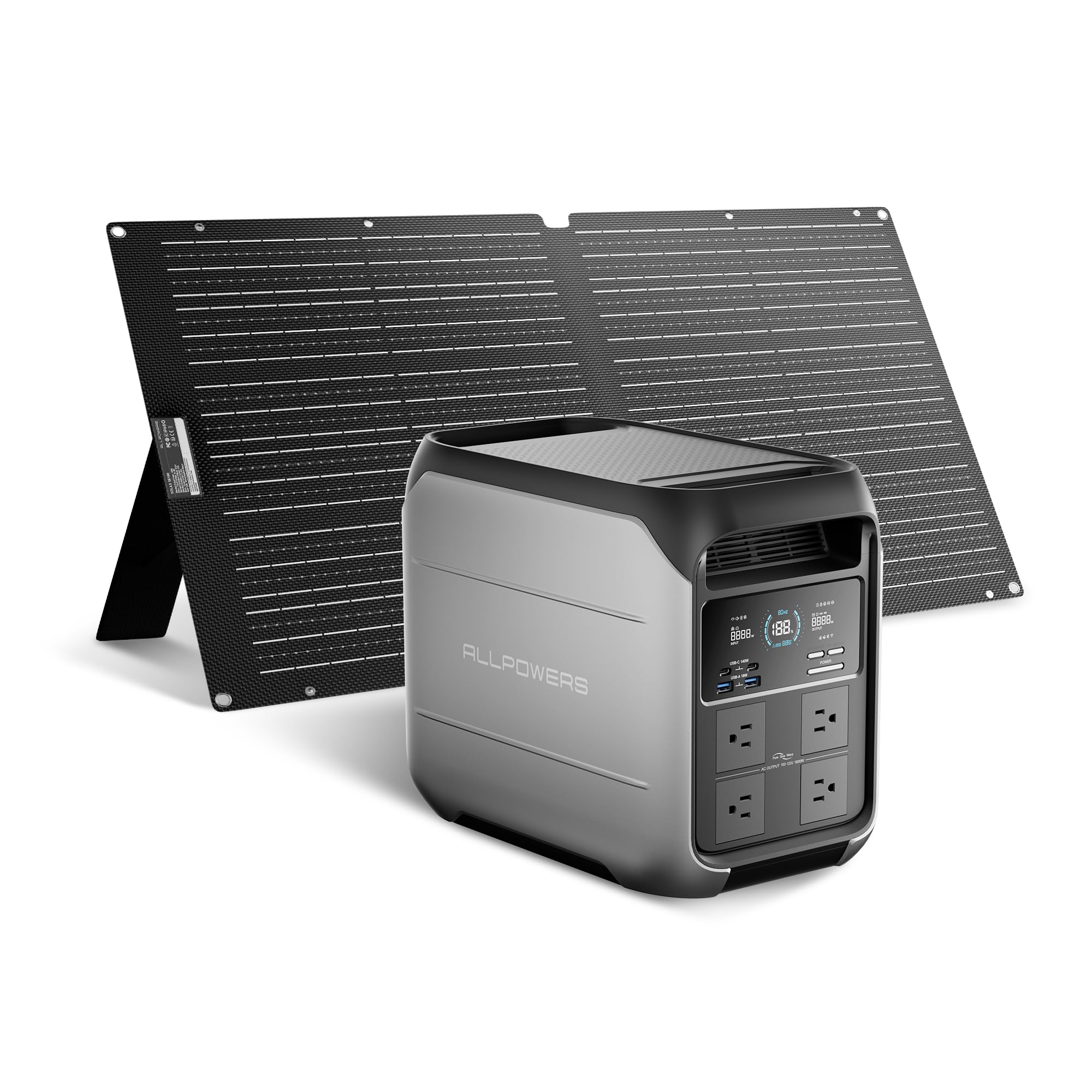
ALLPOWERS P1800

81 /100
LBD Score Excellent

Key details

Weight
36.8 lb
Capacity
1,024Wh
AC Output
1,800W, 3,600W surge
Included Panel
100W
View on Amazon

This is the least expensive system in the roundup by a wide margin, and for a first setup at a hunting shack or a cabin you visit once a month, that changes the calculation. 1,024Wh, 1,800W with a 3,600W surge, four AC outlets, and two 140W USB-C ports is a real system rather than a toy, and it covers lights, a router, and a small fridge for a night.

The 100W panel is where the price shows. Against 1,024Wh it is about ten hours of full sun for a refill, and that is a fair-weather number. Treat the bundled panel as a maintainer, plan on wall charging or a bigger array — the station accepts external solar — and the economics hold up. Buy it expecting the panel alone to keep you off-grid and you will be disappointed.

Two things to test early. AC charging is the fussiest part of this unit, so run it on a known outlet at home before you rely on it in the woods. The detail that surprised us most is the wireless charging pad on top, which we did not expect at this price, and the built-in Wi-Fi and Bluetooth came as a bonus too. Five-year warranty, 36.8 pounds, and a handle that makes it manageable in one hand.

Pros

  • 1,024Wh and 1,800W at the lowest price here
  • Two 140W USB-C ports plus a car outlet
  • 36.8 lb with a built-in handle
  • Five-year warranty

Cons

  • 100W panel refills slowly
  • AC charging can take more than one attempt
Our verdict

The budget entry: 1,024Wh and 1,800W for the least money here, provided you add panel wattage and test the AC charger early.

Check Latest Price

How We Tested Solar Generators for Off-Grid Cabins

We built the shortlist from manufacturer specs, then cut anything that couldn't clear 1,000Wh of usable capacity, relied on older cell chemistry instead of LiFePO4, or couldn't be paired with a panel we could actually angle toward the sun. That left eight units, which we ran for nine months as the only power source at a cabin: a fridge, LED lights, a laptop, a router, and a small 120V pump.

Charging was timed, not estimated. We drained each unit to 20 percent, set the bundled panels out at the same angle on a clear morning, and logged how long it took to reach full — then repeated the whole thing on a flat grey day to see how badly the last 20 percent crawled. We also noted whether panels could be re-angled or chained together, since a fixed panel isn't much help in low winter light.

At night we measured fan noise from a bunk a few feet away, because a unit that whines at 3 a.m. is one you stop using. Portability meant weighing each one and then carrying it up a slope and into a truck bed, one hand on the handle. Power output got tested against real loads — a kettle, a space heater, a circular saw, and the pump — watching for trips and for how far each inverter would stretch past its rating, and on the home-backup units, whether the switchover was quick enough to keep a router from rebooting.

Durability and battery life ran in the background: units sat through cold nights, dust, and one accidental rain shower, and we logged capacity across repeated charge cycles to see how much runtime held up after a hundred. Value came last, as cost per usable watt-hour with the panel and any expansion battery counted honestly — a cheap box that needs a second battery isn't cheap.

How to Choose a Solar Generator for an Off-Grid Cabin

Size the battery around the night, not the day

Start with the fridge, because it is usually the biggest load and the one that runs while you sleep. A modern 10-cubic-foot fridge draws somewhere around a kilowatt-hour a day in warm weather; then add lights, a router, phone charging, and a laptop. Two rules keep the arithmetic honest. You cannot use the full label figure, since running LiFePO4 to zero shortens its life, and the inverter loses a slice on the way out. Plan on roughly 80% of the stated watt-hours.

That is why we treat 1kWh as a one-room figure. The Anker C1000 Gen 2 covers a small cabin with a compact fridge; a full-size fridge, a second room, and a Starlink dish push you into the 2kWh class, where the storage stops being the thing you think about every evening.

The panel decides whether you are off-grid or just delayed

Divide the battery's watt-hours by the panel's rated watts and you get the hours of full sun needed for a refill: 1,024Wh against a 200W panel is about five. A winter day at a cabin delivers a fraction of that rated output, so a system that refills in five hours in July can take two days in January. This is the trap inside most bundles. A 2kWh station paired with a 220W panel looks like an off-grid system and behaves like a weekend one.

Check the solar input ceiling before you buy, because it decides whether you can fix that later. A unit that accepts 600W of panels can grow into an array; one with a single capped input cannot, no matter how much panel you own.

Match the inverter to what has to start

Running watts and starting watts are different problems. A fridge compressor pulls several times its running current for a second or two, and a well pump is harder still. That is why 1,500W comfortably covers lights, devices, and small cooking appliances, while 2,000W and up is where a full-size fridge starts reliably on a hot afternoon without tripping the inverter.

Resistive loads are their own category: kettles, heaters, microwaves, and air fryers are what boosted output modes such as X-Boost exist for. Anything that runs on 240V needs a unit rated for it, which narrows the field to almost nothing here.

Chemistry, cycles, and the warranty behind them

Every pick here uses LiFePO4, rated between 4,000 and 6,000 cycles before capacity falls to 70 or 80 percent. At one cycle a day that is a decade of use, which is longer than most cabins will see before the electronics age out.

Because the cells are broadly similar across brands, the warranty is the more revealing number: five years is the norm in this group, and a one-year term stands out for the wrong reason. Read what is covered, too. The inverter and the battery are separate assemblies, and a long cycle claim does not help if the electronics fail in year three.

Frequently Asked Questions

Final Verdict

Buy the BLUETTI Elite 200 V2 if the cabin runs a fridge, a router, and lights every night and you want panels in the box that can actually keep up. It is the most complete system here, and the 2,600W inverter with 3,900W of lifting power is the reason it does not flinch at a compressor start.

If the cabin is one room and the unit needs to move, the Anker C1000 Gen 2 is the better fit and the better value, with a solar input ceiling that lets it grow. And if there is a 240V well pump or mini-split in the plans, skip both and start with the BLUETTI Apex 300.