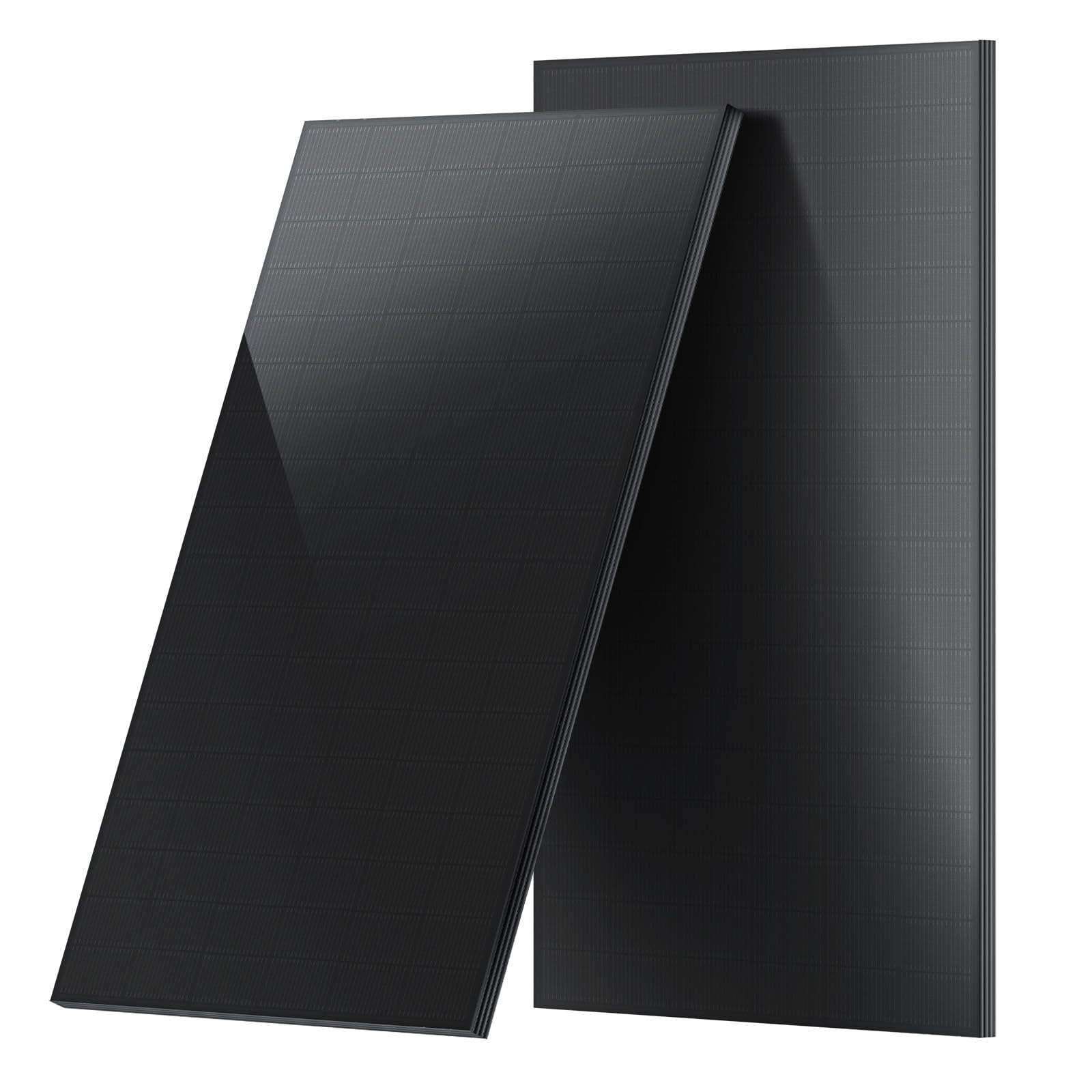
Best Overall
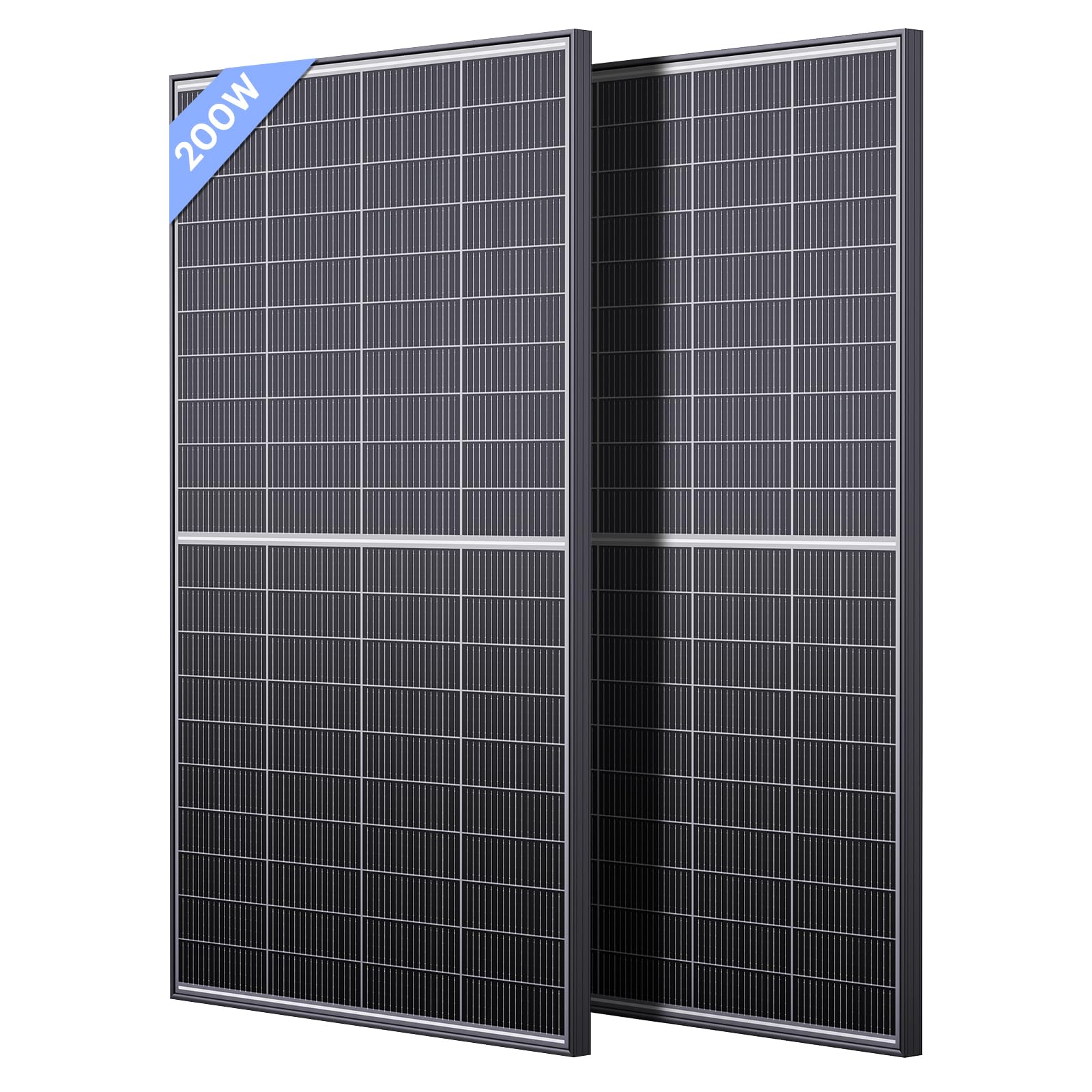
Callsun 400W Bifacial 2-Pack
Key details
- Panel Size
- 51.3 × 30.3 × 1.4 in
- Rated Output
- 400W (2 × 200W)
- Cell Efficiency
- 25.6%
- Weight Per Panel
- 23.8 lb
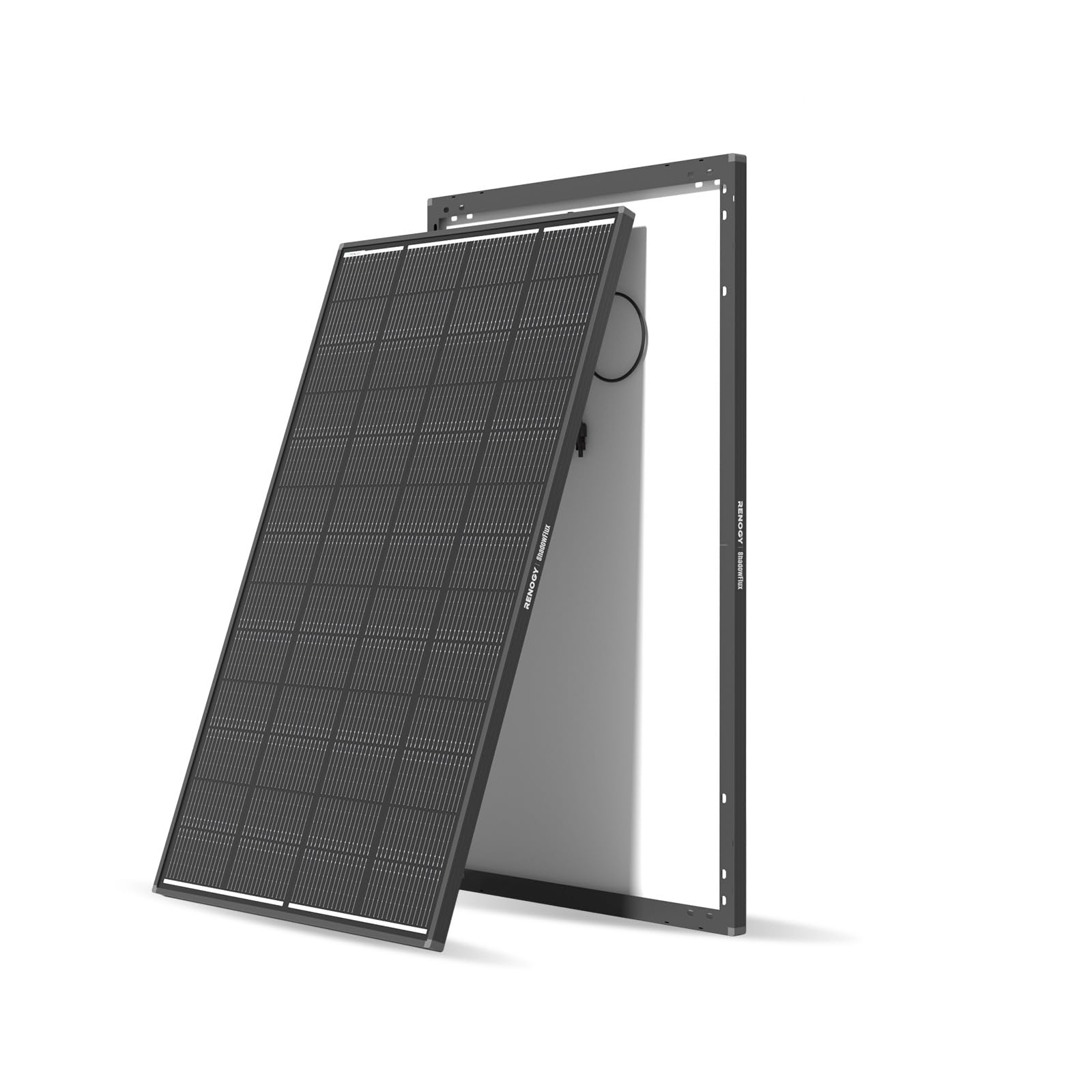
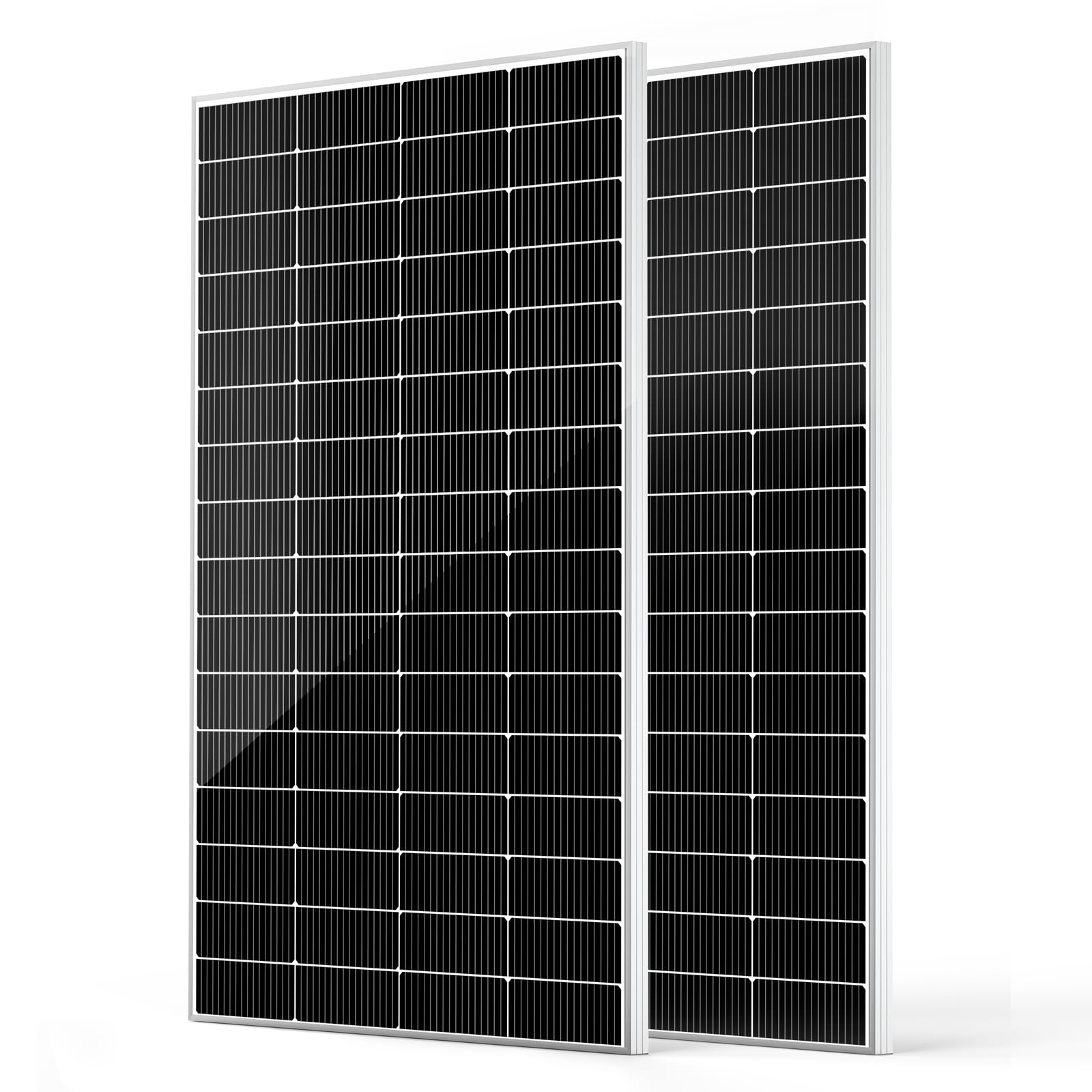
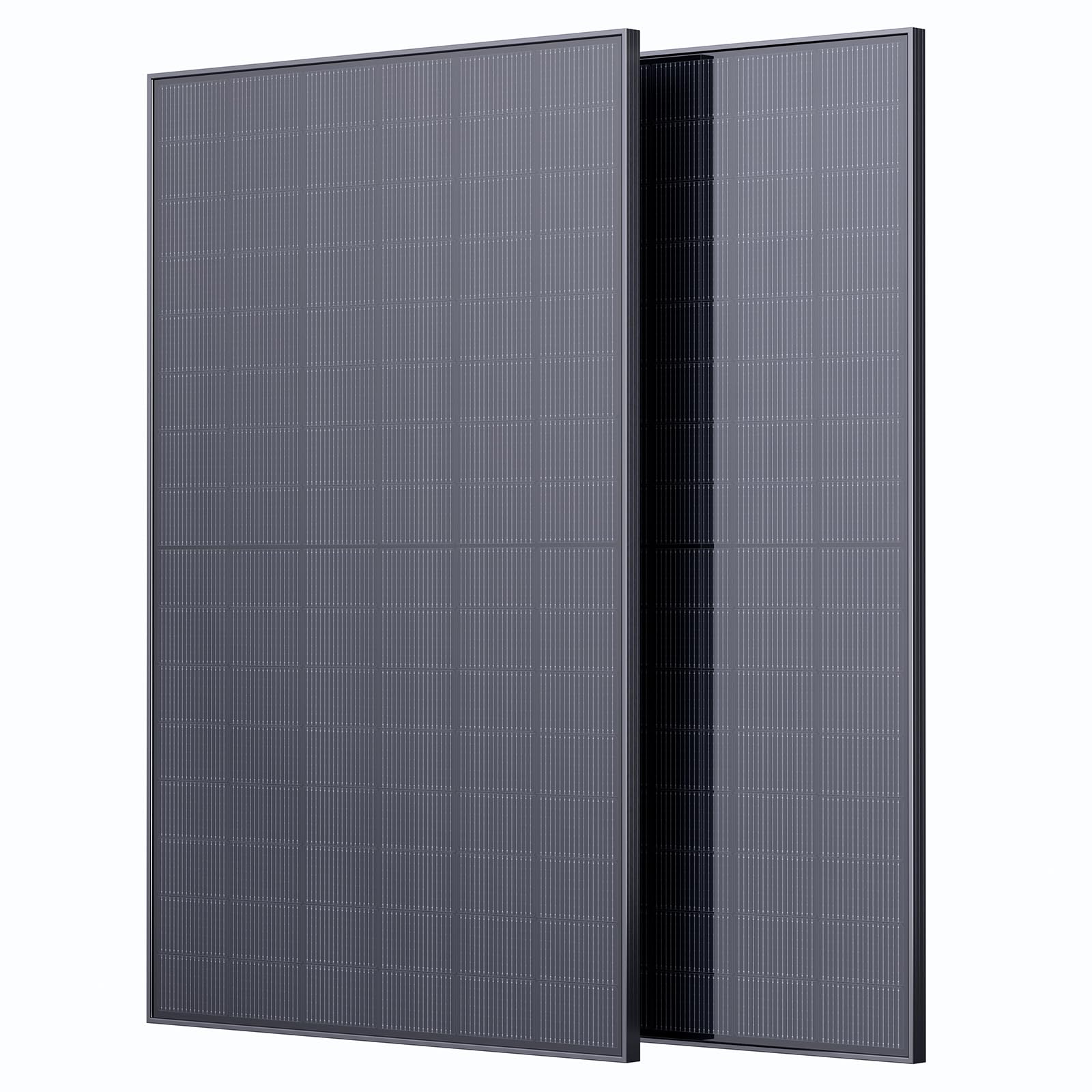
Two hundred watts in a panel that weighs 23.8 pounds and measures 51 by 30 inches is a shape most home roofs can actually use. The pair covers about 22 square feet — enough for a garage roof or the slope above a porch without eating the whole thing — and the black frame and tempered glass look deliberate on shingles rather than bolted on. That mix of size, finish, and 25.6% N-type cells is what makes it the set we hand most homeowners first.
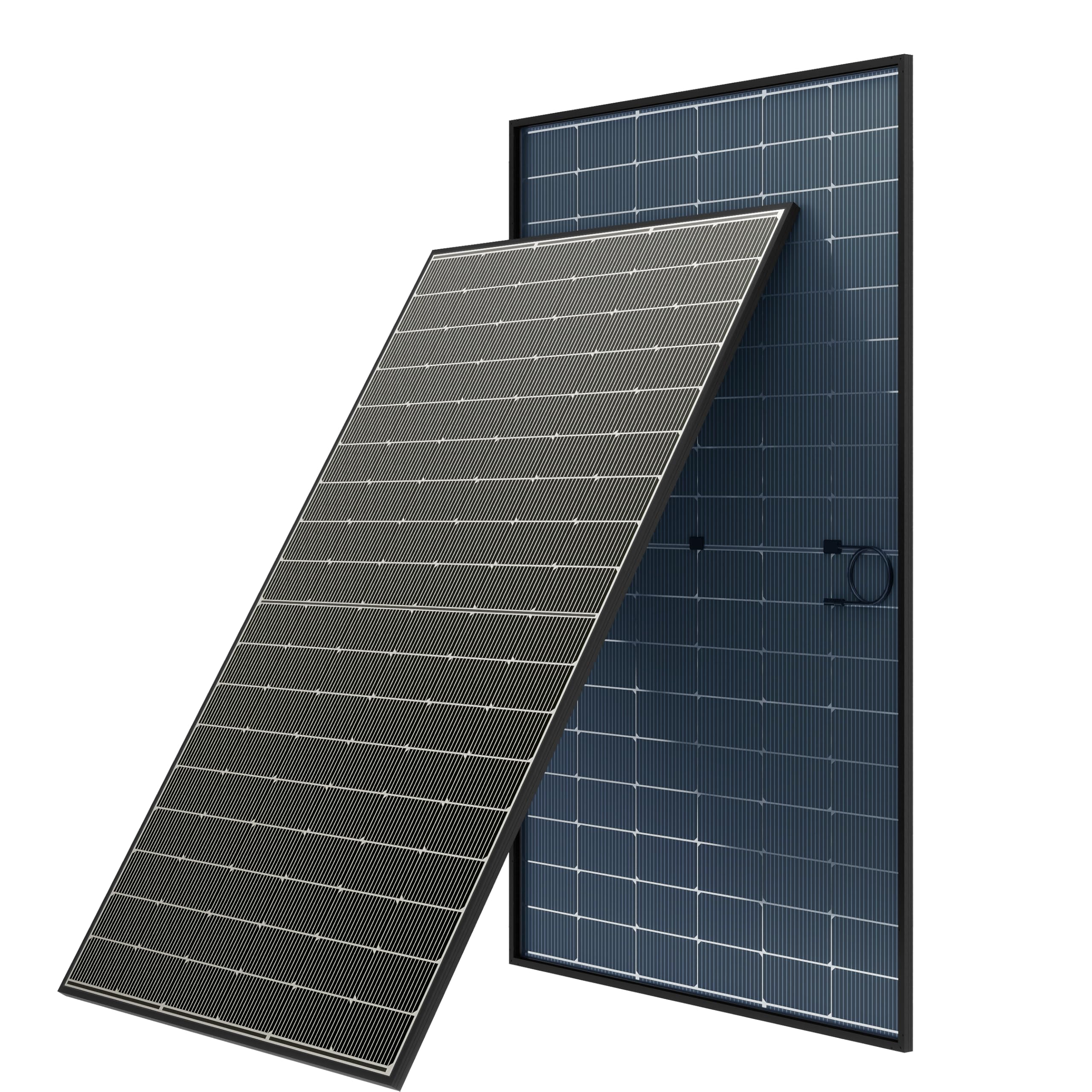
What sold us is less visible. Each panel is split into two independently working halves, so a shadow from a vent pipe or a chimney flue takes out a section instead of the string. Panels wired in series are only as good as their weakest cell, and the split-module layout is the cheapest insurance against that in this group. The bifacial backsheet adds a little on top when the surface under the panel is pale; on dark asphalt shingles, don't count on much.
Installation is where the planning happens. There's no mounting hardware in the box, so add rails or Z-brackets to the list, and the frame gives you standard corner points rather than a channel you can clamp anywhere. Wiring is the other decision: in series the pair runs at 47.5V and 8.4A with a 54.6V open-circuit figure, which needs an MPPT controller rated above that; in parallel you stay near 24V and a smaller controller on a 12V bank will do.
If your roof is clean and unshaded and a controller is already on the wall, a cheaper pair does the same job, and that's fine. The pair also travels: at under 24 pounds each, these are the panels here most likely to do roof duty at home and camper duty on weekends, which is not true of the 69-inch sets.
Pros
- 25.6% N-type cells in a compact 200W panel
- Split-module halves limit shade losses
- Bifacial back side adds output over pale surfaces
- Light enough for one person to handle on a roof
Cons
- No mounting hardware or cabling included
Our default for a home array: top-tier efficiency, split-module shade tolerance in a panel one person can carry, and output that holds its rating in clear sun.