Best Turntable Cartridges of 2026

Every record you own is judged by a diamond the size of a grain of sand. The cartridge holds that stylus and turns the groove's wiggle into a signal your speakers can amplify, which makes it the smallest, cheapest, most consequential upgrade in a vinyl setup. I ignored mine for years, mostly out of fear that I'd bend the cantilever and wreck a good record.

The swap is less scary than the alignment videos suggest, but the shopping is where I got stuck: conical or elliptical stylus, standard half-inch mounting or the plug-in P-mount on older decks, and a price ladder that tempts you to assume pricier is better. It isn't always. Nor is a cartridge a forever purchase — styli wear, and whether you can replace just the stylus or the whole body changes what you'll spend in a few years.

We spent six months with 12 cartridges on our own turntables, replaying the same records until the differences stopped being imaginary. Some are plug-and-play for a nervous first-timer; others reward careful alignment. The right match comes down to your table, your records, and your budget.

1

Best Overall

Audio-Technica AT-VM95E

94 /100
LBD Score Outstanding

Key details

Mount
1/2-inch headshell
Stylus
0.3 x 0.7 mil elliptical
Upgrade Path
VM95 stylus line
Cartridge Weight
0.22 oz
View on Amazon

The AT-VM95E is the cartridge we point to for someone who wants a first real upgrade without turning the project into a weekend of fiddling. It uses a standard 1/2-inch headshell mount, and the threaded inserts in the body mean two screws go straight in without nuts on the other side. That sounds like a small thing until you are trying to hold a tiny nut and a screwdriver at the same time. The low-resonance polymer body keeps the assembly light, and the green shell is easy to spot when you are checking alignment.

Sound is the reason it earns the top spot. The 0.3 x 0.7 mil elliptical stylus and aluminum cantilever give it a clean, crisp presentation with a little warmth, and the midrange has enough body to keep vocals from sounding thin. We noticed good separation between instruments and a steady, unshowy bass line; it does not exaggerate lows or push the treble forward. On a standard deck with a healthy phono stage, it sounds like a more expensive cartridge than it is. It tracks cleanly and does not call attention to surface noise unless the record is already rough.

What makes it a long-term buy is the VM95 stylus family. You can replace the stylus when it wears, and you can move up the line later without changing the cartridge body. The body is light enough for standard tonearms, and the threaded inserts are a genuine convenience. Apart from that, the AT-VM95E is the least risky way into a serious cartridge, and it leaves money for an alignment gauge and a decent record brush.

Pros

  • Clean, detailed sound with a little warmth
  • Threaded inserts simplify mounting
  • Upgradeable VM95 stylus family
  • Strong value for a first upgrade

Cons

  • Threaded holes can complicate some headshell fits
  • Elliptical stylus gives up some fine detail to premium profiles
Our verdict

The AT-VM95E is the cartridge we recommend first for most standard turntables: clean, detailed sound, easy threaded mounting, and a stylus family you can upgrade without replacing the body.

Check Latest Price
2

Best for P-Mount Turntables

Audio-Technica AT85EP

94 /100
LBD Score Outstanding

Key details

Mount
P-mount (T4P)
Stylus
0.3 x 0.7 mil elliptical
Coil Design
Para-toroidal
Compatibility
Linear-tracking P-mount
View on Amazon

P-mount turntables are a closed club. The cartridge plugs straight into the tonearm and is held by a single screw, so a standard 1/2-inch body will not fit no matter how good it sounds. The AT85EP is built for that T4P interface, which is why it is the pick here for linear-tracking Technics, JVC, Hitachi, and Denon decks. It uses a 0.3 x 0.7 mil elliptical stylus and Audio-Technica's dual moving magnet construction, with para-toroidal coils for wide channel separation. The plug-in fit is the whole appeal: you are replacing a worn cartridge, not rebuilding a headshell.

We found the sound clean and clear rather than lush. Albums that had gone dull and scratchy on an old P-mount stylus came back with better separation and a firmer low end, and the elliptical tip pulled more detail than the conical replacements common in this price range. It is not a warm, romantic cartridge, and it will not hide surface noise on a badly worn record. What it does well is restore a vintage deck to enjoyable, everyday listening without asking for much setup. The single mounting screw is not included, so keep the one from your old cartridge or source a matching screw before you start.

The AT85EP makes most sense as a replacement for a secondhand linear-tracker, not as an upgrade for a standard turntable. If you have a P-mount deck and a modest phono stage, it is the least expensive way to get a modern elliptical stylus and a known-good generator into the arm. It is also forgiving of the small alignment errors that come with plug-in mounting. There is no reason to pay more for a P-mount cartridge unless the rest of the system is already sorted. For a deck that only needs to play records cleanly again, that is enough.

Pros

  • Plug-and-play P-mount fit
  • Clean, clear elliptical sound
  • Revives vintage linear-tracking decks
  • Good value for a specialized replacement

Cons

  • Mounting screw not included
Our verdict

For a P-mount turntable, the AT85EP is the easy answer: a plug-in elliptical cartridge that restores clean sound without standard-headshell alignment work.

Check Latest Price
3

Best for Detail

Ortofon 2M Blue

92 /100
LBD Score Outstanding

Key details

Output
5.5 mV
Stylus
Nude elliptical
Compatibility
Most turntables
Replacement Stylus
2M Blue
View on Amazon

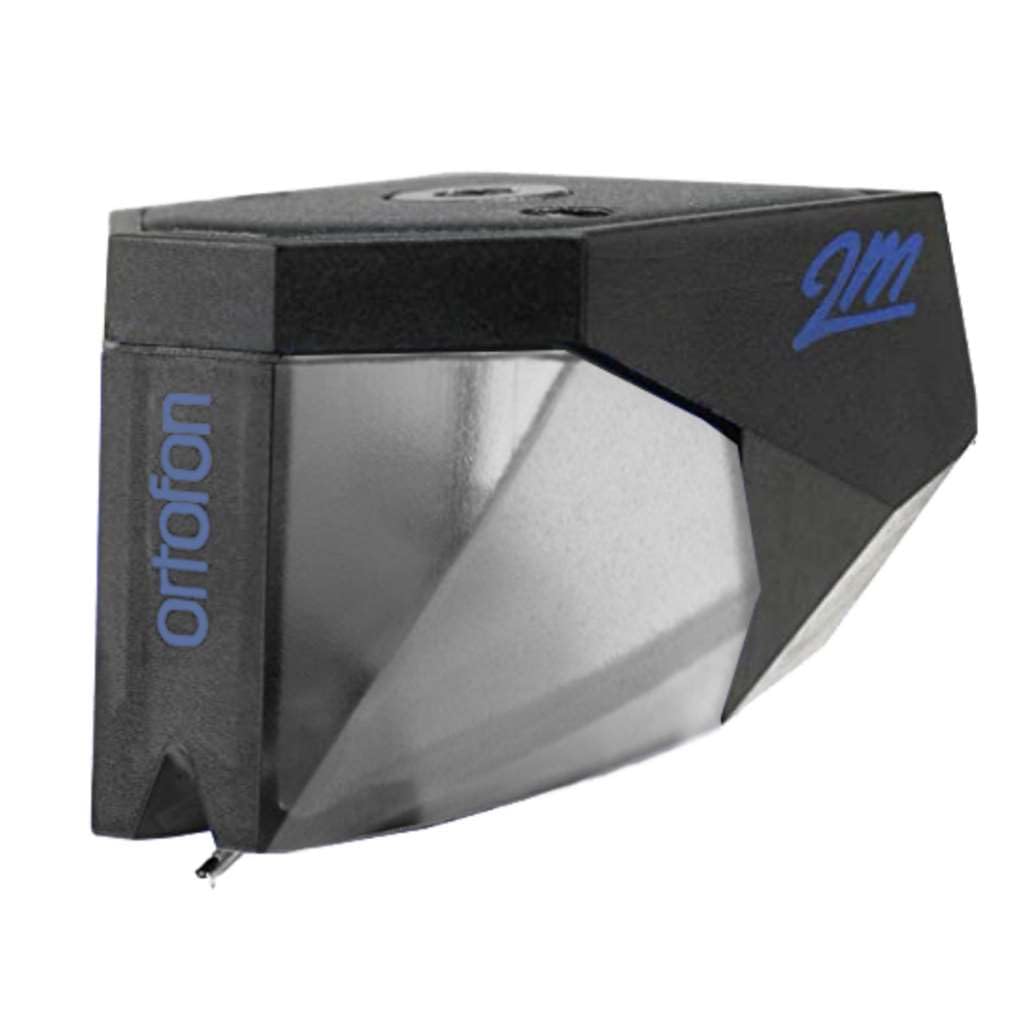
We think the 2M Blue is the cartridge to choose when the rest of your system is good enough to show the difference. It is the upgrade to the 2M Red, and the change is easy to hear: the nude elliptical stylus opens up cymbals and acoustic strings, the soundstage feels wider, and bass notes have more shape. The high 5.5 mV output gives a healthy signal to a standard moving-magnet phono stage, so you do not need a step-up transformer or a specialty preamp. It is not a warmth-first cartridge; it wants clean records and a system that does not already lean bright.

The Blue also stays quiet between tracks. Surface noise is low on clean pressings, and the cartridge does a good job of separating instruments without slicing the music into pieces. We appreciated the replaceable stylus: when the tip wears, you keep the body and fit a new one. Give yourself a clear workspace and a good light for alignment; a cartridge this revealing rewards patience more than force.

Compared with the Nagaoka MP-110, the Blue is the more open and detailed choice; the MP-110 is fuller through the middle and easier on rough records. That makes the Blue the better fit for a clean collection and a system with decent resolution, while the Nagaoka suits someone who wants warmth. If you are stepping up from a stock cartridge and want a clear, modern sound, the Blue is the one we point to. It is not cheap, but it is a genuine upgrade rather than a sideways move.

Pros

  • Open, detailed sound with strong dynamics
  • Nude elliptical stylus reveals more nuance
  • High 5.5 mV output suits standard phono stages
  • Replaceable stylus protects the investment

Cons

  • Small mounting hardware is fiddly
  • Premium price for a moving-magnet cartridge
Our verdict

The 2M Blue is our pick for a revealing system: a nude elliptical stylus, open dynamics, and a replaceable stylus make it a worthwhile step up from the 2M Red.

Check Latest Price
4

Best for Warm, Vocal Sound

Nagaoka MP-110

90 /100
LBD Score Outstanding

Key details

Mount
1/2-inch headshell
Sound
Warm, vocal-forward
Cartridge Weight
2.4 oz
View on Amazon

The MP-110 is the cartridge we reach for when a record needs to feel human more than clinical. Its strength is the middle: voices have body, guitars have weight, and the bass is tight and accurate rather than bloated. The top end is smooth and slightly reserved, so cymbals do not jump out at you the way they can with the Ortofon 2M Blue. That makes it a natural fit for classic rock, soul, and acoustic records that live or die on vocal presence. It also tracks lightly and handles noisy vinyl better than the brighter picks here.

Installation is straightforward. The MP-110 mounted easily in a standard headshell and aligned without drama; the body is compact and the stylus guard is easy to slide off. We liked the way it settled into a system without demanding a different phono stage or a lot of fiddling. It is the kind of cartridge that makes a modest setup sound more confident rather than more impressive. If your speakers already lean bright, the MP-110 fills in the middle without adding glare.

We think the MP-110 is the right choice for a listener who wants richness and a little forgiveness rather than the last word in detail. It costs more than the AT-VM95E but less than the 2M Blue, and it fills a gap between them: warmer than the Audio-Technica, less expensive than the Ortofon. If your system is already bright, the MP-110 can soften the edge without making everything sound dull. If you want sparkle and inner-groove detail, go with the Blue instead.

Pros

  • Rich, full midrange for voices
  • Tight, accurate bass
  • Kind to noisy records
  • Easy to install and align

Cons

  • Delicate cantilever needs gentle handling
Our verdict

The MP-110 is the warm, vocal-loving alternative here: rich midrange, tight bass, and a forgiving way with older records, provided you handle its delicate cantilever carefully.

Check Latest Price
5

Lively Rock

Ortofon 2M Red

94 /100
LBD Score Outstanding

Key details

Sound
Lively, slightly warm
Stylus
Elliptical diamond
Upgrade Path
2M Blue stylus
Compatibility
Most turntables
View on Amazon

The 2M Red is the entry point to Ortofon's 2M line, and it is still one of the most entertaining cartridges in this group. It has an elliptical diamond, a universal fit for most turntables, and a sound that is open and dynamic with a slight touch of warmth. Bass has punch, midrange is clear, and the top end is lively enough to wake up a polite system. We liked it best with rock and pop records that benefit from a little snap. If your system is already forward, the Nagaoka MP-110 is the gentler alternative.

We think the Red makes the most sense as a first step up from a stock cartridge, especially if you plan to upgrade later. The body accepts the 2M Blue stylus, so you can buy the Red now and move up without replacing the whole cartridge. It mounted easily on a standard headshell and aligned without fuss. The upgrade path is the real argument: you are not throwing away the body when you want more detail.

The Red is not the most refined cartridge on this page. The Blue has more resolution, the Nagaoka has more midrange body, and the AT-VM95E is the safer all-rounder. What the Red has is energy and a low enough entry price to leave room for an alignment gauge and a decent phono preamp. If you want a cartridge that makes a modest system feel awake, the Red is still a smart buy. If you want to hear deeper into the groove, save for the Blue.

Pros

  • Lively, dynamic sound with solid bass
  • Easy standard-mount installation
  • Upgrade path to 2M Blue stylus
  • Strong value in the 2M line

Cons

  • Exposed stylus is easy to damage
  • Top end can sound bright on lean systems
Our verdict

The 2M Red is the lively, lower-cost way into Ortofon's 2M family, with an easy standard mount and a clear path to the Blue stylus later.

Check Latest Price

How We Tested a Dozen Cartridges (and What We Listened For)

We started by pulling every moving-magnet cartridge currently in production that a normal person could actually buy, then narrowed by the things that shape ownership rather than the spec sheet: standard half-inch mounting versus the plug-in P-mount a lot of older decks take, whether the stylus can be replaced on its own, the stylus profile, and how wide the price spread runs. Twelve made the cut, and we lived with them for six months, mounting each on turntables in our own homes instead of a listening bench.

Installation came first, because a misaligned cartridge makes every later impression meaningless. We timed each mount with a stopwatch — screws, headshell leads, protractor alignment, tracking force set with a digital gauge — and noted where the process got fiddly, like clips that fight back or molded plastic threaded inserts that felt soft going in. P-mounts simply clicked into place, which took about a minute and left nothing to adjust.

Then the listening. Each cartridge played the same three records: a clean new pressing, a scratched dollar-bin copy, and a loud rock album whose final track sits deep in the inner grooves where trouble shows up first. We listened for sibilance on vocals, how much surface noise the worn record threw, whether the bass felt solid or thin, and whether one channel sat louder than the other.

Durability and value came last. We brushed each stylus, checked for gunk and wear as the months went on, and priced replacement styli to see what a cartridge really costs over a few years rather than on day one. The ones that held up are the ones below.

How to Choose a Turntable Cartridge

Match the Mount Before Anything Else

A standard 1/2-inch cartridge bolts to a headshell with two screws. A P-mount, also called T4P, plugs directly into the tonearm and is held by a single screw. The two systems are not interchangeable, and no stylus upgrade can fix the wrong mount. If you own a linear-tracking Technics, JVC, Hitachi, or similar P-mount deck, the Audio-Technica AT85EP is the direct fit here. Everyone else should start with a standard-mount body such as the AT-VM95E. Check the tonearm and headshell before you shop, and note whether your headshell uses threaded inserts or pass-through holes so you know which screws you need.

Choose the Stylus Profile for Your Records

The stylus profile controls how much detail you hear and how well the cartridge copes with worn vinyl. A conical tip is the cheapest and most forgiving. An elliptical tip, like the one on the AT-VM95E, is the sensible middle ground for most listeners. A nude elliptical, like the 2M Blue's, exposes more nuance and costs more. Microlinear and Shibata profiles go further at the inner grooves, but they ask for cleaner records and careful alignment. If your collection is in good shape, spend up for a finer tip. If you play a lot of noisy secondhand records, a simpler elliptical or a warmer cartridge will be easier to live with.

Match the Sound to Your System

Cartridges are not neutral. The AT-VM95E is clean and detailed with a little warmth. The Ortofon 2M Blue is more open and dynamic. The Nagaoka MP-110 is richer through the midrange and gentler up top, while the 2M Red is the liveliest of the Ortofon pair and can tip bright. Think about the records you actually play and the gear behind them. A warm cartridge can tame a bright phono stage; a detailed one can wake up a soft-sounding system. If vocals and classic rock are the priority, the MP-110's fullness is worth paying for. If you chase resolution, the Blue earns its premium.

Budget for Setup and Stylus Wear

A cartridge is only as good as its alignment. Budget for an alignment gauge and a tracking-force scale, and take the time to set overhang, azimuth, and vertical tracking force. The threaded inserts on the AT-VM95E make mounting easier, but you still need to align the stylus. Consider the replacement stylus, too: the 2M Red can become a 2M Blue later, and the VM95 body accepts several stylus profiles. That upgrade path is often smarter than buying a new cartridge every time the tip wears. Keep records clean and use a stylus brush; a delicate cantilever is easier to damage than to replace.

Frequently Asked Questions

Final Verdict

The Audio-Technica AT-VM95E is the cartridge we recommend to most people: standard mount, clean and detailed sound, threaded inserts that simplify installation, and a stylus family that lets you upgrade later. It is the safest first serious cartridge here.

If your deck is P-mount, buy the AT85EP instead. If you want more resolution, the Ortofon 2M Blue is the step up; the Nagaoka MP-110 is the warmer choice for vocals and older records.