Best Projector Screens of 2026

Projector screens are a trade-off in a box. The one bolted to the wall gives you a taut, flat surface and the same picture every night; the one that folds into a carry bag gives you your wall back, then hands you a few creases and a frame that leans when the wind picks up. Either way, you're buying a surface that stops wasting your projector's brightness on a painted wall or a stretched bedsheet.

We hung, unrolled, inflated, and staked a dozen screens over six months and ran the same clips through every one. Two things stood out. Wrinkle-free is a spectrum, not a promise — most surfaces relaxed after a night stretched tight; one never did. And hardware matters as much as fabric: a screen hanging a half-inch out of level reads as soft focus no matter how good the projector.

Size trips up more buyers than fabric does: a 150-inch image looks spectacular from twelve feet and grainy from six. The picks below span wall-mounted, portable, and drop-down setups, and each one earned its spot.

1

Best Overall

Silver Ticket STR-169120

96 /100
LBD Score Outstanding

Key details

Gain
1.1
Mounting
Wall mount, top and bottom brackets
Viewing Area
120" diagonal; 104.5"W x 58.9"H
Viewing Angle
160 degrees
View on Amazon

The black velvet wrapping the frame is the giveaway. It absorbs the light a projector throws past the edges of the image, so the picture ends in a crisp line instead of a grey haze — the difference between a projected image that reads as a television and one that reads as a sheet. The frame underneath is 2 3/8-inch beveled aluminum, with the white surface pulled across it by a tensioning rod system.

For a room you can darken, this is the one we point people to first. A fixed frame solves the problem every other screen here is managing: the surface is never rolled, folded or stuffed into a bag, so nothing introduces a wave. The 1.1 gain is modest and honest — it plays nicely with long-, short- and ultra-short-throw projectors without hot-spotting — and the 160-degree viewing angle keeps the seats at the ends of the row clean.

What you give up is flexibility. The panel measures about 109 by 64 inches overall and wants a wall nobody else is using, plus two people and a level for the brackets. The center support bar is the fussy part of the build, and the instructions lean on diagrams rather than naming the pieces, so set aside an afternoon rather than twenty minutes.

One piece of advice attached to this screen is worth repeating: project onto the bare wall first and sit where you will actually sit. A 120-inch image sounds right up until the throw distance cannot fill it, or it fills the wall and the center speaker has nowhere to live.

Pros

  • Velvet-wrapped frame keeps the image edge crisp
  • Tensioned surface with no roller to introduce waves
  • 1.1 gain works with long, short and ultra-short throw

Cons

  • Wall-mounted only; no stand or roller option
  • Center support bar is the fiddly part to fit
Our verdict

We tell anyone with a wall to spare and blinds that close to buy this: it is the flattest, cleanest picture in this guide, and it never needs rolling away.
Check Latest Price
2

Best Outdoor With Stand

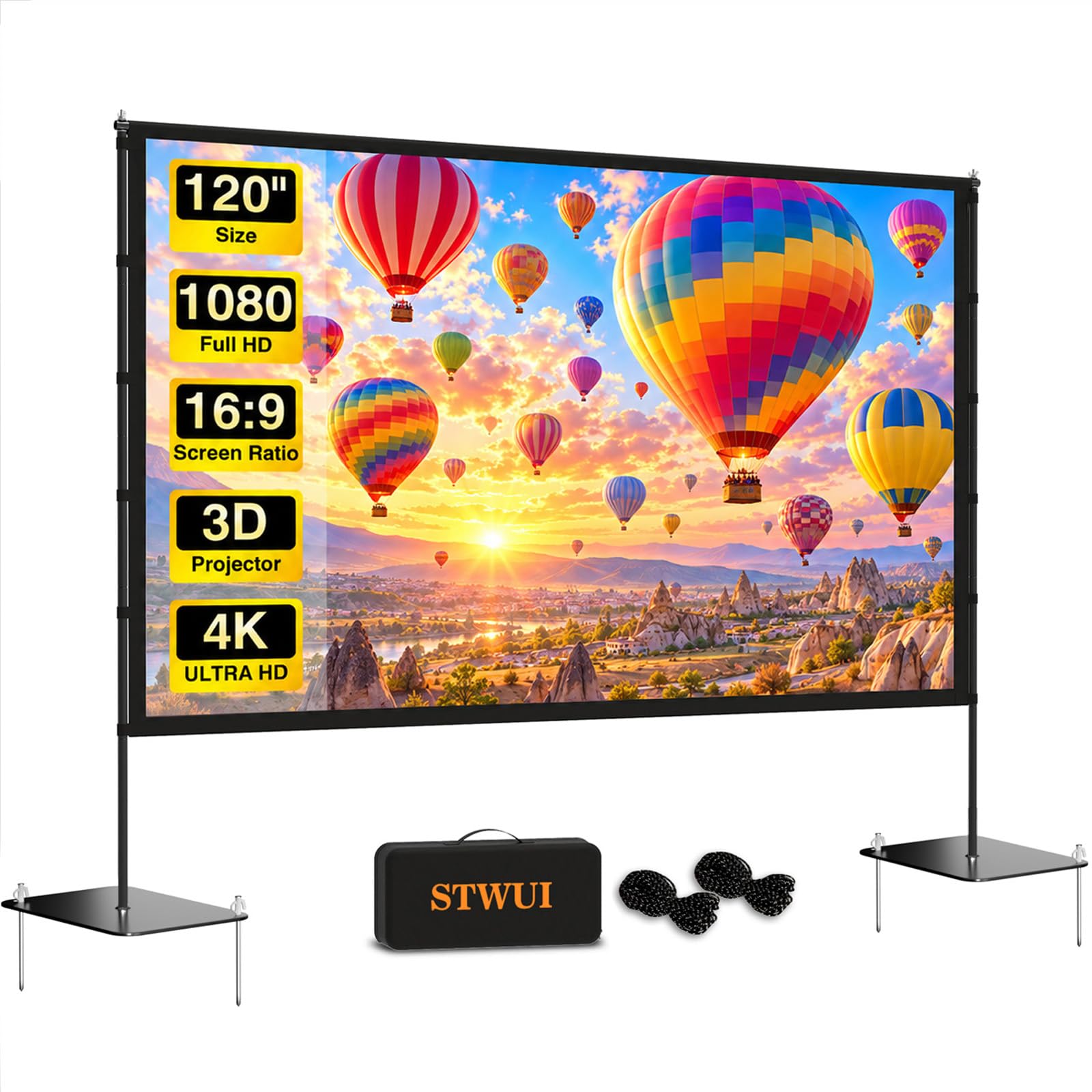
STWUI 120-Inch Screen with Stand

85 /100
LBD Score Excellent

Key details

Mounting
Weighted stake-down base plate
Carry Bag
Included
Screen Size
120 inches
Viewing Angle
160 degrees
View on Amazon

Stand screens usually lose their nerve in the first gust. This one drives a weighted base plate into the ground and widens it to spread the load, and the frame above it is steel rather than the thin tubing that flexes when a big surface catches wind. Set it up on grass and it stands like something that expects to be there.

The image is 120 inches at 16:9 on a stretchy woven fabric that pulls taut instead of hanging slack, and the frame lifts the bottom edge clear of the grass, which matters when the audience is on blankets. A 160-degree viewing angle covers a spread-out crowd, and the whole thing comes apart into a bag that fits in a closet.

For backyard movie nights it is the pick here, and the price is the lowest of any screen with a stand in this guide. What we appreciate most is that nothing about the design is precious: tube sections that push together, Velcro straps instead of tools, and a base you can stake rather than sandbag. A screen you are willing to put up on a Wednesday is worth more than a better one you avoid.

Two things to know before the first show. The tall frame goes up far more easily with a second pair of hands, and the fabric can ripple along one edge if the tension is uneven, so pull it straight before the guests arrive. The warranty runs 30 days, which is short for something that lives outdoors.

Pros

  • Weighted, widened base plate stakes into grass
  • Steel frame resists bending in a breeze
  • Tool-free modular build packs into a carry bag
  • Stretch fabric pulls flat without extra tools

Cons

  • Edge can ripple when the frame tension is uneven
  • 30-day warranty is short for outdoor use
Our verdict

The backyard screen we reach for: a 120-inch image on a frame that stakes down and stays up, for the least money of any stand screen in this guide.

Check Latest Price
3

Best Budget

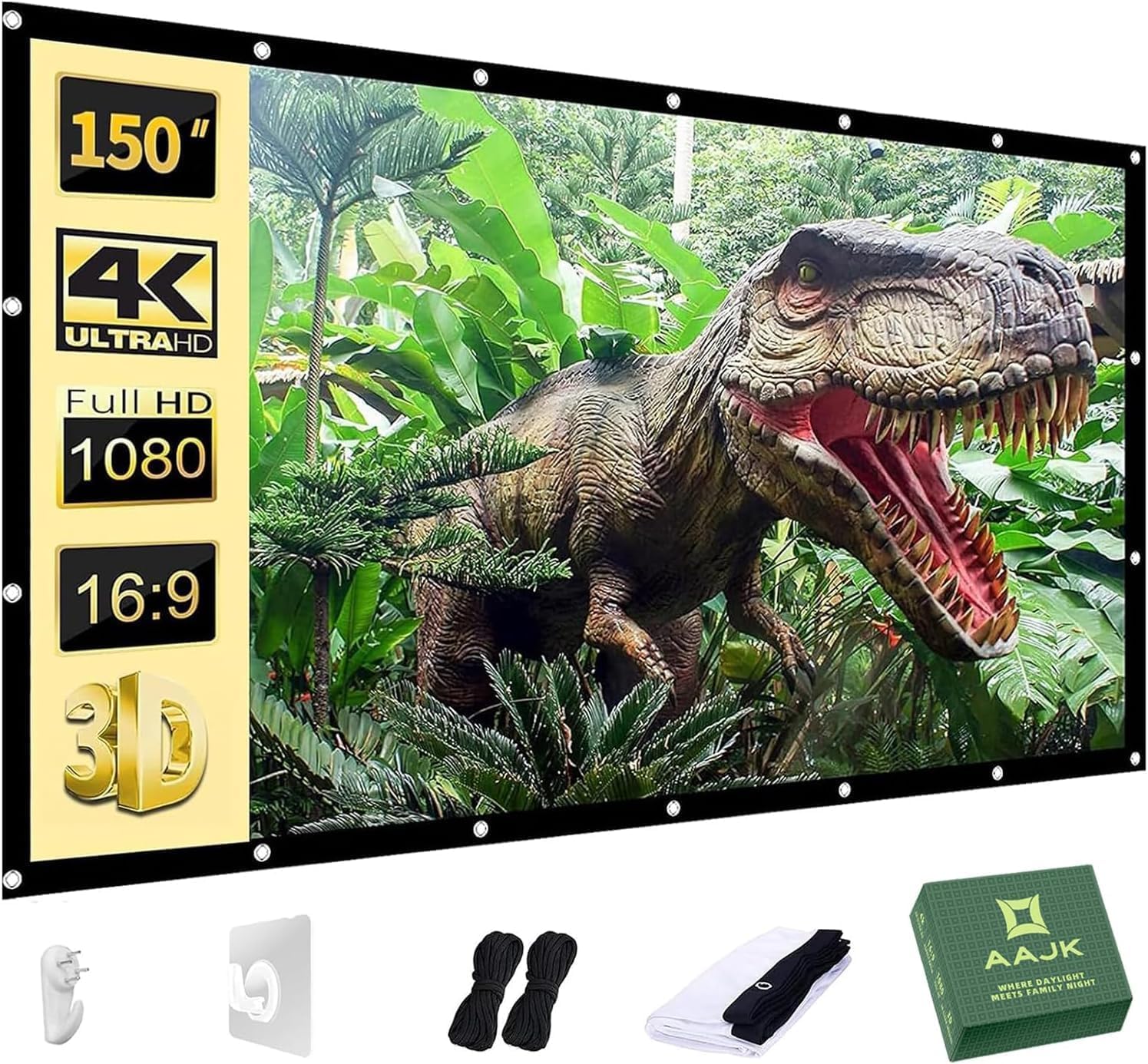
AAJK 150-Inch Fabric Screen

89 /100
LBD Score Excellent

Key details

Weight
2.8 lb
Mounting
Grommets, hooks and rope
Viewing Area
132"W x 73"H
Viewing Angle
160 degrees
View on Amazon

No frame, no stand, no roller: it is a hemmed sheet of white polyester with grommets around the edge, and that is exactly why it earns a place here. It is the least you can spend on a 150-inch image, and at 2.8 pounds it hangs from anything you can tie a rope to.

The viewing area is 132 by 73 inches at 16:9, the surface is matte with a 160-degree spread, and the fabric is washable and folds down small enough to keep on a shelf. Hanging it between two trees or against a garage door takes rope, hooks or nails, and the kit includes all three plus double-sided tape.

The tape is the part we would leave in the box, if we could say that — the adhesive hooks let go on a textured wall or under the weight of a sheet this big, and a screen on the lawn mid-movie ends the night. Use the grommets and the included rope, or bring your own fasteners, and it behaves exactly as advertised.

Flatness is the gamble. Folded fabric arrives creased, and while the grommets let you stretch the edges tight, some creases take their time relaxing. Hung taut against a dark wall after sunset it looks far better than the money suggests. As a permanent screen in a bright living room it is the wrong tool: it has no black backing, so light and shapes behind it come through the picture.

Pros

  • 150-inch image for the lowest outlay here
  • Under three pounds, so rope or hooks will hold it
  • Grommets all round let you tension the edges
  • Washable surface folds into a small bag

Cons

  • No black backing, so light behind it shows through
Our verdict

Buy it for the size and the price: a 150-inch image you can hang from two trees, as long as there is darkness behind it and you bring your own fasteners.

Check Latest Price
4

Best Inflatable

XHYCPY 16-Foot Inflatable Screen

92 /100
LBD Score Outstanding

Key details

Blower
110V, 180W
Projection
Front and rear
Inflated Size
139.2"W x 108"H
Viewing Angle
160 degrees
View on Amazon

Two minutes after you plug it in, there is a 16-foot screen standing in the yard. The 110-volt, 180-watt blower does that, and it has to keep running all evening — an inflatable screen is a screen with a fan attached, and the fan is part of the deal.

Inflated, it measures about 139 by 108 inches, and the white polyester surface is removable, which makes cleaning a job you can actually do rather than a reason to replace it. Front and rear projection both work, so the projector can sit behind the frame and leave the audience side clear for chairs.

It anchors with tethers and yard stakes, and the 210D oxford frame holds its shape once it is up. Between shows it deflates into a bag that goes in the garage, and the 90-day warranty is the shortest here, which is worth knowing if it will be up every weekend.

Of everything in this guide, this is the one that makes a crowd go quiet; a 16-foot picture in a dark yard does something a television cannot. The trade is noise, and it divides people — if yours is on the loud side, run the blower 20 feet behind the seating and the sound stops competing with dialogue. Stake it down, keep it plugged in, and take it in when the wind gets up.

Pros

  • Inflates in about two minutes
  • Front and rear projection on one screen
  • Removable surface is easy to clean
  • Tethers and yard stakes included

Cons

  • Blower has to run for the whole show
  • Fan noise competes with quiet scenes
Our verdict

For a crowd, this is the one: a 16-foot image that stands itself up in about two minutes, provided the blower can run and hum all evening.

Check Latest Price
5

Best Motorized

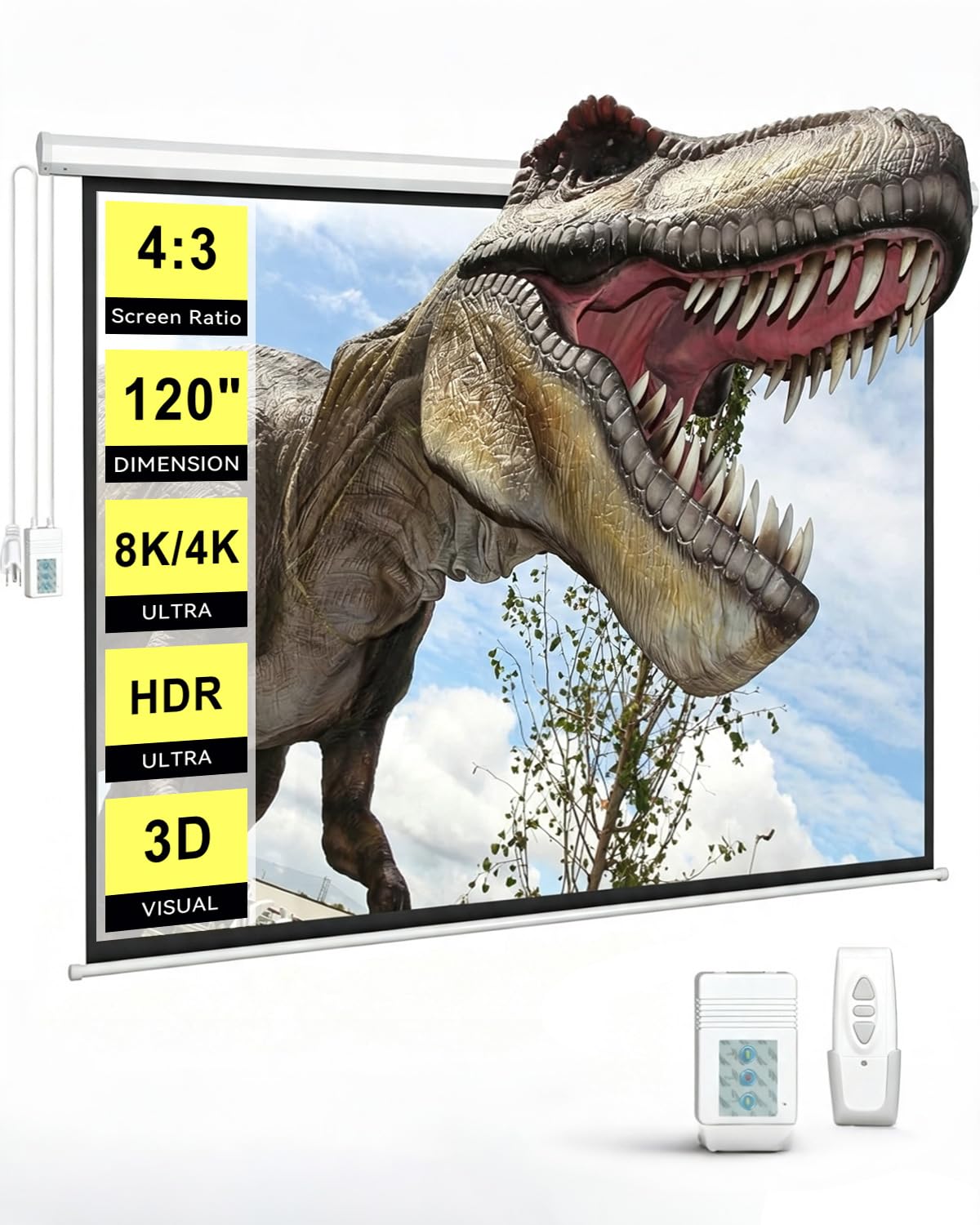
DINAH 120-Inch Motorized Screen

85 /100
LBD Score Excellent

Key details

Mounting
Ceiling mount
Operation
Motorized, remote included
Screen Size
120 inches
Viewing Angle
160 degrees
View on Amazon

The remote is a small thing that changes how often a screen gets used. Mounted on the ceiling, this one drops when you press the button and rolls out of sight afterward, and the wall goes back to being a wall.

That disappearing act is why it wins here for a room that has to serve as something else the rest of the time. The motor is quiet enough to run during an opening scene, the matte surface holds a 160-degree spread, and the whole assembly weighs just under 12 kilograms, so putting it up is a two-person lift rather than a construction project. The two-year warranty is longer than most of the roll-ups here offer.

Check the numbers before you drill. The case is listed at 87 by 49 inches, and that is the measurement that has to fit between your ceiling and your sightlines; the 120-inch figure is the diagonal class, and this is a narrower picture than the fixed frame above. It mounts to the ceiling only, so the fixings need framing.

Two ownership notes. The vinyl needs a few days of air before the smell stops following you around the room, and the drop is the part that decides how long the whole thing lasts — a screen that stops lowering is a warranty conversation, not a weekend repair.

Pros

  • Remote drops and retracts the screen
  • Quiet motor and a 160-degree matte surface
  • Two-year warranty

Cons

  • New vinyl smell lingers for days
  • Ceiling mount only, with no wall or stand option
Our verdict

The pick for a living room with two jobs: press the remote, get a 120-inch picture, and put the wall back when the credits roll.

Check Latest Price
6

Huge Yard Screen

FvcDmik 150-Inch Screen with Stand

81 /100
LBD Score Excellent

Key details

Surface
Anti-crease polyester
Assembly
Tool-free
Mounting
Freestanding, ground nails and ropes
Screen Size
150 inches (16:9)
View on Amazon

A 150-inch 16:9 image is roughly the footprint of a small car laid on its side, and this is the largest picture on a stand in this guide. The frame is iron tubing, it goes together without tools, and ground nails and rigging ropes come in the kit for wind.

The polyester surface is sold as anti-crease and folds into the included bag, and the tube sections snap into place so one person can raise it. For a graduation party, a block movie night or a one-off backyard event, that combination is hard to argue with — the size does the work the picture quality cannot.

Where it gives ground is the frame. Tubing at this span still flexes, and squaring the rectangle takes patience; a corner that will not sit true is the trouble that follows this screen around. If the screen goes up most weekends, the stake-down base of our backyard pick is the better build. For a handful of nights a year, the size wins and the frame is a fair trade.

Pros

  • Largest stand-mounted image here
  • Tool-free frame with ground nails and ropes
  • Anti-crease polyester folds into a bag

Cons

  • Frame flexes and takes patience to square
Our verdict

The biggest picture that stands itself up here, worth it for a few big nights a year if you will trade a little frame rigidity for all that size.

Check Latest Price
7

Presentations and Events

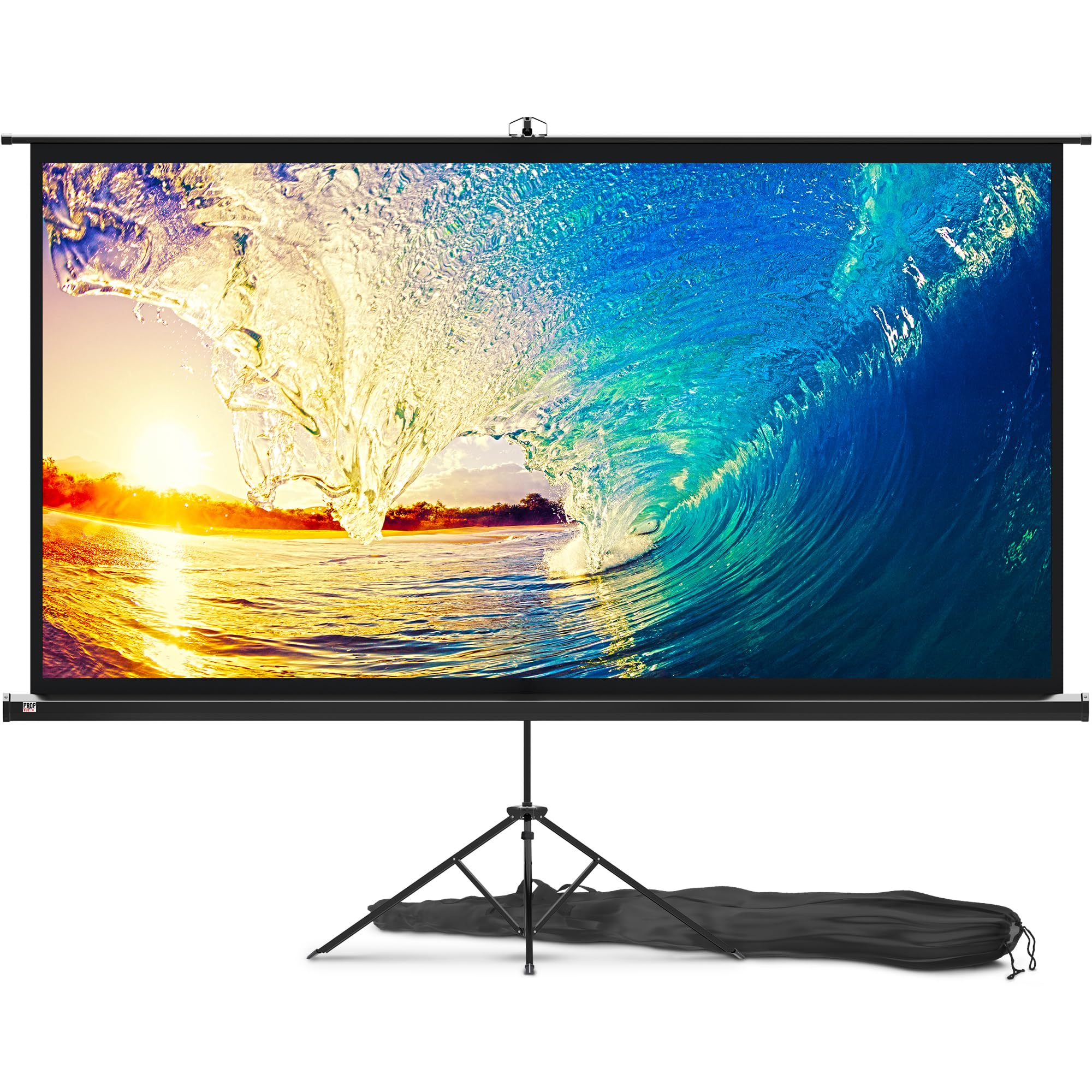
PropVue 100-Inch Tripod Screen

89 /100
LBD Score Excellent

Key details

Gain
1.1
Weight
17.6 lb
Mounting
Tripod stand, adjustable height
Screen Size
100 inches (16:9)
View on Amazon

If you are setting up in a hall, a church basement or a rented room you have to hand back exactly as you found it, the screen has to bring its own structure — and this one brings more of it than the folding stands here. A tripod with wide legs, a screen that retracts into its own case, height adjustment that clears the front row's heads, and nothing to drill.

The surface is matte PVC with a 1.1 gain and a 160-degree viewing angle, at 100 inches diagonal and 16:9. That gain is the honest middle: bright enough in a lit room with a decent projector, without the narrow hot spot a high-gain surface gives you. Everything packs into one bag with tight-straps, at 17.6 pounds.

Stability is the trade. Wide legs help, but a tripod carrying a 100-inch screen is only as steady as what is under it, and a leg that takes a knock can bend — we have seen enough of these go over at the back of a hall to treat the legs as the part to protect. Weight them with sandbags on grass or a stage, keep the screen out of foot traffic, and it stands through a two-hour talk.

It is also the most expensive screen here that is not a fixed frame, which for a presenter is usually the right place to spend. The case, the tripod and the roll-up are what you are paying for, and they are what saves you twenty minutes at each end of the event.

Pros

  • Tripod and screen pack into one case
  • Height adjustment clears seated rows
  • 1.1 gain with a wide 160-degree spread
  • Nothing to drill or mount

Cons

  • Tripod legs are the weak point when knocked
Our verdict

The presentation screen for a room you cannot alter: tripod, case and drop-down surface in one bag, with no drilling and no wall to find.

Check Latest Price
8

Small Rooms

Pyle 84-Inch Pull-Down Screen

87 /100
LBD Score Excellent

Key details

Mounting
Wall or ceiling
Operation
Manual pull-down with auto-lock
Screen Size
84 inches
Viewing Angle
160 degrees
View on Amazon

Eighty-four inches is small for a projector screen and exactly right for some rooms: a den, a garage, a classroom corner, or the one wall in the house that is not already spoken for.

It is a manual pull-down with an auto-lock that stops the surface at whatever height you let it go, on a matte white surface with a 160-degree viewing angle. The case is slim metal, listed at 67.3 by 50.3 inches, and it rolls up out of the way when the room goes back to being a room.

Hanging it is the easy part. Top loops take hooks or screws at the wall or the ceiling, and an hour covers the whole job. Put an anchor at each end rather than trusting a single hook in the middle; a screen that pulls out of the drywall on its first drop is a bad evening, and the pull-down mechanism is worth cycling a few times as soon as it arrives.

For a small room where the picture has to disappear, this is the value pick in the guide, and the image is brighter and cleaner than the size suggests. Two things to accept: the vinyl smells strongly for the first few days and needs airing in a garage, and 84 inches is a one-row experience. If you want a back row, go back up to the 100-inch and 120-inch screens.

Pros

  • Auto-lock holds the screen at any height
  • Rolls into a slim metal case
  • Hangs from wall or ceiling on top loops

Cons

  • Sharp vinyl smell for the first few days
Our verdict

For a den, garage or classroom corner where the screen has to vanish afterward, this small pull-down does the job for a modest outlay.

Check Latest Price

How We Chose and Tested the Best Projector Screens

We started by pulling every 16:9 screen we could find between 84 and 150 inches, then cut anything with missing hardware, vague fabric specs, or a mount that only worked one way. That left 12 screens: fixed aluminum frames, tripod-and-stand kits, foldable nylon with a carry bag, an inflatable with a blower, and a motorized drop-down.

Each screen was assembled from the box alone, with a stopwatch running and only the included instructions for company. I counted the trips back to the manual, noted whether the pre-drilled holes and hardware lined up with studs and ceiling joists, and checked how far out of level each one hung. On a quiet evening I listened to the motorized screen drop and retract, then stood beside the inflatable with the blower running during a dialogue scene and judged whether the hum fought the movie.

Picture quality got the same three clips at the same projector brightness. I watched for hot spots in the center, color shift when sitting off to the side, visible seams, and the shadows of creases, then ran a hand across each surface to feel for ripples. Foldable and roll-up screens were packed, unpacked, and re-hung again and again over six months to see which wrinkles relaxed and which became permanent. Double-sided screens got a rear-projection check.

Stability and appearance were less scientific: a box fan at full speed, a kid sprinting past, a dog's tail. I also looked at each screen hung in daylight, to judge whether the frame sat square and whether it read as furniture or as a tarp.

How to Choose a Projector Screen

Start with where the screen lives

A fixed frame gives you the best surface for the money and the least flexibility: it goes on a wall and stays there. A roll-up or motorized screen trades a little flatness for a room that goes back to normal after the credits, and a stand or inflatable screen is the only sensible answer for a yard. Fabric-only screens skip the structure entirely, which is why they cost the least and ask the most of whatever you hang them from.

Watch the word portable. It can mean a screen that folds into a bag you carry in one hand, or one that comes apart into a case the size of a golf bag. Both are portable; only one fits in a trunk alongside the luggage.

Measure the image, not the model number

A 120-inch 16:9 screen is about 105 inches wide and 59 inches tall. That rectangle is what has to fit on the wall, and it is usually wider than people expect once a media console and two speakers are in the room. Look for the viewing-area figure rather than the diagonal in the product name, then confirm the projector can fill it from where the projector has to sit.

The free test is to project straight onto the bare wall, sit where you will actually sit, and watch ten minutes of something dark. If the size feels wrong there, it will feel wrong on a screen.

Gain, ambient light and the white-sheet problem

Gain measures how much light the surface sends back. Around 1.1 is the neutral choice and what the fixed frame and the tripod screen here use: it keeps color honest and the viewing angle wide. Higher-gain surfaces look punchier head-on but narrow the sweet spot and can hot-spot. The other half of the equation is the room, because no screen makes a projector work in daylight, and a thin unbacked fabric lets whatever is behind it glow through the image.

If the room cannot be darkened, spend the money on blinds before you spend it on gain.

Flatness is the product

A screen's whole job is to be a flat, even surface, so tensioning matters more than the material's name. Fixed frames use rods or a stretched border, elastic fabrics pull taut on a frame, and folded fabric arrives creased and needs hanging tight from every grommet before it settles. Wrinkle-free on a folded screen means the creases come out eventually, not that there are none in the box.

Setup, wind and the new-screen smell

Two people make a 120-inch frame much easier, and anything going on a ceiling has to find framing rather than drywall alone. Outdoors, stakes and tethers are not optional extras, and an inflatable also needs power running to its blower for the entire show.

New vinyl screens off-gas, and the smell is strongest while the surface is new and warm. Unroll one in a garage for a few days before the first movie night rather than discovering it with a yard full of guests.

Frequently Asked Questions

Final Verdict

The Silver Ticket is the screen to buy if you have a room you can darken and a wall to give it. Nothing else here is as flat, and the velvet edge does more for the picture than any feature list suggests. If the screen has to come down between movies, the DINAH's remote turns a living room back into a living room; if it has to go outside, the STWUI's stake-down frame is the backyard answer.

And if the budget is the whole story, a 150-inch fabric screen pulled taut against a dark wall after sunset is a genuinely good picture for very little money.