Best Studio Lighting Kits of 2026

The first time I tried to photograph a pair of boots on my dining table, I lost the daylight at 4 p.m. and the shoot with it. A studio lighting kit is the fix: two or three lights you can aim, soften, and dim, so a shot looks the same at midnight as it does at noon. The trouble is that wattage on the box tells you almost nothing about how a kit actually behaves in a spare bedroom.

We've spent eight months running 12 kits through the same portrait, product, and streaming work — bare bi-color panels on stands, softbox setups, and one studio flash. Adjustable color temperature and smooth dimming earned their keep right away; remote control is the feature people love in theory and abandon in practice, usually because it has to reach a light buried behind a softbox.

The picks below are the kits that held their aim, stayed upright, and went up without a second pair of hands. None are broadcast-studio gear — they're built for a spare room or a cleared-off dining table, which is exactly where we used them.

1

Best Overall

NEEWER 660 LED Kit

94 /100
LBD Score Outstanding

Key details

Light Output
40W, up to 3300 lux at 1 m
Stand Height
26 to 75 in
Color Accuracy
CRI 96+
Color Temperature
3200K-5600K
View on Amazon

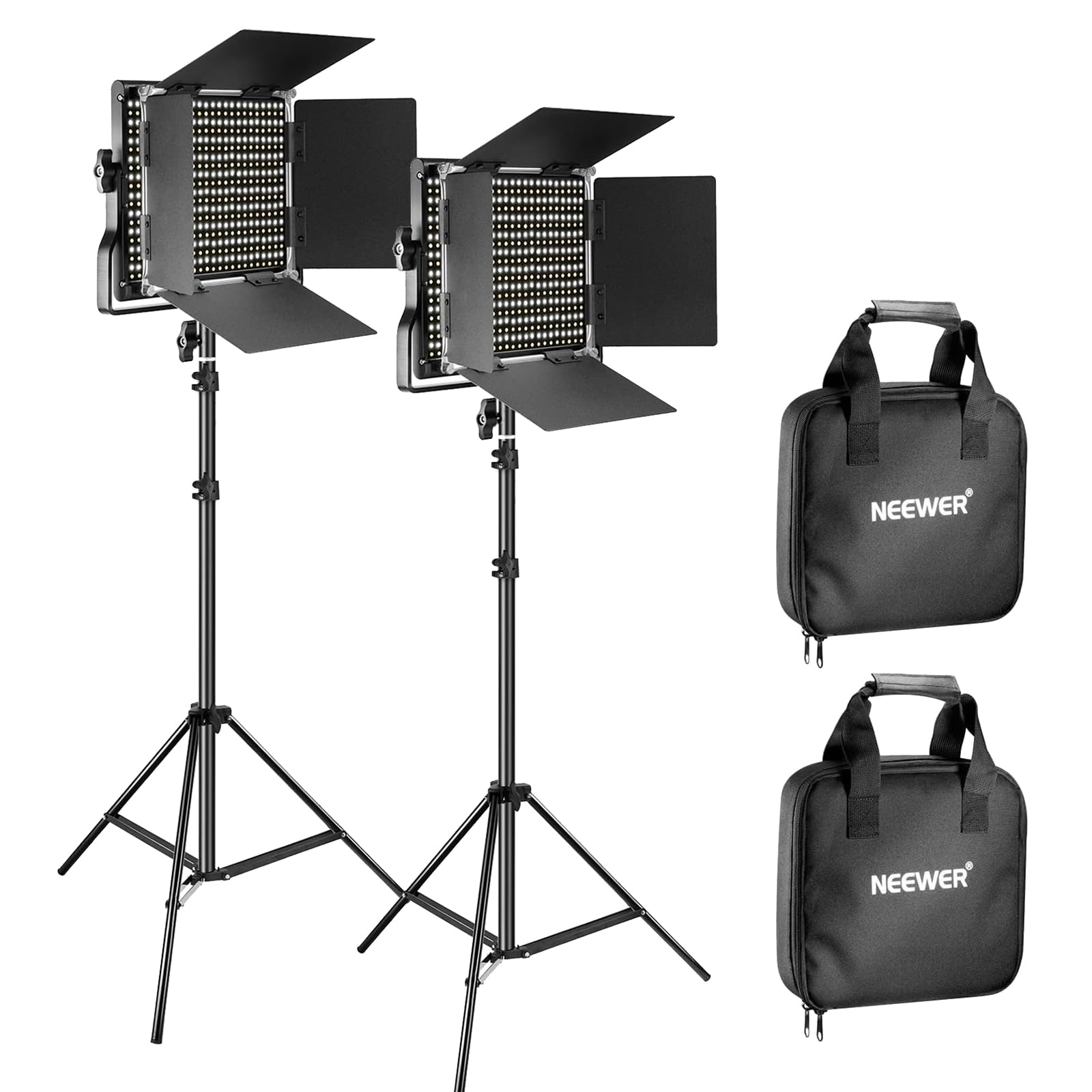
Color accuracy is the specification that settles this kit for us. Two banks of 330 LEDs — warm and cool — blend anywhere between 3200K and 5600K, and the CRI rating is 96+, which is the difference between skin that looks like skin on camera and skin that goes faintly gray. A couple of the bulb kits here reach wider on paper, but none pairs that range with this color fidelity. The output is honest too: 40W delivering up to 3,300 lux at a meter, dimmable from full down to nothing.

The bodies are aluminum, and that shows up in use. There's no fan, so a long recording stays silent and the metal handles the heat instead. Each light sits in a U-shaped yoke with a barn door that slots in front of the panel, and we used those doors constantly to keep spill off a background without moving the light itself. The locking knobs bite, and the heads stay where you put them — not a given in this group.

Power is the other reason we keep reaching for it. Each light runs from the supplied adapter or an NP-F battery, so a shoot doesn't have to happen within reach of an outlet, and the LCD on the back tells you where brightness and color sit before you look at the camera. The stands extend from 26 to 75 inches, and each light travels in its own carry bag.

Softness is where it gives ground. A flat panel behind a diffuser is directional: it wraps a face nicely at three or four feet and gets harder as you back it away, which is exactly where a 24-inch softbox starts to win. For talking-head video, streaming, interviews, and tabletop product shots, we take this pair over anything else on this page. For a full-length portrait at eight feet, take the softbox instead.

Pros

  • 3200K-5600K bi-color output rated CRI 96+
  • Metal bodies, barn doors, and no fan noise
  • Runs on AC power or NP-F batteries
  • Two 75-inch stands and two carry bags included

Cons

  • NP-F batteries sold separately
  • Power leads run short at full stand height
Our verdict

We recommend this pair for video, streaming, and interviews: the bi-color light is accurate, the metal heads hold their angle, and batteries make it cordless.
Check Latest Price
2

Best All-In-One With Backdrops

EMART Backdrop Kit

91 /100
LBD Score Outstanding

Key details

Bulbs
50W LED, 5500K, CRI 80
Backdrops
Three 6 x 9 ft muslin
Softboxes
Two 24 x 24 in
Backdrop Stand
8.5 x 10 ft
View on Amazon

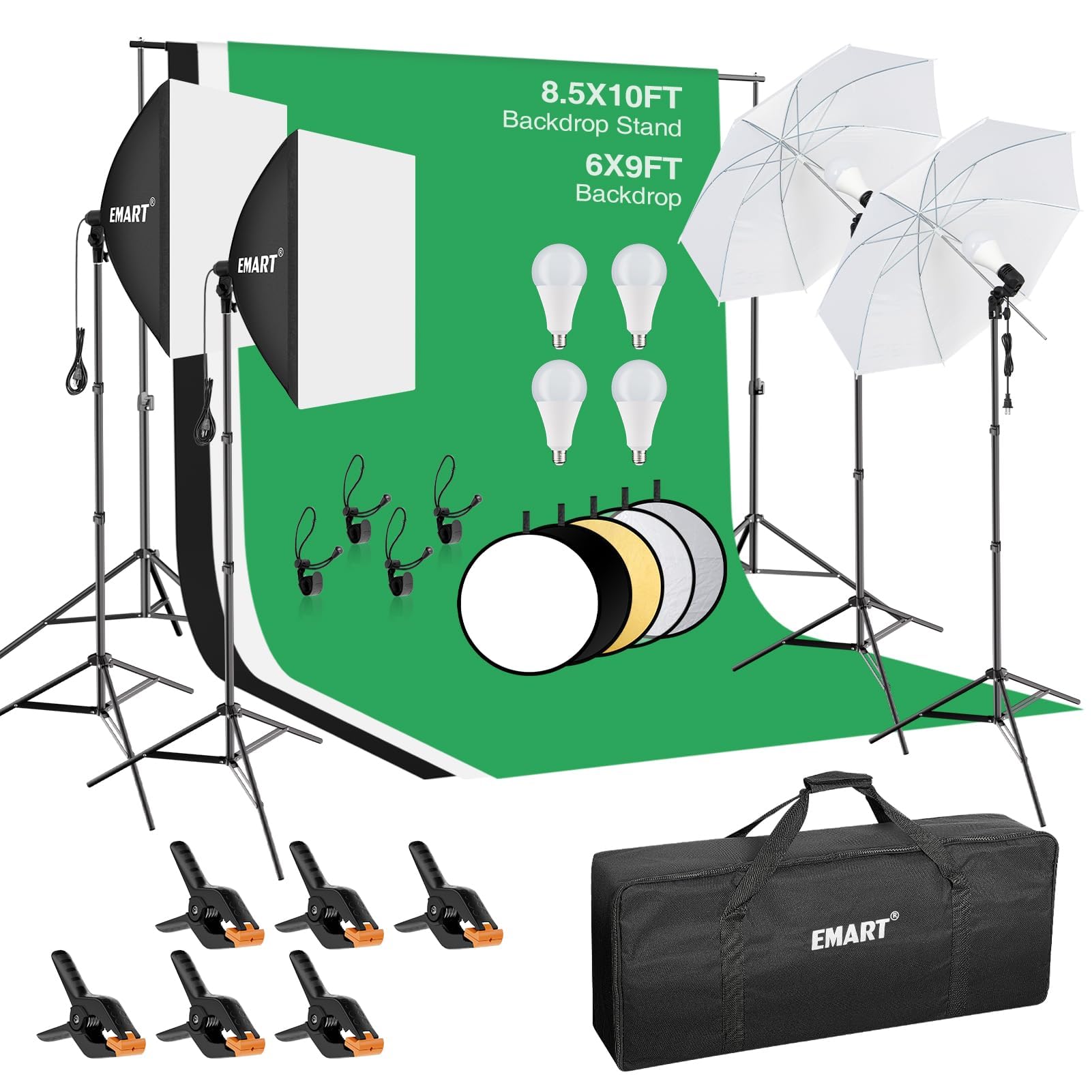
An 8.5-by-10-foot backdrop stand is furniture, and that's the honest starting point. Set up with a muslin hanging from it, this kit wants a wall, ceiling height, and a corner you can leave alone for the length of a shoot. What you get for that commitment is a room that reads as a studio on camera: three 6-by-9-foot cotton backdrops in black, white, and green, six spring clamps, and a support system that spans ten feet.

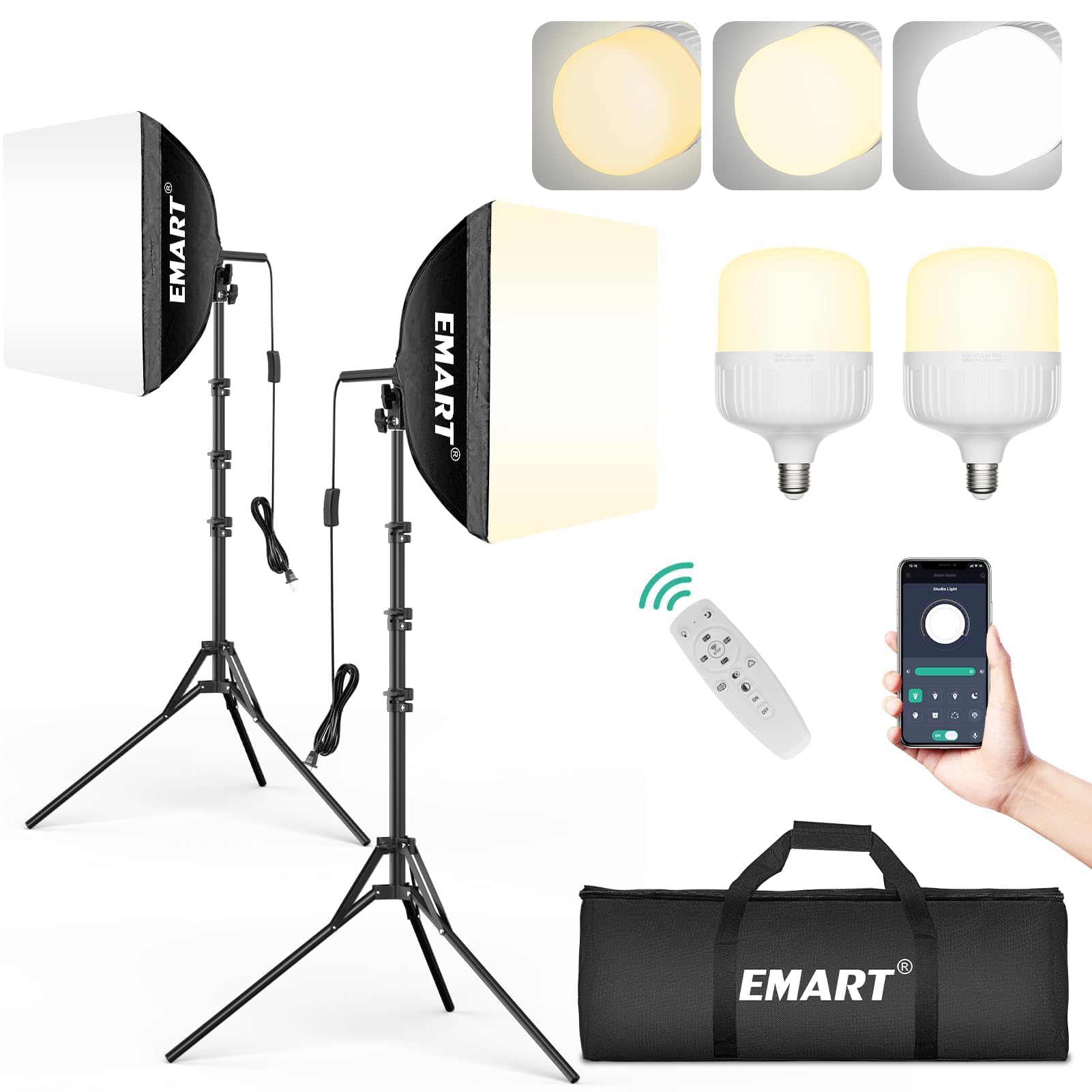
What we like is that it answers the whole question at once. Two 24-inch softboxes on 7-foot stands cover key and fill, two white umbrellas broaden the light when a box feels too directional, and two 50W 5500K LED bulbs keep color consistent between the lights. For a first headshot setup, a small product catalog, or a livestream corner that needs to look deliberate, having everything arrive in one order saves a season of buying pieces one at a time.

The light is the modest part. Fifty watts through a softbox is comfortable for one person at conversational distance and thin for a group or a full-length frame, and the bulbs are rated CRI 80 — fine for streaming, not what you want for accurate product color. Treat it as a one-subject kit and it does the job.

Two practical notes before you build a shoot around it. The muslins are thin enough that a light placed behind the green screen shows through, and they arrive creased from packing — hang them a day early and steam them. And run both bulbs for a proper stretch before the first session; the electrics are the part of any kit at this tier worth checking first.

Pros

  • Backdrop stand, three muslins, and clamps included
  • Two 24-inch softboxes plus two umbrellas
  • Two 5500K bulbs stay color-matched

Cons

  • Light stands stop at 7 feet
Our verdict

We point beginners here when they need a background as much as a light: it's the only kit in this group that fills a frame as well as it lights one.

Check Latest Price
3

Best Softbox Kit for Stills

NEEWER Softbox Kit

90 /100
LBD Score Outstanding

Key details

Bulbs
35W LED, 5700K, 3150 lumens
Softboxes
Two 24 x 24 in
Carrying Bag
Included
Stand Height
83 in (210 cm)
View on Amazon

The difference between this kit and our top pick is the shape of the light. Two 24-inch square softboxes behind white diffusers throw a broad, wrapping source that flatters a face at three or four feet, and the twin 35W 5700K bulbs — 3,150 lumens each, about 700W of incandescent equivalent between them — are enough to shoot at a sensible ISO without pushing the sensor.

Setup takes a few minutes and one person. The boxes open over a spread frame like an umbrella, the diffuser clips on, and the head drops onto the stand's spigot. The bulbs screw into standard E26 sockets, which is the quiet advantage of a kit built this way: when one dies, you buy a bulb rather than a fixture. The carry bag takes both boxes, both stands, and the bulbs.

Where we like this pair best is product photography and headshots in a room where the lights can stay up. The output is soft and even, the bulbs match each other, and there's no fan or flicker to fight. It is not an adjustable kit: the bulbs are single-color daylight with no dimmer, so you shape the light by moving stands and adding diffusion. In a room with warm overheads, that fixed color is a mismatch — flag the room lights off, or plan on a custom white balance.

Pros

  • Large 24-inch diffused boxes for soft light
  • Standard E26 sockets make bulb swaps cheap
  • Quick one-person setup with a carry bag
  • Matched 5700K bulbs for consistent color

Cons

  • Softbox angle can creep once the knob is tight
Our verdict

We reach for this two-pack when the job is a still portrait or a product on a table, and we like that a dead bulb costs a trip to the hardware store.

Check Latest Price
4

Best Budget Kit

NiceVeedi LED Kit

89 /100
LBD Score Excellent

Key details

Power
USB-C adapters included
Kit Weight
3.7 lb
Light Panels
Two, 10 x 7.8 in
Color Temperature
2800K, 4800K, 6500K
View on Amazon

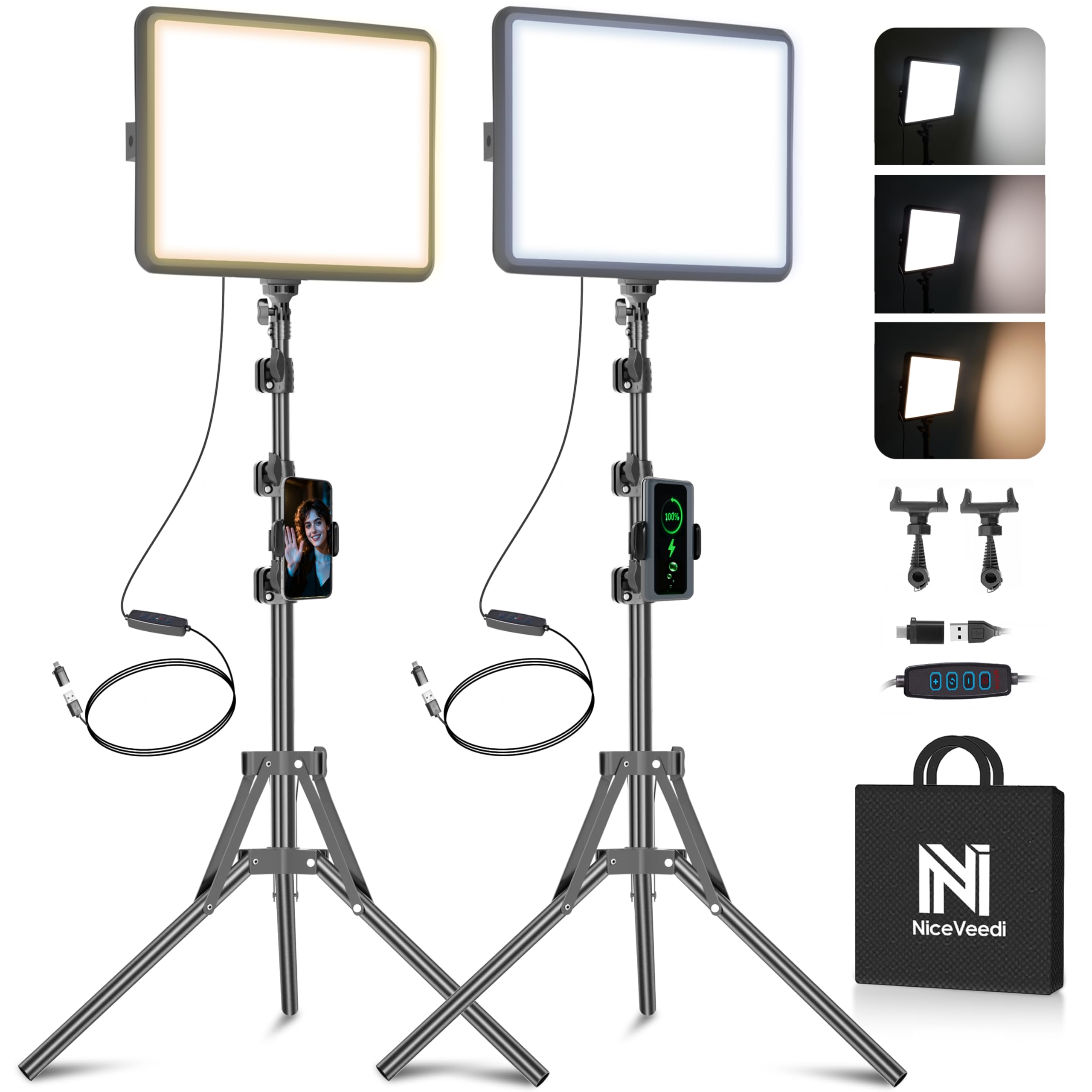
At 3.7 pounds in the bag, this is the kit you can leave set up on a desk and forget about. Two 10-by-7.8-inch LED panels on aluminum tripods, three color temperatures at 2800K, 4800K, and 6500K, ten brightness steps, a phone cradle on each tripod, and USB-C adapters for power. If your camera is a phone and your studio is a spare bedroom, this is the sensible place to start.

We kept this one on a desk for a few weeks and it did what a small panel should: it turned a window-lit corner into something consistent. USB-C means a power bank can run a panel when the outlet is on the wrong side of the room, the panels run cool enough to pack away immediately, and setup is two tripods and two cables. Ten brightness steps do more work than they sound — one step down fixes the shiny forehead that makes webcam footage look amateur.

The limit is size. A ten-inch panel has to sit within about three feet of your face before it wraps, so this is desk and chair lighting: streaming, video calls, a talking-head clip, a small product on a tabletop. Pull it back to light a standing subject and you get a bright, flat, faintly hard look. That's not a fault in the kit; it's what a small panel is.

Pros

  • Two panels, two tripods, and phone holders
  • USB-C power runs from a power bank
  • Ten brightness steps and three color temperatures

Cons

  • Tripods are light-duty at full extension
Our verdict

We steer streamers and phone shooters here first: two lights on tripods with phone holders, for the least money in this group.

Check Latest Price
5

Best Flash Kit

Godox MS300V Kit

87 /100
LBD Score Excellent

Key details

Mount
Bowens
Wireless
Built-in 2.4G X system
Softboxes
Two 24 x 35 in
Stand Height
39 to 110 in
View on Amazon

Every other kit in this guide is continuous — what you see on set is what you get. This one is flash, and that single difference decides who should buy it. Two MS300V monolights, two 9.2-foot stainless stands, two 24-by-35-inch rectangular softboxes, a standard reflector for each head, a 5-in-1 reflector, and a Bowens mount that opens the door to the largest modifier ecosystem in studio photography.

Flash buys two things continuous light can't match at this tier. It stops motion, because the burst is far shorter than any shutter speed you'll set, so a jumping subject or a fan of hair freezes clean. And it puts a large amount of light into that instant, which is what lets you shoot at f/8 and low ISO with a softbox three feet from a face rather than pushing the sensor and living with the noise. The built-in LED modeling lamps show you where the light falls before you fire.

The workflow is different and worth understanding before you commit. You set power on each head by hand, fire remotely, and read the histogram rather than the back of the camera. The 2.4G system groups and fires the heads once a transmitter is in the kit, and the heads hold their output steadily across a long session rather than drifting as they warm.

For portraits, fashion, and anything that moves, this is the kit that will look most like work done in a real studio, and its softboxes are the biggest on this page. It also costs the most by a wide margin and asks the most of the person using it. If your subjects sit still and your deliverable is video, keep the money and buy continuous light.

Pros

  • Two 24-by-35-inch boxes, the largest here
  • Bowens mount takes standard modifiers
  • 2.4G wireless grouping and firing
  • Steady output across long sessions

Cons

  • Wireless trigger not included in the kit
  • No continuous output for video work
Our verdict

We recommend this to anyone shooting portraits or fashion who needs to stop motion; if your work is video, it is the wrong tool.

Check Latest Price
6

Overhead Lighting

Andoer 3-Light Kit

82 /100
LBD Score Excellent

Key details

Lights
Three 85W LED
Boom Arm
Included
Softboxes
Three 20 x 28 in
Stand Height
26 to 78 in
View on Amazon

Three lights is the usual count for a small portrait setup. The boom arm is what makes this kit different: it clamps into the stand and reaches out over the subject for a hair light or a soft overhead that separates a head from a dark background — the one thing a pair of lights at floor level cannot do.

The rest of the package is three 85W LED bulbs in three 20-by-28-inch softboxes on stands running from 26 to 78 inches, remotes for the bulbs, and a carry bag. The bulbs are dimmable and adjustable between 2800K and 5700K, so you can warm one light against another instead of gelling, which is more control than the fixed-daylight softbox kits give you.

The part we trust least is what holds the overhead light. A boom is a lever, and the further the head reaches, the more the stand wants to tip; the aluminum stands here are the same sort every kit at this tier ships with. The fix is boring and effective — weight the rear leg, keep the boom short, and hang the lightest modifier on the end of it. Do that and the third light earns its place in the room.

Pros

  • Boom arm adds overhead or hair light
  • Three dimmable bi-color 85W LEDs
  • Stands reach 78 inches

Cons

  • Remotes aren't paired to a single bulb
Our verdict

We suggest this one when you need a third light over the subject and can be disciplined about weighting the stand.

Check Latest Price
7

Tight Spaces

EMART Pull Softbox Kit

83 /100
LBD Score Excellent

Key details

Bulbs
50W LED, 3000K-6000K
Control
Remote and app
Softboxes
Two 16 x 16 in, pull-open
Stand Height
17 to 63 in
View on Amazon

Press the button, pull the rod, and the box is open — that is the whole assembly. Anyone who has wrestled a conventional softbox over a spread frame, then fought the diffuser and the little clips into place, will recognize how much less work this is. Closing it is the same motion in reverse, which is why this is the kit that actually gets packed away after a shoot instead of living in the corner.

In a small room that matters more than output does. Two 50W bulbs run from 3000K to 6000K and dim through a remote or an app, the stands adjust from 17 to 63 inches, and the pair folds into a bag that fits in a closet. In a bedroom that has to be a bedroom again by dinner, this kit earns its spot on setup time alone.

The trade-off is scale. A sixteen-inch box softens light nicely at two or three feet and does very little at six, so plan on head-and-shoulders framing — a chair, a desk, a tight crop. Used that way the light is genuinely pleasant, and the color range is wide enough to match a warm room or a cool one without reaching for gels.

Pros

  • Softboxes open and close in one pull
  • Bi-color 3000K-6000K bulbs with remote and app control
  • Folds into a bag for closet storage

Cons

  • Stands stop at 63 inches
Our verdict

We point small-room shooters here: the boxes open in a second, which is the difference between using them and leaving them in the bag.

Check Latest Price

How We Tested 12 Studio Lighting Kits

We started with roughly 40 kits and cut anything that shipped without the bulbs it needed, depended on a modifier sold separately, or came from a brand we couldn't source replacement stands or diffusers for. That left 12 kits spread across the range a first studio actually shops in, and we spent eight months living with them.

Each kit got the same first test: unboxed alone, assembled from a sealed carton to a lit subject with the instructions, then broken down and rebuilt without them, timed both ways. I ran every stand to full height on carpet and on hardwood, nudged it at shoulder height, and noted whether the softbox swung, sagged, or took the whole stand down with it. Over the eight months I collapsed and rebuilt each kit roughly 20 times to see which clamps stripped, which screws worked loose, and which diffusers cracked at the seams.

At the subject position I metered each light at full power, at half, and at its lowest usable setting — where dimming tends to get steppy and where a bare panel and a softbox stop matching each other. I also put both lights of a two-light kit against a white wall to see whether their color temperatures truly agreed, then shot skin, denim, and dark fabric to watch how the colors came back.

Adjustability came down to sweeping the color temperature from one end of its range to the other and noting where the output drifted green or pink. Remotes and apps were tried from across the room, from behind a softbox, and through a doorway, with fresh batteries and a fresh pairing. Last, we totaled up what each kit didn't include — bulbs, sandbags, remote batteries — because a cheap kit that needs another round of shopping isn't cheap.

How to Choose a Studio Lighting Kit

Continuous or flash, decided first

Settle this before anything else, because it rules out half the field. Continuous LED and bulb kits let you see the light as you shape it, and they're the only option for video, streaming, and anyone shooting both stills and motion. Flash puts far more light into an instant, freezes movement, and lets you stop down the aperture — but it needs a trigger, a meter or test shots, and a subject who holds still between frames.

Only the Godox kit in this group is flash; everything else is continuous, which matches how most people shoot now: a camera, a laptop, and a spare room. If you do both, buy continuous first. Flash is the second purchase, made once you know what you want it to do.

Softness is size and distance, not watts

A large diffuser close to a subject wraps light around a face. The same diffuser pulled back becomes a hard point source. That's why a 16-inch box at two feet beats a 24-inch box at eight, and why the small kits here are desk tools while the 24-inch ones are portrait tools.

Watch the word compact in a listing. It almost always means shorter stands and smaller boxes, not softer light. A 60-inch stand puts the light at chest height on a standing adult, which flattens the face — sit your subject down, or plan for a taller stand. If you can only commit to one modifier size, buy the largest box your room can hold.

Color: range, accuracy, and what you'll mix it with

CRI decides whether skin and product color survive the trip to camera. The most accurate kit here is rated 96+, a few sit around 90, and several are 80. Below roughly 90 you'll notice it on skin and on anything with a subtle color — if you're photographing products for sale, use CRI as your first filter, before price.

Adjustable color temperature is the other half of the decision. Bi-color and wide-range kits let you warm a key against a cool fill or match the room you're shooting in; fixed 5500K bulbs are perfectly good in a dark room with the house lights off. Mixing fixed daylight bulbs with warm overheads is the classic beginner mistake — two colors in one frame that no white balance setting will reconcile.

Stands, knobs, and the parts that fail

Every kit here is built on aluminum tube stands, and the small differences decide how the kit feels after a month: how high the sections go, whether the collar locks without a fight, and whether the head's angle knob bites hard enough to hold a loaded softbox aimed down. A box that creeps mid-session costs you the take.

Weight is the cheap fix. A sandbag — or a tote with a laptop in it — on the rear leg buys stability no stand at this tier has on its own, and it stops being optional the moment a boom arm is overhead. Set stands at working height, tighten everything, then re-check before you hit record.

Count the extras before you compare kits

Two kits in the same tier can differ by a carry bag, a pair of remotes, backdrops, or the batteries that make a light cordless, and none of that shows up in the headline specification. Read the package list rather than the title. Batteries and wireless triggers are the two things most often missing from a kit that looks complete in the photo.

Backdrops deserve a measurement. A 6-by-9-foot muslin sounds generous until it's hanging from a 10-foot crossbar, and it won't cover a standing adult head to toe. Check the cloth's own dimensions against the frame before you plan a full-length shot around it.

Frequently Asked Questions

Final Verdict

For most people, the answer is the NEEWER 660 pair. It's the most color-accurate light in this group, the metal heads and barn doors behave like equipment rather than props, and the battery option means you aren't hunting for an outlet mid-shoot. Buy it for video, streaming, interviews, and product work on a table.

If your work is portraits, the NEEWER 24-inch softbox two-pack gives you the softer, bigger source those need, and its screw-in sockets keep it running for years. If you also need a background, the EMART kit covers the whole frame in one order — just plan the wall and ceiling space before it arrives.